International News

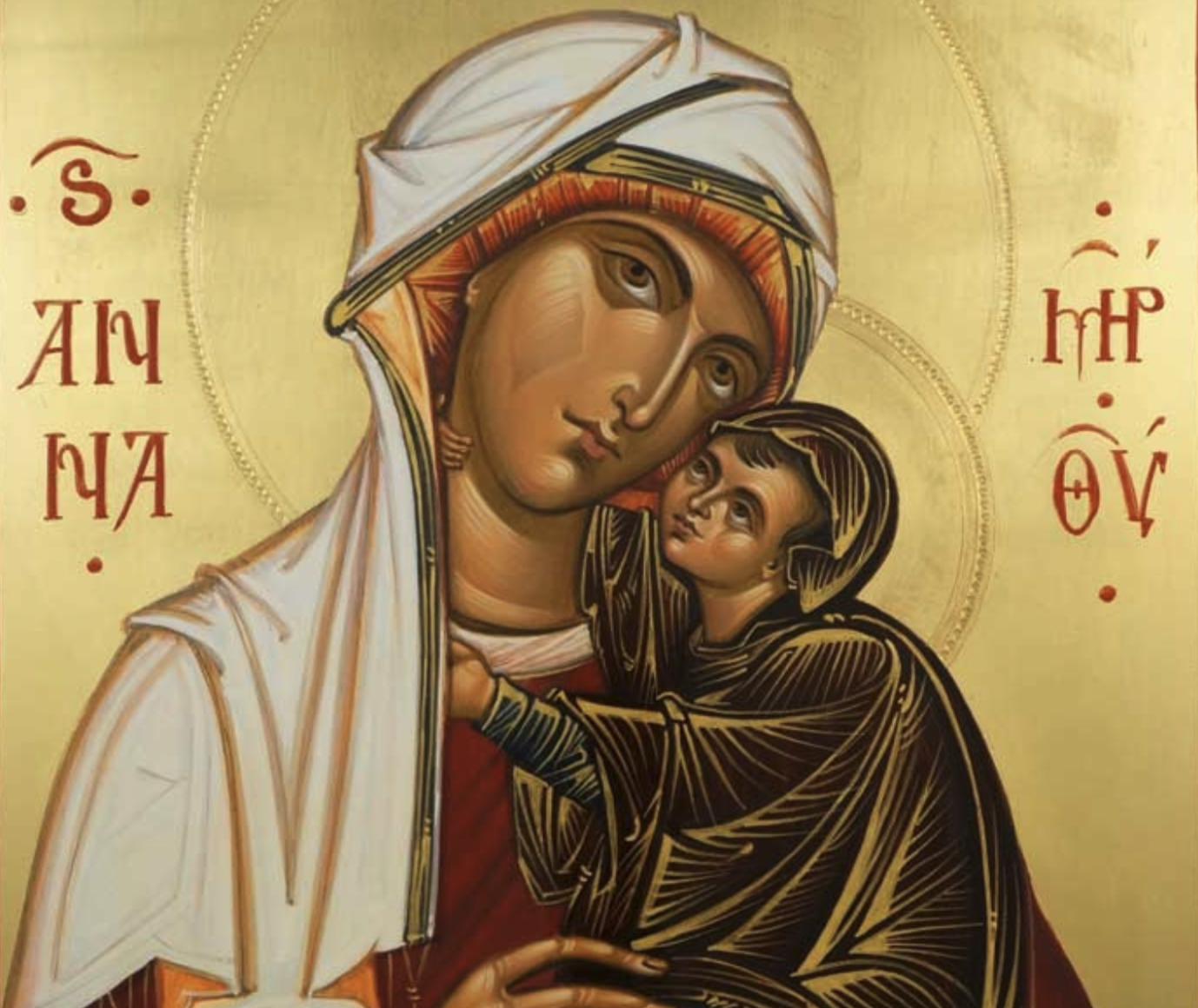
St. Anne plays a major role in papal visit to Canada: Is she important to Catholics, alone?

St. Anne plays a major role in papal visit to Canada: Is she important to Catholics, alone?

Long ago, I had a strategic and symbolic on-deadline argument with Rocky Mountain News (#RIP) editor.

Holy Week loomed on the horizon, on the Western calendar, and I was asked to fill out a form requesting quick Ash Wednesday feature art. I suggested — thinking beauty and diversity — a visit to an Episcopal parish in the heart of Denver’s most prominent Black neighborhood, a congregation known for the beauty of its high-church, Anglo-Catholic rites.

The editor said the photo needed to be in a Catholic church, since Holy Week is a Catholic story. I said that was a logical way to think about it, since the Catholic church is so prominent. However, I noted that Holy Week is an ancient Christian tradition observed in many Christian churches and denominations. It would be good to remind readers of that fact. I won that debate and the result was a stunning photograph.

I thought of that debate when reading a timely Religion News Service piece that ran with this headline: “Who is St. Anne and why is she so important to Indigenous peoples?” Let me stress that this is a good story and a valid angle during the Pope Francis pilgrimage to Canada. I urge readers to check it out. Here is the top of that report:

When Pope Francis met with a delegation of First Nations, Métis and Inuit people in April at the Vatican, he told them he wanted to visit them in Canada this year. And not just at any time of the year, but during the Feast of St. Anne (July 26).

“I think with joy, for example, of the great veneration that many of you have for Saint Anne, the grandmother of Jesus,” Pope Francis told the Indigenous delegation to the Vatican. “This year I would like to be with you on those days.”

As the pope visits Canada through Friday (July 29), he will indeed celebrate the Feast of St. Anne in the country. He also will visit several sites dedicated to the saint, whom Catholics believe to be the mother of Mary and the grandmother of Jesus.

That last sentence includes a classic example of a statement — “whom Catholics believe to be the mother of Mary and the grandmother of Jesus” — that is certainly accurate, but it would still cause some readers to think, “Wait a minute. Aren’t there millions of other Christians who honor St. Anne for the same reasons?”

Please respect our Commenting Policy

AP visits a small circle of Dominicans in Greece -- a lovely story with some missing details

AP visits a small circle of Dominicans in Greece -- a lovely story with some missing details

Contrary to popular belief, there are more than a few GetReligion readers who haven’t given up on the mainstream press.

I know this because, every now and then, I will get emails that praise the same news story or feature. Often these missives come from readers who have been known to send me the URLs of news reports that contain errors or are radically unbalanced in how they approach covering complex issues.

In other words, these readers are reading the news and looking for “good” journalism — defined as work built on an old-liberal American Model of the Press approach seeking accuracy and some sense of balance (maybe even respect for diverse voice) when covering complex debates.

With all of this in mind, let’s look at a recent Associated Press report that several readers have written me to praise: “On Greece’s Santorini, 13 cloistered nuns pray for the world.” This is an unusually beautiful feature — the photography is stunning (please check that out) — written by Giovanna Dell'Orto, a journalism professor at the University of Minnesota who does freelance work for AP.

How did this piece come about, since it clearly involved a travel budget for in-depth religion work (rare in this thin-budget age), research time and a commitment to a detailed feature with strong photography? The credit line offers this: “Associated Press religion coverage receives support through the AP’s collaboration with The Conversation US, with funding from Lilly Endowment Inc.”

What is right with this piece? A regular reader noted, via email:

… I guess I submit this because a story that focuses so much on the joy of cloistered contemplatives is not what you expect to see in most newsfeeds. By letting the community speak for itself and by bringing nothing but honest curiosity to the story, look how even this short article opens a door on a whole other world. I'm reading "Desert Fathers: Sayings of the Early Christian Monks" at the moment, and this news story brought an ancient practice to vivid life.

I agree with all of that and, in this post, I will stress the positive — because it’s there.

At the same time, let me note that it was rather strange that this story focuses exclusively on “God” language and doesn’t contain a single reference to, well, Jesus (other than the name of one of the sisters). This is strange when writing about women religious whose Dominican vows joyfully declare them to be the Brides of Christ.


Please respect our Commenting Policy

Plug-In: Pope Francis in Canada -- five key facts to look for in the news coverage

Plug-In: Pope Francis in Canada -- five key facts to look for in the news coverage

Pope Francis traveled to Canada this weekend.

The purpose of the Catholic leader’s seven-day trip: to apologize to Indigenous peoples for abuses at church-run residential schools.

In advance of his visit, which started Sunday, here are five key facts:

1. It’s a “one-of-a-kind” papal trip.

Christopher White, the National Catholic Reporter’s Vatican correspondent, reports:

When he touches down in Edmonton, Alberta, Francis will find a dramatically altered scene than that of past airport arrivals. Gone will be the jubilant sights and sounds of marching bands and cheering crowds.

When he arrives on the ground — almost certainly via hydraulic lift, given that his limited physical mobility has added another layer of complication to this difficult trip — the first hands he will shake will be that of Indigenous elders and survivors of residential schools. Indigenous drummers will provide background percussion and there will be no customary meetings with the head of state or speeches to civic authorities on his first day in the country.

2. Francis will find a nation where Catholicism is in decline.

Jessica Mundie, a fellow for the National Post, explains:

The role of the Catholic Church in society is not what it once was. What used to be a pillar in the social and political life of communities has now, for some, become the building they pass on the way to the grocery store. Its reputation has been tarnished by sex abuse scandals in Canada and around the world, and after last summer, when hundreds of suspected unmarked graves were discovered on the sites of past residential schools, many were reminded of the church’s role in this country’s controversial history.

Canadian Catholics are hoping that a visit from the Pope, which includes stops in Quebec City and Iqaluit, and meetings with First Nations, can begin to address past wrongs.


Please respect our Commenting Policy

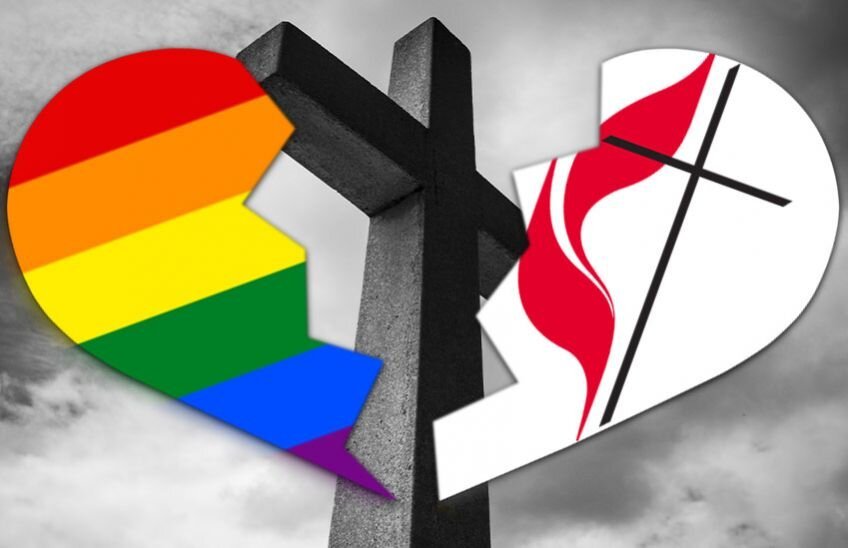
Why are United Methodists at war? Readers need to know that sexuality isn't the only fault line

Why are United Methodists at war? Readers need to know that sexuality isn't the only fault line

If you read most of the mainstream news coverage about chaos inside the United Methodist Church, then you know that this war centers on LGBTQ issues.

Readers who use niche websites offering the views of conservative United Methodists, in the United States and around the world, will learn that the war is about sex, salvation, biblical authority and core doctrines in ancient Christian creeds. Hold that thought.

Before we look at recent events in the divided United Methodist Church, let’s consider an important political-science term — “condensation symbol” — that journalists may want to ponder. In a 2021 post (“Queer Santa As A Condensed Symbol Of Progressivism”) — blogger Rod “Live Not By Lies” Dreher offered this material from a reader:

A condensation symbol is “a name, word, phrase, or maxim which stirs vivid impressions involving the listener’s most basic values and readies the listener for action,” as defined by political scientist Doris Graber. Short words or phrases such as “my country,” “old glory” “American Dream,” “family values,” are all condensation symbols because they conjure a specific image within the listener and carry “intense emotional and effective power.” … Graber identified three main characteristics of condensation symbols, as they: (1) Have the tendency to evoke rich and vivid images in an audience. (2) Possess the capacity to arouse emotions. (3) Supply instant categorizations and evaluations.

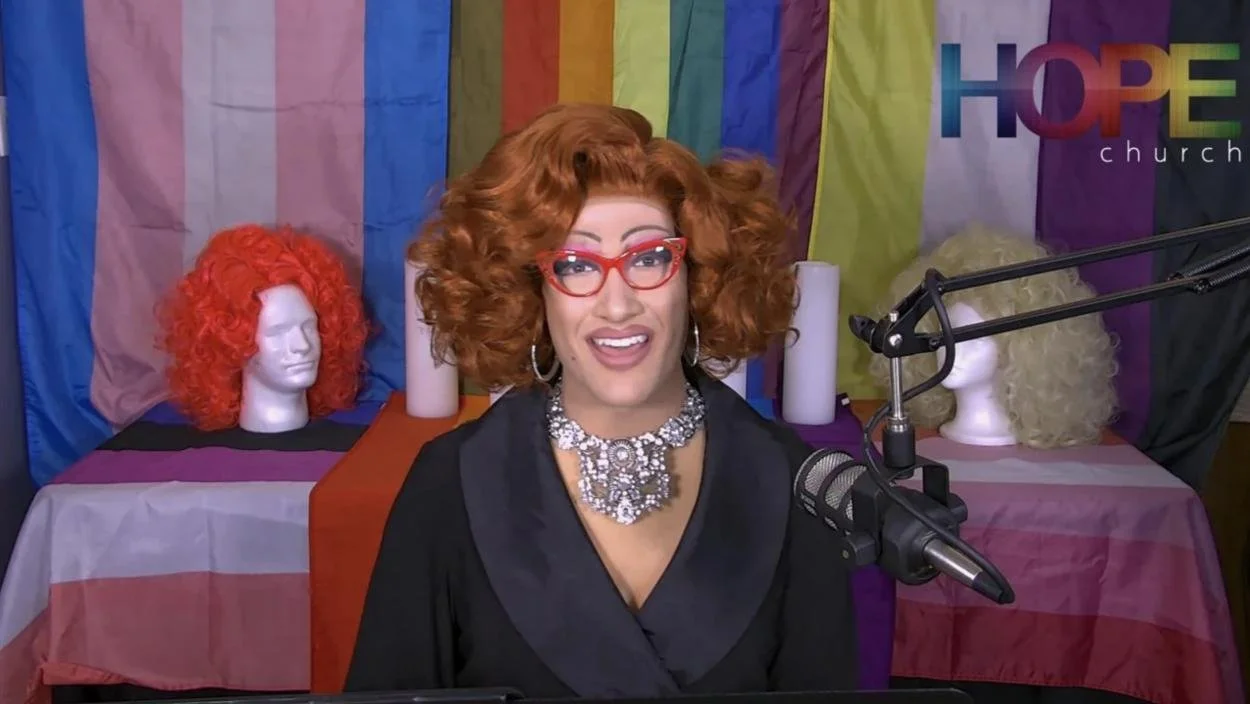
With that in mind, consider the ministry of Isaac Simmons — currently associate pastor at Hope United Methodist Church in Bloomington, Ill. — who has been accepted as a candidate for UMC ordination. Simmons (they/them) is best known as the drag-queen preacher Penny Cost.

At first glance, it would appear that Penny Cost is a perfect example of the LGBTQ issues causing the UMC split. However, I would argue that Simmons is a “condensed symbol” of the wider concerns of the global United Methodist coalition that wants to retain and defend the denomination’s current doctrines on a host of issues.

Consider the following from The American Spectator piece with this headline: “Methodist Church’s First Drag Queen Pastor: ‘God Is Nothing’.” This is, of course, a conservative publication. However, the following passage focuses on direct quotes from a new slam poem posted online by Penny Cost:

“God is nothing,” the self-described “dragavangelist” repeats throughout the poem, adding, “the Bible is nothing” and “religion is nothing.” In the end, he concludes God and the Bible are nothing “unless we wield it into something.”

“God must be f***ing nothing,” he says, “if her boundaryless, transubstantiated bodies of color are run down, beaten, and strewn in the streets of America instead of ruling the runways of life.”


Please respect our Commenting Policy

Thinking about Internet-age ethics with J.D. Flynn, especially rumors about dead popes

Thinking about Internet-age ethics with J.D. Flynn, especially rumors about dead popes

Everyone was talking about this story last week: Pope Benedict XVI is (a) dead, (b) not dead or (c) come on, what’s up with this tired Internet game again?

In that final category, I offer you the following mini-think piece from J.D. Flynn of The Pillar, that must-bookmark source of Catholic news, commentary and Canon law-specifics.

This whole circus was a classic example of people being tempted to report, as semi-news, the fact that online people were TALKING ABOUT something that was being reported with zero creditable attribution. Thus, Flynn starts with this basic equation:

… Pope emeritus Benedict XVI is still not dead. …

Why is that news?

Because last night an Italian schoolteacher named Tommaso De Benedetti created a moral panic online, with a hoax that seems to have been in the works for nearly a year.

“Moral” panic?

That’s an interesting choice of words. The key is that journalists had to stop and ponder whether they had the fortitude to not push the “RETWEET” button on a story that was essentially about Internet chatter.

Let’s keep walking through Flynn’s piece as he works his way through this:

Back in August 2021, the guy created a Twitter account for Bishop Georg Bätzing, who is president of the German bishops’ conference. The account managed to amass thousands of followers. He didn’t use the account, but he built that following by strategically following the right people, and allowing the Twitter algorithms to do the rest.

Then yesterday evening, he tweeted in German, English, and Spanish that Pope emeritus Benedict XVI had died.

The tweets took off like wildfire. Several media outlets picked them up, and a lot of producers and journalists retweeted them. My phone started blowing up — priests, bishops, and other journalists were all asking me if it was true.

What to do?


Please respect our Commenting Policy

Podcast: Experts call the Unification Church a 'cult,' and that word requires explanation

Podcast: Experts call the Unification Church a 'cult,' and that word requires explanation

It has been a long time since I have done a podcast post about a developing news story only one day after I wrote the original post on that topic.

However, yesterday’s post — “New York Times report says the Unification Church is a 'church' and it's as simple as that” — turned out to have some old issues connected to it that, when discussed in this week’s “Crossroads” episode, took us back into a familiar journalism minefield. (To get to the actual podcast, JUST CLICK HERE.) Can you say “cult”?

Before we get to the old issue of journalists (and academics) struggling to define “cult,” let’s look at some of the ways and religious and political language are woven into the story of the assassination of former Prime Minister Shinzo Abe of Japan — primarily through the family history of Tetsuya Yamagami, who was arrested after the shooting. This is from The Guardian:

Tetsuya Yamagami has confessed to killing the former Japanese prime minister during a campaign speech on Friday. He blamed the global religious movement — whose members are often referred to as Moonies — for bankrupting his family, and believed that Abe had championed its activities in Japan.

The Japan branch of the church has confirmed that Yamagami’s mother is a member, but declined to comment on the suspect’s claims that she had made a “huge donation” more than 20 years ago that left the family struggling financially.

The branch’s president, Tomihiro Tanaka, told a press conference that Yamagami’s mother became a follower in the late 1990s, adding that the family had suffered financial ruin around 2002.

As I mentioned in the first post, it’s normal to call the Unification Church a “church” on first reference, since that is it’s primary name — as opposed to the Holy Spirit Association for the Unification of World Christianity or the Family Federation for World Peace and Unification.

The journalism issue here is how reporters describe this religious movement in follow-up references and how much material news reports include about the messianic claims of its founder, the Rev. Sun Myung Moon. Let’s return to the Guardian report:

Moon, who died in 2012, said he had had a vision aged 15 in which he was told by Jesus to complete his unfulfilled mission to restore humanity to a state of “sinless” purity.


Please respect our Commenting Policy

New York Times report says the Unification Church is a 'church' and it's as simple as that

New York Times report says the Unification Church is a 'church' and it's as simple as that

I have received several texts and emails about a recent New York Times story that ran with this headline: “Suspect in Abe Shooting Held a ‘Grudge.’ Scrutiny Falls on a Church.”

If you run a quick search for “church” in this report, you will find the term used 25 times. That’s quite a few uses of what appears to be, for the Times team, a word with no specific meaning.

Thus, we need to do that GetReligion thing that we do. Let’s look at some online dictionaries and see what the word “church” means. This Dictionary.com reference is typical and we need to see several of its secondary definitions:

church:

* a building for public Christian worship.

* public worship of God or a religious service in such a building: to attend church regularly.

* (sometimes initial capital letter) the whole body of Christian believers; Christendom.

* (sometimes initial capital letter) any division of this body professing the same creed and acknowledging the same ecclesiastical authority; a Christian denomination: the Methodist Church.

What’s the basic issue here? As one veteran journalist put it, in a text about this Times report: “I didn’t know the Unification Church was a Christian church.”

Once again we need to talk about how journalists use, or don’t use, tricky words such as “sect” or even “cult” — which may affect how news publications use a word like “church.” When dealing with the Holy Spirit Association for the Unification of World Christianity and the work of the late Rev. Sun Myung Moon, we also need to pay attention to the word “messiah.”

The bottom line: Moon’s movement called itself a “church” and identified it’s leader as either (lines tend to blur) a messiah or “the” new messiah. The problem with the Times report is that readers are told that this is a “church” and that is that — no additional information is needed.


Please respect our Commenting Policy

United Methodist conflict hits Bible Belt pews, while Tennessean report omits crucial facts

United Methodist conflict hits Bible Belt pews, while Tennessean report omits crucial facts

If you have followed United Methodist warfare for the past 40 years or so, as I have, you know that this is a local, regional, national and global story that is only getting more complex now that it has reached pews in local churches.

For years, the key battles were between activists in the global UMC majority (primarily growing churches in Africa and Asia) and the North American UMC establishment (rooted in agencies, seminaries and shrinking blue-zip-code flocks).

At the moment, the fiercest battles are in parts of the Midwest and the Bible Belt where doctrinally conservative churches (usually rural and suburban) will square off with establishment leaders based in big-city-friendly regional conferences. You can see this drama in a recent Tennessean story: “As United Methodists in Tennessee navigate schism, 60 churches leave denomination.” Here’s the overture:

As 60 churches in West and Middle Tennessee leave the United Methodist Church, churches in East Tennessee are so far sticking around but passionately debating denomination policies.

The departures and disagreements were features of recent annual meetings for Tennessee’s two UMC conferences, illustrating the regional variation of the ongoing schism in the UMC.

In May, the split within the UMC solidified when a new "traditionalist" denomination splintered from the UMC for churches with more conservative theological and cultural views, including on sexuality and gender.

When the new Global Methodist Church launched, the pace of churches leaving the UMC was expected to intensify.

Yes, there is that problematic word once again — “schism.” In this recent post — “In terms of church history, should the United Methodist break-up be called a 'schism'?” — I argued, for several reasons, that it’s more accurate to call what is happening a “divorce.”

Without repeating all of that, the crucial point is that group given the “traditionalist” label is, in fact, the majority in the GLOBAL denomination that has, for several decades, won tense votes defending the doctrines in the UMC’s Book of Discipline. The group seeking to change these doctrines is the entrenched North American establishment. According to the Tennessean framing, the majority is creating the “schism,” while the establishment minority represents the doctrinal heart of the denomination.

Instead of a “schism,” many in the denomination — a coalition on the doctrinal left and right —negotiated is a “divorce” plan that could save years of additional pain and millions of dollars in legal fees. That plan is the “Reconciliation and Grace Through Separation” protocol, which remains in limbo after establishment leaders twice delayed the vote, citing COVID-19 fears.

This Tennessean story never mentions this important document.


Please respect our Commenting Policy

Reality on bloody ground: That Pentecost massacre in Nigeria wasn't all that unusual

Reality on bloody ground: That Pentecost massacre in Nigeria wasn't all that unusual

The massacre occurred during a Sunday Mass, but it wasn't an ordinary Sunday -- this was the great feast of Pentecost, which marks the end of the Easter season.

What's more, the gunmen didn't strike in tense northern Nigeria, where Christian communities are isolated in a majority-Muslim region. This 30-minute attack was inside St. Francis Catholic Church, located in the safer southwestern state of Ondo.

While 40 worshippers were confirmed dead, including five children, the number was almost certainly higher since many families buried their dead privately. Another 100 were wounded.

The scope of this attack was "unique," especially in southern Nigeria, but "this violence … was not unique in its occurrence," stressed Stephen Rasche, senior fellow at the independent Religious Freedom Institute in Washington, D.C. "These types of murders are taking place weekly, almost daily, in Nigeria -- murders of innocent Christians, being gunned down, slaughtered indiscriminately, throughout the north and, increasingly, into the central part of Nigeria and into the south."

Human-rights activists are trying to document the bloodshed. According to the nondenominational watchdog group Open Doors, the 4,650 Christians killed in Nigeria during 2021 accounted for 80% of such deaths worldwide -- nearly 13 per day. Nigeria's Christian death toll has topped 60,000 over the past two decades.

Nevertheless, this year's International Religious Freedom Report from the U.S. State Department said the "Secretary of State determined that Nigeria did not meet the criteria to be designated as a Country of Particular Concern for engaging in or tolerating particularly severe violations of religious freedom or as a Special Watch List country for engaging in or tolerating severe violations of religious freedom."

It's understandable that news reports about Nigeria have faded, in part because of Russia's invasion of Ukraine and pressing global economic issues, said Rasche, who visited Nigerian churches during this Holy Week and Easter.

Also, many Western leaders view atrocities in Nigeria as clashes between Christian farmers and Muslim cattle herders, with climate-change issues erasing safety zones between these groups.


Please respect our Commenting Policy