International News

What's news? Attacks on Christians in Nigeria provide an important case study

What's news? Attacks on Christians in Nigeria provide an important case study

As an undergrad, The Religion Guy took a valuable course titled “Evaluation and Display of News,” an elemental skill for journalists who cope with difficult choices.

Take the Johnny Depp-Amber Heard trash-a-thon. Please. Just as car crashes produce rubbernecking, “human interest” justified vast voyeurism that fed the market and stole print space and air time from more substantive stories.

Editors’ tendentious coverage decisions continually erode public trust in the media. Liberal outlets give scant play to the assassination plot against Brett Kavanaugh, harassment of other Supreme Court justices and their families and related attacks on a couple dozen pro-life agencies. Meanwhile, conservatives downplay the near-miss danger to Vice President Mike Pence and other high officials amid the January 6 attempt to block the Constitution’s election process.

The Guy could list other examples from both sides, and so could you.

Let’s leap across the Atlantic to assess neglectful news judgment regarding the important plight facing Christians in Nigeria. Their continual conflict with Muslim jihadi factions has left an estimated 37,500 dead since 2011, says the latest annual report (.pdf here) from the U.S. Commission on International Religious Freedom (www.uscirf.gov; contact media@uscirf.gov or 202–523–3240).

The nondenominational watchdog group Open Doors USA says that in 2021“more Christians were murdered for their faith in Nigeria than in any other country,” making up nearly 80% of Christian deaths worldwide. Nigeria is the “most dangerous place to be a Christian” in the world, says the Intersociety for Civil Liberty and Rule of Law, a Nigerian human rights monitor. Christian observers speak openly of “genocide.”

In addition to the deaths, it’s all but impossible to count up the maimed victims who’ve survived, the kidnapped schoolchildren and clergy, forced child marriages and forced conversions or the widespread destruction of Christians' churches, homes, shops and even whole villages.

Sounds like compelling news from here.

Please respect our Commenting Policy

What responsibility do journalists have when covering incendiary wars about religion and culture?

What responsibility do journalists have when covering incendiary wars about religion and culture?

We tend to pay attention to news that impacts us most directly. So for Americans, the culture war playing out between religious (and some non-religious) traditionalists and social progressives is most compelling.

Half-way around the world, however, another ongoing war about religion and culture has heated up yet again. This one has direct international ramifications and has the potential to negatively impact global religious-political alignments perhaps as much or more than America’s nasty cultural war.

It also contains an important lesson about the possible consequences of governments employing divisive culture war tactics for political gain (more on this theme below.) I do not think it absurd to fear that our homegrown culture war could become just as bad, or worse.

I’m referring to India, a constitutionally secular nation wracked by inter-religious conflict between majority Hindus and minority Muslims (Christians have been caught in this imbroglio, too, but put that aside for the duration of this post).

Here’s a recent overview of India’s situation from The Washington Post. And here’s the top of that report:

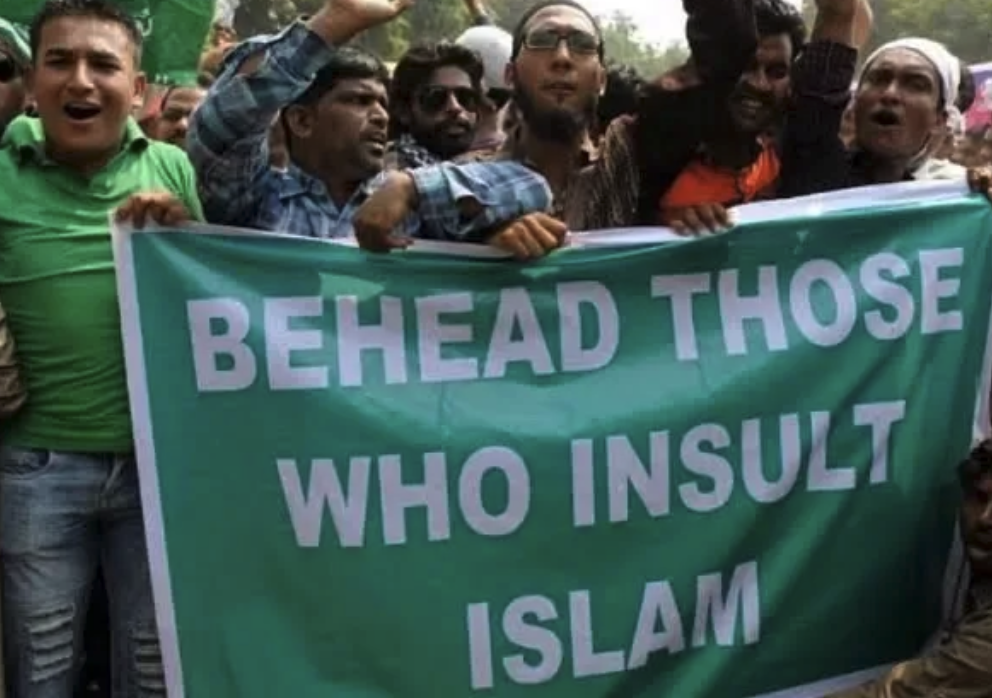
NEW DELHI — After a spokeswoman for India’s ruling party made disparaging remarks about the prophet Muhammad during a recent televised debate, rioters took to the streets in the northern city of Kanpur, throwing rocks and clashing with police.

It was only the beginning of a controversy that would have global repercussions.

Indian products were soon taken off shelves in the Persian Gulf after a high-ranking Muslim cleric called for boycotts. Hashtags expressing anger at Prime Minister Narendra Modi began trending on Arabic-language Twitter. Three Muslim-majority countries — Qatar, Kuwait and Iran — summoned their Indian ambassadors to convey their displeasure. The governments of Saudi Arabia, Indonesia and Afghanistan on Monday condemned the spokeswoman, Nupur Sharma, as did the Organization of Islamic Cooperation.

Inflammatory comments by right-wing activists and political leaders in India often make headlines and spark outrage on social media. But rarely do they elicit the kind of attention that Sharma drew in [early June], which sent her political party — and India’s diplomats — scrambling to contain an international public relations crisis.

Let’s step back from the news coverage for a moment to consider some underlying dynamics and their impact on journalism.


Please respect our Commenting Policy

Vatican game that never ends: Knowns and unknowns with covering next papal election

Vatican game that never ends: Knowns and unknowns with covering next papal election

It might seem ghoulish to outsiders, but the media have a duty to closely monitor news personalities’ retirement plans, health woes, aging processes and impending deaths, whether that of a British queen, U.S. president, Supreme Court justices, tycoons or even Hollywood superstars.

Or a pontiff.

Currently, there’s a season of speculation about Pope Francis’s future and whether his newly chosen cardinals to be installed August 27 are his final bid to shape the conclave that will elect the next pope.

Careful. If you figure he’s making sure it will be a fellow liberal, don’t forget that the conservative Popes John Paul II and Benedict XVI named the cardinals who elected Francis.

Speaking of successors, AP Correspondent Nicole Winfield follows the Rome bureau’s legendary Victor Simpson, who covered four popes across 41 years. On Sunday, she knowledgeably sifted some Francis scenarios.

Francis has just announced that when the cardinals gather in August he’ll visit the Italian hometown of Celestine V, the pope who famously resigned in A.D. 1294.

Surprisingly, Benedict did the same in 2013. So, is this trip a signal, or only a trip? Francis has remarked that Benedict was “opening the door” for resignation by future popes, hinting he might consider the idea. But Vaticanologists figure Francis will not resign so long as another ex-pope is alive.

At age 95, Benedict is alert but frail. Francis, age 85, appears reasonably healthy but underwent colon surgery last year and recently appeared in public in a wheelchair for the first time due to chronic knee pain.

Then there’s this. The cardinals elected Francis partly in hopes he’d reform the perpetually troubled Roman Curia (as in the sprawling Vatican bureaucracy). Restructure is now set in a Francis edict that took effect on Sunday. But fully implementing the scheme may be thorny and Francis may feel a responsibility to pursue his project.

Surveying the batch of incoming cardinal electors, Bishop Robert McElroy of San Diego stands out as the only American and as a mere bishop, not an archbishop (see this tmatt “On Religion” column about this drama). Francis again snubbed nearby Los Angeles Archbishop Jose Gomez, the Mexico-born head of the nation’s largest archdiocese and the elected president of the U.S. bishops. Did membership in the Opus Dei organization count against him?


Please respect our Commenting Policy

Latest massacre of Nigerian Christians? It would help to know this was the Feast of Pentecost

Latest massacre of Nigerian Christians? It would help to know this was the Feast of Pentecost

In my experience, if you ask most newsroom managers and copy-desk pros to name the most important Christian holy day, the majority will say “Christmas.”

Actually, that’s the biggest holiday, from the perspective of the surrounding culture. The correct answer is Easter, the feast of the Resurrection of Jesus Christ.

Now, here is a tricky question — one linked to yet another hellish massacre of Christians in the tense land of Nigeria. What holy day would be ranked No. 2 in the calendar of ancient Christianity?

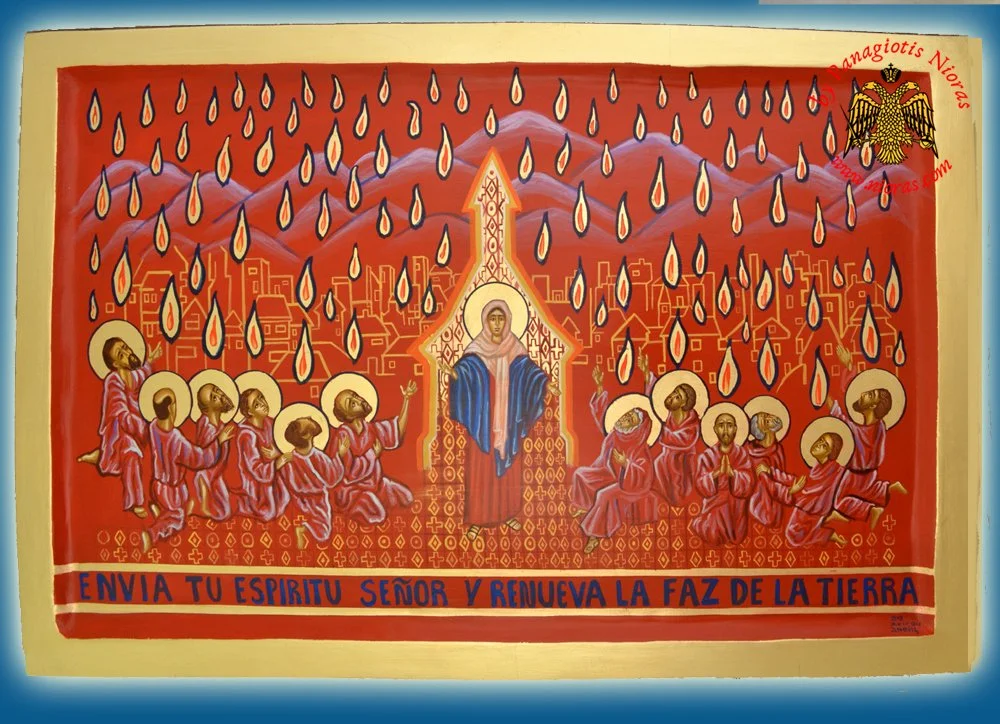
There may some debates about this, but many historians will say it is the joyous Feast of Pentecost (click here for background material), which closes the great season of Easter. Hold that thought, because we will come back to it. Meanwhile, something very important is missing from the top of this Reuters report: “At least 50 killed in massacre at Catholic church in southwest Nigeria.”

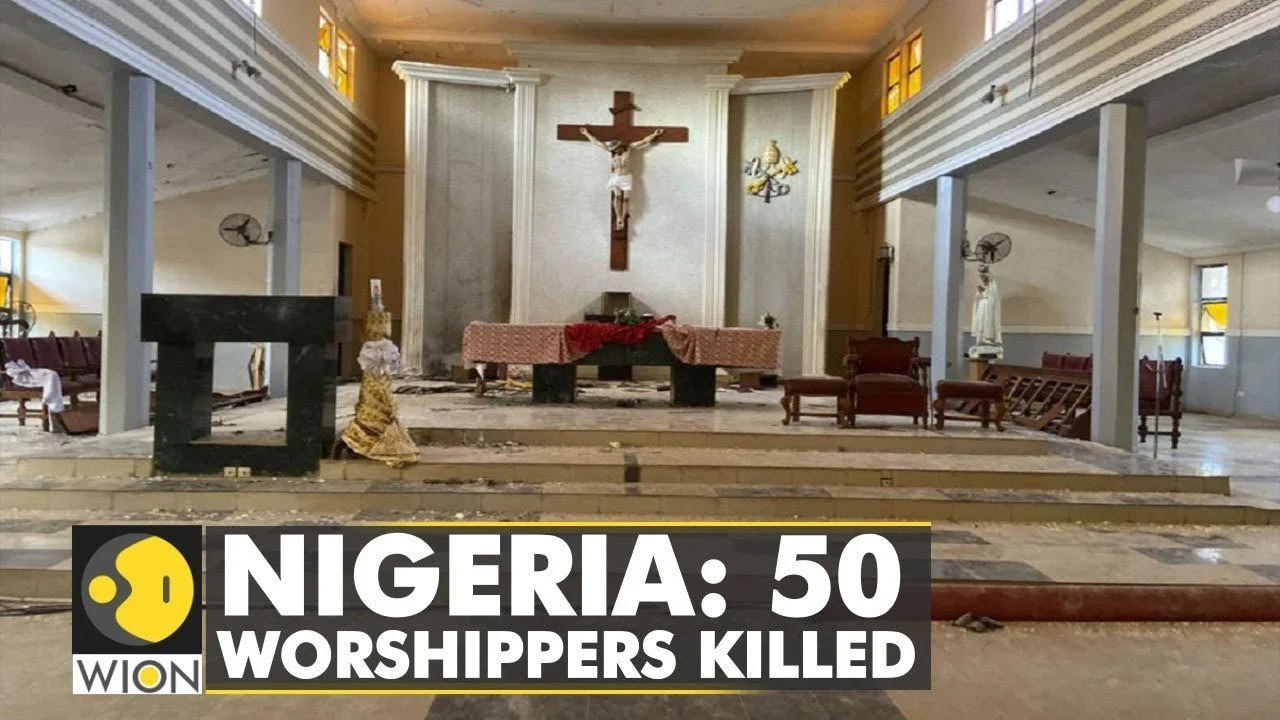
LAGOS, June 5 (Reuters) — Gunmen attacked a Catholic church in southwest Nigeria during mass on Sunday, killing at least 50 people including women and children, according to a hospital doctor and media reports.

The gunmen shot at people outside and inside the church building, killing and injuries worshippers, said Funmilayo Ibukun Odunlami, police spokesperson for Ondo state. She did not say how many people were killed or injured at St Francis Catholic Church in the town of Owo but added police were investigating the cause of the attack.

Ondo state Governor Arakunrin Oluwarotimi Akeredolu, who visited the scene of the attack and injured persons in hospital, described Sunday's incident as "a great massacre" that should not be allowed to happen again. The identity and motive of the attackers was not immediately clear.

The motive was unclear?


Please respect our Commenting Policy

Ukraine's oldest Orthodox Church seeks independence, while the Lavra monastery is at risk

Ukraine's oldest Orthodox Church seeks independence, while the Lavra monastery is at risk

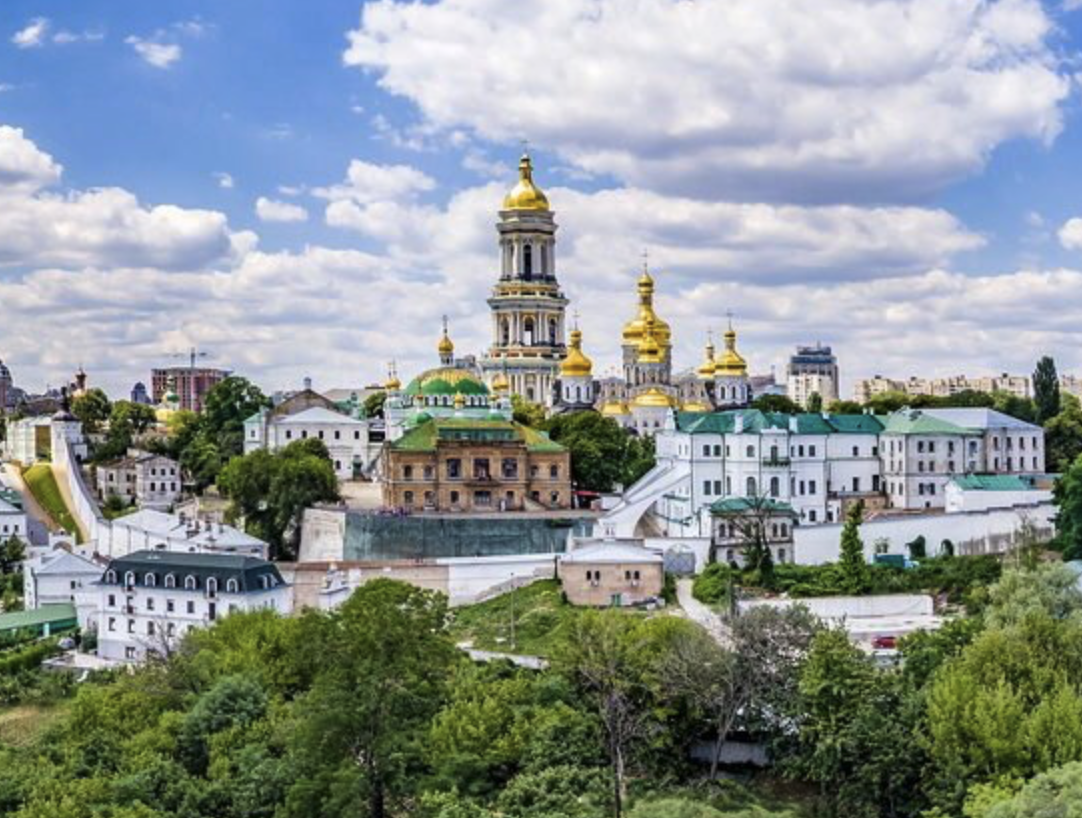
This was a very important weekend in the history of Eastern Orthodox Christianity in Ukraine and Russia — for those (including journalists) who believe that religious traditions and symbols matter as much as statements by government officials and headlines in Western media.

At the center of the drama, of course, was the city of Kiev, as it is known in to Russians and many Ukrainians, and Kyiv, as it is known to many Ukrainians, as well as officials in the United States and the European Union.

Here’s the quotation I keep thinking about, drawn from a historian (and Orthodox priest) I interviewed for a 2018 column that ran with this headline: “A thousand years of Orthodox history loom over today’s Moscow-Istanbul clash.” That quote: "Kiev is the Russian Orthodox Church, and the Russian Orthodox Church is Kiev." From this point of view, the churches of Ukraine and Russia are brothers, connected by centuries of shared history — good and bad — and Orthodox tradition.

The crucial issue, in many ways, is one the press seems to think is secondary — the future of the Kiev Pechersk Lavra, the font of Orthodox spirituality in the Slavic world.

Let’s start with two short wire-service reports and, along the way, I will point readers to some crucial documents that add more depth and clues as to what is happening. First, from the Associated Press:

KYIV, Ukraine — The leaders of the Orthodox churches in Ukraine that were affiliated with the Russian Orthodox Church have adopted measures declaring the church’s full independence and criticizing the Russian church’s leader for his support of Russia’s invasion of Ukraine.

Orthodoxy, the largest religious denomination in Ukraine, is divided between churches that had been loyal to the Moscow Patriarchate and those under a separate ecclesiastical body.

The council of the Moscow-connected body, the Ukrainian Orthodox Church, on Friday said it “condemns the war as a violation of God’s commandment ‘Thou shalt not kill!’ ... and expresses disagreement with the position of Patriarch Kirill of Moscow and All Russia regarding the war in Ukraine.”

It also adopted charter changes “indicating the full self-sufficiency and independence of the Ukrainian Orthodox Church.”

Note, in the lede, the assumption that simply saying that this has happened means that it has happened, as in the “leaders of the Orthodox churches in Ukraine that were affiliated with the Russian Orthodox Church.”

Now, the official declarations (click here for details) made by the leaders of the oldest Orthodox body in Ukraine — usually called the Ukrainian Orthodox Church (Moscow Patriarchate) — are very serious and they were accompanied by changes in WORSHIP that, for the Orthodox, are even more important than words on paper.


Please respect our Commenting Policy

Plug-In bonus: Southern Baptist sexual-abuse probe uncovers apocalyptic sins and crimes

Plug-In bonus: Southern Baptist sexual-abuse probe uncovers apocalyptic sins and crimes

“It is an apocalypse,” declares Russell Moore, former president of the Southern Baptist Convention’s Ethics and Religious Liberty Commission.

It is “far worse” than anything the Rev. Ed Litton, the 13.7 million-member denomination’s president, had anticipated, report the New York Times’ Ruth Graham and Elizabeth Dias.

It is a “bombshell” (per the Houston Chronicle’s Robert Downen and John Tedesco). It is “historic” (The Tennessean’s Liam Adams). It is a “blockbuster report” (Religion News Service’s Bob Smietana).

If you cheered for the movie Spotlight when it won an academy award, you will want to read this.

"Bombshell 400-page report finds Southern Baptist leaders routinely silenced sexual abuse survivors." https://t.co/GbTbd6M91f via @Froomkin

— Jay Rosen (@jayrosen_nyu) May 23, 2022

Sunday brought the long-awaited release of an independent investigation into sexual abuse in the Southern Baptist Convention, and damning might be too feeble a word to characterize the findings.

The bottom line, according to Guidepost Solutions’ 288-page report:

An unprecedented investigation of the Southern Baptist Convention’s top governing body found that an influential group of Baptist leaders systematically ignored, belittled and intimidated survivors of sexual abuse for the past two decades while protecting the legal interests of churches accused of harboring abusers.

The claims are “expected to send shock waves throughout a conservative Christian community that has had intense internal battles over how to handle sex abuse” (Washington Post’s Sarah Pulliam Bailey).


Please respect our Commenting Policy

Growing Haredi numbers poised to alter global Judaism. Maybe press should cover this?

Growing Haredi numbers poised to alter global Judaism. Maybe press should cover this?

The Holocaust devastated European Jewry. The most strictly religious among them — the mystical-oriented Hasidic followers of historic rabbinic lineages and the mitnagdim, Hasidism’s more intellectually focused religious critics — suffered some of the worst losses.

Their insularity and suspicion of the larger world served them poorly at a time when maneuverability and adaptability might have helped them flee Nazi Europe for safety. Instead, they turned their noses up at non-Orthodox Jews and avoided dealing with non-Jews as much as possible.

This was true for both Hasidic and mitnagdim Jews, who are often lumped together by outsiders under the rubric “ultra-Orthodox.”

It’s a label many of them reject; they argue there’s nothing “ultra” about them and that they’re only adhering closely to what they think of as “normative” rabbinic Judaism.

In Hebrew, they’re called Haredi or Haredim, the plural. That’s how I’ll refer to them in this post.

Samuel Heilman, an American academic expert on Haredi life, wrote the following on the subject for a PBS show on Hasidic Jews.

The three things the rebbes told their Hasidim to do led to their being blown away. The rebbes said: "Don't go to America, the treyfe medina (the unclean country), and don't go to the Zionist state, Palestine. Don't change your clothes or learn the surrounding language." So they couldn't disguise themselves or pass as gentiles. And, the rebbes said, "Stay close to me." They did stay close to the rebbes, but many of the rebbes [the Belzer, the Satmar, the Gerer] ran off and left all their people to die.

David Ben-Gurion, the secular Jewish Zionist leader who was Israel’s first prime minister, was convinced that circumstances following World War II would further depress Haredi numbers. Back then, the Haredim comprised just 5 percent of Mandatory Palestine’s pre-state Jewish population.

However to gain United Nations backing for an independent Jewish state, Ben-Gurion believed he had to show full Jewish unity for such a move. That included Haredi support.


Please respect our Commenting Policy

Dramatic story of Kyrgyz Christian swept up in China's Uyghur repression gets very little ink

Dramatic story of Kyrgyz Christian swept up in China's Uyghur repression gets very little ink

In all the stories about Ukraine and the genocide/war happening there, it’s easy to forget the other genocide going on in western China.

A number of weeks ago, Axios.com published a short about China’s “crime’s about humanity” there, particularly against the more than 1 million Muslims who are imprisoned in this 21st century gulag.

Lost in the details of this story is a second angle that would be of great interest to lots of readers in the United States and elsewhere — that Christians too have been caught up in the dragnet.

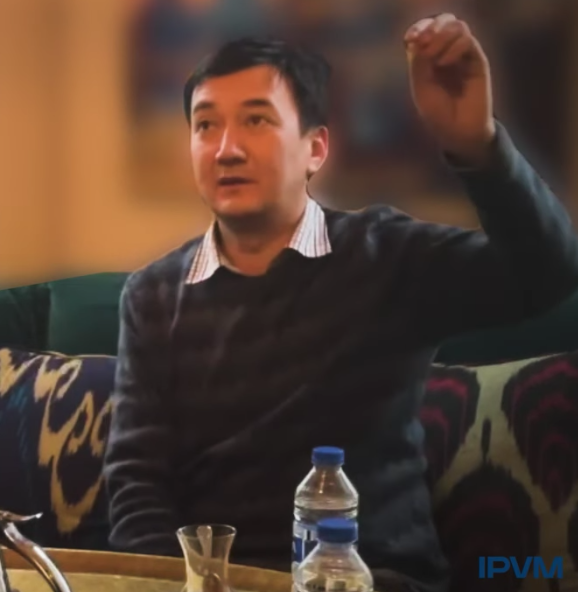
A Christian Chinese national who spent 10 months in a Xinjiang detention camp has arrived in the United States after months of behind-the-scenes lobbying by U.S. lawmakers, human rights activists and international lawyers.

Why it matters: The man, Ovalbek Turdakun, will provide evidence that international human rights lawyers say is vital to the case they have submitted to the International Criminal Court (ICC) prosecutor arguing that China has committed crimes against humanity in Xinjiang.

Here are several crucial details in this overlooked story:

* Ovalbek and his wife and child were authorized to enter the U.S. on significant public benefit parole, which permits entry for special purposes such as testifying in a proceeding, but does not grant immigration status, because of the value of the testimony they are expected to give. Ovalbek crossed the borders of several Asian countries to get out, finally landing at Dulles Inernational Airport on April 8. Thus:

The big picture: Ovalbek Turdakun is a unique witness to Chinese government repression in Xinjiang, according to international lawyers, U.S. officials and others with knowledge of the case.


Please respect our Commenting Policy

Angels and demons: Orthodox pain woven into this year's Pascha epistles in Ukraine

Angels and demons: Orthodox pain woven into this year's Pascha epistles in Ukraine

With the barrage of horrors from Ukraine, it wasn't hard to distinguish between the messages released by the Eastern Orthodox leaders of Russia and Ukraine to mark Holy Pascha, the feast known as Easter in the West.

The epistle from Russian Orthodox Patriarch Kirill offered hope for this life and the next. But his text contained only one possible reference to the fighting in Ukraine, which the United Nations says has claimed the lives of 3,000 civilians, at the very least.

"In the light of Pascha everything is different," wrote the patriarch of Moscow and All Russia. "We are not afraid of any mundane sorrows, afflictions and worldly troubles, and even difficult circumstances of these troubled times do not seem so important in the perspective of eternity granted unto us."

But the first lines of the message released by Metropolitan Onuphry of Kiev and All Ukraine placed this Pascha in a radically different context -- a clash between good and evil, right now. It was released on April 25th, the day after Orthodox Christians celebrated Pascha according to the ancient Julian calendar.

This letter was especially symbolic since Metropolitan Onuphry leads Ukraine's oldest Orthodox body, one with strong ties to the giant Russian Orthodox Church.

"The Lord has visited us with a special trial and sorrow this year. The forces of evil have gathered over us," he wrote. "But we neither murmur nor despair" because Pascha is "a celebration of the triumph of good over evil, truth over falsehood, light over darkness. The Resurrection of Christ is the eternal Pascha, in which Christ our Savior and Lord translated us from death to life, from hell to Paradise."

The contrast between these messages underlined a complex reality in Orthodox life after Russia's invasion of Ukraine, a land cruelly oppressed by the Soviet Union, but with strong Russian roots through the "Baptism of Rus" in 988. That was when, following the conversion of Prince Vladimir, there was a mass baptism of the people of Kiev -- celebrated for a millennium as the birth of Slavic Christianity.

Metropolitan Onuphry and other Orthodox hierarchs with historic ties to Moscow have openly opposed the Russian invasion, while trying to avoid attacks on the Russian Orthodox Church. The bottom line: Leaders of ancient Orthodox churches will ultimately, at the global level, need to address these conflicts.


Please respect our Commenting Policy