International News

Ukraine's oldest Orthodox Church seeks independence, while the Lavra monastery is at risk

Ukraine's oldest Orthodox Church seeks independence, while the Lavra monastery is at risk

This was a very important weekend in the history of Eastern Orthodox Christianity in Ukraine and Russia — for those (including journalists) who believe that religious traditions and symbols matter as much as statements by government officials and headlines in Western media.

At the center of the drama, of course, was the city of Kiev, as it is known in to Russians and many Ukrainians, and Kyiv, as it is known to many Ukrainians, as well as officials in the United States and the European Union.

Here’s the quotation I keep thinking about, drawn from a historian (and Orthodox priest) I interviewed for a 2018 column that ran with this headline: “A thousand years of Orthodox history loom over today’s Moscow-Istanbul clash.” That quote: "Kiev is the Russian Orthodox Church, and the Russian Orthodox Church is Kiev." From this point of view, the churches of Ukraine and Russia are brothers, connected by centuries of shared history — good and bad — and Orthodox tradition.

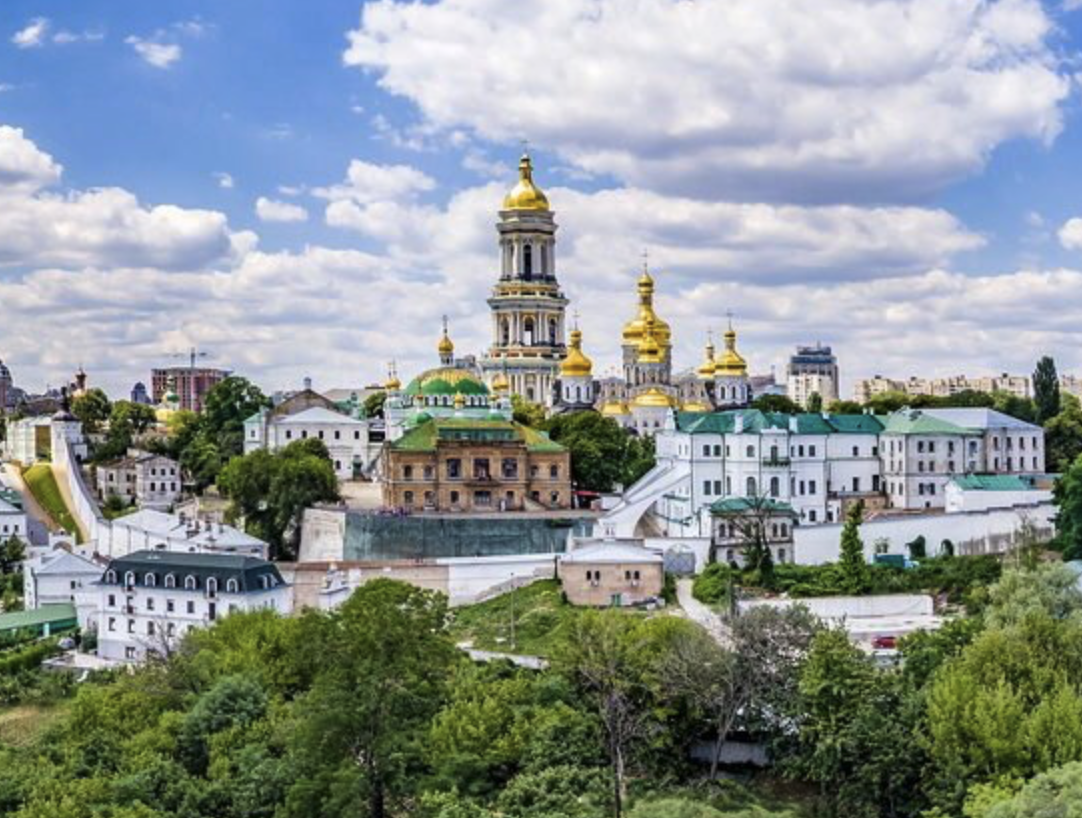
The crucial issue, in many ways, is one the press seems to think is secondary — the future of the Kiev Pechersk Lavra, the font of Orthodox spirituality in the Slavic world.

Let’s start with two short wire-service reports and, along the way, I will point readers to some crucial documents that add more depth and clues as to what is happening. First, from the Associated Press:

KYIV, Ukraine — The leaders of the Orthodox churches in Ukraine that were affiliated with the Russian Orthodox Church have adopted measures declaring the church’s full independence and criticizing the Russian church’s leader for his support of Russia’s invasion of Ukraine.

Orthodoxy, the largest religious denomination in Ukraine, is divided between churches that had been loyal to the Moscow Patriarchate and those under a separate ecclesiastical body.

The council of the Moscow-connected body, the Ukrainian Orthodox Church, on Friday said it “condemns the war as a violation of God’s commandment ‘Thou shalt not kill!’ ... and expresses disagreement with the position of Patriarch Kirill of Moscow and All Russia regarding the war in Ukraine.”

It also adopted charter changes “indicating the full self-sufficiency and independence of the Ukrainian Orthodox Church.”

Note, in the lede, the assumption that simply saying that this has happened means that it has happened, as in the “leaders of the Orthodox churches in Ukraine that were affiliated with the Russian Orthodox Church.”

Now, the official declarations (click here for details) made by the leaders of the oldest Orthodox body in Ukraine — usually called the Ukrainian Orthodox Church (Moscow Patriarchate) — are very serious and they were accompanied by changes in WORSHIP that, for the Orthodox, are even more important than words on paper.

Please respect our Commenting Policy

Plug-In bonus: Southern Baptist sexual-abuse probe uncovers apocalyptic sins and crimes

Plug-In bonus: Southern Baptist sexual-abuse probe uncovers apocalyptic sins and crimes

“It is an apocalypse,” declares Russell Moore, former president of the Southern Baptist Convention’s Ethics and Religious Liberty Commission.

It is “far worse” than anything the Rev. Ed Litton, the 13.7 million-member denomination’s president, had anticipated, report the New York Times’ Ruth Graham and Elizabeth Dias.

It is a “bombshell” (per the Houston Chronicle’s Robert Downen and John Tedesco). It is “historic” (The Tennessean’s Liam Adams). It is a “blockbuster report” (Religion News Service’s Bob Smietana).

If you cheered for the movie Spotlight when it won an academy award, you will want to read this.

"Bombshell 400-page report finds Southern Baptist leaders routinely silenced sexual abuse survivors." https://t.co/GbTbd6M91f via @Froomkin

— Jay Rosen (@jayrosen_nyu) May 23, 2022

Sunday brought the long-awaited release of an independent investigation into sexual abuse in the Southern Baptist Convention, and damning might be too feeble a word to characterize the findings.

The bottom line, according to Guidepost Solutions’ 288-page report:

An unprecedented investigation of the Southern Baptist Convention’s top governing body found that an influential group of Baptist leaders systematically ignored, belittled and intimidated survivors of sexual abuse for the past two decades while protecting the legal interests of churches accused of harboring abusers.

The claims are “expected to send shock waves throughout a conservative Christian community that has had intense internal battles over how to handle sex abuse” (Washington Post’s Sarah Pulliam Bailey).


Please respect our Commenting Policy

Growing Haredi numbers poised to alter global Judaism. Maybe press should cover this?

Growing Haredi numbers poised to alter global Judaism. Maybe press should cover this?

The Holocaust devastated European Jewry. The most strictly religious among them — the mystical-oriented Hasidic followers of historic rabbinic lineages and the mitnagdim, Hasidism’s more intellectually focused religious critics — suffered some of the worst losses.

Their insularity and suspicion of the larger world served them poorly at a time when maneuverability and adaptability might have helped them flee Nazi Europe for safety. Instead, they turned their noses up at non-Orthodox Jews and avoided dealing with non-Jews as much as possible.

This was true for both Hasidic and mitnagdim Jews, who are often lumped together by outsiders under the rubric “ultra-Orthodox.”

It’s a label many of them reject; they argue there’s nothing “ultra” about them and that they’re only adhering closely to what they think of as “normative” rabbinic Judaism.

In Hebrew, they’re called Haredi or Haredim, the plural. That’s how I’ll refer to them in this post.

Samuel Heilman, an American academic expert on Haredi life, wrote the following on the subject for a PBS show on Hasidic Jews.

The three things the rebbes told their Hasidim to do led to their being blown away. The rebbes said: "Don't go to America, the treyfe medina (the unclean country), and don't go to the Zionist state, Palestine. Don't change your clothes or learn the surrounding language." So they couldn't disguise themselves or pass as gentiles. And, the rebbes said, "Stay close to me." They did stay close to the rebbes, but many of the rebbes [the Belzer, the Satmar, the Gerer] ran off and left all their people to die.

David Ben-Gurion, the secular Jewish Zionist leader who was Israel’s first prime minister, was convinced that circumstances following World War II would further depress Haredi numbers. Back then, the Haredim comprised just 5 percent of Mandatory Palestine’s pre-state Jewish population.

However to gain United Nations backing for an independent Jewish state, Ben-Gurion believed he had to show full Jewish unity for such a move. That included Haredi support.


Please respect our Commenting Policy

Dramatic story of Kyrgyz Christian swept up in China's Uyghur repression gets very little ink

Dramatic story of Kyrgyz Christian swept up in China's Uyghur repression gets very little ink

In all the stories about Ukraine and the genocide/war happening there, it’s easy to forget the other genocide going on in western China.

A number of weeks ago, Axios.com published a short about China’s “crime’s about humanity” there, particularly against the more than 1 million Muslims who are imprisoned in this 21st century gulag.

Lost in the details of this story is a second angle that would be of great interest to lots of readers in the United States and elsewhere — that Christians too have been caught up in the dragnet.

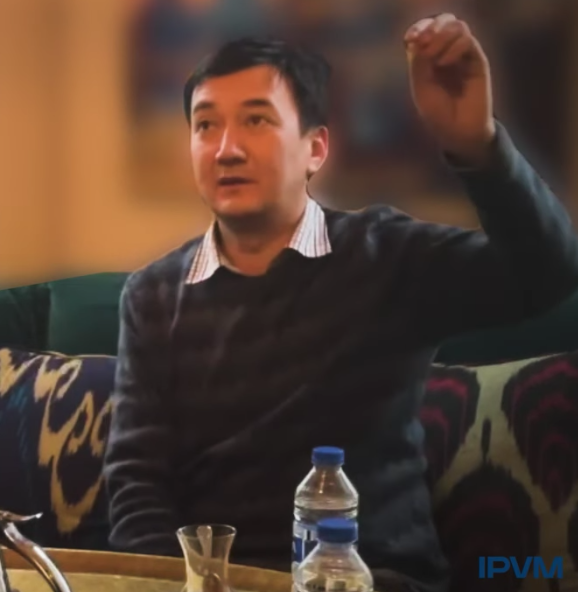
A Christian Chinese national who spent 10 months in a Xinjiang detention camp has arrived in the United States after months of behind-the-scenes lobbying by U.S. lawmakers, human rights activists and international lawyers.

Why it matters: The man, Ovalbek Turdakun, will provide evidence that international human rights lawyers say is vital to the case they have submitted to the International Criminal Court (ICC) prosecutor arguing that China has committed crimes against humanity in Xinjiang.

Here are several crucial details in this overlooked story:

* Ovalbek and his wife and child were authorized to enter the U.S. on significant public benefit parole, which permits entry for special purposes such as testifying in a proceeding, but does not grant immigration status, because of the value of the testimony they are expected to give. Ovalbek crossed the borders of several Asian countries to get out, finally landing at Dulles Inernational Airport on April 8. Thus:

The big picture: Ovalbek Turdakun is a unique witness to Chinese government repression in Xinjiang, according to international lawyers, U.S. officials and others with knowledge of the case.


Please respect our Commenting Policy

Angels and demons: Orthodox pain woven into this year's Pascha epistles in Ukraine

Angels and demons: Orthodox pain woven into this year's Pascha epistles in Ukraine

With the barrage of horrors from Ukraine, it wasn't hard to distinguish between the messages released by the Eastern Orthodox leaders of Russia and Ukraine to mark Holy Pascha, the feast known as Easter in the West.

The epistle from Russian Orthodox Patriarch Kirill offered hope for this life and the next. But his text contained only one possible reference to the fighting in Ukraine, which the United Nations says has claimed the lives of 3,000 civilians, at the very least.

"In the light of Pascha everything is different," wrote the patriarch of Moscow and All Russia. "We are not afraid of any mundane sorrows, afflictions and worldly troubles, and even difficult circumstances of these troubled times do not seem so important in the perspective of eternity granted unto us."

But the first lines of the message released by Metropolitan Onuphry of Kiev and All Ukraine placed this Pascha in a radically different context -- a clash between good and evil, right now. It was released on April 25th, the day after Orthodox Christians celebrated Pascha according to the ancient Julian calendar.

This letter was especially symbolic since Metropolitan Onuphry leads Ukraine's oldest Orthodox body, one with strong ties to the giant Russian Orthodox Church.

"The Lord has visited us with a special trial and sorrow this year. The forces of evil have gathered over us," he wrote. "But we neither murmur nor despair" because Pascha is "a celebration of the triumph of good over evil, truth over falsehood, light over darkness. The Resurrection of Christ is the eternal Pascha, in which Christ our Savior and Lord translated us from death to life, from hell to Paradise."

The contrast between these messages underlined a complex reality in Orthodox life after Russia's invasion of Ukraine, a land cruelly oppressed by the Soviet Union, but with strong Russian roots through the "Baptism of Rus" in 988. That was when, following the conversion of Prince Vladimir, there was a mass baptism of the people of Kiev -- celebrated for a millennium as the birth of Slavic Christianity.

Metropolitan Onuphry and other Orthodox hierarchs with historic ties to Moscow have openly opposed the Russian invasion, while trying to avoid attacks on the Russian Orthodox Church. The bottom line: Leaders of ancient Orthodox churches will ultimately, at the global level, need to address these conflicts.


Please respect our Commenting Policy

When assisted suicide becomes 'a crossing over' church rite and a mere 'procedure'

When assisted suicide becomes 'a crossing over' church rite and a mere 'procedure'

Writer Emily Standfield drew a challenging assignment recently for Broadview magazine: write about Betty Sanguin, who chose to hasten her death as part of a religious rite performed inside the church she loved for many years, amid a diagnosis of amyotrophic lateral sclerosis.

Here’s the full headline: “Manitoba’s first medically assisted death in a church was an ‘intimate’ ceremony — Betty Sanguin spent her last day with family and friends at Churchill Park United.” And this is the overture:

At around noon on March 9, Betty Sanguin arrived at her church, Churchill Park United in Winnipeg, on a stretcher.

“The moment we rolled her in … and sat her up in her recliner, she lit up like a Christmas tree,” Lynda Sanguin-Colpitts, one of Sanguin’s daughters, recalls. “I hadn’t seen that much life in her eyes, so much joy [in a long time]. And honestly I think part of it was just being in the church.”

But this was no ordinary church service. Sanguin chose to die in the sanctuary that day.

Let’s stipulate some points up front:

First of all, Standfield is an editorial intern. Also, it’s crucial that Broadview, a publication affiliated with the United Church of Canada, has many ideological commitments and states them explicitly on its website. Here are some quotes:

— “Broadview’s values include LGBTQ2 inclusion, environmental sustainability and ethical investing, as well as increasing the presence of diverse contributors.”

— “In October 2020, we pledged to have one-third BIPOC (Black, Indigenous, People of Colour) staff and freelance contributors by 2025, and we’ll check in on our progress annually. Our governing board has also committed to achieving a similar target among its 11 members.”

— “In our writing, we refer to diverse communities with their preferred cases and spellings. For example, we capitalize ‘B’ in ‘Black’ and ‘I’ in ‘Indigenous,’ and use our Indigenous writers’ and subjects’ preferred spellings for Indigenous nations.”


Please respect our Commenting Policy

The pope, Cardinal Becciu and bad real estate deals: Concerning the Vatican 'Trial of the Century'

The pope, Cardinal Becciu and bad real estate deals: Concerning the Vatican 'Trial of the Century'

The news media loves the term “Trial of the Century.”

This phrase gained widespread acceptance and use during the 1935 trial that stemmed from the kidnapping of Charles Lindbergh’s son three year earlier. That was in an era when newspapers and sensationalism went hand in hand.

The moniker came back in a more modern context when O.J. Simpson went on trial for double homicide in 1995 — a salute to the power of celebrity in American life, as well as debates about race. This era included both newspapers and TV (the trial was televised live), along with a nascent Internet that would eventually come to dominate the news landscape a few decades later.

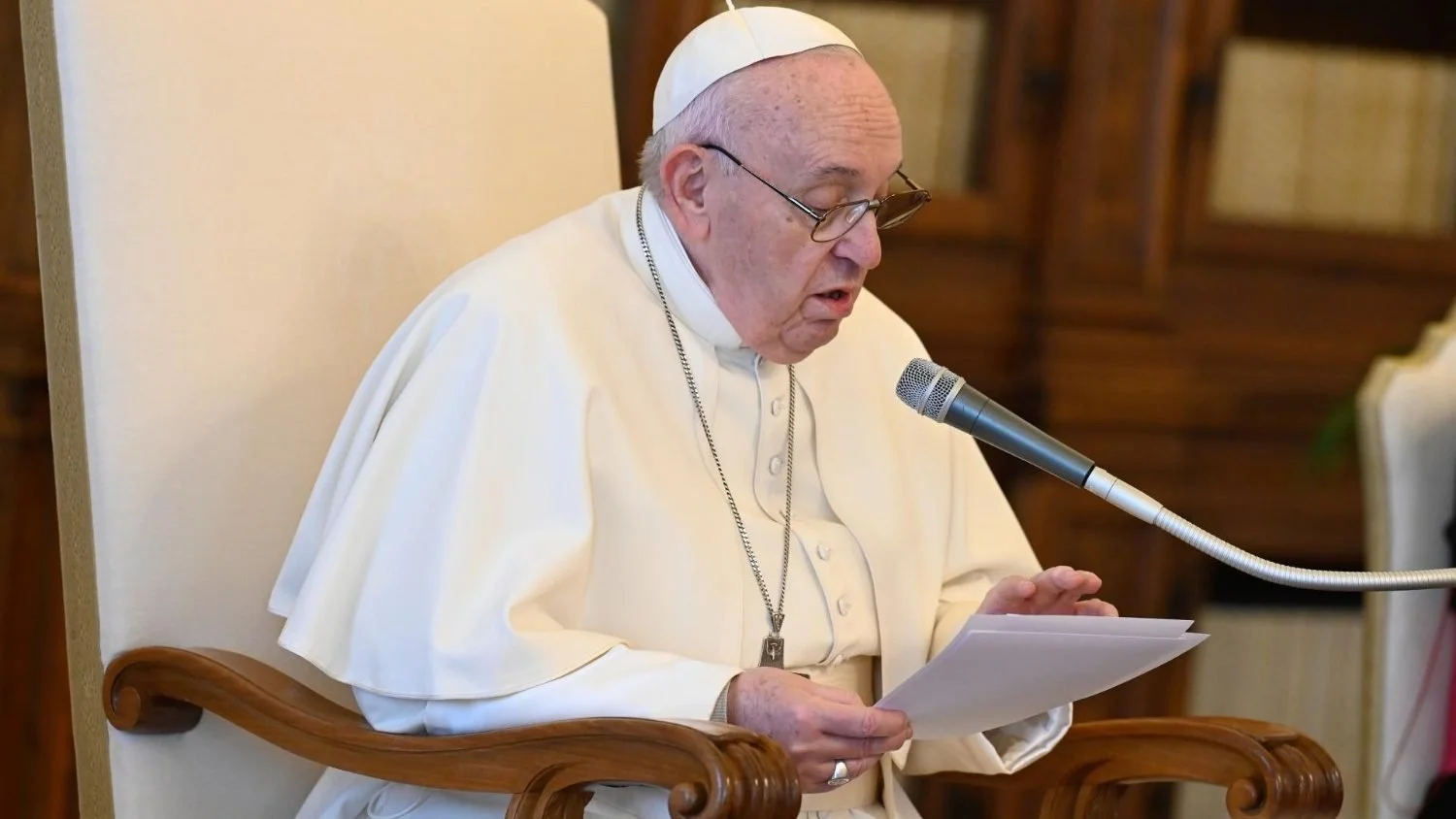
Something akin to a Catholic “Trial of the Century” has gotten underway in Rome and there’s plenty of palace intrigue to go around. The trial involving corruption, bad real estate deals and financial wrongdoing has placed Pope Francis in the center of a controversy that for the first time doesn’t involve doctrine or theology.

Familiar journalism questions leap to mind: What did the pope know and when did he know it? What if a witness implicates Francis? Hold that thought.

Pope Francis may not be on trial, but he might as well be, as news coverage of this trial attempts to cut through all the noise and get readers what’s most important. Catholic media has done a very good job covering the trial, although I expect coverage to expand in the mainstream press should Francis become a central figure during testimony.

It’s moments such as this trial, delayed over the past year by preliminary hearings and COVID-19, that highlight the Vatican as both a religious institution as well as a political one, with all the headaches that come with managing a city state with immense wealth and properties. News coverage of this trial and its lead up has been interesting to dissect — depending on whether you read mainstream media or the Catholic press — and exactly what this latest scandal means for the church.


Please respect our Commenting Policy

Great and Holy Pascha in Ukraine: Details matter when war crashes into holiest day of the year

Great and Holy Pascha in Ukraine: Details matter when war crashes into holiest day of the year

Once a copy-desk fanatic, always a copy-desk fanatic. If you ever get caught up in obscure debates about items in the Associated Press Stylebook, then you’re trapped. You see picky style issues all over the place.

This is certainly true on the religion beat. Readers may recall that the AP team recently updated and expanding some of the style bible’s references to religious terms, history, etc. See this recent post and podcast: “Can the AP Stylebook team slow down the creation of new Godbeat 'F-bombs'?

This brings me to the most important holy day on the Eastern Orthodox Christian calendar — it’s called Pascha and you may have heard that the ancient churches of the East celebrate it according to the older Julian calendar. It’s complicated, but there are times when East is East and West is West.

Pascha is certainly one of those times. OrthodoxWiki notes:

Pascha is a transliteration of the Greek word, which is itself a transliteration of the Aramaic pascha, from the Hebrew pesach meaning Passover. A minority of English-speaking Orthodox prefer the English word "Pasch."

Here is the note that I’d like the AP style pros to think about. It is also accurate to say that this holy day is, in the West, called “Easter.” Thus, we frequently see the term “Orthodox Easter” in the mainstream press. In fact, that is pretty much the only language that we see in news reports about this holy day.

Here me say this: As a journalist who is an Orthodox Christian (and a former copy-desk guy). I get it. I know that “Orthodox Easter” is a quick way to save some ink that journalists would have to use to offer an explanation of, well, Pascha.

But the word “Pascha” is real and it’s ancient and it has great meaning to the second largest Christian communion on the Planet Earth. If you are writing about Orthodox believers at this time of the year, why not use both terms in the story? Why avoid THE WORD. (Oh, and the name of our eucharistic rite is the “Divine Liturgy,” not “Mass.”)

This is an important issue, at the moment, because you have a war going on (whatever Vladimir Putin wants to call it) in the season of Pascha between Russia and Ukraine — two lands with centuries of shared history rooted in Orthodox Christianity.


Please respect our Commenting Policy

In terms of church history, should the United Methodist break-up be called a 'schism'?

In terms of church history, should the United Methodist break-up be called a 'schism'?

When I moved to Denver in 1984, Rocky Mountain News (RIP) my work plunged me into the ongoing United Methodist Church battles over creed-level doctrines, the Bible and, of course, homosexuality.

The region’s defining institution was the Iliff School of Theology, a UMC authorized seminary that a former professor there once told me was “the single most liberal school in America that still bothers to call itself ‘Christian.’ “ In the late ‘80s, an Iliff student said he had encountered one professor who believed that the resurrection of Jesus actually happened, as an event in real time. I would doubt this seminary has become more small-o “orthodox” in the past third of a century.

If you were in Denver back then it was clear that the United Methodists were in the midst of a very slow train wreck and that a parting of the ways was inevitable. The question: Who would leave and who would control the assets of this large, but shrinking, denomination?

This brings us to a recent story in The Nashville Tennessean with this dramatic double-decker headline (behind a fierce paywall):

Methodists focus on Easter amid denominational schism and the tough decisions ahead

A new, more conservative Methodist denomination is set to launch May 1 after a years-long debate centered largely over LGBTQ rights.

People have been using the word “schism” for decades, when describing this conflict. I would like to argue that this technical term is problematic, in this case, and that recent events — especially the proposed “Reconciliation and Grace Through Separation” protocol — have made it even more so. I propose using the word “divorce,” in this case. Hold that thought.

There is much to praise in this Tennessean story, especially the many quotes from regional church leaders on both sides of this battle. However, the “schism” lens is easy to see. I think that with two or three extra sentences, readers would have a better idea what is going on in this conflict. It’s also important to know that the Southeast is a crucial region in this conflict (along with the core Midwest), in which there are many doctrinally conservative churches paired with bishops who are more progressive.

But let’s start with the term “schism.” Here is a helpful Britannica reference:

schism, in Christianity, a break in the unity of the church.


Please respect our Commenting Policy