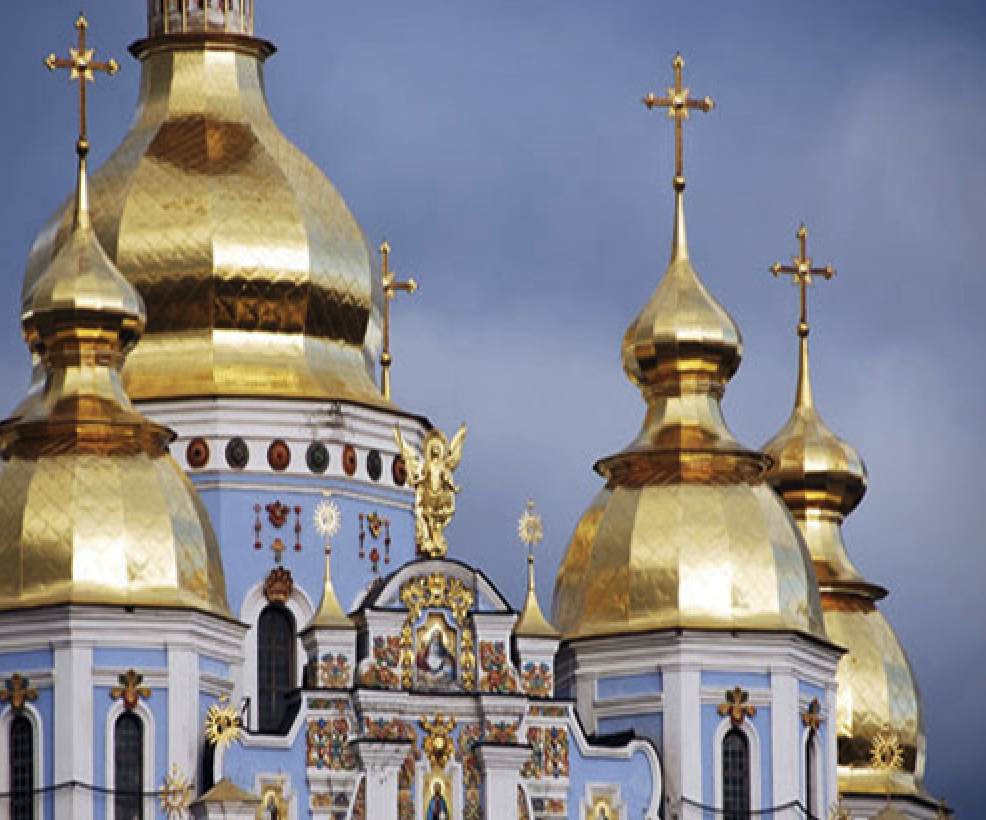
International News

Beyond the Orthodox questions: How might the Ukraine war scramble world Christianity?

Beyond the Orthodox questions: How might the Ukraine war scramble world Christianity?

Russia's invasion of Ukraine has potential to be "the most transformational" European conflict since World War II, writes New York Times foreign policy columnist Thomas Friedman.

Will it be transformational for Christianity?

There's a slim chance peace could be restored, but at this writing Russian dictator Vladimir Putin appears committed to doing whatever it takes to demolish the independence of his once-friendly neighbor and its young democracy. We might see Russian military occupation, a puppet regime, persistent armed resistance by furious Ukrainians, ongoing aid by the West and at some future point a humiliating defeat and withdrawal -- a replay of the decade-long occupation of Afghanistan that played into the Soviet Union's collapse and therefore to Ukraine's independence.

Russia faces accusations of war crimes amid mass killings of innocent civilians, and bombardment of homes, hospitals, schools and infrastructure, with attendant suffering.

The contours of world Christianity could be scrambled, as a result of all of this. This religious aspect seems a mere sidebar for the news media just now.

But long term, the Russian Orthodox hierarchy has fused the church's stature with a regime hit by widespread moral condemnation, sagging influence and rising economic and diplomatic isolation. Opprobrium comes not just from the U.S. and western allies. In a United Nations vote, 141 nations denounced the "aggression" while only four problematic regimes backed Russia. Even China abstained.

The media should be alert to the following possible scenarios.

The starting point for discussion is a current church split within Ukraine, whose Orthodox population is second only to the massive church of Russia. See detail here in a previous Memo.

In 1686, the Ecumenical Patriarch, "first among equals" who lead Orthodoxy's independent "autocephalous" branches, granted the Moscow Patriarch the jurisdiction over Ukraine that it still exercises. But after national independence, a rival Orthodox Church of Ukraine now led by Metropolitan Epiphanius arose, and Ecumenical Patriarch Bartholomew — with the sympathy of western leaders — formalized its autocephalous status in 2019.
Please respect our Commenting Policy

Podcast: What's next for Russian priests who asked if Putin will be damned for invading Ukraine?

Podcast: What's next for Russian priests who asked if Putin will be damned for invading Ukraine?

Warning: The following is not a “whataboutism” comparison between Joe Biden and Vladimir Putin or an attempt to find some kind of moral equivalence between their policies and actions.

What I am doing is making a comment about what journalists can and cannot know about a leader’s public and private religious convictions. This is a key theme in this week’s “Crossroads” podcast (CLICK HERE to tune that in) about religious issues linked to Putin’s invasion of Ukraine. The big idea is that politicians in a variety of cultures are skilled, when it comes to using religious themes and symbols.

First, what do we know about Biden’s Catholic beliefs?

We know that he carries a rosary, knows how to use it and frequently attends Mass, almost always in parishes sympathetic to him. We know that ancient doctrines in Catholic moral theology are important to him when it comes to immigration and social justice issues, but not when it comes to marriage, abortion, sexual ethics and, until recently, the death penalty.

What does this tell us about what he does or does not say during Confession and other crucial issues about the content of his faith? Next to nothing. Thus, his actions are crucial.

Now, what do we know about Putin’s Orthodox beliefs?

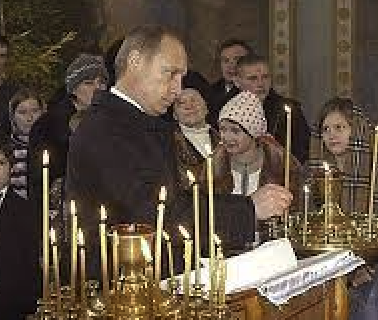
We know that he built a chapel near his office, that he knows how to make the sign of the cross and light prayer candles. We know that he believes that Orthodox Christianity is a crucial part of Russian history and that “Holy Mother Russia” is an important concept in Russian identity and nationalism. We know that issues such as abortion and marriage formation were not important to him — until it became clear that Russia is in a state of demographic collapse. Putin has, of course, used major themes from Orthodox history to justify his actions in Ukraine.

We also know that his government and his supporters have poured oceans of money into the rebuilding of Orthodox churches in the post-Soviet era, believing that this is in the national interest. This matters in a nation that endured the most sweeping wave of martyrdom in Christian history, with the closing of 98% of the land’s churches, the murder of 200,000 bishops, priests and nuns and millions of others in death camps, purges, planned famines (in Ukraine, especially) and other forms of persecution. We know that some clergy were crucified on the doors of their churches, slaughtered on their altars or stripped naked, doused with water and left outdoors in winter.

What does this tell us about what Putin does or does not say during Confession and other crucial issues about the content of his faith? Next to nothing. Thus, his actions are crucial.


Please respect our Commenting Policy

The latest United Methodist bombshell will create news throughout 2022 and beyond

The latest United Methodist bombshell will create news throughout 2022 and beyond

Yet another United Methodist bombshell will create news throughout 2022 and beyond

In this, the 50th anniversary year of the 12.9-million-member United Methodist Church's fierce debate over the Bible and sexuality, a late summer General Conference was set to settle how to split. But a March 3 bombshell announcement cancelled this all-important meeting, already postponed twice due to COVID. Without plans for an orderly and respectful breakup, rancor will persist till delegates finally do assemble, presumably in May, 2024.

Here's some lay of the land for the media through 2022 and beyond.

"The only problem with [cancellation] is everything," remarks Religion News Service commentator Jacob Lupfer. "Every major faction in the church agrees on the need for schism. The status quo is untenable." The liberal Reconciling Ministries Network supports the delay, but "this lengthening test of our patience" postpones "the road to justice for our LGBTQ+ kin" who want a policy change that regularizes weddings and clergy ordinations for Methodists in same-sex relationships.

Conservatives are more upset, so much so they immediately rushed to launch a new "Global Methodist Church" (GMC) on May 1. Mark your calendars: GMC supporters will hold a "global gathering" in Avon, Indiana, just afterward on May 7. The GMC will combine U.S. conservatives with sizable groups from the Methodists' flocks in Africa, the Philippines and elsewhere in the diverse Global South. (Most other "mainline" denominations exist in the United States only.)

Crucially, the breakup "protocol" on the 2022 General Conference agenda would have approved a temporary time window until 2024 during which congregations could quit the UMC and keep ownership of their buildings and other assets. The 2024 General Conference could still OK such an escape clause, but by then the schism will be in full swing.

Here is the key for journalists working at the local and regional levels: Without a mutually agreed pact, Lupfer expects expensive, "chaotic, unruly litigation."


Please respect our Commenting Policy

Stories about Ukrainian Jews? Try a 1,000-year history, the Pale of Settlement and a global diaspora

Stories about Ukrainian Jews? Try a 1,000-year history, the Pale of Settlement and a global diaspora

In August 1991, I visited Ukraine, then still a captive state within the Union of Soviet Socialists Republics. The USSR was on its last legs and western media pundits, academic experts and gloating politicians predicted its full collapse at any moment.

History was about to explode in risky and unpredictable ways. But that wasn’t my prime concern. I didn’t go there to cover a political revolution.

Rather, I was in Ukraine for two weeks to write about the historic Jewish community of Odessa, the Black Sea port city that was once one of the Russian empire’s Crown Jewels. Sadly, as I write, Odessa faces what’s likely to be a large-scale Russian military assault. Just don’t call it a war in the streets of Moscow.

My employer back then was the Baltimore Jewish Times. The paper sent me to Ukraine because Baltimore and Odessa were “sister cities.” (Meaning the Baltimore Jewish community committed itself to financially assisting Odessa’s then-largely poverty stricken Jews and to rebuilding Jewish community institutions largely destroyed under, first, the Nazis, and then the Soviet. To this day, Baltimore has maintained its commitment.)

The first story I wrote for the Jewish Times ran under the headline, “An Uncertain Future for the Jews of Odessa.” The headline (sorry, but I can’t find a working link to this story) reflected the situation as I experienced it.

One might say that it was also prescient, given the horrific situation there today. The current Russian invasion has reduced “uncertain” to a sad understatement.

My guess is most GetReligion readers have followed the Ukraine crisis closely. If so, I assume you’ve also noted the slew of sidebars about Ukraine’s Jewish population.

Why emphasize this angle when the Ukraine story has so many larger implications? Some historical background will help.

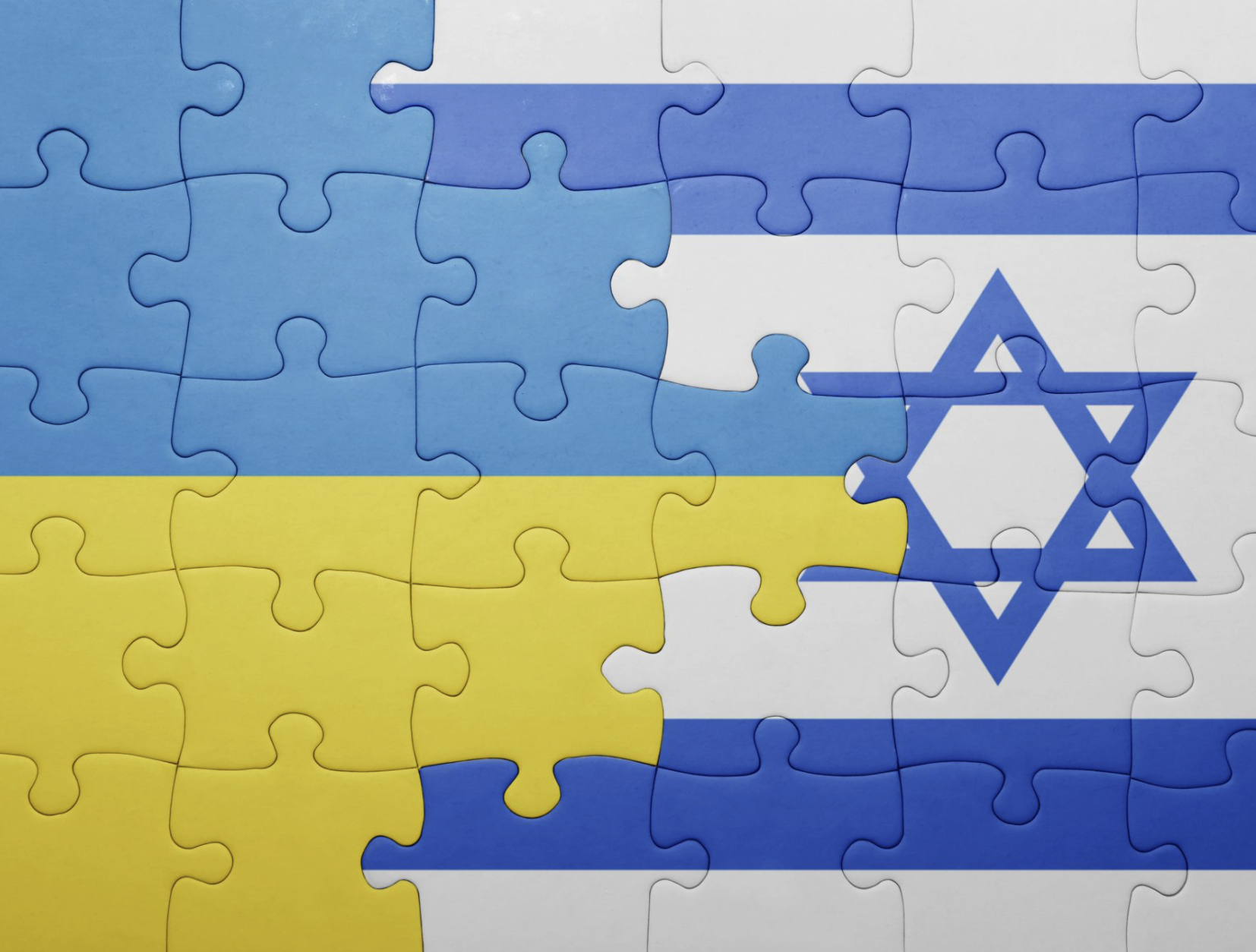
Prior to the start of the current civilian refugee exodus, Ukrainian Jews numbered an estimated 100,000-200,000 individuals, down from nearly a half-million in 1989. That’s quite a spread. But even if the actual number is at the estimate’s low end it still means Ukraine has one of the five largest Jewish communities in Europe.


Please respect our Commenting Policy

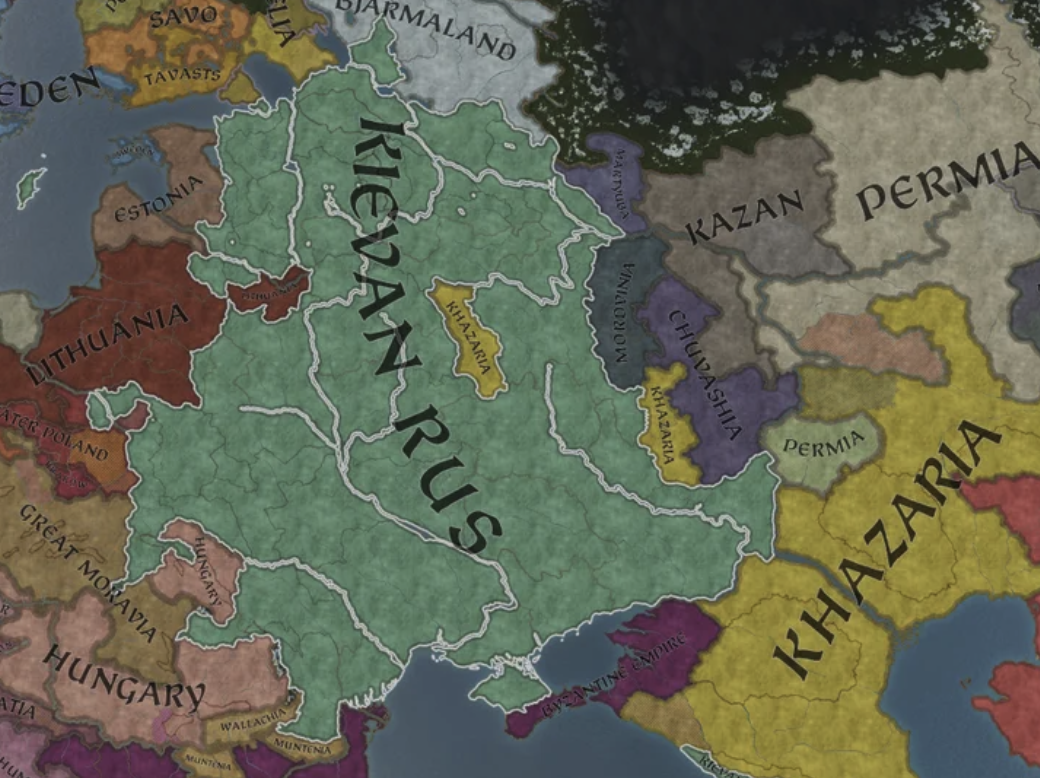
Question for New York Times scribes and others: Did Vladimir Putin dream up the Kievan Rus?

Question for New York Times scribes and others: Did Vladimir Putin dream up the Kievan Rus?

If you know anything about the New Testament, then you know that St. Paul spend a lot of time and energy in the great cities of Greece.

It would seem logical for one of the ancient patriarchates of Eastern Orthodoxy to be located in Greece, perhaps in Athens, Corinth or Thessaloniki. So who is the patriarch of the Greek Orthodox Church? Why are the great churches of Greece led by archbishops, instead of their own patriarch?

That’s a complicated question (click here for Orthodox Wiki timeline) and, as always, the Orthodox will argue about many historical twists and turns. But the big idea is that over the centuries Constantinople grew to become the great city of the wider Greek world and, thus, the leader of Greek Orthodoxy remains in Istanbul. That’s where the Ecumenical Patriarch’s few remaining churches have faced crushing persecution by the Turks. Consider the plight of Turkey’s only seminary, in Halki, which has been shuttered for half a century. Halki is a tragic and sad place. I’ve been there.

Thus, the archbishops in Greece are powerless and without influence? Tell that to the Greeks.

What does this have to do with a simplistic, laugh-to-keep-from-crying paragraph of unattributed information — written in classic “omniscient anonymous" voice — in another New York Times story about the religious tensions in Ukraine? Here is that paragraph:

The Russian church … has made no secret of its desire to unite the branches under a single patriarch in Moscow, which would allow it to control the holiest sites of Orthodoxy in the Slavic world and millions of believers in Ukraine. The Ukrainian Orthodox Church, for its part, has been slowly asserting itself under its own patriarch, reviving a separate and independent branch of Eastern Orthodoxy, after the independence of Ukraine in 1991.

Where to begin?

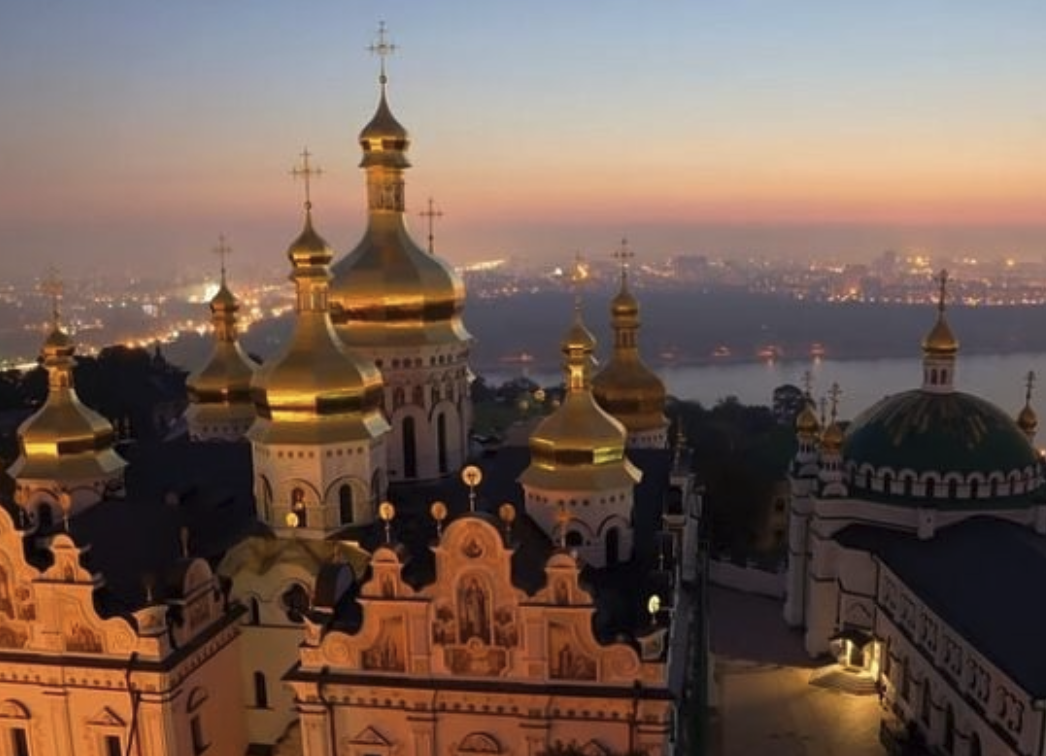
If you know anything about Orthodox Christianity in the Slavic world, you know that the story begins in Kiev in 988 with the “Baptism of Rus“ in the waters of the Dnieper River, after Prince Vladimir embraced Orthodox Christianity as the faith of his lands. The famous Lavra of the Kievan Caves was founded in 1051, marking the birth of monasticism in what would become the Russian world.

Kiev was the key city in Slavic Orthodoxy. However, Moscow grew in importance and, eventually, became the base for the Russian Orthodox Church, much as Constantinople became the great city of the wider Greek world.


Please respect our Commenting Policy

Thinking about Ukraine: Mearsheimer talks secular power, but religion ghosts loom nearby

Thinking about Ukraine: Mearsheimer talks secular power, but religion ghosts loom nearby

Reporters collect quotes. Often we hear people say things that are so haunting that the quotations stick in our minds and refuse to leave.

Let me share one of the quotes that has haunted me for more than a decade. It’s from an interview that I did with Victor Yelensky, a sociologist of religion from the Ukrainian National Academy of Sciences, during a June 2009 forum in Kiev about religion and politics in Ukraine. I was one of the speakers, along with another colleague — the late Arne Fjeldstad — of the Oxford Centre for Religion & Public Life.

Here is that quotation, which I used to close this “On Religion” column: “Religion ghosts in Ukraine.” Yelensky said:

"For many Orthodox people in western Ukraine, it is simply unacceptable to live in any way under the leadership of the Moscow Patriarchate. At the same time, for many Orthodox in eastern Ukraine, it is simply unacceptable to not to be associated and in communion with the Moscow Patriarchate. In the middle are places like Kiev. ...

"This is a division that is inside Ukrainian society. Is it based on religion? No. Is religion right there in the heart of it? Yes."

Again, that was 2009. There has been all kinds of speculation about the degree to which Orthodox tensions in Ukraine did or did not influence Vladimir Putin’s arrogant, egotistical, truly sinful decision to unleash hell on the citizens of Western and Eastern Ukraine.

If you want more background on that subject, may I recommend my earlier post (“Eastern Orthodox thinking on Ukraine? Reporters can't settle for the predictable voices”) and the massive Plug-In feature by Bobby Ross, Jr. (“Why some experts insist Vladimir Putin is motivated by history and religion”). No one needs to agree with all of the voices featured in Bobby’s round-up, because they are all part of cacophony we are hearing, right now. I offered my own take in this week’s “On Religion” column for the Universal syndicate: “Will Russia listen to Orthodox prayers for cease-fire?” Here is how that column ends:

… Inside Russia, numerous Orthodox priests and abbots -- 200-plus early this week, speaking "each on our own behalf" -- began signing an online petition calling for the "cessation of the fratricidal war in Ukraine" and negotiations. "We respect God-given human freedom, and we believe that the people of Ukraine should make their choice independently, not at gunpoint, without pressure from the West or the East," said the text.


Please respect our Commenting Policy

Eastern Orthodox thinking on Ukraine? Reporters can't settle for the predictable voices

Eastern Orthodox thinking on Ukraine? Reporters can't settle for the predictable voices

For the past week or so, I have been getting quite a few emails and messages from people wanting to understand what “the Orthodox” think about the invasion of Ukraine.

That’s a massive question. In my experience, the Orthodox are praying for a ceasefire and negotiations, seeking a Ukraine that is militarily independent of the United States-European Union and, certainly, Vladimir Putin’s Moscow regime.

At this point, no one should be surprised that Orthodox leaders aligned with USA-EU and Turkey are releasing fierce statements against Putin’s arrogant and evil invasion of Ukraine. At the same time, no one should be surprised that Patriarch Kirill of Moscow has tried to call for peace, while avoiding any language that openly clashes with the autocrat next door. You end up with language such as:

As the Patriarch of All Russia and the primate of a Church whose flock is located in Russia, Ukraine, and other countries, I deeply empathize with everyone affected by this tragedy.

I call on all parties to the conflict to do everything possible to avoid civilian casualties. I appeal to the bishops, pastors, monastics, and laity to provide all possible assistance to all victims, including refugees and people left homeless and without means of livelihood.

The Russian and Ukrainian peoples have a common centuries-old history dating back to the Baptism of Rus’ by Prince St. Vladimir the Equal-to-the-Apostles. I believe that this God-given affinity will help overcome the divisions and disagreements that have arisen that have led to the current conflict.

Note this meek language — “I call on all parties to the conflict to do everything possible to avoid civilian casualties” — that still manages to condemn the current actions of Russia’s leaders.

Anyone seeking the “Orthodox mind” on this matter needs to remember that Eastern Orthodoxy, no matter what Western media think, has no pope and that its (I should candidly say “our”) conciliar approach to settling disputes moves very slowly, with good cause.


Please respect our Commenting Policy

Plug-In: Why some experts insist Vladimir Putin is motivated by history and religion

Plug-In: Why some experts insist Vladimir Putin is motivated by history and religion

What’s religion got to do with Russia’s attack on Ukraine?

A whole lot, according to some experts.

Writing at GetReligion early this month (then republished by Religion Unplugged), Richard Ostling stressed that journalists shouldn’t neglect the importance of the Byzantine histories of the two rival Orthodox churches in Ukraine. Readers will also want to see tmatt’s Feb. 19 “think piece” building on that: “Thinking about Orthodox history and the complex West vs. East divisions in Ukraine.

Ostling, retired longtime religion writer for Time magazine and The Associated Press, noted:

Russia and Ukraine contain, by far, the two largest national populations in Eastern Orthodox Christianity. The new World Christian Encyclopedia edition — which belongs in every media and academic library — counts 114 million Orthodox in Russia, for 79% of the population, and 32 million in Ukraine, for 73%.

Terminology note for writers: “Eastern Orthodox” is the precise designation for such churches — related historically to the Ecumenical Patriarchate based in Turkey — that affirm the definition of Jesus Christ’s divinity by the Council of Chalcedon (A.D. 451). The separate branch of so-called “Oriental Orthodox” is non-Chalcedonian; its largest national church is in Ethiopia.

Ukraine’s ecclesiastical history, like its political history, is highly complex. The saga began with the A.D. 988 “baptism of Rus” in Kyiv — Russians prefer “Kiev” — when Prince Vladimir proclaimed Orthodoxy the religion of his realm and urged the masses to join him in conversion and baptism.

Russians see Christendom’s entry into Eastern Europe as the origin of their homeland and the Russian Orthodox Church. Russian President Vladimir Putin cites this history to support his claim for Ukraine as a client area within greater Russia instead of a validly independent nation. His post-Soviet Kremlin maintains close bonds with the Russian Church’s Moscow Patriarchate, which in turn has centuries of ecclesiastical authority within Ukraine.

At Religion News Service, religion author Diana Butler Bass makes the case that “Kyiv is essentially Jerusalem, and this is a conflict over who will have control of Orthodoxy — Moscow or Constantinople.”

Bass writes:

While the secular media tries to guess Vladimir Putin’s motives in Ukraine, one important aspect of the current situation has gone largely ignored: religion.


Please respect our Commenting Policy

When ancient texts meet high tech, behold, will we get near-instant Bibles? 

When ancient texts meet high tech, behold, will we get near-instant Bibles? 

The Religion Guy has touted the investigative chops of the Ministry Watch website and its usefulness as a story source for journalists. Let’s re-up that message.

Along with assorted financial and moral scandals, President Warren Cole Smith has been examining what he calls the "Bible translation industry" (which prefers to call itself a "ministry"). This is a very popular cause among U.S. Protestants, with revenues of around $500 million a year. The biggest group, Wycliffe Bible Translators, took in $227 million in 2020.

In articles here (“Outsourcing Bible Translation?”), here (“Translation Service Providers Could Be Paradigm-Changing For Bible Translation Industry”) and finally here (“Just How Broken Is the Bible Translation Industry?”) Smith has been criticizing translation groups for taking so long and spending so much money to produce a Bible translation in a new language when the need is so great.

To force a massive speedup, Smith promotes the fascinating idea of applying the technology used widely by businesses and governments for necessary rapid translations of contracts, diplomatic exchanges, scientific articles, movie scripts and the like. Such biblical projects are already under way, and that provides a solid feature idea for reporters to pursue.

A consortium of traditional Bible translation organizations, illumiNations, figures the planet has around 7,000 languages currently being spoken, of which 3,700 have little or no scripture. It seeks to fill that gap by 2033, and states that it typically takes seven years to render the New Testament and 16 years for a complete Bible. At the present rate, Smith comments, the task will take till at least A.D. 2150.

As a former business executive, Smith argues that Christian donors should reasonably expect 10 times the new Bibles than are actually being produced and, while chiding groups for lack of financial transparency, estimates it takes not only many years but many millions of dollars to produce a new translation. He says the current experimental phase of the new high-tech scheme indicates radically shortened time frames are possible at a cost of a mere $350,000 per new Bible.

Big, if true. That’s a news story.


Please respect our Commenting Policy