International News

Thinking about Ukraine: Mearsheimer talks secular power, but religion ghosts loom nearby

Thinking about Ukraine: Mearsheimer talks secular power, but religion ghosts loom nearby

Reporters collect quotes. Often we hear people say things that are so haunting that the quotations stick in our minds and refuse to leave.

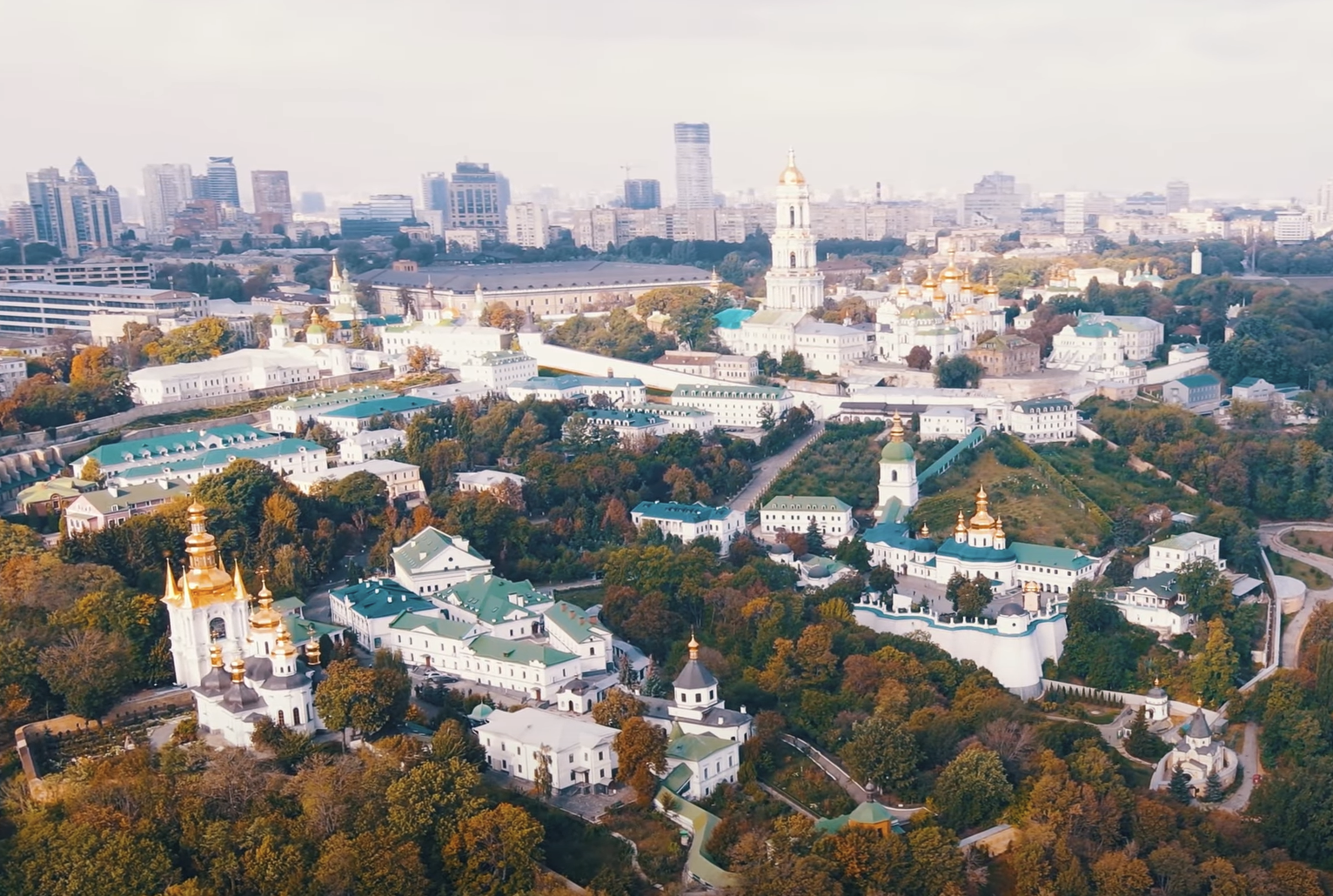
Let me share one of the quotes that has haunted me for more than a decade. It’s from an interview that I did with Victor Yelensky, a sociologist of religion from the Ukrainian National Academy of Sciences, during a June 2009 forum in Kiev about religion and politics in Ukraine. I was one of the speakers, along with another colleague — the late Arne Fjeldstad — of the Oxford Centre for Religion & Public Life.

Here is that quotation, which I used to close this “On Religion” column: “Religion ghosts in Ukraine.” Yelensky said:

"For many Orthodox people in western Ukraine, it is simply unacceptable to live in any way under the leadership of the Moscow Patriarchate. At the same time, for many Orthodox in eastern Ukraine, it is simply unacceptable to not to be associated and in communion with the Moscow Patriarchate. In the middle are places like Kiev. ...

"This is a division that is inside Ukrainian society. Is it based on religion? No. Is religion right there in the heart of it? Yes."

Again, that was 2009. There has been all kinds of speculation about the degree to which Orthodox tensions in Ukraine did or did not influence Vladimir Putin’s arrogant, egotistical, truly sinful decision to unleash hell on the citizens of Western and Eastern Ukraine.

If you want more background on that subject, may I recommend my earlier post (“Eastern Orthodox thinking on Ukraine? Reporters can't settle for the predictable voices”) and the massive Plug-In feature by Bobby Ross, Jr. (“Why some experts insist Vladimir Putin is motivated by history and religion”). No one needs to agree with all of the voices featured in Bobby’s round-up, because they are all part of cacophony we are hearing, right now. I offered my own take in this week’s “On Religion” column for the Universal syndicate: “Will Russia listen to Orthodox prayers for cease-fire?” Here is how that column ends:

… Inside Russia, numerous Orthodox priests and abbots -- 200-plus early this week, speaking "each on our own behalf" -- began signing an online petition calling for the "cessation of the fratricidal war in Ukraine" and negotiations. "We respect God-given human freedom, and we believe that the people of Ukraine should make their choice independently, not at gunpoint, without pressure from the West or the East," said the text.

Please respect our Commenting Policy

Eastern Orthodox thinking on Ukraine? Reporters can't settle for the predictable voices

Eastern Orthodox thinking on Ukraine? Reporters can't settle for the predictable voices

For the past week or so, I have been getting quite a few emails and messages from people wanting to understand what “the Orthodox” think about the invasion of Ukraine.

That’s a massive question. In my experience, the Orthodox are praying for a ceasefire and negotiations, seeking a Ukraine that is militarily independent of the United States-European Union and, certainly, Vladimir Putin’s Moscow regime.

At this point, no one should be surprised that Orthodox leaders aligned with USA-EU and Turkey are releasing fierce statements against Putin’s arrogant and evil invasion of Ukraine. At the same time, no one should be surprised that Patriarch Kirill of Moscow has tried to call for peace, while avoiding any language that openly clashes with the autocrat next door. You end up with language such as:

As the Patriarch of All Russia and the primate of a Church whose flock is located in Russia, Ukraine, and other countries, I deeply empathize with everyone affected by this tragedy.

I call on all parties to the conflict to do everything possible to avoid civilian casualties. I appeal to the bishops, pastors, monastics, and laity to provide all possible assistance to all victims, including refugees and people left homeless and without means of livelihood.

The Russian and Ukrainian peoples have a common centuries-old history dating back to the Baptism of Rus’ by Prince St. Vladimir the Equal-to-the-Apostles. I believe that this God-given affinity will help overcome the divisions and disagreements that have arisen that have led to the current conflict.

Note this meek language — “I call on all parties to the conflict to do everything possible to avoid civilian casualties” — that still manages to condemn the current actions of Russia’s leaders.

Anyone seeking the “Orthodox mind” on this matter needs to remember that Eastern Orthodoxy, no matter what Western media think, has no pope and that its (I should candidly say “our”) conciliar approach to settling disputes moves very slowly, with good cause.


Please respect our Commenting Policy

Plug-In: Why some experts insist Vladimir Putin is motivated by history and religion

Plug-In: Why some experts insist Vladimir Putin is motivated by history and religion

What’s religion got to do with Russia’s attack on Ukraine?

A whole lot, according to some experts.

Writing at GetReligion early this month (then republished by Religion Unplugged), Richard Ostling stressed that journalists shouldn’t neglect the importance of the Byzantine histories of the two rival Orthodox churches in Ukraine. Readers will also want to see tmatt’s Feb. 19 “think piece” building on that: “Thinking about Orthodox history and the complex West vs. East divisions in Ukraine.

Ostling, retired longtime religion writer for Time magazine and The Associated Press, noted:

Russia and Ukraine contain, by far, the two largest national populations in Eastern Orthodox Christianity. The new World Christian Encyclopedia edition — which belongs in every media and academic library — counts 114 million Orthodox in Russia, for 79% of the population, and 32 million in Ukraine, for 73%.

Terminology note for writers: “Eastern Orthodox” is the precise designation for such churches — related historically to the Ecumenical Patriarchate based in Turkey — that affirm the definition of Jesus Christ’s divinity by the Council of Chalcedon (A.D. 451). The separate branch of so-called “Oriental Orthodox” is non-Chalcedonian; its largest national church is in Ethiopia.

Ukraine’s ecclesiastical history, like its political history, is highly complex. The saga began with the A.D. 988 “baptism of Rus” in Kyiv — Russians prefer “Kiev” — when Prince Vladimir proclaimed Orthodoxy the religion of his realm and urged the masses to join him in conversion and baptism.

Russians see Christendom’s entry into Eastern Europe as the origin of their homeland and the Russian Orthodox Church. Russian President Vladimir Putin cites this history to support his claim for Ukraine as a client area within greater Russia instead of a validly independent nation. His post-Soviet Kremlin maintains close bonds with the Russian Church’s Moscow Patriarchate, which in turn has centuries of ecclesiastical authority within Ukraine.

At Religion News Service, religion author Diana Butler Bass makes the case that “Kyiv is essentially Jerusalem, and this is a conflict over who will have control of Orthodoxy — Moscow or Constantinople.”

Bass writes:

While the secular media tries to guess Vladimir Putin’s motives in Ukraine, one important aspect of the current situation has gone largely ignored: religion.


Please respect our Commenting Policy

When ancient texts meet high tech, behold, will we get near-instant Bibles? 

When ancient texts meet high tech, behold, will we get near-instant Bibles? 

The Religion Guy has touted the investigative chops of the Ministry Watch website and its usefulness as a story source for journalists. Let’s re-up that message.

Along with assorted financial and moral scandals, President Warren Cole Smith has been examining what he calls the "Bible translation industry" (which prefers to call itself a "ministry"). This is a very popular cause among U.S. Protestants, with revenues of around $500 million a year. The biggest group, Wycliffe Bible Translators, took in $227 million in 2020.

In articles here (“Outsourcing Bible Translation?”), here (“Translation Service Providers Could Be Paradigm-Changing For Bible Translation Industry”) and finally here (“Just How Broken Is the Bible Translation Industry?”) Smith has been criticizing translation groups for taking so long and spending so much money to produce a Bible translation in a new language when the need is so great.

To force a massive speedup, Smith promotes the fascinating idea of applying the technology used widely by businesses and governments for necessary rapid translations of contracts, diplomatic exchanges, scientific articles, movie scripts and the like. Such biblical projects are already under way, and that provides a solid feature idea for reporters to pursue.

A consortium of traditional Bible translation organizations, illumiNations, figures the planet has around 7,000 languages currently being spoken, of which 3,700 have little or no scripture. It seeks to fill that gap by 2033, and states that it typically takes seven years to render the New Testament and 16 years for a complete Bible. At the present rate, Smith comments, the task will take till at least A.D. 2150.

As a former business executive, Smith argues that Christian donors should reasonably expect 10 times the new Bibles than are actually being produced and, while chiding groups for lack of financial transparency, estimates it takes not only many years but many millions of dollars to produce a new translation. He says the current experimental phase of the new high-tech scheme indicates radically shortened time frames are possible at a cost of a mere $350,000 per new Bible.

Big, if true. That’s a news story.


Please respect our Commenting Policy

Plug-In: Canadian trucker protests echo U.S. Christian nationalism? Press says 'yes'

Plug-In: Canadian trucker protests echo U.S. Christian nationalism? Press says 'yes'

“Honk if you love Jesus.”

That headline on a recent story by the Ottawa Citizen’s Blair Crawford sets the scene as the Canadian newspaper explains “Why so many Evangelical Christians have joined the ‘Freedom Convoy.’”

Unfamiliar with the Freedom Convoy? The Wall Street Journal explains the protest in Canada’s capital city this way:

Since late January, downtown Ottawa has served as a parking lot for hundreds of heavy-duty trucks, pickup trucks and other vehicles, operated by individuals who say they are fed up with the social restrictions and vaccine mandates meant to contain the spread of Covid-19.

Back to the faith angle: The Ottawa newspaper notes:

At the ongoing demonstration … Jesus references and Bible quotes share space alongside “F*ck Trudeau” signs. The evangelical Christian message of love and peace clashes with reports of Ottawa residents being harassed for wearing masks, houses displaying the rainbow pride flag vandalized and the sight of Confederate flags and swastikas among the demonstrators. At one booth on Wellington Street you could get buttons with the yellow Star of David, likening the plight of Jewish people in Nazi Germany to the unvaccinated.

CBC News’ Jorge Barrera reports that “For many inside the freedom convoy, faith fuels the resistance.”

According to Barrera’s story:

Christian faith — with an overtly evangelical feel — flows likes an undercurrent through the Freedom Convoy in Ottawa.


Please respect our Commenting Policy

Yes, a cardinal with strong Pope Francis ties said church doctrines on LGBTQ issues are wrong

Yes, a cardinal with strong Pope Francis ties said church doctrines on LGBTQ issues are wrong

It isn't every day that a prince of the Roman Catholic Church, and a strategic Jesuit ally of the pope, openly rejects centuries of Christian teachings that clash with core doctrines of the Sexual Revolution.

"The Church's positions on homosexual relationships as sinful are wrong," said Cardinal Jean-Claude Hollerich of Luxembourg, in a recent interview with KDA, a German Catholic news agency. "I believe that the sociological and scientific foundation of this doctrine is no longer correct. It is time for a fundamental revision of Church teaching, and the way in which Pope Francis has spoken of homosexuality could lead to a change in doctrine. …

"In our archdiocese, in Luxembourg, no one is fired for being homosexual, or divorced and remarried. I can't toss them out, they would become unemployed, and how can such a thing be Christian? As for homosexual priests, there are many of these, and it would be good if they could talk about this with their bishop without his condemning them."

The latest unorthodox proclamations by Cardinal Hollerich commanded attention because he leads the Commission of the Bishops' Conferences of the European Union, as well as being the pope's choice as "relator general" for the October 2023 global Synod of Bishops, helping shape its work to weigh the church's future.

"This Cardinal seems to be claiming a private revelation which is contrary to scripture & the Catechism of the Catholic Church," tweeted Bishop Joseph Strickland, an outspoken conservative who is Bishop of Tyler, Texas. "Any private revelation that contradicts public revelation must be condemned."

However, the recent "Synodal Way" meetings of German Catholic leaders voted to approve draft texts that affirmed some of Cardinal Hollerich's beliefs, including overwhelming approval for a document entitled "Blessing celebrations for couples who love each other." Support was just as strong for a "Magisterial reassessment of homosexuality" text stating that official church teachings on chastity and homosexuality "should be revised."


Please respect our Commenting Policy

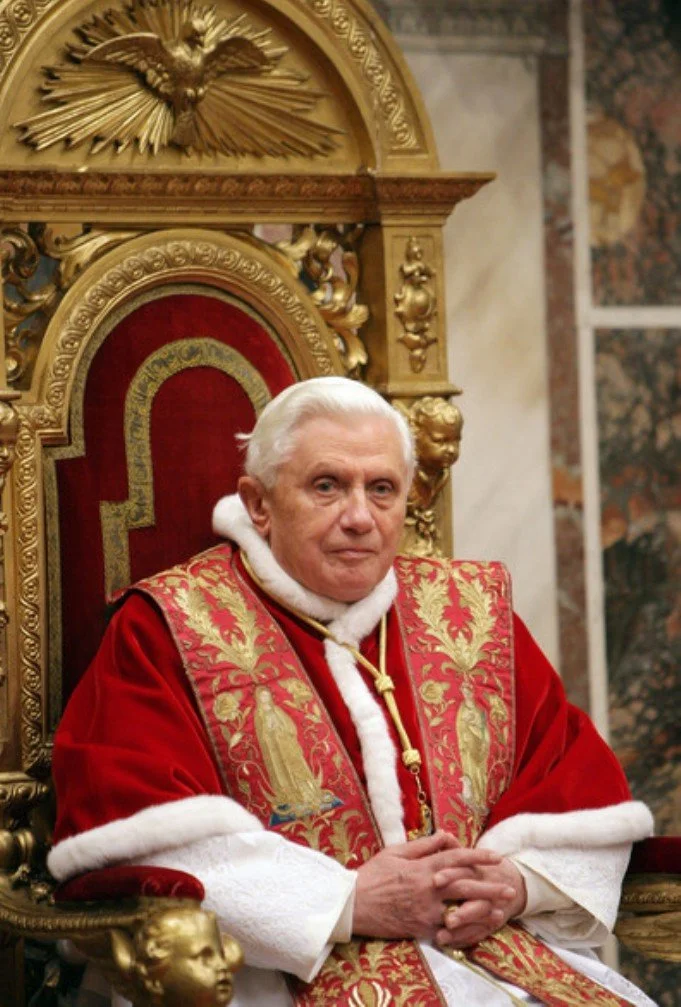
Pope Benedict's blunder and ensuing media coverage have put his legacy on the line

Pope Benedict's blunder and ensuing media coverage have put his legacy on the line

It has been 20 years since The Boston Globe broke open the decades of sexual abuse by Catholic priests, dragging into the light a hellish story that had lingered on the edge of elite media coverage since the 1980s (see this GetReligion post: “That gap between 1985 and 2002”).

Two decades later, this is a story that continues in the form of questions about who in the Catholic hierarchy knew what and when in a variety of dioceses around the world.

The issue wasn’t limited to Boston. Predator priests were everywhere — a scandal that may have been unearthed in the United States, but one that continues to plague other parts of the world.

The focus the past few weeks has been on Germany and the involvement of Benedict XVI in the handling of some abuse cases, decades before he became a key church official in Rome and, eventually, pope. This was also long before the church — in part due to his leadership — adopted stricter policies on how to handle cases of clergy sexual abuse.

This is a complex subject for journalists to cover, in part when events in the past are viewed through the lens of present church policies and standards. How is the press doing?

Here’s a timeline of these fast-moving developments. This latest chapter in the decades-long clergy sex abuse saga began on Jan. 20 when a law firm released a report, commissioned by the German church, to look into how cases of sexual abuse were handled in Munich between 1945 and 2019. Benedict, the former Cardinal Joseph Ratzinger, headed that archdiocese from 1977 to 1982, when he was named to head the Vatican’s Congregation for the Doctrine of the Faith.

The report’s authors found that Ratzinger failed to stop the abuse in four cases. The report also faulted his predecessors and, this is crucial, his successors for their own misconduct in allowing clergy accused of sex abuse to stay in ministry.

The 2,000-page report also criticized Cardinal Reinhard Marx, currently the archbishop of Munich and Freising, for his role in two cases dating back to 2008. Marx offered his resignation to Pope Francis last year, saying he was willing to take responsibility for his part in the sexual abuse crisis. Francis did not accept the resignation, which says something about what this pontiff thinks of the German prelate.


Please respect our Commenting Policy

In Afghanistan, believers in religious minorities have every reason to go underground

In Afghanistan, believers in religious minorities have every reason to go underground

There's a logical reason that Taliban forces have not been accused of destroying any churches in Afghanistan.

"That's the dirty little secret. There were no churches before the Taliban returned to power," said Nina Shea, director of the Hudson Institute's Center for Religious Freedom and a human-rights activist for 30 years. "Christians were already underground because of the constant threats to their lives, so they didn't have any church buildings to blow up."

Everyone remembers the shocking videos when desperate Afghans chased a U.S. military plane on a Kabul runway, pleading to be among those evacuated. At least two people fell to their deaths after clinging to a plane during takeoff.

Ever since, there have been reports about the dangers faced by those left behind, especially Afghans with ties to the U.S. military, the fallen government or workers in secular or religious non-profit groups that remained behind to continue humanitarian work.

Christians, Hindus, Sikhs, Ahmadis, Shia Muslims and members of other religious minorities are also living in fear.

"They are all on the run. They are all in hiding," said Shea, reached by telephone. "People are being hunted down and beaten and are threatened with death if they don't betray members of their families who are considered apostates" by the Taliban.

It's impossible not to discuss religious freedom during this crisis, she added. "Everything the Taliban does is about religion. Religion is involved when they hang people for violating their approach to Islamic law or when they attack women and girls who want to go to school. For the Taliban, this is all connected."

The problem is that religious freedom concerns are often drowned out during debates about politics, economics, climate change and other issues in violent flashpoints around the world.


Please respect our Commenting Policy

In reportage on Russia and Ukraine, don't neglect the importance of two rival churches 

In reportage on Russia and Ukraine, don't neglect the importance of two rival churches 

On top of the 2014 seizure of Crimea and years of infiltration in eastern borderlands, Russia now poses a more severe threat to neighboring Ukraine.

Whether the nation faces a military invasion, or even a World War 2.5, or less bloody subversion and hoped-for domination, journalists these next few years will need to understand and depict the religious aspect of Ukraine's rising nationalism and resistance against Russian expansionism.

Here are some basics. Russia and Ukraine contain by far the two largest national populations in Eastern Orthodox Christianity. The new World Christian Encyclopedia edition (which belongs in every media and academic library) counts 114 million Orthodox in Russia for 79% of the population, and 32 million in Ukraine for 73%.

Terminology note for writers: "Eastern Orthodox" is the precise designation for such churches, related historically to the Ecumenical Patriarchate based in Turkey, that affirm the definition of Jesus Christ's divinity by the Council of Chalcedon (A.D. 451). The separate branch of so-called "Oriental Orthodox" is non-Chalcedonian; its largest national church is in Ethiopia.

Ukraine's ecclesiastical history, like its political history, is highly complex. The saga began with the A.D. 988 "baptism of Rus" in Kyiv (Russians prefer "Kiev") when Prince Vladimir proclaimed Orthodoxy the religion of his realm and urged the masses to join him in conversion and baptism.

Russians see Christendom's entry into Eastern Europe as the origin of their homeland and the Russian Orthodox Church. Russian President Vladimir Putin cites this history to support his claim for Ukraine as a client area within greater Russia instead of a validly independent nation. His post-Soviet Kremlin maintains close bonds with the Russian Church's Moscow Patriarchate, which in turn has centuries of ecclesiastical authority within Ukraine.


Please respect our Commenting Policy