International News

While most media ignore religious persecution, Al Jazeera devotes space and time to it

While most media ignore religious persecution, Al Jazeera devotes space and time to it

I remember when Al Jazeera was looking to hire folks in Washington, D.C., about the time they launched Al Jazeera English in 2006.

Some journalists about town weren’t sure about applying there, even though the money was said to be good and its connections within the Arabic-speaking world were light years better than any other news operation.

It was, of course, the whiff of Arab nationalism and Islamism that scared a lot of folks off. (Then again, in 2018, it was officially banned from more than one-third of all Arabic-speaking countries, so sometimes those connections exact a high price.)

Anyway, that was then. In 2008, it launched a human-rights desk in its newsrooms and began doing stories where such rights were violated. Being that religious groups were often the first targeted, Al Jazeera got into some serious religion reporting — covering all kinds of issues, often with a striking effort to be balanced, fair and accurate.

Fast forward to 2021, where they just won first place in the Excellence in Television News Magazine Religion Reporting category for the Religion News Writers annual contest. I am not sure what specific story won them that award but in recent years, they’ve done some quality religion pieces. Now they’re at the point where folks are writing academic papers based on their religion coverage.

I am not going to go into their reporting on Islam, which is a whole other topic. This post concerns their human rights-religious minorities coverage. One of their latest examples details how Myanmar has become “a living hell” for Christians — a story very few secular media are covering. Let’s start here:

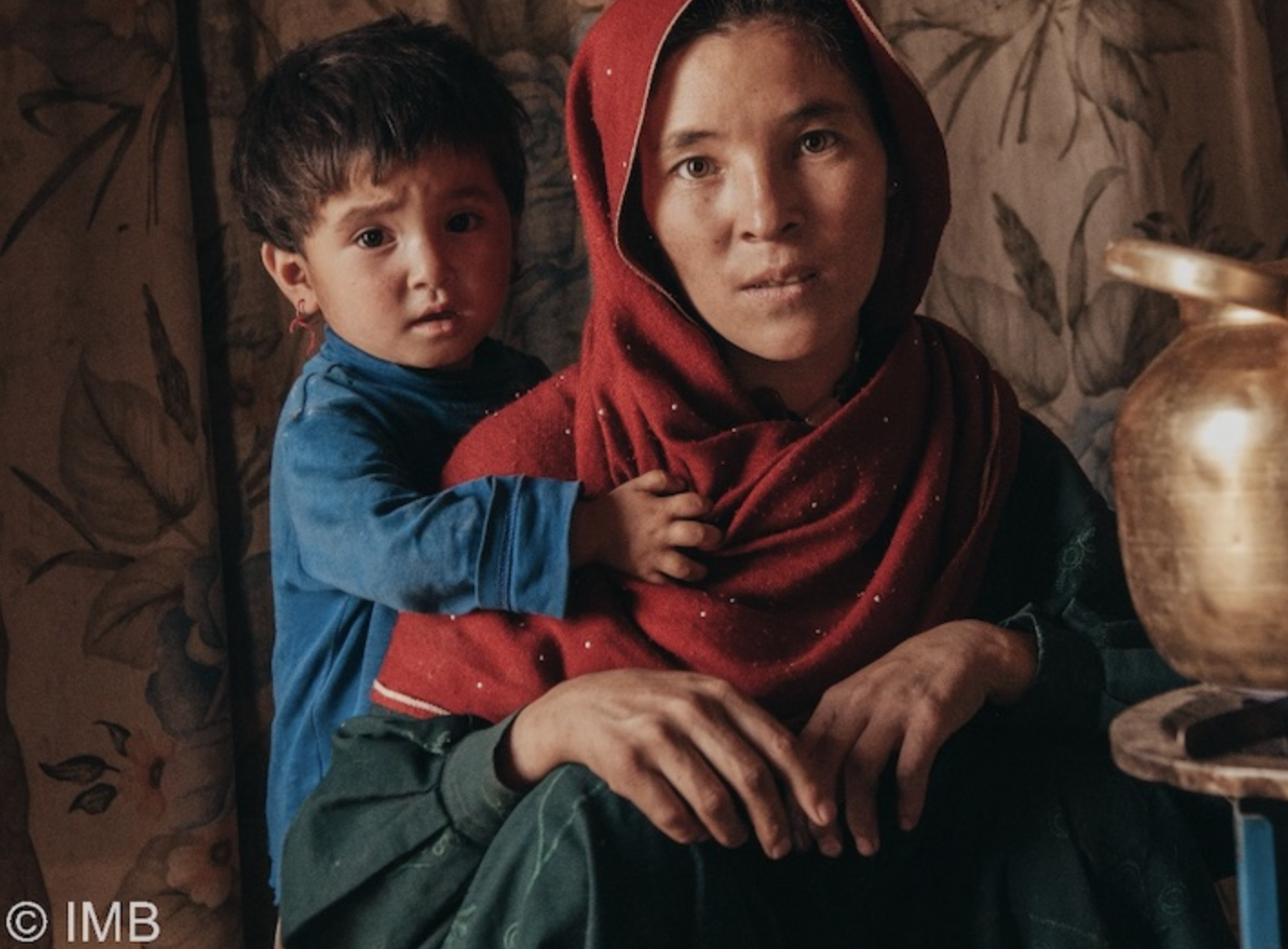
Last month, Myanmar soldiers gunned down Cung Biak Hum, a 31-year-old Baptist pastor, while he rushed to help put out a fire caused by military shelling. As his town of Thantlang in Myanmar’s northwestern Chin State went up in flames, soldiers sawed off the pastor’s finger and stole his wedding ring.

Please respect our Commenting Policy

Biden says pope called him a 'good Catholic' and why (most) journalists took his word on that

Biden says pope called him a 'good Catholic' and why (most) journalists took his word on that

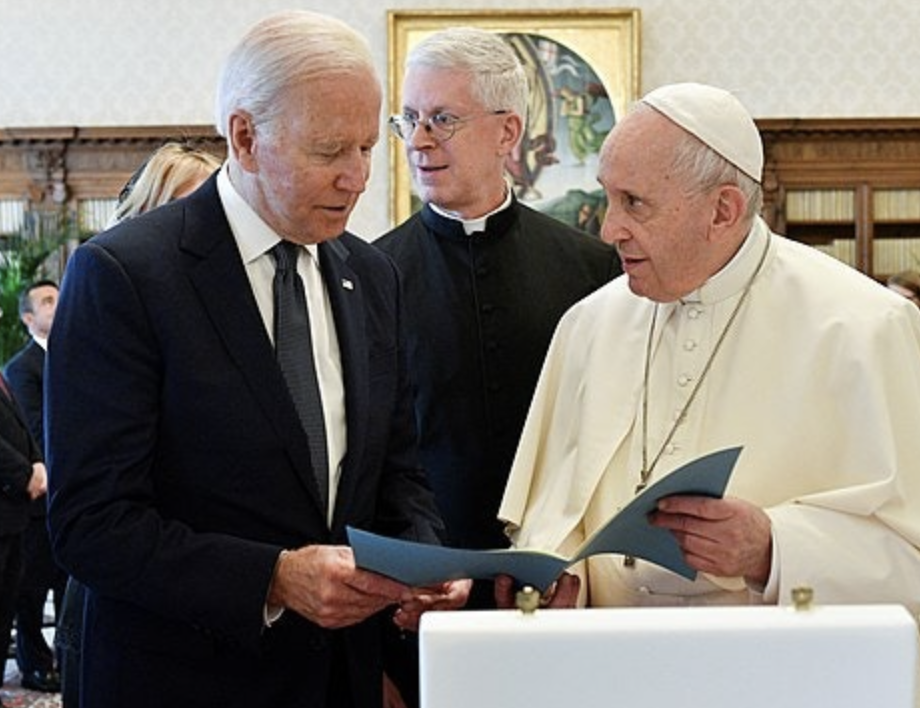
A funny thing happened when President Joe Biden visited Pope Francis at the Vatican.

The event actually made news, especially with Biden quotes about what allegedly happened in private.

In fact, it was big news across the media ecosystem — from the mainstream press to Catholic news sites — because of 20 words the president uttered to reporters in Rome after the face-to-face had already taken place.

“We just talked about the fact that he was happy I’m a good Catholic and I should keep receiving Communion,” Biden said.

With those words, Biden grabbed plenty of favorable headlines (much needed ones if you look at his sagging poll numbers as of late) online throughout the day and into the weekend. At the same time, it widened the rift between the pope and a group of U.S. bishops because of Biden’s support for abortion. Thus, it will lead to further conflict between Biden and those same bishops.

Given the love many in the press had given Biden even before the meeting, none of this should come as a surprise. The rush to accept Biden’s claim — while Vatican officials declined to confirm it — has shaped mainstream news coverage of this encounter.

Biden continued to get great headlines a day after the meeting and into Sunday when he boldly attended Mass at St. Patrick’s Church in Rome, where he received Communion. It’s worth noting that Biden was not given Communion by the pope during his private meeting. It’s also worth noting that the pope serves as the bishop of Rome.

Why all the glowing headlines, built on the acceptance of Biden’s second-hand quote from Pope Francis?

Biden’s words fit the popular news narrative on the Communion issue, beginning with the label that the president is a “devout Catholic,” even as his words and actions undercut Catholic doctrine. Far too many news accounts were happy to take Biden’s words at face value — perhaps because doing so validated their own beliefs on the issue. It amounted to a papal dispensation.


Please respect our Commenting Policy

Define 'evangelical,' please. Alas, many Americans don't think that this is a religious term

Define 'evangelical,' please. Alas, many Americans don't think that this is a religious term

Here’s a scary thought: Who wants to dress up as an evangelical for Halloween?

Except, exactly what would that look like?

Would it involve wearing a red “Make America Great Again” hat? Does the term still have any religious and/or theological meaning left?

Those questions came to mind as I perused some of the week’s big religion stories — both news reports and major analytical takes. Here are five such headlines that caught my attention:

(1) Why ‘evangelical’ is becoming another word for Republican: “Instead of theological affinity for Jesus Christ, millions of Americans are being drawn to the evangelical label because of its association with the G.O.P.,” Ryan Burge, a frequent contributor to ReligionUnplugged.com, writes in an opinion piece for the New York Times.

(2) In a post-Donald Trump world, these pastors are ditching the evangelical label for something new: “They looked to each other to ask, What could it look like to organize as ‘post-evangelicals?’” religion writer Sarah Pulliam Bailey reports for the Washington Post. “They had at least one thing in common: They were all on some journey of deconstruction, the process of reexamining their long-held beliefs, and they wanted to participate in reconstruction and the building up of something new.”

(3) The evangelical divide: “Political and social issues are splintering American Christians. Can the Church find unity?” asks part one of a three-part series by World magazine senior reporter Sophia Lee.

(4) The evangelical church is breaking apart: “As a person of the Christian faith who has spent most of my adult life attending evangelical churches, I wanted to understand the splintering of churches, communities, and relationships,” contributing writer Peter Wehner explains in The Atlantic. “I reached out to dozens of pastors, theologians, academics, and historians, as well as a seminary president and people involved in campus ministry. All voiced concern.”


Please respect our Commenting Policy

New podcast: When popes and presidents meet, headlines may not tell the private stories

New podcast: When popes and presidents meet, headlines may not tell the private stories

Sometimes, the calendar isn’t friendly to columnists and podcasters.

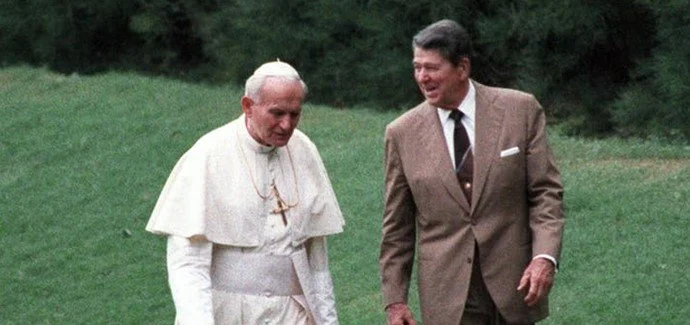
This week’s “Crossroads” podcast (click here to tune that in) was recorded before the lengthy, closed-door chat (with photo ops before and after) between Pope Francis and the “devout” Catholic President Joe Biden. Thus, host Todd Wilken and I took a kind of “tomorrow’s headlines” approach, surveying the advance coverage of the meeting and some fascinating features that looked at images and the realities of some previous pope-president meetings.

In this podcast I predicted that the headlines and public pronouncements would focus on their agreements about the environment, immigration, poverty and COVID-19 strategies.

Why? Well, the mainstream press believes that these meetings are, first and foremost, political events and these are political topics, even though they clearly have doctrinal content for those with the eyes to see that.

Biden and the pope agree on these subjects and, at this point, the progressive Pope Francis has little or no motivation to hurt a Catholic progressive in the White House. They have many of the same goals and they, to be blunt, have all the same enemies — especially among American Catholics who wear the red hats that mark them as cardinals (and those who have not received red hats).

Would anything significant happen in the private discussions?

That’s the kind of question that Catholic publications will probe and, here at GetReligion, I’ll leave commentary on that topic to Clemente Lisi (it helps that he is fluent in Italian).

If you are looking for a perfect summary of the elite press template for coverage of this meeting, and the ties that bind these two modern Catholics, this block of Washington Post material — from a political-desk story, of course — is pitch perfect:

… The resonance is also personal, given the similarities between the 84-year-old pope and the 78-year-old president, who have in a sense become allies. Both attained ultimate leadership late in their lives and quickly moved in a liberal direction. They have faced internal resistance. Both are treated warily by conservative American bishops.


Please respect our Commenting Policy

That question again: What's happening to religious believers and others stuck in Afghanistan?

That question again: What's happening to religious believers and others stuck in Afghanistan?

This is a case in which I don’t want to say, “We told you so,” but -- well — we told you so.

If you dug into this recent podcast-post — “ 'What's next in Afghanistan?' Warning: this news topic involves religion” — you’d know that the GetReligion team has been worried about what will happen to elite news coverage of human rights issues and, specifically, religious freedom, in Afghanistan under this new Taliban regime. In fact, that podcast included many themes from an earlier GetReligion podcast-post with this headline: “When the Taliban cracks down, will all the victims be worthy of news coverage?”

It appears that there are two problems.

Reality No. 1: It’s hard to cover the hellish realities of life in the new-old Afghanistan without discussing the messy exit of U.S. diplomats and troops from that troubled nation. Thus, new coverage will please Republicans, who are infuriated about that issue, and anger the White House team of President Joe Biden, which wants to move on. New coverage allows Republicans to “pounce,” as the saying goes.

Reality No. 2: There are many valid stories inside Afghanistan right now, but some are more explosive than others in terms of fallout here in America. This is especially true when dealing with stories about Americans who are still trapped there. Then there are religious believers — including Christians and members of minority groups inside Islam — who face persecution and even executions because of their beliefs. It appears that some journalism executives (and foreign-policy pros) continue to struggle with the reality that religious issues are at the heart of the Afghanistan conflict.

Thus, cases of political and religious persecution in Afghanistan are “conservative news.” For a quick overview, see this National Review piece: “In Afghanistan, ‘Almost Everyone Is in Danger Now.’ “ Note this snarky line:

The sort of headline that shouldn’t just be local news. … Those knee-jerk Biden critics over at . . . er, the Connecticut affiliate of NBC News report: “43 Connecticut Residents Still Stuck In Afghanistan.

Here is a key chunk of that NBCConnecticut.com report:


Please respect our Commenting Policy

Plug-In: Clashes between religion and COVID-19 vaccines are (#DUH) not fading away

Plug-In: Clashes between religion and COVID-19 vaccines are (#DUH) not fading away

Where to begin this week?

“As they impose COVID-19 vaccine mandates, company leaders across the country are facing a flood of requests for religious exemptions,” the Deseret News’ Kelsey Dallas reports in a story explaining how employers judge such requests.

“As the Biden administration prepares a federal vaccine mandate and more states and companies impose them to help accelerate the pandemic's end, letter-writing efforts by religious leaders (supporting exemptions) are being reinforced by legal advocacy groups such as Liberty Counsel,” according to Reuters’ Tom Hals.

“The prelate who oversees Catholics in the U.S. military issued a statement Tuesday (Oct. 12) supporting service members who have refused to get vaccinated against COVID-19 on religious grounds,” Religion News Service’s Jack Jenkins notes.

Here we go again.

For the seventh time in the last year (yes, I counted), news of religion and the COVID-19 vaccines tops the latest Weekend Plug-in. See previous installments here, here, here, here, here and here.

Why does Plug-in keep focusing on this subject? Because it remains major news. And it likely will for a while.

Here are a few more related stories that caught my attention this week:

Latino Catholics are among the most vaccinated religious groups. Here’s why. (by Alejandra Molina, RNS)

‘It’s not Satanism’: Zimbabwe church leaders preach vaccines (by Farai Mutsaka, Associated Press)

The pandemic has helped religion’s reputation. Do religious vaccine resisters put this progress at risk? (by Kelsey Dallas, RNS)


Please respect our Commenting Policy

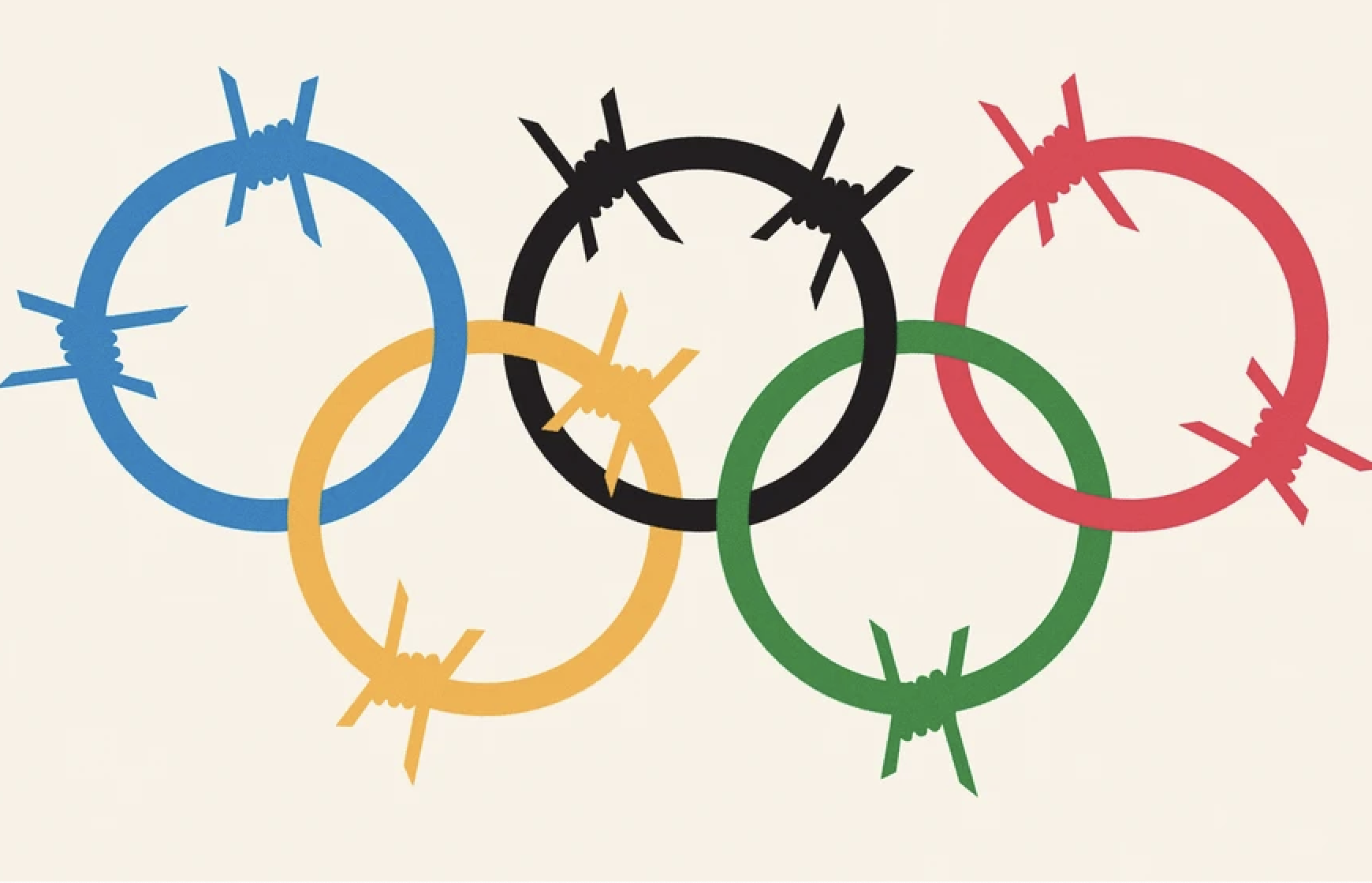
Berlin 1936. Beijing 2022. Must China's Uighurs play the role Jews did in Hitler Olympics?

Berlin 1936. Beijing 2022. Must China's Uighurs play the role Jews did in Hitler Olympics?

It should be evident to all paying attention that the 2022 Beijing Winter Olympics will proceed as planned. Forget the meager protests against China’s cruel and immoral treatment of its own. The bad guys appear to be on the verge of another power-play victory.

Never mind the plight of China’s Uighur Muslims, underground Christian churches, Tibetan Buddhists and all the other groups the Beijing government labels a political threat. They’re of no lasting concern to the international elite who are quick to issue public condemnations, but oh so slow when it comes to follow up.

China’s political power — a byproduct of its enormous economic strength — is just too much to counter. And Beijing’s despotic leaders darn well know it.

This recent Associated Press article — “Beijing Olympics open in 4 months; human rights talk absent” — underscores the point. These opening graphs summarize the story quite well. They're also a reminder of the efficacy of traditional wire journalism’s inverted pyramid style. This piece of the story is long, but essential:

When the International Olympic Committee awarded Beijing the 2008 Summer Olympics, it promised the Games could improve human rights and civil liberties in China.

There is no such lofty talk this time with Beijing’s 2022 Winter Olympics — the first city to host both the Summer and Winter Games — opening in just four months on Feb. 4.

Instead, there are some calls for governments to boycott the Games with 3,000 athletes, sponsors and broadcasters being lobbied by rights groups representing minorities across China.

IOC President Thomas Bach has repeatedly dodged questions about the propriety of holding the Games in China despite evidence of alleged genocide, vast surveillance, and crimes against humanity involving at least 1 million Uyghurs and other largely Muslim minorities. Tibet, a flashpoint in the run up to 2008, remains one still.

“The big difference between the two Beijing Games is that in 2008 Beijing tried to please the world,” Xu Guoqi, a historian at the University of Hong Kong, said in an email to The Associated Press. “In 2022, it does not really care about what the rest of the world thinks about it.”


Please respect our Commenting Policy

Pope's preferred airline goes bust: Alitalia's demise way more than a business story

Pope's preferred airline goes bust: Alitalia's demise way more than a business story

I have many fond memories of family trips to Italy that took place each summer during my childhood. Those summer pilgrimages to visit family and friends also included connecting with the place of my parents’ birth as well as seeing some of the country’s stories sites.

Visiting Vatican City for the first time in 1990 (when I was 14) remains one of the best memories. I would visit there again numerous times — including as a news reporter — in the decades that ensued.

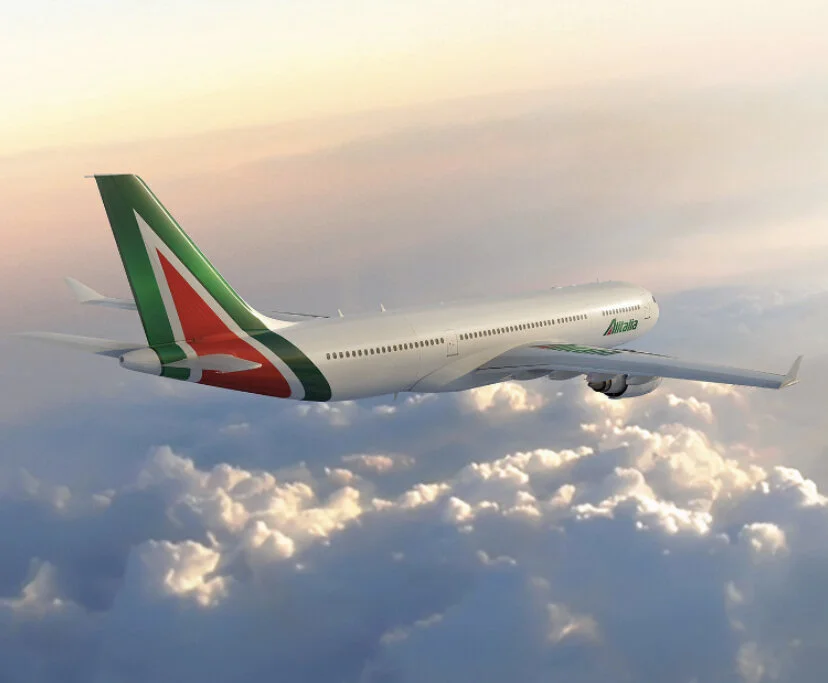
Those New York-Rome trips involved flying with Alitalia, Italy’s national carrier. The airline — known for its nearly-impeccable safety record and sometimes appalling customer service — will officially close on Oct. 15. The announcement, made this past summer, marks the end of an era for an airline founded in 1946. it also marked the end of an era for my family, who were loyal to this brand to a fault.

Why is this a topic for GetReligion?

The airline’s demise and the start of a new one named ITA is a business story with a religion angle that too many news organizations ignored over the past few weeks. There was plenty of coverage regarding ITA buying new planes, potential layoffs and Italian government subsidies that kept the airline afloat for decades.

That religion angle? You see, my family and I weren’t the only loyal Alitalia customers over the years. The most famous has been the pope. It was in 1964, when Pope Paul VI traveled to Israel, when Alitalia became the pontiff’s official airline.

Alitalia put on plenty of miles under the papacy of now-St. Pope John Paul II, who visited 129 countries during his 27 years as head of the Roman Catholic church. The plane used by the pope — known in the press as “Shepherd One” as a way to compare it to the president’s “Air Force One” — continued to be used by Pope Benedict XVI and now Pope Francis. It’s also aboard these flights that the pope holds a news conference and always makes news.

Alitalia and the papacy will forever be intertwined.


Please respect our Commenting Policy

Elephant in sanctuary: Spot the news hooks in shocking changes facing Cincinnati Catholics

Elephant in sanctuary: Spot the news hooks in shocking changes facing Cincinnati Catholics

Let’s do the math. When discussing the future of the American Catholic Church, Joe Biden isn’t the biggest issue on the table. Biden’s liberal Catholicism may be a symptom of larger issues — and since it’s political, it’s easier to cover — but it isn’t the issue that’s going to lock the doors of many parishes from coast to coast, but especially in blue culture zones.

The big issue? Actually, it’s several connected issues — and the elephant in the living room (or sanctuary) is that links them. Hold that thought.

The obvious issues? The priest shortage. Declining enrollment rates in Catholic schools. Closed parishes. You can also add declining Mass attendance numbers in many, but clearly not all, parishes. I would add the collapse in the number of Catholics going to Confession.

This brings us to a very important Cincinnati Enquirer story with this headline: “'Change is difficult': Cincinnati Archdiocese launches shakeup that reaches almost every parish.” Here’s the overture:

The Archdiocese of Cincinnati … launched one of the most ambitious reorganizations in its 200-year history, potentially changing when and where almost a half-million Catholics attend Mass, school and other activities connected to their faith.

Known as Beacons of Light, the restructuring process will combine the archdiocese’s 208 parishes into 60 “families of parishes,” which will begin sharing priests and resources as early as next year.

Unlike past attempts to remake the archdiocese, which rarely got out of the planning stages, Beacons of Light is backed by Archbishop Dennis Schnurr and will in some way touch almost every Catholic and priest in the archdiocese’s 19 counties.

The goal, church officials say, is to eventually unite the 60 new parish families into single parishes.

So, the goal is 60 parishes instead of 208?


Please respect our Commenting Policy