International News

What does the New York Times mean when it reports on 'religious leaders' in Afghanistan?

What does the New York Times mean when it reports on 'religious leaders' in Afghanistan?

Anyone who has read GetReligion for more than a month probably knows that I have always been concerned about the lack of press coverage of endangered religious minorities in large parts of the world — including nations such as Afghanistan.

It’s crucial to remember, when talking about religious freedom issues and the Universal Declaration of Human Rights, that it is tragically common for members of a major world religion to punish other members of their own faith because of strong disagreements about doctrine and tradition. It is common to see persecution of those who have no faith — think atheists and agnostics — as well as those who have converted to a new faith.

As a reminder, here is Article 18 of that landmark United Nations document:

Everyone has the right to freedom of thought, conscience and religion; this right includes freedom to change his religion or belief, and freedom, either alone or in community with others and in public or private, to manifest his religion or belief in teaching, practice, worship and observance.

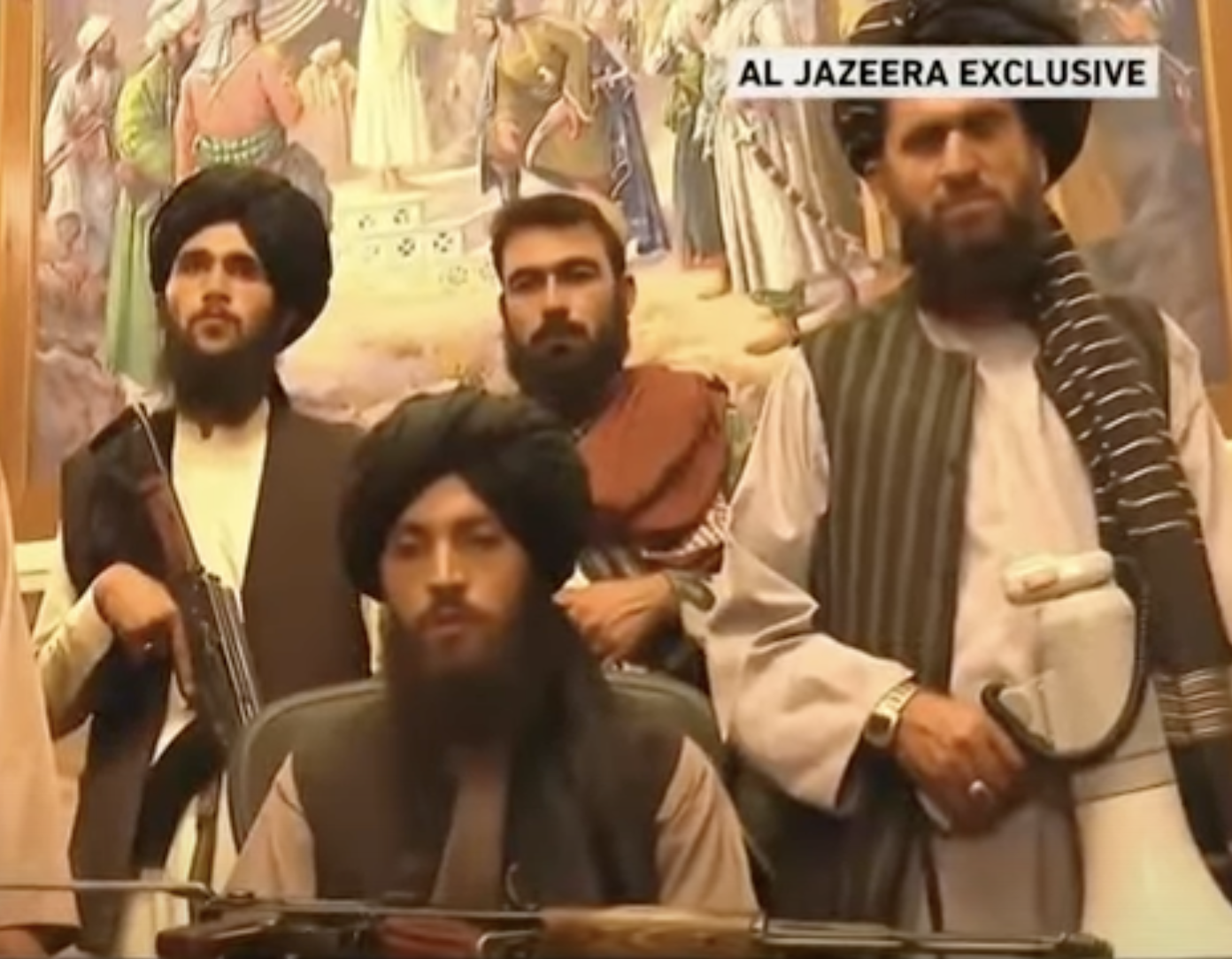
With all of that in mind, it’s easy to understand why I was interested in this headline atop a New York Times report: “The Taliban holds first meeting of religious leaders since taking Kabul.

The key, of course, is the meaning of these two words — “religious leaders.”

If you follow news updates, you know that the ancient Jewish community in Afghanistan is long gone — unless merchant Zablon Simintov chose to attend this meeting. Was there a Catholic representative at the meeting? Were leaders of the growing underground church invited? Did they dare to come out of hiding? What about the Muslim leaders of progressive (for lack of a better word) mosques who cooperated with Western leaders during the past 20 years?

Who were these “religious leaders”?


Please respect our Commenting Policy

Afghanistan's Catholic 'hidden believers' and the underreported work of the church

Afghanistan's Catholic 'hidden believers' and the underreported work of the church

The news cycle in recent weeks has been dominated by the pullout in Afghanistan and the fallout that has taken place as a result of such a decision — especially the choice to remove most U.S. troops before evacuating American citizens and Afghans who worked with Western groups.

Much of the coverage has centered around the Taliban’s takeover and the tragic events unfolding at the Kabul airport. Meanwhile, others who are in danger — including Christians and members of other religious minorities — are in hiding.

I covered the 9/11 attacks in New York City that day. I can’t help but recall that morning with the 20th anniversary of those attacks approaching. The desperate actions of those stuck in the World Trade Center that day resulted in people jumping off those burning buildings. The very same thing happened just last week when Afghans looking to flee the Taliban grabbed onto military planes as they took off, only to fall out of the sky.

Those images served as a bookend to the U.S.’s involvement in Afghanistan. Rod Dreher, who covered the 9/11 attacks and was my colleague at the New York Post at the time, recently noted the following regarding the U.S.’s time in Afghanistan and the nation-building fiasco that took place:

We are such an unserious nation. I am a practicing Christian who hates the way Christians are treated in many Islamic countries. But I have enough common sense to know that it does not advance America’s national interest to give host countries the finger by displaying a symbol of Christianity to defy their local norms.

This isn’t a post about the culture wars or what the U.S. did right and wrong in Afghanistan since 2002. I will let others do that. Instead, I want to place a spotlight on the important work of Christian groups across Afghanistan over the years, the little mention they have received by the secular press and how one recent story illustrates both the plight of Afghan refugees and how those who converted to Catholicism who now live outside the country have been crucial in helping people get out.

What has largely been viewed as a military operation until now is quickly turning into a humanitarian mission, one that may yet require some military support. Nonetheless, the major newspapers and cable channels in this country still largely cover the Afghan crisis through a political lens — like they do most subjects — and have largely underreported the work of the church.


Please respect our Commenting Policy

What collapse of the Afghan gov't means for Christians and other religious minorities

What collapse of the Afghan gov't means for Christians and other religious minorities

On Oct. 19, 2001, as I drove to a prayer breakfast in the Oklahoma City suburb of Edmond, the radio crackled with news of U.S. special forces on the ground in Afghanistan.

This was not a particularly shocking development since air and missile strikes in retaliation for 9/11 had started 12 days earlier.

Then religion editor for The Oklahoman, I quoted the breakfast’s keynote speaker — Steve Largent, a Pro Football Hall of Fame member then serving in Congress — in the story I wrote.

“We have been sent a very important wake-up call," Largent said that Friday morning. "Let's not go back to sleep."

All of us — at that point — felt an urgency about the war in Afghanistan and the effort to destroy Osama bin Laden's terrorist network.

Nearly 20 years later, my attention had diverted elsewhere until Afghanistan burst back into the headlines — in a major way — this past week.

It’s impossible to keep up with all the rapid-fire developments, but these stories delve into compelling religion angles:

Young Afghans speak out about rapidly changing life under the Taliban (by Meagan Clark, ReligionUnplugged)

Refugee aid groups criticize Biden for stumbles in evacuating ‘desperate’ Afghans (by Emily McFarlan Miller and Jack Jenkins, Religion News Service)

Taliban begins targeting Christians while cementing control over desperate Afghans (by Mindy Belz, World)

Afghan-American scholar agonizes over homeland, lashes out at Taliban, U.S. (by Mark A. Kellner, Washington Times)

Afghanistan’s Christians, small in number, have gone underground, expert says (by Mark A. Kellner, Washington Times)


Please respect our Commenting Policy

New podcast: When the Taliban cracks down, will all the victims be worthy of news coverage?

New podcast: When the Taliban cracks down, will all the victims be worthy of news coverage?

There’s no question that the botched U.S. efforts to evacuate at-risk people in Afghanistan is the big story of the hour, the day, the week and for the foreseeable future — especially if this turns into a grand-scale hostage nightmare.

But who is at risk? What kinds of people are trapped inside the new kingdom of the Taliban?

That was the subject that dominated this week’s “Crossroads” podcast (click here to tune that in). And as you would expect, host Todd Wilken and I were especially interested in the role that religion has been playing in this story — if journalists are willing to cover that angle.

So who is at risk? Here is a typical wording, care of an Associated Press update:

The Kabul airport has been the focus of intense international efforts to get out foreigners, Afghan allies and other Afghans most at risk of reprisal from the Taliban insurgents.

With the Taliban controlling the Afghan capital, including the airport’s outer perimeter, White House national security adviser Jake Sullivan said that U.S. citizens are able to reach the airport, but were often met by large crowds at the airport gates.

But, wait. What about the news reports that U.S. forces cannot help U.S. citizens avoid Taliban checkpoints in order to reach the airport, while British and French military personnel are doing precisely that for their own people? That’s a very hot story right now, with U.S. diplomats and the White House saying that the can work with the Taliban to ensure safety.

So let’s pause and flesh out some of the details in that AP phrase about who is at risk, as in “foreigners, Afghan allies and other Afghans most at risk.” Who is most at risk, right now?

* Obviously, American journalists have every right to focus on risks to American citizens.

* In particular, we can assume that Taliban activists are tracing Americans who have led or worked with NGOs, religious aid groups, churches. Then there are the Western-style think tanks, schools, medical groups, etc.

* Obviously, there are the thousands of Afghans who cooperated with and even worked for the U.S. government, U.S.-backed Afghan military units and the kinds of “foreign” organizations mentioned in the previous item.


Please respect our Commenting Policy

For Albania's 'sworn virgins,' the West's culture war over gender roles is a non-starter

For Albania's 'sworn virgins,' the West's culture war over gender roles is a non-starter

Few issues are more contentious in today’s culture wars than those involving gender and sexuality, which is why they attract a substantial amount of hot-button media attention. That includes religion-beat coverage, of course.

Those labeled traditionalists generally feel one way on the issue and so-called progressives tend to feel just the opposite way. It’s a divide that cuts across virtually every faith group, leading to schisms and a great deal of congregational and individual pain.

Nor, I should point out, is there across-the-board agreement on these issues in secular circles.

On occasion a story turns up that seems to turn the issue on its head, scrambling our easy use of the traditionalist and progressive labels. The New York Times recently ran one such piece out of Albania. I found it fascinating. The headline: “With More Freedom, Young Women in Albania Shun Tradition of ‘Sworn Virgins’.”

Reading between the lines, one unstated point I take from the story is that today’s growing acceptance, by some, of more fluid gender roles predates the post-modern influences that today’s cable TV news polemists, and others — including politicians — argue are causative.

On the other hand, I’d be remiss to not also note that this Albanian cultural quirk is an isolated and rapidly disappearing practice as the small Balkan nation’s rigid gender roles loosen in the age of globalization. So be careful not to draw too many broad generalizations from it.

In short, gender roles, like everything else in life worth serious attention, are complicated concepts and have been across human history. Here’s the story’s top, which is long, but essential:

LEPUSHE, Albania — As a teenager locked in a patriarchal and tradition-bound mountain village in the far north of Albania, Gjystina Grishaj made a drastic decision: She would live the rest of her life as a man.


Please respect our Commenting Policy

With the Taliban takeover, world Islam -- and the press -- have much at stake in the future

With the Taliban takeover, world Islam -- and the press -- have much at stake in the future

The return of Taliban rule after 20 years will likely produce the typical mayhem and murder when a regime suddenly collapses. Longer-term, immense challenges face the people of Afghanistan under the "Islamic Emirate" and, externally, the takeover will intensify a host of international military, security, political and humanitarian problems.

But much is also at stake for world Islam, a crucial aspect that the media have tended to slight thus far, as tmatt has already observed here at GetReligion. Journalists may be witnessing a new phase in what Georgetown University expert John Esposito has called a long-running "struggle for the soul of Islam."

The fallout could last for years, or even a generation, because it will be highly difficult to again dislodge Taliban control — from within or without. Though plans are unknown, Afghanistan’s rulers may well reimpose harsh practices that had provoked widespread condemnation (without, however, losing religiously freighted diplomatic recognition by Saudi Arabia). And they could again provide a strategic national sanctuary from which terrorists could target innocent civilians in the despised West.

The key, of course, is that all this would be proclaimed as God's will, enacted in the name of Islam and for its benefit. The Taliban announce religious zeal for a strict construction of Islam's dominant Sunni branch in their very name, which derives from "student" in the Pashto language.

Militant movements that include the Taliban have achieved special appeal for youthful Muslim devotees and some government backing. They have variously claimed religious sanction for destruction of historic artifacts, torture, mutilation, beheading and stoning to death, execution without trial, kidnaping for ransom, forced marriages and sexual slavery, drug trafficking and thievery, killing of envoys and charity workers, and persecution not only of Christians and Jews and Yazidis but even moreso of fellow Muslims who dissent (see scholar Paul Marshall’s book “Silenced: How Apostasy and Blasphemy Codes are Choking Freedom Worldwide“). Not to mention banning music and movies, kites and dolls.

The most severe consequences have fallen upon Muslim girls and women, not merely put under strict clothing mandates, but denied human rights, education beyond age 10 or careers outside the home.


Please respect our Commenting Policy

When it comes to covering disasters in Haiti, the Catholic media have the best connections

When it comes to covering disasters in Haiti, the Catholic media have the best connections

It’s already shaping up to be a bad week: The collapse of Afghanistan and the earthquake in Haiti and the coronavirus figures that keep on going up and up; how much worse can it get?

Quite a bit. Tropical Storm Grace dumped torrential rains on Haiti on Monday. Oh, and Lebanon is in economic collapse.

With tmatt already covering the religion news landscape in Afghanistan (be sure to catch his note on the U.S. embassy in Kabul being tone deaf to Islamic values), I turned my attention to Haiti, the recipient of a 7.2 magnitude earthquake on Saturday that has killed at least 1,300, injured at least 5,700 and leveled buildings in an isolated corner of the island that’s a four-hour drive from Port-au-Prince, the capital.

Finding a religion angle when reporting a disaster is challenge enough, but finding an original angle is harder. Happily, the New York Times foreign desk came up with a jewel of a story about how the role that the churches of Haiti are playing in all of this.

For many Haitians, their only source of aid throughout their lives, in the absence of strong government institutions, has been the church, a part of Haiti’s landscape since the era of European colonialism and slavery.

Many churches lay in ruins after the 7.2 magnitude earthquake on Saturday morning,
In the city of Les Cayes, which was particularly devastated by the quake, clerics despaired even as they sought to project hope and resolve to rebuild.

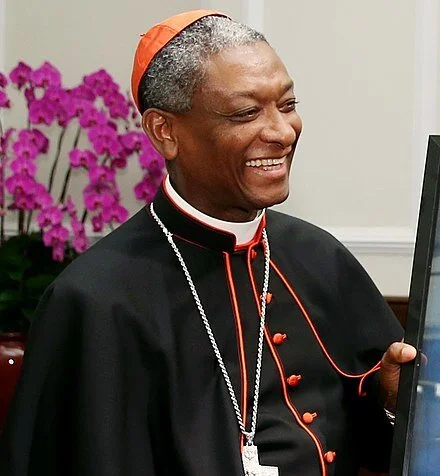
“We are the only thing here,” said the Rev. Yves Joel Jacqueline, 44, who works at cathedral in Les Cayes with Haiti’s cardinal, Bishop Chibly Langlois, who was hurt in the quake. “There is no support from the government.”

Langlois, who is pictured with this post, is Haiti’s first cardinal, appointed to the post by Pope Francis in 2014. Of all the articles I’ve scanned, none seem to know what kind of injuries he has.

Having never been to Haiti, I wasn’t aware that churches and their relief agencies are often the only safety net for many people.


Please respect our Commenting Policy

Trying to spot religion 'ghosts' in the dramatic fall of America's version of Afghanistan (#FAIL)

Trying to spot religion 'ghosts' in the dramatic fall of America's version of Afghanistan (#FAIL)

The whole idea of Axios, as a news publication, is to take massive, complex stories and — using a combination of bullet lists and URLs to additional information — allow readers to quickly scan through the news of the previous day. The Axios team calls this “smart brevity.”

More often than not, this turns out to be a crunched summary of the big ideas in mainstream coverage. Thus, it’s logical to look at this online newsletter’s take — “1 big thing: System failure” — on the horrific scenes that unfolded yesterday in Kabul, Afghanistan.

The big question: What did American diplomats, intellectuals and politicos miss in the big picture?

* The United States was literally run out of town after 20 years, $1 trillion and 2,448 service members' lives lost.

* Mohammad Naeem, the spokesman for the Taliban's political office, told Al Jazeera today: "Thanks to God, the war is over in the country."

Why it matters: A friend who spent more than a decade as a U.S. official in Afghanistan and Iraq texted me that the collapse "shows we missed something fundamental — something systemic in our intel, military and diplomatic service over the decades — deeper than a single (horrible) decision."

* As the BBC's Jon Sopel put it: "America's attempt to export liberal democracy to Afghanistan is well and truly over. …”

What were the key tasks in this “export of liberal democracy”? Here is my two-point summary.

First, the United States and its allies had to build an Afghan military that could protect this project. #FAIL

Second, the Western nation builders had to sell a vision of an Islamic culture that, somehow, embraced American values on a host of different issues — from free elections to freedom for women, from Western-style education to respect for the Sexual Revolution in all its forms. This Georgetown University faculty lounge vision of Islam needed to be more compelling than the one offered by the Taliban. #FAIL

Looking at this from a journalism perspective, I think it is more than symbolic that most of the elite media coverage of the fall of this new, alternative Afghanistan have almost nothing to say about Islam and, in particular, the divisions inside that stunningly complex world religion. Was this, in any way, a “religion story”? Apparently not. #FAIL

There is way too much coverage to look at, of course. However, it does help to look at The New York Times, since that is the straw that stirs the drink in American media. My goal was to find material that contrasted the Taliban’s vision of Islam with the vision offered by the U.S. State Department.


Please respect our Commenting Policy

Sports and religion: Simone Biles, mental health and why no mention of rosaries

Sports and religion: Simone Biles, mental health and why no mention of rosaries

It’s mid-August, so it’s the time of year when the Lisi clan leaves the hustle-and-bustle of New York City for a few weeks for the quieter environs of Long Island’s East End. It’s from this undisclosed beach location where I wrote this post about the latest goings on in the Catholic world.

It’s has been a busy summer for Catholicism and this month could be even busier. I’ve been distracted, in part, by sports. The subsiding of the pandemic brought back sports with a roar this summer. The centerpiece for it all has been the pandemic-delayed Tokyo Games.

The Olympics have been a great distraction from the Delta variant, our insane politics and the culture wars that dominate the news cycle every minute of each day.

It’s true that sports do intersect with these topics, but that’s why I typically limit my Twitter minutes this time of year. I’ve been fascinated by the athletes — and in particular the ones with ties to Catholicism — that dominated the recent Summer Games.

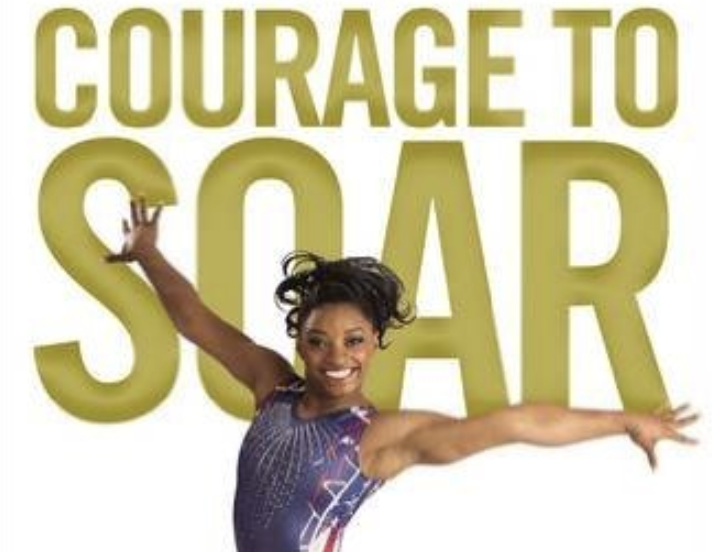
The headliner, of course, was gymnast Simone Biles and her decision to temporarily withdraw from competition to prioritize her mental health drew criticism, but also massive praise.

Her actions put a spotlight on athletes’ mental health, but also highlighted the inability of the mainstream press to delve deeper and ask pertinent questions regarding her faith. You see, Biles is a Roman Catholic, something written about leading up to the 2016 Summer Olympics in Rio. You wouldn’t know it from the news coverage of the past few weeks.

The lack of mentions in news accounts of Biles being Catholic in regards to her mental wellness spilled over this past Monday when the gymnast’s Instagram account made news. She claimed to be pro-abortion-rights in a post, triggering plenty of mainstream news coverage. In a subsequent Twitter post, Biles wrote that in no way did she favor aborting babies as an alternative to the foster care system. Biles grew up in the foster care system and was later adopted.

Again, none of the mainstream news coverage included that she is an active Roman Catholic.


Please respect our Commenting Policy