International News

With the Taliban takeover, world Islam -- and the press -- have much at stake in the future

With the Taliban takeover, world Islam -- and the press -- have much at stake in the future

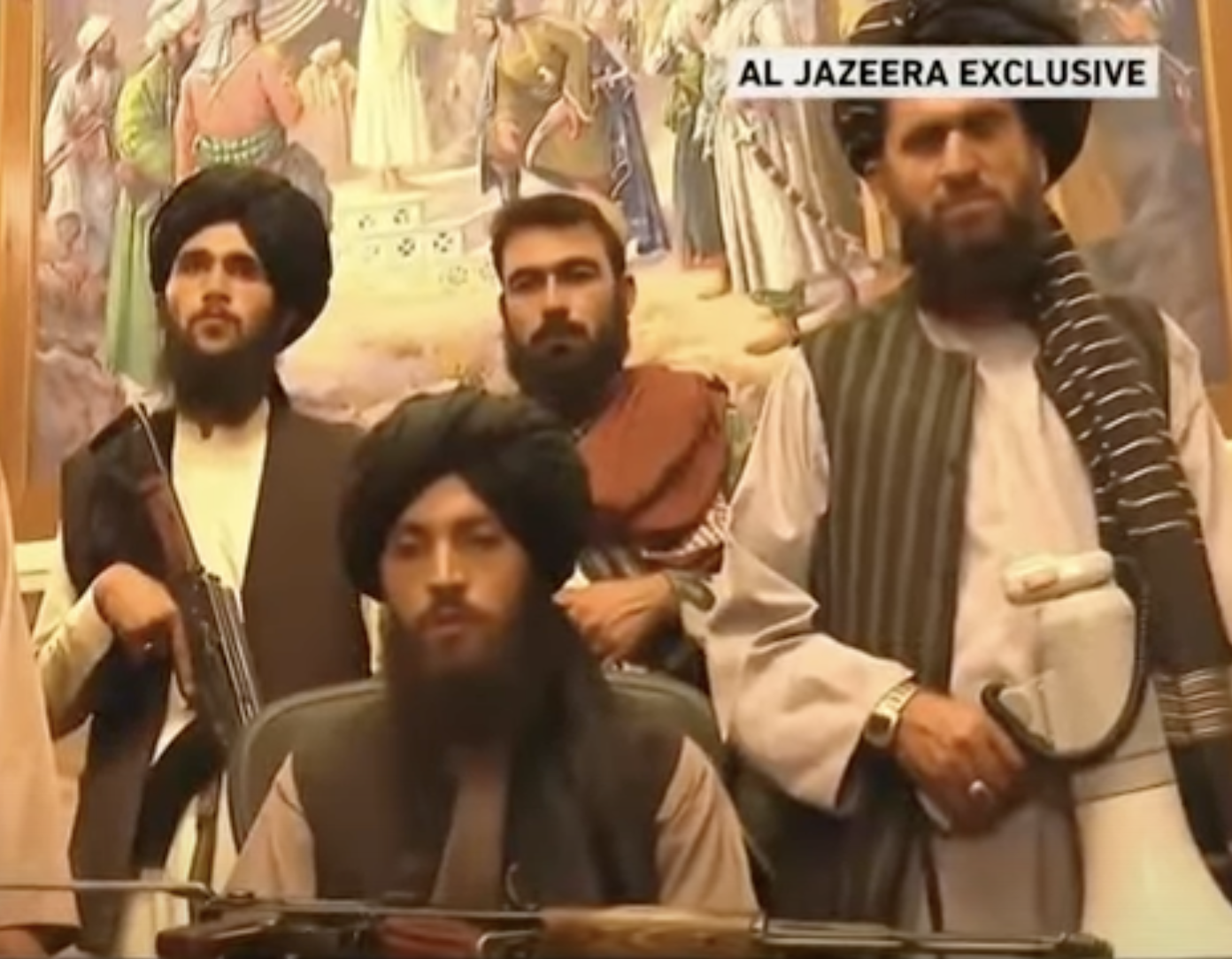
The return of Taliban rule after 20 years will likely produce the typical mayhem and murder when a regime suddenly collapses. Longer-term, immense challenges face the people of Afghanistan under the "Islamic Emirate" and, externally, the takeover will intensify a host of international military, security, political and humanitarian problems.

But much is also at stake for world Islam, a crucial aspect that the media have tended to slight thus far, as tmatt has already observed here at GetReligion. Journalists may be witnessing a new phase in what Georgetown University expert John Esposito has called a long-running "struggle for the soul of Islam."

The fallout could last for years, or even a generation, because it will be highly difficult to again dislodge Taliban control — from within or without. Though plans are unknown, Afghanistan’s rulers may well reimpose harsh practices that had provoked widespread condemnation (without, however, losing religiously freighted diplomatic recognition by Saudi Arabia). And they could again provide a strategic national sanctuary from which terrorists could target innocent civilians in the despised West.

The key, of course, is that all this would be proclaimed as God's will, enacted in the name of Islam and for its benefit. The Taliban announce religious zeal for a strict construction of Islam's dominant Sunni branch in their very name, which derives from "student" in the Pashto language.

Militant movements that include the Taliban have achieved special appeal for youthful Muslim devotees and some government backing. They have variously claimed religious sanction for destruction of historic artifacts, torture, mutilation, beheading and stoning to death, execution without trial, kidnaping for ransom, forced marriages and sexual slavery, drug trafficking and thievery, killing of envoys and charity workers, and persecution not only of Christians and Jews and Yazidis but even moreso of fellow Muslims who dissent (see scholar Paul Marshall’s book “Silenced: How Apostasy and Blasphemy Codes are Choking Freedom Worldwide“). Not to mention banning music and movies, kites and dolls.

The most severe consequences have fallen upon Muslim girls and women, not merely put under strict clothing mandates, but denied human rights, education beyond age 10 or careers outside the home.
Please respect our Commenting Policy

When it comes to covering disasters in Haiti, the Catholic media have the best connections

When it comes to covering disasters in Haiti, the Catholic media have the best connections

It’s already shaping up to be a bad week: The collapse of Afghanistan and the earthquake in Haiti and the coronavirus figures that keep on going up and up; how much worse can it get?

Quite a bit. Tropical Storm Grace dumped torrential rains on Haiti on Monday. Oh, and Lebanon is in economic collapse.

With tmatt already covering the religion news landscape in Afghanistan (be sure to catch his note on the U.S. embassy in Kabul being tone deaf to Islamic values), I turned my attention to Haiti, the recipient of a 7.2 magnitude earthquake on Saturday that has killed at least 1,300, injured at least 5,700 and leveled buildings in an isolated corner of the island that’s a four-hour drive from Port-au-Prince, the capital.

Finding a religion angle when reporting a disaster is challenge enough, but finding an original angle is harder. Happily, the New York Times foreign desk came up with a jewel of a story about how the role that the churches of Haiti are playing in all of this.

For many Haitians, their only source of aid throughout their lives, in the absence of strong government institutions, has been the church, a part of Haiti’s landscape since the era of European colonialism and slavery.

Many churches lay in ruins after the 7.2 magnitude earthquake on Saturday morning,
In the city of Les Cayes, which was particularly devastated by the quake, clerics despaired even as they sought to project hope and resolve to rebuild.

“We are the only thing here,” said the Rev. Yves Joel Jacqueline, 44, who works at cathedral in Les Cayes with Haiti’s cardinal, Bishop Chibly Langlois, who was hurt in the quake. “There is no support from the government.”

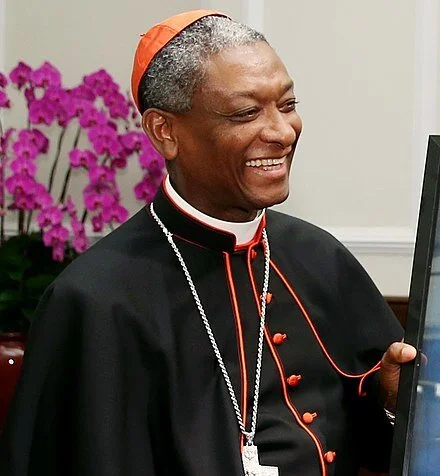
Langlois, who is pictured with this post, is Haiti’s first cardinal, appointed to the post by Pope Francis in 2014. Of all the articles I’ve scanned, none seem to know what kind of injuries he has.

Having never been to Haiti, I wasn’t aware that churches and their relief agencies are often the only safety net for many people.


Please respect our Commenting Policy

Trying to spot religion 'ghosts' in the dramatic fall of America's version of Afghanistan (#FAIL)

Trying to spot religion 'ghosts' in the dramatic fall of America's version of Afghanistan (#FAIL)

The whole idea of Axios, as a news publication, is to take massive, complex stories and — using a combination of bullet lists and URLs to additional information — allow readers to quickly scan through the news of the previous day. The Axios team calls this “smart brevity.”

More often than not, this turns out to be a crunched summary of the big ideas in mainstream coverage. Thus, it’s logical to look at this online newsletter’s take — “1 big thing: System failure” — on the horrific scenes that unfolded yesterday in Kabul, Afghanistan.

The big question: What did American diplomats, intellectuals and politicos miss in the big picture?

* The United States was literally run out of town after 20 years, $1 trillion and 2,448 service members' lives lost.

* Mohammad Naeem, the spokesman for the Taliban's political office, told Al Jazeera today: "Thanks to God, the war is over in the country."

Why it matters: A friend who spent more than a decade as a U.S. official in Afghanistan and Iraq texted me that the collapse "shows we missed something fundamental — something systemic in our intel, military and diplomatic service over the decades — deeper than a single (horrible) decision."

* As the BBC's Jon Sopel put it: "America's attempt to export liberal democracy to Afghanistan is well and truly over. …”

What were the key tasks in this “export of liberal democracy”? Here is my two-point summary.

First, the United States and its allies had to build an Afghan military that could protect this project. #FAIL

Second, the Western nation builders had to sell a vision of an Islamic culture that, somehow, embraced American values on a host of different issues — from free elections to freedom for women, from Western-style education to respect for the Sexual Revolution in all its forms. This Georgetown University faculty lounge vision of Islam needed to be more compelling than the one offered by the Taliban. #FAIL

Looking at this from a journalism perspective, I think it is more than symbolic that most of the elite media coverage of the fall of this new, alternative Afghanistan have almost nothing to say about Islam and, in particular, the divisions inside that stunningly complex world religion. Was this, in any way, a “religion story”? Apparently not. #FAIL

There is way too much coverage to look at, of course. However, it does help to look at The New York Times, since that is the straw that stirs the drink in American media. My goal was to find material that contrasted the Taliban’s vision of Islam with the vision offered by the U.S. State Department.


Please respect our Commenting Policy

Sports and religion: Simone Biles, mental health and why no mention of rosaries

Sports and religion: Simone Biles, mental health and why no mention of rosaries

It’s mid-August, so it’s the time of year when the Lisi clan leaves the hustle-and-bustle of New York City for a few weeks for the quieter environs of Long Island’s East End. It’s from this undisclosed beach location where I wrote this post about the latest goings on in the Catholic world.

It’s has been a busy summer for Catholicism and this month could be even busier. I’ve been distracted, in part, by sports. The subsiding of the pandemic brought back sports with a roar this summer. The centerpiece for it all has been the pandemic-delayed Tokyo Games.

The Olympics have been a great distraction from the Delta variant, our insane politics and the culture wars that dominate the news cycle every minute of each day.

It’s true that sports do intersect with these topics, but that’s why I typically limit my Twitter minutes this time of year. I’ve been fascinated by the athletes — and in particular the ones with ties to Catholicism — that dominated the recent Summer Games.

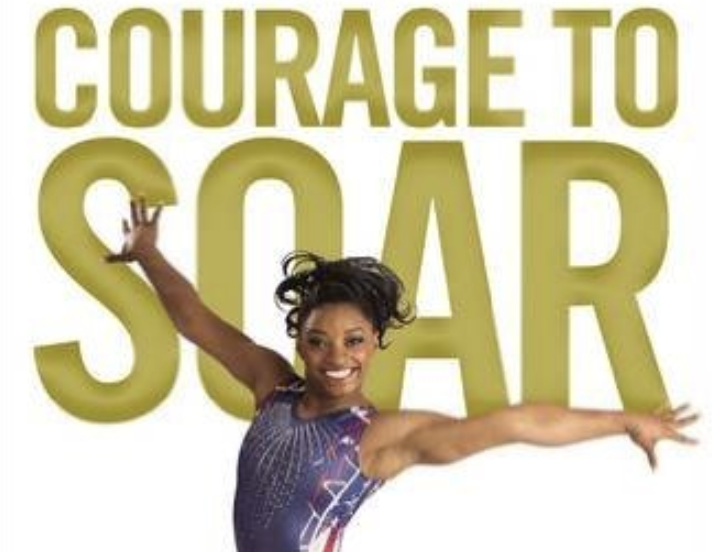
The headliner, of course, was gymnast Simone Biles and her decision to temporarily withdraw from competition to prioritize her mental health drew criticism, but also massive praise.

Her actions put a spotlight on athletes’ mental health, but also highlighted the inability of the mainstream press to delve deeper and ask pertinent questions regarding her faith. You see, Biles is a Roman Catholic, something written about leading up to the 2016 Summer Olympics in Rio. You wouldn’t know it from the news coverage of the past few weeks.

The lack of mentions in news accounts of Biles being Catholic in regards to her mental wellness spilled over this past Monday when the gymnast’s Instagram account made news. She claimed to be pro-abortion-rights in a post, triggering plenty of mainstream news coverage. In a subsequent Twitter post, Biles wrote that in no way did she favor aborting babies as an alternative to the foster care system. Biles grew up in the foster care system and was later adopted.

Again, none of the mainstream news coverage included that she is an active Roman Catholic.


Please respect our Commenting Policy

Twist on familiar assimilation questions: Where are trends leading Islam in U.K. (and U.S.)?

Twist on familiar assimilation questions: Where are trends leading Islam in U.K. (and U.S.)?

THE QUESTION:

Where are current trends leading Islam in the U.K. (and what about the U.S.)?

THE RELIGION GUY'S ANSWER:

As in the United States, the Muslim minority population is growing steadily in the United Kingdom, up 107% since 2001 to exceed 3 million -- even as participation in many Christian churches declines.

The odds are good that British society will be reshaped by the inner workings among followers of the world's second-largest religion. That underscores the importance of the new book "Among the Mosques: A Journey Across Muslim Britain" (Bloomsbury) by Ed Husain.

This depiction of Britain is rather unnerving, though France apparently faces a more fraught situation. There the enforcement of "laicite," rigid separation of religion from the state originally aimed at Christianity, limits sensitivity to Muslim concerns and adds to long-running alienation and failure to assimilate. Current disputes, for instance, involve public schools' headscarf bans and unwillingness to provide alternatives to pork on cafeteria menus.

British author Husain is a practicing Muslim, political consultant and adjunct professor at America's Georgetown University. A sympathizer with militant "Islamism" in his younger days, he now advocates a tolerant and modernized form of the faith and that shapes his narrative.

Just before COVID-19 hit, Husain toured London and five other cities in England, two in Scotland, and one each in Wales and Northern Ireland, mingling with fellow believers and non-Muslims at the grass roots to discern trends. His knowledge of the faith, reputation as an author on Islam, study overseas and command of languages like Arabic and Urdu aided the sort of access denied to outside investigators.

While older British Muslims tended to assimilate, he found, many more recent immigrants are suspicious or hostile toward their adopted nation and their neighbors, isolating to create what's somewhat a country within a country.


Please respect our Commenting Policy

No vacation at Vatican? Thinking about an 'August surprise' from Pope Francis

No vacation at Vatican? Thinking about an 'August surprise' from Pope Francis

If you have lived and worked in Washington, D.C., you know that Beltway-land has its own unique media traditions.

For example, no one is surprised when politicos issue somewhat embarrassing statements and proposals late on Friday afternoons, especially during the seasons in which half of the city’s journalists and chattering-class superstars are parked in traffic on the Chesapeake Bay Bridge in Annapolis on their way to the beach. After all, who pays attention to the news on Saturdays and it’s too late to do a major feature for the Sunday newspaper.

Then there is the “October surprise,” which is when a presidential candidate who is trailing — especially an incumbent president — makes a wild domestic policy proposal, foreign policy gesture or accusation against his enemies in an attempt to jump-start the race and gain ground in the polls.

With that in mind, it’s interesting to pause and think about an interesting Crux analysis piece by editor and super-insider John L. Allen, Jr., that just ran with this headline: “Pope’s ‘August surprise’ could be most counter-cultural stand of all.” Allen didn’t make a specific proposal for an upcoming bombshell, but did say that this pope has a history of making news during a month when Italians — it's almost a sacred tradition — are on vacation.

I asked Clemente Lisi, our resident Italian and Catholic-media pro, what he thought of this thesis. He quickly answered — even though (irony alert) he is on vacation this week. His email said:

I know the feeling well. I spent every August in Italy as a child visiting relatives and being on vacation. And yes, everything was closed!

This papal August surprise could very well be a symptom of the media’s lack of attention during this month. In the pre-Donald Trump years, August was typically considered a “slow month” — at least in the United States — and also a time when many editors took time off after a long year. The same thing happens in Italy, probably on a grander scale.


Please respect our Commenting Policy

Plug-In: Who is the alleged Baptist minister accused in Haiti's presidential assassination?

Plug-In: Who is the alleged Baptist minister accused in Haiti's presidential assassination?

In 2018, I was blessed to visit Haiti with an American mission team and write about a Christian humanitarian aid organization that drills water wells around the world.

I keep thinking about that trip — and the amazing people I met — as I read about the latest turmoil facing that Caribbean island nation.

This week, I hand off the top part of my column to ReligionUnplugged’s managing editor, Meagan Clark. She found an interesting detail about the self-described pastor accused in the Haitian president’s assassination:

By Meagan Clark

An American suspect in Haiti’s presidential assassination, Christian Emmanuel Sanon, 63, was arrested at his gated home in Port-au-Prince by Haitian police last week.

Sanon identifies himself on social media as a “Medical Doctor and Christian Minister.” The Sun Sentinel of Fort Lauderdale, Florida, may have been the first to unearth that Sanon did not have a license to practice medicine in Florida. At ReligionUnplugged, we wondered about his faith background, credentials and motivations.

The New York Times, TIME and others reported that Sanon attended Midwestern Baptist Theological Seminary, citing the Florida Baptist Historical Society. But when I called Midwestern, the registrar’s office said the school has no records of Sanon ever attending, online or in-person.

A Florida Baptist Society representative told ReligionUnplugged that Sanon wrote in a biographical profile of himself that he attended Midwestern, and the society relies on honesty to compile its biographies. The representative said that in fact, the society has since learned that Sanon attended a training course that Midwestern sponsored, not the seminary itself. The Florida Baptist Society has updated its website.


Please respect our Commenting Policy

Catholic worship wars rage on: Pope Francis decides Latin Mass is too divisive to embrace

Catholic worship wars rage on: Pope Francis decides Latin Mass is too divisive to embrace

The message to Catholic traditionalists in Southwest England was blunt, yet pointed.

Because of the new Traditionis Custodes ("Guardians of the tradition") document from Pope Francis, and the wishes of Bishop Declan Lang of the Diocese of Clifton, the upcoming "Latin Mass at Glastonbury will be the final Latin Mass here."

The message delivered to another circle of believers there was quite different. As a "Clifton Diocese Initiative," the "LGBT+ Mass" series at a Bristol church would continue because the bishop "wishes to express pastoral care and concern for our Catholic LGBT+ community."

Thus, the Catholic worship wars rage on.

This bolt of liturgical lightning from Pope Francis struck one of his predecessor's signature achievements. In his 2007 apostolic letter Summorum Pontificum ("Of the Supreme Pontiffs"), the now retired Pope Benedict XVI declared that the post-Vatican II rite was the "ordinary form" for the church, but that the older Latin Mass was an "extraordinary form" and could be encouraged when requested by the faithful.

While Benedict said these rites could coexist, Pope Francis argued -- in a letter accompanying Traditionis Custodes -- that the old Latin Mass has become too divisive.

Benedict was "comforted" by his belief that the "two forms of the … Roman Rite would enrich one another," wrote Pope Francis, but some bishops now believe the Latin Mass has been "exploited to widen the gaps, reinforce the divergences, and encourage disagreements that injure the Church."

Thus, Francis declared, bishops must guarantee that any priests and laity they allow to celebrate the old rite have accepted the validity of Vatican II and its "Novus Ordo" Mass. Bishops may "designate one or more locations where the faithful adherents of these groups may gather" for approved Latin Masses, but these services may not be held in "parochial churches" and there should be no new parishes created for the extraordinary rite.


Please respect our Commenting Policy

Step back from digital news blitz with deeply layered religion pieces about China and India

Step back from digital news blitz with deeply layered religion pieces about China and India

The web has seduced us — and by us I mean me — into a life of 24-7 journalistic overload. For me, that can mean running out of bandwidth before getting to a story that actually deserves close attention. My limited brain can digest only so much before it shorts out.

Even a strung-out news junkie such as myself needs to log off every so often. Self-styled media literacy is as addictive as blissful ignorance.

Religion coverage has suffered greatly in this new journalistic reality. We’re provided an abundance of attention-grabbing stories about clergy hypocrisy, largely involving sexual, material or political excess. We get too few stories that connect the data points of everyday religious complexity that allows us to understand issues more deeply.

Here are two recent stories that struck me as worthy of the attention that’s too often withheld. One involves China, the other India. The only connection between them is that they both reveal deep truths about the religious reality of the societies they report on.

Let’s start with China, the more straightforward of the two stories.

It comes from Foreign Policy and ran under the intriguing, but incomplete, headline: “The Chinese Communist Party Is Scared of Christianity.”

Why incomplete? Because as the writer notes, it’s not just Christianity that scares China’s totalitarians rulers. It’s all unauthorized official thinking, religious or otherwise.

Did the headline mention Christianity alone because editors figured that would play best with their mostly western readership? Is this another example of algorithmic journalism?


Please respect our Commenting Policy