International News

Twist on familiar assimilation questions: Where are trends leading Islam in U.K. (and U.S.)?

Twist on familiar assimilation questions: Where are trends leading Islam in U.K. (and U.S.)?

THE QUESTION:

Where are current trends leading Islam in the U.K. (and what about the U.S.)?

THE RELIGION GUY'S ANSWER:

As in the United States, the Muslim minority population is growing steadily in the United Kingdom, up 107% since 2001 to exceed 3 million -- even as participation in many Christian churches declines.

The odds are good that British society will be reshaped by the inner workings among followers of the world's second-largest religion. That underscores the importance of the new book "Among the Mosques: A Journey Across Muslim Britain" (Bloomsbury) by Ed Husain.

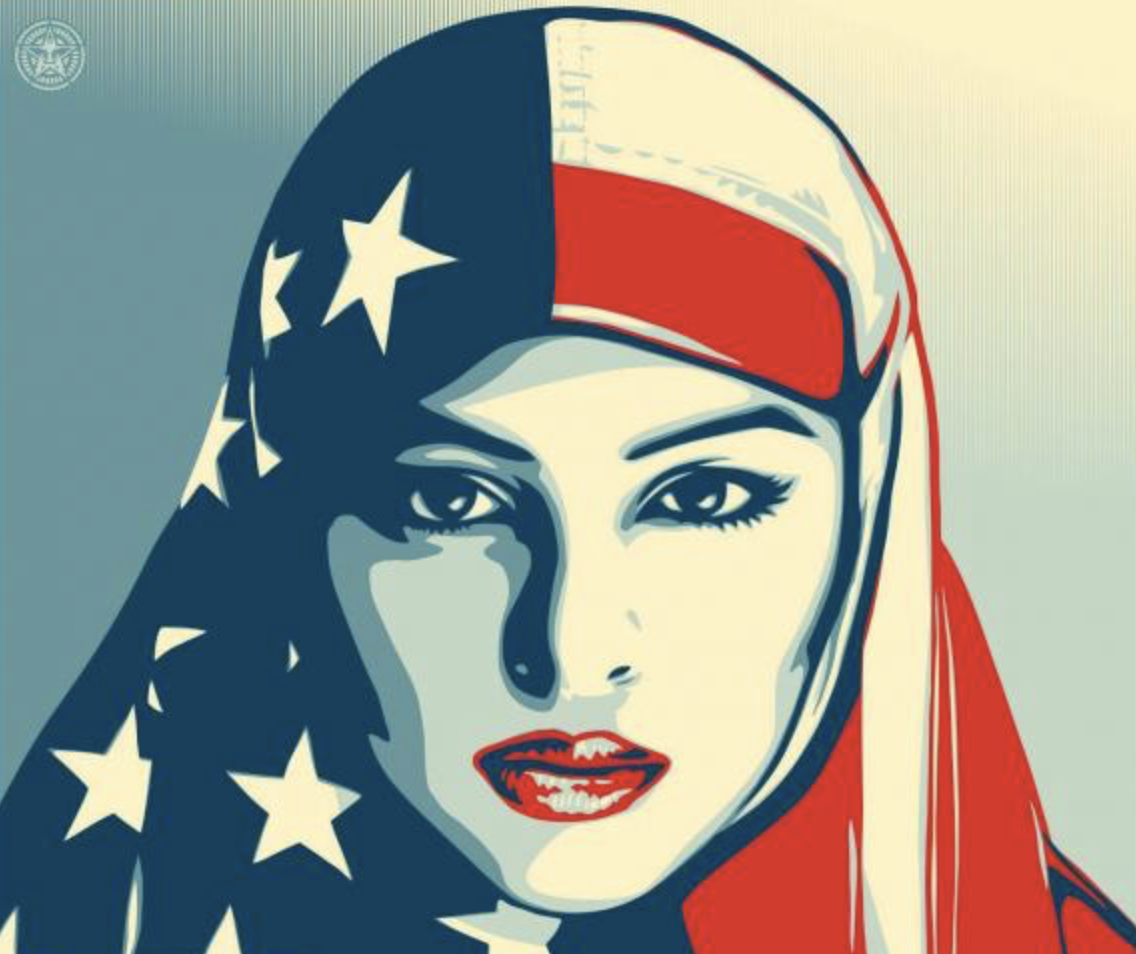
This depiction of Britain is rather unnerving, though France apparently faces a more fraught situation. There the enforcement of "laicite," rigid separation of religion from the state originally aimed at Christianity, limits sensitivity to Muslim concerns and adds to long-running alienation and failure to assimilate. Current disputes, for instance, involve public schools' headscarf bans and unwillingness to provide alternatives to pork on cafeteria menus.

British author Husain is a practicing Muslim, political consultant and adjunct professor at America's Georgetown University. A sympathizer with militant "Islamism" in his younger days, he now advocates a tolerant and modernized form of the faith and that shapes his narrative.

Just before COVID-19 hit, Husain toured London and five other cities in England, two in Scotland, and one each in Wales and Northern Ireland, mingling with fellow believers and non-Muslims at the grass roots to discern trends. His knowledge of the faith, reputation as an author on Islam, study overseas and command of languages like Arabic and Urdu aided the sort of access denied to outside investigators.

While older British Muslims tended to assimilate, he found, many more recent immigrants are suspicious or hostile toward their adopted nation and their neighbors, isolating to create what's somewhat a country within a country.

Please respect our Commenting Policy

No vacation at Vatican? Thinking about an 'August surprise' from Pope Francis

No vacation at Vatican? Thinking about an 'August surprise' from Pope Francis

If you have lived and worked in Washington, D.C., you know that Beltway-land has its own unique media traditions.

For example, no one is surprised when politicos issue somewhat embarrassing statements and proposals late on Friday afternoons, especially during the seasons in which half of the city’s journalists and chattering-class superstars are parked in traffic on the Chesapeake Bay Bridge in Annapolis on their way to the beach. After all, who pays attention to the news on Saturdays and it’s too late to do a major feature for the Sunday newspaper.

Then there is the “October surprise,” which is when a presidential candidate who is trailing — especially an incumbent president — makes a wild domestic policy proposal, foreign policy gesture or accusation against his enemies in an attempt to jump-start the race and gain ground in the polls.

With that in mind, it’s interesting to pause and think about an interesting Crux analysis piece by editor and super-insider John L. Allen, Jr., that just ran with this headline: “Pope’s ‘August surprise’ could be most counter-cultural stand of all.” Allen didn’t make a specific proposal for an upcoming bombshell, but did say that this pope has a history of making news during a month when Italians — it's almost a sacred tradition — are on vacation.

I asked Clemente Lisi, our resident Italian and Catholic-media pro, what he thought of this thesis. He quickly answered — even though (irony alert) he is on vacation this week. His email said:

I know the feeling well. I spent every August in Italy as a child visiting relatives and being on vacation. And yes, everything was closed!

This papal August surprise could very well be a symptom of the media’s lack of attention during this month. In the pre-Donald Trump years, August was typically considered a “slow month” — at least in the United States — and also a time when many editors took time off after a long year. The same thing happens in Italy, probably on a grander scale.


Please respect our Commenting Policy

Plug-In: Who is the alleged Baptist minister accused in Haiti's presidential assassination?

Plug-In: Who is the alleged Baptist minister accused in Haiti's presidential assassination?

In 2018, I was blessed to visit Haiti with an American mission team and write about a Christian humanitarian aid organization that drills water wells around the world.

I keep thinking about that trip — and the amazing people I met — as I read about the latest turmoil facing that Caribbean island nation.

This week, I hand off the top part of my column to ReligionUnplugged’s managing editor, Meagan Clark. She found an interesting detail about the self-described pastor accused in the Haitian president’s assassination:

By Meagan Clark

An American suspect in Haiti’s presidential assassination, Christian Emmanuel Sanon, 63, was arrested at his gated home in Port-au-Prince by Haitian police last week.

Sanon identifies himself on social media as a “Medical Doctor and Christian Minister.” The Sun Sentinel of Fort Lauderdale, Florida, may have been the first to unearth that Sanon did not have a license to practice medicine in Florida. At ReligionUnplugged, we wondered about his faith background, credentials and motivations.

The New York Times, TIME and others reported that Sanon attended Midwestern Baptist Theological Seminary, citing the Florida Baptist Historical Society. But when I called Midwestern, the registrar’s office said the school has no records of Sanon ever attending, online or in-person.

A Florida Baptist Society representative told ReligionUnplugged that Sanon wrote in a biographical profile of himself that he attended Midwestern, and the society relies on honesty to compile its biographies. The representative said that in fact, the society has since learned that Sanon attended a training course that Midwestern sponsored, not the seminary itself. The Florida Baptist Society has updated its website.


Please respect our Commenting Policy

Catholic worship wars rage on: Pope Francis decides Latin Mass is too divisive to embrace

Catholic worship wars rage on: Pope Francis decides Latin Mass is too divisive to embrace

The message to Catholic traditionalists in Southwest England was blunt, yet pointed.

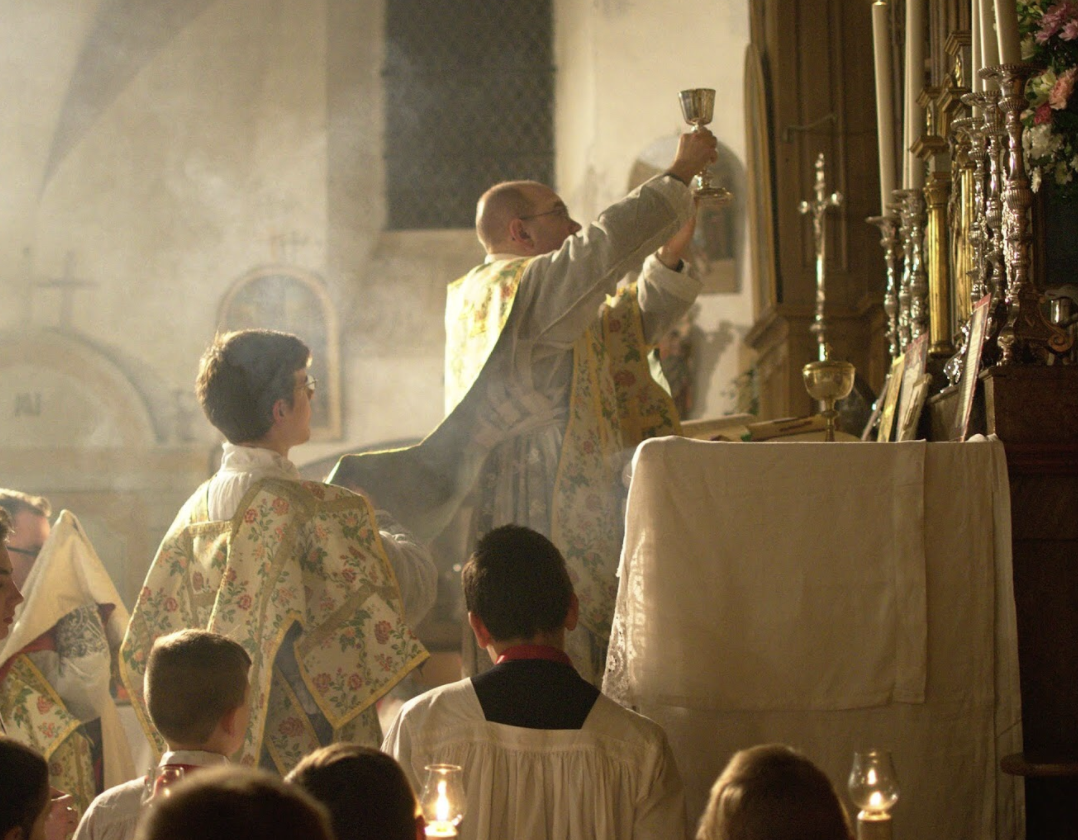
Because of the new Traditionis Custodes ("Guardians of the tradition") document from Pope Francis, and the wishes of Bishop Declan Lang of the Diocese of Clifton, the upcoming "Latin Mass at Glastonbury will be the final Latin Mass here."

The message delivered to another circle of believers there was quite different. As a "Clifton Diocese Initiative," the "LGBT+ Mass" series at a Bristol church would continue because the bishop "wishes to express pastoral care and concern for our Catholic LGBT+ community."

Thus, the Catholic worship wars rage on.

This bolt of liturgical lightning from Pope Francis struck one of his predecessor's signature achievements. In his 2007 apostolic letter Summorum Pontificum ("Of the Supreme Pontiffs"), the now retired Pope Benedict XVI declared that the post-Vatican II rite was the "ordinary form" for the church, but that the older Latin Mass was an "extraordinary form" and could be encouraged when requested by the faithful.

While Benedict said these rites could coexist, Pope Francis argued -- in a letter accompanying Traditionis Custodes -- that the old Latin Mass has become too divisive.

Benedict was "comforted" by his belief that the "two forms of the … Roman Rite would enrich one another," wrote Pope Francis, but some bishops now believe the Latin Mass has been "exploited to widen the gaps, reinforce the divergences, and encourage disagreements that injure the Church."

Thus, Francis declared, bishops must guarantee that any priests and laity they allow to celebrate the old rite have accepted the validity of Vatican II and its "Novus Ordo" Mass. Bishops may "designate one or more locations where the faithful adherents of these groups may gather" for approved Latin Masses, but these services may not be held in "parochial churches" and there should be no new parishes created for the extraordinary rite.


Please respect our Commenting Policy

Step back from digital news blitz with deeply layered religion pieces about China and India

Step back from digital news blitz with deeply layered religion pieces about China and India

The web has seduced us — and by us I mean me — into a life of 24-7 journalistic overload. For me, that can mean running out of bandwidth before getting to a story that actually deserves close attention. My limited brain can digest only so much before it shorts out.

Even a strung-out news junkie such as myself needs to log off every so often. Self-styled media literacy is as addictive as blissful ignorance.

Religion coverage has suffered greatly in this new journalistic reality. We’re provided an abundance of attention-grabbing stories about clergy hypocrisy, largely involving sexual, material or political excess. We get too few stories that connect the data points of everyday religious complexity that allows us to understand issues more deeply.

Here are two recent stories that struck me as worthy of the attention that’s too often withheld. One involves China, the other India. The only connection between them is that they both reveal deep truths about the religious reality of the societies they report on.

Let’s start with China, the more straightforward of the two stories.

It comes from Foreign Policy and ran under the intriguing, but incomplete, headline: “The Chinese Communist Party Is Scared of Christianity.”

Why incomplete? Because as the writer notes, it’s not just Christianity that scares China’s totalitarians rulers. It’s all unauthorized official thinking, religious or otherwise.

Did the headline mention Christianity alone because editors figured that would play best with their mostly western readership? Is this another example of algorithmic journalism?


Please respect our Commenting Policy

'Where there is incense there is fire.' True, but reporters can seek voices in middle of that war

'Where there is incense there is fire.' True, but reporters can seek voices in middle of that war

Raise your hand if you are old enough to remember the Vietnam era.

That may sound like a strange question to ask after a weekend of reading the tsunami of online reactions to the decision by Pope Francis to all but crush the 2007 Summorum Pontificum apostolic letter by the now retired Pope Benedict XVI, the document defending the use of the old Latin Mass, now called the Extraordinary Form of the Roman Rite.

Now the fighting — another sign of real divisions between Catholic bishops almost everywhere — will almost certainly be turned up to 11. As Father Raymond J. de Souza of the National Catholic Register put it: “Where there is incense there is fire.”

This brings me back to Vietnam. Here’s the phrase that jumped into my mind, about an hour or two into watching the firestorm on Catholic Twitter: “We had to burn the village in order to save it,” the popular paraphrase of a line in an Associated Press report from that era stating, “It became necessary to destroy the town to save it.”

There appear to be people on both side of the Latin Mass war who are ready to do something like that. Pope Francis has clearly stated that he believes the “ordinary” modern form of the Vatican II Mass cannot live peacefully with rules allowing many Catholics to embrace the faith’s earlier liturgical traditions.

This is an unbelievably complex story and I feel only compassion for the wire-service reporters who had to write short hard-news stories about this action by Pope Francis.

Why? At one point, I started listing some basic facts built into the foundations of this story.

Truth be told, there are:

* Latin Mass activists who reject Vatican II and, from time to time, refer to this pope simply as “Bergoglio,” meaning they still consider him to be Cardinal Jorge Mario Bergoglio of Argentina — not the real pope. They reject Vatican II, period. Pope Benedict XVI has never been in this camp.

* Progressive Catholics whose hatred of the traditional Mass and its proponents is so fierce that they are willing to roll the dice on schism. They believe the “spirit,” not the actual teachings, of Vatican II must be defended at all costs. Some of these liberal Catholics are openly sympathetic to the doctrinal “reforms” sought by German bishops, which could lead to schism in some form.


Please respect our Commenting Policy

Plug-In: Generations of indigenous children snatched from families and churches took part

Plug-In: Generations of indigenous children snatched from families and churches took part

For 120 years, Canada took Indigenous children from their families and forced them into residential schools run by Christian denominations — a practice that didn’t end until 1996.

Now, the discoveries of hundreds of unmarked graves at two former residential schools have rocked America’s northern neighbor, and the aftershocks have spread to the U.S.

Last month, the Tk’emlúps te Secwépemc First Nation announced that it had found the remains of 215 children near the former Kamloops Indian Residential School in British Columbia. And this week, the Cowessess First Nation reported locating more than 600 unmarked graves at the former Marieval Indian Residential School in Saskatchewan.

The discoveries have brought a national reckoning over what Canadian Prime Minister Justin Trudeau characterizes as “a dark and shameful chapter” of the nation’s history.

“I’m ashamed as a White Christian. I’m ashamed of what we did,” Kevin Vance, a minister in Regina, Saskatchewan, told me earlier this month. “I’m ashamed of all the racism and genocide that we concocted and that we did it in the name of Jesus. That’s just unbelievable to me.”

But the dark history isn’t limited to Canada: The news there “has magnified interest in the troubling legacy both in Canada and the United States,” according to The Associated Press.

As Susan Montoya Bryan of the Associated Press reports, the U.S. government “will investigate its past oversight of Native American boarding schools and work to ‘uncover the truth about the loss of human life and the lasting consequences’ of policies that over the decades forced hundreds of thousands of children from their families and communities.”

In the U.S. — as in Canada — Christian denominations are an important part of the story, notes veteran religion writer G. Jeffrey MacDonald, who wrote about American church-run boarding schools in 2018.

“The churches were not just complicit. They were participatory,” Christine Diindiisi McCleave, chief executive officer of the National Native American Boarding School Healing Coalition, told MacDonald then. “They received federal funding and helped carry out the policy.”


Please respect our Commenting Policy

Why does no one, including the New Yorker, want to address the Catholicity of Joe Manchin?

Why does no one, including the New Yorker, want to address the Catholicity of Joe Manchin?

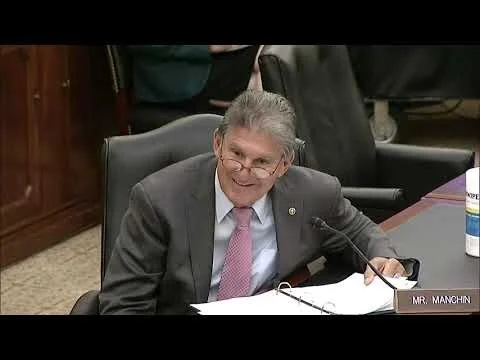
The New Yorker always has interesting profiles and I got to reading one about West Virginia Sen. Joe Manchin, a conservative Democrat who is the one bulwark in the U.S. Senate against a Republican majority.

That is, in a Senate divided 50/50, Manchin is the swing vote on the Democratic side. And he has been known to oppose the hopes and dreams of the Democratic Party’s center-left coalition.

So lots of people are writing about him, including the New Yorker, which bent over backward to avoid talking about one of the inner strengths that Manchin has: His determination to be a Catholic politician, even in an age in which compromise is all but impossible.

Tmatt has covered Manchin beforehand and these days, Manchin is very much in the headlines these days because if anything, the diference between two major parties is massive.

The story begins with a near-fatal accident involving two Senators, one of them Manchin.

In another year, the prospect of losing two Democratic senators overboard in an ice storm might be greeted with a certain wry resignation among Washington’s political class. This year, it inspires panic, at least among Democrats: in a 50-50 Senate, the Party’s agenda is only one vote — or one heartbeat — from oblivion. Manchin, in particular, holds extraordinary power.

As perhaps the Senate’s most conservative Democrat, he often breaks from the Party, which gives him a de-facto veto over a large swath of the Administration’s agenda. In the first months of Joe Biden’s Presidency, Manchin tanked the nomination of Neera Tanden as budget director (he disapproved of her tweets), opposed raising the corporate tax rate to twenty-eight per cent (he preferred twenty-five per cent), and single-handedly narrowed unemployment benefits in a COVID-relief bill.

Over and over, Manchin said that he was driven by a fundamental faith in bipartisanship, a belief that Democrats could and must find Republican support for their legislation—a posture so at odds with the present hostilities in Washington that it evoked a man hoisting his glass for a toast while his guests lunged at one another with steak knives…

Biden and Manchin have obvious points in common—two white, Catholic Joes, in their seventies, both former football players who take pride in their working-class roots, long after becoming wealthy.

What drives Manchin, what gives him the courage to stand alone as he so often does?


Please respect our Commenting Policy

Plug-In: How hot will SBC meetings get in Nashville? Sexual-abuse fights are Round 1

Plug-In: How hot will SBC meetings get in Nashville? Sexual-abuse fights are Round 1

Look for a little thunder today, but I don’t see any rain in the Nashville, Tennessee, forecast for next week.

That’s probably a good thing because I’m not sure how many more leaks the Southern Baptist Convention can take.

The heat will be turned up, though, as 16,000 Baptist messengers converge on Music City for the denomination’s (yes, I’m going to use that word) biggest annual meeting in a quarter-century.

Last week’s Plug-in set the scene, but the headlines just keep coming.

The new developments start with Washington Post religion writer Sarah Pulliam Bailey’s scoop last Saturday on a leaked letter detailing allegations that Southern Baptist leaders mishandled sex abuse claims.

Next up: That would be the leaked audio Thursday of SBC officials showing reluctance to take action against churches accused of mishandling abuse, as The Associated Press’ Peter Smith and Travis Loller, Religion News Service’s Bob Smietana and Adelle M. Banks and The Tennessean’s Holly Meyer report.

More to read:

Pressure mounts for an independent investigation of SBC Executive Committee handling of abuse (by Bob Smietana, RNS)

Tensions erupt among Southern Baptists ahead of their big meeting in Nashville. Here's why (by Holly Meyer, The Tennessean)

Sexual abuse pushed to top of agenda for Southern Baptist Convention (by Terry Mattingly, Universal syndicate columnist)

Southern Baptist pastors demand inquiry into handling of sex abuse cases (by Yonat Shimron, RNS)


Please respect our Commenting Policy