International News

'Where there is incense there is fire.' True, but reporters can seek voices in middle of that war

'Where there is incense there is fire.' True, but reporters can seek voices in middle of that war

Raise your hand if you are old enough to remember the Vietnam era.

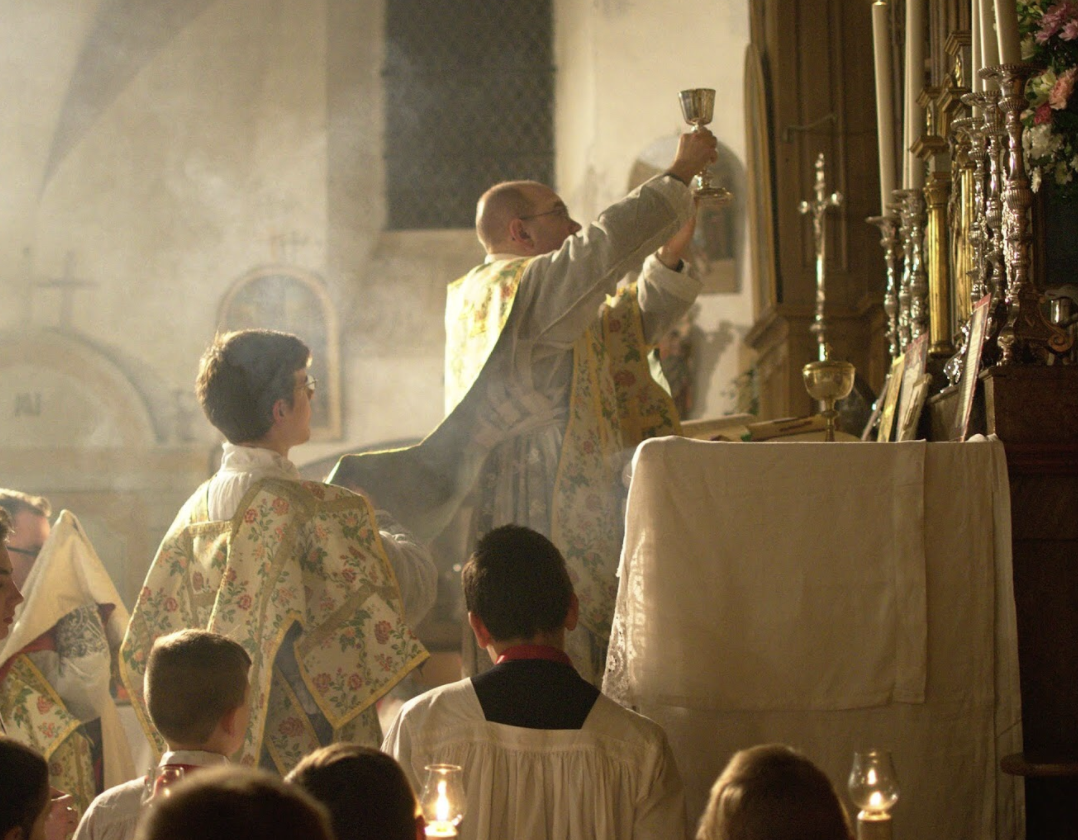
That may sound like a strange question to ask after a weekend of reading the tsunami of online reactions to the decision by Pope Francis to all but crush the 2007 Summorum Pontificum apostolic letter by the now retired Pope Benedict XVI, the document defending the use of the old Latin Mass, now called the Extraordinary Form of the Roman Rite.

Now the fighting — another sign of real divisions between Catholic bishops almost everywhere — will almost certainly be turned up to 11. As Father Raymond J. de Souza of the National Catholic Register put it: “Where there is incense there is fire.”

This brings me back to Vietnam. Here’s the phrase that jumped into my mind, about an hour or two into watching the firestorm on Catholic Twitter: “We had to burn the village in order to save it,” the popular paraphrase of a line in an Associated Press report from that era stating, “It became necessary to destroy the town to save it.”

There appear to be people on both side of the Latin Mass war who are ready to do something like that. Pope Francis has clearly stated that he believes the “ordinary” modern form of the Vatican II Mass cannot live peacefully with rules allowing many Catholics to embrace the faith’s earlier liturgical traditions.

This is an unbelievably complex story and I feel only compassion for the wire-service reporters who had to write short hard-news stories about this action by Pope Francis.

Why? At one point, I started listing some basic facts built into the foundations of this story.

Truth be told, there are:

* Latin Mass activists who reject Vatican II and, from time to time, refer to this pope simply as “Bergoglio,” meaning they still consider him to be Cardinal Jorge Mario Bergoglio of Argentina — not the real pope. They reject Vatican II, period. Pope Benedict XVI has never been in this camp.

* Progressive Catholics whose hatred of the traditional Mass and its proponents is so fierce that they are willing to roll the dice on schism. They believe the “spirit,” not the actual teachings, of Vatican II must be defended at all costs. Some of these liberal Catholics are openly sympathetic to the doctrinal “reforms” sought by German bishops, which could lead to schism in some form.

Please respect our Commenting Policy

Plug-In: Generations of indigenous children snatched from families and churches took part

Plug-In: Generations of indigenous children snatched from families and churches took part

For 120 years, Canada took Indigenous children from their families and forced them into residential schools run by Christian denominations — a practice that didn’t end until 1996.

Now, the discoveries of hundreds of unmarked graves at two former residential schools have rocked America’s northern neighbor, and the aftershocks have spread to the U.S.

Last month, the Tk’emlúps te Secwépemc First Nation announced that it had found the remains of 215 children near the former Kamloops Indian Residential School in British Columbia. And this week, the Cowessess First Nation reported locating more than 600 unmarked graves at the former Marieval Indian Residential School in Saskatchewan.

The discoveries have brought a national reckoning over what Canadian Prime Minister Justin Trudeau characterizes as “a dark and shameful chapter” of the nation’s history.

“I’m ashamed as a White Christian. I’m ashamed of what we did,” Kevin Vance, a minister in Regina, Saskatchewan, told me earlier this month. “I’m ashamed of all the racism and genocide that we concocted and that we did it in the name of Jesus. That’s just unbelievable to me.”

But the dark history isn’t limited to Canada: The news there “has magnified interest in the troubling legacy both in Canada and the United States,” according to The Associated Press.

As Susan Montoya Bryan of the Associated Press reports, the U.S. government “will investigate its past oversight of Native American boarding schools and work to ‘uncover the truth about the loss of human life and the lasting consequences’ of policies that over the decades forced hundreds of thousands of children from their families and communities.”

In the U.S. — as in Canada — Christian denominations are an important part of the story, notes veteran religion writer G. Jeffrey MacDonald, who wrote about American church-run boarding schools in 2018.

“The churches were not just complicit. They were participatory,” Christine Diindiisi McCleave, chief executive officer of the National Native American Boarding School Healing Coalition, told MacDonald then. “They received federal funding and helped carry out the policy.”


Please respect our Commenting Policy

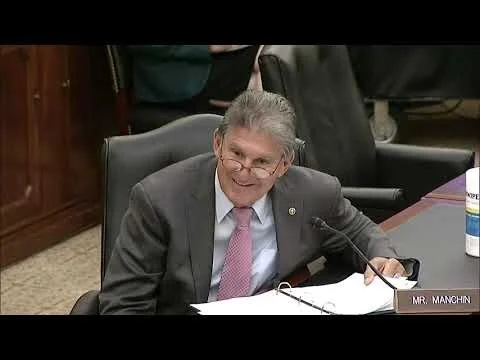
Why does no one, including the New Yorker, want to address the Catholicity of Joe Manchin?

Why does no one, including the New Yorker, want to address the Catholicity of Joe Manchin?

The New Yorker always has interesting profiles and I got to reading one about West Virginia Sen. Joe Manchin, a conservative Democrat who is the one bulwark in the U.S. Senate against a Republican majority.

That is, in a Senate divided 50/50, Manchin is the swing vote on the Democratic side. And he has been known to oppose the hopes and dreams of the Democratic Party’s center-left coalition.

So lots of people are writing about him, including the New Yorker, which bent over backward to avoid talking about one of the inner strengths that Manchin has: His determination to be a Catholic politician, even in an age in which compromise is all but impossible.

Tmatt has covered Manchin beforehand and these days, Manchin is very much in the headlines these days because if anything, the diference between two major parties is massive.

The story begins with a near-fatal accident involving two Senators, one of them Manchin.

In another year, the prospect of losing two Democratic senators overboard in an ice storm might be greeted with a certain wry resignation among Washington’s political class. This year, it inspires panic, at least among Democrats: in a 50-50 Senate, the Party’s agenda is only one vote — or one heartbeat — from oblivion. Manchin, in particular, holds extraordinary power.

As perhaps the Senate’s most conservative Democrat, he often breaks from the Party, which gives him a de-facto veto over a large swath of the Administration’s agenda. In the first months of Joe Biden’s Presidency, Manchin tanked the nomination of Neera Tanden as budget director (he disapproved of her tweets), opposed raising the corporate tax rate to twenty-eight per cent (he preferred twenty-five per cent), and single-handedly narrowed unemployment benefits in a COVID-relief bill.

Over and over, Manchin said that he was driven by a fundamental faith in bipartisanship, a belief that Democrats could and must find Republican support for their legislation—a posture so at odds with the present hostilities in Washington that it evoked a man hoisting his glass for a toast while his guests lunged at one another with steak knives…

Biden and Manchin have obvious points in common—two white, Catholic Joes, in their seventies, both former football players who take pride in their working-class roots, long after becoming wealthy.

What drives Manchin, what gives him the courage to stand alone as he so often does?


Please respect our Commenting Policy

Plug-In: How hot will SBC meetings get in Nashville? Sexual-abuse fights are Round 1

Plug-In: How hot will SBC meetings get in Nashville? Sexual-abuse fights are Round 1

Look for a little thunder today, but I don’t see any rain in the Nashville, Tennessee, forecast for next week.

That’s probably a good thing because I’m not sure how many more leaks the Southern Baptist Convention can take.

The heat will be turned up, though, as 16,000 Baptist messengers converge on Music City for the denomination’s (yes, I’m going to use that word) biggest annual meeting in a quarter-century.

Last week’s Plug-in set the scene, but the headlines just keep coming.

The new developments start with Washington Post religion writer Sarah Pulliam Bailey’s scoop last Saturday on a leaked letter detailing allegations that Southern Baptist leaders mishandled sex abuse claims.

Next up: That would be the leaked audio Thursday of SBC officials showing reluctance to take action against churches accused of mishandling abuse, as The Associated Press’ Peter Smith and Travis Loller, Religion News Service’s Bob Smietana and Adelle M. Banks and The Tennessean’s Holly Meyer report.

More to read:

Pressure mounts for an independent investigation of SBC Executive Committee handling of abuse (by Bob Smietana, RNS)

Tensions erupt among Southern Baptists ahead of their big meeting in Nashville. Here's why (by Holly Meyer, The Tennessean)

Sexual abuse pushed to top of agenda for Southern Baptist Convention (by Terry Mattingly, Universal syndicate columnist)

Southern Baptist pastors demand inquiry into handling of sex abuse cases (by Yonat Shimron, RNS)


Please respect our Commenting Policy

Many pieces in this news puzzle: New Israeli coalition reflects land's complex religiosity

Many pieces in this news puzzle: New Israeli coalition reflects land's complex religiosity

What does it say about Israel that its founding prime minister was someone who today might be labeled a “BuJew,” a Jew strongly attracted to Buddhist philosophy? Or that it took Israel more than 70 years to produce a prime minister who identifies with Orthodox Judaism?

The BuJew prime minister was, of course, the otherwise secular David Ben-Gurion, Israel’s George Washington equivalent. Ben-Gurion actually took several days during a 1961 two-week state visit to Burma (today’s Myanmar) to attend a Buddhist retreat. I can’t imagine an Israeli prime minister doing that today given the Jewish state’s current political turmoil and Orthodoxy’s influence.

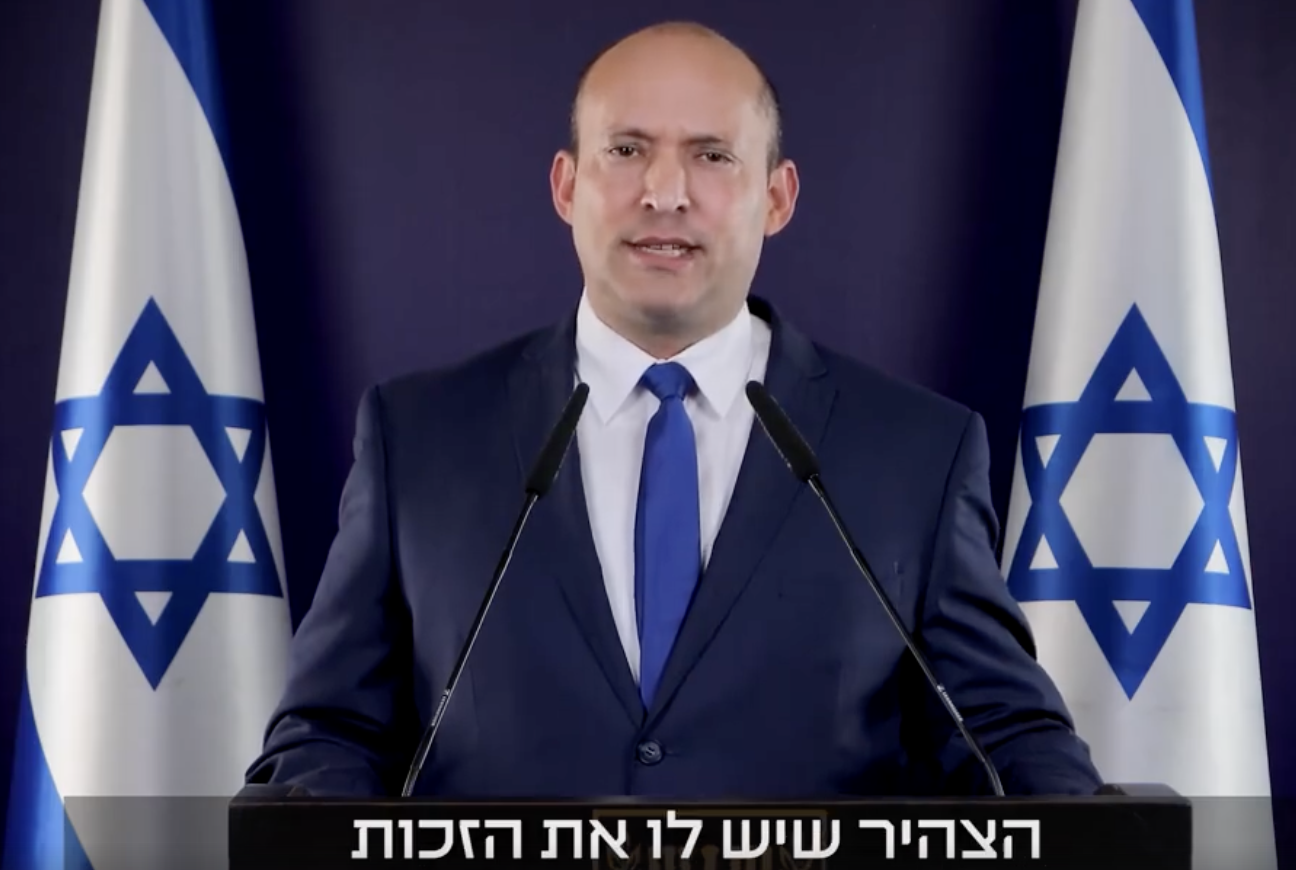
The first Orthodox prime minister is set to be Naftali Bennett, who as of this writing is scheduled to command the top spot in Israel’s nascent anti-Netanyahu governing coalition, itself tentatively set to formally assume office within days.

Again, what does all of this say? A lot, I’d argue, about Israel’s religious complexity and the degree to which religion and politics are tightly intertwined, perhaps inseparably so, in Israel (and the Middle East in general, but that’s a larger topic for another day).

I’d also argue it underscores the importance for journalists opining on Israel to be well versed on its religious politics — from its varied and often antagonistic Jewish factions, to its distinctive Arab Muslim, Christian and Druse communities — if they are to adequately explain the thinking that goes into Israeli decision making.

Consider the following. Benjamin (Bibi) Netanyahu, the longtime right-wing prime minister, is a secular Jew, as are most Israeli Jews. Yet he nonetheless enjoyed the support of his nation’s ultra-Orthodox parties. Netanyahu gained their support by including the parties in his ruling coalitions, giving them great access and sometimes control over public funds needed for their community institutions and economic safety nets.

Bennett, meanwhile, has gained the condemnation of several leading Orthodox Jews, even though identifies with this religious descriptor.


Please respect our Commenting Policy

New podcast: New York Times still ignoring religion ghosts in 'demographic winter' trends

New podcast: New York Times still ignoring religion ghosts in 'demographic winter' trends

I could, without breaking a sweat, create a list of important religion-beat news stories that are, to some degree or another, connected to the sinking birth rates in the Unites States and around the world.

Clashes between Chinese leaders and Muslims inside their borders? Decades of declining numbers of men seeking Catholic priesthood? The sharp decline in the power of “mainline” Protestant churches? American political clashes between red-zip code and blue-zip code regions, usually seen as tensions between rural and urban life. Tensions between Orthodox and progressive Jews. Soaring numbers linked to anxiety and loneliness. And so forth and so on.

So when I saw this headline in The New York Times — “Long Slide Looms for World Population, With Sweeping Ramifications“ — I immediately thought to myself, “Here we go again.” I also figured that this would be the topic for this week’s “Crossroads” podcast (click here to tune that in).

Sure enough, this new feature was the global version of a Times story several years ago that led to a GetReligion post with this headline: “New York Times asks this faith-free question: Why are young Americans having fewer babies?” As I wrote at that time:

In a graphic that ran with the piece, here are the most common answers cited, listed from the highest percentages to lowest. That would be, "Want leisure time," "Haven't found partner," "Can't afford child care," "No desire for children," "Can't afford a house," "Not sure I'd be a good parent," “Worried about the economy," "Worried about global instability," "Career is a greater priority," "Work too much," "Worried about population growth," "Too much student debt," etc., etc. Climate change is near the bottom.

The economic and cultural trends are all valid, of course. But they also point toward changes in how modern people in modern economies define and look for “meaning in life” and the beliefs that define those choices.

Think birth, marriage, vocation, death. We are talking about topics that, for several billion people on this planet, are linked to religious faith.

So what did the Times have to say?


Please respect our Commenting Policy

Plug-In: What 'Never Trumper' Russell Moore's departure from ERLC means for SBC

Plug-In: What 'Never Trumper' Russell Moore's departure from ERLC means for SBC

Religion News Service national writer Bob Smietana picked up one Moore big scoop this week.

Back in March, Smietana broke the internet with news of Beth Moore no longer identifying as a Southern Baptist.

This week, Smietana — one-time “longhaired, hippy wannabe songwriter” turned highly content religion reporter — was the first to confirm the embattled Russell Moore leaving the Southern Baptist Convention’s Ethics and Religious Liberty Commission.

The ERLC’s president since 2013 will join Christianity Today, the influential evangelical magazine founded by the late Rev. Billy Graham in 1956. He’ll “serve as a full-time public theologian for the publication and … lead a new Public Theology Project.”

At the Washington Post, religion writers Sarah Pulliam Bailey and Michelle Boorstein point out that Russell Moore “blasted former president Donald Trump and his evangelical fans.” His ERLC resignation prompts questions about the SBC’s future:

Moore’s departure from the convention’s Ethics & Religious Liberty Commission (ERLC) follows other high-profile exits from the denomination, including popular Bible teacher Beth Moore (no relation) and Black pastors. Some evangelicals are wondering what their departures signal about the direction of the convention, which has included louder voices on the far right in recent years.

Read additional coverage from The Tennessean’s Holly Meyer, the Wall Street Journal’s Ian Lovett and GetReligion’s Terry Mattingly.

Also, if you can’t get enough of Smietana and the Southern Baptists, check out this piece on “the grievance studies hoaxer and atheist” who is “on a crusade against what he sees as a ‘woke’ invasion of the nation’s largest Protestant denomination.”


Please respect our Commenting Policy

What's going on with faith trends in American Judaism, nationally and in your locale?

What's going on with faith trends in American Judaism, nationally and in your locale?

Since 9-11, the media have — with good cause — lavished attention upon Islam in America.

There's been less interest in the cultural and demographic challenges facing Judaism, long the nation's second-largest religion behind Christianity. Jewish news coverage in the mainstream press tends to focus on Democratic Party politics, trends in anti-Semitism and attitudes toward Israel and the unending Mideast mess.

Those are important, of course, but what about Judaism as a living 21st Century religious faith? Here, as so often, the Pew Research Center steps up with its 248-page survey on "Jewish Americans in 2020" (click here for the .pdf report).

The Guy proposes that this is the ideal moment for journalists to focus on the religion of Judaism, asking rabbis and lay synagogue leaders how Pew's trends are playing out both nationally and with their particular audiences and locales.

At one time, Jewish federations conducted such community surveys. This one follows up Pew's major survey in 2013 but direct comparisons with the 2000 numbers are iffy due to changed methodology.

As so often, Pew worked from an unusually large random sample of 4,718 Jewish adults who were interviewed between November 2019 and June 2020. To learn more about Pew's revised methodology to cope with low "response rates" among those sampled -- among factors that produced the embarrassingly wrong 2020 political polls -- see this prior Guy Memo.

As writers dig into the numbers they'll understand fears that unless things change "we are going to lose the illusion of there being a Jewish people." So says "modern Orthodox" Rabbi Shmuly Yanklowitz, speaking with Forward.com (“Pew’s new study of American Jews reveals widening divides, worries over antisemitism”).

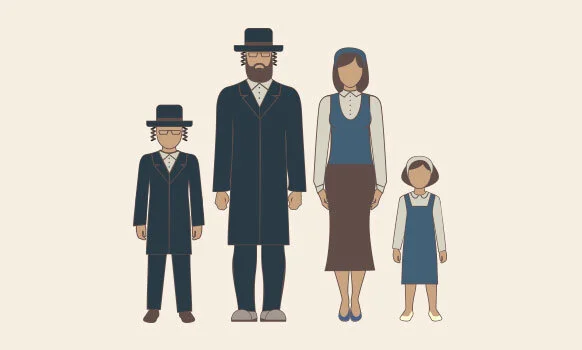
The bottom line: Across the board, the gap between Orthodox and non-Orthodox Jews is deepening. This looks very much like the gap between declining U.S. "mainline" and "liberal" Protestants over against conservative or "evangelical" believers, or the gap between traditional religious believers and the growing world of atheists, agnostics and the “religiously unaffiliated.”


Please respect our Commenting Policy

Yes, there's a religion story behind those statistics about China's shrinking population

Yes, there's a religion story behind those statistics about China's shrinking population

China made the news again last week for an odd reason — its demographics.

Only 12 million babies were born last year in China, the lowest number since 1961. You can think of 35 years of forced abortions and mandatory IUD devices for that. Oh, and going after the offspring of Uyghur Muslims, house-church Christians, Tibetan Buddhists and Falun Gong practitioners figure into that number, as well.

But the details of that important religion angle didn’t make it into the stories I read. In the New York Times:

Figures from a census released on Tuesday show that China faces a demographic crisis that could stunt growth in the country, the world’s second-largest economy. China has long relied on an expanding and ambitious work force to run its factories and achieve Beijing’s dreams of building a global superpower and industrial giant. An aging, slow-growing population — one that could even begin to shrink in the coming years — threatens that dynamic.

Now listen to how the next paragraph explains how this happened.

While most developed countries in the West and Asia are also getting older, China’s demographic problems are largely self-inflicted. China imposed a one-child policy in 1980 to tamp down population growth. Local officials enforced that policy with sometimes draconian measures. It may have prevented 400 million births, according to the government, but it also shrank the number of women of childbearing age.

“Sometimes draconian” measures? Forcibly aborting a woman’s second child is, by definition, draconian.

Beijing is now under greater pressure to abandon its family planning policies, which are among the world’s most intrusive; overhaul an economic model that has long relied on a huge population and a growing pool of workers; and plug yawning gaps in health care and pensions.

Well, yes, when local cadres monitor the exact timing of women’s periods to make sure they’re not pregnant, that’s pretty intrusive.


Please respect our Commenting Policy