International News

Press coverage of Mount Meron tragedy offers window into Israel's ultra-Orthodox Jews

Press coverage of Mount Meron tragedy offers window into Israel's ultra-Orthodox Jews

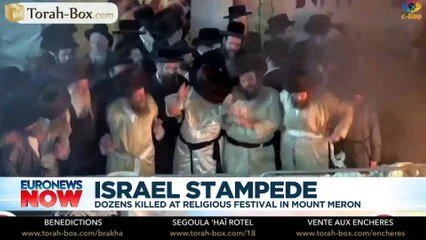
By now most GetReligion readers are likely aware of the fatal crushing of 45 Jewish pilgrims during a religious festival at Mount Meron in Israel’s north at the end of April. It’s been called one of the worst, if not the worst, civilian tragedy in Israel’s history.

(Sadly, the Meron tragedy has been superseded in the news by the serious explosion of Israeli-Palestinian violence this week. But as sad as this is — and as a Jew and a Zionist I find it almost debilitatingly sad —that’s not the subject of this post, so let’s return to Meron.)

For those in need of a refresher, here’s an early Times of Israel news story on the Meron catastrophe.

The sudden and dramatic loss of more than four dozen lives is, of course, a national trauma for a relatively small country such as Israel, which is not much larger than New Jersey. As has been noted elsewhere, “numbers numb.”

Among the dead were six Americans. Other victims came from Canada and Argentina. The youngest of the dead was a boy of nine. Some 150 others were injured.

Beyond the deaths themselves, the Meron incident surfaced major — and intricately interwoven — political and religious implications for Israel. That’s not an unusual mashup in Israel, where the divide between religion and state is near impossible to discern.

For journalists, the tragedy also underscores a Journalism 101 reality of the craft. Which is that the most interesting public commentators are often those closest to the story, such as varied eyewitnesses and longstanding, articulate members or observers of whatever groups are germane to the story.

I’ll say more about this below. First, some pertinent background.

The Meron tragedy took place on the Jewish holiday of Lag B’Omer. Because this is generally considered a minor holiday by most Jews, it’s largely ignored by the theologically liberal in Israel and elsewhere.
Please respect our Commenting Policy

Stunning AP photos of mass cremations in India: But what about religious traditions?

Stunning AP photos of mass cremations in India: But what about religious traditions?

Draw up a list of the world’s most religious nations and India (population 1.4 billion) will almost always be somewhere near the top — especially if you focus on the world’s largest nations, in terms of population.

What makes India unique, however, is its incredible religious complexity. While Hindu believers make up about 80% of the population, 15% of the population is Muslim. In terms of sheer numbers, India has the world’s second largest Muslim population (after Indonesia). India has small, but historically important, Christian communities, mostly Catholic and Anglican.

The tensions between India’s various traditions are quite stunning and complex. But so are they way that the major faith groups overlap and blend into a larger whole. The bottom line: There are very few issues in this amazing land that are not, to some degree, touched by religious traditions — even if people struggle to describe the details.

This brings me to a stunning Associated Press photo feature that ran with this headline: “Mass funeral pyres reflect India’s COVID crisis.

Pause for a minute and ponder this question: How many story angles — some of them quite controversial — can you imagine that are linked to funeral pyres and Hindu traditions? Now, imagine the complex issues that waves of COVID-19 deaths would create in India’s faith communities, with their unique traditions linked to death and dying.

Now imagine dedicating a mere one sentence to only one of those angles. Here is the overture, describing the larger crisis:

NEW DELHI (AP) — Delhi has been cremating so many bodies of COVID-19 victims that authorities are getting requests to start cutting down trees in city parks for kindling, as a record surge of illness is collapsing India’s tattered health care system.

Outside graveyards in cities like Delhi, which currently has the highest daily cases, ambulance after ambulance waits in line to cremate the dead. Burial grounds are running out of space in many cities as glowing funeral pyres blaze through the night.


Please respect our Commenting Policy

With open talk of schism, will German bishops mar the rest of Pope Francis's reign?

With open talk of schism, will German bishops mar the rest of Pope Francis's reign?

Conservative Catholic news outlets have thoroughly covered growing turmoil in Germany's Catholic Church, making available solid backgrounding for "mainstream" media who've generally been sluggish in picking up on this story.

That neglect presumably won't last, considering factors The Religion Guy will now underscore for colleagues' consideration.

A significant phalanx of German bishops, united with prominent lay activists, seem intent on revisionist change to come from their "Synodical Way" project, which the Vatican has sought to suppress, so far without success.

The German go-it-alone demands set up an inevitable showdown with the Holy See. The global repercussions were captured in a blunt Wall Street Journal headline April 16: "Can Pope Francis Head Off a Schism?" One week earlier a headline in the conservative National Catholic Register declared that "U.S. Theologians Echo Fears of Schism in Catholic Church in Germany."

The Religion Guy proposes a different hed that uses the P-word rather than the S-word: Will German Catholicism Go Protestant, Five Centuries Late?

Peg-hunting reporters will want to watch the "wires" (to use an anachronistic term) May 10 for the latest pageant of defiance. On the heels of the Vatican's papally-approved statement reaffirming opposition to church blessings and marriages for same-sex couples, a large network of German Catholics — with clergy involved — plan to stage same-sex blessing ceremonies across the nation. Watch for how many bishops are silent, or even pleased, when their priests are willing to participate.

The LGBTQ issue is only one aspect of the German imbroglio that dates from the 2019 launch of the "synodical" process, which is co-sponsored by the German Bishops' Conference and the Central Committee of German Catholics, an influential group of lay activists.


Please respect our Commenting Policy

Ponder this news question: What happens to Afghan religious minorities post-USA?

Ponder this news question: What happens to Afghan religious minorities post-USA?

First things first. There is no question that, if and when U.S. troops leave Afghanistan, the biggest security issue will be protecting women who have taken modest steps to move into public life in recent decades.

Thus, it is totally appropriate that information about women’s rights received the lion’s share of attention in the recent New York Times report on the sobering behind-the-scenes realities in that troubled land. You can see that right in the headline: “Afghans Wonder ‘What About Us?’ as U.S. Troops Prepare to Withdraw,” with its subhead mentioning fears that the “country will be unable to preserve its modest gains toward democracy and women’s rights.”

Again, this news hook is totally valid. However, I think that this story needed some information — at least a paragraph of two — acknowledging the serious concerns of members of minority religious groups in Afghanistan. These range from Islamic minorities (and more moderate forms of that faith) as well as small, but historic, communities of Baha’is, Sikhs, Jews and Christians. And then there are the reports about growing underground networks of secret Christian converts.

This is, literally, a life-and-death situation for thousands of people. Might this human-rights issue be worth a sentence or two?

Hold that thought. First, here is the overture in this otherwise fine feature:

KABUL, Afghanistan — A female high school student in Kabul, Afghanistan’s war-scarred capital, is worried that she won’t be allowed to graduate. A pomegranate farmer in Kandahar wonders if his orchards will ever be clear of Taliban land mines. A government soldier in Ghazni fears he will never stop fighting.

Three Afghans from disparate walks of life, now each asking the same question: What will become of me when the Americans leave?

President Biden on Wednesday vowed to withdraw all American troops by Sept. 11, 20 years after the first Americans arrived to drive out Al Qaeda following the 2001 terrorist attacks. “War in Afghanistan was never meant to be a multigenerational undertaking,” he said, speaking from the White House.

The American withdrawal would end the longest war in United States history, but it is also likely to be the start of another difficult chapter for Afghanistan’s people.


Please respect our Commenting Policy

Despite China's vast religious and political repression, 2022 Olympic boycott still unlikely

Despite China's vast religious and political repression, 2022 Olympic boycott still unlikely

We’re rapidly approaching the inflection point on whether China will get to stage the 2022 Winter Olympics without some sort of concurrent international protest — such as a major boycott — prompted by Beijing’s often outrageous treatment of its Muslim Uighur, Tibetan Buddhist and underground Christian religious minorities, as well as its secular pro-democracy movement.

The question for me is: Will the international community — and in particular the United States and other democracy-espousing nations — punk out as it did with the Nazi-run 1936 Berlin Olympics. Or will the International community find some righteous backbone and either boycott the 2022 winter games, or make its opposition to Beijing’s policies known in another significant and unmistakable manner?

China, of course, has threatened retaliation against any nation that dares to challenge it by linking the Olympics and human rights.

When I last posted about the possibility of an international boycott of the upcoming China Games, — back in 2019 — I wrote off any boycott possibility as an extreme long shot.

As of this writing, I think a widespread boycott is still highly unlikely. But it’s no longer a completely dismissible long shot, I believe, because of changed circumstances — not the least of which is the ongoing coronavirus crisis and China’s oblique explanations of the pandemic’s Wuhan region origins.

Why still unlikely? Ironically, for the very same reason a protest is now slightly more conceivable, the coronavirus.

The U.S., without which no boycott can succeed, as well as its major pro-Western democratic allies, are all still deeply engaged in trying to halt the coronavirus.

We don’t know how much longer this fight will go on or what surprises are ahead. Regardless, the effort has left them economically vulnerable and politically drained. I’d say they lack the necessary additional emotional and intellectual bandwidth to take on another international crisis. Certainly not one they can avoid without triggering immediate dire consequences for their own citizens.

Forget the morality of the situation. Moral avoidance is a well-honed government strategy with a global heritage.


Please respect our Commenting Policy

Welcome to Holy Days 2021: How to handle the latest sensational claim about the Bible

Welcome to Holy Days 2021: How to handle the latest sensational claim about the Bible

The New York Times often ignores developments in religious scholarship, an especially serious deficiency of its Sunday Book Review (where Nash K. Burger, who was hired by fellow Mississippian Eudora Welty, long and carefully monitored the field until he retired in 1974).

Thus, hallelujahs should greet a huge article by culture reporter Jennifer Schuessler, posted March 10 and granted two full pages in the Arts & Leisure section of last Sunday's print edition.

The piece reports that young Israeli-American scholar Idan Dershowitz may have identified "the oldest known biblical manuscript by far," which offers "an unprecedented window into origins and evolution of the Bible" and, in particular, the Book of Deuteronomy. If substantiated, some say, this "will be the most consequential Bible-related discovery since the Dead Sea Scrolls in 1947."

Or not. Journalists assessing what's hot should consider that across the years, manuscript frauds and ill-supported speculations about the Bible have been rife.

The Times is known to sometimes "bury the lede," and in this case it buried the news peg. The piece was nicely timed for Jewish Passover and Christian Holy Week when media often dig into biblical mysteries and controversies. But the news here is the April publication of Dershowitz's book "The Valediction of Moses: A Proto-Biblical Book."

The book will fill in the missing element in the Times story and thus provide major fresh substance for reporters to develop: Which portions of Deuteronomy are involved in this discussion, and how do specific wordings and passages in today's Bibles compare with the purportedly ancient texts Dershowitz cites? On that basis, what do the agreements and contrasts tell us and why?

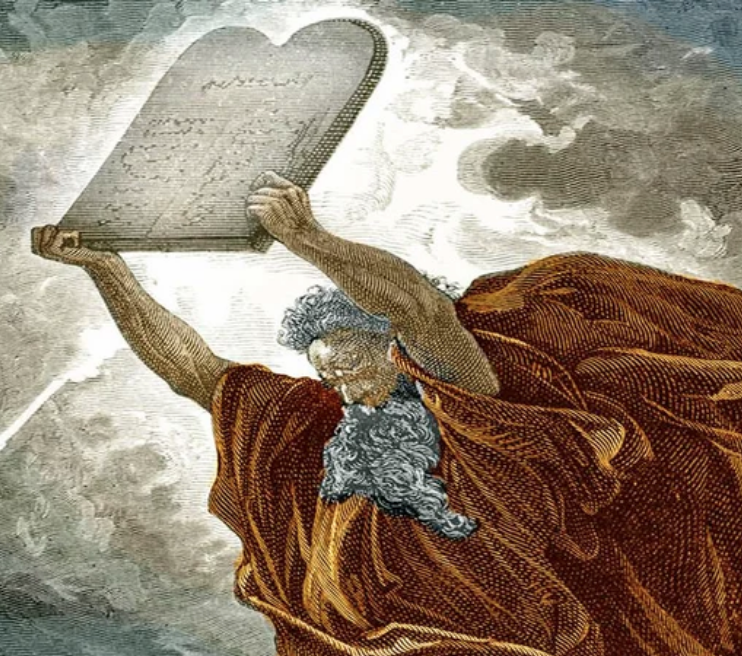
Dershowitz seeks to rehabilitate Wilhelm Moses Shapira, whose 19th Century Jerusalem shop sold both tourist trinkets and allegedly valuable ancient manuscripts. He tried to sell these Deuteronomy fragments to a regular customer, the British Museum, but its expert and others declared them forgeries in 1883, based on what Dershowitz considers slipshod study.

Shamed, Shapira soon committed suicide in Rotterdam. The leather fragments themselves then disappeared.


Please respect our Commenting Policy

Catholic left seeks (and finds?) signs of hope after Vatican ruling on same-sex unions

Catholic left seeks (and finds?) signs of hope after Vatican ruling on same-sex unions

After a media firestorm ignited by a Vatican condemnation of same-sex unions -- because God "cannot bless sin" -- Catholic progressives immediately looked for hope in the words of bishops, President Joe Biden and even Pope Francis.

In his Sunday Angelus address after the March 15 ruling, the pope stressed that modern seekers want to "see Jesus" in acts of love, not persecution.

Catholics must promote "a life that takes upon itself the style of God -- closeness, compassion and tenderness," said the pope. "It means sowing seeds of love, not with fleeting words but through concrete, simple and courageous examples, not with theoretical condemnations, but with gestures of love. Then the Lord, with his grace, makes us bear fruit, even when the soil is dry due to misunderstandings, difficulty or persecution, or claims of legalism or clerical moralism."

While Pope Francis gave "his assent" to this ruling, the Jesuit publication America cited anonymous Vatican sources saying the Angelus remarks suggested that he was "distancing himself" from the work of the Congregation for the Doctrine of the Faith.

That document said God "does not and cannot bless sin: He blesses sinful man, so that he may recognize that he is part of his plan of love and allow himself to be changed." As for same-sex unions, it added: "The presence in such relationships of positive elements … cannot justify these relationships and render them legitimate objects of an ecclesial blessing, since the positive elements exist within the context of a union not ordered to the Creator's plan."

Bishop Johan Bonny of Antwerp -- who represented Belgium at the 2015 Vatican Synod on Marriage and the Family -- said those words left him "ashamed on behalf of my Church. … I want to apologize to all those for whom this 'responsum' is painful and incomprehensible: faithful and committed Catholic homosexual couples, the parents and grandparents of homosexual couples and their children, pastoral workers and counsellors of homosexual couples," he wrote on Facebook.

"I know homosexual couples who are legally married, have children, form a warm and stable family, and moreover, actively participate in parish life. A number of them are employed full-time in pastoral work or ecclesial organizations." Why, he added, deny the "similarity or analogy with heterosexual marriage here?"


Please respect our Commenting Policy

Prayers and bloodshed during Lent: Catholic bishops cry out for help in Nigeria

Prayers and bloodshed during Lent: Catholic bishops cry out for help in Nigeria

Another day, with yet another funeral.

Catholics in Nigeria had buried many priests and believers killed in their country's brutal wars over land, cattle, honor and religion. But this was the first time Bishop Matthew Hassan Kukah of the Sokoto Diocese had preached at the funeral of a seminarian.

A suspect in the crime said 18-year-old Michael Nnadi died urging his attackers to repent and forsake their evil ways.

"We are being told that this situation has nothing to do with religion," said Kukah, in remarks distributed across Nigeria in 2020. "Really? … Are we to believe that simply because Boko Haram kills Muslims too, they wear no religious garb? Are we to deny the evidence before us, of kidnappers separating Muslims from infidels or compelling Christians to convert or die?"

The bishop was referring to fierce debates -- in Nigeria and worldwide -- about attacks by Muslim Fulani herders on Christian and Muslim farmers in northern and central Nigeria. The question is whether these gangs have been cooperating with Boko Haram, Al-Qaeda and the Islamic State.

The conflict has claimed Catholics, Anglicans, Pentecostal Christians and many others, including Muslims opposed to the violence. Prominent Muslim leaders have condemned Boko Haram and church leaders have condemned counterattacks by Christians. In recent years it has become next to impossible to keep track of the number of victims, including mass kidnappings of school children and the murders of clergy and laypeople, including beheadings.

"Religion is not the only driver of the mass atrocities," said Nina Shea of the Hudson Institute's Center for Religious Freedom, in December testimony before members of the House Foreign Affairs Committee. "Not all 40 million members of the Fulani ethnic group in the region are Islamic extremists. However, there is evidence that some fraction of the Fulani have an explicit jihadist agenda. …

"A mounting number of attacks in this region also evidence deep religious hatred, an implacable intolerance of Christians, and an intent to eradicate their presence by violently driving them out, killing them or forcing them to convert."

In a sobering Feb. 23 statement (.pdf here), the Catholic Bishop's Conference of Nigeria warned that the "nation is falling apart."


Please respect our Commenting Policy

Luis Palau: New York Times dug deeper than the 'Billy Graham of Latin America' label

Luis Palau: New York Times dug deeper than the 'Billy Graham of Latin America' label

It was the kind of question that general-assignment television reporters asked Billy Graham, since they didn’t realize that it had become a cliche: Who will be the “next Billy Graham?”

I heard Graham answer this question several times (and discussed it in depth with him in a 1987 one-on-one interview) and his response almost always included three key points.

First of all, he would say that he really didn’t know how or why he became “Billy Graham,” as in the world’s most famous evangelist (click here for his famous “turtle on a fencepost analogy). Second, Graham thought it was strange that reporters seemed to assume that he would know who the “next Billy Graham” would be. And finally, why did evangelists in other parts of the world need to be compared to him?

Take Luis Palau, for example. Graham said he didn’t consider him the “Billy Graham” of Latin America or anywhere else. Luis Palau, Graham told me, was Luis Palau, and that was who God wanted him to be.

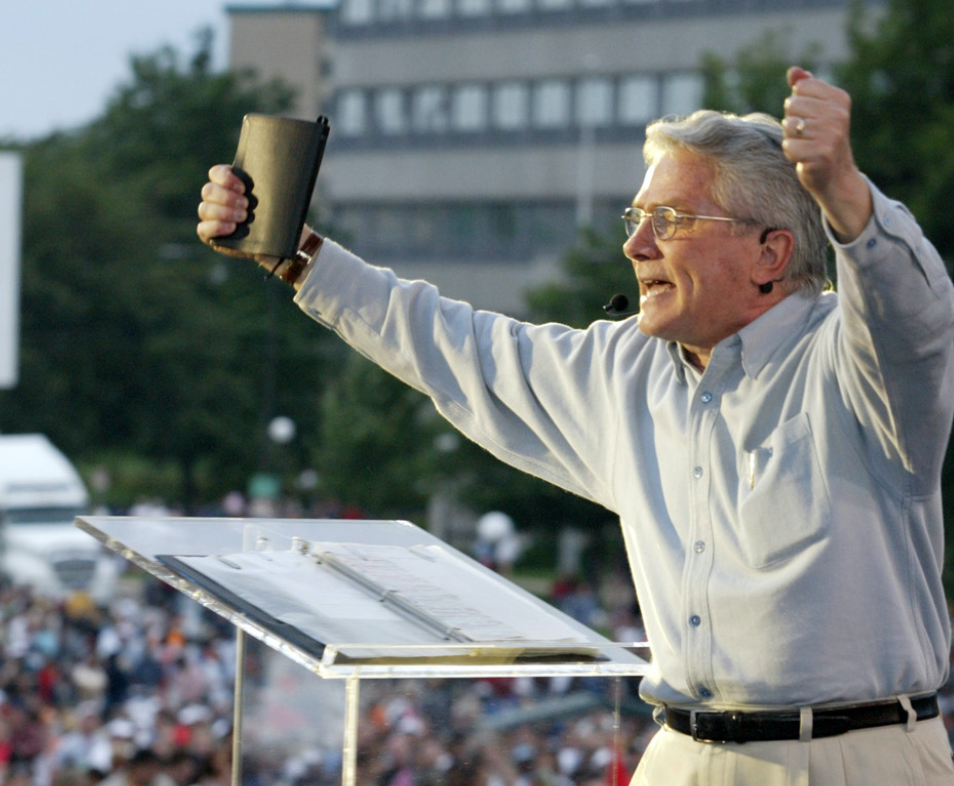
I bring this subject up, of course, because of the double-decker headline that ran atop the recent New York Times obituary for this singular figure in modern evangelical history: “

Luis Palau, the ‘Billy Graham of Latin America,’ Dies at 86

He rose from preaching on street corners in Argentina to ministering to millions around the world, then focused his ministry on liberal corners of the U.S.

I’m not blaming the Times for using that image, since it appeared — to one degree or another — in almost every major news feature about his passing. In fact, the key to the Times feature is that dug deeper than that cliche and showed why Palau was a major player, in his own right, in global evangelicalism.

Still, everyone knows where this story will begin. But note the transition in this key summary passage near the top of the Times obit:

Though his headquarters were in Oregon, Mr. Palau was often called “the Billy Graham of Latin America.” He addressed that region’s 120 million evangelicals through three daily radio shows (two in Spanish, one in English), shelves of Spanish-language books and scores of revival crusades, in which he might spend a week, and millions of dollars, preaching in a single city. The Luis Palau Association estimates that he preached to 30 million people in 75 countries.


Please respect our Commenting Policy