International News

Despite China's vast religious and political repression, 2022 Olympic boycott still unlikely

Despite China's vast religious and political repression, 2022 Olympic boycott still unlikely

We’re rapidly approaching the inflection point on whether China will get to stage the 2022 Winter Olympics without some sort of concurrent international protest — such as a major boycott — prompted by Beijing’s often outrageous treatment of its Muslim Uighur, Tibetan Buddhist and underground Christian religious minorities, as well as its secular pro-democracy movement.

The question for me is: Will the international community — and in particular the United States and other democracy-espousing nations — punk out as it did with the Nazi-run 1936 Berlin Olympics. Or will the International community find some righteous backbone and either boycott the 2022 winter games, or make its opposition to Beijing’s policies known in another significant and unmistakable manner?

China, of course, has threatened retaliation against any nation that dares to challenge it by linking the Olympics and human rights.

When I last posted about the possibility of an international boycott of the upcoming China Games, — back in 2019 — I wrote off any boycott possibility as an extreme long shot.

As of this writing, I think a widespread boycott is still highly unlikely. But it’s no longer a completely dismissible long shot, I believe, because of changed circumstances — not the least of which is the ongoing coronavirus crisis and China’s oblique explanations of the pandemic’s Wuhan region origins.

Why still unlikely? Ironically, for the very same reason a protest is now slightly more conceivable, the coronavirus.

The U.S., without which no boycott can succeed, as well as its major pro-Western democratic allies, are all still deeply engaged in trying to halt the coronavirus.

We don’t know how much longer this fight will go on or what surprises are ahead. Regardless, the effort has left them economically vulnerable and politically drained. I’d say they lack the necessary additional emotional and intellectual bandwidth to take on another international crisis. Certainly not one they can avoid without triggering immediate dire consequences for their own citizens.

Forget the morality of the situation. Moral avoidance is a well-honed government strategy with a global heritage.
Please respect our Commenting Policy

Welcome to Holy Days 2021: How to handle the latest sensational claim about the Bible

Welcome to Holy Days 2021: How to handle the latest sensational claim about the Bible

The New York Times often ignores developments in religious scholarship, an especially serious deficiency of its Sunday Book Review (where Nash K. Burger, who was hired by fellow Mississippian Eudora Welty, long and carefully monitored the field until he retired in 1974).

Thus, hallelujahs should greet a huge article by culture reporter Jennifer Schuessler, posted March 10 and granted two full pages in the Arts & Leisure section of last Sunday's print edition.

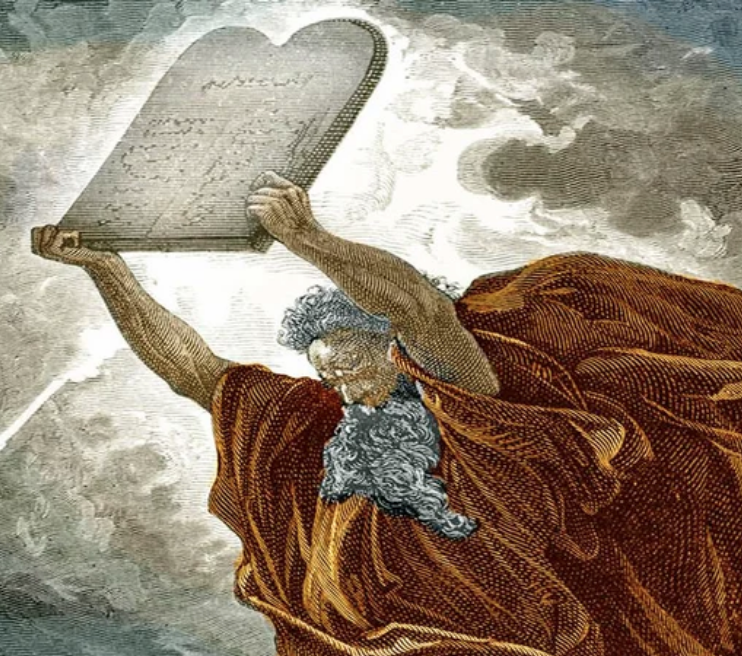
The piece reports that young Israeli-American scholar Idan Dershowitz may have identified "the oldest known biblical manuscript by far," which offers "an unprecedented window into origins and evolution of the Bible" and, in particular, the Book of Deuteronomy. If substantiated, some say, this "will be the most consequential Bible-related discovery since the Dead Sea Scrolls in 1947."

Or not. Journalists assessing what's hot should consider that across the years, manuscript frauds and ill-supported speculations about the Bible have been rife.

The Times is known to sometimes "bury the lede," and in this case it buried the news peg. The piece was nicely timed for Jewish Passover and Christian Holy Week when media often dig into biblical mysteries and controversies. But the news here is the April publication of Dershowitz's book "The Valediction of Moses: A Proto-Biblical Book."

The book will fill in the missing element in the Times story and thus provide major fresh substance for reporters to develop: Which portions of Deuteronomy are involved in this discussion, and how do specific wordings and passages in today's Bibles compare with the purportedly ancient texts Dershowitz cites? On that basis, what do the agreements and contrasts tell us and why?

Dershowitz seeks to rehabilitate Wilhelm Moses Shapira, whose 19th Century Jerusalem shop sold both tourist trinkets and allegedly valuable ancient manuscripts. He tried to sell these Deuteronomy fragments to a regular customer, the British Museum, but its expert and others declared them forgeries in 1883, based on what Dershowitz considers slipshod study.

Shamed, Shapira soon committed suicide in Rotterdam. The leather fragments themselves then disappeared.


Please respect our Commenting Policy

Catholic left seeks (and finds?) signs of hope after Vatican ruling on same-sex unions

Catholic left seeks (and finds?) signs of hope after Vatican ruling on same-sex unions

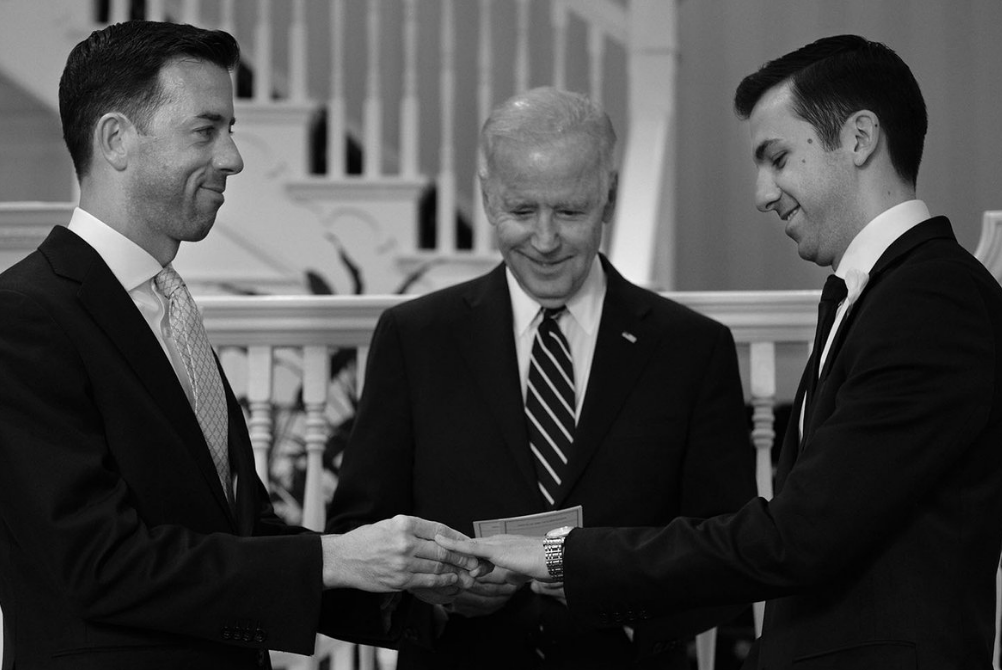
After a media firestorm ignited by a Vatican condemnation of same-sex unions -- because God "cannot bless sin" -- Catholic progressives immediately looked for hope in the words of bishops, President Joe Biden and even Pope Francis.

In his Sunday Angelus address after the March 15 ruling, the pope stressed that modern seekers want to "see Jesus" in acts of love, not persecution.

Catholics must promote "a life that takes upon itself the style of God -- closeness, compassion and tenderness," said the pope. "It means sowing seeds of love, not with fleeting words but through concrete, simple and courageous examples, not with theoretical condemnations, but with gestures of love. Then the Lord, with his grace, makes us bear fruit, even when the soil is dry due to misunderstandings, difficulty or persecution, or claims of legalism or clerical moralism."

While Pope Francis gave "his assent" to this ruling, the Jesuit publication America cited anonymous Vatican sources saying the Angelus remarks suggested that he was "distancing himself" from the work of the Congregation for the Doctrine of the Faith.

That document said God "does not and cannot bless sin: He blesses sinful man, so that he may recognize that he is part of his plan of love and allow himself to be changed." As for same-sex unions, it added: "The presence in such relationships of positive elements … cannot justify these relationships and render them legitimate objects of an ecclesial blessing, since the positive elements exist within the context of a union not ordered to the Creator's plan."

Bishop Johan Bonny of Antwerp -- who represented Belgium at the 2015 Vatican Synod on Marriage and the Family -- said those words left him "ashamed on behalf of my Church. … I want to apologize to all those for whom this 'responsum' is painful and incomprehensible: faithful and committed Catholic homosexual couples, the parents and grandparents of homosexual couples and their children, pastoral workers and counsellors of homosexual couples," he wrote on Facebook.

"I know homosexual couples who are legally married, have children, form a warm and stable family, and moreover, actively participate in parish life. A number of them are employed full-time in pastoral work or ecclesial organizations." Why, he added, deny the "similarity or analogy with heterosexual marriage here?"


Please respect our Commenting Policy

Prayers and bloodshed during Lent: Catholic bishops cry out for help in Nigeria

Prayers and bloodshed during Lent: Catholic bishops cry out for help in Nigeria

Another day, with yet another funeral.

Catholics in Nigeria had buried many priests and believers killed in their country's brutal wars over land, cattle, honor and religion. But this was the first time Bishop Matthew Hassan Kukah of the Sokoto Diocese had preached at the funeral of a seminarian.

A suspect in the crime said 18-year-old Michael Nnadi died urging his attackers to repent and forsake their evil ways.

"We are being told that this situation has nothing to do with religion," said Kukah, in remarks distributed across Nigeria in 2020. "Really? … Are we to believe that simply because Boko Haram kills Muslims too, they wear no religious garb? Are we to deny the evidence before us, of kidnappers separating Muslims from infidels or compelling Christians to convert or die?"

The bishop was referring to fierce debates -- in Nigeria and worldwide -- about attacks by Muslim Fulani herders on Christian and Muslim farmers in northern and central Nigeria. The question is whether these gangs have been cooperating with Boko Haram, Al-Qaeda and the Islamic State.

The conflict has claimed Catholics, Anglicans, Pentecostal Christians and many others, including Muslims opposed to the violence. Prominent Muslim leaders have condemned Boko Haram and church leaders have condemned counterattacks by Christians. In recent years it has become next to impossible to keep track of the number of victims, including mass kidnappings of school children and the murders of clergy and laypeople, including beheadings.

"Religion is not the only driver of the mass atrocities," said Nina Shea of the Hudson Institute's Center for Religious Freedom, in December testimony before members of the House Foreign Affairs Committee. "Not all 40 million members of the Fulani ethnic group in the region are Islamic extremists. However, there is evidence that some fraction of the Fulani have an explicit jihadist agenda. …

"A mounting number of attacks in this region also evidence deep religious hatred, an implacable intolerance of Christians, and an intent to eradicate their presence by violently driving them out, killing them or forcing them to convert."

In a sobering Feb. 23 statement (.pdf here), the Catholic Bishop's Conference of Nigeria warned that the "nation is falling apart."


Please respect our Commenting Policy

Luis Palau: New York Times dug deeper than the 'Billy Graham of Latin America' label

Luis Palau: New York Times dug deeper than the 'Billy Graham of Latin America' label

It was the kind of question that general-assignment television reporters asked Billy Graham, since they didn’t realize that it had become a cliche: Who will be the “next Billy Graham?”

I heard Graham answer this question several times (and discussed it in depth with him in a 1987 one-on-one interview) and his response almost always included three key points.

First of all, he would say that he really didn’t know how or why he became “Billy Graham,” as in the world’s most famous evangelist (click here for his famous “turtle on a fencepost analogy). Second, Graham thought it was strange that reporters seemed to assume that he would know who the “next Billy Graham” would be. And finally, why did evangelists in other parts of the world need to be compared to him?

Take Luis Palau, for example. Graham said he didn’t consider him the “Billy Graham” of Latin America or anywhere else. Luis Palau, Graham told me, was Luis Palau, and that was who God wanted him to be.

I bring this subject up, of course, because of the double-decker headline that ran atop the recent New York Times obituary for this singular figure in modern evangelical history: “

Luis Palau, the ‘Billy Graham of Latin America,’ Dies at 86

He rose from preaching on street corners in Argentina to ministering to millions around the world, then focused his ministry on liberal corners of the U.S.

I’m not blaming the Times for using that image, since it appeared — to one degree or another — in almost every major news feature about his passing. In fact, the key to the Times feature is that dug deeper than that cliche and showed why Palau was a major player, in his own right, in global evangelicalism.

Still, everyone knows where this story will begin. But note the transition in this key summary passage near the top of the Times obit:

Though his headquarters were in Oregon, Mr. Palau was often called “the Billy Graham of Latin America.” He addressed that region’s 120 million evangelicals through three daily radio shows (two in Spanish, one in English), shelves of Spanish-language books and scores of revival crusades, in which he might spend a week, and millions of dollars, preaching in a single city. The Luis Palau Association estimates that he preached to 30 million people in 75 countries.


Please respect our Commenting Policy

3D chess in Rome? Pope Francis approves Vatican decree affirming doctrines on marriage

3D chess in Rome? Pope Francis approves Vatican decree affirming doctrines on marriage

All together now: Is the pope Catholic?

Actually, in this age of conspiracy theories — on right and left — the question of the day appears to be: Is THIS pope Catholic? I am referring, of course, to the Vatican’s decision to affirm centuries of Christian doctrine stating that sex outside of marriage is (trigger warning) “sin” and that the sacrament of marriage is limited to the union of a man and a woman.

But, but, but, clearly Pope Francis must be playing some kind of three-dimensional chess with this action, moving the doctrinal pieces in some subtle way that will become clear in “reforms” at a later date? This was a case in which one could catch whiffs of disappointment and even conspiracy thinking on both the Catholic left and right (and in the press).

To see this in print, check out the overture in this Washington Post report: “Pope Francis says priests cannot bless same-sex unions, dashing hopes of gay Catholics.” The headline assumes, of course, that all gay Catholics oppose the church’s teachings on this matter but, well, nevermind.

ROME — Pope Francis has invited LGBT advocates to the Vatican. He has spoken warmly about the place of gay people in the church. He has called for national laws for same-sex civil unions.

But Monday, Francis definitively signaled the limits to his reformist intentions, signing off on a Vatican decree that reaffirms old church teaching and bars priests from blessing same-sex unions.

The pronouncement, issued at a time when some clerics were interested in performing such blessings, leans on the kind of language that LGBT Catholics have long found alienating — and that they had hoped Francis might change. It says that same-sex unions are “not ordered to the Creator’s plan.” It says acknowledging those unions is “illicit.” It says that God “cannot bless sin.”

The decree shows how Francis, rather than revolutionizing the church’s stance toward gays, has taken a far more complicated approach, speaking in welcoming terms while maintaining the official teaching. That leaves gay Catholics wondering about their place within the faith, when the catechism calls homosexual acts “disordered” but the pontiff says, “Who am I to judge?”

Let’s see. We have the standard use of the word “reform” to prejudge this matter. We have a sense of yearning that Pope Francis is taking a “more complicated approach” to this doctrinal issue.


Please respect our Commenting Policy

Plug-in: Beth Moore, Southern Baptist trolls and a scoop that stunned Godbeat Twitter

Plug-in: Beth Moore, Southern Baptist trolls and a scoop that stunned Godbeat Twitter

In a little-noticed, late-night Twitter conversation on March 3, prominent author and speaker Beth Moore indicated that her Living Proof Ministries had ended its longtime partnership with Lifeway Christian Resources, a Southern Baptist Convention publishing house.

“Adored them but SBC baggage got to be too much,” Moore tweeted, matter-of-factly. “It was heartbreaking.”

A tip about the social media posts to Religion News Service national reporter Bob Smietana set in motion one of the year’s biggest religion news scoops.

Smietana called and set up an interview with Moore, who told him March 5 — last Friday — that she is “no longer a Southern Baptist.” After talking to Moore, the veteran religion writer then spent a nervous few days doing additional research and reporting — hoping no other journalist would learn about his in-depth exclusive.

When RNS published Smietana’s piece Tuesday, traffic quickly overwhelmed the wire service’s website, and the story became a trending topic on Twitter.

By Thursday, the Trump critic’s split with Southern Baptists was front-page news in the New York Times (read the story by Ruth Graham and Elizabeth Dias) and just missed the front page of the Washington Post (see the A2 coverage by Sarah Pulliam Bailey and Michelle Boorstein).

Other interesting follow-up coverage includes Holly Meyer’s report for USA Today, Kate Shellnutt’s story for Christianity Today and Ashlie D. Stevens’ analysis for Salon.

P.S. Kudos to RNS’ Emily McFarlan Miller for her front-page photo of Moore in the New York Times.


Please respect our Commenting Policy

Papal splash: Persecuted Iraqi Christians get long-awaited spotlight with Francis visit

Papal splash: Persecuted Iraqi Christians get long-awaited spotlight with Francis visit

By the time this runs, the pope will have flown home from Iraq after a historic trip that apparently went without a hitch. Popes John Paul II and Benedict XVI both wanted to go to Iraq; Francis actually went and did it.

There were so many reasons not to go: The pandemic, the security situation and the potential for misunderstanding or disaster. But Iraq put on an impressive show, keeping the pope safe, creating venues at which he spoke (the tableau in Mosul was particularly dramatic) and accommodating a press corps of several dozen reporters.

Which leads to mentioning how difficult covering a papal trip really is. I’ve covered two U.S. papal trips (John Paul II in 1987 and Benedict XVI in 2008); one papal election in Rome (Benedict, 2005) and spent plus two weeks in northern Iraq (July 2004), so I have a feel for the conditions. Covering a pope is a succession of 18-20-hour days spent getting checked over by security, traveling to the event, covering it and then filing your story and doing the research for the next day’s story.

Even the timing was tricky. The pope had to dodge major religious holidays along with national ones such as Nowruz, the Persian new year that’s also observed in Iraq and is on the first days of spring. He also had to avoid coming much past April as that part of the world is scorching for half of the year. (When I was there in July, it was 111 degrees).

Listen here to CNN’s Vatican correspondent Delia Gallagher as she talks about waiting in Rome for the papal plane with 75 other journalists, all of whom, she said, were vaccinated. Notice the band playing the hymn “Joyful, Joyful We Adore Thee” when the pontiff came down the stairs to the tarmac. I’m sure that tune was a new one for the Baghdad airport.

I also caught this NBC report about reporters taking an Iraqi military plane to get to Ur. I hope to hear more about what it was like to report from Iraq.

News outlets with Baghdad and Rome bureaus understandably had the best ringside seats to the visit and it was the foreign correspondents, not these outlets’ religion beat reporters, who got to cover the trip.

Even Religion News Service’s and the Associated Press’ Vatican reporters had to cover the event from Rome, so I am very curious as to who these 75 journalists were who actually got on the plane.

Putting on such a trip was quite the production, according to a detailed 25-minute special report by alJazeera, which informed us that Iraq employed 10,000 members of its security forces to make sure nothing went wrong.

I’ll open with the Washington Post’s account of the pope’s arrival.


Please respect our Commenting Policy

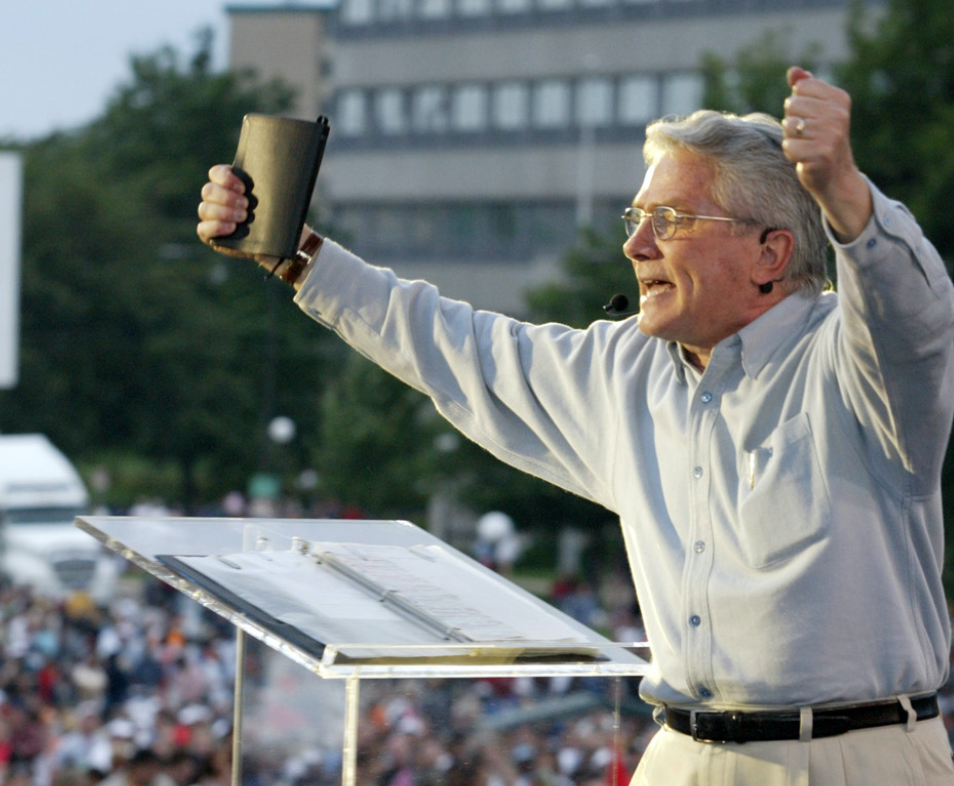
Thinking about disunited Methodist future: Questions, terms and fault lines to ponder

Thinking about disunited Methodist future: Questions, terms and fault lines to ponder

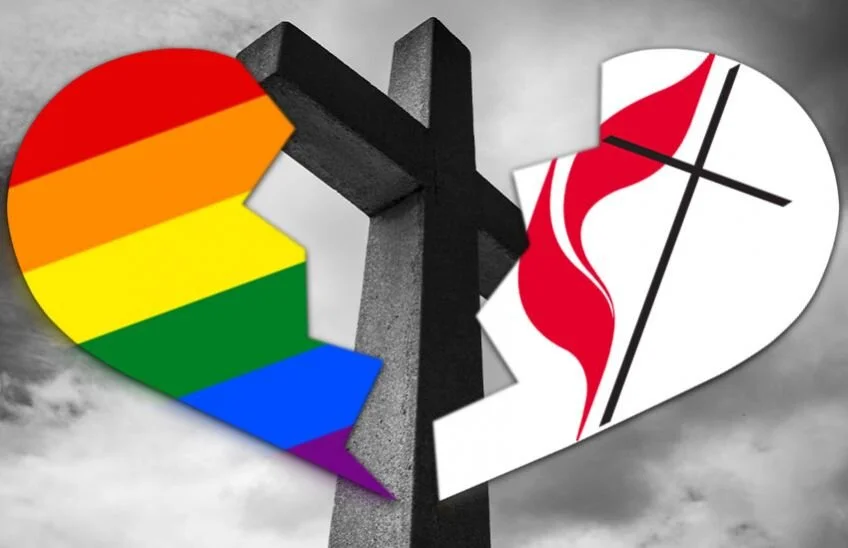
So the “United” Methodists are back on the clock, in terms of waiting for their amicable divorce?

It would appear so, as COVID-19 continues to delay all kinds of large-scale meetings for pretty much everyone. Maybe they could have a socially distanced meeting in something like the University of Michigan’s “Big House” stadium (which seats about 110,000 under normal conditions)?

This is a huge story, of course, any way you cut it — with major implications for the shrinking world of the Seven Sisters of oldline liberal Protestantism, as well as putting the spotlight on the thriving evangelicalism of the Global South. As GetReligion patriarch Richard Ostling noted the other day:

The United Methodist Church is on the brink of America's biggest religious schism since the Civil War, with the conflict centering on sexual morality, biblical authority and theological liberalism.

At stake is an empire with 6.7 million U.S. members and 31,000 congregations located across most American counties, 6.5 million members overseas and $6.3 billion in annual donations (though there's now a severe money crunch). Many of those churches sit on prime urban and suburban real estate.

You know that COVID-19 has to be affecting the economics of all of this, especially for the center-left UMC establishment. Will they try to run out the clock somehow, assuming that the doctrinal conservatives will simply leave on their own (thus avoiding the need for some kind of severance check)? But that kind of split would lead to legal warfare (think of it as the United Methodist lawyers Employment Act) over church sanctuaries, clergy benefits, etc. Ask the the Episcopalians about that.

This leads me to two think pieces for reporters and news consumers to file. The first comes from the Mark Tooley, the must-follow analyst on the Methodist right: “Global Methodism’s New Church.” He covers essential background, with logical attention to Methodist growth in Africa, then offers this helpful summary:

Why are conservatives leaving when they won at the General Conference?

Liberals, although outnumbered globally, dominate the U.S. church and its bureaucracy. Few American conservatives want to inherit liberal church agencies, seminaries, and local conference structures, whose financial viability is already dubious.


Please respect our Commenting Policy