International News

3D chess in Rome? Pope Francis approves Vatican decree affirming doctrines on marriage

3D chess in Rome? Pope Francis approves Vatican decree affirming doctrines on marriage

All together now: Is the pope Catholic?

Actually, in this age of conspiracy theories — on right and left — the question of the day appears to be: Is THIS pope Catholic? I am referring, of course, to the Vatican’s decision to affirm centuries of Christian doctrine stating that sex outside of marriage is (trigger warning) “sin” and that the sacrament of marriage is limited to the union of a man and a woman.

But, but, but, clearly Pope Francis must be playing some kind of three-dimensional chess with this action, moving the doctrinal pieces in some subtle way that will become clear in “reforms” at a later date? This was a case in which one could catch whiffs of disappointment and even conspiracy thinking on both the Catholic left and right (and in the press).

To see this in print, check out the overture in this Washington Post report: “Pope Francis says priests cannot bless same-sex unions, dashing hopes of gay Catholics.” The headline assumes, of course, that all gay Catholics oppose the church’s teachings on this matter but, well, nevermind.

ROME — Pope Francis has invited LGBT advocates to the Vatican. He has spoken warmly about the place of gay people in the church. He has called for national laws for same-sex civil unions.

But Monday, Francis definitively signaled the limits to his reformist intentions, signing off on a Vatican decree that reaffirms old church teaching and bars priests from blessing same-sex unions.

The pronouncement, issued at a time when some clerics were interested in performing such blessings, leans on the kind of language that LGBT Catholics have long found alienating — and that they had hoped Francis might change. It says that same-sex unions are “not ordered to the Creator’s plan.” It says acknowledging those unions is “illicit.” It says that God “cannot bless sin.”

The decree shows how Francis, rather than revolutionizing the church’s stance toward gays, has taken a far more complicated approach, speaking in welcoming terms while maintaining the official teaching. That leaves gay Catholics wondering about their place within the faith, when the catechism calls homosexual acts “disordered” but the pontiff says, “Who am I to judge?”

Let’s see. We have the standard use of the word “reform” to prejudge this matter. We have a sense of yearning that Pope Francis is taking a “more complicated approach” to this doctrinal issue.


Please respect our Commenting Policy

Plug-in: Beth Moore, Southern Baptist trolls and a scoop that stunned Godbeat Twitter

Plug-in: Beth Moore, Southern Baptist trolls and a scoop that stunned Godbeat Twitter

In a little-noticed, late-night Twitter conversation on March 3, prominent author and speaker Beth Moore indicated that her Living Proof Ministries had ended its longtime partnership with Lifeway Christian Resources, a Southern Baptist Convention publishing house.

“Adored them but SBC baggage got to be too much,” Moore tweeted, matter-of-factly. “It was heartbreaking.”

A tip about the social media posts to Religion News Service national reporter Bob Smietana set in motion one of the year’s biggest religion news scoops.

Smietana called and set up an interview with Moore, who told him March 5 — last Friday — that she is “no longer a Southern Baptist.” After talking to Moore, the veteran religion writer then spent a nervous few days doing additional research and reporting — hoping no other journalist would learn about his in-depth exclusive.

When RNS published Smietana’s piece Tuesday, traffic quickly overwhelmed the wire service’s website, and the story became a trending topic on Twitter.

By Thursday, the Trump critic’s split with Southern Baptists was front-page news in the New York Times (read the story by Ruth Graham and Elizabeth Dias) and just missed the front page of the Washington Post (see the A2 coverage by Sarah Pulliam Bailey and Michelle Boorstein).

Other interesting follow-up coverage includes Holly Meyer’s report for USA Today, Kate Shellnutt’s story for Christianity Today and Ashlie D. Stevens’ analysis for Salon.

P.S. Kudos to RNS’ Emily McFarlan Miller for her front-page photo of Moore in the New York Times.


Please respect our Commenting Policy

Papal splash: Persecuted Iraqi Christians get long-awaited spotlight with Francis visit

Papal splash: Persecuted Iraqi Christians get long-awaited spotlight with Francis visit

By the time this runs, the pope will have flown home from Iraq after a historic trip that apparently went without a hitch. Popes John Paul II and Benedict XVI both wanted to go to Iraq; Francis actually went and did it.

There were so many reasons not to go: The pandemic, the security situation and the potential for misunderstanding or disaster. But Iraq put on an impressive show, keeping the pope safe, creating venues at which he spoke (the tableau in Mosul was particularly dramatic) and accommodating a press corps of several dozen reporters.

Which leads to mentioning how difficult covering a papal trip really is. I’ve covered two U.S. papal trips (John Paul II in 1987 and Benedict XVI in 2008); one papal election in Rome (Benedict, 2005) and spent plus two weeks in northern Iraq (July 2004), so I have a feel for the conditions. Covering a pope is a succession of 18-20-hour days spent getting checked over by security, traveling to the event, covering it and then filing your story and doing the research for the next day’s story.

Even the timing was tricky. The pope had to dodge major religious holidays along with national ones such as Nowruz, the Persian new year that’s also observed in Iraq and is on the first days of spring. He also had to avoid coming much past April as that part of the world is scorching for half of the year. (When I was there in July, it was 111 degrees).

Listen here to CNN’s Vatican correspondent Delia Gallagher as she talks about waiting in Rome for the papal plane with 75 other journalists, all of whom, she said, were vaccinated. Notice the band playing the hymn “Joyful, Joyful We Adore Thee” when the pontiff came down the stairs to the tarmac. I’m sure that tune was a new one for the Baghdad airport.

I also caught this NBC report about reporters taking an Iraqi military plane to get to Ur. I hope to hear more about what it was like to report from Iraq.

News outlets with Baghdad and Rome bureaus understandably had the best ringside seats to the visit and it was the foreign correspondents, not these outlets’ religion beat reporters, who got to cover the trip.

Even Religion News Service’s and the Associated Press’ Vatican reporters had to cover the event from Rome, so I am very curious as to who these 75 journalists were who actually got on the plane.

Putting on such a trip was quite the production, according to a detailed 25-minute special report by alJazeera, which informed us that Iraq employed 10,000 members of its security forces to make sure nothing went wrong.

I’ll open with the Washington Post’s account of the pope’s arrival.


Please respect our Commenting Policy

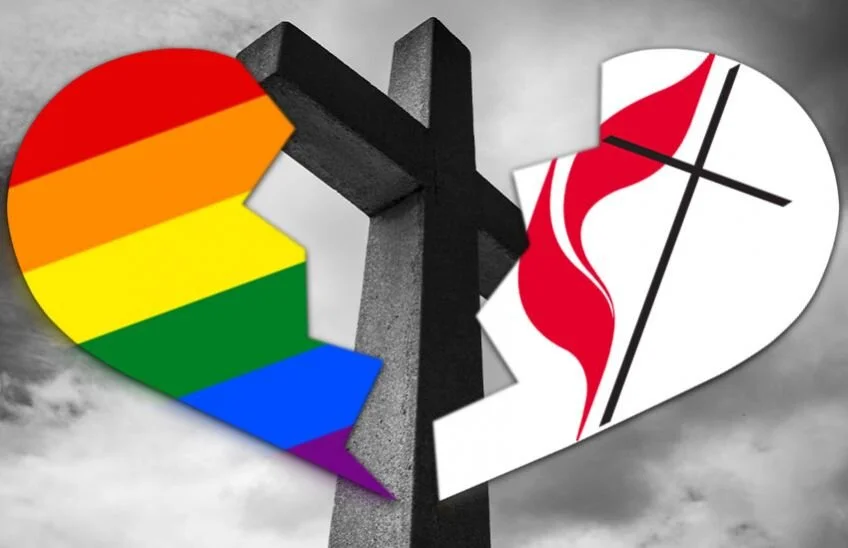
Thinking about disunited Methodist future: Questions, terms and fault lines to ponder

Thinking about disunited Methodist future: Questions, terms and fault lines to ponder

So the “United” Methodists are back on the clock, in terms of waiting for their amicable divorce?

It would appear so, as COVID-19 continues to delay all kinds of large-scale meetings for pretty much everyone. Maybe they could have a socially distanced meeting in something like the University of Michigan’s “Big House” stadium (which seats about 110,000 under normal conditions)?

This is a huge story, of course, any way you cut it — with major implications for the shrinking world of the Seven Sisters of oldline liberal Protestantism, as well as putting the spotlight on the thriving evangelicalism of the Global South. As GetReligion patriarch Richard Ostling noted the other day:

The United Methodist Church is on the brink of America's biggest religious schism since the Civil War, with the conflict centering on sexual morality, biblical authority and theological liberalism.

At stake is an empire with 6.7 million U.S. members and 31,000 congregations located across most American counties, 6.5 million members overseas and $6.3 billion in annual donations (though there's now a severe money crunch). Many of those churches sit on prime urban and suburban real estate.

You know that COVID-19 has to be affecting the economics of all of this, especially for the center-left UMC establishment. Will they try to run out the clock somehow, assuming that the doctrinal conservatives will simply leave on their own (thus avoiding the need for some kind of severance check)? But that kind of split would lead to legal warfare (think of it as the United Methodist lawyers Employment Act) over church sanctuaries, clergy benefits, etc. Ask the the Episcopalians about that.

This leads me to two think pieces for reporters and news consumers to file. The first comes from the Mark Tooley, the must-follow analyst on the Methodist right: “Global Methodism’s New Church.” He covers essential background, with logical attention to Methodist growth in Africa, then offers this helpful summary:

Why are conservatives leaving when they won at the General Conference?

Liberals, although outnumbered globally, dominate the U.S. church and its bureaucracy. Few American conservatives want to inherit liberal church agencies, seminaries, and local conference structures, whose financial viability is already dubious.


Please respect our Commenting Policy

Attention news editors: Are German Catholic bishops poised to become liberal Luthers?

Attention news editors: Are German Catholic bishops poised to become liberal Luthers?

Germany’s Catholic bishops embarked on a series of conversations in 2018 aimed at reforming church teachings. It was an ambitious, if not audacious, effort addressing everything from homosexuality, priestly celibacy and the ordination of women.

As always, the word “reform” — in this context — means modernizing ancient church doctrines.

Conservative Catholics across the world decried the prospect. The tensions that arose at that time — and still simmering today — even caused some to warn that a permanent split could occur.

Indeed, the dreaded “s-word” — schism — can be used to describe the current moment. It was just last year that a high-ranking prelate argued that pushing such changes could lead to a “German national church.”

That’s a big news story — period. Over the past three years, the bishops in Germany haven’t been shy about making headlines — in Catholic-market publications. The question is when their proposals will draw major coverage by professionals in major newsrooms, including television networks.

Meanwhile, Pope Francis has elevated women at the Vatican, but he hasn’t endorsed such progressive doctrinal proposals — although his papacy has emboldened the Germans to push for such changes.

The church across the West has suffered tremendously due to secularism and the clergy sex scandal, especially in Germany. None of these German innovations, along with the alleged cover-ups, has helped matters. Still, the German bishops have continued to propose “reforms” in the past few weeks — with a series of moves that could forever change Roman Catholicism.

These latest pronouncements have received attention in the U.S. press, primarily in conservative religious publications. There are exceptions, but overall these fast-moving developments have gone unnoticed as of late.

These moves come as the church in Germany continues to lose members. In 2019, for example, over 272,000 Catholics quit the church.


Please respect our Commenting Policy

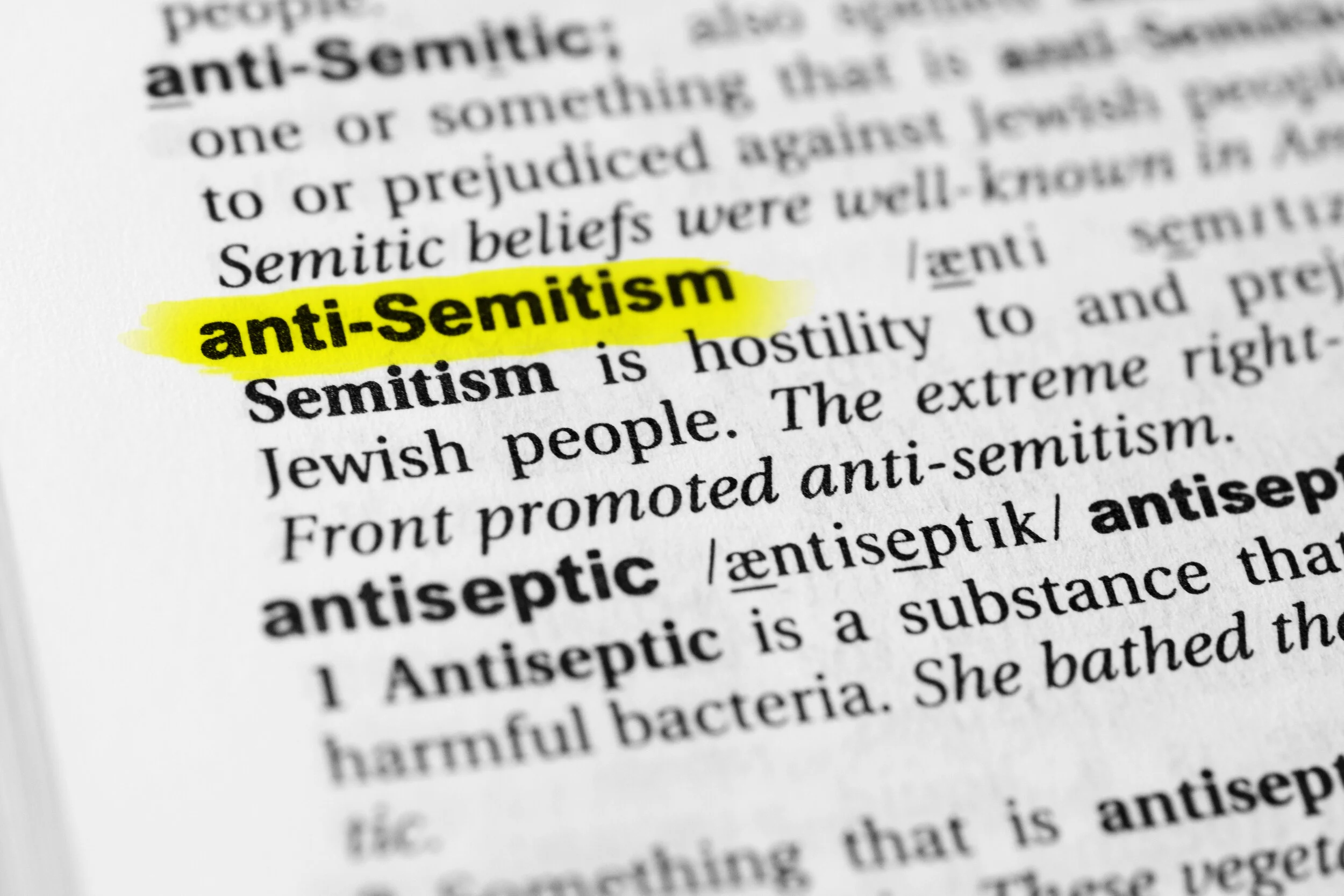
Israel issue complicates anti-Semitism definition. This could haunt Biden’s Middle East work

Israel issue complicates anti-Semitism definition. This could haunt Biden’s Middle East work

A tired Jewish cliche states, “two Jews, three opinions.” As a member of the tribe for, well, my entire life, I have to agree that it has a clear ring of truth.

However, I’m inclined to say that it’s not just Jews who seem to disagree about almost everything, certainly these days, and perhaps never. To quote the Talking Heads (one of my favorite post-punk rock bands, “same as it ever was, same as it ever was…”

So, President Joseph R. Biden, unity will not be had just for the asking. But I digress.

Among the latest Jewish communal verbal slugfests is one an outsider might reasonably think Jews would likely agree upon — which is, how do you define anti-Semitism?

But we don’t, because nothing is simple in life (allow me to refer you back to the “two Jews, three opinions” cliche above) no matter what we’d like to think.

This is particularly so when you add Israel to the equation. Or, to be more precise, the question of what constitutes fair political criticism of Israel and what is unfair — or biased — criticism of Israel that bleeds into hateful anti-Semitism?

The top of this JTA (the international Jewish news agency) story from mid-January lays out the issue.

(JTA) — When is it anti-Semitic to criticize Israel?

Anti-Semitism signifies hatred of Jews and the ways that hatred is perpetuated through age-old conspiracy theories and their modern variants. But what about when that hatred is expressed through rhetoric about the Jewish state? Is anti-Zionism anti-Semitism?

Those questions have divided American Jews in recent years — and are doing so again.


Please respect our Commenting Policy

Could these writings shatter Christian history? True or false, journalists might take a look

Could these writings shatter Christian history? True or false, journalists might take a look

Let's pretend there's not much news coming out of Washington, D.C and a reporter yearns to cover something different. And what if the press has missed "the biggest biblical discovery to date," indeed, "arguably the most important religious discovery of all time"?

Sounds interesting. And if those lavish promotional claims turn out to be false, that's a story, too.

A friend of The Religion Guy uses the News360.com app, whose algorithms scan 7,000 newspapers and magazines for articles keyed to the individual's interests. This friend's interests include Christian history, and he was alerted to a Jan. 29 article announcing the discovery of ancient documents that "could revolutionize our picture of Christianity."

A seasoned journalist immediately recalls hoaxes of this sort. Leave aside the deceptive history on Christian origins offered as fact in "The Da Vinci Code" novel, a huge 2003 seller that spawned a movie starring Tom Hanks. A claim of proof Jesus Christ was married that emanated from august Harvard Divinity School was debunked. Evangelicals swooned over spurious reports about finding a manuscript of the Gospel of Mark written in the 1st Century. In 2017, The Guy attempted to assess the Shroud of Turin dispute.

The Jan. 29 article wasn't from a recognized scholarly journal or site but CoreSpirit.com, which informs practitioners, entrepreneurs and curiosity-seekers about magic, esoterica, life enhancement nostrums, transcendence and "ancient wisdom."

By the way, this site is potentially useful for media. The Guy bets journalists know nothing about most of the 800-plus topics covered (e.g. global brain, isolation tank, medical intuition, superhuman agility, urine therapy, tongue cutting, wall crawling, you name it).

Core Spirit neglected to tell readers that its news is not new.

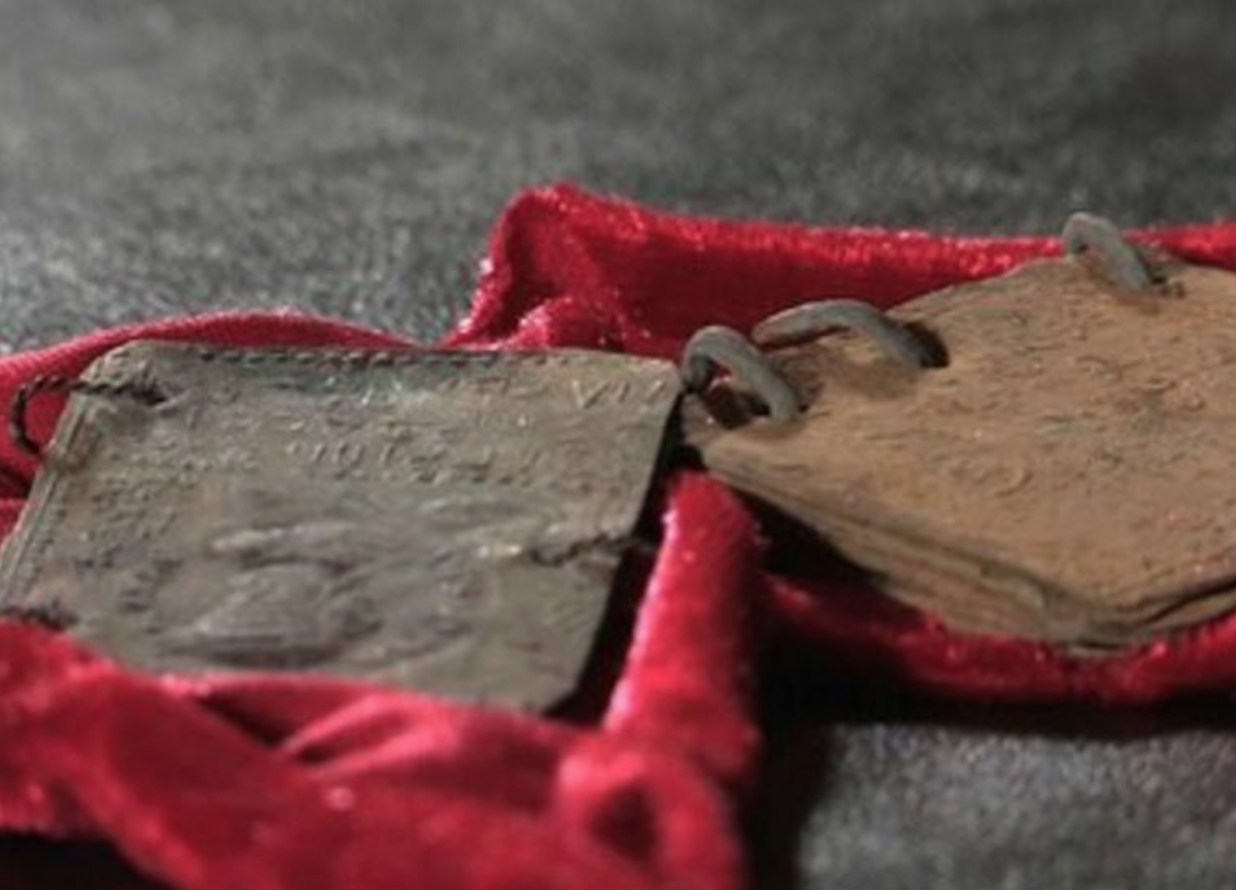
The mysterious "Jordanian Codices," a collection of small, bound-together metal tablets, first won publicity in 2011 and mostly in Britain. Though scholars scoffed, there's been lively chatter across the Internet ever since that reporters can plumb to assess story prospects. The history of where these items came from is confused, but they're now being held by Jordan's antiquities department.


Please respect our Commenting Policy

Should elite European officials outlaw Jewish and Muslim ritual slaughter for meat?

Should elite European officials outlaw Jewish and Muslim ritual slaughter for meat?

THE QUESTION:

Should Europeans outlaw ritual slaughter for meat practiced by Judaism and Islam as cruelty to animals?

THE RELIGION GUY’S ANSWER:

With such unprecedented political mayhem, Americans can be forgiven for barely noticing important events overseas.

The Guy, who believes threats to religious freedom warrant especially close attention, highlights a Dec. 17 ruling by the Court of Justice, the highest tribunal in the European Union (which covers 27 member nations with the departure of Great Britain). Readers will want to check out this recent Ira Rifkin post on this topic: “EU hypocrisy? Foie gras and factory farming continue, but kosher and halal traditions nixed.”

The decision, on referral from Belgium’s Constitutional Court, approved a regional statute mandating that animals be stunned before they are slaughtered for meat. This requirement directly pits animal-welfare advocates against Judaism and Islam, in which long-standing tradition allows observant believers to eat only meat from ritual slaughter, which forbids such stunning. European Jews and Muslims plan to appeal the decision, which could influence policies in other nations.

The court acknowledged that religious liberty is important, but on balance stated that the crackdown in Belgium occurs in “an evolving societal and legislative context which is characterized by an increasing awareness of the issue of animal welfare.” Several European nations already require stunning before slaughtering. (In the United States, statutes require stunning but allow for religious exemptions.)

Adding to the emotions in Europe, this dispute brings to mind that in 1933 Germany’s new Nazi-influenced regime prohibited Jewish slaughter on grounds of the stunning problem. More recently, this argument has been employed by Islamophobes.

The Conference of European Rabbis, which represents believers in 40 nations, said such prohibitions “put Jewish life at risk.” Omer Yankelevitch, a member of Israel’s parliament and the government diaspora affairs minister, wrote similarly in the Jerusalem Post last week. He said the European Union is violating freedom of religion and “harms the viability of Jewish communities in Europe,” so intense diplomatic efforts will be undertaken to respect the age-old observance.

Those who enjoy eating meat may give barely a thought to the methods used to produce it, although perhaps some reflected on this reality when COVID outbreaks brought attention to slaughterhouse conditions.


Please respect our Commenting Policy