Godbeat

That SBC powderkeg: Clearly, executive committee is bitterly divided on sexual-abuse issues

That SBC powderkeg: Clearly, executive committee is bitterly divided on sexual-abuse issues

Several decades ago, early in the media coverage of the Catholic clergy sexual abuse scandals, a veteran Catholic educator gave me some sobering advice.

When dealing with stories about sexual abuse, he stressed, the usual doctrinal and cultural labels do not apply. There wasn’t a “left” or a “right” side of the story because there were people hiding their sins on both sides. When dealing with sexual abuse, most conflicts centered on issues of honesty and integrity and, most of all, a willingness to repent and admit that these sins and crimes were real.

I thought of that the other day when reading the Religion News Service story that started dominos falling in America’s largest non-Catholic flock: “Leaked Russell Moore letter blasts SBC conservatives, sheds light on his resignation.” (I apologize for getting to this story late, due to a week of travels with family, followed by a painful health crisis that has me rather drugged and could return me to an emergency room at any moment.)

Journalists and SBC insiders were not surprised that RNS scribe Bob Smietana was involved in breaking that story, in part because of his years of experience in the Nashville market at The Tennessean, as well as five years with Lifeway Research, an organization linked to Southern Baptist life. This is one of those cases in which a reporter can build on years of experience and contacts in a complex, massive organization and, thus, Smietana has been landing one SBC scoop after another in recent years. It’s crucial that this RNS story was supported by a post featuring the full text of the 4,000-word Moore letter.

The next key story, by Sarah Pulliam Bailey, ran in The Washington Post: “Newly leaked letter claims Southern Baptist leaders 'covered up' sex abuse allegations.” Click here (.pdf file) for a full text of this second Moore letter. It’s packed with material from crucial voices on both sides of this conflict, with most of them speaking on the record. This is another MUST read report.

The ink will be flying fast and furious, I imagine, as combatants prepare for the 2021 national Southern Baptist Convention, which will be held June 15-16 in Nashville, with preliminary gatherings two days earlier.

As Moore stated in the letter posted by RNS, many people will assume that this conflict centers on his highly public opposition to the presidential candidacy of Donald Trump. However, he stressed that he is convinced the main lightning rod was his efforts to fight sexual abuse inside the SBC, along with his bridge-building efforts to Black congregations, a growing and strategic network in the convention.


Please respect our Commenting Policy

Plug-In: Southern Baptists brace for biggest annual meeting in a quarter-century

Plug-In:  Southern Baptists brace for biggest annual meeting in a quarter-century

The Southern Baptist Convention’s annual meeting is a hot ticket once again.

Flash back to 1985: At the height of the battles between the denomination’s conservatives and moderates, 45,000 Southern Baptists flocked to Dallas.

But by 2001 — when I covered my first SBC annual meeting for The Oklahoman — the typical number of “messengers” sent by local congregations had dipped below 10,000. I actually wrote a front-page story from New Orleans that year headlined “Baptists share united voice.”

For years, the meetings were a big draw for national and regional journalists who cover religion. But as Southern Baptists gathered in Orlando, Florida, in 2010, Cathy Lynn Grossman, then the religion writer for USA Today, asked, “Who's watching Southern Baptists debate their future?”:

The wire services are walking the beaches of Pensacola with President Obama and religion reporters — what's left of us — are hobbled by lack of travel budgets and the rigidly local focus of many media.

The Tennessean’s Bob Smietana, now with Religion News Service, was one of perhaps only two mainstream reporters (along with the Arkansas Democrat-Gazette’s Frank Lockwood) who flew to Florida for that meeting.

At the time, I opined that not just a lack of travel budgets — but a shortage of news woven through the lens of sex and politics — was to blame.

Not to fear: No such shortage of news exists anymore. (Thank Donald Trump. Or Russell Moore. Or if you prefer, Beth Moore.)


Please respect our Commenting Policy

New podcast: Among waves of Tulsa Massacre ink, a fine AP religion story pointed forward

New podcast: Among waves of Tulsa Massacre ink, a fine AP religion story pointed forward

The 100th anniversary of the Tulsa Race Massacre is one of those stories that punches every button that can be pushed in news coverage today, especially after months of news about the complex Black Lives Matter movement and its impact on American life.

Obviously, this is a story about history and the voices of the few survivors who are alive to talk about the impact of this event on their lives and their community. In many parts of America, this is a story that can be linked to similar horrors from the past. For starters, there were the Red Summer riots of 1919 here in Knoxville, Tenn., and elsewhere.

Obviously, this is a legal and political story right now as efforts continue to pull the details of the Tulsa Massacre into the light of day. Consider the top of this remarkable multi-media report from The New York Times: “What the Tulsa Race Massacre Destroyed.”

Imagine a community of great possibilities and prosperity built by Black people for Black people. Places to work. Places to live. Places to learn and shop and play. Places to worship.

Now imagine it being ravaged by flames.

In May 1921, the Tulsa, Okla., neighborhood of Greenwood was a fully realized antidote to the racial oppression of the time. … Brick and wood-frame homes dotted the landscape, along with blocks lined with grocery stores, hotels, nightclubs, billiard halls, theaters, doctor’s offices and churches.

Yes, many of the 13 churches in Greenwood were destroyed or damaged, as 35 square blocks were burned down. No one truly knows how many people died, but the estimate of 300 is almost certainly low, with reports of mass graves and bodies tossed in the Arkansas River. As many news reports noted, no one has ever been prosecuted the crimes linked to the massacre in and around what was known as America’s Black Wall Street.

Did the major news coverage of the anniversary — some of it staggering in its complexity and depth — cover the many religion angles of this story? Yes and no. As always, political voices and news hooks received the most attention.

But there was one Associated Press story in particular — “Tulsa pastors honor ‘holy ground’ 100 years after massacre” — that we discussed, and praised, during this week’s “Crossroads” podcast (click here to tune that in).


Please respect our Commenting Policy

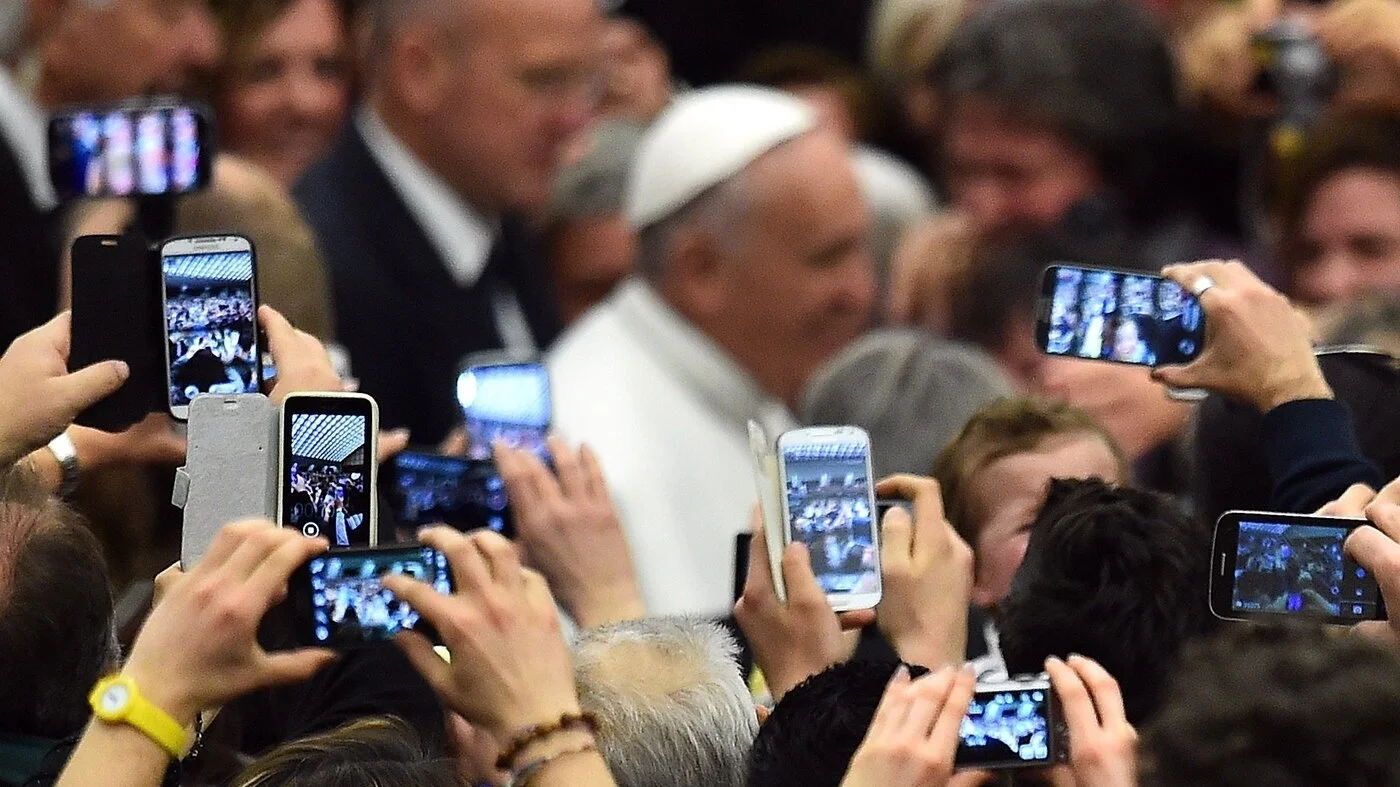
Pope Francis questions the purpose of official Vatican media: Does he have a point?

Pope Francis questions the purpose of official Vatican media: Does he have a point?

The year was 2012 and then-Pope Benedict XVI, yearning to “encounter men and women wherever they are, and begin dialogue with them” sent out his first tweet.

The papal Twitter account in English — and associated accounts in different languages — continue to this day under Pope Francis. For the leader of the world’s 1.3 billion Roman Catholics, it remains a way to evangelize through the computer, especially during the pandemic.

It did not go unnoticed when Francis — paying a visit on May 24 to the Dicastery of Communications to mark the 90th anniversary of Vatican Radio and the 160th anniversary of the Vatican’s newspaper L’Osservatore Romano — used the occasion to call the Vatican’s in-house media to stay relevant during a challenging media landscape.

The Associated Press, in its news story, noted the following:

Francis has vowed not to fire anyone to offset the economic crisis created by COVID-19 and the pandemic-related shuttering of one of the Holy See’s main sources of revenue, ticket sales from the Vatican Museums.

But in a warning of sorts to the Vatican communications staff, he opened his unscripted remarks Monday with a pointed question.

“There are a lot of reasons to be worried about the Radio, L’Osservatore, but one that touches my heart: How many people listen to the Radio? How many people read L’Osservatore Romano?” Francis asked.

He said their work was good, their offices nice and organized, but that there was a “danger” that their work doesn’t arrive where it is supposed to. He warned them against falling prey to a “lethal” functionality where they go through the motions but don’t actually achieve anything.

In dealing with Vatican-run media, journalists need to ask several questions:

* Why has Pope Francis questioned his own media?


Please respect our Commenting Policy

Demographics make news: How will religion shape the oncoming Birth Dearth and vice versa?

Demographics make news: How will religion shape the oncoming Birth Dearth and vice versa?

A Newsweek magazine feature back in 1975 was headlined "The Cooling World." (Journalists beware: The supposed 1977 Time magazine cover story "How to Survive the Coming Ice Age" is among the countless frauds that infest the Internet.)

Eventually, cultural concern shifted instead to "global warming" (which was then rebranded as "climate change").

Seven years before Newsweek's freeze alarm, Stanford University biologist Paul Ehrlich published his apocalyptic "The Population Bomb," which sold in the millions and updated Thomas Malthus's dire demographic predictions from 1798. Ehrlich warned, for example, that due to global overpopulation, in the 1970s "hundreds of millions of people are going to starve to death." He then helped found the Zero Population Growth organization (since rechristened Population Connection).

Now comes The New York Times with a major page-one May 23 feature headlined "Long Slide Looms for World Population, With Sweeping Ramifications." We're told fertility rates are falling most everywhere except Africa south of the Sahara Desert, and that experts project the first population decline in world history will take hold by the end of this century. Click here for tmatt’s podcast and first take on some of the religion hooks in that story.

Stagnant and shrinking populations will thrill a segment of environmentalists, but these trends also destabilize society — which creates news. Whether with the shared responsibilities families have always assumed, or modern-day governments' social security systems, humanity must have enough younger workers carrying older people to sustain itself.

To keep the population stable, a society needs 2.1 children in the average nuclear family. A survey in The Lancet last year predicted that 183 of the world's 195 nations and territories are on a path to fall below that mark.

The particulars are staggering. The United States is well below that replacement number, and India and Mexico are nearly there, but South Korea has plummeted to a remarkable 0.92.


Please respect our Commenting Policy

Plug-In: Tulsa Massacre centennial -- focusing on repentance, reconciliation, reparations

Plug-In: Tulsa Massacre centennial -- focusing on repentance, reconciliation, reparations

TULSA, Okla. — Today marks the 100th anniversary of the Tulsa Race Massacre, a truly dark moment in America’s history.

At the centennial, a prayer room at a downtown Tulsa church focuses on the sins of 1921 while asking God to bring healing, as I report here at ReligionUnplugged.com.

In separate dispatches for The Christian Chronicle, I explain how faith drives two leading advocates fighting for massacre justice and detail the racial unity effort by two Tulsa-area ministers — one Black, one White.

New Associated Press religion writer Peter Smith reports from Tulsa on how houses of worship commemorated the massacre Sunday.

At The Oklahoman, longtime faith editor Carla Hinton and her colleagues offer in-depth coverage, including a compelling story on how a modern-day Moses helped rebuild Tulsa’s Mount Zion Baptist Church.

A strong narrative piece by AP’s Aaron Morrison opens with a scene from Vernon African Methodist Episcopal Church, a congregation involved in a massacre reparations lawsuit that Religion News Service’s Adelle M. Banks highlights.

Check out the Tulsa World, too, for the latest developments, including a last-minute cancellation of a planned centennial event featuring John Legend and Stacey Abrams.


Please respect our Commenting Policy

'On Religion' flashback to 1998: Ten years of reporting on a church-state fault line

'On Religion' flashback to 1998: Ten years of reporting on a church-state fault line

Back in the 1980s, I began to experience deja vu while covering event after event on the religion beat in Charlotte, Denver and then at the national level.

I kept seeing a fascinating cast of characters at events centering on faith, politics and morality. A pro-life rally, for example, would feature a Baptist, a Catholic priest, an Orthodox rabbi and a cluster of conservative Methodists, Presbyterians, Episcopalians and Lutherans. Then, the pro-choice counter-rally would feature a "moderate" Baptist, a Catholic activist or two, a Reform rabbi and mainline Methodists, Presbyterians, Episcopalians and Lutherans.

Similar line-ups would appear at many rallies linked to gay rights, sex-education programs and controversies in media, the arts and even science. Along with other journalists, I kept reporting that today's social issues were creating bizarre coalitions that defied historic and doctrinal boundaries. After several years of writing about "strange bedfellows," it became obvious that what was once unique was now commonplace.

Then, in 1986, a sociologist of religion had an epiphany while serving as a witness in a church-state case in Mobile, Ala. The question was whether "secular humanism" had evolved into a state-mandated religion, leading to discrimination against traditional "Judeo-Christian" believers. Once more, two seemingly bizarre coalitions faced off in the public square.

"I realized something there in that courtroom. We were witnessing a fundamental realignment in American religious pluralism," said James Davison Hunter of the University of Virginia. "Divisions that were deeply rooted in our civilization were disappearing, divisions that had for generations caused religious animosity, prejudice and even warfare. It was mind- blowing. The ground was moving."

The old dividing lines centered on issues such as the person of Jesus Christ, church tradition and the Protestant Reformation. But these new interfaith coalitions were fighting about something even more basic – the nature of truth and moral authority.


Please respect our Commenting Policy

Plug-In: What 'Never Trumper' Russell Moore's departure from ERLC means for SBC

Plug-In: What 'Never Trumper' Russell Moore's departure from ERLC means for SBC

Religion News Service national writer Bob Smietana picked up one Moore big scoop this week.

Back in March, Smietana broke the internet with news of Beth Moore no longer identifying as a Southern Baptist.

This week, Smietana — one-time “longhaired, hippy wannabe songwriter” turned highly content religion reporter — was the first to confirm the embattled Russell Moore leaving the Southern Baptist Convention’s Ethics and Religious Liberty Commission.

The ERLC’s president since 2013 will join Christianity Today, the influential evangelical magazine founded by the late Rev. Billy Graham in 1956. He’ll “serve as a full-time public theologian for the publication and … lead a new Public Theology Project.”

At the Washington Post, religion writers Sarah Pulliam Bailey and Michelle Boorstein point out that Russell Moore “blasted former president Donald Trump and his evangelical fans.” His ERLC resignation prompts questions about the SBC’s future:

Moore’s departure from the convention’s Ethics & Religious Liberty Commission (ERLC) follows other high-profile exits from the denomination, including popular Bible teacher Beth Moore (no relation) and Black pastors. Some evangelicals are wondering what their departures signal about the direction of the convention, which has included louder voices on the far right in recent years.

Read additional coverage from The Tennessean’s Holly Meyer, the Wall Street Journal’s Ian Lovett and GetReligion’s Terry Mattingly.

Also, if you can’t get enough of Smietana and the Southern Baptists, check out this piece on “the grievance studies hoaxer and atheist” who is “on a crusade against what he sees as a ‘woke’ invasion of the nation’s largest Protestant denomination.”


Please respect our Commenting Policy

Catholic News Agency looks at GetReligion (including why Catholics still care about news)

Catholic News Agency looks at GetReligion (including why Catholics still care about news)

There is no “Crossroads” post this week, in part because various people — including me — are engaged in long-awaited in what I think used to be called “vacations.” In my case, I will be trading the lovely mountains of East Tennessee for my old stomping grounds — the Rocky Mountains in Colorado.

If you want to check out some podcasts, by all means click here to head into our online library or go to Apple Podcasts and sign up for the automatic feed.

In place of a podcast, I think GetReligion readers — old and new — will want to check out a new Catholic News Agency feature — “GetReligion points out 'ghosts' in religion reporting among mainstream media“ — about the history of GetReligion and why we keep doing what we do. Here’s the overture:

The news-checking website GetReligion.org is in its 18th year of looking for “ghosts” in mainstream media. The “ghosts,” as co-founder and current editor Terry Mattingly calls them, are holes in news coverage that exist either because the media does not want to cover the religious aspect of a story or because the reporters are unaware that a religious component is present.

“The goal was to openly advocate for an old style, liberal approach to journalism where you are striving for accuracy and striving to let people on both sides of controversial issues have their voices heard in a way that is accurate and shows them respect,” Mattingly said.

GetReligion was founded in 2004. Mattingly and fellow co-founder Douglas LeBlanc set out to dissect news coverage and brought with them a number of experienced religion writers, including Richard Ostling, Ira Rifkin, Julia Duin and Bobby Ross. Together, they hoped to shed light on the inconsistencies in religion reporting or religion bias in the news.


Please respect our Commenting Policy