Godbeat

What's going on with faith trends in American Judaism, nationally and in your locale?

What's going on with faith trends in American Judaism, nationally and in your locale?

Since 9-11, the media have — with good cause — lavished attention upon Islam in America.

There's been less interest in the cultural and demographic challenges facing Judaism, long the nation's second-largest religion behind Christianity. Jewish news coverage in the mainstream press tends to focus on Democratic Party politics, trends in anti-Semitism and attitudes toward Israel and the unending Mideast mess.

Those are important, of course, but what about Judaism as a living 21st Century religious faith? Here, as so often, the Pew Research Center steps up with its 248-page survey on "Jewish Americans in 2020" (click here for the .pdf report).

The Guy proposes that this is the ideal moment for journalists to focus on the religion of Judaism, asking rabbis and lay synagogue leaders how Pew's trends are playing out both nationally and with their particular audiences and locales.

At one time, Jewish federations conducted such community surveys. This one follows up Pew's major survey in 2013 but direct comparisons with the 2000 numbers are iffy due to changed methodology.

As so often, Pew worked from an unusually large random sample of 4,718 Jewish adults who were interviewed between November 2019 and June 2020. To learn more about Pew's revised methodology to cope with low "response rates" among those sampled -- among factors that produced the embarrassingly wrong 2020 political polls -- see this prior Guy Memo.

As writers dig into the numbers they'll understand fears that unless things change "we are going to lose the illusion of there being a Jewish people." So says "modern Orthodox" Rabbi Shmuly Yanklowitz, speaking with Forward.com (“Pew’s new study of American Jews reveals widening divides, worries over antisemitism”).

The bottom line: Across the board, the gap between Orthodox and non-Orthodox Jews is deepening. This looks very much like the gap between declining U.S. "mainline" and "liberal" Protestants over against conservative or "evangelical" believers, or the gap between traditional religious believers and the growing world of atheists, agnostics and the “religiously unaffiliated.”

Please respect our Commenting Policy

First Baptist in Dallas works to promote COVID-19 vaccines: Was this a big news story?

First Baptist in Dallas works to promote COVID-19 vaccines: Was this a big news story?

If you have followed news coverage of debates about COVID-19 vaccines, you know that the leaders of churches and major religious denominations — Black and White — have been walking a tightrope on this issue.

Once this subject became politicized — like everything else in American life — there was almost no way to tackle it without causing more tension in their flocks.

Nevertheless, the vast majority of major religious leaders have been doing everything they can to make it possible for more people to safely return to the pews. These efforts have received quite a bit coverage at the local level.

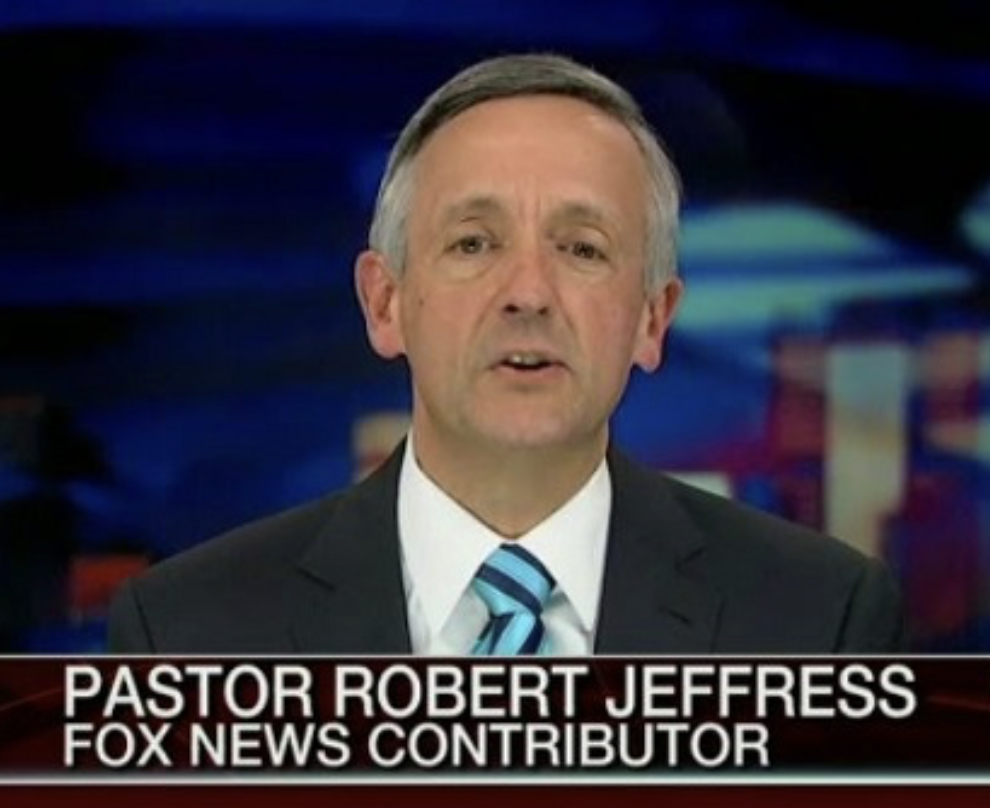
Take, for example, this recent headline in The Dallas Morning News: “Robert Jeffress hopes to combat vaccine fears with First Baptist Dallas’ COVID-19 vaccination effort.” Here is the overture:

To combat vaccine hesitancy among Christian evangelicals, First Baptist Church in Dallas will have a COVID-19 vaccination clinic. …

Senior pastor Robert Jeffress said he hopes the move will encourage people to get shots so more of his 14,000 congregants can come and worship in person.

“Our church will never be what it needs to be until you’re back. The greater risk is the spiritual danger of staying isolated,” Jeffress said in a recent sermon. “I’m not forcing anybody to get the vaccine. That’s your choice. But what I am saying is if you are not back yet, and would like to come back, one option is to take the vaccine, and therefore you don’t have to worry about what other people do or don’t do here in the church.”

Like I said, this was a totally normal local story on this issue.

However, stop and think about this question: Would this have been a bigger story — attracting coverage from TV networks and elite newsrooms such as The New York Times — if Jeffress had taken a stance against the vaccines?

You know it would have been a national story, in part because of this preacher’s past support for former President Donald Trump.


Please respect our Commenting Policy

Plug-In: Mourning two amazing people and journalists -- Rachel Zoll and Amy Raymond

Plug-In: Mourning two amazing people and journalists -- Rachel Zoll and Amy Raymond

In 31 years of full-time journalism, I’ve been blessed to work with some incredible people.

The world recently lost two of the best.

Rachel Zoll was one of The Associated Press’ two New York-based national religion writers — along with Richard Ostling — when I joined AP’s Nashville bureau in 2002.

She was always so kind and supportive of me and my work, as she was with countless others. I last saw her at the 2017 Religion News Association annual meeting in Nashville. I had left AP more than a decade earlier, so I was surprised when she asked how my wife, Tamie, was doing. I had no idea she knew Tamie was battling autoimmune disease. But she did.

Early in 2018, Zoll was diagnosed with brain cancer. She died Friday in Amherst, Mass., at 55.

Her AP colleague David Crary, who called Zoll his “best friend at work,” wrote a truly touching obituary.

Zoll and Ostling were AP’s national religion dream team for five years until his retirement in 2006.

Ostling enjoyed a legendary career with Time magazine before going to work at AP and now, in retirement, with GetReligion. But he told Zoll during her illness that “on a day-to-day basis our work together was the highlight” of his time in journalism.

Amy Raymond and I both got our start working on The Talon campus newspaper at Oklahoma Christian University. I was excited when she joined The Oklahoman staff in 1997, a few years after me.

Although Raymond and I hadn’t worked together in nearly two decades, we stayed in touch via Facebook. We occasionally chatted about religious and political issues.

On a Zoom discussion Monday night, current and former colleagues kept saying — through tears — how smart and kind she was. That is the absolute truth.

“Amy started as a staff writer but her true passion became apparent as she made her way up the ladder as a copy editor, page designer, and then as night news editor,” my longtime friend and former Oklahoma Christian classmate Steve Lackmeyer wrote in The Oklahoman this week.


Please respect our Commenting Policy

Trends that influence news: Where in the world is Christianity still growing?

Trends that influence news: Where in the world is Christianity still growing?

THE QUESTION:

Where in the world is Christianity still growing, and why?

THE RELIGION GUY'S ANSWER:

This page often addresses topics that have been in the air for months, even years. But this one is raised by a brand-new article this week at Christianity Today and a more academic version posted by the journal Sociology of Religion. There's further timeliness in the Gallup Poll's March bombshell that less than half of Americans now claim religious affiliations, the lowest mark since it began asking about this 84 years ago.

The CT article, headlined "Proof That Political Privilege Is Harmful for Christianity," is found here. The academic article is headlined "Paradoxes of Pluralism, Privilege and Persecution: Explaining Christian Growth and Decline Worldwide," and available for purchase.

So: Bad times for Christians are good times for Christianity?

That contention is a modern update on Tertullian's 2nd Century maxim during an era of outright persecution, "semen est sanguis Christianorum" — "blood is the seed of Christians." If you persecute us, we grow even more. And so it was.

The scholars proposing a 21st Century version of this are Nilay Saiya (writing solo in C.T.) and study partner Stuti Manchanda, both at the public policy department of Nanyang Technological University in Singapore. This team analyzed data on churches' rise and decline in 166 countries from 2010 to 2020, found impressive expansion, and examined causal factors.

Looking back, Asia began the last century with only one Christianized nation, the Philippines, but more recently the faith "has grown at twice the rate of the population." Africa in 1900 had only pockets of Christians, mostly in coastal locations but today is "the world's most Christian continent in terms of population."

Now, all of that is familiar to missionary strategists and historians of the modern church. What's new here is the team's fresh look at explanations. They conclude "the most important determinant of Christian vitality is the extent to which governments give official support to Christianity." It's often said that the American founders' pioneering separation of church and state energized Christianity across two centuries.


Please respect our Commenting Policy

New podcast: Yes, election of first trans/queer/gender fluid ELCA bishop was a big story

New podcast: Yes, election of first trans/queer/gender fluid ELCA bishop was a big story

Imagine that you are a pastor or a layperson in the Lutheran Church-Missouri Synod, the Wisconsin Evangelical Lutheran Synod or one of the other conservative Lutheran bodies in the United States.

So you sit down with your morning coffee and pop open your email and you see that friends and family have sent you emails enquiring about a headline that they saw on Twitter or somewhere else in today’s complicated news marketplace.

In this case, the headline is from the New York Times and it states: “U.S. Lutheran Church Elects Its First Openly Transgender Bishop.

The problem, of course, is that the “U.S. Lutheran Church” doesn’t exist There is no one denomination that fits that description. Or perhaps the person sending you the email saw, somewhere, the Religion News Service headline that ran with this headline: “Lutherans elect Megan Rohrer first transgender bishop.” Second verse, same as the first.

When it comes to Lutheranism, many journalists continue to struggle when describing who is who and what is what. This brand-name problem was the first layer of the complex issues — in terms of church doctrine and journalism style — that we explored in this week’s “Crossroads” podcast. Click here to tune that in.

The denomination that elected Bishop-elect Rohrer was, of course, the Evangelical Lutheran Church in America, one of the “Seven Sisters” — we may need to make that “Seven Siblings” — of liberal Protestantism.

But what happens if you put that denominational brand name in a headline (besides the fact that it’s way too long for most newspaper layouts)? If you do that, you have to explain the presence of “evangelical,” which has become a near curse word in a news context. And, hey, “Lutheran” by itself sounds more important. Damn the accuracy, full speed ahead.

This brings us to the key hook for this podcast: There was little or nothing surprising about the progressive ELCA electing a trans (if that is the best term, in this case) bishop.


Please respect our Commenting Policy

Press coverage of Mount Meron tragedy offers window into Israel's ultra-Orthodox Jews

Press coverage of Mount Meron tragedy offers window into Israel's ultra-Orthodox Jews

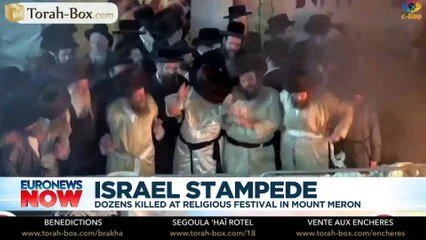
By now most GetReligion readers are likely aware of the fatal crushing of 45 Jewish pilgrims during a religious festival at Mount Meron in Israel’s north at the end of April. It’s been called one of the worst, if not the worst, civilian tragedy in Israel’s history.

(Sadly, the Meron tragedy has been superseded in the news by the serious explosion of Israeli-Palestinian violence this week. But as sad as this is — and as a Jew and a Zionist I find it almost debilitatingly sad —that’s not the subject of this post, so let’s return to Meron.)

For those in need of a refresher, here’s an early Times of Israel news story on the Meron catastrophe.

The sudden and dramatic loss of more than four dozen lives is, of course, a national trauma for a relatively small country such as Israel, which is not much larger than New Jersey. As has been noted elsewhere, “numbers numb.”

Among the dead were six Americans. Other victims came from Canada and Argentina. The youngest of the dead was a boy of nine. Some 150 others were injured.

Beyond the deaths themselves, the Meron incident surfaced major — and intricately interwoven — political and religious implications for Israel. That’s not an unusual mashup in Israel, where the divide between religion and state is near impossible to discern.

For journalists, the tragedy also underscores a Journalism 101 reality of the craft. Which is that the most interesting public commentators are often those closest to the story, such as varied eyewitnesses and longstanding, articulate members or observers of whatever groups are germane to the story.

I’ll say more about this below. First, some pertinent background.

The Meron tragedy took place on the Jewish holiday of Lag B’Omer. Because this is generally considered a minor holiday by most Jews, it’s largely ignored by the theologically liberal in Israel and elsewhere.


Please respect our Commenting Policy

Same-sex Catholic blessing rites in Germany: Why talk to experts on both sides of this story?

Same-sex Catholic blessing rites in Germany: Why talk to experts on both sides of this story?

And this just in: Germany’s Catholic left proceeded with its planned same-sex blessing rites and, as you would expect (see previous GetReligion podcast and post on this topic), mainstream journalists were there to capture the details.

Sort of.

Actually, not so much.

The most important content — the precise wording of the blessing prayers, in doctrinal terms — appear to be Missing In Action. It’s possible that, as usual, journalists were not interested in the liturgical and doctrinal details. However, I could imagine a scenario in which journalists were asked by organizers to avoid that doctrinal content, with good cause. That material that will matter to canon lawyers.

Also, there was no need to look for content drawn from interviews with pro-Catechism Catholics who opposed the winds of change blowing in Germany. Clearly, this was a story with only one side that needed to be covered. Here is a key part of the Associated Press report written just before the main wave of events on May 10 (“German Catholics to bless gay unions despite Vatican ban”):

Germany is no stranger to schism: 500 years ago, Martin Luther launched the Reformation here. …

In Berlin, the Rev. Jan Korditschke, a Jesuit who works for the diocese preparing adults for baptism and helps out at the St. Canisius congregation, will lead blessings for queer couples at a worship service May 16.

“I am convinced that homosexual orientation is not bad, nor is homosexual love a sin,” Korditschke told The Associated Press in an interview Friday. “I want to celebrate the love of homosexuals with these blessings because the love of homosexuals is something good.”

The 44-year-old said it is important that homosexuals can show themselves within the Catholic Church and gain more visibility long-term. He said he was not afraid of possible repercussions by high-ranking church officials or the Vatican.


Please respect our Commenting Policy

The U.S. Census story and its hooks for religion news (plus a personal note about Rachel Zoll)

The U.S. Census story and its hooks for religion news (plus a personal note about Rachel Zoll)

The first round of 2020 U.S. Census data (with much more to come) is big news as states gain and lose seats in the U.S. House and politicos enter the wild decennial joust to gerrymander federal and state district lines to their advantage.

But here's another journalistic thought: What does the Census mean for religion?

Tony Carnes of the "A Journey Through NYC Religions" website provides an early example, analyzing possible implications for New York City that other writers could emulate for their own cities, towns or regions.

Editor Carnes (disclosure: a personal friend) is a professional sociologist leading a team that has spent years tracking religion developments in Gotham, notably at the neighborhood level. Despite the town's secular image, Carnes and company have documented that, starting in the late 1970s, thousands of new churches, synagogues, mosques and temples have been built. Such activity was continuing until the COVID-19 pandemic struck.

Carnes counts the populations moving in and moving out from the American Community Survey between 2010 and 2014 as updated by Census numbers for 2018. This shows a city gradually becoming less African-American (population down 96,000) and Hispanic (down 50,000). The gainers are non-Hispanic Whites (up 200,000) and Asians (up 97,000). We'll soon know if these trends continued in 2020.

Carnes calls that "a startling change in the racial/ethnic profile of the city, and it is also found in other cities in the United States."


Please respect our Commenting Policy

Passing of the guard at the Associated Press; the rise of Ministry Watch and the Roys Report

Passing of the guard at the Associated Press; the rise of Ministry Watch and the Roys Report

The death of a well-known religion reporter; a new job announcement from a beat veteran and a spotlight on two feisty independent religion news organizations is what concerns me this week.

Tmatt had previously offered an update on the health of Rachel Zoll, a former Associated Press religion specialist who came down with glioblastoma, a brain cancer that has no cure, in early 2018. That was only a few months after another religion-beat pro, Jeffrey Weiss of the Dallas Morning News, died of the exact same malady.

Last week, Zoll died at the age of 55 at her home in Massachusetts. She reported on religion for AP for 17 years.

There have been lots of tributes, so I’ll spotlight this Associated Press obit atop the list.

Zoll covered religion in all its aspects, from the spiritual to the political, and her stories reached a global audience. But her influence was far greater than that. Other publications often followed her lead, and AP staffers around the world depended on her generosity and guidance.

Zoll was at the forefront of coverage of two papal transitions, the clergy sex abuse scandal in the Catholic Church, and tensions within many denominations over race, same-sex marriage and the role of women.

She often broke news, as in 2014, when she was the first to report Pope Francis’ appointment of Blase Cupich to become the new archbishop of Chicago.

Fellow GetReligionista Dick Ostling, who was at AP from 1998-2006, wrote this:

My partner Rachel was simply a delight to work with and a personality enjoyed by everyone who knew her -- and who competed with her. But in broader and more historical terms she exemplified all that's needed in reporting and especially with a complex and emotion-laden field like religion. She was of course quick and accurate but those are the basics for any Associated Press writer. And then, remarkably intelligent. She knew her stuff and knew she needed to learn ever more stuff to handle this beat.


Please respect our Commenting Policy