Godbeat

Puzzle: Many reporters ignoring Equality Act's impact on this crucial Schumer-Kennedy legislation

Puzzle: Many reporters ignoring Equality Act's impact on this crucial Schumer-Kennedy legislation

I have been following the Equality Act coverage and, so far, a crucial piece in this puzzle has been missing.

Thus, here is a one-question pop test. That question: Name the piece of stunningly bipartisan legislation — vote was 97-3 in U.S. Senate — from the Bill Clinton era that will be gutted by passage of the Equality Act? Hint: It was introduced in the House by Rep. Chuck Schumer (D-NY) on March 11, 1993, and in the Senate on the same day by the late Sen. Ted Kennedy (D-MA).

We are, of course, talking about the Religious Freedom Restoration Act (RFRA). In today’s advocacy-media age that would, of course, be the “Religious Freedom” Restoration Act, complete with “scare quotes.”

The key is the impact the Equality Act would have on religious parachurch groups, social ministries, hospitals and educational institutions, from preschools to universities.

Now, does everyone agree on how the Equality Act would impact the First Amendment rights of religious believers and their doctrine-defined ministries?

Of course not. There are strong, credible voices on both sides of that debate that deserve serious, accurate, informed coverage by the mainstream press. However, this process — let’s call it “journalism” — would require newsroom managers to admit that this issue exists.

That’s why Andrew Sullivan — one of the world’s best-known gay public intellectuals — called the introductory Washington Post Equality Act story a “press release” (think PR) for the Human Rights Campaign. Here is that story’s description of the legislation’s impact:

The Equality Act would amend existing civil rights laws, such as the Civil Rights Act of 1964 and the Fair Housing Act, to explicitly ban LGBTQ discrimination in the workforce, housing, education, credit, jury service and other areas of American life.

If passed, the legislation would provide the most comprehensive LGBTQ civil rights protections in U.S. history, advocates say, significantly altering the legal landscape in a country where more than half of states lack explicit legal protections on the basis of sexuality or gender identity. …

Please respect our Commenting Policy

Keep the Bible in one hand, a newspaper in the other: Tips for stressed-out preachers

Keep the Bible in one hand, a newspaper in the other: Tips for stressed-out preachers

“You preach with the Bible in one hand and the newspaper in the other.”

That’s what Bishop Timothy Clarke, an Ohio senior pastor, said in a recent front-page feature by Danae King, the Columbus Dispatch’s religion writer.

It’s an idea that originated with the late Karl Barth, one of the most influential theologians of the 20th century. Barth put it this way: “Take your Bible and take your newspaper, and read both. But interpret newspapers from your Bible.”

Barth’s concept was a prominent theme of a Facebook Live panel discussion organized this week by the Siburt Institute for Church Ministry at Abilene Christian University in Texas.

“We used to think the hard part was interpreting the Bible, but now we've decided the hard part is interpreting the newspaper,” quipped Randy Harris, one of the co-hosts, along with Carson Reed, of the discussion on “Light, Truth and Fake News.”

The panel — on which I was honored to speak — aimed to help stressed-out ministers make sense of the news in a time of polarization and conspiracy theories.

“Read broadly. Value truth,” urged Cheryl Mann Bacon, a Christian Chronicle correspondent and retired journalism chair at Abilene Christian. “Be compassionate when you share it, but be courageous when you share it.”

Co-host Harris is a longtime preacher and spiritual director who works with the Siburt Institute.

He advised: “Pay attention to local news. We can get caught up with what's happening in Washington, but there's stuff that's happening in your town that needs a response. The second thing is, to ministers: You've made a commitment to read the news through a certain lens, and that's the lens of a crucified and risen Messiah.”


Please respect our Commenting Policy

Farewell to 'reindeer rules'? Indiana nativity scene case could have been turning point

Farewell to 'reindeer rules'? Indiana nativity scene case could have been turning point

Year after year, the Lion's Club sets up wire-frame Christmas decorations on the lawn of the historic Jackson County courthouse, facing Main Street in Brownstown, Ind.

The display, which belongs to the local ministerial alliance, glows from dusk to dawn from Thanksgiving until New Year's Day, with the county providing the electricity.

This led to yet another "Christmas Wars" dispute, with the recent Woodring v. Jackson County court decision offering a precise description of this tableau.

There is a "waving Santa Claus with his sleigh, a reindeer, seven large candy-striped poles, the nativity scene … and four carolers standing in front of a lamp post," noted Seventh Circuit Judge Amy Joan St. Eve. "Santa Claus and the reindeer are on the left. …To their right are three gift-bearing kings (Magi) and a camel, who look upon the nativity. On the right side of the sidewalk, Mary, Joseph, and infant Jesus in the stable are flanked on each side by trumpet-playing angels. To their right are several animals facing the nativity. The carolers stand in front of the animals, closer to Main Street."

Before the 2018 lawsuit, the Freedom From Religion Foundation warned that the nativity scene needed to come down. County officials responded by moving Santa and other secular symbols closer to the telltale manger.

That move was clearly linked to what activists call the "reindeer rules," in which secular and sacred symbols are mixed to honor guidelines from the Supreme Court's Lemon v. Kurtzman in 1971. The "Lemon test" asks if a government action's primary effect advanced religion, as opposed to a secular purpose, thus entangling church and state.

But the majority in the new 2-1 decision in Indiana argued that the "nativity scene is constitutional because it fits within a long national tradition of using the nativity scene in broader holiday displays to celebrate the origins of Christmas."

This post-Christmas decision in the heartland may have been a turning point.

"To the degree that the reindeer rules were based on Lemon, this decision said that we now have a new Supreme Court precedent. The reindeer rules appear to be gone," said Diana Verm, senior counsel for the Becket Fund for Religious Liberty, which filed a brief in the case.


Please respect our Commenting Policy

Ask any church-state lawyer and you'll hear that this is a hard question: What is religion?

Ask any church-state lawyer and you'll hear that this is a hard question: What is religion?

THE QUESTION:

What is religion?

THE RELIGION GUY’S ANSWER:

Oddly, “Religion Q&A” entered its ninth year online before getting around to this question.

It’s not an easy one.

During the tax season, we may not feel particularly fond toward the IRS but can pity the staffers who spent years on a long-running dispute that ended in 1993 when the godless Scientology system was finally defined as a “religion” and thus eligible for the tax exemption benefit.

Then there are the federal and state disputes — beloved of journalists and too numerous to summarize here — over tax exemption for the “Universal Life Church,” and whether marriages performed by its clergy are legit. The ULC provides instant internet ordinations, sometimes for the likes of comedian Conan O’Brien, with no questions asked and no requirements of training, creed, or church. The ordination itself is free but the group sells such paraphernalia as a “Doctor of Divinity” certificate, a bargain at $20, and a $59.99 kit for performing weddings.

Let’s back up for the basics. Whatever the IRS might think, here are definitions of “religion” from the authoritative Merriam-Webster folks :

* “The service and worship of God or the supernatural.”

* “Commitment or devotion to religious faith or observance” (which is certainly a circular definition. Religion is religious.).

* “A personal set or institutionalized system of religious attitudes, beliefs, and practices.” (Again, religion is religious.)

* “A cause, principle, or system of beliefs held to with ardor and faith.” (This means devoutly embraced atheism or Communism can be deemed a de facto religion although, as “Religion Q & A” has learned over the years, this terminology can provoke atheists’ fury.)

Another definition, labeled “archaic,” is “scrupulous conformity” to something.


Please respect our Commenting Policy

Which issue drew more ink? SBC on Trump-era rifts, race, #ChurchToo abuse, gay marriage

Which issue drew more ink? SBC on Trump-era rifts, race, #ChurchToo abuse, gay marriage

Here’s a question for GetReligion readers, including journalists: Are you surprised that the Southern Baptist Convention still believes sex outside of marriage is sin and, yes, that marriage is defined — by two millennia of Christian teaching — as the union of man and woman?

All of you who are surprised, please raise your hands.

There shouldn’t be many hands in the air on that one.

Now, would you say that SBC action on that question is, well, sexier than the decision by the national convention’s executive committee to oust two congregations for violating guidelines on sexual abuse, following in the wake of many #ChurchTwo revelations (especially in major Texas newspapers)?

Meanwhile, SBC President J.D. Greear offered up a blistering speech to the executive committee in which he addressed what he called demonic attacks on SBC unity, attacks centering on two hot-button topics — racism and (to be blunt) Donald Trump-era politics.

Of these four issues, want to guess which drew mainstream-press headlines? That’s the question that host Todd Wilken and I discussed during this week’s “Crossroads” podcast. Click here to tune that in or head over to iTunes to subscribe.

According to the Associated Press, the biggest news was that totally predictable decision linked to marriage and sex. Meanwhile, I am happy to report that The New York Times produced a story that, while the headline was predictable (“Southern Baptists Expel 2 Churches Over Sex Abuse and 2 for L.G.B.T.Q. Inclusion”), was updated to become a solid look at the tensions surrounding Greear and some of these issues. We will come back to both of those stories.

But first, I think GetReligion readers need to read a large chunk of the (edited) text from the Greear broadside. (Click here for Baptist Press coverage and, most of all, here for a file that includes the full video.)

The key: Greear sets out to affirm the 1980s SBC move to the right on issues of biblical authority, while repudiating what he calls the “leaven of the Pharisees” emerging on the SBC’s right flank. The following is long, I know, but essential to understanding what is happening right now in America’s largest Protestant flock:


Please respect our Commenting Policy

Reader asks: How can news consumers decide if Ethiopian massacre reports are true?

Reader asks: How can news consumers decide if Ethiopian massacre reports are true?

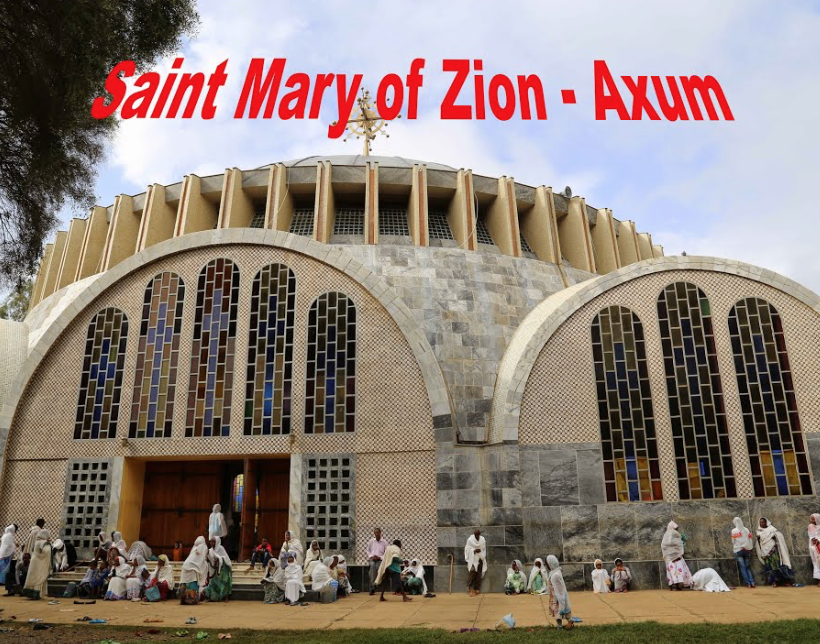
While Americans focused on the dramatic conclusion of 2020 White House race, reports began circulating in the overseas press claiming that a sickening massacre had taken place in a famous church — a pilgrimage site for the Ethiopian Orthodox.

How famous? For centuries, church officials have claimed that the Church of St. Mary of Zion in Axum contains the Ark of the Covenant.

This was, from the start, a journalism horror story — since Ethiopian officials were preventing foreign journalists from reaching the site of the alleged massacre. At the same time, activists on both sides of the stunningly complex conflict appeared to be working hard to shape the coverage that was taking place.

The other day, a frustrated reader sent me this note, after seeing materials posted online attempting to undercut claims that this massacre of 700-plus believers took place. “I’ve trusted you and your sources for about five years now so I’m hoping you can help get to the bottom of this,” the reader said.

I told the reader that, to me, it appeared that this was a case in which — at this point — certainty was impossible. A careful reader would note that some journalists were saying that claims about the massacre could not be verified — either way. “Human rights activists on left and right are concerned about the report and believe the attack COULD have taken place. But there has been no verification that has been locked down certain,” I said.

If you want to see what we’re talking about, check out these early reports from Catholic News Agency (“Hundreds reportedly dead after massacre at Oriental Orthodox church in Ethiopia”) and The Church Times (“Massacre ‘of 750’ reported in Aksum church complex, Tigray, Ethiopia”).

This is, of course, an argument about the attribution of truth claims. When journalists cannot (for a variety of reasons) do on-site reporting to seek evidence, they frequently are forced to seek the best sources that are available to them (often via telephone or other forms of technology) and report what they can. Here is the crucial point: Journalists have to clearly identify the identity of the sources and let readers know what kind of access they would or would not have to the information.

This leads us to a recent Associated Press story with a headline stating, “ ‘Horrible’: Witnesses recall massacre in Ethiopian holy city.

The key word is, of course, “witnesses.”


Please respect our Commenting Policy

Behind the headlines: As winter storm cripples Texas power grid, people of faith rally to help

Behind the headlines: As winter storm cripples Texas power grid, people of faith rally to help

Texans like to brag that they live in “a whole other country.”

I don’t suppose, though, that whoever came up with that slogan had Siberia in mind.

As a severe winter storm crippled the state’s energy grid this week, my parents were among 4 million residents who lost electricity. Mom and Dad endured a really chilly night before going to stay at my sister’s house for a few days.

Heroes (think “Mattress Mack”) and villains (#FlyingTed) have emerged, while people of faith — as they tend to do during disasters — rally to help.

Here at Religion Unplugged, Jillian Cheney tells the inspiring story of a church that partnered with a Jeep club to rescue snowed-in families.

Houses of worship losing power themselves hampered some efforts to provide reliable sanctuary, but “leaders are doing all they can to connect and comfort their communities,” Christianity Today’s Kate Shellnutt reports.

Churches and other faith groups teamed up to help open an emergency warming center for the homeless at a Dallas convention center, Religion News Service’s Bob Smietana notes.

Catholic churches in San Antonio and Fort Worth opened their doors, according to the Catholic News Agency’s Jonah McKeown.

Among others mobilizing to help: Southern Baptists, Churches of Christ and Episcopalians.

Power Up: The Week’s Best Reads

1. A congregation of avatars: A few pastors minister “to the wild universe of virtual reality, or VR for short,” this fascinating feature by World magazine’s Juliana Chan Erikson explains.


Please respect our Commenting Policy

Want to trigger Episcopalians? Ask an evangelical superstar to preach at National Cathedral

Want to trigger Episcopalians? Ask an evangelical superstar to preach at National Cathedral

Halfway between Norway and the North Pole, scientists have buried a million seeds and crop samples under a mountain in the Svalbard archipelago -- in case an environmental doomsday comes to pass.

That strategy rings true during "this crazy, chaotic season" when so many are anxious about the coronavirus pandemic, global warming, lost jobs, surging debts and the bitter state of public life, said evangelical megachurch leader Max Lucado, in a recent sermon streamed online by the National Cathedral in Washington, D.C.

“Most of us can't hide out in a bunker, yet threats of calamity may make us try to do so," he said. "If the wrong person pushes the wrong red button -- it's enough to make a person purchase a plane ticket to Svalbard."

But there was a problem. While pre-service publicity stressed that Lucado's books have sold more than 120 million copies and Christianity Today has called him "America's pastor," this invitation alarmed legions of Episcopalians opposed to his history of orthodoxy on sex and marriage. His sermon about God offering comfort in the midst of chaos avoided hot-button topics, but his cathedral appearance triggered an online storm.

Before the event, the Very Rev. Randolph Marshall Hollerith linked the Lucado invitation to the cathedral's history of hosting a variety of religious leaders. This has included evangelicals such the late Billy Graham, Archbishop of Canterbury Justin Welby and megachurch leader Rick Warren of Saddleback Church in Southern California.

"When we only engage with those with whom we agree on every issue, we find ourselves in a dangerous (and lonely) place," wrote the cathedral's dean. "That means this cathedral, and this pulpit, are big enough and strong enough to welcome pastors, rabbis, imams, clergy of every faith. … It does not mean we agree with everything they might believe, but it does mean that we exhibit and inhabit a sense of open handed welcome."

However, Hollerith issued a formal apology in response to the online backlash, noting: "In my straight privilege I failed to see and fully understand the pain he has caused. I failed to appreciate the depth of injury his words have had on many in the LGBTQ community. I failed to see the pain I was continuing. I was wrong."

While Lucado is known as an evangelical moderate, Episcopalians were outraged by a 2004 sermon, and online commentary, stating that he "categorically opposes" gay marriage, as well as his conviction that "homosexual activity" is sin.


Please respect our Commenting Policy

New podcast: There's more to Lent 2021 than virtual-ash selfies and giving up (fill in the blank)

New podcast: There's more to Lent 2021 than virtual-ash selfies and giving up (fill in the blank)

It happened every year that I worked in a mainstream newsroom. Apparently, there was a law somewhere that official newsroom “advance calendars” should include a note about the beginning of Lent.

Thus, an editor would ask me a question that sounded something like this: “So where are we sending a photographer this year on Ash Wednesday?”

This was, you see, the official way to handle Lent and it would be followed, of course, by some kind of sunrise-and-lilies photo when Easter rolled around. There might be an Easter story of some kind, but that was always a problem since the goal was to have the story in print on that Sunday, which meant the story and photograph needed to be done early. It’s so hard to cover a holy day that hasn’t happened yet.

But Ash Wednesday photographs, backed with a sentence of two about Lent, seem to be a news-culture tradition. That reality was the hook — sort of — for this week’s “Crossroads” podcast (click here to tune that in).

Thus, it was easy to anticipate this COVID-19 era variation on a familiar theme, care of Religion News Service: “Celebrating Ash Wednesday in a pandemic? There’s an app for that.

There are filters that blur “imperfections” in photos and filters that turn lawyers into cats on Zoom.

Now there are filters to help Christians safely display the very visible Ash Wednesday mark on social media.

Many Catholic and other liturgical churches observe Ash Wednesday by smudging ashes on congregants’ foreheads as a sign of repentance and a reminder of one’s mortality. That practice presents a problem during a season when health experts fighting COVID-19 have advised people to avoid touching their faces or coming in close proximity to others. …

In a year when so much of life has been lived virtually, Catholic prayer and meditation app Hallow has also taken the tradition online with an “AshTag” photo filter on both Facebook and Instagram.

That’s a valid story, even if it does fit a now familiar pandemic pattern — lots of coverage of virtual faith in these troubled times, as opposed to a few stories about the creative efforts of analog people to observe their traditions within the parameters of social-distancing guidelines.


Please respect our Commenting Policy