Godbeat

Christians and conspiracy theories that helped fuel some members of U.S. Capitol mob

Christians and conspiracy theories that helped fuel some members of U.S. Capitol mob

Nearly 20 years ago, I wrote a column for The Oklahoman headlined “Internet deception runs wild.”

In that July 2001 piece, I highlighted the claim that an atheist group formed by the late “Madeline Murray O’Hare” had collected 287,000 signatures and was pushing to remove all Sunday morning worship service broadcasts.

“The good news is, the prayers have been answered — many times over,” I wrote. “Since the false petition related to the late Madalyn Murray O’Hair (that’s the correct spelling) began circulating in the late 1970s, the Federal Communications Commission has received more than 35 million signatures asking it to block her efforts.”

Two decades after that column ran, well-meaning religious people’s susceptibility to conspiracy theories has not waned.

If anything, the rise of social media has made it worse. Much, much worse.

“This last year has just been one giant conspiracy theory about everything — the pandemic, the civil unrest, the election — and it all sort of culminated with this terrifying scene we saw on Jan. 6. That was an army of conspiracy theorists, pretty much,” Tea Krulos told Religion News Service’s Emily McFarlan Miller this week.

Krulos is the author of the book “American Madness: The Story of the Phantom Patriot and How Conspiracy Theories Hijacked American Consciousness.”

Last week, I referred to President Donald Trump — who has repeatedly claimed he won an election he lost by 74 Electoral College votes and 7 million popular votes — as the nation’s conspiracy-theorist-in-chief.

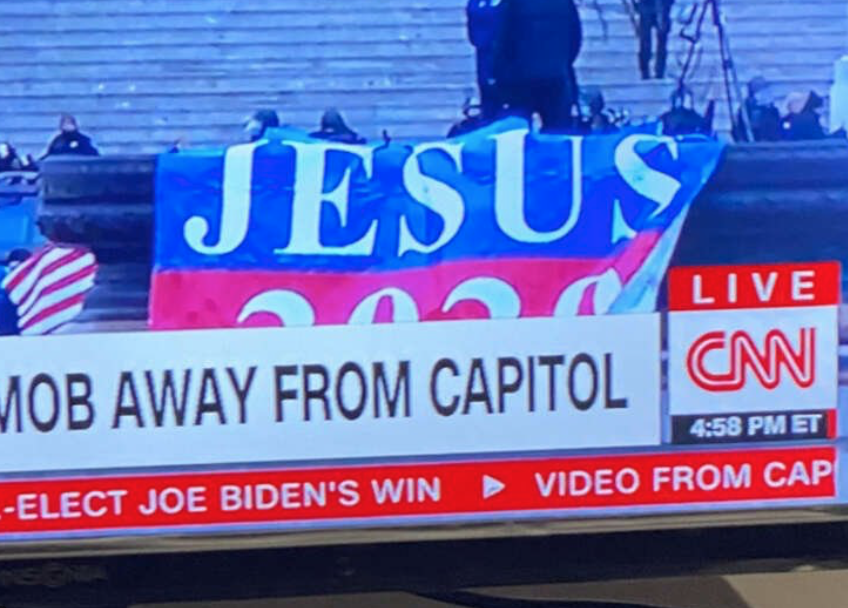
In the wake of the deadly Jan. 6 siege at the U.S. Capitol — egged on by Trump — a leading evangelical theologian told NPR this week that it’s time for a Christian reckoning.

“Part of this reckoning is: How did we get here? How were we so easily fooled by conspiracy theories?” said Ed Stetzer, executive director of the Wheaton College Billy Graham Center in Illinois. “We need to make clear who we are. And our allegiance is to King Jesus, not to what boasting political leader might come next.”

In a May 2020 essay titled “Christians Are Not Immune to Conspiracy Theories,” The Gospel Coalition’s Joe Carter traced the problem all the way back to Satan spreading lies in the Garden of Eden.

Please respect our Commenting Policy

New podcast: New York Times says 'Christian nationalism' tied to white 'evangelical power'

New podcast: New York Times says  'Christian nationalism' tied to white 'evangelical power'

At the 2016 Southern Baptist Convention, messengers from churches across the nation approved a resolution calling for Americans to “discontinue the display of the Confederate battle flag as a sign of solidarity of the whole Body of Christ.”

The speaker of the Mississippi House of Representatives, Philip Gunn, was there (full Baptist Press report here) as chair of the Southern Baptist Seminary board of trustees. He went home determined to help do something about his state’s flag. Mississippi’s new flag dropped the Confederate symbolism of the old, replaced by a magnolia blossom and the phrase “In God We Trust.”

This is clearly an example of a major evangelical institution using its clout — “power,” if you will.

This brings us — using a back door, I will admit — to this week’s “Crossroads” podcast (click here to listen to that), which focuses on the waves of coverage about Christians symbols and banners among participants in both the “Save America March” backing Donald Trump and the deadly riot outside and inside the U.S. Capitol. How did some F-bomb screaming rioters end up chanting “Hang Mike Pence!” while others nearby played loud Contemporary Christian Music?

The hook for this rather complicated podcast discussion with host Todd Wilken was one of those voice-from-on-high, magisterial New York Times passages — with zero attribution to sources — that speaks for the Acela Zone ruling elites. The double-decker headline proclaimed:

How White Evangelical Christians Fused With Trump Extremism

A potent mix of grievance and religious fervor has turbocharged the support among Trump loyalists, many of whom describe themselves as participants in a kind of holy war.

Are we talking about ALL Trump loyalists? Or is it simply MANY of them? Hold that thought, because we will return to it shortly.

But here is the key passage that needs to be read carefully, more than once:

The blend of cultural references, and the people who brought them, made clear a phenomenon that has been brewing for years now: that the most extreme corners of support for Mr. Trump have become inextricable from some parts of white evangelical power in America. Rather than completely separate strands of support, these groups have become increasingly blended together.


Please respect our Commenting Policy

EU hypocrisy? Foie gras and factory farming continue, but kosher and halal traditions nixed

EU hypocrisy? Foie gras and factory farming continue, but kosher and halal traditions nixed

My fantasy very best self adheres to a strictly vegan diet. That means consuming no foods from members of the animal kingdom.

No meat, no eggs, no fish, no dairy, and just for consistency’s sake, no honey or even vitamin supplements containing traces of animal products. My fantasy very best self believes a plant-based diet to be best for me based on ethical, environmental, and health considerations (I’ve had serious heart issues).

But as you’ve probably already deduced, my current best self falls way short of my fantasy best self. While I rarely eat red meat (a couple of times a year at most), I regularly eat poultry, fish, eggs and dairy. So I’m by no means there yet.

When I do eat animal flesh, however, I restrict myself to animals in accord with traditional Judaism’s dietary protocols. That means I won’t eat pork or shell fish and won’t mix meat with dairy at the same meal. My wife and I also restrict our consumption to organic, free-range animal products. It also means that the allowed meats I do eat must be slaughtered in accordance with kosher guidelines.

As a theologically liberal Jew, I do not do all this because I believe HaShem — God — has directly commanded me to do so. I do this as a way to sustain my Jewish identity and as a voluntary spiritual discipline.

Which is why recent news out of Europe concerning the outlawing of kosher slaughtering protocols caught my attention. Journalists should note that traditional Muslims, who adhere to a similar slaughtering protocol, are also impacted by the European Union court ruling.

Here’s the gist of the issue, courtesy of a December story from JTA, the international Jewish news service:

(JTA) – The European Union’s highest court has upheld Belgium’s bans on slaughtering animals without first stunning them, a ruling that confirms the prohibition on the production of kosher and halal meat in parts of Belgium and clears a path for additional bans across Europe.

Israel’s ambassador to Belgium called the ruling “a blow to Jewish life in Europe.”


Please respect our Commenting Policy

State and federal elections spotlight America's diversity and (yet again) religious nones

State and federal elections spotlight America's diversity and (yet again) religious nones

The mayhem at the U.S. Capitol last week did not prevent Congress's ceremonial tally of the Electoral College victories of the nation's second Catholic president, Joseph Biden, and of Kamala Harris, the first African-American, first Asian-American and first female vice president.

Simultaneously, diversity was also demonstrated in the two Georgia runoff wins that give Democrats control of the U.S. Senate. Jon Ossoff is this heavily Protestant state's first Jewish senator. Baptist pastor Raphael Warnock makes history as only the South's second African-American senator elected since the Reconstruction era. The first is Republican Tim Scott in neighboring South Carolina.

OK. The press has reported all that.

Less noticed are some diverse Democrats newly elected to state legislatures, as featured in the "mainline" Protestant magazine Christian Century. Colorado, Delaware, Florida, Wisconsin and Oklahoma all elected their first-ever Muslim lawmakers, and the Oklahoman, Mauree Turner, is also America's first legislator to identify as non-binary. Episcopal priest Kim Jackson becomes the first openly lesbian member of Georgia's Senate. Kirk White, founder of the Wiccan Church of Vermont, joins that state's Assembly.

Journalists should also be reflecting on the societal change reflected in the religious makeup of the new U.S. Congress, documented in Pew Research Center's latest biennial report, drawn from CQ Roll Call data. Pew's report page is here and for future reference note you can click on "Detailed Table" for a listing of each member's religious identity.

Religious affiliations do not necessarily define members' policies and voting records. Consider all those Democrats who call themselves Catholic but are pro-choice on abortion -- churchgoer Biden among them. But the numbers tell the media something about society's broad religious trends.

Diversity rundown: Way back when, Congress was exclusively Christian and heavily Protestant. The new House and Senate have 33 Jews, three Muslims, three Hindus and two Buddhists. Like Jews, Unitarian Universalists are over-represented relative to the U.S. population with three members, while Pentecostalists are under-represented, with only two members.

Several organizations have compiled religious censuses of Congress over the years. Pew Research issued its first after the 2008 election.


Please respect our Commenting Policy

Big symbols, big story: Pope Francis changes church law to put women 'on the altar' in robes

Big symbols, big story: Pope Francis changes church law to put women 'on the altar' in robes

It’s not every day that the pope changes canon law. Pope Francis did just that in allowing women a larger role during Mass.

The pope said, using a powerful phrase in Catholic thought, that this headline-grabbing change was based on “a doctrinal development” seen in the recent life of the church.

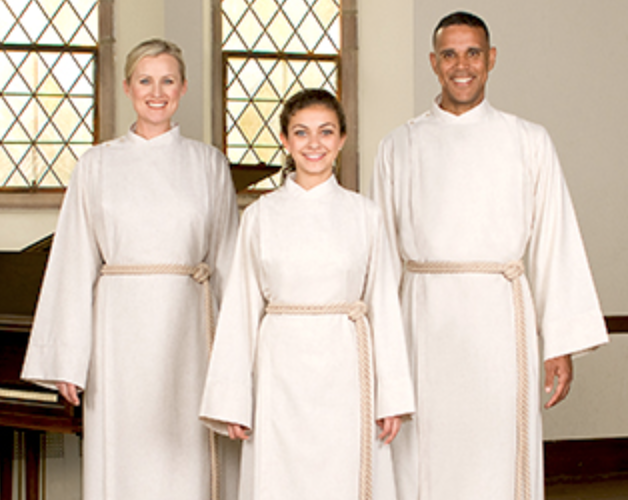
The move — in the wake of a decades-old priest shortage — will grant “non-ordained ministers” the chance to serve as lectors, read scripture, act as eucharistic ministers and, in a crucial symbolic change, wear robes while serving in the sacred space around the altar. The changes, however, will continue to forbid women from being made deacons or ordained priests.

The pope changed canon law to read: “Lay people who have the age and skills determined by decree of the Episcopal Conference, they can be permanently assumed, through the established liturgical rite, to the ministries of lectors and of acolytes; however this contribution does not give them the right to support or to remuneration by the church.”

For the sake of comparison, the law had previously read: “Lay men who possess the age and qualifications established by decree of the conference of bishops can be admitted on a stable basis through the prescribed liturgical rite to the ministries of lector and acolyte.”

In other words, this codifies into the canon the role of women as part of Roman liturgical rite. The announcement, however, caused lots of confusion, especially among many Catholics who have already witnessed women in some of these roles for decades.

The Associated Press headline on the story read, “Pope says women can read at Mass, but still can’t be priests.” That vague language didn’t clarify matters.

In a letter that accompanied the changes, the pontiff said he wanted to bring “stability” and “public recognition” to women already serving during the Mass. Beyond the headline, the AP, in its reporting of the announcement, said that the pope had “amended” church law “to formalize and institutionalize what is common practice in many parts of the world: Women can be installed as lectors, to read Scripture, and serve on the altar as eucharistic ministers. Previously, such roles were officially reserved to men even though exceptions were made.”

The original AP story caused even more confusion when it initially reported that women could read the Gospel during Mass.


Please respect our Commenting Policy

On the religion beat: Alma mater hails New York Times and Washington Post alums

On the religion beat: Alma mater hails New York Times and Washington Post alums

Three important women working the religion beat right now all graduated from the same small college within a span of six years.

Coincidence? Perhaps not when their alma mater is Wheaton College, the elite and devout evangelical campus whose magazine's current issue surveys a dozen alums in media careers.

(That's Wheaton of Illinois, not the Massachusetts school of the same name where religious roots are long distant. Disclosure: The Guy's late wife Joan was a 1961 Wheaton graduate, journalist and college journalism teacher.)

The three: Ruth Graham, '02 (no relation to the famed evangelist) was hired by The New York Times last year to report on "religion, faith and values" out of church-saturated Dallas. The influential daily bragged that Graham forms "a powerhouse team" with the Washington bureau's Elizabeth Dias, '08, a "faith and politics" reporter since 2018. Sarah Pulliam Bailey, also '08, joined the Washington Post's equally talented religion crew in 2015, based in New York where husband Jason (class of '07) is a Times editor.

Outsiders may assume that seriously religious colleges inculcate a narrow view of life and of religion. But The Guy observes that good liberal arts education, as much or even more at a religious school than today's secularized campuses, does not wall off students from a broad outlook. Moreover, the best way to understand any and all religions is immersion in a specific believing community, whether through education or personal experience.

It figures that a Wheaton graduate will comprehend the influence of religion on individuals and societies with sophistication. Whatever their private beliefs, nobody can claim these Wheaton alums show religious favoritism. If anything, they're more likely to lift rocks on evangelical embarrassments thanks to good sources.

Perhaps employers in the East Coast cultural bubble have come to realize that evangelicalism is the nation's largest and most dynamic religious sector, and that "Wheaties" are well-equipped to interpret its vast complexities. Just so, the media scouted for writers of Catholic background during the Second Vatican Council e.g. John Cogley at the Times, writer John Elson and Rome correspondent Robert Kaiser at Time and Kenneth Woodward at Newsweek.


Please respect our Commenting Policy

Yearenders-palooza finale: 2020 Top 10 religion-news lists from several Getreligionistas

Yearenders-palooza finale: 2020 Top 10 religion-news lists from several Getreligionistas

OK. This is it. I promise. This is the last GetReligion #2020 Top 10 religion-news post that you’re going to see. I think. And sorry about the Kiss 2020 goodbye concert video with this post (I could not resist).

Let me be clear what this is. A few of us have already written columns or posts evaluating the results of the Religion News Association poll, like this “On Religion” column that I shared here: “Of course the pandemic was top 2020 religion-news story: But which COVID-19 story?

However, each of us — when creating our own personal lists — saw the religion-news landscape through our own lens. Thus, I thought readers might enjoy seeing all of the RNA poll items — 27 news events and trends were on the ballot — and how some of us arranged them. Some readers, for example, have expressed a desire to explore what was left OFF the list and how the items were described on the official ballot. Read it all at the RNA.org website.

As I said earlier, in the GetReligion podcast and post in which I shared my own ballot (“The year when religion news went viral, and that was a bad thing”), I thought the key was that the COVID-19 crisis was several stories in one. I thought the most important angle was the First Amendment fights, so I wrote:

According to journalists who cover religion, this was the year's biggest story: "COVID-19 pandemic claims lives of many religious leaders and laity, upends death rituals, ravages congregational finances, spurs charitable responses, forces religious observances to cancel or go online and stirs legal fights over worship shutdowns."

But there was a problem on my ballot. The RNA list included another coronavirus item focusing on religious liberty. In some cities and states, officials created pandemic regulations that claimed many institutions — from grocery stores to casinos — provided "essential services." Meanwhile, other institutions — like churches and synagogues — were deemed "non-essential."

The U.S. Supreme Court eventually ruled that religious institutions shouldn't face tougher rules than secular groups and activities. It was wrong, for example, to ban masked priests from hearing confessions – outdoors, 10 feet away from masked penitents – while consumers were lined up at liquor stores.

Ryan Burge, in a post this weekend, had a similar take at the top of his list, stressing First Amendment and Supreme Court issues. The key, he said, was this: “I made a list based on what I thought would have the most lasting impacts into 2021 and beyond.”

So that brings us to new material from other members of the team, starting with Julia Duin. She sent me an email raising another issue with the RNA results:


Please respect our Commenting Policy

Yearenders-palooza -- Bobby Ross Jr. with positive, poignant ways to look at 2020 religion news

Yearenders-palooza  -- Bobby Ross Jr. with positive, poignant ways to look at 2020 religion news

A church shooting. Deadly twisters. Racial justice protests. And the biggest news in this tumultuous year: COVID-19.

These were among the most memorable stories that I covered in 2020.

Here is my personal year-end Top 10 list, mostly in chronological order:

• Texas church shooting: A gunman opened fire at the West Freeway Church of Christ in White Settlement, Texas, killing two worshipers before an armed member fatally shot him. While the attack occurred at the end of 2019, it remained an important story in 2020. In the immediate aftermath, I covered a members-only prayer vigil, recounted minister Britt Farmer’s experience and explained why Farmer chose to talk to me. I profiled victims Richard White and Tony Wallace. Later, I moderated a panel discussion on church shootings. And I wrote about the church’s emotional return to its auditorium.

Women in the church: My Christian Chronicle colleagues and I produced an in-depth package of stories on women’s roles in Churches of Christ. I focused on two distinct congregations: an Arlington, Texas, church that embraces traditional gender roles and a Los Angeles church that has added female elders.

Tennessee tornadoes: On my last flight before COVID-19 grounded me, I traveled to Middle Tennessee to report on tornadoes that cut an 80-mile swath of death and destruction. I highlighted the leading role that Churches of Christ played in the disaster relief effort. I interviewed a church teen who was serving her community while grieving her 4-year-old friend, Hattie Jo Collins. I covered the funeral for a Christian family killed in the storm. And I reflected on how sadness gave way to gladness on the Sunday after the tornadoes.

COVID-19: As of this moment, the global pandemic has killed 1.8 million people around the world.


Please respect our Commenting Policy

Yearenders-palooza: Ryan Burge (Who else?) charts religion and politics in #2020

Yearenders-palooza: Ryan Burge (Who else?) charts religion and politics in #2020

We now know, apparently, what happens if you force political scientist Ryan Burge into lockdown — but leave the WiFi turned on.

You end up with lots and lots and lots of charts, with most of them focusing on the major role that religion plays in politics and the American public square, in general.

Burge’s work was all over the place during 2020, with good cause. He’s a contributor here at GetReligion, but we keep stressing that journalists (and news consumers) really need to follow his active Twitter feed and his work at the weblog Religion In Public. Here in that blog’s “Year in Review” feature.

Anyway, I wrote Burge and asked him to send me several crucial bytes of his work from 2020, with some quick commentary. You will see that below. I have always appreciated the fact that Ryan’s work tends to poke at stereotypes on the left and the right.

I also asked him for his take on the Top 10 religion-beat news stories and trends of 2020, using the full list of options provided at the start of the Religion News Association poll. I have already offered my own take on that poll here in an “On Religion” column and then here, in a “Crossroads” podcast.

Burge’s commentary on that poll is at the end of this post.

So let’s get started, with Burge’s charts and commentary.


Please respect our Commenting Policy