
Godbeat

Pope Francis attempts to mend some doctrinal divisions by rejecting Amazonian Rite

How progressive is Pope Francis? Not as much as many may think.

In a surprise move, Francis rejected a proposal that had called for married men in remote areas of the Amazon to marry, a decision widely seen as a victory for conservative Catholics who feared such an exception would eventually lift the celibacy requirement of priests around the world.

The pope, the first ever from Latin America, also rejected a proposal that would have allowed women to serve as deacons, an even more momentous change within the church’s traditionally male hierarchy. Press reports consistently failed to note that female deacons in altar ministry would have had a bigger impact on Catholic doctrine than ordaining married men.

The pope’s rejection of an Amazonian rite came three months after bishops at the controversial Pan-Amazonian Synod had made several recommendations to the pontiff. The big change would have included allowing community elders to perform Mass and other duties of ordained celibate Catholic clergy in order to deal with the shortage of Roman Catholic priests in South America.

In Francis, progressives have (or thought they had) their man — someone who says he’s unafraid to tinker with church tradition. This passage, high in the New York Times coverage, sums up their disappointment in this decision:

The pope’s supporters had hoped for revolutionary change. The decision, coming seven years into his papacy, raised the question of whether Francis’ promotion of discussing once-taboo issues is resulting in a pontificate that is largely talk. His closest advisers have already acknowledged that the pope’s impact has waned on the global stage, especially on core issues like immigration and the environment. …

The pope’s refusal to allow married priests was likely to delight conservatives, many of whom have come to see Francis and his emphasis on a more pastoral and inclusive church as a grave threat to the rules, orthodoxy and traditions of the faith.

The papacy of Francis has frequently drawn the ire of conservative Catholics, many of them living in the United States and parts of Europe — so they were anxiously awaiting this statement from Rome. After all, the Pan-Amazonian synod, a three-week meeting at the Vatican, was fraught with controversy.
Please respect our Commenting Policy

Trying to embrace friendships at church, in the tense age of #MeToo headlines

Trying to embrace friendships at church, in the tense age of #MeToo headlines

The email was signed "Worried Wife" and contained a blunt version of a question Bronwyn Lea has heard many times while working with women in and around churches.

The writer said her husband had become friends with another woman his own age. There were no signs of trouble, but they traded messages about all kinds of things. This was creating a "jealous-wife space" in her mind.

"Worried Wife" concluded: "I need a biblical perspective. What is a godly view of cross-gender friendships, and how should they be approached within the context of marriage?"

That's a crucial question these days for clergy and leaders of other ministries and fellowships, said Lea, author of "Beyond Awkward Side Hugs: Living as Christian Brothers and Sisters in a Sex-Crazed World." All of those #ChurchToo reports about sexual abuse and inappropriate relationships have people on edge -- with good cause.

Lea, who has a seminary degree and law-school credentials, is convinced that it's time for churches to act more like extended families and less like companies that sort people into niches defined by age, gender and marital status.

"Many people are lonely and they truly long for some kind of connection with others," she said. "But they've also heard so many horror stories about what can go wrong that they're afraid to reach out. They think that everyone will think that they're creepy or weird if they open up. … Lots of people are giving up and checking out."

Everyone knows the church is "supposed to be a family that everyone can belong to. … That's the vision that we need to reclaim," said Lea, a staff member at the First Baptist Church in Davis, Calif. Thus, the New Testament says: "Treat younger men as brothers, older women as mothers, and younger women as sisters, with absolute purity."

The problem is making that work at the personal level, where pastors, teachers, parents and laypeople are trying to find realistic ways to handle social media, complex career pressures, tensions in modern families and constantly-changing gender roles.


Please respect our Commenting Policy

Iran's Baha'is lose 'other religion' ID card bracket: A global story ripe for local coverage

The world, unfortunately, is awash in cases of state-supported religious persecution.

Among the better known examples are China’s treatment of its Uighur Muslim and Tibetan Buddhist minorities. Myanmar’s Rohingya Muslims and Russia’s Jehovah’s Witnesses have also drawn international attention.

Perhaps less well known is the case of Iran’s Baha’is, who have long been persecuted for their beliefs in the land where their faith first emerged in the 19th century. Since Iran’s 1979 Islamic revolution, however, government-instituted oppression has increased substantially.

Late last month, Teheran’s rulers moved to prevent Baha’is from obtaining national identity cards. Without such cards they cannot participate in Iran’s banking system — which means they cannot cash a check, apply for a loan, or purchase property — adding to their impoverishment.

“The exclusion of the Iranian Baha’i community from national identification cards is unconscionable, and we are disturbed to see how this action against the Baha'is fits into a broader pattern of heightened persecution over the past few months,” Anthony Vance, an American Baha’i spokesman, told The National an English-language publication based in Abu Dhabi, United Arab Emirates.

(Other than the The National, as of this writing my quick web search turned up little other international coverage of this latest Iranian Baha’i twist. Great Britain’s The Telegraph was the best that I found. Also, Germany’s Deutsche Welle carried a piece on its English web site, as did the U.S.-financed Radio Free Europe (Radio Liberty), and Israel’s English-language daily The Jerusalem Post. I suspect other outlets will sooner or later follow suit.)

The faith’s official international website says that Baha’is, Iran’s largest non-Muslim religious minority, “are routinely arrested, detained, and imprisoned. They are barred from holding government jobs, and their shops and other enterprises are routinely closed or discriminated against by officials at all levels. Young Baha’is are prevented from attending university, and those volunteer Baha’i educators who have sought to fill that gap have been arrested and imprisoned.”

The latest affront to Baha’i freedoms resulted from Teheran’s decision to eliminate the “other religions” category from government-mandated personal identity cards. Other than Islam, Iran recognizes only Judaism, Christianity and Zoroastrianism as acceptable religious identities. Previously, Baha’is registered under “other religions.”


Please respect our Commenting Policy

Podcast: Do Catholic dissenters have a constitutional right to Holy Communion?

They are among the most famous words in journalism, combining to form a phrase that — back in the old wire-service days — defined the craft of hard-news reporting and writing.

All together now: These words are “who,” “what,” “when,” “where,” “why” and “how.”

That’s the old approach to writing a good hard-news lede (especially on deadline). This formula can be a big clunky, at times, but it does force reporters to think through their material and identify the most important elements of a story.

So, with that in mind, try to identify the various pieces of the W5H puzzle when reading the Providence Journal lede that dominated our discussions during this week’s “Crossroads” podcast (click here to tune that in). The key in this case is to focus on the “why” factor.

The Rev. Richard Bucci, pastor of the West Warwick church where a lawmaker’s sister has said she was sexually molested repeatedly as a child by a now-dead priest, marked the anniversary of the landmark Roe v. Wade decision by issuing a flier listing the names of every Rhode Island legislator who voted last year to enshrine the right to an abortion in state law.

So why did this Catholic pastor send out this flier? That’s pretty obvious: He did so in response to a piece of abortion-rights legislation in Rhode Island.

Now, why did the individual legislator mentioned in this train wreck of a lede believe that Father Bucci had taken this action?

It would appear that Rep. Carol McEntee thought this action also had something to do with the Catholic church — or this particular parish — hiding clergy who abuse children. Later, readers also learn that Bucci and McEntee had previously clashed over her right to give a eulogy in the middle of a Catholic funeral.

But what is the main story here? Is this a story about the new abortion law and Bucci’s list of legislators or is it a story about Rep. McEntee and this priest? Does the story offer evidence that proves that McEntee is onto something, with this claim that there are two “why” factors at play in this case? (Hold that thought.)


Please respect our Commenting Policy

There's a whiff of a tiff when the pros try to pick the past decade's top religion stories

What were the past decade’s top religion stories?

In the current Christian Century magazine, Baylor historian Philip Jenkins lists his top 10 in American Christianity and — journalists take note -- correctly asserts that all will “continue to play out” in coming years.  

His list: The growth of unaffiliated “nones,” the papacy of Francis, redefinition of marriage, Charleston murders and America’s “whiteness” problem, religion and climate change, Donald Trump and the evangelicals, gender and identity, #MeToo combined with women’s leadership, seminaries in crisis and impact of religious faith (or lack thereof) on low fertility rates.

Such exercises are open to debate, and there’s mild disagreement on the decade’s top events as drawn from Religion News Service coverage by Senior Editor Paul O’Donnell. Unlike Jenkins, this list scans the interfaith and global scenes.

The RNS picks:  “Islamophobia” in America (with a nod to President Trump), the resurgent clergy sex abuse crisis, #ChurchToo scandals, those rising “nones,” mass shootings at houses of worship, gay ordination and marriage, evangelicals in power (Trump again) as “post-evangelicals” emerge, anti-Semitic attacks and religious freedom issues.

You can see that the same events can be divvied up in various ways, and that there’s considerable overlap but also intriguing differences.

Jenkins  looks for broad “developments” and focuses on the climate and transgender debates, racial tensions, shrinking seminaries and low birth rates (see the Guy Memo on that last phenomenon).

By listing religious freedom, RNS correctly highlights a major news topic that Jenkins missed. RNS includes the U.S. legal contests over the contraception mandate in Obamacare and the baker who wouldn’t design a unique wedding cake for a gay couple. Those placid debates are combined a bit awkwardly with overseas attacks against Muslims in China, India and Myanmar, and against Christians in Nigeria. OK, what about Christians elsewhere?


Please respect our Commenting Policy

GetReligion isn't an entertainment blog: But entertainment and news often run together

Your GetReligionistas received an interesting note this week (via our comments pages) that reminded me that I haven’t offered an update on how things are going one month into GetReligion 4.0.

GetReligion 4.0? Well, GetReligion 1.0 was quite small, with me and co-founder Doug LeBlanc striving to get one or two items online day after day while doing other jobs. Then, in 2.0, I did the blog part-time for a decade while leading the Washington Journalism Center — with contributions from a wonderful pack of scribes, such as Daniel Pulliam, Elizabeth Eisenstadt Evans, M.Z. Hemingway, Sarah Pulliam Bailey, George Conger and others. The 3.0 version just ended, with me blogging and editing full-time with the members of the current gang contributing throughout the week.

With 4.0, I’m part-time, again and we’re part of the First Amendment work at the Overby Center at the University of Mississippi. The site has downsized a bit and we do need financial support from readers. We also share some content with the online magazine Religion UnPlugged.

Now, the following letter from reader Mark Gammon came in response to a recent piece by Catholic-news specialist Clemente Lisi that ran with this headline: “HBO's 'The New Pope' serves up lots of sinful sizzle, but no substance worth discussing.” Here is what Gammon had to say:

Oh no. Is this what this website is going to be now? I always appreciated reading about the press’ blind spots or unconscious hostility toward religion. As a theologian, I found it a valuable service.

This piece, on the other hand, is just whining about a TV show.


Please respect our Commenting Policy

Plug-In: Journalist's faith -- Memoir tells how justice prevailed n Civil Rights Era murders

“To the One who loves justice.”

That’s the simple dedication at the start of investigative reporter Jerry Mitchell’s long-awaited memoir, “Race Against Time,” which hits bookstores Tuesday.

It reflects the deep Christian faith of the veteran Mississippi journalist, whose stories helped put four Klansmen and a serial killer behind bars.

“God loves justice,” Mitchell, 60, told me in a telephone interview.

Mitchell, a 1982 journalism graduate of Harding University in Searcy, Ark., worked for The Clarion-Ledger newspaper in Jackson, Miss., for 33 years. He left in 2018 to found the Mississippi Center for Investigative Reporting, a nonprofit watchdog news organization.

Although Mitchell’s book is written in first person, he stressed that it’s not about him. (Nonetheless, at least one reviewer suggests that readers might conclude, rightly, that he is a “hero.”)

“It’s really about these families, about the journey to justice and what all took place,” Mitchell said. “To me, the larger story is what’s important.”

What is that larger story?

Bestselling author John Grisham put it this way in endorsing the book, published by Simon & Schuster:


Please respect our Commenting Policy

Thinker from David French: Does it matter if media elites don't 'get' Pentecostalism?

Thinker from David French: Does it matter if media elites don't 'get' Pentecostalism?

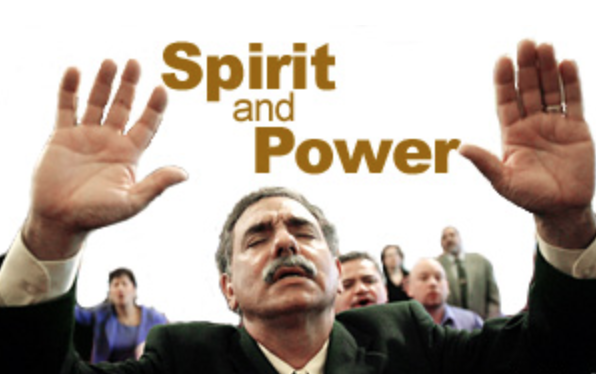
The other day I praised Religion News Service for jumping into the Twitter tornado caused by the Rev. Paula White’s wild sermon thundering about the powers of the “marine kingdom” and the miscarriage of “satanic pregnancies” and lots of other stuff.

It was just another day in America’s shattered and splintered public discourse.

Here’s the New York Times summary of what that Right Wing Watch clip unleashed:

The video shows part of a nearly three-hour-long service at the City of Destiny church in Apopka, Fla., on Jan. 5. In it, Ms. White can be seen talking about fighting witchcraft and demonic manipulation. She called for any “strange winds that have been sent to hurt the church, sent against this nation, sent against our president, sent against myself” to be broken.

“In the name of Jesus, we command all satanic pregnancies to miscarry right now,” Ms. White said. “We declare that anything that’s been conceived in satanic wombs, that it’ll miscarry. It will not be able to carry forth any plan of destruction, any plan of harm.”

As of Monday, the video had been watched more than eight million times.

It appeared that no one in this shouting match had the slightest interest in promoting understanding. Some commentators weren’t even interested in accurate, honest disagreements.

However, Adelle Banks and Bob Smietana wrote a short explainer that provided crucial information about what White was saying and, most importantly, what she was not saying. Click here to see my piece on that: “RNS pros offered crucial context for 'Satanic pregnancies' sound bite.”

Now I would like to do something that I rarely do: I want to point mainstream journalists and concerned readers to another explainer digging deeper into this topic. This one is by David French, a Harvard Law graduate and First Amendment expert who is one of the most quoted #NeverTrump conservatives in American political life.

In recent weeks, the former National Review star has been doing some brilliant religion-news analysis for his new publication — The Dispatch. His new piece (“Satanic Pregnancies, Explained”) is not an attempt — obviously — to support Paula White or her political master, President Donald Trump. However, it is an attempt to explain why White’s critics, especially scribes in the mainstream press, need to slow down and try to grasp what charismatic and Pentecostal Christians believe on the topic of fierce prayer and “spiritual warfare.”


Please respect our Commenting Policy

What is 'religion news'? The Washington Post asked for feedback on that tricky question

I am sure every journalist who has ever worked on the religion beat for multiple years — let alone decades — has taken part in this exchange.

Q: So what do you do?

A: I’m a journalist who covers religion.

Q: So you’re a religious reporter. What kinds of things do you cover?

Yes, lots of people automatically turn “religion” into “religious,” but that’s a topic for another day.

But there’s the question for today: What kinds of things do we cover on the religion beat?

If you look, year after year, at the Religion News Association’s list of the Top 10 stories of the year, it’s pretty obvious that most of the big stories tend to fall into predictable patterns. Such as:

(1) Stories in which religion plays a role in partisan politics.

(2) Stories in which religious groups act like political parties and fight it out over hot-button doctrinal issues (often about sexuality) that most journalists define in political terms.

(3) Scandals that involve religious leaders (think sex and money) that play out like political dramas.

(4) Big, unavoidable events like terrorist acts, cathedrals burning, etc.

Am I being too cynical? Take a look at the 2019 list and see how many items fit into these kinds of patterns.

Long ago, I interviewed for religion-beat jobs at two major newspapers. At one, the editor admitted that he basically wanted news about scandals and politics. At the other, the editor (active in a mainline Protestant church) offered a broad approach to the beat that included culture, the arts, medical ethics, educational institutions, etc. I took that second job.

All of this brings me to a fascinating little memo that religion-beat veteran Michelle Boorstein circulated the other day in the “Acts of Faith” digital newsletter from The Washington Post. What was her goal?

In our extra-polarized times, I wanted to reach out to our most committed religion (spirituality/faith/ethics/meaning-making) readers and get a sense -- In your view, what are the most important topics in our realm for Washington Post journalists to cover?


Please respect our Commenting Policy