Evangelicals

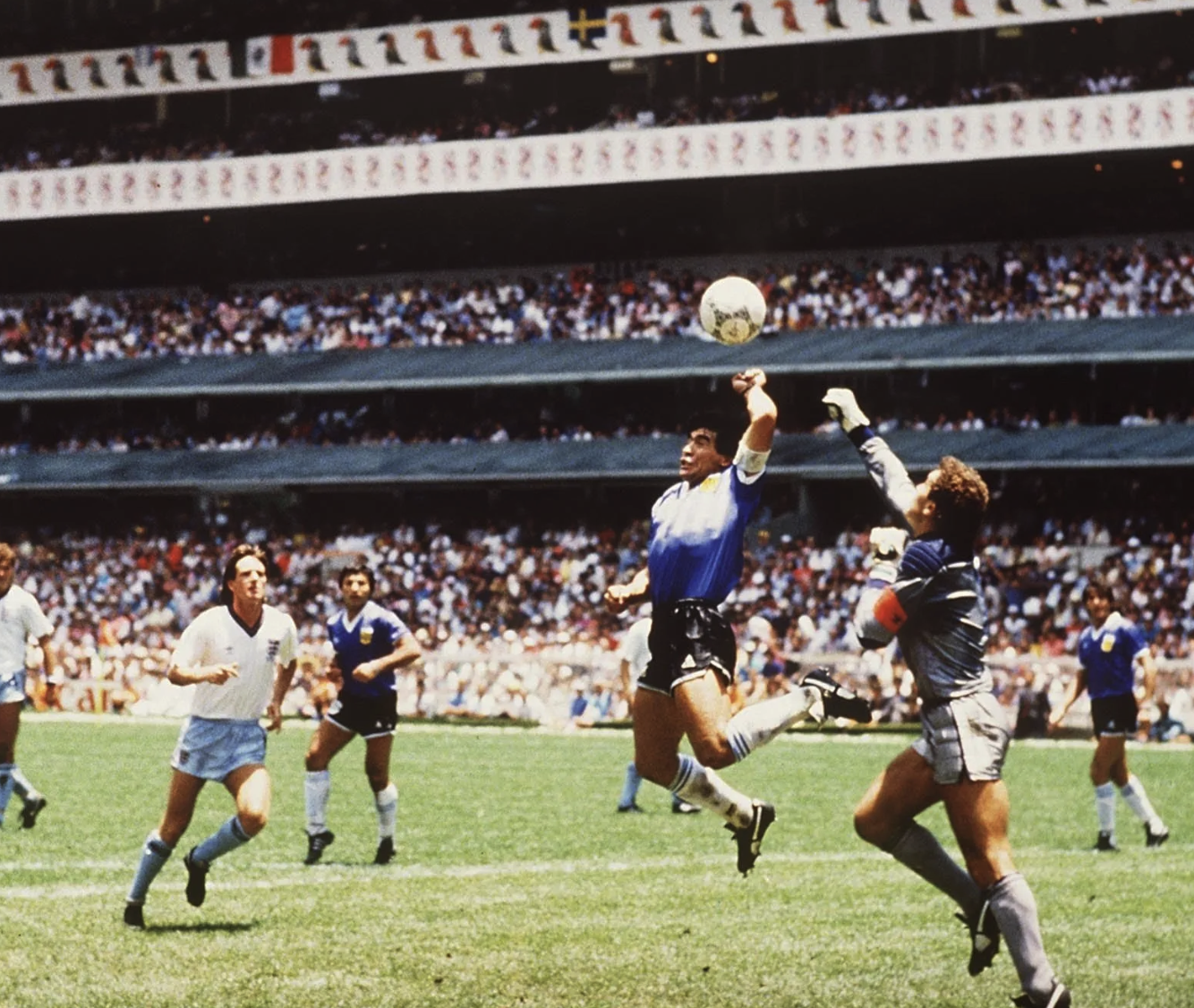
Clemente Lisi off to World Cup: Soccer, faith and memories of Maradona's 'hand of God'

Clemente Lisi off to World Cup: Soccer, faith and memories of Maradona's 'hand of God'

Long, long ago, I told the managing editor of The Rocky Mountain News (#RIP) that I should be part of the newsroom team sent to cover the Super Bowl.

My logic was simple: If the Denver Broncos were not a religious organization for a majority of people in the Rocky Mountain Time Zone, there was no such thing as a cultural definition of religion.

With that in mind, it makes all kinds of sense that our own Clemente Lisi is about to get on an airplane and head to Qatar to cover the final rounds of World Cup 2022. In addition to being our Catholic-news specialist here at GetReligion, he is also the author of the new book “The FIFA World Cup: A History of the Planet's Biggest Sporting Event.

You know that there will be religion angles all over the place, in part because of the location. And, once again, if soccer isn’t — for most of the world — a near-religion, then I don’t know what is. After all, one of my all-time favorite book titles is this: “How Soccer Explains the World.”

Yes, the favored samba-style evangelicals of Brazil lost in a heartbreaker yesterday — to a Croatia team with a coach with a rosary in his hands, on the sideline. I’ll keep my eyes open for GetReligion-friendly copy from Lisi, once he arrives in Qatar.

Meanwhile, we ran a piece by Lisi that ran with this headline: “Sports, passion, faith — The ties that bind are always there, even if journalists miss them.” Here is the highly relevant overture:

Sports, in so many ways, are almost like a religion for many people. Like religion, sports can convey important lessons about culture and values. From the times of the Ancient Greeks, athletes were sometimes accorded the status of gods.

Not much has changed since ancient times. Modern society has given god-like status to many athletes. Lebron James, Tiger Woods and Lionel Messi are just three athletes who garner such adulation on a global scale.

The question here at GetReligion is how this relationship shows up in news stories about sports, especially stories in which religious faith is — according to the athletes themselves — a key element in their lives and their success.


Please respect our Commenting Policy

Podcast: What happens when drag-queen culture meets the Christmas Wars? Take a guess ...

Podcast: What happens when drag-queen culture meets the Christmas Wars? Take a guess ...

Just the other day, someone tweeted out a challenge asking readers to share, in five words or less, something that would annoy die-hard Texans. As a prodigal Texan, I responded: “Austin, Austin, Austin, Austin, Austin.”

You see, the People’s Republic of Austin — I heard that label in the 1970s — is located inside Texas and it is even the capital of Texas, but it has long been deep-blue urban zip code (there are now others) in a rather red state.

This creates tensions. Which brings us to that interesting Christmas Wars headline the other day in The Washington Post: “A Texas culture clash: Dueling parades over the meaning of Christmas,” which was the hook for this week’s “Crossroads” podcast (CLICK HERE to tune that in).

Let me offer a bit of “Christmas Wars” background. For decades, the most powerful institutions in American life — government, mass media, public schools, shopping malls, etc. — have argued about what kind of language and symbolism can be used during the cultural tsunami known as The Holidays. As one Baptist progressive said long ago, people may want to play it safe and say, "Merry Christmas, Happy Hanukkah, and a Joyous Kwanzaa, Martyrdom Day of Guru Tegh Bahadur, Bodhi Day, Maunajiyaras Day, Beginning of Masa'il, Nisf Sha'ban and Yalda Night, Yule and Shinto Winter Solstice, and Ramadan! Or, happy holidays!"

But there is a serious church-state issue looming in the background: Is religious speech and symbolism a uniquely dangerous force in public life? In practical terms, can public institutions — especially if there are tax dollars involved — let “Christmas be Christmas.”

Strange things have happened in these debates, such as some (repeat “SOME”) religious and cultural conservatives celebrating when, let’s say, Menorahs and even Nativity scenes are acceptable since they have become “secular” symbols that no longer have offensive religious content. That’s a win for religion?

With that in mind, let’s look at the overture of this Washington Post story, about Christmas Wars in greater Austin:

TAYLOR, Tex. — The trouble started at last year’s Christmas parade, when students from St. Mary’s Catholic School watched as two drag queens aboard the first Taylor Pride float danced and lip synced to Christmas carols beneath a glittering rainbow arch.


Please respect our Commenting Policy

News coverage of LGBTQ issues enters mop-up phase in the religion marketplace

News coverage of LGBTQ issues enters mop-up phase in the religion marketplace

It has been a big week for the ongoing LGBTQ+ story. Even as the U.S. Supreme Court heard oral arguments in a case about how much to tolerate personal dissent against same-sex marriage, the U.S. House, the House this morning passed nationwide codification of the gay marriage right that the Court enacted by 5-4 in the 2015 Obergefell ruling.

The new law effectively concludes phase one in the unusually rapid upending of a central societal structure dating from antiquity. The next few years, the media will be covering the mop-up phase facing religious groups and individuals that uphold traditional teachings about marriage, over against anti-discrimination assertions by government, Hollywood, corporate America and private actors.

The current Supreme Court case (303 Creative LLC v. Elenis, docket #21-476) involves a Colorado website designer who does not create pages that celebrate same-sex weddings — though she serves gay customers otherwise. Her free-speech claim is opposed by, for example, Reform Judaism, many liberal Protestants and other social liberals.

Observers figure that the Court, with a more traditionalist makeup than in 2015, will back this designer’s plea and ultimately look kindly upon further religious claims under the Bill of Rights. If so, the future conflict may focus on the Carborundum tactic as the LGBTQ+ movement grinds down conservatives’ energy, time and money in long-running legal maneuvers, meanwhile building cultural pressure to marginalize conscientious objectors as simple bigots.

An opinion-page complaint against religion’s “encroachment” upon society, posted by NBC News and written by Stanford University journal editor Marcie Bianco, neatly encapsulates where this culture war appears to be heading. This is the voice from the cultural left:

Dig a bit deeper, and what this act really represents is the inflexibility of our nation’s institutions and the national entrenchment — despite constitutional assurances to the contrary — of religion.


Please respect our Commenting Policy

Christian web designer at the Supreme Court: How reporters covered 303 Creative case

Christian web designer at the Supreme Court: How reporters covered 303 Creative case

On the face of it, 303 Creative v. Elenis, a case heard before the U.S. Supreme Court on Monday, sounded unimpressive.

A Christian web designer living near Denver was suing her state civil rights commission for the right to create wedding web sites without having to include creative content about same-sex weddings in the mix. She hadn’t been approached by any gay couples yet — but because she might be, she launched a pre-emptive lawsuit with the aid of the Alliance Defending Freedom, a law firm with an impressive track record of 11 wins at the Supreme Court level.

Yet, the more I read about the case and the issues it was trying to raise, the more intrigued I got. And the hearing on Monday didn’t disappoint. It lasted some two and one-half hours, which is long by Court standards. Covering hour-long hearings at the high court is difficult at best; I can only imagine how tough it was for reporters to sift through 150 minutes of speech — and all the tangents that were involved — to sum up how the hearing went.

Which is why I am merely critiquing the first drafts of what I hope will be more in-depth articles as time goes on. I’ll start with how CBS covered the story:

The Supreme Court's conservative bloc appeared sympathetic Monday to a Colorado graphic designer who argues a state law prohibiting discrimination on the basis of sexual orientation violates her free speech rights by forcing her to express a message that conflicts with her closely held religious beliefs.

During oral arguments in the case known as 303 Creative LLC v. Elenis, the court seemed to move closer to resolving a question it has left unanswered since 2018, when it narrowly ruled in favor of a Colorado baker who refused to make a cake for a same-sex wedding: whether states like Colorado can, in applying their anti-discrimination laws, compel an artist to express a message they disagree with.

An editorial comment: It's a minor annoyance that the plural “they” is used for a singular “artist.” Just write “he or she” for heaven’s sake.

One issue with reporting on this case is that it takes a ton of backstory to explain that this case isn’t just about a web designer, but also a cake designer-baker in a previous Supreme Court case.


Please respect our Commenting Policy

Perfect storm before and after COVID-19: Do churches have $$$ for missions and charity?

Perfect storm before and after COVID-19: Do churches have $$$ for missions and charity?

Back in the heady church-growth days of the 1980s and 1990s, researchers John and Sylvia Ronsvalle began hearing caution creep into their interviews with church leaders.

Denominational leaders were especially uncomfortable when asked about declines in giving to overseas missions and projects to help the poor.

Sylvia Ronsvalle said the leader of one large congregation gave this blunt response: "Ah! No! We can't promote missions because there won't be enough for our seminaries." She responded: "Well, I think people would be more interested in your seminaries if you were actually impacting global needs in Jesus' name."

That encounter, and many others, ended up in "Behind the Stained Glass Windows: Money Dynamics in the Church," one of many publications the Ronsvalles have produced while leading empty tomb, inc. Their center also serves as a hub for missions in Champaign, Illinois, their home for 50 years.

Danger signs began decades ago. Giving to religious groups -- defined in terms of potential donations based on after-tax incomes -- peaked in 1960 and then began to decline, even as church membership numbers and budgets kept rising.

This trend "pre-dated many of the controversial issues that were to emerge by the end of the 1960s," noted the 31st annual empty tomb report, based on 2019 numbers. In mainline and evangelical denominations "per member giving in current dollars, as well as in inflation-adjusted dollars and as a portion of income" was lower in 2019 than the year before.

Then COVID-19 hit. But the pandemic's impact in pews only made an ongoing charity funding crisis more obvious, said Sylvia Ronsvalle, in a telephone interview.


Please respect our Commenting Policy

Thinking with Ryan Burge: That 'nondenominational' term? Well, it isn't going away

Thinking with Ryan Burge: That 'nondenominational' term? Well, it isn't going away

Rare is the week in which I don’t read two or three important stories in the mainstream press that leave me thinking: “Journalists are really going to need to understand the wild, complex and rapidly world of nondenominational evangelical-fundamentalist-charismatic-Pentecostal-Protestant-whatever churches.”

For starters, the vast majority of these church have absolutely zero connections to any group providing even minimal legal, financial, ethical or theological oversight. In many cases, the pulpit-star who started the congregation remains in complete control, with a hand-picked board as the only balance on his power. He may not have even attended an accredited seminary.

Think about that the next time you ponder the role of structures of “evangelical power” in stories about clergy sexual abuse or, oh, the odd riot at the U.S. Capitol.

This brings me (#NoSurprise) back to the world of researcher Ryan Burge (must-follow on Twitter) and a recent think piece he wrote for Christianity Today with this headline: “How ‘Christian’ Overtook the ‘Protestant’ Label.” Before we get to a Burge chart or two, here’s the overture:

Over the past several decades, American evangelicalism has moved away from the religious labels, symbols, and buildings that used to define church.

Many newer churches don’t contain stained glass, crosses, or traditional sanctuary setups. They tend to adopt contemporary names, leaving out denominational labels or other religious language. Along with those shifts, churchgoers have changed the way they speak about their faith; think of phrases like “It’s is not a religion; it’s a relationship.”

These trends have had a real impact on how younger people understand their religious identity. Evangelical Protestants have been debating for years over the definition and usefulness of the “evangelical” label. Now, it appears “Protestant” may be losing its place too.

Put the word “Baptist” on the sign in the lawn? No way. And, of course, there are zillions of different meanings to the word “Baptist” — in the world of independent churches. But that’s another (related) subject.


Please respect our Commenting Policy

NPR offers a faithful Mike Pence interview: But readers will need the transcript to know that

NPR offers a faithful Mike Pence interview: But readers will need the transcript to know that

National Public Radio posted a story the other day with a totally predictable headline: “Mike Pence, pondering a presidential run, condemns Trump's rhetoric on Jan. 6.

What we have here is a perfect chance to meditate on that concept that readers see all the time here at GetReligion, when dealing with the political lens through which most (#IMHO) elite-market journalists view the world. That would be: “Politics is real. Religion? Not so much.”

Things are a bit more nuanced with this particular NPR feature. To be blunt: The Steve Inskeep interview is way, way better than the feature that someone — an intern, perhaps — wrote about the contents of the interview.

The text version is — I am sure this will shock many — all about Donald Trump, Donald Trump and Donald Trump, with a near-laser focus on the events of January 6th at the U.S. Capitol.

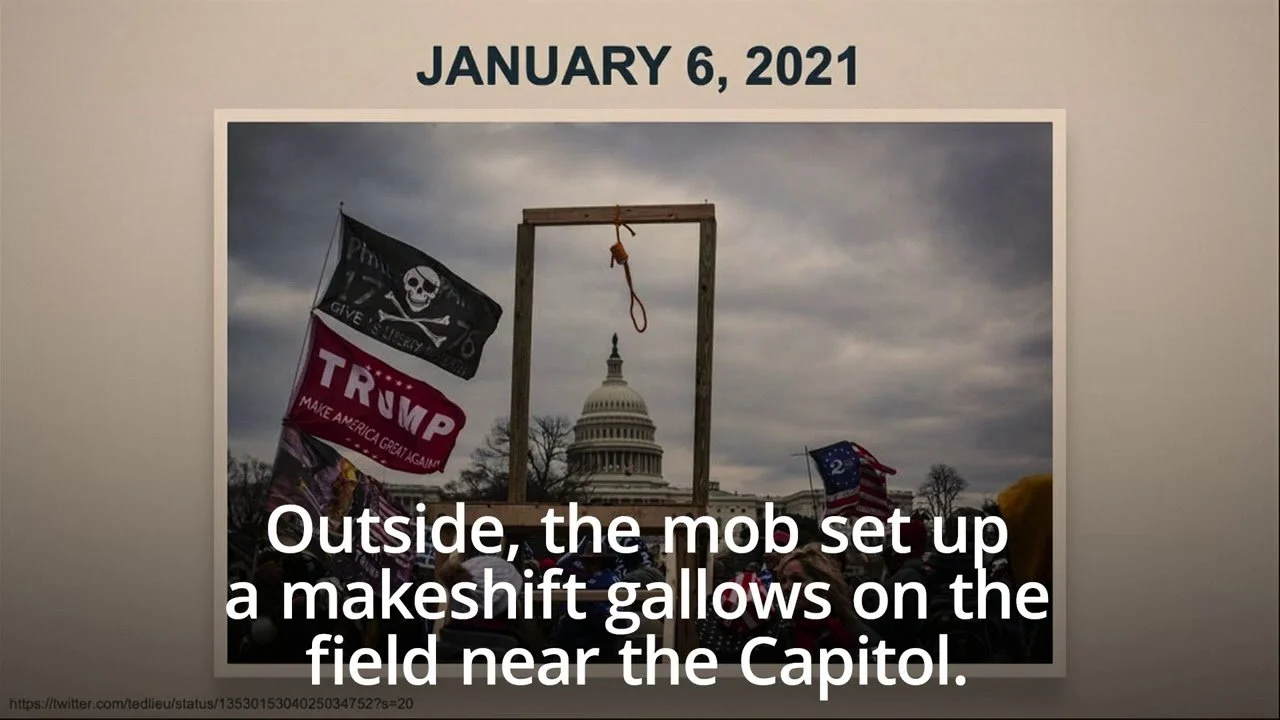
Now, that’s a crucial subject, since Vice President Mike Pence was the man that many Trump-inspired rioters wanted to hang (or they chanted words to that effect). That’s a topic that cannot be avoided, and I get that. This is an interview that will infuriate Trump disciples and, at the same time, will leave the progressive left just as mad.

The bottom line: The interview is about Pence’s memoir “So Help Me God,” and that’s a book that has a much broader focus than recent partisan politics. I would argue — based on the interview itself — that the book’s most important contents are not linked to Trump, Trump, Trump. The most provocative parts of the interview are about federalism and (#triggerwarning) the First Amendment. But, first, here is the highlighted Trump material:

Pence faces an extraordinary challenge as a political leader whose national reputation is closely tied to the record of the Trump administration but who says the Constitution and his conscience would not allow him to follow Trump's ultimate demand. …

When a mob disrupted the proceedings, Pence retreated with family members to an office within the U.S. Capitol and then to an underground parking garage, but refused to flee the building.


Please respect our Commenting Policy

New religion census: That means more numbers, more maps and more hooks for news stories

New religion census: That means more numbers, more maps and more hooks for news stories

It’s always a fun day when one of my trusted sources publishes some new raw data that I can use to better understand the religious and political world of the United States. That’s doubly true when it’s something other than survey data because it allows me to make data visualizations that are a bit different than the run of the mill bar and line graphs.

Earlier this month the Association of Statisticians of American Religion Bodies released the results of their 2020 Religion Census, which is a one of a kind dataset. Every 10 years, this very capable research team tracks religious organizations all the way down to the county level — which is a granularity that is astonishing.

For example, most surveys would be lucky to give you a sample that is large enough to understand religion at the state level. So, to have access to county level data unlocks thousands of possibilities.

This is the kind of detail that helps researchers — and journalists — look for news trends at the local and regional levels. There are news stories hidden in these numbers. The key is spotting them.

So, with that in mind, I took to map-making the last few weeks. I think that there’s a lot of surprising results in this new data.

Where is religion the most concentrated in the United States? Probably not where most people would guess.

According to data from the 2020 Religion Census, there’s obviously a strong pocket of believers in the Bible Belt — that isn’t surprising.


Please respect our Commenting Policy

Good froth and substance in RNS feature about fading church's jump into coffee shop life

Good froth and substance in RNS feature about fading church's jump into coffee shop life

There is a style of news-feature writing that I have heard described, over the years, in words that sound something like this: “Don’t tell me a story about 100,000 people who are wrestling with a big, complex problem. Tell me a story about one person who stands for those 100,000 people.”

For years, this was the style of feature writing that we saw over and over in the “column one” features at the Wall Street Journal and the Los Angeles Times. When used by a skilled reporter, this strategy can help readers understand complex trends and events through the eyes of a well-chosen symbolic person or organization.

One of the biggest religion-news stories out there right now is the slow death of thousands of shrinking churches that face painful questions about what to do with their buildings and the legacies of the believers who once filled the pews. Statistically speaking, most of these churches are old-school mainline Protestant or Catholic congregations in urban or small-town settings. But, truth be told, this is a trend that will torture everybody, sooner or later.

This brings me to a fine Religion News Service story that ran the other day with this double-decker headline:

A once-dying church hopes to reinvent itself with coffee and kindness

Embrace Church had two years left to live. Rather than wait for the end, the church sold its building, reinvented itself and invested in a local coffee house.

Literally, my only question about this story is whether the “summary” paragraph explaining the big picture could have been moved up a bit — somehow. That, gentle readers, is a tiny, tiny nit to pick. Here is the overture:

Community Covenant Church in Kirkwood, Missouri, had a problem common to thousands of churches around the country: an aging congregation, a shrinking budget, a too-big building that spent most of the week empty.

And the clock was ticking.


Please respect our Commenting Policy