Evangelicals

More Elizabeth II coverage: Washington Post goes deep on her Billy Graham contacts

More Elizabeth II coverage: Washington Post goes deep on her Billy Graham contacts

Confession: I am still paying next to zero attention to American telly when it comes to rites linked to the death of Queen Elizabeth II. I’m tuned into BBC World and, via YouTube, streaming Sky News.

The few times I’ve flipped over to the major U.S. networks left me with the same impression as before — that the Royal Family is viewed as kind of a cleaned-up version of the Kardashians, with the queen as a sad, nobel celebrity matriarch. See this earlier post: “Elizabeth the Great: Why do many journalists choose to edit faith out of her Christmas talks?

I think the big gaps (other than details about her faith) have been any sense of (a) the gravitas added by her World War II service, including her work driving an Army ambulance. Also, it’s poignant that, (b) until the stunning abdication of King Edward VIII, she was raised with zero expectation of becoming queen. This relatively normal childhood (until age 10) created tight ties to her parents and shaped her views on family.

Yes, the BBC has had a very heavy emphasis on the admiration for the queen seen in mainline, establishment churches and minority faiths. At some point I would like to know if the admiration for Elizabeth II common among American evangelicals also exists in the UK. Click here for a roundup of that, including these typical remarks from Bishop Andrew Forster of the Church of Ireland:

"Throughout her life she set Christ, and his message and his teaching, as the primary thing that has helped her and blessed her and I think made her into the incredible monarch, sovereign that she was."

Bishop Forster described the late Queen as the "grandmother of the nation".

"Maybe it was because people understood that she had an understanding of some of the issues that we might face behind closed doors, some of the issues of increased frailty, of family strife — there was that sense of a grandmotherly figure who understood the challenges of life," he said.

In my previous post, I noted that a Washington Post feature about the queen’s “most memorable remarks” that said her public appearances were “peppered with words of wisdom, faith and occasionally personal reflections.” There was content about her Christmas messages, while omitting any faith content.

However, the religion desk — veteran Sarah Pulliam Bailey (a former GetReligion contributor) — went in depth on one of the most interesting religion-news angles from the queen’s long life: “Fact checking ‘The Crown’: Queen Elizabeth’s faith and her close relationship with preacher Billy Graham.”

Please respect our Commenting Policy

Is celebrity culture eroding American evangelicalism? This publishing insider says 'yes'

Is celebrity culture eroding American evangelicalism? This publishing insider says 'yes'

Evangelical Protestantism, by most accounts the largest camp in American religion, has run into various troubles lately, as The Guy and many others have chronicled.

Now there’s ample Internet buzz about Katelyn Beaty’s diagnosis of one factor in a new book from a major evangelical publisher that’s well worth coverage: “Celebrities for Jesus: How Personas, Platforms, and Profits are Hurting the Church.”

Make that hurting the “White Evangelical” church.

The type of personality cults she describes are pretty much absent in “mainline” Protestantism, Black Protestantism (there are some glaring exceptions in the health-and-wealth world), Catholicism and other U.S. religious bodies. By coincidence, Rodney Palmer, an American Baptist who teaches preaching at Palmer Theological Seminary, echoed her concerns just last week in an article for the progressive Baptist News Global website.

Inevitably, Beaty has much to say about the media that we practitioners and consumers should ponder.

She’s a well-marinated evangelical as author, former print managing editor of flagship Christianity Today magazine and currently a New York-based acquisitions editor with Baker Publishing Group, one of the majors whose Brazos Press division published “Celebrities.” (Note the company’s other book imprints: Baker Books, Baker Academic, Bethany House, Chosen, Revell.)

For this reason, The Guy finds especially newsworthy — and gutsy — Beaty’s chapter treating the evangelical book industry, which is said to pour “jet fuel” on the type of fandom, branding and marketing she decries.

The bottom line, here: This bite-hand-that-feeds angle alone offers a strong story theme that journalists could draw from this book.


Please respect our Commenting Policy

Bonus podcast: Return of hot debates about ancient Psalms vs. contemporary praise hits

Bonus podcast: Return of hot debates about ancient Psalms vs. contemporary praise hits

Here is a truth that many religion-beat professionals (a) haven’t really thought through or (b) they totally get it, but their editors do not.

Obviously, churches from coast to coast and around the world are engaged in heated debates, if not outright financial wars, about centuries of church teachings about marriage and sexuality. This makes headlines. These battles often reach the local level (ask United Methodists and, previously, Episcopalians).

Editors like that, since these battles can be framed as “politics.”

But there is another subject that frequently causes divisions in the pews (or megachurch folding chairs) — music. These battles rarely make headlines, even though they stir deep emotions between various generations of believers. In recent decades, this has led to discussions of “worship wars.”

I recently wrote a column — “Open Bible to Psalms: What messages are seen there, but not in modern praise music?” — that was, shall we say, “worship wars” adjacent. This led to me being invited as a guest on the national “Connections” podcast, with hosts Mike Thom and Colleen Houde. If you want to listen to that, CLICK HERE.

During that discussion I mentioned that I had another column coming up that was related to this subject. It later appeared with this headline: “Hillbilly Thomists — Dominicans tracing their roots into Appalachian music and faith.”

But the Psalms column was the hook for the podcast and it didn’t take long to veer into “worship wars” territory and the subject of commercialized music in the modern church. That made me flash back a decade-plus to a column with this headline: “FM radio reality in church.”

Maybe the best way to intro this bonus podcast is simply to reprint that column. So here goes.

The clock is ticking and soon Jeff Crandall while face the challenge of selecting the right music for the Christmas services at High Desert Church.

This will be tricky, because Christmas is what the 70-member staff at this megachurch calls a "federal" event.


Please respect our Commenting Policy

Old debates behind the new headlines: What does the Bible teach about abortion?

Old debates behind the new headlines: What does the Bible teach about abortion?

THE QUESTION:

What does the Bible teach about abortion?

THE RELIGION GUY’S ANSWER:

This question is raised by the assertion that the Bible “says nothing about abortion.”

So writes Melanie Howard, a scripture scholar at Fresno Pacific University, a Mennonite Brethren campus self-defined as both “evangelical and ecumenical” that “embodies Christ-centered values.” Her July 25 article titled “What the Bible actually says about abortion may surprise you” for TheConversation.com was widely distributed to Associated Press and Religion News Service clients under the three outlets’ cooperative agreement.

Later in the article, Howard is more precise, explaining correctly that though abortion was known and practiced in biblical times it “is not directly mentioned” in scripture. True, but there’s more to be said about how the Bible views unborn human lives.

The biblical passage that applies most specifically is Exodus 21:22-23, which involves miscarriage but was extended to the abortion issue by ancient rabbis. It states that if a pregnant woman is hit accidentally “when men fight” and “a miscarriage results,” the person responsible pays a negotiated fine. But “if other damage results” (understood to be the woman’s death), then the “life for life” principle requires the death penalty. (This Memo uses the 1999 JPS translation throughout).

The Jewish Study Bible (2nd edition, 2014) presents the faith’s understanding from ancient times that this passage means “abortion is permitted when necessary to save the mother.” Today, even pro-life conservative Christians mostly agree with that. Due to this passage, Judaism also teaches that “feticide is not murder” because the unborn life is not yet regarded as fully a person. Over the centuries, authoritative “responsa” from rabbis issued varied opinions on allowing abortions in specific circumstances.

Otherwise, one Christian website lists 100 Bible passages said to bear on abortion.


Please respect our Commenting Policy

Podcast: Why are churches closing? There are many forces at work, but doctrine still matters

Podcast: Why are churches closing? There are many forces at work, but doctrine still matters

For years, there was a simple answer to the old question: Why do some churches grow, while others shrink?

You simply bought a copy of the 1972 book “Why Conservative Churches Are Growing: A Study in Sociology of Religion” by the late National Council of Churches leader Dean M. Kelley and that provided information answering lots (but not all) of the big questions. It was crucial that this groundbreaking book was written by a mainline Protestant insider, as opposed to a Southern Baptist or Assemblies of God leader.

Of course, everyone knew that some churches grew because of location, location, location. Also, there were always a few liberal churches that grew because of talented preachers or other strengths. Like I said: Kelley answered lots of church-decline questions, but not all of them.

What about 2022 in post-pandemic church life? For starters, many churches will never be post-pandemic — because many congregations (and maybe denominations or communions) were changed forever and we will see more evidence of that in the next few years.

All of this is an overture to this week’s “Crossroads” podcast (CLICK HERE to tune that in) which focuses on a must-read feature story by Godbeat veteran Bob Smietana. The headline at Religion News Service: “For a small Chicago church, closing down was an act of faith.” This was a personal, heartfelt story for Smietana, since this was a congregation that he once called home.

Like so many pastors around the United States, the Rev. Amanda Olson has kept one eye on the Bible and another on the evolving religious landscape.

She knew change was coming to the church in America.

Yet she hoped her congregation might be spared the worst of it.

“Everyone thinks that churches are going to close,” said Olson, the longtime pastor of Grace Evangelical Covenant Church on Chicago’s North Side. “But nobody thinks it is going to be their church.”


Please respect our Commenting Policy

What will American Protestantism look like after the wars inside the 'Seven Sisters' are done?

What will American Protestantism look like after the wars inside the 'Seven Sisters' are done?

Over decades, the map of U.S. Protestantism has been redrawn by splits over the authority and interpretation of the Bible that eventually focused on the LGBT dispute. Now we have a major case study that journalists will need to cover at the local, regional, national and global levels.

A balanced coalition of leaders in the large United Methodist Church (UMC) developed a treaty for mutually respectful separation — the Reconciliation and Grace Through Separation protocol — for that’s currently degenerating into a wasteful fight like other groups have suffered.

Reporters and concerned readers will want to dive into these commentaries and news stories:

* Look at a United Methodist timeline: Why are conservatives going nuclear with lawsuits?

* What happened to United Methodists’ proposal to split the denomination?

* Time is Running Out for Traditionalist United Methodists!

* For United Methodists, the center is not holding

* Special sessions of United Methodist annual conferences 2022

* United Methodist Church bishops mount defense amid conservative attacks (paywall protected)

* Liberal Bishops Have Redefined United Methodist Polity

The current maneuvers by the North American UMC establishment may well limit the number of dropouts joining the Global Methodist Church. Its vision has been to unite a million or more U.S. Methodist evangelicals with the growing Methodist churches in Africa and Asia, creating an effective and innovative international denomination dedicated to defending current Methodist doctrines. This could help counteract some U.S. conservatives’ drift into Christian nationalism. Is that still feasible?


Please respect our Commenting Policy

Fellowship of Christian Athletes wins an 'equal access' case, even if LATimes missed that

Fellowship of Christian Athletes wins an 'equal access' case, even if LATimes missed that

Once upon a time, back in the days of the Bill Clinton White House, there was a strong church-state coalition that stretched, basically, from the Assemblies of God to the Unitarians. The legal activists in this coalition didn’t agree on everything, but they did agree on some basic First Amendment principles that helped defend believers in a wide variety of religious minorities.

If you know the history of that era, you can sense that a few important words are missing from the recent Los Angeles Times report (behind a paywall) that ran at Yahoo!News with this aggressive headline: “Court says San Jose school district must recognize Christian club that excludes LGBTQ kids.”

That headline, of course, could have noted — somehow — that the this victory for the Fellowship of Christian Athletes was based on the same legal principles that defend the First Amendment rights of LGBTQ support groups at the same school.

The key is that there are two crucial words — “equal access” — that are missing from this rather solid story, which includes enough quoted material from voices on both sides for readers to figure out what is going on (if they have a background in church-state studies). Hold that thought.

First, here is the Times overture:

In spring 2019, a teacher at Pioneer High School in San Jose posted a message on his classroom whiteboard questioning a "Sexual Purity" statement that a club for Christian student athletes was requiring its leaders to sign.

The club's statement said sexual relationships should exist only between married, heterosexual couples. The teacher wrote that he was "deeply saddened" that a club on the public school campus made its leaders "affirm" those ideas, and he asked students what they thought.

The resulting firestorm led to the San Jose Unified School District rescinding recognition of the Fellowship of Christian Athletes for excluding LGBTQ students in violation of the district's nondiscrimination policy. In response, the club and its international parent organization sued in federal court, alleging religious discrimination.

On Monday, the Fellowship of Christian Athletes won a major victory when a three-judge panel of the U.S. 9th Circuit Court of Appeals ordered the club be reinstated as an official student group for the current school year while litigation between the parties continues in the lower district court.

Shutting down the FCA violated the “nondiscrimination policy”?


Please respect our Commenting Policy

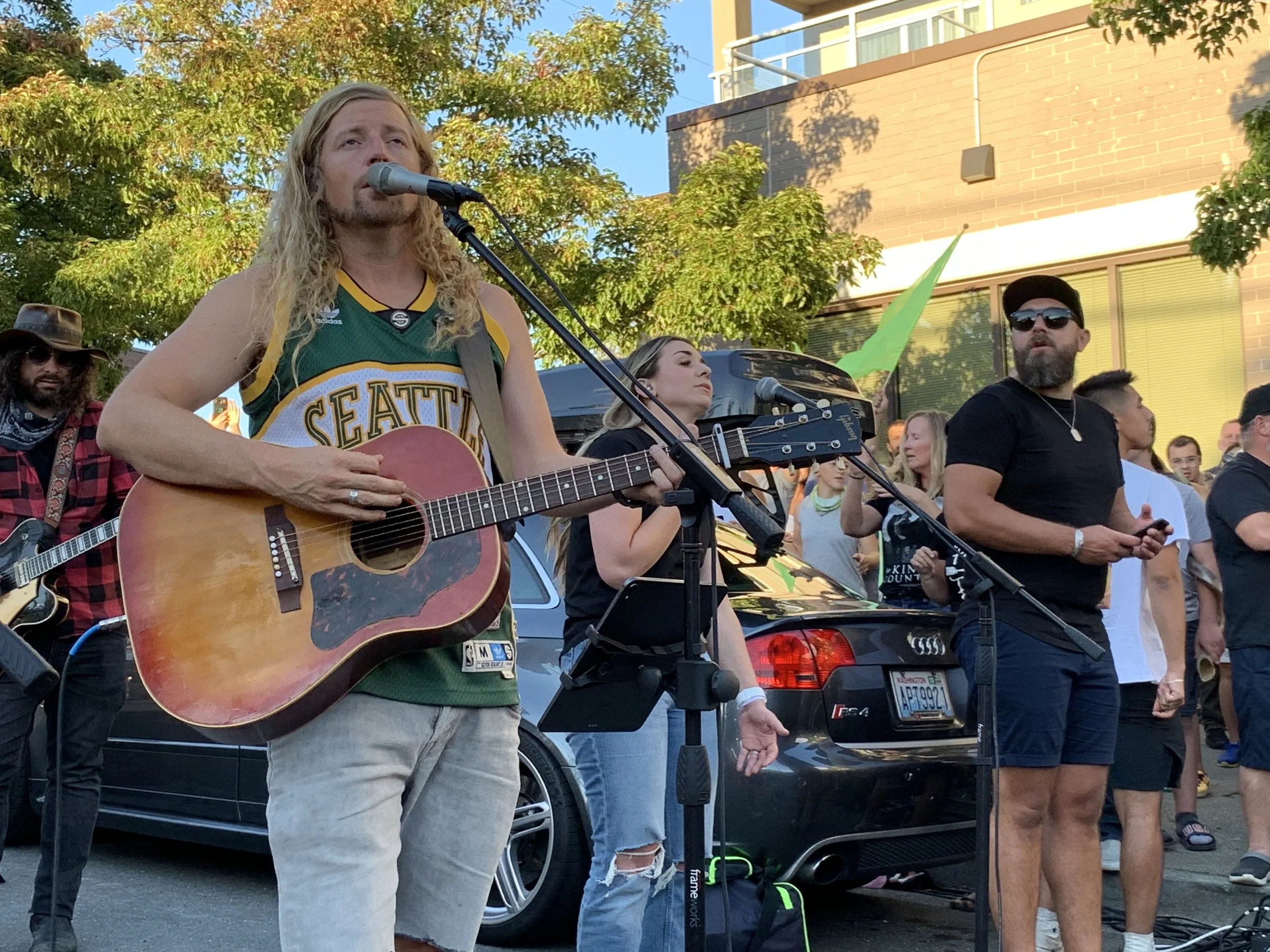
New stories on New Apostolic Reformation, Sean Feucht keep assuming a right-wing takeover

New stories on New Apostolic Reformation, Sean Feucht keep assuming a right-wing takeover

I’ve been complaining for years that journalists aren’t schooling themselves adequately on the prophetic movement (among charismatics) that some call the New Apostolic Reformation (NAR). Since the Jan. 6 uprising, they’ve started writing about it.

But be careful what you wish for. Not all that glitters is gold. I’ve read more than a few stories that sound like something out of a horror flick: An ominous theocratic movement involving millions of people, under uber-controlling leaders with a few White Christian nationalists thrown in.

The two pieces I’ll be addressing is Elle Hardy’s Aug. 23 story in The New Republic: “The Right-Wing Christian Sect Plotting a Political Takeover,” and Rolling Stone’s July 11 story on Sean Feucht. Both typify current Christian trends as scary movements with an end game of sending Donald Trump to the White House in 2024 and sending America back to the Middle Ages.

Hardy’s story had ambitious goals. It began with a summation of this movement starting from 1994 with a revival at a church once known as the Toronto Airport Vineyard. Also known as a “laughing revival” for the odd laughing fits folks had, it made major changes in North American Christianity and swept across the English-speaking world. (Three years later, I was interviewing folks in Iceland who said they were dramatically influenced by Canadian missionaries spreading its benefits.)

All this grew into the NAR, the author says, and (drum roll):

And they have one clear goal in mind — ruling over the United States and, eventually, the world.

NAR, as it’s often called, is a shadowy movement, rather than an organization; many who are considered a part of it deny that it even exists. Broadly, it seeks to return church structures to the fivefold ministry of the Bible (defined roles of apostle, prophet, evangelist, pastor, and teacher). The key roles in this pecking order are prophets, who have the visions, and apostles, the anointed ones who put ideas and networks into practice and, critically, to whom everyone else must submit.

OK. I did my first master’s thesis (in 1992) on authority and submission practices in the charismatic communities that were so popular among evangelicals in the 1960s and 1970s, plus I wrote a 2009 book that deals substantially with this issue. And I can tell you that the NAR folks did learn a thing or two about the mess caused by the 1970s “discipleship movement” which was deeply into one submitting oneself to an elder who was himself (usually this person was male) submitted to a higher elder in a hierarchical line reaching up to a small group of people.

They’re not going that same route today.


Please respect our Commenting Policy

Hillbilly Thomists: Dominican brothers singing about the Americana ties that bind

Hillbilly Thomists: Dominican brothers singing about the Americana ties that bind

With its sobering lyrics and a droning country-blues riff, "Holy Ghost Power" by the Hillbilly Thomists is a song with zero chance for Christian radio success.

The jilted protagonist has been "living off of grits, whiskey and Moon Pies." His man cave offers no refuge: "A hundred channels of nothing on the TV at 10. It's like Diet Coke and original sin. … Now it's a zombie town, there's a lot of undead. They wander around looking underfed."

But the chorus offers hope: "He makes a rich man poor; He makes a weak man strong. No more going wrong just to get along. I felt the force of the truth when they pierced His side. I saw the war eagle dive and I could not hide."

It wouldn't shock old-school country fans if this was a Johnny Cash song. But it was written by a banjo-playing Dominican from Georgia who has an Oxford theology doctorate and now leads the Pontifical University of Saint Thomas Aquinas. Writing to the National Reso-Phonic Company, Father Thomas Joseph White said he likes to play this classic blues guitar "in my office looking out at the Roman Forum that's 2,700 years-old."

That makes sense in the Hillbilly Thomists, a "musical collective" of Dominicans, most of whom have Bible-belt roots. The band recently staged a concert in the Grand Ole Opry and, over the past decade, has recorded three albums of music that would sound at home at Appalachian fairs, but not in most church halls.

There's a vital tie linking these songs to the life and work of this band of priests and brothers, said Father Simon Teller (who plays fiddle). Whether singing Appalachian hymns or their own original songs, the Hillbilly Thomists -- dressed in the white habits of their order -- keep returning to images of suffering, sorrow, eternity, hope, grace and redemption.

"We're priests in the Dominican order and that kind of states our vision of the world and the faith and everything we do," he said. "In our day job, we're working a lot with people who are dealing with very concrete situations and have a lot of very concrete questions."

"Holy Ghost Power," for example, is "not sung from the voice of a clergyman. It's sung with the voice of a man who's living a very ordinary life that is going off the rails in a very ordinary way," said Teller. "There's a malaise there and he's unsatisfied by the things of this world."


Please respect our Commenting Policy