Evangelicals

WHAT IS THIS? Looking for real news coverage of crisis pregnancy centers? This isn't it ...

WHAT IS THIS? Looking for real news coverage of crisis pregnancy centers? This isn't it ...

If you have been around newsrooms for several decades, especially after the arrival of the Internet, you know that Donald Trump didn’t invent the term “fake news.” Yes, he grabbed it and ran with it. Big time.

Basically, what Orange Man Bad wanted was news coverage that praised all things Trump and, whenever possible, attacked his enemies. This is the flip side of mainstream news offerings that conservatives criticized during the whole Barack “The One” Obama era, when some press people had a thrill-up-the-leg or messiah-esque approach to news.

This preach-to-the-choir ethos is, I believe, one form of “fake news” and I started hearing journalists expressing concerns about it back in the 1980s. Journalists also, as newspaper economics soured, began worrying out loud about news coverage of powerful businesses that resembled cheerleading for the home team. Many feared the line between news and public-relations was in danger.

Then there was the whole “news you can use” phenomenon. The idea is that newsrooms need to offer “news” that is, in reality, offers handy, cheerful, useful, positive guides to local services and worthy causes.

With all of that as a backdrop, let’s look at a recent headline in The Olympian, a mainstream McClatchy chain newspaper up in the deep-blue Pacific Northwest: “Anti-abortion ‘fake clinics’ exist throughout WA. Here’s what they are and how to spot them.”

Read this article and then ask: WHAT IS THIS?

While the scare quotes around ‘fake clinics’ provide a smidgen of editorial distancing, it’s clear — if you look at the sources for this article — that the newspaper is cheering for the pro-abortion-rights activists who are using that term.

But first, WHAT IS THIS? Here is what this article is NOT. It is not an editorial. It is not an opinion column. It is not even a news “analysis” feature.

I would argue that this is a “news you can use” feature for readers who want to attack — that word can be used in several ways — religious and nonprofit groups opposed to abortion and, in particular, crisis pregnancy centers. If you have scanned small headlines deep inside mainstream news outlets, you may know that some of these centers, and the churches that support them, have recently experienced vandalism and even arson.
Please respect our Commenting Policy

Dear religion-beat pros: Sometimes small religious denominations merit a bit of attention

Dear religion-beat pros: Sometimes small religious denominations merit a bit of attention

With American public space monopolized by furor over abortion and also about sexual abuse in the huge Southern Baptist Convention, it seems eccentric to mention small Protestant denominations. But sometimes these flocks produce news and highlight developing trends that may merit news attention.

Consider actions in recent days by the Presbyterian Church in America (PCA) and Christian Reformed Church (CRC). [Disclosure: The Religion Guy is a longtime CRC member though not directly involved in the matters at hand.] These two bodies, generally similar in terms of Calvinist theology, exercise influence in the wider American evangelical marketplace of ideas that far exceeds their modest numbers.

The CRC, founded in 1857, has declined to 205,000 members in the U.S. and Canada. The PCA, launched in a 1973 southern breakaway among Presbyterians has added northern go-getters to reach a U.S.-only membership of 378,000. More liberal “mainline” Presbyterians dropped from 4 million in 1970 to a current 1.2 million.

The CRC and PCA were the largest church bodies in the conservative North American Presbyterian and Reformed Council until 2002, when the council terminated CRC participation for allowing female pastors and lay officers. Both denominations remained members of the National Association of Evangelicals (NAE) until last week, when the PCA quit the cooperative organization. Oddly, NAE President Walter Kim (contact: walter.kim@trinitycville.org), a Harvard Ph.D., is a PCA minister who led an important PCA church in Charlottesville, Va., and is now its “teacher in residence.”

Politics is involved in all of this, of course.

The PCA cited Presbyterians’ Westminster Confession of 1646, which declares that church bodies deal only with internal religious issues and “are not to intermeddle with civil affairs” except in “extraordinary” cases. The NAE indeed addresses many societal topics. The PCA lamented its policy statements on the environment, immigration, the death penalty and, especially, support of proposed “Fairness For All” legislation to acknowledge LGBTQ legal protections in return for religious-liberty guarantees.

Yet the PCA itself has issued statements on abortion, AIDS, alcohol, child protection, education, homosexuality, medical insurance, nuclear power, pornography and race relations. Does PCA separation from NAE-style evangelicals move it toward what we used to call cultural and religious “fundamentalism”?


Please respect our Commenting Policy

United Methodist conflict hits Bible Belt pews, while Tennessean report omits crucial facts

United Methodist conflict hits Bible Belt pews, while Tennessean report omits crucial facts

If you have followed United Methodist warfare for the past 40 years or so, as I have, you know that this is a local, regional, national and global story that is only getting more complex now that it has reached pews in local churches.

For years, the key battles were between activists in the global UMC majority (primarily growing churches in Africa and Asia) and the North American UMC establishment (rooted in agencies, seminaries and shrinking blue-zip-code flocks).

At the moment, the fiercest battles are in parts of the Midwest and the Bible Belt where doctrinally conservative churches (usually rural and suburban) will square off with establishment leaders based in big-city-friendly regional conferences. You can see this drama in a recent Tennessean story: “As United Methodists in Tennessee navigate schism, 60 churches leave denomination.” Here’s the overture:

As 60 churches in West and Middle Tennessee leave the United Methodist Church, churches in East Tennessee are so far sticking around but passionately debating denomination policies.

The departures and disagreements were features of recent annual meetings for Tennessee’s two UMC conferences, illustrating the regional variation of the ongoing schism in the UMC.

In May, the split within the UMC solidified when a new "traditionalist" denomination splintered from the UMC for churches with more conservative theological and cultural views, including on sexuality and gender.

When the new Global Methodist Church launched, the pace of churches leaving the UMC was expected to intensify.

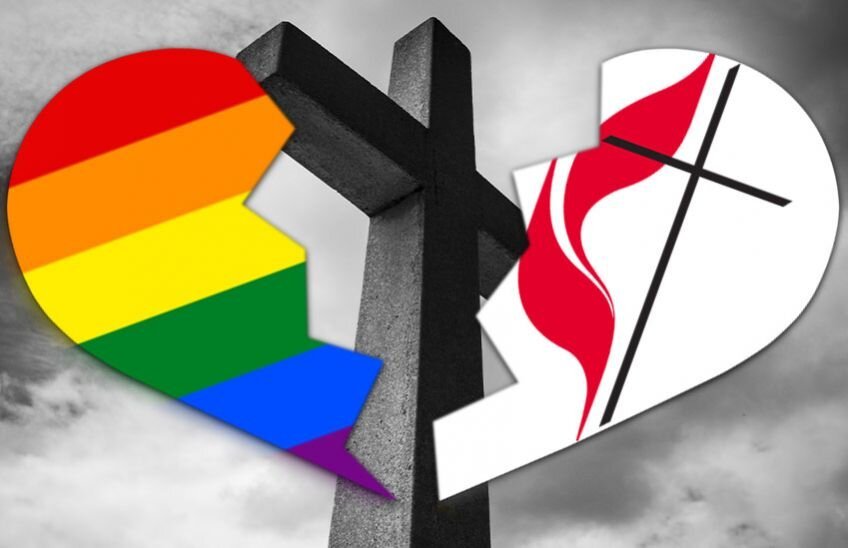
Yes, there is that problematic word once again — “schism.” In this recent post — “In terms of church history, should the United Methodist break-up be called a 'schism'?” — I argued, for several reasons, that it’s more accurate to call what is happening a “divorce.”

Without repeating all of that, the crucial point is that group given the “traditionalist” label is, in fact, the majority in the GLOBAL denomination that has, for several decades, won tense votes defending the doctrines in the UMC’s Book of Discipline. The group seeking to change these doctrines is the entrenched North American establishment. According to the Tennessean framing, the majority is creating the “schism,” while the establishment minority represents the doctrinal heart of the denomination.

Instead of a “schism,” many in the denomination — a coalition on the doctrinal left and right —negotiated is a “divorce” plan that could save years of additional pain and millions of dollars in legal fees. That plan is the “Reconciliation and Grace Through Separation” protocol, which remains in limbo after establishment leaders twice delayed the vote, citing COVID-19 fears.

This Tennessean story never mentions this important document.


Please respect our Commenting Policy

Podcast: What happens at Calvin doesn't stay at Calvin. True, so what now for LGBTQ wars?

Podcast: What happens at Calvin doesn't stay at Calvin. True, so what now for LGBTQ wars?

Back in the spring, we did a GetReligion podcast that was accompanied by a post with this title: “What parents (and journalists) can learn from LGBTQ debates at Calvin.

The Big Idea in that podcast was that Calvin University isn’t just another Christian college — it’s the base camp for a kind of Reformed intellectual A-team that punches way, way, way above its weight in the Council For Christian Colleges and Universities (the global network in which I worked and taught for a quarter of a century or so). Thus, I stated: “What happens at Calvin doesn’t stay at Calvin.”

If you have followed Calvin closely in recent decades, you know that a significant chunk of its faculty believes (this is my summary) that those who truly honor and teach the great Reformed Tradition of Calvinism know that it’s time for new Reformers (that would be them) to reform the out-of-date theological conclusions of their ancestors. You can see similar streams of thought among Methodists, Anglicans, Catholics and even (in a few zip codes) the Eastern Orthodox.

With that in mind, it’s time for this week’s “Crossroads” episode (CLICK HERE to tune that in), which offers an update on Calvin and tensions inside its denomination, care of a Religion News Service story with this headline: “Christian Reformed Church codifies homosexual sex as sin in its declaration of faith.” Actually, if you read carefully, the CRC affirmed 2,000 years of Christian teaching that (a) sex outside of marriage is a sin and (b) Christian marriages unite a man and a women. Here is the overture of that RNS story:

(RNS) — The Christian Reformed Church, a small evangelical denomination of U.S. and Canadian churches, voted … at its annual synod to codify its opposition to homosexual sex by elevating it to the status of confession, or deration of faith.

The 123-53 vote at Calvin University in Grand Rapids, Michigan, caps a process begun in 2016 when a previous synod voted to form a study committee to bring a report on the “biblical theology” of sexuality.

The vote, following a long day of debate, approves a list of what the denomination calls sexual immorality it won’t tolerate, including “adultery, premarital sex, extra-marital sex, polyamory, pornography and homosexual sex.”

“The church must warn its members that those who refuse to repent of these sins — as well as of idolatry, greed, and other such sins — will not inherit the kingdom of God,” the report says. “It must discipline those who refuse to repent of such sins for the sake of their souls.”

Just asking: That “what the denomination calls” language is interesting. Doesn’t that kind of imply that these teachings belong to the CRC alone — as opposed to being doctrines affirmed by the world’s largest Christian bodies, such as the Roman Catholic Church, Eastern Orthodoxy, Third World Anglicans and most evangelical and Pentecostal believers.


Please respect our Commenting Policy

What's news? Attacks on Christians in Nigeria provide an important case study

What's news? Attacks on Christians in Nigeria provide an important case study

As an undergrad, The Religion Guy took a valuable course titled “Evaluation and Display of News,” an elemental skill for journalists who cope with difficult choices.

Take the Johnny Depp-Amber Heard trash-a-thon. Please. Just as car crashes produce rubbernecking, “human interest” justified vast voyeurism that fed the market and stole print space and air time from more substantive stories.

Editors’ tendentious coverage decisions continually erode public trust in the media. Liberal outlets give scant play to the assassination plot against Brett Kavanaugh, harassment of other Supreme Court justices and their families and related attacks on a couple dozen pro-life agencies. Meanwhile, conservatives downplay the near-miss danger to Vice President Mike Pence and other high officials amid the January 6 attempt to block the Constitution’s election process.

The Guy could list other examples from both sides, and so could you.

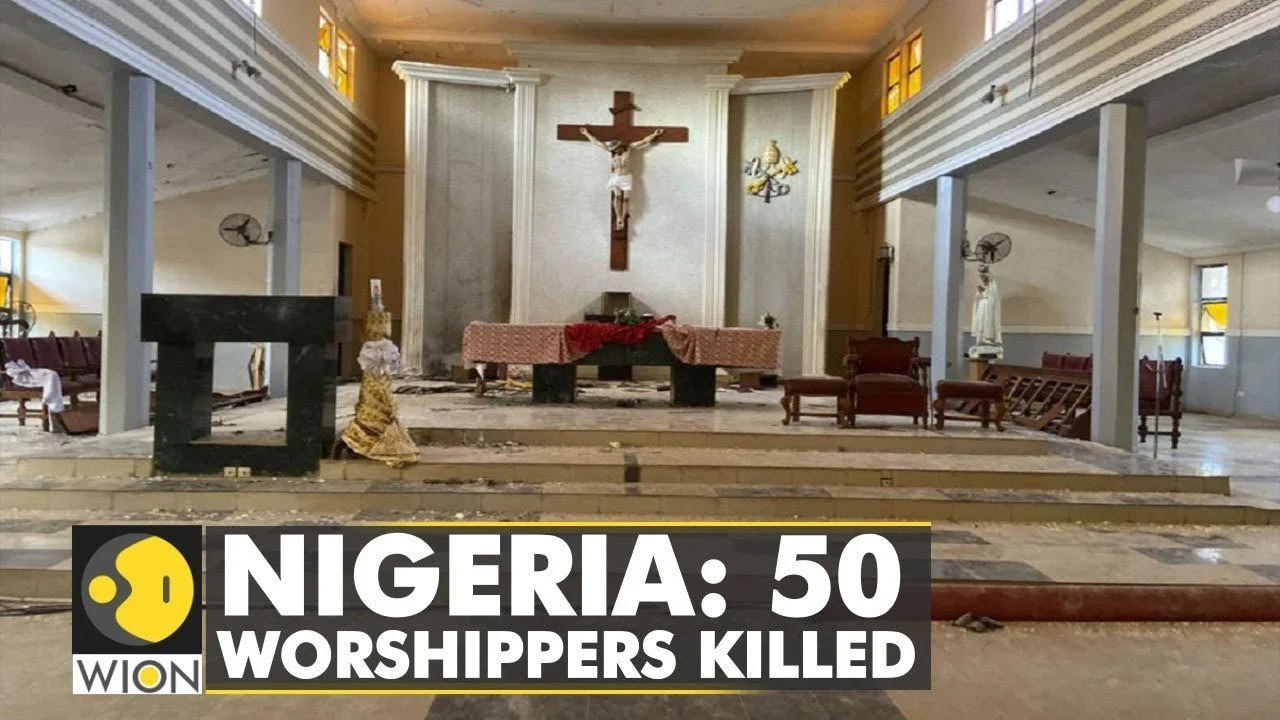
Let’s leap across the Atlantic to assess neglectful news judgment regarding the important plight facing Christians in Nigeria. Their continual conflict with Muslim jihadi factions has left an estimated 37,500 dead since 2011, says the latest annual report (.pdf here) from the U.S. Commission on International Religious Freedom (www.uscirf.gov; contact media@uscirf.gov or 202–523–3240).

The nondenominational watchdog group Open Doors USA says that in 2021“more Christians were murdered for their faith in Nigeria than in any other country,” making up nearly 80% of Christian deaths worldwide. Nigeria is the “most dangerous place to be a Christian” in the world, says the Intersociety for Civil Liberty and Rule of Law, a Nigerian human rights monitor. Christian observers speak openly of “genocide.”

In addition to the deaths, it’s all but impossible to count up the maimed victims who’ve survived, the kidnapped schoolchildren and clergy, forced child marriages and forced conversions or the widespread destruction of Christians' churches, homes, shops and even whole villages.

Sounds like compelling news from here.


Please respect our Commenting Policy

Another SCOTUS win for 'equal access,' whether most journalists realized this or not

Another SCOTUS win for 'equal access,' whether most journalists realized this or not

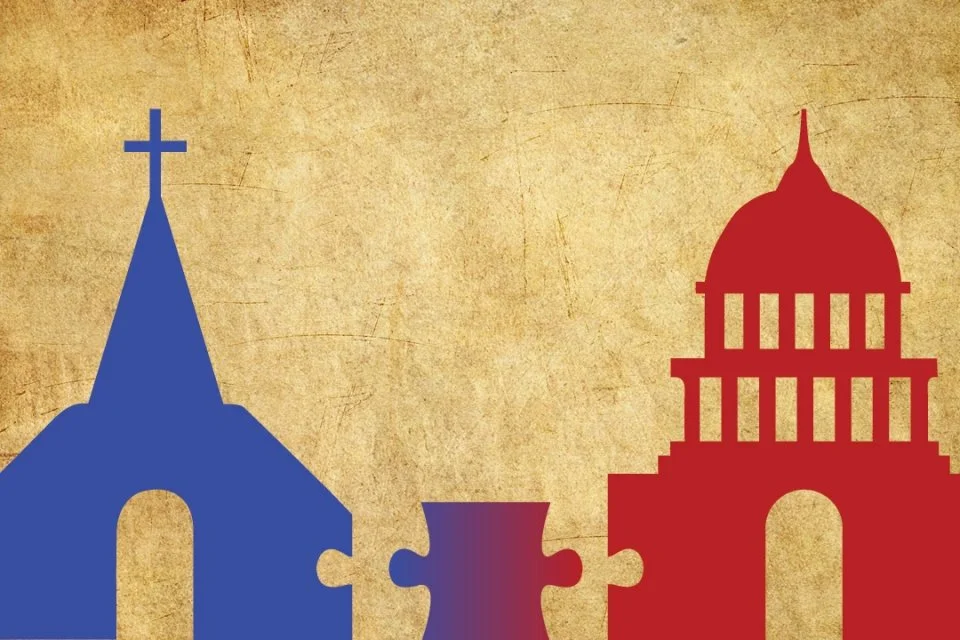
For a decade or more, U.S. Supreme Court justices have been arguing about the separation of church and state. What we keep seeing is a clash between two different forms of “liberalism,” with that term defined into terms of political science instead of partisan politics.

Some justices defend a concept of church-state separation that leans toward the secularism of French Revolution liberalism. The goal is for zero tax dollars to end up in the checkbooks of citizens who teach or practice traditional forms of religious doctrine (while it’s acceptable to support believers whose approach to controversial issues — think sin and salvation — mirror those of modernity).

Then there are justices who back “equal access” concepts articulated by a broad, left-right coalition that existed in the Bill Clinton era. The big idea: Religious beliefs are not a uniquely dangerous form of speech and action and, thus, should be treated in a manner similar to secular beliefs and actions. If states choose to use tax dollars to support secular beliefs and practices, they should do the same for religious beliefs and practices.

At some point, it would be constructive of journalists spotted these “equal access” concepts and traced them to back to their roots in the Clinton era (and earlier). But maybe I am being overly optimistic.

You can see these tensions, kind of, in the Associated Press coverage of the new SCOTUS decision that addressed a Maine law that provided tax funds for parents who chose secular private schools, but not those who chose religious schools. The headline of the main report stated, “Supreme Court: Religious schools must get Maine tuition aid.”

Chief Justice John Roberts wrote the opinion for the majority in this 6-3 ruling. In this story, “liberal” is used to describe the majority.

“Maine’s ‘nonsectarian’ requirement for its otherwise generally available tuition assistance payments violates the Free Exercise Clause of the First Amendment. Regardless of how the benefit and restriction are described, the program operates to identify and exclude otherwise eligible schools on the basis of their religious exercise,” Roberts wrote.

The court’s three liberal justices dissented. “This Court continues to dismantle the wall of separation between church and state that the Framers fought to build,” Justice Sonia Sotomayor wrote.


Please respect our Commenting Policy

'Forced' to bear twins: Washington Post offers morality tale about reluctant teen mom in Texas

'Forced' to bear twins: Washington Post offers morality tale about reluctant teen mom in Texas

When I saw the headline to the Washington Post story: “This Texas teen wanted an abortion. Now she has twins,” I thought, “Here we go again.“

We were going to read about Texas, the state that had the nerve to limit abortions to around the sixth week of pregnancy and the many women who are now being forced to bear children.

There’s so many problems with this story, it’s hard to know where to start. I’ll try.

The narrative begins with a scene from the life of Brooke Alexander, who is trying to nurse two three-month-old twins in a run-down apartment with blankets as curtains. We learn quickly that she’s living in the home of her boyfriend after her heartless mother has kicked her out. This is the same mother who encouraged her to continue with the pregnancy in the first place.

Brooke found out she was pregnant late on the night of Aug. 29, two days before the Texas Heartbeat Act banned abortions once an ultrasound can detect cardiac activity, around six weeks of pregnancy. It was the most restrictive abortion law to take effect in the United States in nearly 50 years.

For many Texans who have needed abortions since September, the law has been a major inconvenience, forcing them to drive hundreds of miles — and pay hundreds of dollars — for a legal procedure they once could have had at home. But not everyone has been able to leave the state. Some people couldn’t take time away from work or afford gas, while others, faced with a long journey, decided to stay pregnant.

Nearly 10 months into the Texas law, they have started having the babies they never planned to carry to term. Texas offers a glimpse of what much of the country would face if the Supreme Court overturns Roe v. Wade this summer. …

Did the couple use birth control? Did they care? It appears that the reporter never asked many basic questions. We do know that Brooke’s dad has been missing for much of her life; she talks about feeling that she is unattractive and all of a sudden here’s this guy paying attention to her.

Here we have two teens, both 17, who have unprotected sex apparently on the first or second date. She ignores obvious signs (two missed periods) until it’s too late; the Heartbeat Law is going into effect.

Sometimes Brooke imagined her life if she hadn’t gotten pregnant, if Texas hadn’t banned abortion just days after she decided that she wanted one. She would have been in school, rushing from class to her shift at Texas Roadhouse, eyes on a real estate license that would finally get her out of Corpus Christi. She’d pictured an apartment in Austin and enough money for a trip to Hawaii, where she’d swim with dolphins in water so clear she could see her toes.

Ah, the freedom that abortion brings. And the villains in this story? We will get there in a moment.


Please respect our Commenting Policy

Plug-In: Sexual-abuse reforms top Southern Baptist actions in dramatic annual meeting

Plug-In: Sexual-abuse reforms top Southern Baptist actions in dramatic annual meeting

In terms of making history, 1979 was a highly consequential year for the direction of the Southern Baptist Convention.

So was 1985. And 2021, come to think of it. No doubt I’m missing other important years.

Where might 2022 rank? For the second year in a row, the high-profile annual meeting of the nation’s largest Protestant denomination produced major news.

Five key takeaways from this week’s proceedings in Anaheim, California:

1. Sex abuse reforms

In response to last month’s bombshell report on sexual abuse in the denomination, delegates “voted overwhelmingly Tuesday to create a way to track pastors and other church workers credibly accused of sex abuse and launch a new task force to oversee further reforms,” as The Associated Press’ Deepa Bharath and Peter Smith report.

See related coverage by the Houston Chronicle’s John Tedesco and Robert Downen, two of the journalists whose 2019 “Abuse of Faith” investigation spurred the reforms.

2. Apology to victims

A day after that important vote, the Southern Baptists “approved a resolution Wednesday apologizing to abuse survivors and asking for forgiveness,” as Religion News Service’s Bob Smietana and Adelle M. Banks report.

See related coverage by The Tennessean’s Liam Adams and the Memphis Commercial Appeal’s Katherine Burgess.

3. New president

In “another win for abuse reform,” the Baptists elected Bart Barber, the pastor of a relatively small congregation in rural Texas, to lead the denomination’s crucial next steps, as Christianity Today’s Kate Shellnutt reports.

See related coverage by the Arkansas Democrat-Gazette’s Frank Lockwood and the Washington Times’ Mark A. Kellner, a former GetReligion team member.


Please respect our Commenting Policy

What happens after Anaheim '22? That will unfold in pulpits, pews and big SBC institutions

What happens after Anaheim '22? That will unfold in pulpits, pews and big SBC institutions

Before the Southern Baptists Convention's strong vote to approve what supporters called "bare minimum" sexual-abuse reforms -- with victims in the crowd weeping with relief -- there was a strategic amendment to the recommendations.

Rather than stay with the independent Guidepost Solutions organization, the Abuse Reform Implementation Task Force would seek to use "best practices in keeping with Southern Baptist church polity," while a "Ministry Check" website tracking those "credibly accused" of abuse would be "established and maintained by an independent contractor."

Activist Rachel Denhollander pleaded, before the vote: "Institutions must be held accountable. It doesn't matter who they are. Justice and truth are always what we should pursue."

Afterwards, the attorney and #ChurchToo abuse survivor posted another challenge on Twitter: "It is the first, most basic steps. But it is a testament to the survivors who fought so long and so hard. I am grateful. Now let's keep working."

That work will depend on the cooperation of pastors and church leaders in the SBC's 47,000 local churches, as well as the administrators and trustees of agencies, boards, seminaries and other institutions at the state and national levels.

The bottom line: In Southern Baptist "polity" -- with sprawling structures of autonomous congregations that, to varying degrees, fund state, national and global ministries -- there are no leadership structures resembling local Presbyterian presbyteries, regional annual conferences among United Methodists or the powerful diocesan structures of Catholics, Episcopalians and others. Local churches ordain, hire and fire clergy.

Outsiders often struggle to understand the theological and practical implications of Baptist polity, said Thomas Kidd, who teaches church history at Midwestern Baptist Theological Seminary and Baylor University.

"Many people continue to think that the SBC can make its churches do this or that or the other and that simply isn't true," he said.


Please respect our Commenting Policy