Evangelicals

Podcast: Now what, after SBC 'messengers' have waved their yellow voting cards?

Podcast: Now what, after SBC 'messengers' have waved their yellow voting cards?

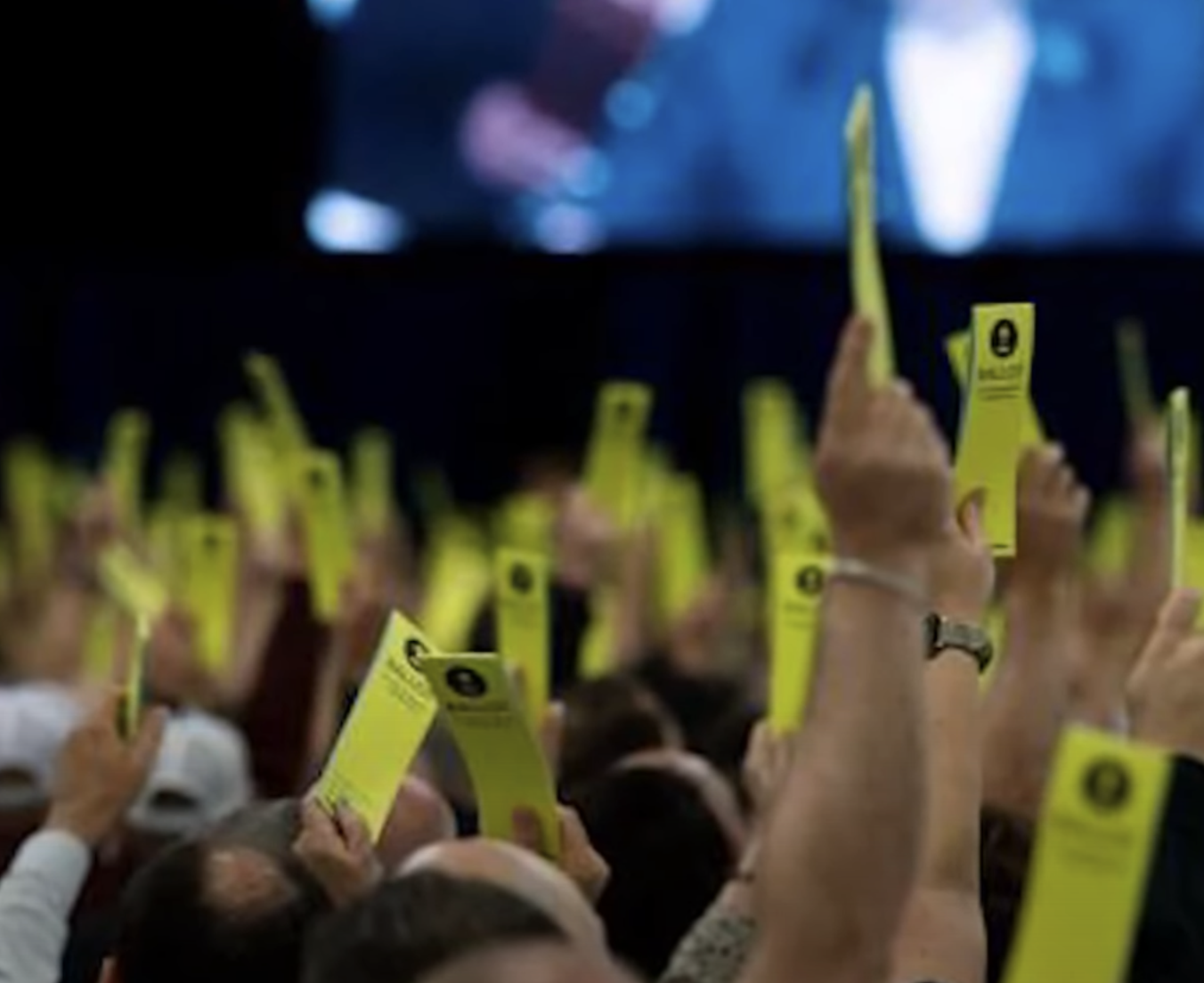
Here’s a warning to reporters who are preparing for future national meetings of the Southern Baptist Convention: Never call these folks “delegates.”

They are not delegates at some kind of political event. They are “messengers” from their local autonomous churches. You see, this isn’t some kind of cocktail-hour mainline Protestant denominational whatever, and many Baptists don’t like the word “denomination,” either. This is a “convention” and it only meets for three days each year.

Use the wrong language and Southern Baptists will give you a steely gaze and then say something nasty, like “Well, bless your heart.”

Quite a few journalists attended this year’s SBC meeting because there were headline-worthy — from their editors’ point of view — topics on the agenda, like clergy sexual abuse, Critical Race Theory and an election to determine if some new-breed conservative “pirates” (that was their term from 2021) were going to wrest the wheel of the ship away from the allegedly “woke” establishment conservatives.

As you would imagine, host Todd Wilken and I dug into all of this during the “Crossroads” podcast this week (CLICK HERE to tune that in). One of the big themes was that the hard-news coverage of this convention — especially by “Location, location, location” pros from major SBC centers, like Houston and Nashville — was top-notch.

Veteran GetReligion scribe Bobby “Positive” Ross, Jr., will offer pages of URLs in his Plug-In feature this week, so I will not try to do that (I’ll post a link when it goes public). But this is what happens when major newsrooms send religion-beat professionals to cover a major event. Readers don’t have to agree with every single thing that they saw in the #SBC2022 coverage, but what we had here was a tsunami of serious coverage from professionals, backed by the skilled Baptist Press team running the on-site newsroom.

With that in mind, let me note a Big Ideas from this podcast.

* If you study attendance numbers at previous “hot” SBC meetings, you will notice a logical trend linked to a map of the Bible Belt. In this online list, note the 1985 Dallas convention drew 45,519 messengers and the 1986 Atlanta convention drew 40,987.

Yes, these were the pivotal years in the historic “conservative resurgence” in SBC life. But, truth is, those numbers also reflect how far ordinary messengers can drive in one day jammed into the buses or vans owned by “ordinary” SBC congregations.


Please respect our Commenting Policy

What responsibility do journalists have when covering incendiary wars about religion and culture?

What responsibility do journalists have when covering incendiary wars about religion and culture?

We tend to pay attention to news that impacts us most directly. So for Americans, the culture war playing out between religious (and some non-religious) traditionalists and social progressives is most compelling.

Half-way around the world, however, another ongoing war about religion and culture has heated up yet again. This one has direct international ramifications and has the potential to negatively impact global religious-political alignments perhaps as much or more than America’s nasty cultural war.

It also contains an important lesson about the possible consequences of governments employing divisive culture war tactics for political gain (more on this theme below.) I do not think it absurd to fear that our homegrown culture war could become just as bad, or worse.

I’m referring to India, a constitutionally secular nation wracked by inter-religious conflict between majority Hindus and minority Muslims (Christians have been caught in this imbroglio, too, but put that aside for the duration of this post).

Here’s a recent overview of India’s situation from The Washington Post. And here’s the top of that report:

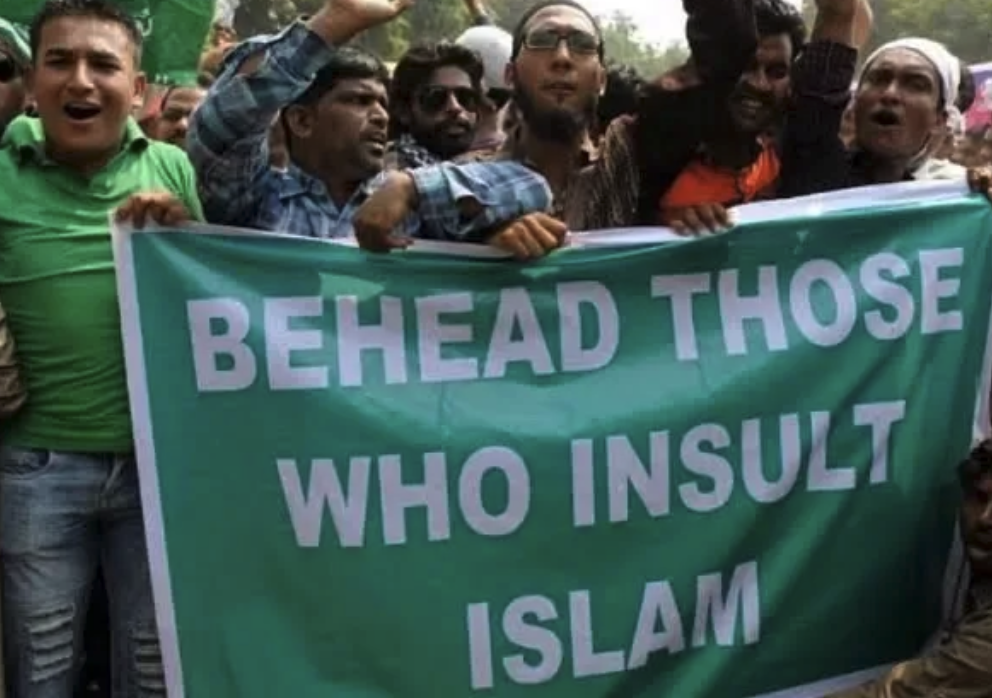
NEW DELHI — After a spokeswoman for India’s ruling party made disparaging remarks about the prophet Muhammad during a recent televised debate, rioters took to the streets in the northern city of Kanpur, throwing rocks and clashing with police.

It was only the beginning of a controversy that would have global repercussions.

Indian products were soon taken off shelves in the Persian Gulf after a high-ranking Muslim cleric called for boycotts. Hashtags expressing anger at Prime Minister Narendra Modi began trending on Arabic-language Twitter. Three Muslim-majority countries — Qatar, Kuwait and Iran — summoned their Indian ambassadors to convey their displeasure. The governments of Saudi Arabia, Indonesia and Afghanistan on Monday condemned the spokeswoman, Nupur Sharma, as did the Organization of Islamic Cooperation.

Inflammatory comments by right-wing activists and political leaders in India often make headlines and spark outrage on social media. But rarely do they elicit the kind of attention that Sharma drew in [early June], which sent her political party — and India’s diplomats — scrambling to contain an international public relations crisis.

Let’s step back from the news coverage for a moment to consider some underlying dynamics and their impact on journalism.


Please respect our Commenting Policy

Nowhere to hide: Los Angeles Times hit job focuses on one side of Biola University tensions

Nowhere to hide: Los Angeles Times hit job focuses on one side of Biola University tensions

If you have followed trends in academic and student life at Biola University over the past 25 years or so — I have spoken there about 10 times in that period — you know that this is a complex campus, with all kinds of divisions on theological, moral, political and cultural issues.

As a rule, campus administrators there are just as uncomfortable with strong conservative voices as they are with candid evangelical progressives. Thus, all kinds of Biola believers have learned to state radically different convictions in language that can be called “evangelical” to one degree or another. The goal is to keep painful fights out of publications read by parents, donors and even trustees.

It’s important to keep this in mind while reading the Los Angeles Times morality-tale sermon that ran the other day with this headline: “CRT, Trumpism and doubt roil Biola University. Is this the future of evangelical Christianity?” The headline failed to include the key issue in this story — clashes over the validity of 2,000 years of Christian doctrine on sexuality and marriage.

For additional insights on political and theological diversity found Christian campuses, it will help to read this classic 1995 essay at The Atlantic — “The Warring Visions of the Religious Right” — by the liberal Baptist scholar Harvey Cox of Harvard Divinity School (author of the ‘60s bestseller, “The Secular City”).

Oh, and speaking of liberal Baptist scholars, one of the defining voices in the new Los Angeles Times feature is David Gushee of Mercer University. It was totally valid to include his voice in this story, but it was interesting that he is quoted as a neutral academic expert on these matters, as opposed to being an articulate spokesman for activists on one side of the doctrinal war being covered in this story.

After all, it was Gushee who opened a classic 2016 essay for Religion News Service with these lines:

Middle ground is disappearing on the question of whether LGBT persons should be treated as full equals, without any discrimination in society — and on the related question of whether religious institutions should be allowed to continue discriminating due to their doctrinal beliefs.

It turns out that you are either for full and unequivocal social and legal equality for LGBT people, or you are against it, and your answer will at some point be revealed. This is true both for individuals and for institutions.

Neutrality is not an option. Neither is polite half-acceptance. Nor is avoiding the subject. Hide as you might, the issue will come and find you.

Thus, the Los Angeles Times has come to confront the leaders of Biola University.


Please respect our Commenting Policy

Plug-In: Faith groups continue to debate solutions to blitz of mass shootings in America

Plug-In: Faith groups continue to debate solutions to blitz of mass shootings in America

God and guns.

After a string of mass shootings nationwide, conversations with people of faith inevitably turn to that subject.

Ken Factor and Lawson Vaughn are friends and fellow Christians. I met both while in Tulsa this past weekend to report on their church mourning the massacre of four people.

I asked Factor and Vaughn about possible solutions following the recent attacks at a Buffalo, New York, supermarket, an Uvalde, Texas, school and a medical office in their own community.

Factor stressed that he has been a registered Republican for nearly 40 years.

But he said, “I think we need some kind of restrictions on guns. I don’t know that the Second Amendment applies to things like me deciding, ‘I’m going to go get an AR-15 today.’”

In Vaughn’s view, though, firearms aren’t the real problem.

“I think there’s something to be said just for the erosion of the home, the family,” he said. “I mean, it starts with raising kids to respect others and having families that go to church.”

As The Associated Press’ Deepa Bharath and Holly Meyer report, the recent shootings have exposed divisions on the gun issue in faith communities and raised this question: “Are you pro-life if you are pro-gun?”

At The Oklahoman, Carla Hinton offers in-depth coverage of religious views on gun control — including a letter signed by more than 50 leaders that was recently delivered to Tennessee’s Republican governor, Bill Lee.


Please respect our Commenting Policy

Just before I hit the road, I did this bonus podcast with veteran evangelical thinker John Fischer

Just before I hit the road, I did this bonus podcast with veteran evangelical thinker John Fischer

Truth be told, I was on the road most of this week and away from my alleged “office” in the Tennessee Hills.

Thus, I took a very rare break from writing the “On Religion” column for the Universal syndicate. I say “rare” because I literally went 20 years before I took a vacation at all. Well, I did miss one week because I was unconscious during a kidney-stone attack. Things happen.

Just before charging up the car and heading out, I did spend some time with veteran evangelical writer and folk musician on his weekly podcast called “The Catch.” Thus, I will offer this bonus podcast as a substitute for the column that normally fills this weekend slot here at GetReligion.org and, a day or so later, at Tmatt.net, even though this is not a media-criticism feature (for the most part).

Listeners can find this episode at Apple podcasts (click here) or at BlogTalkRadio (click here).

The topic? I have known Fischer since the 1980s and I tried to pull him into a flashback chat about music, the late (and great) Mark Heard, acoustic guitars, guitar strings, etc. I did work in a famous Heard lyric about his dilemma in the “Christian marketplace.” That would be: “I’m too sacred for the sinners and the saints wish I would leave.” Preach it.

Fischer had other ideas for the conversation — as in another discussion of how the word “evangelical” turned into a political label, with “evangelical voters” playing a crucial role at the ballot box, especially for GOP folks in heated primaries.

Naturally, old guy that I am, I flashed back to my history as a Jimmy Carter campaign volunteer at Baylor University in the 1970s, back in the era when — to be blunt about it — many evangelicals were culturally conservative Southern Democrats.


Please respect our Commenting Policy

Thinking, with Aaron Renn, about the 'three worlds' shaping American evangelical debates

Thinking, with Aaron Renn, about the 'three worlds' shaping American evangelical debates

f you have been paying much attention to evangelical Twitter in the past year or so, you may have noticed quite a few heated arguments involving the word “elite.”

If you doubt this, run a basic Google search for “Tim Keller,” “evangelical” and “elite.” Then try “David French,” “evangelical” and “elite.”

What you’ll find is more evidence of the relevance of this recent GetReligion “Memo” by religion-beat patriarch Richard Ostling: “Is evangelical Protestantism breaking into five factions in the United States of America?

You may want to click a few of these links if you are planning to read, write or report about the upcoming Southern Baptist Convention, which is June 12-15 in Anaheim, Calif.

There is a very good chance that, at some point, one or more Baptists taking part in speeches or in floor debates will use one or more of these terms — “Positive “World,” “Neutral World” and “Negative World.” Most people will “get” the references being made.

However, I think that it would be good — as a weekend “think piece” — to point to the source of those terms as they were used earlier this year in a First Things essay by social-media scribe Aaron M. Renn. The logical title: “The Three Worlds of Evangelicalism.” Here is the overture:

American evangelicalism is deeply divided.

Some evangelicals have embraced the secular turn toward social justice activism, particularly around race and immigration, accusing others of failing to reckon with the church’s racist past. Others charge evangelical elites with going “woke” and having failed their flocks. Some elites are denounced for abandoning historic Christian teachings on sexuality. Others face claims of hypocrisy for supporting the serial adulterer Donald Trump. Old alliances are dissolving.


Please respect our Commenting Policy

Podcast: So many questions after that symbolic Tampa Bay Rays conflict over 'Pride' logos

Podcast: So many questions after that symbolic Tampa Bay Rays conflict over 'Pride' logos

Symbolism often plays a major role in tense clashes between people with competing religious beliefs (or secular beliefs, for that matter).

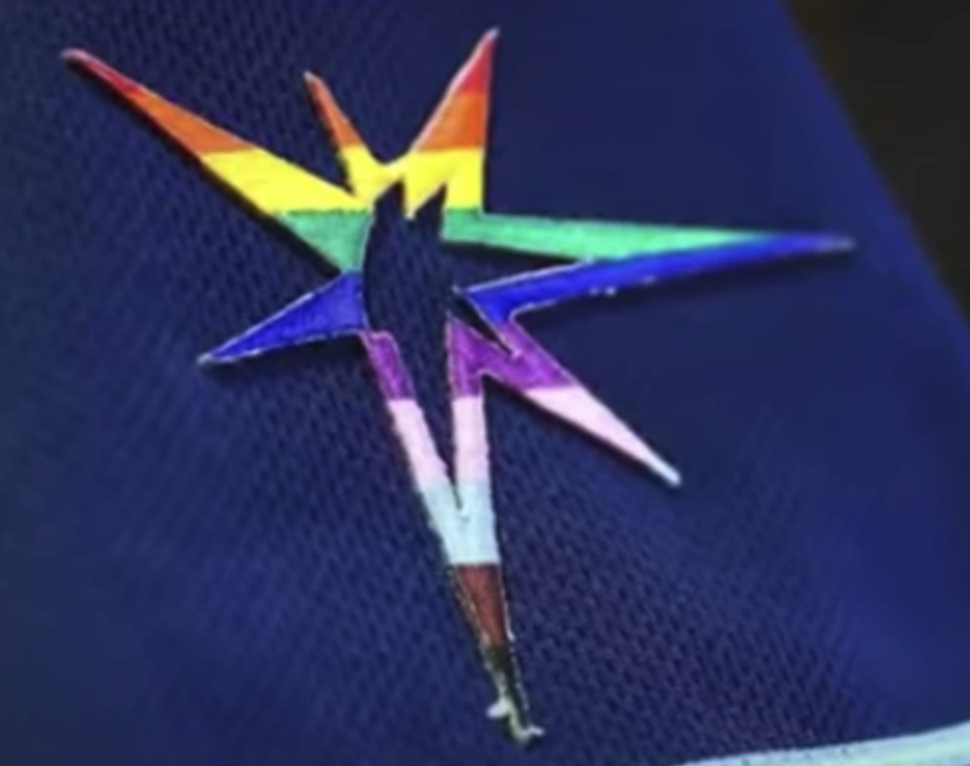
You could see evidence of this fact during and after the recent kerfuffle about a small group of Tampa Bay Rays players who declined to wear special rainbow-logo uniforms during the team’s recent celebration of Pride Month. The media coverage of this clash was the subject of this week’s “Crossroads” podcast (CLICK HERE to tune that in), in part because the stories raised more questions than they answered.

I’ll get to some of those questions, but first let’s look at the Washington Post coverage. Note that this means the Rays conflict was a national story, since the Post doesn’t cover mere regional stories and disputes (see this classic M.Z. Hemingway post about the newspaper’s MIA stance on covering the trial of Philadelphia abortionist Kermit Gosnell).

The headline on this sports-desk story: “Rays players make ‘faith-based decision’ to shun Pride Night logos.” Yes, it’s important to note that there are doubts about the nature of this “faith-based” angle. Let’s look at some important passages in this:

A member of the Tampa Bay Rays said he and several teammates made a “faith-based decision” to not wear rainbow-colored logos on their uniforms during a “Pride Night” home game Saturday that recognized the LGBTQ community.

Most Rays players, per accounts from the game, wore the special uniform designs that had a rainbow pattern over the “TB” on their caps and over a sunburst logo on their right sleeves. The team, which has staged Pride Night for several seasons but had not previously included uniform changes, reportedly gave players the option to display the logos or go with the usual look.

The crucial fact there is that team management decided to allow players some degree of free-will in this case. Hold that thought.

Apparently, team management asked pitcher Jason Adam to make a statement on why he, and four others, elected to wear their usual jerseys for this symbolic event. Thus, he said:

“A lot of it comes down to faith, to like a faith-based decision,” said Adam, a 30-year-old in his fifth major league season.


Please respect our Commenting Policy

Thinking about that 'Define evangelical' thing, with Andrew Walker, Ryan Burge (and Mark Noll)

Thinking about that 'Define evangelical' thing, with Andrew Walker, Ryan Burge (and Mark Noll)

If you search for “define evangelical” in the 18 years worth of material stored here at GetReligion you will find about four screens worth of information. Here’s what that looks like in a Google search.

Believe it or not, this was a hot topic before the advent of Orange Man Bad and the dreaded “81% of White evangelicals” mantra.

Debates about the meaning of the church-history term “evangelical” are so old that I once asked the Rev. Billy Graham for his take. Here’s some information about his answer, drawn from this “On Religion” column: “Define 'evangelical' – please.”

… You might assume that the world's most famous evangelist has an easy answer for this tricky political question: "What does the word 'evangelical' mean?" If you assumed this, you would be wrong. In fact, Graham once bounced that question right back at me.

"Actually, that's a question I'd like to ask somebody, too," he said, during a 1987 interview in his mountainside home office in Montreat, N.C. This oft-abused term has "become blurred. ... You go all the way from the extreme fundamentalists to the extreme liberals and, somewhere in between, there are the evangelicals."

Wait a minute, I said. If Billy Graham doesn't know what "evangelical" means, then who does? Graham agreed that this is a problem for journalists and historians. One man's "evangelical" is another's "fundamentalist."

That leads us to the topic of this quick, and rather rare, Monday “think piece” (I’m traveling right now and rather unplugged, so I wrote this several days ago).

Thus, at the top of this post you will see a video feature from The Gospel Coalition in which two academics — political scientist Ryan Burge ( a GetReligion contributor) and ethicist-apologist Andrew Walker — debate this topic: “Is ‘Evangelical’ a Political or Theological identity?” (Careful readers may have noticed that, a few lines earlier, I called it a “church-history term” and I’m sticking to that.)

I will let Burge and Walker speak for themselves.


Please respect our Commenting Policy

Should religion influence U.S. public policy? It always has, on both the left and right

Should religion influence U.S. public policy? It always has, on both the left and right

THE QUESTION:

Should religion influence U.S. public policy? For instance, look at Protestants.

THE RELIGION GUY’S ANSWER:

The media occasionally press this question upon us as, as with a timely May article by Religion News Service columnist Jeffrey Salkin titled “Should religion influence abortion policy?

He thinks not. Salkin acknowledges that “religious ideas are part of the public discourse” but even so “those ideas cannot determine policy. Public policy must be open to rational discourse, with provable data, and not merely rely on beliefs, however sacred their sources.” (Naturally, pro-lifers would reply that they rely on “rational discourse” and “provable data” from biology.)

He continues, “America does not allow you to turn your own religion’s theological ideas into public policy. ... This way lies chaos, and worse — holy wars between religious groups. This way lies a return to the Middle Ages. It is time for all religious people to call: Time out.” For Salkin, this approach is required by freedom of religion — or perhaps should we say freedom from religion?

Salkin champions the pro-choice public policy advocated by this own faith, Reform Judaism, which puts this among 17 causes on the agenda of its Washington lobby.

The pro-lifers believe laws should protect the tiny human life growing in the womb. Faiths such as Reform Judaism oppose such protection, believing that women must exercise unimpeded abortion choice. To a journalist, religious alliances on both sides seek to impose their belief as public policy.

Whether America’s religious groups should try to influence policy, they’ve in fact done so since Plymouth Rock and will continue to under the Bill of Rights. Reminders. As much as anything it was Christian zeal that led to abolition of slavery — and 620,000 Civil War deaths. Similarly with the colonists’ rebellion against Britain, women’s vote and, in a remarkable demonstration of Protestant power now mostly regretted, nationwide alcohol Prohibition written into the Constitution.

Which brings us to very important but oft-neglected history depicted convincingly in the new book “Before the Religious Right: Liberal Protestants, Human Rights, and the Polarization of the United States” (University of Pennsylvania Press) by University at Buffalo historian Gene Zubovich.


Please respect our Commenting Policy