Evangelicals

Catholic doctrine has always rejected abortion: But what about Catholics in pews today?

Catholic doctrine has always rejected abortion: But what about Catholics in pews today?

It may be the most important U.S. Supreme Court decision of the last fifty years.

A leaked draft of a majority opinion, written by Justice Samuel Alito, would effectively dismantle the legal framework around abortion that was established in the 1973 decision Roe v. Wade. In its wake, states would have almost complete freedom to regulate abortion however they saw fit, including enacting a total prohibition.

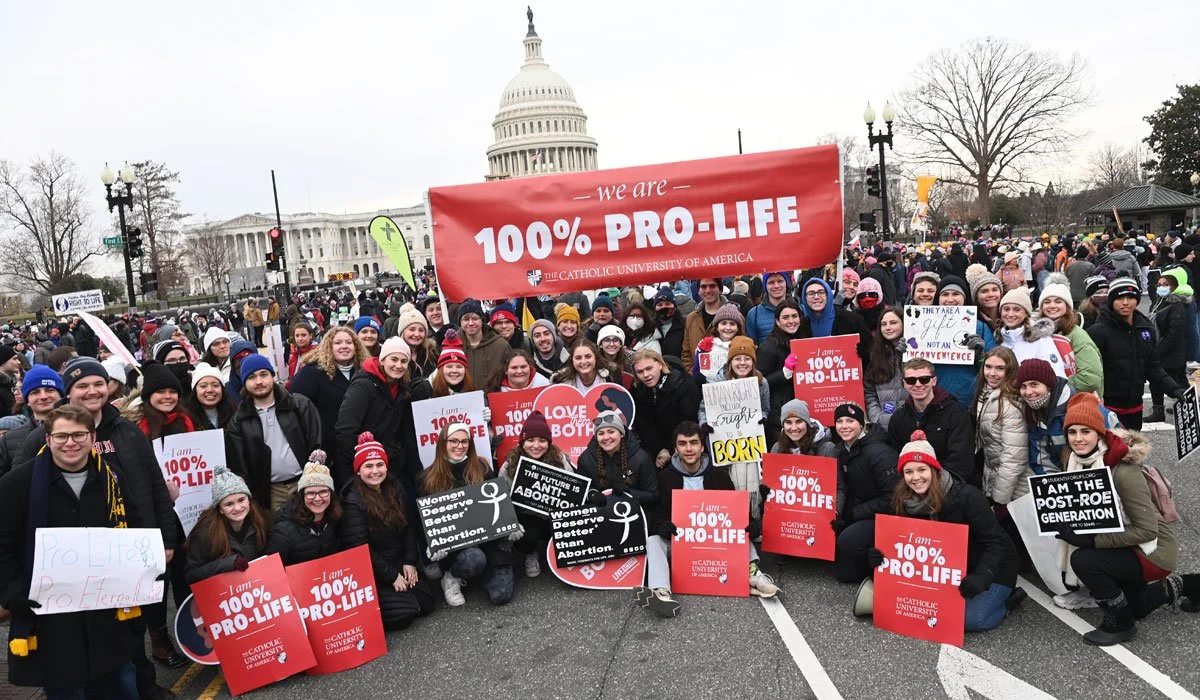
Among those who study American religion and politics, it’s long been established that the earliest political voices seeking to restrict access to an abortion were members of the Catholic Church. For centuries, the catechism has taught that life should be protected at all stages — from conception to natural death. Thus, the tens of millions of American Catholics should be the standard bearers for the pro-life movement in the United States.

But here is an important question for journalists: Will most Catholics applaud the end of Roe? The data tells a nuanced story about how the average Catholic thinks about the issue of abortion access. As always, it’s important to note if polls pay any attention to how often Catholics attend Mass.

Looking back to the time period immediately after the Roe v Wade decision in 1973, it’s clear that the vast majority of Catholics were not comfortable with the concept of a woman obtaining an abortion for any reason, which not was out of step with how the average American felt.

For instance, in 1985 about 35% of Catholics were in favor of abortion demand. It was 39% of the general public. In the 1990s and 2000s, abortion opinion was relatively stable, but then things began to shift in 2010. From that point forward, the share of Catholics who supported abortion began to rise, which paralleled a shift in the overall opinion of the American public.

By 2021, fifty-three percent of Americans supported abortion on demand along with forty-five percent of Catholics. But, it’s worth noting that the contours of the two lines run in almost perfect unison. As the country moved left on abortion, so did the average Catholic.

Please respect our Commenting Policy

Podcast: A growing post-Roe divide between 'Jesusland' and the 'United States of Canada'?

Podcast: A growing post-Roe divide between 'Jesusland' and the 'United States of Canada'?

Over the past week or so, I have received several emails — while noticing similar messages on Twitter — from people asking: “Why is The Atlantic publishing the same story over and over?” Some people ask the same question about The New York Times.

It’s not the same SPECIFIC story over and over, of course. But we are talking about stories with the same basic Big Idea, usually framed in the same way. In other words, it’s kind of a cookie-cutter approach.

The key word is “division,” as in America is getting more and more divided or American evangelicalism is getting more and more divided. A new Ronald Brownstein essay of this kind at The Atlantic — “America’s Blue-Red Divide Is About to Get Starker” — provided the hook for this week’s “Crossroads” podcast (CLICK HERE to tune that in).

The villains in these dramas are, of course, White evangelicals or, in more nuanced reporting, a radical wing of the White evangelicals. Just this week, I praised the New York Times for running a feature that offered a variation on one of these templates: “Bravo! The New York Times reports that evangelicals are divided, not united on politics.” That piece showed progress, in part, because it undercut the myth of the evangelical political monolith on issues such as Donald Trump, COVID vaccines, QAnon, etc.

Let me make this personal. There is a reason that all of these stories written by journalists and blue-checkmark Twitter stars sound a big familiar to me. You see, people who have been paying attention know that the great “Jesusland” v. the “United States of Canada” divide is actually at least three decades old. It’s getting more obvious, methinks, because of the flamethrower social-media culture that shapes everything,

So let’s take a journey and connect a few themes in this drama, including summary statements by some important scribes. The goal is to collect the dots and the, at the end, we’ll look at how some of these ideas show up in that new leaning-left analysis at The Atlantic.

First, there is the column I wrote in 1998, when marking the 10th anniversary of “On Religion” being syndicated (as opposed to the 33rd anniversary the other day). Here’s the key chunk of that:

… In 1986, a sociologist of religion had an epiphany while serving as a witness in a church-state case in Mobile, Ala.


Please respect our Commenting Policy

While polls show ambivalence, SCOTUS striking down Roe would let each state decide

While polls show ambivalence, SCOTUS striking down Roe would let each state decide

According to the Gallup Poll, 49% of American adults called themselves "pro-choice" last year versus 47% "pro-life," with the second designation chosen by 73% of those who attend worship weekly and 74% of Republicans.

The over-all population posted the same virtual tie in each of the prior three years. Journalists, by the way, should note that Gallup's question defied the widely-followed Associated Press Stylebook, which despite some criticism rejects both of those familiar labels in favor of "abortion-rights" versus "anti-abortion" while disallowing "pro-abortion."

After last week's leak to Politico of a Supreme Court draft opinion that would return abortion policy-making to each state, the Pew Research Center (media contact 202-419-4372) released poll results that are vitally important for media analysis.

Here’s where the stories will be found: The Pew team warns against Gallup's two-sided breakdown above, since "relatively few" Americans "take an absolutist view" for or against legality in all circumstances.

Much ambivalence is evident. Fully 33% of Pew respondents believed that whether to abort should "belong solely to the pregnant woman" (and 72% among Americans over-all) AND at the same time believed that "human life begins at conception so a fetus is a person with rights" (held by a 56% majority of Americans).

The Pew data fill a 78-page report, titled "America's Abortion Quandary." As typical with Pew, the new survey stands out for the precision and variety of questions, special skill in defining religious sectors (though this project does not distinguish between Hispanic and non-Hispanic Catholics), the huge sample of 10,441 (compared with 1,016 for that Gallup poll) and consequently a remarkably high response rate of 89% among members of Pew's ongoing American Trends Panel.

Another technical note on polls. Regarding political races they are often more accurate on the national level than with state races. And the Supreme Court draft indicates abortion policy will be returned to each individual state — so that's where legal and political fireworks will occur unless efforts in Congress succeed.


Please respect our Commenting Policy

Bravo! The New York Times reports that evangelicals are divided, not united on politics

Bravo! The New York Times reports that evangelicals are divided, not united on politics

If you stop and think about it, the latest New York Times feature about those dreaded White evangelicals includes a few signs of progress.

The good news is that the story focuses on the many ways White American evangelicals are divided, these days. That’s progress, since it undercuts the dominant news narrative of the years since 2016. You know the one: That White evangelicals from sea to shining sea just love Donald Trump and that’s that.

The truth was always more complex than that, but many blue-checkmark experts on Twitter really needed someone to blame for Trump. White evangelicals were the answer, of course, since it would have required a great deal of introspection to blame the Democratic Party for nominating Hillary Clinton — perhaps the only opponent that scared millions of depressed Americans more than Trump.

But back to the key truth in this Times report — which is that White evangelicals are divided, which is true, and that is certainly not the same thing as the myth of monolithic unity. For background, see this 2018 post: “Complex realities hidden in '81 percent of evangelicals' love Trump myth.”

At the heart of this story is a character that will be familiar to some news consumers — a conservative religious leader whose beliefs would normally cause heart attacks in blue-zip-code newsrooms, but this leader is shown to deserve sympathy because believers who are much worse are attacking him/her. (The irony in this case is that this particular pastor seems very familiar to me since he appears to represent the evangelicalism in which I was raised and that I greatly respect.)

The headline: “As a ‘Seismic Shift’ Fractures Evangelicals, an Arkansas Pastor Leaves Home.” Here’s the overture:

FORT SMITH, Ark. — In the fall of 2020, Kevin Thompson delivered a sermon about the gentleness of God. At one point, he drew a quick contrast between a loving, accessible God and remote, inaccessible celebrities. Speaking without notes, his Bible in his hand, he reached for a few easy examples: Oprah, Jay-Z, Tom Hanks.

Mr. Thompson could not tell how his sermon was received. The church he led had only recently returned to meeting in person. Attendance was sparse, and it was hard to appreciate if his jokes were landing, or if his congregation — with family groups spaced three seats apart, and others watching online — remained engaged.

So he was caught off guard when two church members expressed alarm about the passing reference to Mr. Hanks.


Please respect our Commenting Policy

Alongside abortion, don't neglect the Supreme Court's big school prayer ruling

Alongside abortion, don't neglect the Supreme Court's big school prayer ruling

Vastly overshadowed by the uproar over Politico's bombshell report that the Supreme Court may be poised to overturn past abortion rulings, the court actually released religious-liberty ruling written by retiring Justice Stephen Breyer. His Shurtleff v. City of Boston opinion (.pdf here) reasoned that since Boston had permitted 284 city hall flag displays by varied groups, it violated freedom of speech to forbid a Christian flag for fear of violating church-state separation.

Harvard Divinity student Hannah Santos, writing for Americans United, said Christian flag displays would be "disturbing and demoralizing" and evoke the Puritan founders' "cruel" intolerance. But Breyer and the other two liberal justices joined six conservatives in this unanimous — repeat unanimous — decision.

There's likely to be less Court concord on another First Amendment ruling reporters need to prepare for in coming weeks. This dispute crisply demonstrates the culture-war split among American religious groups and between most Democrats and Republicans.

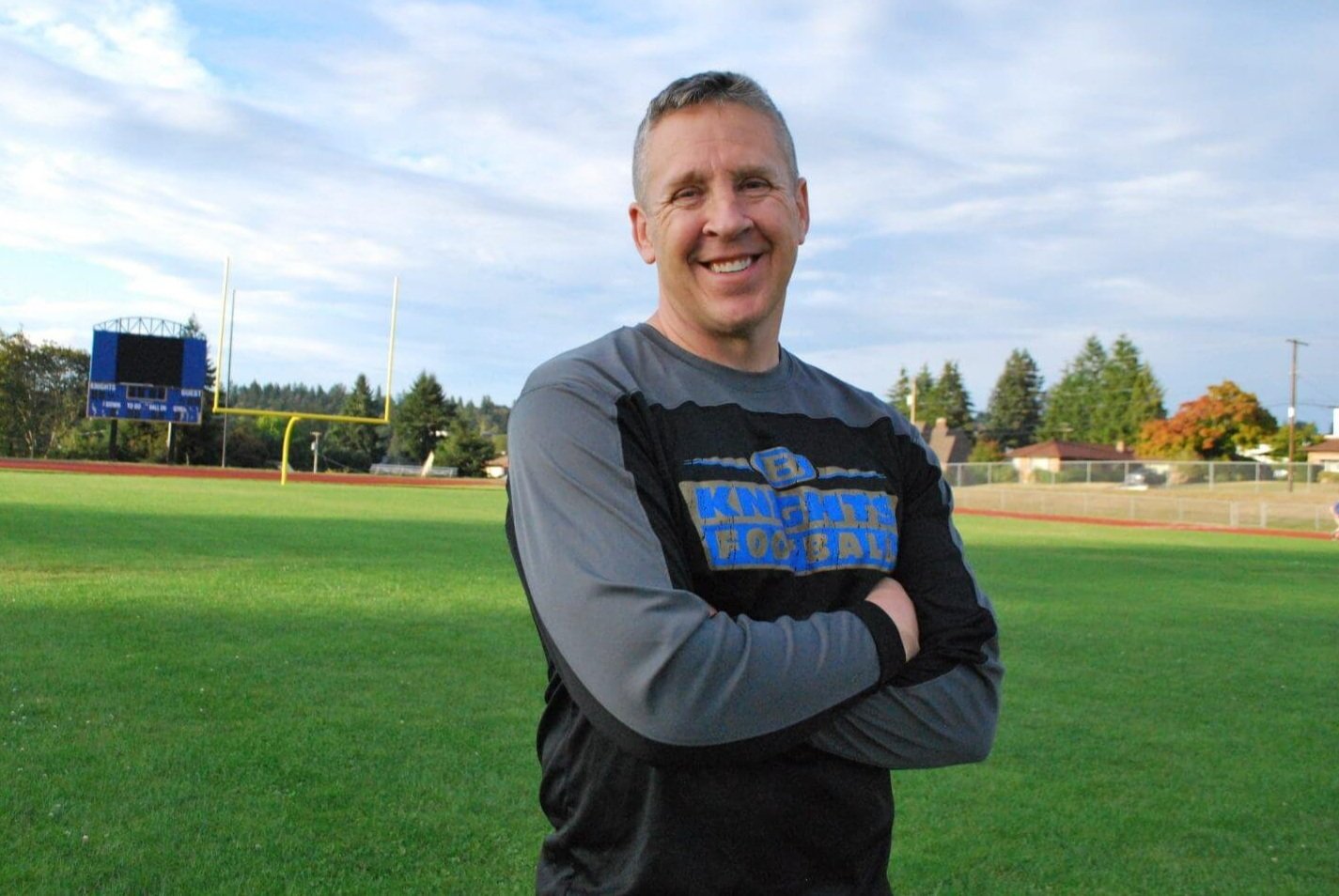
Kennedy v, Bremerton School District [Docket #21-418] involves the firing of Joseph Kennedy, an assistant high school football coach in Washington state. He violated the school's order against his kneeling to utter brief prayers on the 50-yard line after games, with students who wished joining him.

Here, too, Kennedy's freedoms of speech and religion ran up against school fears about violating the Constitution's clause barring government "establishment of religion." Click here for a recent Julia Duin post looking at some of the media coverage of this debate.

In preparing coverage to interpret the forthcoming ruling, keep in mind possible ramifications beyond the gridiron. As Christianity Today reported, hypothetical situations the justices discussed during the two-hour oral argument included teachers or coaches praying silently or aloud or reading the Bible before class, coaches praying on the sidelines perhaps with specific notice that students weren't required to pray or that they cannot pray or a player simply making the sign of the cross.

Also this. A court filing from the Jewish Coalition for Religious Liberty and the Islam team at the Religious Freedom Institute informed the justices that observant Jewish teachers and coaches need to speak brief public blessings before eating or drinking, and that Muslims must join daily prayer times during public school hours or while chaperoning a field trip.


Please respect our Commenting Policy

Memory eternal: What were the big ideas that drove the work of Chuck Colson?

Memory eternal: What were the big ideas that drove the work of Chuck Colson?

As a D.C. Beltway power player, the late Charles W. Colson worked with a "Thank God it's Monday" attitude that meant his colleagues always knew they could contact him about hot topics and decisions.

But there was one exception -- visits by his autistic grandson Max.

"If Chuck was with Max, his phone was turned off," said Dave Carlson of the Colson Center for Christian Worldview. "Max could stop him in his tracks."

This bond was rooted in a conviction that shaped the Nixon White House strategist's work after his 1973 born-again Christian conversion and guilty plea for Watergate crimes that put him in federal prison, said Carlson, who spent two decades as a Colson aide and editor. This same conviction led Colson to create the global Prison Fellowship ministry in 1976.

"It didn't matter if you were in prison or what kind of crimes put you there. It didn't matter if you were missing a chromosome or were autistic," he said. Colson believed "we are all humans made in the image of God -- Imago Dei. He was passionate about that until the end."

The 80-year-old Colson died on April 21, 2012, felled by a brain hemorrhage moments after a speech about rising threats to religious liberty. His colleagues marked the 10-year anniversary by rebroadcasting that speech during a BreakPoint radio commentary.

"What we're witnessing in our culture … is but the tip of the iceberg. It's the latest visible manifestation of a growing hostility towards Christianity mainly because -- this has always been the case -- government officials feel threatened by the power of the church because we all worship a king higher than the kings of this earth," said Colson.

Cultural issues are bigger than mere politics, he stressed.

"Elections are important. Whoever serves in office, it makes a difference what kind of person that is and what that person believes," he said. "But elections can't solve the problem we've got. The problem we've got is that our culture has been decaying from the inside for 30 or 40 years, and politics is nothing but an expression of culture. So how do you fix the culture?"


Please respect our Commenting Policy

Podcast: AP fails to connect religion dots in latest surge in homeschooling statistics

Podcast: AP fails to connect religion dots in latest surge in homeschooling statistics

If you know anything about the history of homeschooling, you know that battles about parental rights, morality, religious motivations and faith-centered school content have been a big part of this drama since Day 1.

Connect a few dots in almost any trend linked to homeschooling and, sooner and later, you will hit religion.

It doesn’t matter if you are talking about mainstream groups such as the National Home School Association or aggressive activist groups such as the Home School Legal Defence Association. Needless to say, when you see a headline like this one — “The Frightening Power of the Home-Schooling Lobby” — or this one from Europe — “Home education: Court rules against German Christian family “ — you will almost always run into lots of content about religious fundamentalism (of various kinds), big families and other signs of countercultural behavior.

As I noted 20+ years ago in an “On Religion” column about a homeschooling convention inside the D.C. Beltway:

These are not business-as-usual families, cookie-cut into the sizes and shapes on display in shopping malls, mail-order catalogues and, especially, prime-time television. They have unique priorities when they budget their time and money. They have radically different family values that often defy simple political labels.

In a strange way, home-schoolers are creating a new counter-culture outside the American mainstream. It's the Anti-Woodstock Generation.

All of these issues came up for discussion during this week’s “Crossroads” podcast (CLICK HERE to tune that in), which focused on a recent Associated Press feature with this headline: “Homeschooling surge continues despite schools reopening.” Here is the overture for that story:

The coronavirus pandemic ushered in what may be the most rapid rise in homeschooling the U.S. has ever seen. Two years later, even after schools reopened and vaccines became widely available, many parents have chosen to continue directing their children’s educations themselves.

Homeschooling numbers this year dipped from last year’s all-time high, but are still significantly above pre-pandemic levels, according to data obtained and analyzed by The Associated Press.

Families that may have turned to homeschooling as an alternative to hastily assembled remote learning plans have stuck with it — reasons include health concerns, disagreement with school policies and a desire to keep what has worked for their children.

Now, there’s no doubt that what parents saw on Zoom screens during the COVID-tide played a big role in these numbers. But what did they see and hear?


Please respect our Commenting Policy

Coach Joe Kennedy goes to the Supreme Court and the media coverage gets a B+

Coach Joe Kennedy goes to the Supreme Court and the media coverage gets a B+

God and football. Angry school officials and Satanists. That’s a combo that gets a lot of readers.

In the fall of 2015, soon after I moved to Seattle, a conflict arose across Puget Sound about a football coach who prayed on the 50-yard line after games and a school district that forbade him to do so. Here’s what I wrote back then about the coverage.

On Monday, Coach Joe Kennedy’s case went before the U.S. Supreme Court, the first time in decades that a school-prayer case has been heard by the justices. This time I was covering it for Newsweek, starting at 7 a.m. my time, which is when the debate went live on the East Coast.

Usually, the justices race through their hearings in only one hour. Kennedy v. Bremerton School District took nearly two. (You can listen to these debates on a live audio feed.)

You heard justices ask about Young Life clubs. They pondered the significance of whether a teacher who goes to an Ash Wednesday service and arrives at school with a smudge on her forehead is doing anything illegal. Would a coach have been disciplined by the school district if he planted a Ukrainian flag on the 50-yard line instead of praying?

In short, it was fascinating, and I thought most of the stories on the hearing were quite good with a few bad apples. Many of the headlines said the majority-conservative court “appeared sympathetic” to the coach, which I disagree with. The justices appeared more confused by the conflicting narratives. As Justice Stephen Breyer plaintively noted at one point: "One of my problems in this case, is that the parties seem to have different views of the facts."

The Supreme Court had turned down the case a few years ago because the facts weren’t clear and apparently, they still weren’t as of Monday. For instance, the defense said that students felt coerced into joining the coach in his prayers, and they included an amicus brief from one unnamed former player who said he felt coerced. Yet, when the Seattle Times pigeonholed three local football players about the issue back in 2015, none of them said they felt forced to go along.


Please respect our Commenting Policy