Evangelicals

Podcast: Can the AP Stylebook team slow down the creation of new Godbeat 'F-bombs'?

Podcast: Can the AP Stylebook team slow down the creation of new Godbeat 'F-bombs'?

Words matter, especially when covering a topic as complex as religion.

That concept has, of course, been one of the core doctrines of GetReligion for nearly 20 years and it was the hook for this week’s “Crossroads” podcast (CLICK HERE to tune that in). This episode discussed a few of the religion-language changes in the evolving Associated Press Stylebook — an update project that involved both Godbeat patriarch Richard Ostling and Bobby “Are the Rangers playing today?” Ross, Jr.

I am gung-ho about making stylebook improvements. Carry on!

But I have my doubts about whether these changes will have a major impact, when it comes to the butchering of religious language, information and history when complex religion subjects are covered by reporters (especially political-desk stars) with zero training and experience on this beat. After all, we already know that religion-news coverage radically improves when editors hire qualified writers and editors.

Thus, The Big Question, for my entire career, has been: Why don’t more newsroom managers show respect for religion news by hiring religion-beat pros?

So, will the improved AP bible help? Well, consider the many GetReligion posts over the years praising the stylebook entry for “fundamentalist,” while noting that way too many reporters ignore that advice. Why does this happen? Here is some material from an “On Religion” column I wrote on the topic (“Define fundamentalist, please”). First, the classic stylebook language:

"fundamentalist: The word gained usage in an early 20th century fundamentalist-modernist controversy within Protestantism. ... However, fundamentalist has to a large extent taken on pejorative connotations except when applied to groups that stress strict, literal interpretations of Scripture and separation from other Christians.

"In general, do not use fundamentalist unless a group applies the word to itself."

Alas, for reporters and academics, one person’s "evangelical" is another's "fundamentalist” and “fundamentalist” is basically and F-bomb.
Please respect our Commenting Policy

Naw! Nobody in the Title IX wars is asking LGBTQ questions about religious schools

Naw! Nobody in the Title IX wars is asking LGBTQ questions about religious schools

Every now and then, I finish reading a major-media news story and I think: Wait a minute. There’s a massive hole here (and one that’s going to produce all kinds of news headlines). Didn’t anyone notice?

In this case, we are talking about another story involving a head-on collision between the First Amendment and the evolving doctrines of the Sexual Revolution. The battleground is the hyper-tense world of higher education. The Washington Post headline, in this case: “New Title IX rules set to assert rights of transgender students.”

We will get to the overture in a moment. But can you spot the “hole” that is sort-of mentioned in this background paragraph which is buried way down in the Post report?

Title IX is a 1972 law that bars discrimination on the basis of sex in any educational program or activity that receives federal money. Schools found in violation risk losing federal aid. Advocates have long held that this definition rightfully includes discrimination on the basis of sexual orientation or gender identity.

OK. Does “any educational program or activity that receives federal money” include student-loan programs?

If so, maybe this story should have at least mentioned the 7,000 or so religious colleges and universities in this land? I mean, is there any chance that LGBTQ activists are going to challenge the religious liberty claims of these schools, many of which are explicitly doctrine-defined voluntary associations?

With that in mind, read the top of this feature at The Conversation: “What is the religious exemption to Title IX and what’s at stake in LGBTQ students’ legal challenge?”

While federal law shields most U.S. students from gender and sexual orientation discrimination, an estimated 100,000 LGBTQ students at religious institutions do not have the same protections.

Under a religious exemption provision, scores of colleges and universities can – and do – discriminate on the basis of someone’s sexual orientation, gender identity or gender expression.

A class action lawsuit now challenges that discrimination.


Please respect our Commenting Policy

Podcast: Concerning the many religion-beat stories linked to that 'Don't Say Gay' bill

Podcast: Concerning the many religion-beat stories linked to that 'Don't Say Gay' bill

Let’s talk news-business realities for a moment.

If you do an online search for the following terms — “Parental Rights in Education,” Florida — you will get about 43,000 hits on Google News (as of Thursday afternoon).

Then again, if you run a search for these terms — “Don’t Say Gay,” Florida — you will get 6,820,000 hits on Google News and 24,100,000 hits on Google (period).

That’s a pretty big difference. What’s going on?

On this week’s “Crossroads” podcast (CLICK HERE to tune that in) I argued that the real name of this bill sounded way, way too much like a whatever it was that parents in Virginia wanted during that recent election that left the Democratic Party establishment in shock.

As it turns out, a new Public Opinion Strategies poll (.pdf here) found that registered voters — a majority of Democrats, even — liked the contents of this controversial Florida bill when shown its key, defining language:

“Classroom instruction by school personnel or third parties on sexual orientation or gender identity may not occur in Kindergarten through third grade or in a manner that is not age appropriate or developmentally appropriate for students in accordance with state standards.”

Clearly, “Don’t Say Gay” worked much better for political activists who wanted to keep the focus on LGBTQ-era sexual education for prepubescent children. The whole idea was that way too many parents are burdened with religious, moral and cultural beliefs that were on the wrong side of history. Thus, “parental rights” and classroom transparency are not helpful concepts.

What does this have to do with the many religion-angle stories that journalists could be chasing linked to this legislation and variations on this bill that are sure to show up in other states?


Please respect our Commenting Policy

Along the religion beat: Should 'mainstream media' pundits take sides on church disputes?

Along the religion beat: Should 'mainstream media' pundits take sides on church disputes?

The acerbic anti-Donald Trump conservative Jonah Goldberg says that — at National Review and currently TheDispatch.com — he has spent the past 25 years complaining about "liberal media bias."

But, he wrote last week, much has changed during that time with the breakup of America's onetime "hegemony" of three broadcast networks, the newsmagazines and a few influential newspapers. Now we have devoutly conservative news-talk radio and cable TV while infinite opinions of commentary and information overwhelm the Internet.

Then there's rising distrust in the news media, which The Religion Guy believes is a serious threat to healthy democracy. A Pew Research Center survey, reported last August, found that since 2016 the percentage of Americans with at least "some" trust in the national news media has slumped from 76% down to 58%, and among Trump-era Republicans and Republican leaners from 70% down to 35%.

Another simultaneous change, Goldberg said, is "the blurring of reporting with partisan punditry, particularly on cable news and social media." The Guy would contend that this distrust expands when partisan opinion seeps into or overshadows supposed hard news. (This is the spirit of our media age, since, as tmatt often observes here at GetReligion, opinion is cheap and actual reporting is expensive).

That brings us to religion coverage in the print media and the Internet (broadcasters and cable generally slight the beat) and a rather idiosyncratic must-read complaint about The New York Times from Hillsdale College historian D.G. Hart, posted at Real Clear Religion the same day as Goldberg's article. In case you missed it, the text is here.

Hart thinks the Times "rightly" figures that explicitly religious periodicals can handle faith news, which means he does not read the paper that closely (though it can be criticized for sins of omission). The article appears to suggest the Times and other outlets should downplay or eliminate attempts to do religion-beat reporting -- which would remove the very reason GetReligion exists.


Please respect our Commenting Policy

Are lawyers 'ministers?' Unanswered questions plague Union Gospel Mission coverage

Are lawyers 'ministers?' Unanswered questions plague Union Gospel Mission coverage

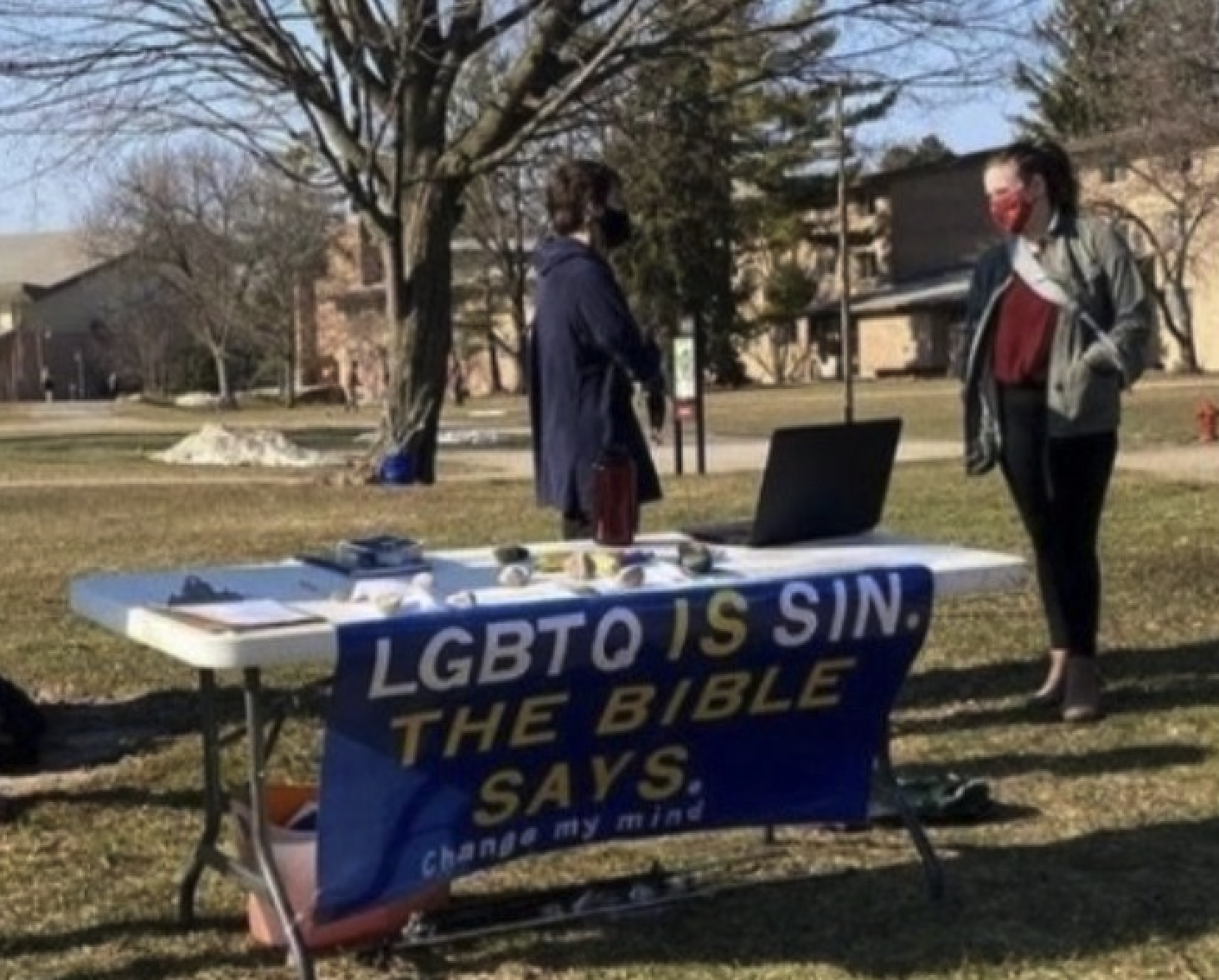
Last week, the Supreme Court turned down a very interesting case that has gotten comparatively little media coverage outside the Pacific Northwest, which is where it originated. It was Woods v. Seattle’s Union Gospel Mission (UGM) and it’s an important milestone in allowing gay employees to be employed at evangelical Christian organizations.

I wish the high court had taken the case, as it would have gone a long way toward explaining if all employees at religious organizations are counted as “ministers,” or only the ones with spiritual-sounding titles.

It’s a battle that’s going to keep on being fought and I’m guessing that leaders at evangelical and Catholic groups are not taking the Court’s silence on this case as good news.

The Seattle Times’ account of the Court’s rejection is below, although I would’ve liked to have seen a more balanced headline than: “U.S. Supreme Court won’t hear Seattle’s Union Gospel Mission’s anti-LGBTQ+ hiring policies case.” The kind of gives you an idea of where the article is going, doesn’t it?

Assuming the Times reporters did read some of the arguments from UGM, they would have known the subject was not just some anti-gay organization, but that UGM also had problems with this employee’s lack of clear Christian commitment.

The U.S. Supreme Court announced … that it will not review a case involving Seattle’s Union Gospel Mission, which was sued in 2017 over its anti-LGBTQ+ hiring policy after it declined to hire a bisexual lawyer who applied for a job.

Justice Samuel Alito and Justice Clarence Thomas agreed with the decision not to hear the case at this stage. But according to The Associated Press, they said that “the day may soon come” when the court needs to confront the issue the case presents.

The Seattle-based Christian organization filed a petition in August 2021, asking the Supreme Court to decide a case in which the Washington Supreme Court ruled in favor of the plaintiff, attorney Matt Woods, in March 2021.

I covered this in December for Newsweek (of course it helps that I live driving distance from UGM’s headquarters), and believe me, UGM helps the folks who no one else wants to help.


Please respect our Commenting Policy

Podcast: What parents (and journalists) can learn from LGBTQ debates at Calvin

Podcast: What parents (and journalists) can learn from LGBTQ debates at Calvin

Any list of the two or three most influential evangelical Protestant colleges and universities in America has to include Calvin University in Grand Rapids, Mich.

Hang around at Council of Christian Colleges and Universities gatherings (I was a senior fellow and journalism professor for 20 years) and you’ll hear chatter about the “Calvin mafia” that has long provided intellectual clout shaping trends and programs nationwide. In other words, what happens at Calvin doesn’t stay at Calvin.

You could say that was the Big Idea in this week’s “Crossroads” podcast (CLICK HERE to tune that in), which focused on a Religion News Service story with this headline: “Fallout over LGBTQ spouses at Calvin University captures broader evangelical divide.” The second line: “A same-sex wedding led the university to split with its longtime research center over Christian teaching on sexuality.” Before we look at the overture, let’s jump down to a crucial passage in this story:

Provost Noah Toly did confirm that all faculty and staff, including those at the center, are required to follow the school’s employment policies, which bar sex outside of a marriage between a man and a woman. He also said that hiring managers and supervisors are required to enforce the policy.

“Employment policies” is a rather secular way of stating that Calvin has a doctrinal statement linked to its ties to the Christian Reformed Church. It’s safe to assume that, at some point, faculty and staff sign a copy of that statement or a “lifestyle covenant” that states the doctrines in practical terms. At some schools, faculty and staff reaffirm that doctrinal statement/covenant every year.

When we are talking about defining the boundaries of a voluntary association of this kind — an explicitly Christian liberal-arts university — “doctrines” are more important than “policies.” Keep that quote from the provost in mind as you read the top of this RNS story. This is long, but crucial:

For years, Calvin University, a leading evangelical school in Grand Rapids, Michigan, has tried to walk a fine line of being welcoming to LGBTQ students while still enforcing traditional Christian Reformed Church views on sexuality.


Please respect our Commenting Policy

Plug-In: Why sexual harassment reports inside Christianity Today were especially shocking

Plug-In: Why sexual harassment reports inside Christianity Today were especially shocking

“Sexual harassment went unchecked at Christianity Today.”

The headline shocked me.

The source of the news stunned me as much as the content of it.

“Women reported two top leaders’ inappropriate behavior for more than 12 years,” the story said. “Nothing happened.”

Where were those claims made? In a bombshell investigative piece by Christianity Today itself.

The influential evangelical magazine, based in Carol Stream, Illinois, outside Chicago, published an in-depth exposé written by news editor Daniel Silliman and edited by senior news editor Kate Shellnutt.

I’ve frequently praised Silliman’s investigative reporting on evangelical institutions. In this week’s piece, he delves into serious allegations inside his own workplace:

A number of women reported demeaning, inappropriate, and offensive behavior by former editor in chief Mark Galli and former advertising director Olatokunbo Olawoye. But their behavior was not checked and the men were not disciplined, according to an external assessment of the ministry’s culture released Tuesday.

The report identified a pair of problems at the flagship magazine of American evangelicalism: a poor process for “reporting, investigating, and resolving harassment allegations” and a culture of unconscious sexism that can be “inhospitable to women.” CT has made the assessment public.

“We want to practice the transparency and accountability we preach,” said CT president Timothy Dalrymple. “It’s imperative we be above reproach on these matters. If we’re falling short of what love requires of us, we want to know, and we want to do better.”

In separate, independent reporting, the CT news editor interviewed more than two dozen current and former employees and heard 12 firsthand accounts of sexual harassment.

If Galli’s name sounds familiar, he made widespread headlines in December 2019 when he wrote an editorial calling for then-President Donald Trump’s impeachment and removal from office.


Please respect our Commenting Policy

Americans think highly of Jesus: But modern Christians get rather harsh reviews

Americans think highly of Jesus: But modern Christians get rather harsh reviews

When it comes to exploring what Americans think about Jesus, a new study offers Christian leaders both good news and bad news.

The good news is that 76% of Americans affirm the "historical existence" of "Jesus of Nazareth," although it's also interesting to note that if 89% of self-identified Christians embraced that statement, the implication is that 11% are not sure.

Meanwhile, 84% of participants in a new "Jesus in America" study -- conducted by the global Ipsos research company for the Episcopal Church -- agreed that "Jesus was an important spiritual figure."

The bad news? While 50% of "not religious" Americans accepted this "important spiritual figure" language, they were much less impressed with the believers who represent Jesus.

When asked, "What characteristics do you associate with Christians in general?", the nonreligious selected these words from the poll's options -- "hypocritical" (55%), "judgmental" (54%) and "self-righteous" (50%). Next up: "arrogant," "unforgiving" and "disrespectful."

It appears that one of the goals of this poll -- with questions about racism, social justice and last year's attack on the U.S. Capitol -- was to see if nonbelievers have different attitudes about liberal and conservative Christians, said political scientist Ryan Burge of Eastern Illinois University, author of the new book "20 Myths about Religion and Politics in America." He is co-founder of the Religion in Public website and a contributor at GetReligion.org, which I have led since 2004.

"This is the million-dollar question," said Burge, who is also a pastor in the progressive American Baptist Church. "If non-religious people are turned off by what they see as the stricter faith of many Christians, evangelicals in particular, then wouldn't it make sense for them to seek more flexible alternatives?

"If there's all kinds of room in mainline Protestant churches these days, and that's putting it mildly, then why aren't these kinds of people filling up some of those pews?"


Please respect our Commenting Policy

Never forget: There are more than two strategic camps in the global United Methodist war

Never forget: There are more than two strategic camps in the global United Methodist war

It’s time for another religion-beat journey beyond “whataboutism” and the basic assumption that all controversial subjects have “two sides,” and that’s basically that.

Of course, we live in an age in which many elite newsrooms decline to cover “one side” of a story if, according to newsroom doctrines, it’s already obvious which side is good and which side is bad. Here at GetReligion we have a term for this — “Kellerism,” a nod to candid remarks once made, on the record, by former New York Times editor Bill Keller.

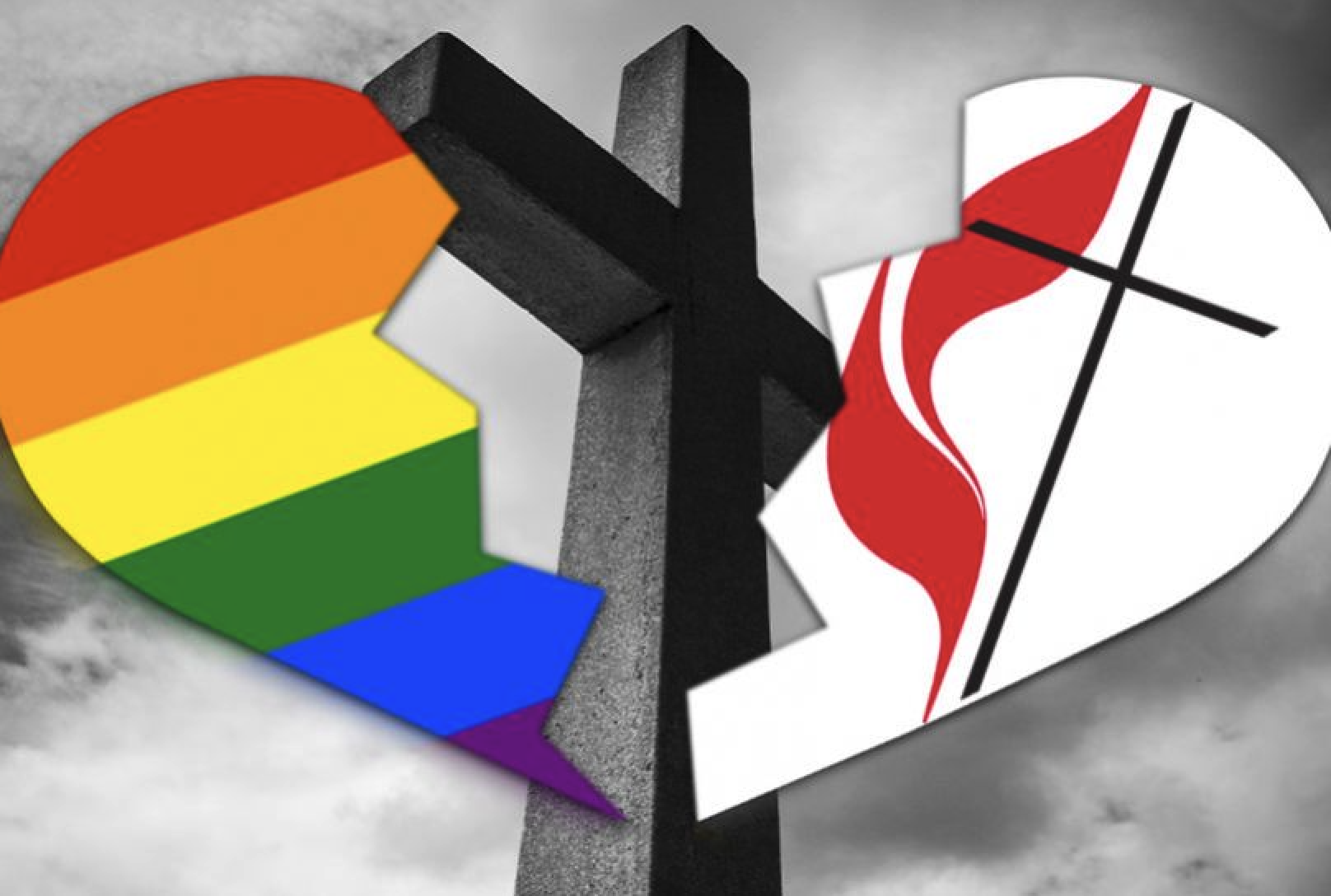
In this case, we are looking at a religion-beat superstory at the local, regional, national and global levels — the break-up of the United Methodist Church, the second largest Protestant denomination in America.

To get the big picture, please see this recent GetReligion post by Richard Ostling: “The latest United Methodist bombshell will create news throughout 2022 and beyond.” To see how long this battle has been going on, check out this “On Religion” column that I wrote in 1998: “United Methodists — Breaking up is hard to do” and two more on a related topic, “Old fault lines can be seen in the ‘seven churches’ of divided Methodism” (and then part II).

Here are Three Big Ideas for today. Remember that I have, as a reporter, been wrestling with this ongoing story since the early 1980s.

(I) Never forget the unique element of this story, which is that the United Methodist Church has a GLOBAL structure that includes the growing churches of Africa and Asia, as well as the splintering (and usually shrinking) congregations in the United States. Readers should question news reports that fail to mention — or even stress — the racial and cultural diversity of the global conservative United Methodism coalition.

(II) While fights about LGBTQ issues make headlines, the United Methodist wars have — behind the scenes — included clear divisions on basic, even credal, issues in Christian theology. In addition to clashing views of biblical authority, we’re talking about splits on salvation, sin, heaven, hell, the Resurrection and the very nature of Jesus Christ. Reporters need to ask questions about issues other than sex.

(III) There are, at the very least, three major groups involved in this story. Let’s call them the “candid left,” the “establishment left” and then the “traditional” United Methodists, as in the defenders of the existing laws and doctrines in the United Methodist Book of Discipline. However, there are subgroups on the right. Never assume that the global conservatives have precisely the same views as their American counterparts.

To see that these issues look like “in the wild,” consider this recent Religion News Service story: “Vote delayed again, some United Methodists say they quit. Now what?”


Please respect our Commenting Policy