Evangelicals

About that Southern Baptist 'binder' story: What do Black biblical 'inerrantists' say about CRT?

About that Southern Baptist 'binder' story: What do Black biblical 'inerrantists' say about CRT?

Reporters receive all kinds of bizarre things in the mail (analog or digital). Religion-beat reporters have been known to have some really, really bizarre items come out of nowhere.

My all-time “favorite” (I am using that term loosely) was a 35-page, handwritten manifesto detailing why — using lots of biblical references — Barbra Streisand was the Antichrist. I filed that one away. That wasn’t the case, however, with the typed, unsigned note in a plain white envelope that pointed to public documents detailing the arrest of a prominent clergyman for a sex crime committed in a public bathroom.

Journalists offered hot documents have to ask two questions:

(1) Can this information be verified as accurate?

(2) What are the motives of the person sharing the information? That question leads to another: How can those motives be explained to readers without identifying the person who provided the documents?

It goes without saying that documents from an on-the-record source will be trusted — by informed readers and “stockholders” in the story — more than those from a source demanding anonymity. The key is to give as much information as possible about the source of the information as possible, including why anonymity was acceptable in this case.

This leads us to the Nashville Tennessean story that rocked the world of Southern Baptist Convention social media, the one with this headline: “Inside the Southern Baptist Convention's battle over race and what it says about the denomination.

The entire story pivots on documents linked to a former SBC president, the Rev. James Merritt, and the Rev. J.D. Greear, the convention’s leader at the time of the events described in the story. It also helps to know that Merritt was the chair of the national convention resolutions committee in 2021.

All of this focuses on efforts to pass a 2021 SBC resolution that condemned “critical race theory” outright — by name and with no qualifications, as desired by leaders of the SBC’s most conservative churches. Here is a key passage:

Please respect our Commenting Policy

Plug-In: Americans favor religious exemptions for COVID-19 vaccine mandates — sort of

Plug-In: Americans favor religious exemptions for COVID-19 vaccine mandates — sort of

What a difference a year makes.

Or not.

Fifty-two weeks ago, this news topped Weekend Plug-in.

Sound familiar?

Trump calls COVID-19 vaccine ‘a medical miracle,’ but many religious people are skeptical

Guess what? Many religious people remain highly skeptical of the vaccines, despite their strong effectiveness at preventing serious illness, hospitalization and death from COVID-19.

Which leads us to this week’s news: a new public opinion poll on religious exemptions to the vaccines.

Religion News Service’s Jack Jenkins reports:

WASHINGTON (RNS) — A new poll reveals most Americans are in favor of offering religious exemptions for the COVID-19 vaccines, yet express concern that too many people are seeking such exemptions. In the same survey, more than half of those who refuse to get vaccinated say getting the shot goes against their personal faith.

The poll, conducted by the Public Religion Research Institute and Interfaith Youth Core and released Thursday (Dec. 9), investigated ongoing debates about COVID-19 vaccines as well as emerging divisions over whether religious exemptions to the shots should even exist.

According to the survey, a small majority (51%) of Americans favor allowing individuals who would otherwise be required to receive a COVID-19 vaccine to opt out if it violates their religious beliefs, compared with 47% who oppose such religious exemptions.

See additional coverage of the poll by the Washington Times’ Mark A. Kellner, a former contributor at GetReligion, and NPR’s Megan Myscofski.


Please respect our Commenting Policy

In search of the elusive liberal evangelical: Is this tiny flock worthy of big news coverage?

In search of the elusive liberal evangelical: Is this tiny flock worthy of big news coverage?

I was listening to a podcast the other day and the host asked a guest a question that I have heard way too many times over the last year — “Why did you decide to focus only on conservative evangelicals?”

I fully admit that a lot of my work does focus on conservative evangelicals. Why? Because, in the current political landscape, there’s not a more important force in American politics. The nones are too disorganized at this juncture to have a systemic impact. Catholics and Mainline Protestants are too politically divided to be considered anything close to a coherent voting bloc.

The fact is simply this: 13% of all American adults in 2020 were white evangelical Republicans.

No other group comes even close to that size. Nine percent of Americans are nothing in particular Democrats — but that’s not an easy group to wrap your arms around. There are twice as many white evangelical Republicans as there are white Catholic Republicans. For every Democratic atheist, there are 2.5 white evangelical Republicans.

But, I wanted to devote some time trying to look at the other side of the evangelical coin: those who describe themselves as politically liberal. Because the Cooperative Election Study is so large, even if that group is a relatively small percentage of the population, it’s still possible to do in-depth statistical analysis of liberal evangelicals.

Of all self-identified evangelicals, 58% describe themselves as conservative, 29% indicate they are moderate, while 13% say they are liberal. If that is restricted to just white evangelicals: 8% are liberal, 24% are moderate, and 68% say they are conservative.

That’s obviously much different than the general population. In 2020, 30% of all Americans said they were liberal, along with 28% of just white respondents.


Please respect our Commenting Policy

New podcast: Are some SCOTUS justices asking, 'Are all religious schools equal in Maine?'

New podcast: Are some SCOTUS justices asking, 'Are all religious schools equal in Maine?'

Let’s say that, in the state of Maine, there are two very different “Lutheran” schools. You could, in this hypothetical case, also say “Episcopal,” or “Presbyterian” or “Congregational.”

Leaders at one of these schools insist that their school is in “the Lutheran tradition,” and it may retain ties to a doctrinally liberal flock. The school has a chapel, but attendance is optional since its students (it may be an elite boarding school) come from all kinds of religious faiths or have no stated faith at all. Classes on hot-button moral issues — sexuality, for example — stress this church’s progressive doctrines.

Academic life is very different at the other Lutheran school, which draws most of its students and financial support from a conservative Lutheran body. Chapel attendance is required and classes linked to moral theology are quite countercultural — defending 2,000 years of Christian tradition.

The question, in the latest church-state case at the U.S. Supreme Court, is whether the state of Maine has the power to say that the first school is eligible for tuition support — using tax dollars — because it’s policies do not clash with those in public schools. Students at the conservative school are not eligible, because its beliefs are “sectarian.”

This is tricky territory and church-state experts on the Religious Right would certainly disagree with experts from the Religious Left and secular think tanks. The question discussed in this week’s “Crossroads” podcast (click here to tune that in) is whether journalists covering this case allowed readers a chance to understand the views of activists on both sides.

Let me state, right up front, that my dueling Lutherans illustration is based on “equal access” church-state principles that emerged from a left-right coalition during the Bill Clinton administration. The big idea: If state officials create policies that affect nonprofits, they cannot back secular groups while discriminating against religious organizations. States could, however, deny aid to both. In other words, religious faith is not a uniquely dangerous form of speech or activity.

Let me state this another way. Under the separation of church and state, officials are not supposed to use tax dollars to back state-approved forms of religion. Ah! But what if some religious groups have doctrines that are consistent with state policies, while others clash with the doctrines of the state?


Please respect our Commenting Policy

As the news media churn, two rising religion muckrakers belong on your source list

As the news media churn, two rising religion muckrakers belong on your source list

It's the worst of times for the American media, with vanishing newspapers and magazines, shrinking staffs and budgets with what's left, the heavy-handed slant on cable TV "news" and polls showing record lows for consumer confidence in the accuracy and honesty of work done by journalists.

But the religion beat offers one ray of hope with gutsy investigative journalism from within evangelical Protestant ranks that sets the standard for other media -- and is one reason this movement so dominates religious news.

For years, Christianity Today and World magazines have bravely lifted rocks regarding what's been called the "evangelical industrial complex.". One can hope World will persist after its recent shakeup (click here for GetReligion post on that topic).

This Memo spotlights two muckrakers who belong on source lists of religion writers and religious organizations: Julie Roys of "The Roys Report" and Warren Cole Smith of "Ministry Watch."

Alas, there's much muck for them to rake. Religion-watchers are unlikely to miss any newsworthy scandals if they subscribe to free listserves and monitor their original reporting, alongside pick-ups such as this $600,000 mystery at THE Houston superchurch or this academic fuss at Cornerstone University.

By coincidence, both editors, who are resolutely conservative in terms of religious beliefs, jumped into the scene in 2019. Either or both would make for a good story, as would Roys' "Restore 2022" conference May 20-21 at Judson University in Elgin, Illinois.

Roys, a Wheaton and Medill School alumna, was a newswriter and reporter for Chicago TV stations. She took 13 years off to raise her three children and then, for a decade, hosted Moody Radio Network's "Up For Debate" show. She then exposed "corruption and mission drift" at the sponsoring Moody Bible Institute on her personal blog, which evolved into the "Report," with a special focus on #ChurchToo sexual exploitation scandals. She is even a watchdog of watchdogs, catching the president of the Evangelical Council for Financial Accountability in resume-padding.


Please respect our Commenting Policy

About Southern Baptist wars and the Merritt family: Here's some inside baseball worth covering

About Southern Baptist wars and the Merritt family: Here's some inside baseball worth covering

I rarely write about Southern Baptist affairs unless one of their annual conventions is at hand, but I can’t resist commenting on a fascinating sideshow happening between the highly symbolic Merritt family and their fellow conservatives.

Jonathan Merritt is the openly gay (and I assume celibate, based on previous comments) son of the Rev. James Merritt, a former president of the Southern Baptist Convention. It’s been a tough ride for the past 10 years as the younger Merritt has tried to reconcile his sexuality with his faith, while working as a news- columnist. His father has been under immense pressure as well.

The latest fracas, with a hat tip to JulieRoys.com, has to do with the elder Merritt walking away from his position as a visiting professor at Southeastern Baptist Theological Seminary in Wake Forest, N.C. The whole affair has gone unnoticed by many newsrooms, even though this is a topic that is newsworthy for a variety of reasons. Here is what Roys wrote:

Former Southern Baptist Convention President James Merritt resigned last week as a visiting professor at Southeastern Baptist Theological Seminary over controversy sparked by Merritt’s decision to share a sermon online by his son who’s gay. …

The decision came after Merritt, who’s also pastor of Cross Pointe Church in Duluth, Georgia, tweeted a link to a sermon by his son, Jonathan Merritt. The younger Merritt is a graduate of Southeastern Baptist and an author, journalist, and popular speaker. In August, Jonathan Merritt announced on Instagram that he’s gay.

“I don’t agree with my loved son @JonathanMerritt on everything to be sure,” James Merritt tweeted November 22. “But I encourage you to listen to his message on Mark 13. It is both brilliant and faithful to the gospel and the coming of Jesus!”

After that, things got really interesting. Here is the chronology:

Nov. 22 — James Merritt publishes his tweet.

Nov. 23 — The Conservative Baptist Network, a group of some 6,000 members based in Memphis, issues a statement with the headline: “Promoting homosexual preachers is not loving, biblical or Baptist.” The elder Merritt responds that same day.


Please respect our Commenting Policy

Emerging split inside old mainline: Is U.S. Christianity becoming two different religions?

Emerging split inside old mainline: Is U.S. Christianity becoming two different religions?

THE QUESTION:

Is Christianity in the United States becoming two different religions?

THE RELIGION GUY'S ANSWER:

If the question above seems off the wall, at least look why it has arisen.

Two years ago, The Guy wrote that he was quite astonished by some survey research reported in "The Twentysomething Soul" (Oxford University Press) by Tim Clydesdale of the College of New Jersey and Kathleen Garces-Foley of Marymount University.

Young Americans age 30 and under, quizzed about religion, were asked how they think of God.

One option was "a personal being, involved in the lives of people today." It doesn't get any simpler or more basic than that, whether you're Jewish, Christian or Muslim. Other choices were some impersonal "cosmic life force," or a deistic creator who is "not involved in the world now," or that God does not exist.

Not surprisingly, the evangelical Protestants were virtually unanimous in embracing the first definition. But remarkably, only half of those in the predominantly white, theologically pluralistic "mainline" Protestant church bodies made that choice, while 40 percent favored the vague "life force." Young adult Catholics fell in between the two Protestant groups. (In this random sample, 30 percent were evangelicals, 18 percent Catholic, 14 percent "mainline" Protestant, and 29 percent with no religious affiliation.)

The Guy therefore posed the question whether Protestants' long-running two-party rivalry "could be evolving toward a future with two starkly different belief systems."

Now a more radical version of that scenario is explored at book length in "One Faith No Longer" (New York University Press) by Baylor University sociologist George Yancey and Ashlee Quosigk, a visiting scholar of religion at the University of Georgia. More info here.


Please respect our Commenting Policy

New podcast: Are news reports 'dunking' on the late religious broadcaster Marcus Lamb?

New podcast: Are news reports 'dunking' on the late religious broadcaster Marcus Lamb?

If you search for the word “posterized” in up-to-date online dictionaries, this is what you find: “A slang term depicting a play in basketball. In said play, a player dunks the ball over top or in front of another player, making a play so picturesque that it may appear on a poster, hence the term, posterized.”

Clearly, this is linked to another term frequently used in the nasty verbal wars that are common on social-media sites, with Twitter — dominated by liberal and conservative voices in elite zip codes — being the best example.

That term is “dunking.”

“Dunking” is relevant to the main topic discussed in this week’s “Crossroads” podcast (click here to tune that in) about media coverage of the death of religious broadcaster Marcus Lamb, who died of COVID-19 after using his Daystar Television Network to criticize vaccine mandates and other anti-pandemic rules and guidelines, while advocating alternative treatments.

“Dunking” is defined, sort of, in this Slate article: “ ‘Dunking’ Is Delicious Sport — But it might be making Twitter even more terrible.” Here is a relevant passage:

Since Twitter rolled out the feature a couple of years ago, the quote-tweet has evolved into something like a pair of magic high-tops dispensed to every user on the service: Anyone can botch a tweet, and anyone can leap over him or her to score a couple of points—or a couple thousand likes and retweets.

The basketball term is apt: In a Twitter dunking, someone has made his point or said her piece, and instead of responding to it with a direct reply, perhaps in the spirit of equal-footed debate, the dunker seizes it like an alley-oop on his or her way to the basket. Maybe another player gets the unwitting assist, but the point is yours to be liked and retweeted not just as a reply but as a worthier tweet in its own right.

What does this look like in practice? Consider this example from the blitz of tweets about Lamb’s death. This dunk comes from the creator of the “America’s Best Christian” brand:


Please respect our Commenting Policy

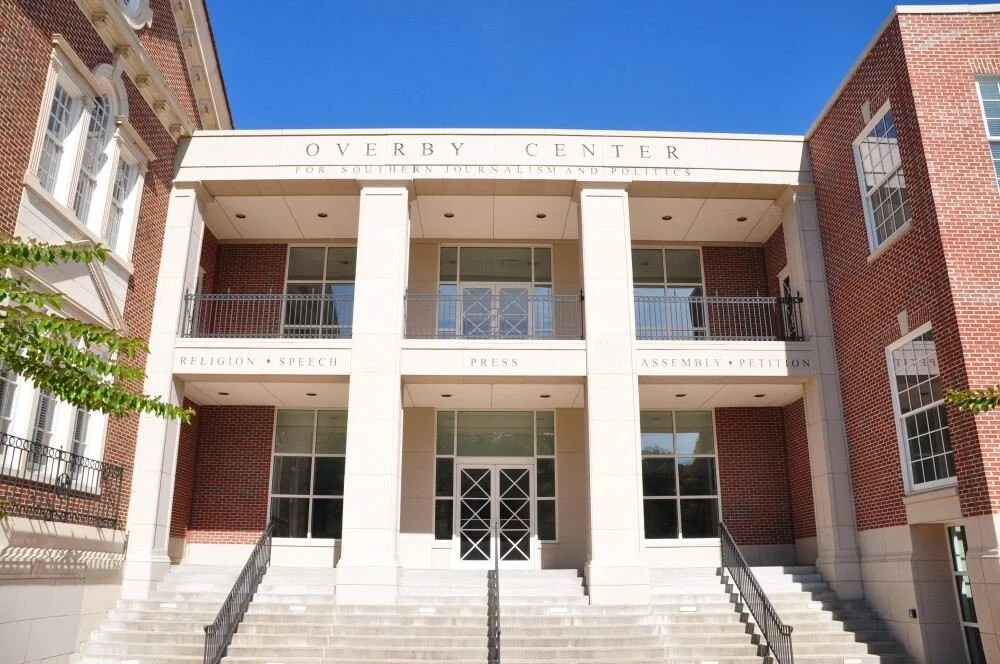
Finally, another Overby Center program: Why religion was one big factor in vaccine wars

Finally, another Overby Center program: Why religion was one big factor in vaccine wars

I have strong memories, to say the least, of the first Overby Center program in which I was able to participate, as a senior fellow for the center and as editor of GetReligion.

The topic was the role that religion would play in the 2020 presidential election. Religion-beat patriarch Richard Ostling was there and both of us stressed that, while journalists were pouring oceans of ink into coverage of (#TriggerWarning) white evangelicals, Catholic voters would play the pivotal role in swing states. I also noted the little-covered 2016 impact of Latino evangelicals and, especially, Pentecostal believers in Florida. I didn’t think to predict a starring 2020 role these Latino voters in Texas.

When was that program? Here’s a clue. As I drove home, I stopped for lunch in Jackson, Tenn. As I pulled back onto the interstate headed east, I heard a radio report noting that the mysterious virus that was causing havoc in Wuhan, China, had now been detected in Europe and, perhaps, in New York City.

Days later, the whole world turned upside down.

With social-distancing, masks and vaccines in mind, we recently gathered in Oxford for a forum addressing a logical topic — why religion was a key factor (but not the only one or even the dominant one) in America’s wars over COVID-19 vaccines. Click here to watch the event on YouTube.

In addition to Center founder Charles Overby, I was joined by three logical voices on this subject.

First, political scientist (and GetReligion contributor) Ryan Burge Zoomed in with several crucial charts full of relevant info. Take this post, for example: “Thinking about white evangelicals, COVID-19 vaccines and VERY popular headlines.” Then there was Marquita Smith of the University of Mississippi faculty, a journalist I came to know while she was teaching at John Brown University on the edge of the Ozarks. She is now the assistant dean of graduate programs at the Ole Miss J-school.

The final panelist was the Rev. Daniel Darling, who was recently named director of the Land Center for Cultural Engagement at Southwestern Baptist Theological Seminary in Fort Worth, Texas.

Then again, Darling may be better known in religion-beat circles because of this New York Times headline: “Fired After Endorsing Vaccines, Evangelical Insider Takes a Leadership Role.”


Please respect our Commenting Policy