Evangelicals

Journalism tips on: (1) Evangelical crack-ups, (2) campus faith fights, (3) COVID exemptions

Journalism tips on: (1) Evangelical crack-ups, (2) campus faith fights, (3) COVID exemptions

A potential U.S. evangelical crack-up continues as a lively story topic since Guy Memos here since these two Memos here at GetReligion, “Are we finally witnessing the long-anticipated (by journalists) evangelical crack-up?” and also “Concerning evangelical elites, Donald Trump and the press: The great crack-up continues.” In USA Today, Daniel Darling, for one, sought hope despite his recent victimhood in these tensions.

Media professionals considering work on this theme should note a lament at book length coming next week: "Struggling with Evangelicalism: Why I Want to Leave and What It Takes to Stay" by Dan Stringer. The author is a lifelong evangelical, Wheaton College (Illinois) and Fuller Theological Seminary alum, leader of InterVarsity's graduate student and faculty ministries in Hawaii and Evangelical Covenant Church minister. This book comes from InterVarsity Press.

The Guy has yet to read this book, but it looks to be a must-read for reporters covering American evangelicals in the Bible-Belt and elsewhere. Stringer ponders how evangelicalism can move beyond too-familiar sexual scandals, racial and gender conflicts, and Trump Era political rancor -- what a blurb by retired Fuller President Richard Mouw calls "blind spots, toxic brokenness and complicity with injustice."

Regarding the Donald Trump factor, the evangelical elite was largely silent, with one faction openly opposed, while certain outspoken evangelicals backed the problematic populist.

As The Guy has observed, recent politics exposed the already existing gap between institutional officials and the Trumpified evangelical rank and file. Problem is, to thrive any religious or cultural movement needs intelligent leaders united with a substantial grass-roots constituency to build long-term strategy.

Evangelicalism has always combined basic unity in belief with a wide variety of differences. Think denominational vs. independent, Arminian vs. Calvinist, gender "complementarian" vs. "egalitarian," Pentecostal-Charismatic vs. others and a racial divide so wide that many Black evangelicals shun the e-word alltogether.

In an October 21 Patheos article, historian Daniel K. Williams at the University of West Georgia added North vs. South to those internal divisions. He recounts that the Southern Baptist Convention remained mostly apart when northerners began to supplant "fundamentalism" with "evangelicalism" in the World War II era. Eventually, he says, this movement formed a North-South alliance but it's now eroding.

Please respect our Commenting Policy

Dang it! Your GetReligionistas pounced a bit too early on the 'parental rights' wars

Dang it! Your GetReligionistas pounced a bit too early on the 'parental rights' wars

Dang it (said the Texas Baptist preacher’s kid), I really hate it when GetReligion gets to a serious media topic Just. A. Bit. Too. Early.

What am I talking about?

Well, take a look at the New York Times headline featured in the tweet at the top of this post, a tweet authored by a symbolic figure in the wider world of Democratic Party life. Michael Wear is a political consultant, but he is best known as the faith-outreach director for Barack Obama's 2012 campaign and then as part of Obama's White House staff. Here’s that headline:

Republicans Seize on Schools as a Wedge Issue to Unite the Party

Rallying around what it calls “parental rights,” the party is pushing to build on its victories this week by stoking white resentment and tapping into broader anger at the education system.

First of all, I think the verb “seize” is a stand-in for the world “pounce,” which has become a bit of a cliche in recent years. Here is the Urban Dictionary take on the “Republicans pounce!” phenomenon or click here for a National Review essay on the subject. The whole point is that the issue at hand isn’t really all that important, but conservatives have “pounced” on it and are using this alleged issue to hurt liberals in social media, conservative news sources, etc.

Major media on the coasts, of course, avoid covering the topic — unless it leads to an embarrassing defeats for Democrats in a symbolic state like Virginia.

Anyway, the Times headline may ring a bell or two for those who read this October 22 podcast-post here at GetReligion: “Are 'parental rights' references (inside scare quotes) the new 'religious liberty.” Here is the opening of that post:


Please respect our Commenting Policy

Religious liberty at SCOTUS, again: Touch, comfort and the prayers of clergy at executions

Religious liberty at SCOTUS, again: Touch, comfort and the prayers of clergy at executions

The U.S. Supreme Court will hear religious freedom arguments Tuesday in the case of a Texas death-row inmate named John Henry Ramirez.

Ramirez, 37, wants his Southern Baptist pastor to lay hands on him and pray before and during his execution. The state of Texas won’t allow it.

Time magazine’s Madeleine Carlisle provides a nice overview of the case.

“The job of a minister is not to stand still and be quiet,” Dana Moore, the inmate’s pastor, tells Time. “Prayer is very important. And the power of touch is real. It’s encouraging. It brings peace. It’s significant… Why can’t I hold his hand?”

In an August interview with New York Times religion writer Ruth Graham, Ramirez took responsibility for killing Corpus Christi convenience store clerk Pablo Castro, calling Castro’s 2004 death a “heinous murder.” (As noted by the Corpus Christi Caller-Times, Ramirez “beat and kicked Castro and stabbed him 29 times with a 6-inch serrated knife.” He and two female accomplices left the scene with $1.25.)

“It would just be comforting,” Ramirez said of wanting Moore by his side at the time of his lethal injection.

At The Associated Press, religion writer David Crary explains that the “ACLU has a long history of opposing the death penalty and also says that condemned prisoners, even at the moment of execution, have religious rights.”

Conservative church-state activists have been involved in this case, and others like it, since Day 1.

“Intriguingly, the ACLU’s position in the Ramirez case is echoed by some conservative religious groups which support the death penalty and are often at odds with the ACLU on other issues,” Crary reports.


Please respect our Commenting Policy

New podcast: Did Glenn Youngkin win the Latino vote in Virginia? Maybe ask folks in pews?

New podcast: Did Glenn Youngkin win the Latino vote in Virginia? Maybe ask folks in pews?

On the morning after The Virginia Election, I noted that the sharp folks at a must-bookmark niche-news website — A Journey Through NYC Religion — had done some old-fashioned digging and discovered some interesting religion ghosts (to use an old GetReligion term) in that political earthquake. Click here for that story: “Faith trumps Trump in Virginia.”

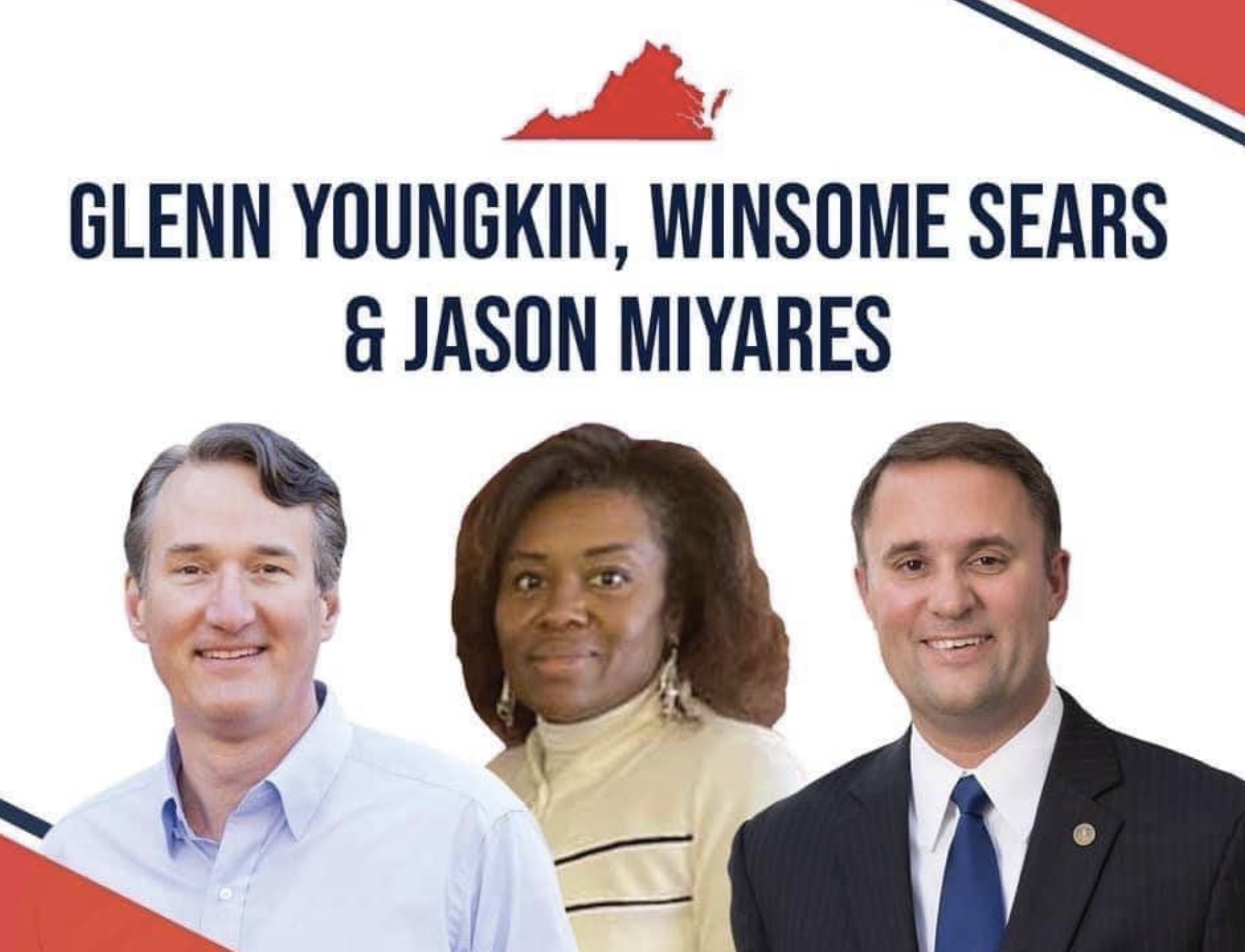
I sure didn’t know, from reading mainstream press coverage, that Governor-elect Glenn Youngkin was an evangelical Anglican who once was a leader in the Alpha course, an evangelism program that expanded from the Church of England into churches and denominations around the world.

I didn’t know that Lieutenant Governor-elect Winsome Sears, an African American evangelical and former Marine, had once led a Salvation Army ministry and that the state’s new attorney general, Jason Miyares, appears to be a Latino evangelical Episcopalian.

All of that showed up in my post-election piece with this headline: “Yes, there were overlooked religion angles in today's biggest U.S. political news story.”

We talk about all of that in this week’s “Crossroads” podcast (click here to tune that in), but also veered off into other religion-based angles in the current political climate. One of them took us into familiar territory, at least for those who have followed GetReligion for the past five or six ears. I’m talking about the rising political clout of Latino evangelicals, traditional Catholics and Pentecostal believers.

There’s some evidence that Youngkin and the diverse GOP lineup actually WON the Latino vote in the Virginia election (click here for a totally faith-free Politico discussion of that topic).

So here is that question again: How can journalists cover shifting patterns among Latino voters — and Black voters, as well — without examining the role of religion and cultural issues?

Let’s say: Is it safe to assume that pro-life Latinos are more likely — lacking acceptable Democrats on the ballot — to opt for Republicans? How about Latinos who favor school choice? Who old traditional Christian views on gender issues?


Please respect our Commenting Policy

Yes, there were overlooked religion angles in today's biggest U.S. political news story

Yes, there were overlooked religion angles in today's biggest U.S. political news story

Well what do you know. Evangelical Anglicans and the Salvation Army had a big night in the Commonwealth of Virginia.

That’s probably not the first thing that leaps to mind today, for political junkies who spent most of the night (the World Series finale was a big deal) watching political pundits express shock and, sometimes, grief watching a Republican newcomer upset name-brand Democratic Party candidate.

Lots of people talked about Donald Trump, of course. Some people dug a bit deeper and focused on how governor-elect Glenn Youngin managed to affirm some themes from the Trump revolution, while striving to stay as far away as possible from personal contact with Orange Man Bad.

This brings me to a headline this morning at A Journey Through NYC Religions, which is one of those niche-news websites that many religion-beat pros have in their browser favorites — because of its heady mix of hard facts and hard-to-label commentary.

Here’s the headline: “Faith trumps Trump in Virginia.”

Say what?

I think many journalists would assume — if they thought about religion angles in the Virginia race — that the members of the victorious GOP team probably came from White megachurches. But that’s not what veteran editor Tony Carnes found when he looked for the ties that bind, in this case. Here is his overture:

Most of the media attention in the Virginia elections has been on Trump and his influence. The Democratic candidate Terry McAuliffe tried unsuccessfully to tag his opponent Glenn Youngkin as a Trumper.

However, under the surface of politics, there was a deeper spiritual culture and social network that connected the top three candidates in Virginia. This characteristic made the GOP effort in Virginia more winsome (indeed, that is the first name of Winsome Sears, the next Lieutenant Governor.)


Please respect our Commenting Policy

Many media pros have missed a mega-money source backing some big Christian causes

Many media pros have missed a mega-money source backing some big Christian causes

Follow the money.

Those three little words guide journalists and prosecutors alike. And that explains the news potential of the Georgia-based National Christian Foundation (NCF), www.ncfgiving.com/ which to date has quietly given $14 billion to 71,000 non-profit groups, $1.3 billion of that last year, in both tiny and huge grants. An Atlanta Journal-Constitution piece recently noted that "mysterious" operation is "one of the most influential charities you've never heard of."

Writing last week for Ministry Watch (a news website that reporters should follow), GetReligion alumnus Steve Rabey reports that NCF became "the world's largest Christian foundation" largely through word-of-mouth referrals rather than promotional efforts. The Chronicle of Philanthropy, which posted antagonistic coverage in February, ranks NCF as the nation's eighth-largest charity.

NCF calls itself a "ministry," and though it aids a wide range of secular non-profit charities it's a particularly important vehicle for religious donations from wealthy conservative Protestants who share its belief that "the entire Bible is the inspired and inerrant Word of God." The foundation's 26 offices around the U.S. handle donations -- contact info posted here -- so local angles for the media abound. (At national headquarters, Dan Stroud is C.E.O and Steve Chapman the media contact via info@ncfgiving.com or 404-252-0100.)

Rabey's piece includes a helpful link to the Guidestar.org posting of NCF's 593-page IRS Form 990 filed for 2019, with a listing of grant recipients that reporters will want to eyeball. The largest categories of donations ranged from local churches ($215 million) on down to medical care ($21 million). Major causes included evangelism, relief, education, children and youth work, museums, spiritual and community development, media and publishing, orphan care, Bible translation and ministry to the homeless.

NCF typifies the rising importance of "donor-advised funds" in U.S. philanthropy. The basic idea has existed for a century and was devised as a vehicle for Christian donors in 1982 by pioneering Atlanta tax attorney Terry Parker, still a board member, along with evangelical financial gurus Ron Blue and Larry Burkett.


Please respect our Commenting Policy

Define 'evangelical,' please. Alas, many Americans don't think that this is a religious term

Define 'evangelical,' please. Alas, many Americans don't think that this is a religious term

Here’s a scary thought: Who wants to dress up as an evangelical for Halloween?

Except, exactly what would that look like?

Would it involve wearing a red “Make America Great Again” hat? Does the term still have any religious and/or theological meaning left?

Those questions came to mind as I perused some of the week’s big religion stories — both news reports and major analytical takes. Here are five such headlines that caught my attention:

(1) Why ‘evangelical’ is becoming another word for Republican: “Instead of theological affinity for Jesus Christ, millions of Americans are being drawn to the evangelical label because of its association with the G.O.P.,” Ryan Burge, a frequent contributor to ReligionUnplugged.com, writes in an opinion piece for the New York Times.

(2) In a post-Donald Trump world, these pastors are ditching the evangelical label for something new: “They looked to each other to ask, What could it look like to organize as ‘post-evangelicals?’” religion writer Sarah Pulliam Bailey reports for the Washington Post. “They had at least one thing in common: They were all on some journey of deconstruction, the process of reexamining their long-held beliefs, and they wanted to participate in reconstruction and the building up of something new.”

(3) The evangelical divide: “Political and social issues are splintering American Christians. Can the Church find unity?” asks part one of a three-part series by World magazine senior reporter Sophia Lee.

(4) The evangelical church is breaking apart: “As a person of the Christian faith who has spent most of my adult life attending evangelical churches, I wanted to understand the splintering of churches, communities, and relationships,” contributing writer Peter Wehner explains in The Atlantic. “I reached out to dozens of pastors, theologians, academics, and historians, as well as a seminary president and people involved in campus ministry. All voiced concern.”


Please respect our Commenting Policy

Looking for signs of life? Study the birth rates among religious faiths in America

Looking for signs of life? Study the birth rates among religious faiths in America

A team of economists from Wellesley College and the University of Maryland recently published a working paper that focused on a peculiar puzzle facing the United States: declining birth rates.

More particularly, the team of researchers was trying to understand why birth rates continued to fall even after the economy was recovering from the Great Recession of 2007. Those economists concluded that one of the biggest factors was shifting priorities among younger Americans — away from raising children and toward career and travel aspirations.

But fertility is obviously incredibly multifaceted. The decision to become a parent is often one that is made with a number of factors in mind. Young adults have to consider their educational plans, the amount of income they would have available to pay for a child and how to handle childcare responsibilities once they become parents.

One factor that can have a tremendous impact on this decision is religion.

Every major religious tradition on Earth encourages reproduction, and thus there can be a theological nudge for people to have children. But a local religious community can also make the decision easier for potential parents by offering up a safety net that can provide financial support or easy access to caregivers for babies and children in the congregation.

Clearly, it’s in the best interest of religious groups to encourage their young families to have children if they want to ensure the long-term viability of their traditions. It’s no secret that families with children are the easiest pathway to ensure that a church, mosque or synagogue will be able to sustain itself for decades to come. But which traditions are doing a good job of having children, and which ones aren’t? And what does that tell us about the future of American religion?


Please respect our Commenting Policy

ProPublica covers horrors at Liberty University. But do all Christian colleges hide rape cases?

ProPublica covers horrors at Liberty University. But do all Christian colleges hide rape cases?

Yes, Liberty University is back in the news — for valid reasons. Yes, the news involves accusations of sexual violence.

Let’s start with the basics. It’s never good for a Baptist institution when the official news service of the Southern Baptist Convention publishes a story like this one: “Ex-Liberty spokesman says he was fired for raising concerns.”

The only thing missing from that somewhat soft headline is, well, the sex angle. However, that promptly shows up in the lede. Once again, we are talking about the overture in a story from a conservative, Baptist press office:

A former spokesperson for Liberty University is suing the evangelical school after being fired, alleging in a lawsuit filed Monday (Oct. 25) that his termination came in retaliation for voicing concerns that sexual misconduct accusations were mishandled.

Scott Lamb, a vice president-level executive at the school where he was hired in 2018, said in an interview with The Associated Press that he pushed for answers about what was being done to investigate claims raised in a lawsuit filed over the summer by 12 women, and was continually dissatisfied.

The women’s lawsuit, which is still ongoing, alleged the school had a pattern of mishandling cases of sexual assault and harassment and had fostered an unsafe campus environment. A student-led movement has since been established to advocate for systemic reforms, and the nonprofit investigative journalism outlet ProPublica published a deeply reported investigation … with findings similar to the allegations raised in the lawsuit.

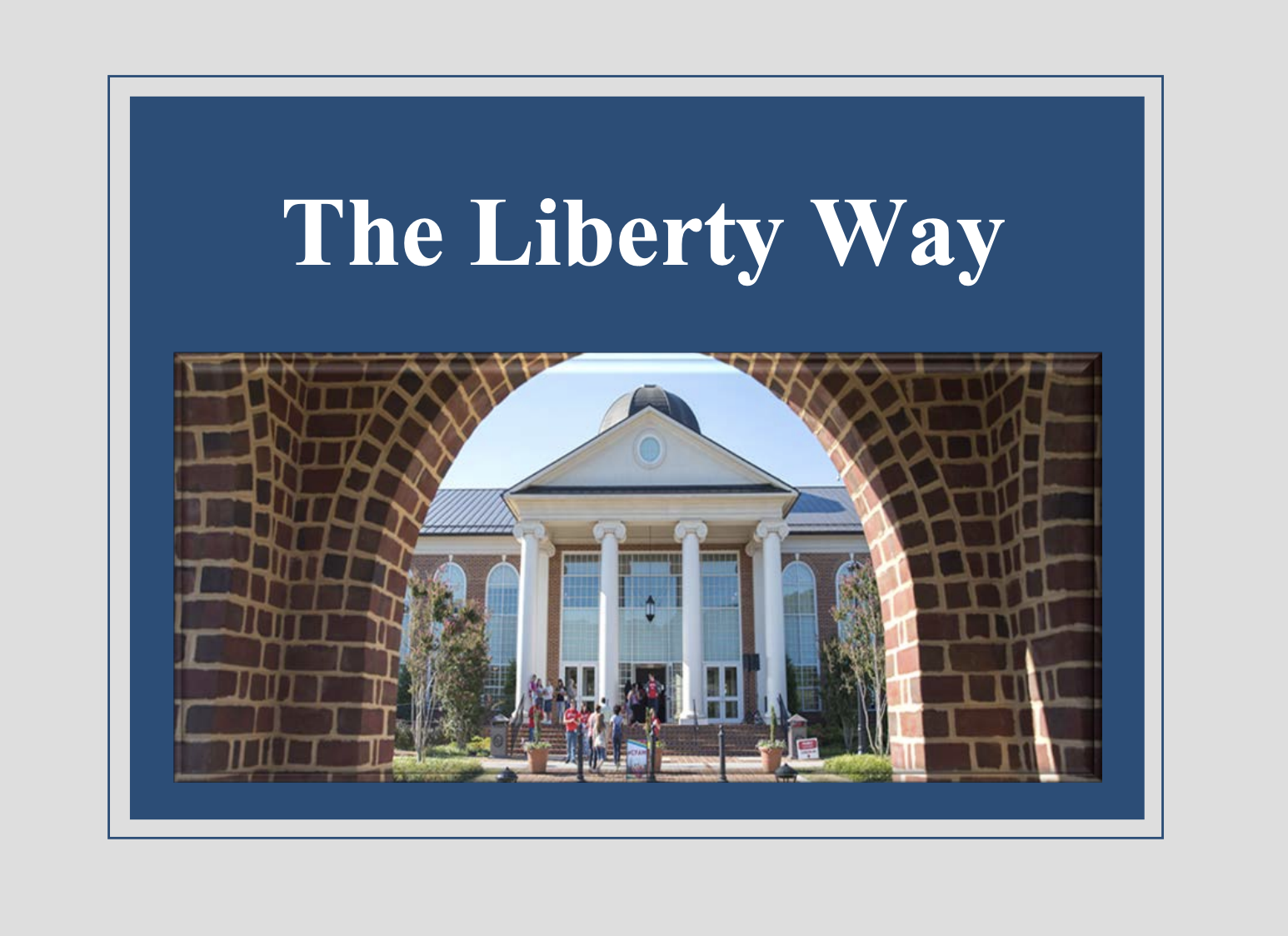
Now, the key to all of this is the brutal contents of that ProPublica piece: “ ‘The Liberty Way’: How Liberty University Discourages and Dismisses Students’ Reports of Sexual Assaults.” If you want a quick summary of the accusations — in another rather conservative source — check out this report at The New York Post: “Liberty University accused of making it ‘impossible’ to report rape, lawsuit alleges.”

The ProPublica report is, of course, hostile to Liberty University in every way possible. It’s also clear that Liberty officials appear to have gone out of their way to earn that hostility — in large part by refusing, at ever twist in the plot, to speak on the record about the university’s perspective on these issues.


Please respect our Commenting Policy