Evangelicals

New podcast: Those Southern Baptist sex-abuse battles are not just about Southern Baptists

New podcast: Those Southern Baptist sex-abuse battles are not just about Southern Baptists

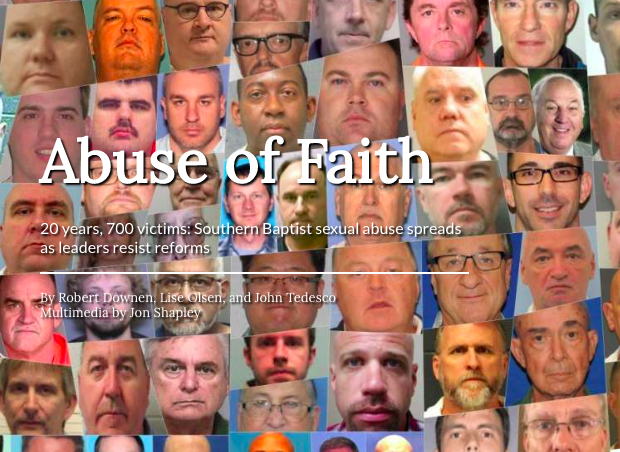
The Southern Baptist Convention’s ongoing fights about how to handle sexual-abuse claims against ministers and other church personnel and volunteers is a perfect example of the kind of story that drives newspaper editors crazy.

It’s big and complicated and it seems like something crazy or important (or both) happens every other day. But it also seems like it’s impossible to yank a big, dramatic headline out of this sprawling, complicated story.

The story never seems to end and the amount of background material needed — in story after story after story — makes it impossible to cover this stuff in tidy 500-word stories. But if a newsroom skips a few of the major developments, that makes it even harder to get back in the game and explain to readers what is happening. Oh, and did I mention that newsroom managers pretty much have to assign a reporter to this story full-time or near full-time? That’s expensive in this day and age. Obviously, this reporter has to have religion-beat experience and speak fluent Southern Baptist.

At the same time, in my experience, there will almost always be one or two editors who say (or think) something like this: “I know the SBC is huge and there are billions of dollars involved and we have lots of Southern Baptist churches (and maybe a college) in our news territory, but … I don’t ‘get’ why this story really matters to average readers. I mean, it’s not about sports or politics or something important (to me).”

As a Charlotte editor once told me, when I was poised to break a national-level SBC story in the early 1980s: Nobody reads this stuff but fanatics and every time you write about it we get too many letters to the editor.

This brings us to this week’s “Crossroads” podcast, which focuses on why the SBC’s struggles with sexual-abuse are important, and NOT just to Southern Baptists (click here to tune that in). The key is to identify major stories LINKED to sexual-abuse scandals that involve ethical, moral, legal and theological issues that can be seen in religious groups of all kinds (and many secular nonprofits and organizations as well). To illustrate this, let me tell you a story about an important evangelical counseling pioneer — the late Dr. Louis McBurney, founder of the Marble Retreat Center in Colorado.

Please respect our Commenting Policy

Does church attendance reduce political polarization? Not among White conservatives

Does church attendance reduce political polarization? Not among White conservatives

There are some concepts in political science that have just become impossible to ignore. Whether it’s leading a classroom discussion, talking to a member of the media, or just chatting with friends about the current state of the world, I can’t help but bring it all back to political polarization.

Put simply, it’s the idea that American society has become more politically tribalized, with Democrats huddled in the far left corner of the political spectrum and Republicans doing the same on the right side of the scale with a huge chasm between the two. And, the two parties loathe each other — not just disagreeing, but believing that if the other party wins an election, it will lead to the end of the Republic.

Compromise becomes impossible in a world in which you see the other side not only as wrong, but also as the enemy. The inherent problem is that our democratic processes grind to a halt without a level of bi-partisan support.

There’s been a ton of great research done on measuring the level of polarization in the United States Congress by using DW-NOMINATE scores. The results indicate that both parties have moved away from the center, but that is more pronounced among the GOP than among the Democrats. This visual (it comes from this paper) is one I use in class to show just how bad it’s gotten.

But, I wanted to take a different approach here. I wanted to see just how much polarization is perceived by the average American, how that has changed over time, and how religion plays a role in that perception.

Here’s how I did it.

Since 2012, the CCES has asked respondents a battery of questions that require them to place the Democratic Party, the Republican Party, and themselves on an ideology scale running from 1 (very liberal) to 7 (very conservative), with the moderate option described as “middle of the road.” For my purposes someone has a polarized view of the world if they describe either the Democrats as “very liberal” or the Republicans as “very conservative.” In essence, they are saying: “that political party can’t get any more extreme.”


Please respect our Commenting Policy

New podcast: Yes, New York's governor urged church folks to be her 'apostles' backing vaccines

New podcast: Yes, New York's governor urged church folks to be her 'apostles' backing vaccines

Hey news consumers, remember that time when President Donald Trump stood in front of a church (sort of in an urban war zone), held up a Bible and the world went nuts?

Chances are good that you heard about it. However, as a refresher, here are 66,100,1000 Google references to this incident, as well as as an imperfect collection of other Trumpian news involving the word “Bible.”

Or remember that time when Trump — long-time member of the liberal Presbyterian Church (U.S.A.) and probably, in terms of private life, one of the most secular presidents in American history — went to Liberty University to court evangelicals and said this (care of an NPR report):

"We're going to protect Christianity. I can say that. I don't have to be politically correct," he thundered at the beginning of his speech at the conservative evangelical university.

Then he moved on to cite "Two Corinthians 3:17, that's the whole ballgame. ... Is that the one you like?" Trump asked. "Now the Lord is that Spirit: and where the Spirit of the Lord is, there is liberty."

Over at Google, there appear to be a mere 2,380,000 references to this “Two Corinthians” incident.

Truth is, politicians often say and do strange things while courting support in religious settings that are way outside their own cultural comfort zone.

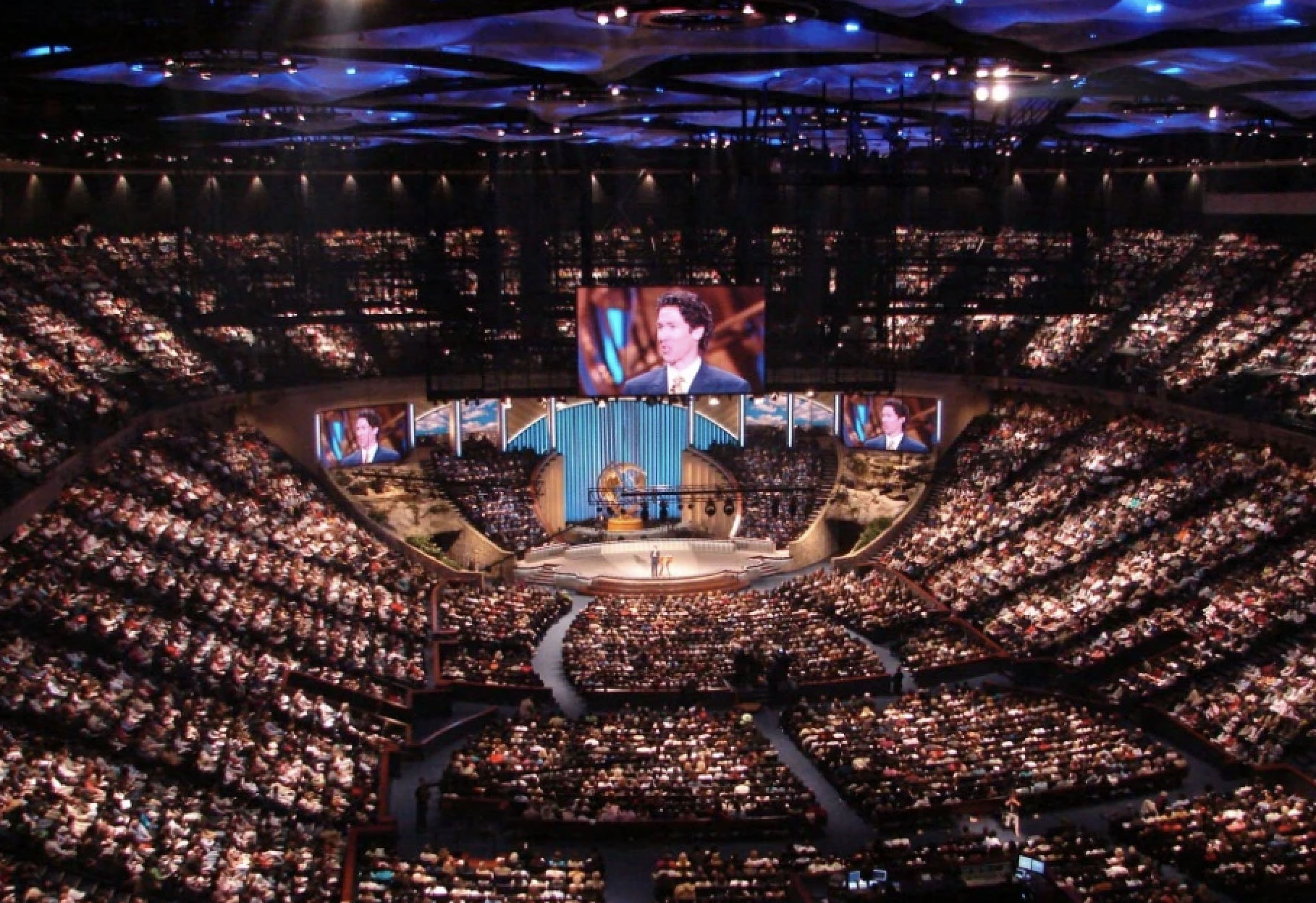
This brings us to this week’s “Crossroads” podcast, which focuses on the coverage — actually, the lack of coverage — of the recent visit that New York Gov. Kathy Hochul paid to the Christian Cultural Center, a massive and very influential predominantly African-American megachurch in Brooklyn. Click here to get that podcast, or head over to Apple Podcasts.

Now, there was more to this political-religious event than the hilarious typo in the rushed transcript of the governor’s remarks produced, apparently, by a staff member. Check out the opening words here: “The phrase be to God, this is the day the Lord has made. Amen, amen.”

Let’s assume that the governor actually said “praise be to God.”


Please respect our Commenting Policy

Notable omission among liberal religious voices in phase 2 of Supreme Court abortion case

Notable omission among liberal religious voices in phase 2 of Supreme Court abortion case

The media are prepping for the U.S. Supreme Court's December 1 hearing on the strict Mississippi abortion law and the subsequent ruling.

In a prior Guy Memo on religious "friend of the court" briefs filed on the pro-life side, I promised a second rundown when pro-abortion-rights activists weighed in with their views. Now that second wave of religious arguments has landed — with a notable omission in those ranks that journalists will want to pursue.

To explain, we'll need some religion-beat history on this issue.

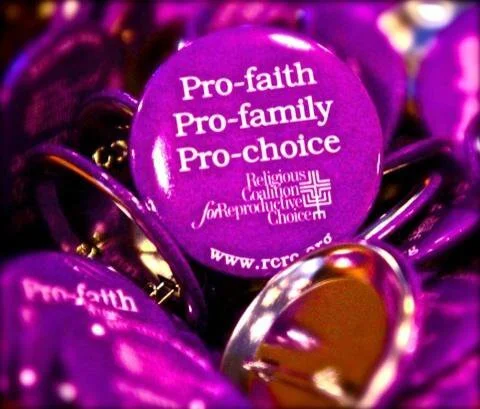
In 1967, two years before NARAL Pro-Choice America was founded, the 1,400-member Clergy Consultation Service formed to help women obtain abortions and fight legal barriers. After the high court legalized U.S. abortions in the 1973 Roe v. Wade decision currently at issue, the related Religious Coalition for Abortion Rights was founded to campaign for moral acceptance. (In 1994 it dropped the A-word and was renamed the Religious Coalition for Reproductive Choice or RCRC).

Founders included a significant chunk of "mainline" and liberal Protestantism, including the Episcopal Church, Presbyterian Church (U.S.A.) Mission Agency, United Church of Christ and several independent Protestant caucuses. The United Methodists' General Board of Church and Society hosted the founding, and the Methodist women's division also joined, but both later backed away. The Coalition also included major non-Orthodox Jewish organizations and the Unitarian Universalist Association (UUA).

In the new Court filings, abortion-rights law gets continued support from RCRC, UUA and Jewish organizations. But no Protestant denomination that favors abortion choice has joined to support Roe. Reporters should find out why they sidestepped this historic showdown. For example, have complex schism talks led to silence on the United Methodist left, as opposed to earlier debates (see YouTube video at the top of this post)?

The silence from "mainline" churches deprives the high court of in-depth moral thinking from pro-choice Christians that answers conservatives on issues that make abortion unusually difficult for public policy, among them: Does a genetically unique and developing human embryo or fetus have value? Why, or why not?


Please respect our Commenting Policy

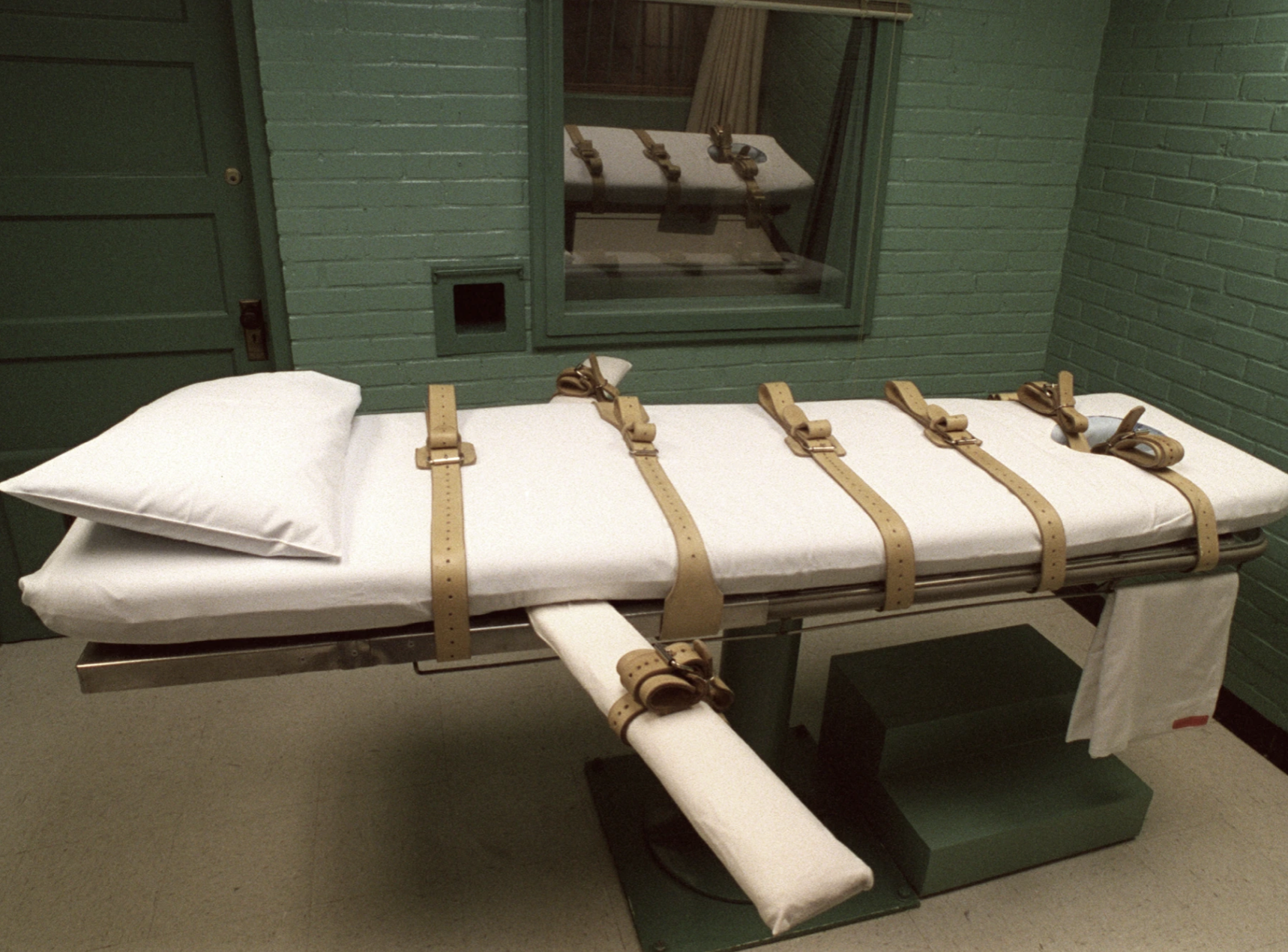
Thinking about prayers at executions: These stories offer glimpses of an old church-state unity

Thinking about prayers at executions: These stories offer glimpses of an old church-state unity

This is a “feeling guilty” post. For quite some time now, I have been planning to examine the coverage of some important religious-liberty cases that have been unfolding in the death-row units of prisons.

The decisions are worthy of coverage, in and of themselves. At the same time, these cases have demonstrated that it is still possible, in this day and age, for church-state activists on the left and right to agree on something. Maybe I should have put a TRIGGER WARNING notice at the start of that sentence.

Like I said the other day in this podcast and post — “Covering a so-called 'religious liberty' story? Dig into religious liberty history” — this kind of unity in defending religious freedom has become tragically rare (from my point of view as an old-guard First Amendment liberal). Indeed, to repeat myself, “America has come a long way since that 97-3 U.S. Senate vote to approve the Religious Freedom Restoration Act of 1993.”

The problem is that you rarely, if ever, see reporters catch this church-state angle in these decisions. The key is to look at who filed legal briefs in support of the religious liberty rights of the prisoners.

This brings me to an important Elizabeth Bruenig essay that ran the other day at The Atlantic, under this dramatic double-decker headline:

The State of Texas v. Jesus Christ

Texas’s refusal to allow a pastor to pray while holding a dying man’s hand is an offense to basic Christian values.

Here is the meaty overture:

Devotees to the cause of religious liberty may be startled to discover during the Supreme Court’s upcoming term that the latest legal-theological dispute finds the state of Texas locked in conflict with traditional Christian practice, where rites for the sick, condemned, and dying disrupt the preferences of executioners.


Please respect our Commenting Policy

Big question right now: What religious groups oppose vaccination, even during epidemics?

Big question right now: What religious groups oppose vaccination, even during epidemics?

THE QUESTION:

What religious groups oppose vaccination -- even during epidemics?

THE RELIGION GUY'S ANSWER:

Judges and public officials will be coping with the issue of vaccination mandates that President Joe Biden, states and employers are imposing to counter spread of the stubbornly contagious and virulent COVID-19 virus. This again raises the issue of religious-liberty claims for exemption from required vaccination.

Pastor Greg Locke of the independent Global Vision Bible Church in suburban Nashville has just been permanently banned from social media postings on Twitter after demanding that Christians shun vaccination (as well as preaching that Biden is a usurper and not a legitimately elected president).

Also, the Washington Post highlighted Pastor Jackson Lahmeyer of Tulsa, Oklahoma (who's running against devoutly evangelical U.S. Senator James Lankford in next year's Republican primary). Lahmeyer offers exemption letters for anyone who donates at least $1 to become an online member of his charismatic Sheridan Church. So far 30,000 supplicants have downloaded his exemption letter.

The president's new policy has already sparked a significant upswing in religious exemption requests. So, what are the facts on religious groups and opposition to vaccination?

A bit of history: Major religious objections arose with the first vaccination experiments in the American Colonies. But influential Congregationalist Cotton Mather championed scientific progress and defended smallpox experiments using adult volunteers. Eminent theologian Jonathan Edwards agreed and set an example as a vaccination volunteer when president of the school we know as Princeton University. He died as a result in 1758. Edward Jenner only achieved vaccination safety 38 years later.

Since then, official Christian or Jewish protests have generally been rare to non-existent as vaccinations are required to enter U.S. public schools, military service or particular jobs, or for foreign travel.


Please respect our Commenting Policy

New podcast: Covering a so-called 'religious liberty' story? Dig into religious liberty history

New podcast:  Covering a so-called 'religious liberty' story? Dig into religious liberty history

Believe it or not, America’s commitment to the First Amendment and religious liberty wasn’t dreamed up by the Religious Right.

However, at some point — mainly during press coverage of clashes between the Sexual Revolution and traditional forms of religion — religious liberty turned into “religious liberty” or even “so called ‘religious liberty’ ” and other language to that effect. America has come a long way since that 97-3 U.S. Senate vote to approve the Religious Freedom Restoration Act of 1993.

Now we are seeing waves of valid news coverage of religious liberty disputes linked to people seeking exemptions from mandates requiring COVID-19 vaccines. During this week’s “Crossroads” podcast (CLICK HERE to tune that in) I suggested that it would help for journalists to dig into the details of how courts have handled earlier religious liberty cases.

Consider this recent Washington Post headline, involving a White evangelical leader in Oklahoma: “This pastor will sign a religious exemption for vaccines if you donate to his church.” Here’s the overture:

A pastor is encouraging people to donate to his Tulsa church so they can become an online member and get his signature on a religious exemption from coronavirus vaccine mandates. The pastor, Jackson Lahmeyer, is a 29-year-old small-business owner running in the Republican primary challenge to Sen. James Lankford in 2022.

Lahmeyer, who leads Sheridan Church with his wife, Kendra, said Tuesday that in the past two days, about 30,000 people have downloaded the religious exemption form he created.

“It’s beautiful,” he said. “My phone and my emails have blown up.”

This minister isn’t alone in thinking this way. Here is a New York Daily News story about an African-American Pentecostal leader: “A Brooklyn preacher’s blessing is a pox upon his flock.”


Please respect our Commenting Policy

Latest angles on Trump-era 'evangelicals,' including questions about the vague label itself

Latest angles on Trump-era 'evangelicals,' including questions about the vague label itself

This Memo concerns not some breaking story but a potential scenario about U.S. "evangelical" Protestants that reporters on both the politics and religion beats should be watching.

For the umpteenth time we revisit the definition of this vibrant but challenged movement and its relation to a Republican Party that the secularized Donald Trump continues to dominate.

(See The Guy's effort at defining evangelicalism here, and remember that most media discussions involve White evangelicals only, since Black and Hispanic evangelicals are very different politically. And click here for a wave of tmatt posts on this topic.)

GetReligion team member Ryan Burge, an energetic political scientist who posts interesting data most days of the week, tweeted this chart on Sept. 16th showing how self-identified evangelicals described their own church attendance over a dozen years in Cooperative Election Study polling.

There's a clear developing trend. As recently as 2008, 58.6% of self-identified evangelicals said they worshiped weekly or more often, but less than half (49.9%) by 2020.

Over the same years, evangelicals who "seldom" or "never" attended grew from 16.1% to 26.7%. The slide did not begin with the Trump presidency but was already at work, since in 2016 the weekly-or-mores were down to 52.9% and seldom-or-nevers up to 22.6%.

The Guy considers attendance a good barometer of devotion, as a historically central value inside the evangelical subculture. We can speculate that similar downward slides might be occurring with other bonding activities in the evangelical tradition such as adult Bible classes, prayer meetings, small groups, daily devotions, evangelistic revivals and charity projects.

The numbers surely reflect the nation's 21st Century secularization. But Burge reaches the provocative conclusion that they mean evangelical "is not a religious term anymore." (What substitute word would suffice? There's a story theme for you.) Certain movement insiders have argued that a different label is needed because the term has taken on such a heavy Republican -- and Trumpublican -- flavor


Please respect our Commenting Policy

Plug-In: As COVID-19 vaccine wars rage, press focuses on religious-exemption claims

Plug-In: As COVID-19 vaccine wars rage, press focuses on religious-exemption claims

Back in March, I wrote a column about the joy and hope the COVID-19 vaccines had brought my family after more than a year of pandemic disruption.

I prayed that those skeptical of the vaccines eventually would recognize the benefits of protecting themselves — and their loved ones — from potential serious illness and death.

Yet here we are six months later, with coronavirus infections and deaths at “levels not seen since last winter” and religion often at the center of the vaccine war.

Colleen Long and Andrew DeMillo of The Associated Press report:

An estimated 2,600 Los Angeles Police Department employees are citing religious objections to try to get out of the required COVID-19 vaccination. In Washington state, thousands of state workers are seeking similar exemptions.

And in Arkansas, a hospital has been swamped with so many such requests from employees that it is apparently calling their bluff.

Religious objections, once used sparingly around the country to get exempted from various required vaccines, are becoming a much more widely used loophole against the COVID-19 shot.

And it is only likely to grow following President Joe Biden’s sweeping new vaccine mandates covering more than 100 million Americans, including executive branch employees and workers at businesses with more than 100 people on the payroll.

In a front-page report, New York Times religion writer Ruth Graham notes:

Major religious traditions, denominations and institutions are essentially unanimous in their support of the vaccines against Covid-19. But as more employers across the country begin requiring Covid vaccinations for workers, they are butting up against the nation’s sizable population of vaccine holdouts who nonetheless see their resistance in religious terms — or at least see an opportunity.


Please respect our Commenting Policy