Evangelicals

Once again, U.S. Supreme Court chooses to punt on a major religious liberty case

Once again, U.S. Supreme Court chooses to punt on a major religious liberty case

Florist Barronelle Stutzman and Robert Ingersoll have shared many details from the 2013 conversation that changed their lives and, perhaps, trends in First Amendment law.

For nine years, Ingersoll was a loyal customer at Arlene's Flowers in Richland, Wash., and that included special work Stutzman did for Valentine's Day and anniversaries with his partner Curt Freed. Then, a year after the state legalized same-sex marriages, Ingersoll asked her to design the flower arrangements for his wedding.

Stutzman took his hand, Ingersoll recalled, and said: "You know I love you dearly. I think you are a wonderful person, but my religion doesn't allow me to do this."

In a written statement to the Christian Science Monitor, Ingersoll wrote: "While trying to remain composed, I was … flooded with emotions and disbelief of what just happened." He knew many Christians rejected gay marriage but was stunned to learn this was true for Stutzman.

As stated in recent U.S. Supreme Court documents: "Barronelle Stutzman is a Christian artist who imagines, designs and creates floral art. … She cannot take part in or create custom art that celebrates sacred ceremonies that violate her faith."

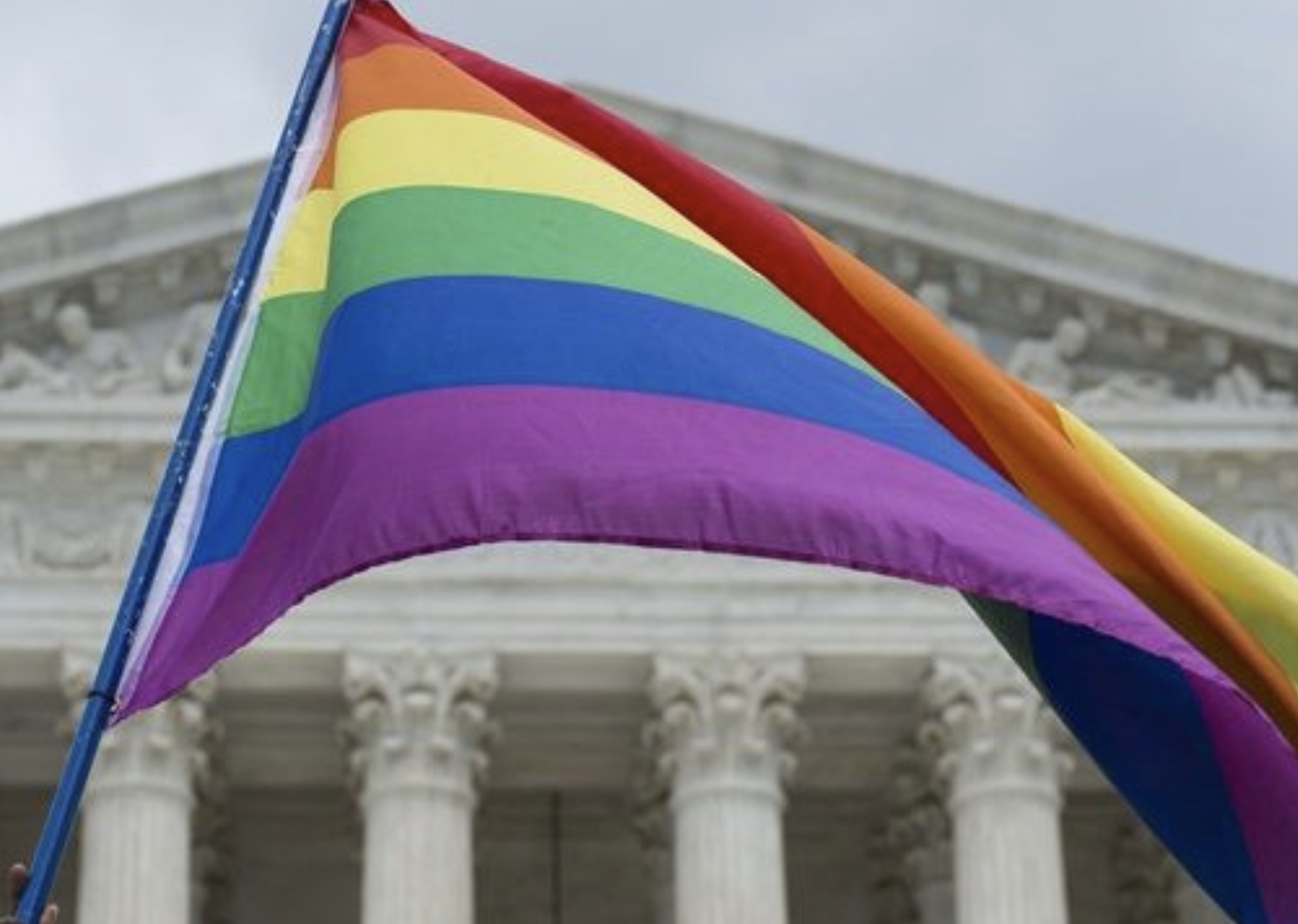
This legal drama appears to have ended with Stutzman's second trip to the high court and its July 2 refusal to review a Washington Supreme Court decision the drew a red line between a citizen's right to hold religious beliefs and the right to freely exercise these beliefs in public life. Supreme Court justices Clarence Thomas, Samuel Alito and Neil Gorsuch backed a review, but lacked a fourth vote.

"This was shocking" to religious conservatives "because Barronelle seemed to have so many favorable facts on her side," said Andrew T. Walker, who teaches ethics at Southern Baptist Theological Seminary.

Stutzman is a 76-year-old grandmother and great-grandmother who faces the loss of her small business and her retirement savings. She has employed gay staffers. She helped Ingersoll find another designer for his wedding flowers. In the progressive Northwest, her Southern Baptist faith clearly makes her part of a religious minority.

"Barronelle is a heretic because she has clashed with today's version of progressivism," said Walker.


Please respect our Commenting Policy

Jimmy and Rosalynn Carter: Why did some journalists bury the faith tie that binds them?

Jimmy and Rosalynn Carter: Why did some journalists bury the faith tie that binds them?

If it’s been said once it’s been said a thousand times: Jimmy Carter may have been a very unsuccessful U.S. president, but his life after the White House has been top-notch.

In fact, according to a 2015 poll, the American public thinks he’s No. 1 among the nation’s post-presidents.

Obviously, there was that Nobel Peace Prize in 2002, which was awarded for “his decades of untiring effort to find peaceful solutions to international conflicts, to advance democracy and human rights, and to promote economic and social development." But if you ask average Americans what they admire about Carter’s life post-White House, I think most of them would mention two, or maybe three, parts of his life.

First, there is his record in volunteer work and public service, symbolized by decades of work with Habitat For Humanity building homes for the working poor. If you have followed that story at all, you know that Carter doesn’t just show up with a hammer for the photo-ops. Second, there is the remarkable marriage-partnership between Jimmy and Rosalynn Carter. I have heard Southerners refer to them as the “anti-Clintons,” as in Bill and Hillary Rodham.

Finally, there is — as Jerry Falwell, Jr., of all people, once put it — Carter’s many decades of work as the “world’s most famous Sunday school teacher.” Ths smiling Baptist did that work week after week whether there were TV cameras present or not.

That faith element was the subject of this week’s “Crossroads” podcast (click here to tune that in) in which host Todd Wilken and I looked at three mainstream-press features about Jimmy and Rosalynn Carter celebrating their 75th wedding anniversary. If readers are interested in the faith tie that binds in this marriage, they should start with this fine Washington Post feature, with it’s one-word headline: “Inseparable.” Here’s the overture:

PLAINS, Ga. — When they arrived, they strolled hand-in-hand toward their pond with a graceful willow at its edge.

“We’re going to be buried right there, on that little hill,” Jimmy Carter said, motioning toward the lawn sloping up from the pond.


Please respect our Commenting Policy

That New Yorker #FreeBritany feature: It's all about a Baptist daddy and his wild daughter?

That New Yorker #FreeBritany feature: It's all about a Baptist daddy and his wild daughter?

One thing is clear, when you read the long, sad (but buzz-worthy) feature in The New Yorker entitled “Britney Spears’s Conservatorship Nightmare.”

Britney is a celebrity.

When she goes to court, she is a celebrity. When she escapes to a pub, she is a celebrity. When she fights to see her children, she is a celebrity. When she has a nervous breakdown (especially in public), she is a celebrity.

If and when she ever returns to church (there are rumors), she will do so as a celebrity. Ditto for any return to celebrity friendly Kabbalah classes.

But you get what you expect in this feature, written by Ronan Farrow and Jia Tolentino. There’s a huge cast of characters, some who speak on the record and some who do not. There are waves of details from court documents and testimony. There’s an endless survey of public scenes and paparazzi chases.

But the second line of the double-decker headline points to the heart of the story: “How the pop star’s father and a team of lawyers seized control of her life — and have held on to it for thirteen years.”

This is a story about a fight between a Baptist father (simply “Jamie” in most of the story) and his wild daughter — who has lived her entire teen and adult life in the glare of a media spotlight that burned her, even as it poured wealth on everyone around her, including members of her immediate family.

What about faith issues? There are fleeting glimpses of religion “ghosts” throughout this story. However, there is evidence that The New Yorker team realizes that, behind all of the talk about Britney’s mental health, the father and daughter are fighting about the moral choices she has made in her private life. Meanwhile, the daughter keeps trying to break free from this noose, in part through sex, love, marriage and children.

Consider the implications of this passage, referring to the legal drama that pulled the #FreeBritney social-media world back into the headlines:


Please respect our Commenting Policy

Lawsuits and scarce donors: Religious colleges could be facing tough years ahead

Lawsuits and scarce donors: Religious colleges could be facing tough years ahead

A narrowly-framed Supreme Court victory — the Fulton v. Philadelphia case — will allow Catholic Charities (at least for now) to preserve religious conscience and avoid placing foster children and children available for adoption with same-sex couples, despite the city's non-discrimination statute.

However, this does not settle the many similar legal disputes the media will be covering the next few years.

In particular, reporters will want to carefully monitor Hunter v. U.S. Department of Education, a potentially huge lawsuit filed in Oregon federal court March 29. This is a class action with 33 plaintiffs represented by Portland attorney Paul Southwick, director of the Religious Exemption Accountability Project or REAP (paul@paulsouthwick.com and 503-806-9517). Alliance Defending Freedom, a familiar participant in such matters, has filed a bid to defend the religious schools (media@adflegal.org or 480-444-0020). There are questions about the degree to which the current Justice Department will help in this defense.

The suit charges that LGBTQ students suffer "abuses and unsafe conditions" at "hundreds" of U.S. religious colleges with traditional doctrinal covenants so government should cut off their financial aid. Except for Brigham Young University and the Church of Jesus Christ of Latter-day Saints, REAP's targets are Protestant, led off by Oregon's George Fox University, a venerable Quaker campus attended by Herbert Hoover when it was a mere secondary school. George Fox's mission statement declares that "we desire the presence of Christ to be at the core of all we do."

Others include the likes of Azusa Pacific University, Baylor University, Bob Jones University, Dordt University, Eastern University, Fuller Theological Seminary, Liberty University, Messiah University, Moody Bible Institute, Seattle Pacific University, Union University and Westmont College. (Notably missing: Calvin, Gordon, Wheaton.)

Loss of aid for students would be a severe competitive blow in coming years when all colleges and especially private and religious ones expect to suffer declines in the student-age population and thus in applications, this on top of the institutional damage wrought by COVID-19. There are also prospective attacks on such schools' tax exemption and academic accreditation over sexuality. The status of athletic programs is also a hot-button issue.


Please respect our Commenting Policy

To tithe or not to tithe: Should 21st Century Christians give church 10% of their income?

To tithe or not to tithe: Should 21st Century Christians give church 10% of their income?

THE QUESTION:

Should 21st Century Christians still give 10% of their income to the church?

THE RELIGION GUY'S ANSWER:

A bad pun says that the week of a church's annual budget pledge drive the pastor preaches the Sermon on the Amount. Many churches are fretting about amounts these days, hoping attendance and offering-plate receipts will recover from the COVID crisis.

How much should modern-day Christians donate to support their churches? The oft-cited standard is the "tithe," a biblical term for 10% of income. But Keith Giles, a "progressive Christian" blogger at Patheos.com, argued that there are "very good reasons to stop tithing your 10% every week."

Definitions: Should that be 10% of wealth and accumulated assets or only income? Should all 10% go to the church only with any other giving counted beyond the 10%, or does the tithe cover all religious and charitable donations? Also, of course, the very different biblical situation involved gifts of agricultural produce, not money.

Speaking of the ancient context, Giles's main theme is that tithing was part of a bypassed Old Testament system that provided upkeep for the Jerusalem Temple and the priests working there who had no other livelihood. The Romans destroyed the Temple in A.D. 70 so there's no Temple or priesthood that need support.

However, that argument ignores that today's clergy similarly live off believers' financial support in order to carry out religious work. In fact, clergy typically get lower pay than other professionals with comparable years of training.


Please respect our Commenting Policy

How will this Supreme Court decide, or sidestep, pivotal religious liberty questions?

How will this Supreme Court decide, or sidestep, pivotal religious liberty questions?

The major U.S. Supreme Court ruling in Fulton v. Philadelphia (.pdf here) allows a Catholic agency to avoid placing foster-care children with same-sex couples. Importantly, the Catholics will place gay children and will place children with gay singles since there's no conscience crisis over defying the church's doctrines on marriage.

For decades there's been confusion and acrimony over the court's applications of the Constitution's ban on government "establishment of religion," but now disputes over the religious "free exercise" clause grab the spotlight. The Fulton ruling sidestepped the heart of this generation's conflagration between religious rights and LGBTQ+ rights and, thus, may even have added logs to the fire.

The justices backed the Catholic claim with what The Economist's headline correctly labeled "The 3-3-3 Court." The narrow technical grounds for the decision enabled the three liberals (Stephen Breyer, Elena Kagan, Sonia Maria Sotomayor) to make the ruling unanimous. The conservatives were split between three demanding a thorough overhaul of "free exercise" law (Justice Samuel Alito, in a vigorous 77 pages, joined by Neil Gorsuch and Clarence Thomas) and three unwilling to take the plunge at this time (Chief Justice John Roberts and the two newest members, Brett Kavanaugh and Amy Coney Barrett).

Similar caution apparently underlies the court's majority decision this week not to review transgender student Gavin Grimm's victory against his Virginia school over bathroom access.

Journalists should prepare for more years of extensive -- and expensive -- politicking and litigation before the Supreme Court defines -- or decides not to define -- how First Amendment guarantees apply in 21st Century culture.

For those on the religion beat, it is easy to see that this case has hardened the related conflict among major denominations.


Please respect our Commenting Policy

Lighthouse parable again: Faith-shaped hole in report on Donald Trump's brush with death

Lighthouse parable again: Faith-shaped hole in report on Donald Trump's brush with death

Something is missing from that riveting Washington Post report by Damian Paletta and Yasmeen Abutaleb about Donald Trump’s battle with the coronavirus that may have been much more dangerous than the White House team let on.

The headline: “Inside the extraordinary effort to save Trump from covid-19.” This long feature was adapted from the upcoming book “Nightmare Scenario: Inside the Trump Administration’s Response to the Pandemic That Changed History.”

This is a story about Trump’s hubris that is, for a change, packed with on-the-record material. Thus, I kept waiting for a specific name to show up — but it never did. I was thinking, of course, about the “lighthouse parable” that I have shared many times here at GetReligion. If you prefer the Sherlock Holmes story about the dog that didn't bark, that will work, too. Here is a flashback to that lighthouse tale:

Once there was a man who lived in a lighthouse on the foggy Atlantic. This lighthouse had a gun that sounded a warning every hour. The keeper tended the beacon and kept enough shells in the gun so it could keep firing. After decades, he could sleep right through the now-routine blasts.

Then the inevitable happened. He forgot to load extra shells and, in the dead of night, the gun did not fire.

This rare silence awoke the keeper, who lept from bed shouting, "What was that?"

Now, in my experience, when religious believers get really sick — especially if they are close to the “critical” stage — they will almost always send for their pastor. In a life-and-death situation ministers are a source of prayer, comfort and, often, sound advice (my late father spent the final decade of his ministry working as a hospital chaplain).

Thus, I kept waiting to see a reference to the Rev. Paula White, the charismatic megachurch leader who Trump supporters frequently called his spiritual advisors (click here for a Julia Duin post on White). There were other clergy who, in this case, were candidates to get a call from the White House, like the Rev. Franklin Graham, perhaps.


Please respect our Commenting Policy

Plug-In: Generations of indigenous children snatched from families and churches took part

Plug-In: Generations of indigenous children snatched from families and churches took part

For 120 years, Canada took Indigenous children from their families and forced them into residential schools run by Christian denominations — a practice that didn’t end until 1996.

Now, the discoveries of hundreds of unmarked graves at two former residential schools have rocked America’s northern neighbor, and the aftershocks have spread to the U.S.

Last month, the Tk’emlúps te Secwépemc First Nation announced that it had found the remains of 215 children near the former Kamloops Indian Residential School in British Columbia. And this week, the Cowessess First Nation reported locating more than 600 unmarked graves at the former Marieval Indian Residential School in Saskatchewan.

The discoveries have brought a national reckoning over what Canadian Prime Minister Justin Trudeau characterizes as “a dark and shameful chapter” of the nation’s history.

“I’m ashamed as a White Christian. I’m ashamed of what we did,” Kevin Vance, a minister in Regina, Saskatchewan, told me earlier this month. “I’m ashamed of all the racism and genocide that we concocted and that we did it in the name of Jesus. That’s just unbelievable to me.”

But the dark history isn’t limited to Canada: The news there “has magnified interest in the troubling legacy both in Canada and the United States,” according to The Associated Press.

As Susan Montoya Bryan of the Associated Press reports, the U.S. government “will investigate its past oversight of Native American boarding schools and work to ‘uncover the truth about the loss of human life and the lasting consequences’ of policies that over the decades forced hundreds of thousands of children from their families and communities.”

In the U.S. — as in Canada — Christian denominations are an important part of the story, notes veteran religion writer G. Jeffrey MacDonald, who wrote about American church-run boarding schools in 2018.

“The churches were not just complicit. They were participatory,” Christine Diindiisi McCleave, chief executive officer of the National Native American Boarding School Healing Coalition, told MacDonald then. “They received federal funding and helped carry out the policy.”


Please respect our Commenting Policy

Don't neglect Mainline Protestants when analyzing, e.g., sexual abuse or Baptist turmoil

Don't neglect Mainline Protestants when analyzing, e.g., sexual abuse or Baptist turmoil

Two blockbusters dominated the American religion beat last week.

The Catholic bishops defied a nudge from Pope Francis's Vatican and decided overwhelmingly to write a Communion policy that might target President Joe Biden and other pols for liberal abortion stances. And conservative establishment voters in a Southern Baptist Convention (SBC) presidential showdown narrowly defeated (for now) hard-right populists.

Standard news judgment automatically puts the spotlight on hot disputes in the nation's two largest religious sectors — white evangelicalism and Catholicism. Meanwhile, week by week, year by year, the media consistently downplay the third-ranking religious category, "Mainline" Protestantism, which not so long ago exercised such vast cultural influence. (They also neglect fourth-ranking Black Protestantism.)

Two thoughtful new articles show intriguing ways to overcome sins of omission.

President Mark Tooley of the conservative Institute on Religion & Democracy asks, at the Juicy Ecumenism weblog, why Mainline churches apparently suffer fewer sexual abuse scandals than their evangelical rivals. And University of West Georgia historian Daniel K. Williams compares the turbulent Southern Baptists with their smaller and rarely covered Mainline rival, American Baptist Churches (ABC). [Disclosure: The Guy was happily raised in the ABC and remained a nominal member till age 30.]

"Mainline" refers to church bodies dating from Colonial and post-Revolutionary times that have been predominantly white, involved in ecumenical groups like the National Council of Churches and are either liberal on theology and politics or give liberals ample running room. The largest such denominations — often called the “Seven Sisters” — are the ABC, Christian Church (Disciples of Christ), Episcopal Church, Evangelical Lutheran Church in America, Presbyterian Church (USA), United Church of Christ and United Methodist Church.

Tooley is a Methodist evangelical and major critic of liberal trends, so when he faintly praises Mainline performance this commands attention.


Please respect our Commenting Policy