Evangelicals

Want to trigger Episcopalians? Ask an evangelical superstar to preach at National Cathedral

Want to trigger Episcopalians? Ask an evangelical superstar to preach at National Cathedral

Halfway between Norway and the North Pole, scientists have buried a million seeds and crop samples under a mountain in the Svalbard archipelago -- in case an environmental doomsday comes to pass.

That strategy rings true during "this crazy, chaotic season" when so many are anxious about the coronavirus pandemic, global warming, lost jobs, surging debts and the bitter state of public life, said evangelical megachurch leader Max Lucado, in a recent sermon streamed online by the National Cathedral in Washington, D.C.

“Most of us can't hide out in a bunker, yet threats of calamity may make us try to do so," he said. "If the wrong person pushes the wrong red button -- it's enough to make a person purchase a plane ticket to Svalbard."

But there was a problem. While pre-service publicity stressed that Lucado's books have sold more than 120 million copies and Christianity Today has called him "America's pastor," this invitation alarmed legions of Episcopalians opposed to his history of orthodoxy on sex and marriage. His sermon about God offering comfort in the midst of chaos avoided hot-button topics, but his cathedral appearance triggered an online storm.

Before the event, the Very Rev. Randolph Marshall Hollerith linked the Lucado invitation to the cathedral's history of hosting a variety of religious leaders. This has included evangelicals such the late Billy Graham, Archbishop of Canterbury Justin Welby and megachurch leader Rick Warren of Saddleback Church in Southern California.

"When we only engage with those with whom we agree on every issue, we find ourselves in a dangerous (and lonely) place," wrote the cathedral's dean. "That means this cathedral, and this pulpit, are big enough and strong enough to welcome pastors, rabbis, imams, clergy of every faith. … It does not mean we agree with everything they might believe, but it does mean that we exhibit and inhabit a sense of open handed welcome."

However, Hollerith issued a formal apology in response to the online backlash, noting: "In my straight privilege I failed to see and fully understand the pain he has caused. I failed to appreciate the depth of injury his words have had on many in the LGBTQ community. I failed to see the pain I was continuing. I was wrong."

While Lucado is known as an evangelical moderate, Episcopalians were outraged by a 2004 sermon, and online commentary, stating that he "categorically opposes" gay marriage, as well as his conviction that "homosexual activity" is sin.

Please respect our Commenting Policy

New podcast: There's more to Lent 2021 than virtual-ash selfies and giving up (fill in the blank)

New podcast: There's more to Lent 2021 than virtual-ash selfies and giving up (fill in the blank)

It happened every year that I worked in a mainstream newsroom. Apparently, there was a law somewhere that official newsroom “advance calendars” should include a note about the beginning of Lent.

Thus, an editor would ask me a question that sounded something like this: “So where are we sending a photographer this year on Ash Wednesday?”

This was, you see, the official way to handle Lent and it would be followed, of course, by some kind of sunrise-and-lilies photo when Easter rolled around. There might be an Easter story of some kind, but that was always a problem since the goal was to have the story in print on that Sunday, which meant the story and photograph needed to be done early. It’s so hard to cover a holy day that hasn’t happened yet.

But Ash Wednesday photographs, backed with a sentence of two about Lent, seem to be a news-culture tradition. That reality was the hook — sort of — for this week’s “Crossroads” podcast (click here to tune that in).

Thus, it was easy to anticipate this COVID-19 era variation on a familiar theme, care of Religion News Service: “Celebrating Ash Wednesday in a pandemic? There’s an app for that.

There are filters that blur “imperfections” in photos and filters that turn lawyers into cats on Zoom.

Now there are filters to help Christians safely display the very visible Ash Wednesday mark on social media.

Many Catholic and other liturgical churches observe Ash Wednesday by smudging ashes on congregants’ foreheads as a sign of repentance and a reminder of one’s mortality. That practice presents a problem during a season when health experts fighting COVID-19 have advised people to avoid touching their faces or coming in close proximity to others. …

In a year when so much of life has been lived virtually, Catholic prayer and meditation app Hallow has also taken the tradition online with an “AshTag” photo filter on both Facebook and Instagram.

That’s a valid story, even if it does fit a now familiar pandemic pattern — lots of coverage of virtual faith in these troubled times, as opposed to a few stories about the creative efforts of analog people to observe their traditions within the parameters of social-distancing guidelines.


Please respect our Commenting Policy

Ryan Burge day: Political tensions rise as secularism grows (yet faith numbers stay strong)

Ryan Burge day: Political tensions rise as secularism grows (yet faith numbers stay strong)

Anyone who has followed GetReligion for nearly two decades knows that we have — over, and over, and over — stressed that the safe middle ground in American life seems to be vanishing.

This is true in religion and it is certainly true in politics.

Now, journalists and news consumers can prepare to dig into two books related to these trends — both linked to the work of names that will be familiar to GetReligion readers.

The first, by GetReligion contributor Ryan Burge, is entitled, “The Nones: Where They Came From, Who They Are, and Where They Are Going.” It will hit the market March 9th. We will come back to Burge in a moment, with links to some of his omnipresent charts and commentary.

The second book is entitled, “Secular Surge: A New Fault Line in American Politics,” and it was written by David Campbell, Geoffrey C. Layman and (here’s the familiar name to most GetReligion readers) John C. Green.

Yes, that John C. Green, the man from the 2007 seminar at the Washington Journalism Center who told a circle of journalists from around the world about emerging research about “religiously unaffiliated” Americans and how this would impact politics and, in particular, the shape of the Democratic Party. The line-graph he sketched on our write-on-wall that day was a foretaste of the stunning 2012 Pew study on the rapid rise of the “nones.”

The key was that the “nones” were the natural political partners of secular voters and believers in the shrinking world of the Religious Left. At some point, however, he said there would be tensions with moderate and even conservative Democrats in the Black church and in Hispanic pews, both Catholic, evangelical and Pentecostal. As I wrote in an On Religion column:

The unaffiliated overwhelmingly reject ancient doctrines on sexuality with 73 percent backing same-sex marriage and 72 percent saying abortion should be legal in all, or most, cases. Thus, the “Nones” skew heavily Democratic as voters — with 75 percent supporting Barack Obama in 2008. The unaffiliated are now a stronger presence in the Democratic Party than African-American Protestants, white mainline Protestants or white Catholics.

“It may very well be that in the future the unaffiliated vote will be as important to the Democrats as the traditionally religious are to the Republican Party,” said Green, addressing the religion reporters. “If these trends continue, we are likely to see even sharper divisions between the political parties.”


Please respect our Commenting Policy

Ryan Burge day: Black church believers and Black ‘nones’ show little Ideological divide

Ryan Burge day: Black church believers and Black ‘nones’ show little Ideological divide

There are a number of narratives that have emerged from the 2020 election season, many of which will take years to fully unpack.

One of the most important actually began to take root in December 2017 when Alabama held a special election to fill the Senate seat vacated by Jeff Sessions who became Attorney General in the Donald Trump administration. Alabama, one of the most conservative states in the nation, elected a Democrat — Doug Jones — to a statewide office for the first time in 25 years.

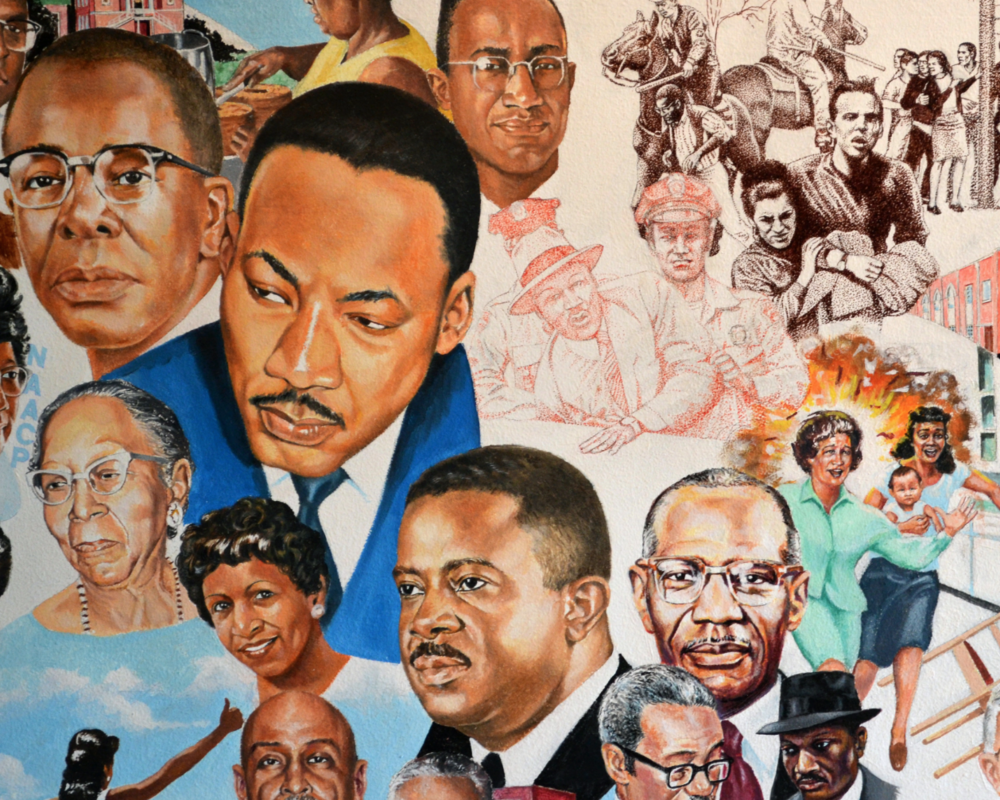
The reason for the victory was quickly attributed to the African-American community who turned out in large numbers for the Democrats. This same thread has run through coverage of the 2020 presidential election, when Joe Biden bested Trump in Georgia. Observers noted that the deep history of civil rights activism in the state energized the African-American base to repudiate the Trump presidency.

That bore out again on Jan. 5, 2021 when the Democrats won both Senate run-off elections in the state, defeating two Republican incumbents.

The Rev. Raphael Warnock’s win has garnered the most headlines. The pastor of one of America’s most historic churchesEbeneezer Baptist — Warnock’s sermons featured prominently in the campaign. One of the results of this coverage is that it pulled back the curtain a bit on the Black church experience for many White Americans who have never had a lot of exposure to other religious traditions.

Yet, despite the fact that a lot of the chatter about the Black vote has centered on people of faith — it’s important to recognize that the Black community is not a religious monolith. While the largest share of African-Americans identify as Christian (63.5%), nearly a quarter indicate that they have no religious affiliation (22.1%) and another 15% identify as part of another faith group (Muslims, Buddhists, Hindus, etc.)

While these religious differences generate huge political divides among the White community, is the same true for Black Americans? The data indicates that race generates a unifying identity for Black Americans much more so than it does for White America, and religious differences at the ballot box are often small or non-existent when comparing Black Americans of different faith traditions.

In terms of political partisan and ideology — the differences between Black Christians, Black Nones and those of other faith traditions is relatively small. However, it’s worth pointing out that Black Christians are clearly the most likely to identify with the Democratic Party.


Please respect our Commenting Policy

Anatomy of a scandal: What's next for journalists working on the Ravi Zacharias fallout?

Anatomy of a scandal: What's next for journalists working on the Ravi Zacharias fallout?

File this memo under “be careful what you wish for.”

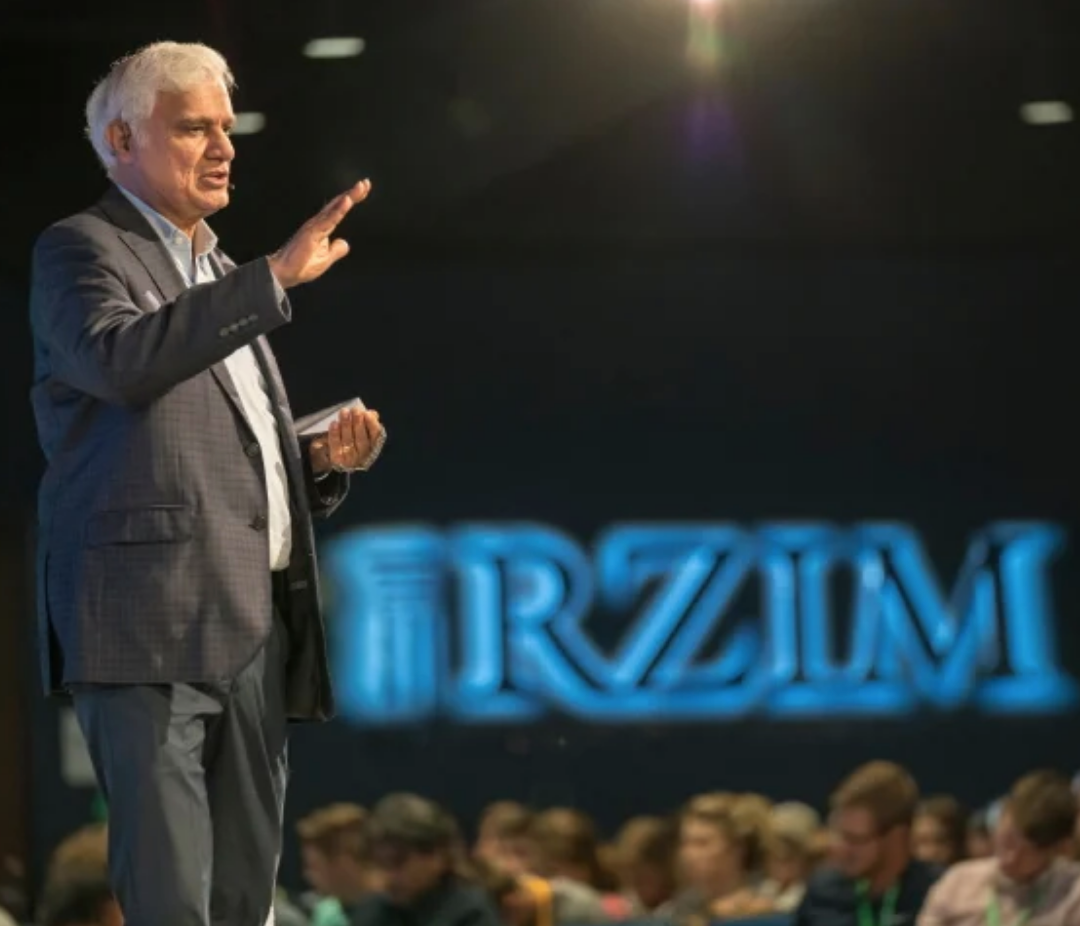
Those planning last May's funeral for evangelical star Ravi Zacharias were pleased to obtain live-streamed tributes from celebrities like Vice President Mike Pence and athlete Tim Tebow. Those outside the oft-disdained evangelical subculture may not comprehend the esteem Zacharias won by turning "apologetics" (defense of the Christian faith) from defensive bombast to intelligent and personable persuasion through books, countless personal appearances worldwide and the global team of some 100 speakers he built.

Presidential Press Secretary Kayleigh McEnany teared up as she told CBN News that Zacharias equipped multitudes so "you didn’t have to check your brain at the door when you became a Christian." She concluded, "Rest assured, his legacy will always be here and he will continue to change lives."

That encapsulates the drama of this harder-they-fall saga.

All the posthumous praise for Zacharias shocked one onlooker, a massage therapist who says he groped her, masturbated in her presence and asked her for sexualized photos. She searched his name online, contacted Steve Baughman of the hyper-hostile RaviWatch.com and then spoke with Daniel Silliman, news editor of the evangelical magazine Christianity Today.

Silliman's resulting investigation found three victimized massage therapists and provoked fury among some staffers and beyond, eventually forcing Ravi Zacharias International Ministries (RZIM) to drop its kid-gloves response and commission a totally independent investigation by a major Atlanta law firm, Miller & Martin.

Media analysts should understand that it takes far more guts for an evangelical magazine that survives on donors and advertisers to expose such situations than a metropolitan newspaper. Upshot: Silliman and colleagues can take satisfaction in distinguished service to the Christian constituency — which echoes those utterly candid authors of the Bible. [Disclosure: The Guy was this magazine's news editor early in his career.]

As agreed, RZIM released the attorneys' full findings on Feb. 9 (click here for .pdf) and they were mind-numbing. Christianity Today's lede had this socko summation:


Please respect our Commenting Policy

Ravi Zacharias scandal shows why independent ministries are so difficult to investigate

Ravi Zacharias scandal shows why independent ministries are so difficult to investigate

If you have followed the Ravi Zacharias story in recent years, you know that it’s a tragedy on multiple levels and a reminder of why repentance is a crucial element of orthodox Christianity.

I followed this story at a distance, because — unlike many religion-beat pros — I had next to zero contact with Zacharias. I interviewed him only once, by telephone, several decades ago. I thought that he was clever, especially when addressing Hollywood’s trendy take on Eastern religions (“Only in America would anyone argue that reincarnation is Good News).”

The stunning, sordid details of his abuse of women make it clear that he suffered from some kind of sexual addiction. And while his mind was razor-sharp when dissecting many questions about moral theology and ethics, he also used his intellectual gifts to justify his own behavior — to the point of saying that God was blessing his actions.

What can we learn from the news coverage of this scandal?

First of all, it’s a good example of what happens when editors allow religion-beat professionals to cover important stories on their beat. Second, the reporting — in Christianity Today and also in the mainstream press — is devastating because it is based on mountains of documentation and on-the-record sources, as well as the testimonies of victims who deserve privacy.

However, there is a third point that must be emphasized, echoing a point frequently made at GetReligion for nearly two decades. I repeat this as a way of stressing one of the biggest challenges facing journalists — even veteran religion-beat pros — covering stories of this kind.

The fall of Zacharias is a perfect example of why it is so difficult to cover independent, non-denominational parachurch ministries (and independent congregations, as well). Nine times out of 10, radically independent religious organizations are only as honest as their charismatic, gifted, rainmaker founders allow them to be. This is true whether we are talking yoga or the prosperity anti-gospel. It was true long ago when I worked with skilled investigative reporters trying to probe the hidden scandals of PTL’s Jim Bakker. Alas, this remains true today.

Hold that thought, because we will come back to it.

Readers who want to know the horrifying details of this case can start with Christianity Today or with The New York Times. Here is the summary material from CT:


Please respect our Commenting Policy

Supreme Court justices are not singing the same religious liberty tune during pandemic

Supreme Court justices are not singing the same religious liberty tune during pandemic

Legal battles over pandemic-era worship gatherings rage on.

Last October’s confirmation of Justice Amy Coney Barrett flipped the U.S. Supreme Court’s script on such questions.

The latest ruling came last Friday night: A 6-3 order stopped California’s ban on indoor worship in most of the nation’s most populous state. But the justices allowed a 25 percent capacity limit to remain.

Perhaps most interestingly, the majority said California can keep prohibiting singing and chanting. For now.

On the singing issue, the justices sang several different tunes:

Chief Justice John Roberts: “The State has concluded … that singing indoors poses a heightened risk of transmitting COVID–19. I see no basis in this record for overriding that aspect of the state public health framework.”

Barrett, joined by Justice Brett Kavanaugh: “Of course, if a chorister can sing in a Hollywood studio but not in her church, California’s regulations cannot be viewed as neutral. But the record is uncertain. … (H)owever, the applicants remain free to show that the singing ban is not generally applicable and to advance their claim accordingly.”

Justice Neil Gorsuch, joined by Justices Clarence Thomas and Samuel Alito: “California has sensibly expressed concern that singing may be a particularly potent way to transmit the disease. … But, on further inspection, the singing ban may not be what it first appears. It seems California’s powerful entertainment industry has won an exemption. So, once more, we appear to have a State playing favorites … expending considerable effort to protect lucrative industries (casinos in Nevada; movie studios in California) while denying similar largesse to its faithful.”


Please respect our Commenting Policy

In the age of COVID-19, it's impossible for clergy to avoid wrestling with the internet

In the age of COVID-19, it's impossible for clergy to avoid wrestling with the internet

Even before the coronavirus crisis, this question haunted pastors: What in God's name are we supposed to do with the internet?

American clergy aren't the only ones wrestling with this puzzle. Consider this advice -- from Moscow -- about online personality cults.

"A priest, sometimes very young, begins to think that he is an experienced pastor -- so many subscribers! -- able to answer the many questions that come to him in virtual reality," noted Patriarch Kirill, leader of the Russian Orthodox Church, at a recent diocesan conference. "Such clerics often lose the ability to accept any criticism, and not only on the internet, or respond to objections with endless arguments."

Pastors eventually have to ask, he added, if their online work is leading people through parish doors and into face-to-face faith communities.

"That is the question of the hour, for sure," said Savannah Kimberlin, director of published research for the Barna Group. Recent surveys have convinced Barna researchers that "the future church will be a blend of digital and in-person work. But it's up to us to decide what that will look like. …

"But isn't that true of our society as a whole? There are digital solutions for so many issues in our lives, right now. … But we can also see people yearning for more than that -- for experiences of contact with others in a community."

In a recent survey, 81% of churchgoing adults affirmed that "experiencing God alongside others" was very important to them, she said. At the same time, a majority of those surveyed said they hoped their congregations would continue some forms of online ministry in the future.

Similar paradoxes emerge when researchers studied evangelistic efforts to reach people who are "unchurched" or completely disconnected from religious institutions.

Half of all unchurched adults (52%), along with 73% of non-Christians, said they are not interested in invitations to church activities. However, a new Barna survey -- cooperating with Alpha USA, a nondenominational outreach group -- found that 41% of non-Christians said they were open to "spiritual conversations about Christianity" if the setting felt friendly.

Online forums and streamed events -- experienced at home, with viewers in control -- may offer some newcomers the flexibility and "safety" that they want.


Please respect our Commenting Policy

Did the January 6th riot at the U.S. Capitol involve Christian 'heresy' or was it 'apostasy'?

Did the January 6th riot at the U.S. Capitol involve Christian 'heresy' or was it 'apostasy'?

THE QUESTION:

Did the January 6th Capitol riot involve Christian “heresy” or “apostasy”?

THE RELIGION GUY’S ANSWER:

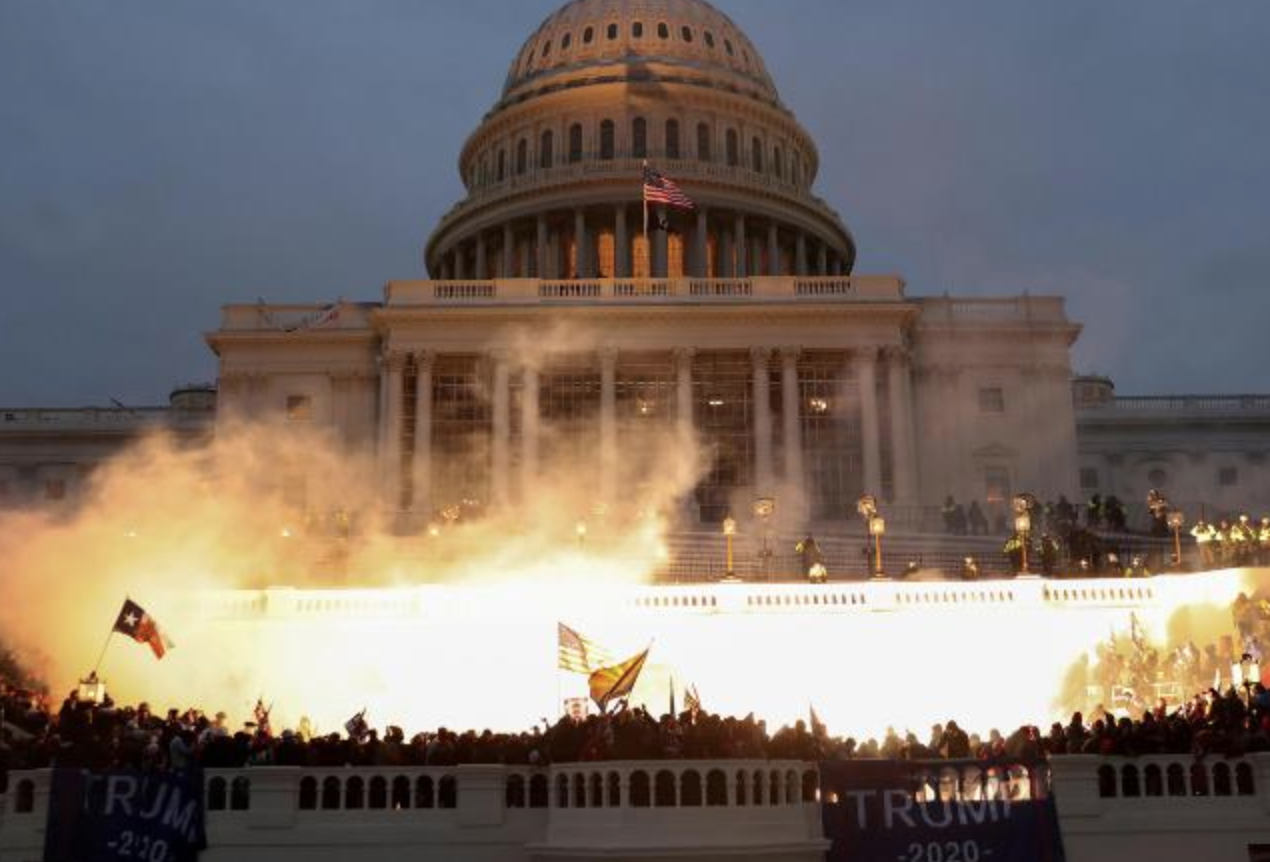
The U.S. Senate may have debated whether ex-President Donald Trump bears responsibility for the Jan. 6 riot at U.S. Capitol, but certain conservative Christians focused instead on his followers. They propose that the final day of Trump’s campaign to overturn President Biden’s December 14 Electoral College victory involved religious “heresy” or “apostasy.”

Those leveling this charge are not #NeverTrump politicians or pundits but devout and conservative Christians. That may seem surprising because in the media and the public mind the “religious right” fuses with devotion to Trump. But such thinkers take doctrine and biblical teaching seriously (unlike religious liberals who define political sins while ignoring theological errors).

A survey by the conservative American Enterprise Institute shows 63% of white evangelicals think Biden’s win was illegitimate, despite the numerous federal and state court rulings that found no evidence for Trump’s claim of a “sacred landslide.” But to what extent were Christians implicated in the Capitol mayhem?

As weeks roll on, we’re learning how a radical fringe planned the Capitol attack in advance and energized the crowd that Trump assembled and addressed.

Terry Mattingly of GetReligion.org distinguishes among four groups: The horde that Trump assembled to hear his demand that Congress and Vice President Mike Pence somehow overthrow Biden’s election; those who obeyed Trump’s plea to march on the Capitol; the militant marchers who broke into the security zone, but only protested outside the Capitol; and the smaller, violent, and foul-mouthed mob that desecrated this potent symbol of democracy across the globe.

Regarding that fourth group, Tony Carnes, editor of the A Journey Through NYC Religions website observed that, “no pastors, priests, or other organized religious leaders have been identified so far as part of the riot.” Mattingly wondered where’s the evidence that links a legal protest that evolved into insurrection with “evangelical networks and institutions.” And yet, videos do capture some incongruous Christian symbols and prayers that mingled with the homicide, threats to kill national leaders, injuries to 138 police, vandalism and theft.


Please respect our Commenting Policy