Evangelicals

New podcast: 'Screen' culture tied to loneliness; can clergy build bridges with same tech?

New podcast: 'Screen' culture tied to loneliness; can clergy build bridges with same tech?

The coronavirus pandemic has created a wide variety of religion-beat stories — from empty local pews to the U.S. Supreme Court debating how many people can occupy local pews. And sometimes it feels like all roads during this crisis, for better or worse, lead to the internet.

Yes, we had lots of ground to cover in this week’s “Crossroads” podcast (click here to tune that in).

Empty local pews have, in some cases, led to near-empty offering plates. Leaders in religious groups that were struggling before COVID-19 — look for closing congregations, seminaries, colleges and even cathedrals — are now hearing the demographics clock tick, tick, tick even louder.

We’re talking about huge stories, but they are also stories that are hard for journalists to cover, simply because they require information at the local, regional and national levels.

It was easy to cover local clergypersons as they learned to mount smartphones atop camera tripods and stream worship services to their locked-down flocks (as opposed to megachurches that already had cameras and massive websites). It was also easier to cover black-sheep clergy that rebelled against social-distancing guidelines than it was to report on the remarkable efforts of leaders in entire denominations and religious traditions seek ways for their people to worship as best they could within constantly evolving (and often hostile) government guidelines.

Journalists, of course, were also being affected by lockdowns and, in some cases, budget cuts. This was an equal-opportunity crisis.

Let me give you an example of an important story that everyone knows is unfolding right now. Consider this Baptist Press headline: “Pandemic division causing pastors to leave ministry, pastoral mentor says.” Here is the overture:

Brian Croft jokes that masks are the new “color of the carpet argument” in churches, with similarly poor outcomes. Pastors are resigning from the stress “kind of in a way I’ve never really seen.”

The founder of Practical Shepherding transitioned from fulltime pastoring to lead the shepherding outreach fulltime in January, pulled by a need for coaching and counseling that has steadily increased among pastors over the past decade.

Then came COVID-19.


Please respect our Commenting Policy

Welcome to New York Times 'religion' feed? A kissy-kissy chat with exiting NARAL boss

Welcome to New York Times 'religion' feed? A kissy-kissy chat with exiting NARAL boss

Does anyone else remember RSS feeds?

The whole idea of RSS — Really Simple Syndication — is that websites can allow you can set up an automated feed that feeds you updates on specific topics in a standardized, computer-readable format.

The key is that computer algorithms are supposed to detect when stories address issues that interest a specific reader.

Anyway, I received this item the other day in my RSS feed devoted to New York Times stories about religion. In this case, the Times defines the RSS criteria, not me.

In terms of religion news, this one is pretty weird — even for today’s Times. The headline: “Ilyse Hogue, Influential Abortion Rights Advocate, Will Step Down as NARAL Chief — In an interview, Ms. Hogue discussed a tumultuous era for abortion rights and the future of Roe v. Wade.”

In other words, this is a kissy-kissy Q&A marking Hogue’s exit after eight years as leader of NARAL Pro-Choice America. The Times informs readers that “abortion rights are at something of a crossroads, with Democrats facing the choice of whether to try to deliver on their promise of codifying Roe v. Wade.”

All right, says I, let’s see the many points in this report that touch on religion. After all, the RSS algorithms put this in the “religion” feed.

I found three, and even that it is stretching it. Can you spot the religious content in the following three bites from this news feature? The questions, obviously, are in bold type:

Let’s start with perhaps the biggest question: Is Roe v. Wade safe?


Please respect our Commenting Policy

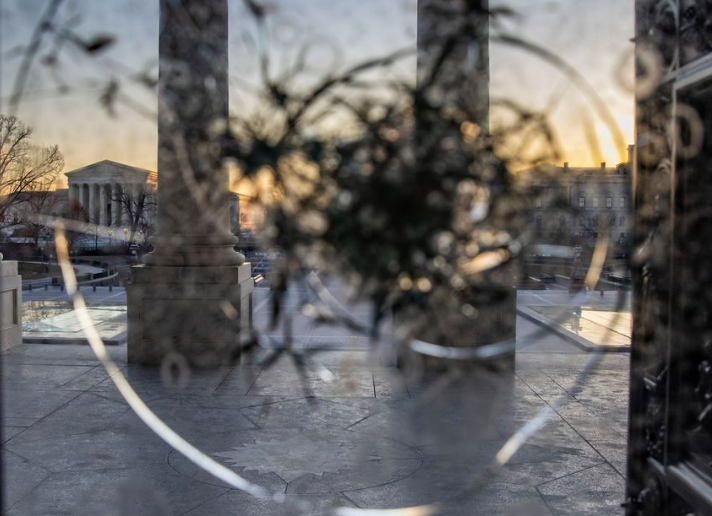
Early arrests after U.S. Capitol riot: So were there evangelical leaders in the attack or not?

Early arrests after U.S. Capitol riot: So were there evangelical leaders in the attack or not?

If you’ve worked as a reporter for any amount of time, you know what it’s like to return from covering a Big Story. Then you face your editor and get THAT LOOK.

Here is the religion-beat version of this scene. The editor asks a question that sounds something like this: “So what happened? Did (insert name of ecclesiastical group) finally make a decision about (insert hot-button topic, usually involving sex and/or politics) or not? We need to know how big a story this is.”

The reporter answers that this or that religious group passed a vague resolution calling for more study, dialogue and prayer, but the text contains slight hints — often involving scripture references — that one side or the other is making progress toward achieving this or that goal (maybe). They’ll be arguing about this newsy issue again next year (or whenever the assembly has its next legal gathering), as they have been arguing about it for 25 years.

The editor gives the reporter THAT LOOK. It says, “You have got to be kidding” (or stronger words) and/or “Why did we spend money to send you to cover this national meeting? You said this was a Big Story.” Trust me: Reporters can detect THAT LOOK in an editor’s voice, even if this encounter is on the telephone.

Editor’s don’t like to wait. They like clear results that produce a BOLD headline over a Big Story.

With that in mind, let’s look at a recent New York Times story about the slowly unfolding legal process surrounding rioters who were arrested for attacking the U.S. Capitol during the Jan. 6 “Stop the Steal” protests. The headline stated, “Arrested in Capitol Riot: Organized Militants and a Horde of Radicals.”

My question: Did the 14 reporters involved in covering this story get THAT LOOK when their reporting revealed that the kinds of people facing federal charges (as of Jan. 31) were pretty much what careful news consumers would have expected? In particular, why isn’t there evidence — at this point — linking the violent rioters with (wait for it) evangelical networks and institutions?

To dig a bit deeper into that question, I think readers should read a Tony Carnes essay — “Mysteries about the Mob in the Capitol cleared up“ — at the website called “A Journey Through NYC Religions.” (That’s a deep website that GetReligion reader should include in their “favorites” lists in online browsers.) Carnes explores lots of logical religion questions about this story.


Please respect our Commenting Policy

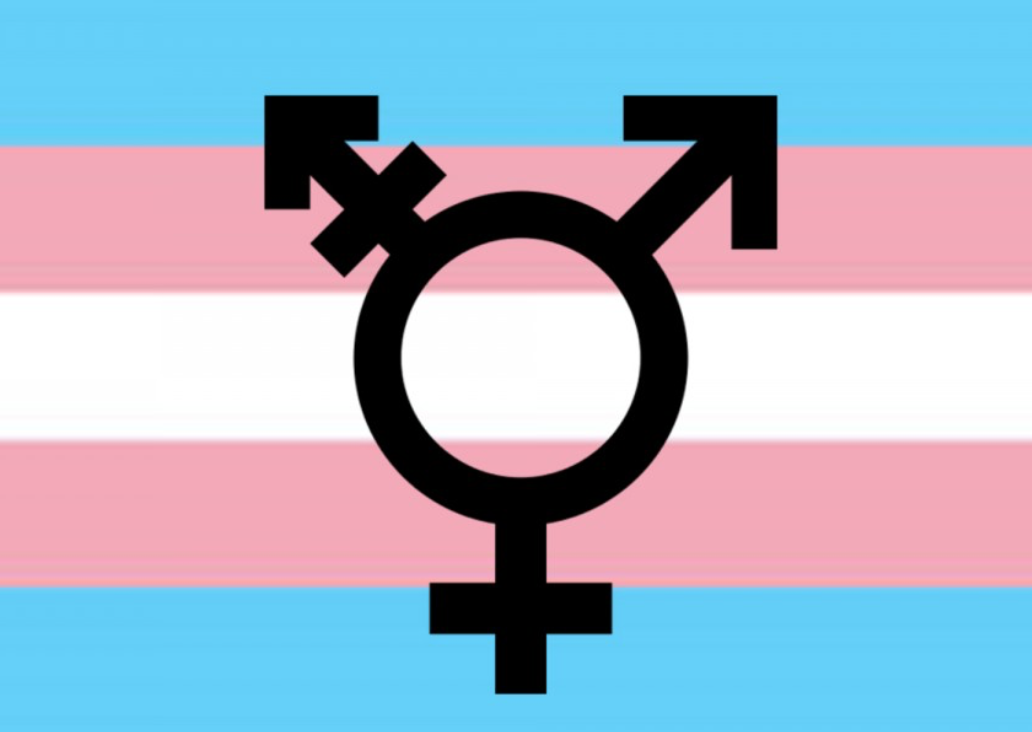
Joe Biden era puts transgender rights atop newsroom agendas (which creates religion news)

Joe Biden era puts transgender rights atop newsroom agendas (which creates religion news)

Among American "social issues," freedom of abortion is long-settled as a matter of law, so foes largely nibble at the edges. Courtroom victories for gays and lesbians have put dissenters on the defensive seeking to protect conscience claims.

Meanwhile, in the Biden-Harris era the transgender debate -- emotion-laden, multi-faceted and religiously weighty -- is moving to the top of the news agenda. {The Guy admits at the start he brings no psychological insight to this complex terrain and has personal knowledge of only two such situations.}

Democrats' zeal is the major new factor. President Joe Biden has said that he believes "transgender equality is the civil rights issue of our time. There is no room for compromise." Last year, Donald Trump appointee Neil Gorsuch made the case for "gender identity" rights in the Supreme Court's Bostock ruling, but this covered only secular employment. During his first hours in office, President Biden issued an executive order that extends this outlook across the board.

The president declared, for instance, that school kids shouldn't have to worry about their "access to the restroom, the locker room, or school sports," nor should adults be mistreated "because how they dress does not conform to sex-based stereotypes." He directed each government agency to spend the next 100 days reframing all gender policies accordingly.

Los Angeles Archbishop Jose Gomez, elected leader of the U.S. Conference of Catholic Bishops, immediately responded that on this and other matters like abortion, America's second Catholic president "would advance moral evils and threaten human life and dignity." Chicago's Cardinal Blasé Cupich assailed Gomez's Inauguration Day statement as "ill-considered." (Click here for GetReligion post and podcast on this topic.)

Then New York's Cardinal Timothy Dolan and four other chairmen of bishops' committees jointly declared that by reaching beyond the Supreme Court ruling Biden "needlessly ignored the integrity of God's creation of the two complementary sexes, male and female," and threatened religious freedom. This protest echoed the 2019 Vatican pronouncement "Male and Female He Created Them (.pdf here).”

A second Biden executive order Feb. 4 defined the new "LGBTQI+" approach in U.S. foreign policy. He directed 15 Cabinet departments and agencies to press other countries to comply with America's new stance, using diplomacy and, as needed, financial sanctions or visa restrictions. The State Department is to report annually on problem nations.


Please respect our Commenting Policy

Once again, AP accuses big Catholic bosses of abusing government coronavirus relief efforts

Once again, AP accuses big Catholic bosses of abusing government coronavirus relief efforts

There they go again.

In this case, “they” refers to whoever is in charge of religion-news coverage these days at the Associated Press. Someone there needs to take a remedial course in (a) church history, (b) church-state law in the United States or (c) both.

Let’s start by flashing back about six months, when the AP rolled out an investigation of what its editors clearly thought was a scandal of epic proportions. Does anyone remember this lede, and this GetReligion dissection (“AP explains why it was wrong for local-level Catholic employees to get coronavirus relief money“), of the expose)?

NEW YORK (AP) — The U.S. Roman Catholic Church used a special and unprecedented exemption from federal rules to amass at least $1.4 billion in taxpayer-backed coronavirus aid, with many millions going to dioceses that have paid huge settlements or sought bankruptcy protection because of clergy sexual abuse cover-ups.

That was a bizarre, but honest, opener. The entire story was built on the assumption that there is such a thing — corporately and legally speaking — as a “U.S. Roman Catholic Church.”

As I said at the time, this is “like saying that there is an ‘American Public School System,’ as opposed to complex networks of schools at the local, regional and state levels.” One could also note that there is a Planned Parenthood of America. However, government coronavirus aid in the paycheck-support program went to 37 regional and local Planned Parenthood groups.

The Associated Press has now produced a sequel, with this headline: “Sitting on billions, Catholic dioceses amassed taxpayer aid.” While the editors avoided the “U.S. Roman Catholic Church” label this time around, this lengthy story is built on a similar misunderstanding of what happened when Catholic parishes, schools, nonprofits and other ministries applied for coronavirus aid.

As readers can see in the headline, in the sequel AP leaders focused on finances at the diocesan level, as opposed to a mythical national Catholic structure. This is closer to the truth, but it still misses the mark. While many issues of church authority are linked to local bishops, in local dioceses, the crucial issue here was paycheck-relief money reaching staff members in individual parishes, schools and ministries that had been rocked by falling donations during the COVID-19 crisis. Let’s start with the overture:


Please respect our Commenting Policy

Protestants in pulpits say that the QAnon era is creating tension in many pews

Protestants in pulpits say that the QAnon era is creating tension in many pews

Having reached the vice president's chair in the U.S. Senate, the self-proclaimed QAnon shaman, UFO expert and metaphysical healer removed his coyote-skin and buffalo horns headdress and announced, with a megaphone, that it was time to pray.

"Thank you, Heavenly Father … for this opportunity to stand up for our God-given inalienable rights," proclaimed Jake "Yellowstone Wolf" Angeli (born Jacob Chansley), his face painted red, white and blue and his torso tattooed with Norse symbols that his critics link to the extreme right.

“Thank you, divine, omniscient, omnipotent, omnipresent Creator God for filling this chamber with your white light and love," he added, in a prayer captured on video by correspondent working for The New Yorker. "Thank you for filling this chamber with patriots that love you and that love Christ. …

"Thank you, divine Creator God for surrounding and filling us with the divine, omnipresent white light of love and protection, of peace and harmony. Thank you for allowing the United States of America to be reborn. Thank you for allowing us to get rid of the communists, the globalists and the traitors within our government."

Many phrases in this rambling prayer would sound familiar to worshippers in ordinary churches across America, said Joe Carter, an editor with The Gospel Coalition and a pastor with McLean Bible Church near Washington, D.C. But the prayer also included strange twists and turns that betrayed some extreme influences and agendas.

"This is a man who has described himself as pagan, as an ordained minister, in fact," said Carter, reached by telephone. "The alt-right has always included some pagan influences. But now it's obvious that leaders with QAnon and other conspiracy theorists have learned that if they toss in some Christian imagery, then they'll really expand their base and their potential reach 100-fold."

Law-enforcement officials will soon present evidence attempting to prove who planned key elements of the illegal riot that crashed into the U.S. Capitol on Jan. 6, after the legal "March to Save America" backing former President Donald Trump's claim that fraud cost him the White House.

This is just the latest example of how conspiracy theories, on the left and right, have soaked into public discourse about COVID-19 vaccines, Big Tech monopolies, sinister human-trafficking networks and, of course, alleged illegal activities in the 2016 and 2020 elections.

There is no way to deny that this digital tornado has shaken many Protestant churches, according to a new Lifeway Research survey that asked clergy to respond to this statement: "I frequently hear members of my congregation repeating conspiracy theories they have heard about why something is happening in our country."


Please respect our Commenting Policy

Spot the link between Trump ally Sen. Josh Hawley and hot 5th Century Christian dispute?

Spot the link between Trump ally Sen. Josh Hawley and hot 5th Century Christian dispute?

THE QUESTION:

How is Trump ally Sen. Josh Hawley linked with 5th Century Christianity’s hottest dispute?

THE RELIGION GUY’S ANSWER:

New York Times contributor Katherine Stewart doesn’t care much for conservative Christians.

Consider the subtitle of her 2012 book “The Good News Club: The Christian Right’s Stealth Assault on America’s Children.” (Actually, these non-political after-school clubs operate openly, and participation is voluntary.) Last year, she wrote the timely “The Power Worshippers: Inside the Dangerous Rise of Religious Nationalism.

Stewart’s latest Times op-ed article (“The Roots of Josh Hawley’s Rage”) decries U.S. Senator Josh Hawley’s clenched-fist backing for President Trump’s attempt to have Congress overturn the 2020 election that culminated in the U.S. Capitol riot, Trump’s second impeachment and multitudes of criminal investigations.

The controversial 42-year-old is a Stanford and Yale Law alumnus whose rapid rise included clerking for Chief Justice Roberts and just two years as Missouri’s attorney general before winning his U.S. Senate seat. Pundits assume he’ll seek the presidency in 2024 if Trump does not or cannot run.

Hawley tells World magazine he is part of the Evangelical Presbyterian Church, he was formerly a staff attorney with the Becket Fund for Religious Liberty and some count him among Capitol Hill’s most devout figures.

Stewart makes the surprising assertion that to understand the senator’s role in the unprecedented furies of recent weeks we must look back 16 centuries to one of the hottest theological disputes in Christian history.


Please respect our Commenting Policy

Skeptical thinking (from left) about role of religion in President Joe Biden's big day

Skeptical thinking (from left) about role of religion in President Joe Biden's big day

Back in the early days of GetReligion (we launched on Feb. 2, 2004) I urged reporters not to forget the old Religious Left and, when covering believers in those flocks, not to forget that there is more to their stories than politics. The left is the left because of doctrinal and worship traditions, as well as convictions that align with the New York Times editorial page.

Then something happened that modified my thinking on this subject. Hang in there with me, because I am working my way to an interesting think piece, care of Religion Dispatches. The headline: “The Inauguration’s Beautiful Call for Unity Was Undermined by the Invocation of Religion.”

Faithful readers of GetReligion will remember that, in the summer of 2007, political scientist and polling maven John C. Green spoke at a Washington Journalism Center seminar to a international circle of journalists who came to Capitol Hill to discuss press freedoms in their homelands. But the hot topic of the day was the rise of Sen. Barack Obama of Illinois and whether he could reach the White House. As I wrote in a previous post about that:

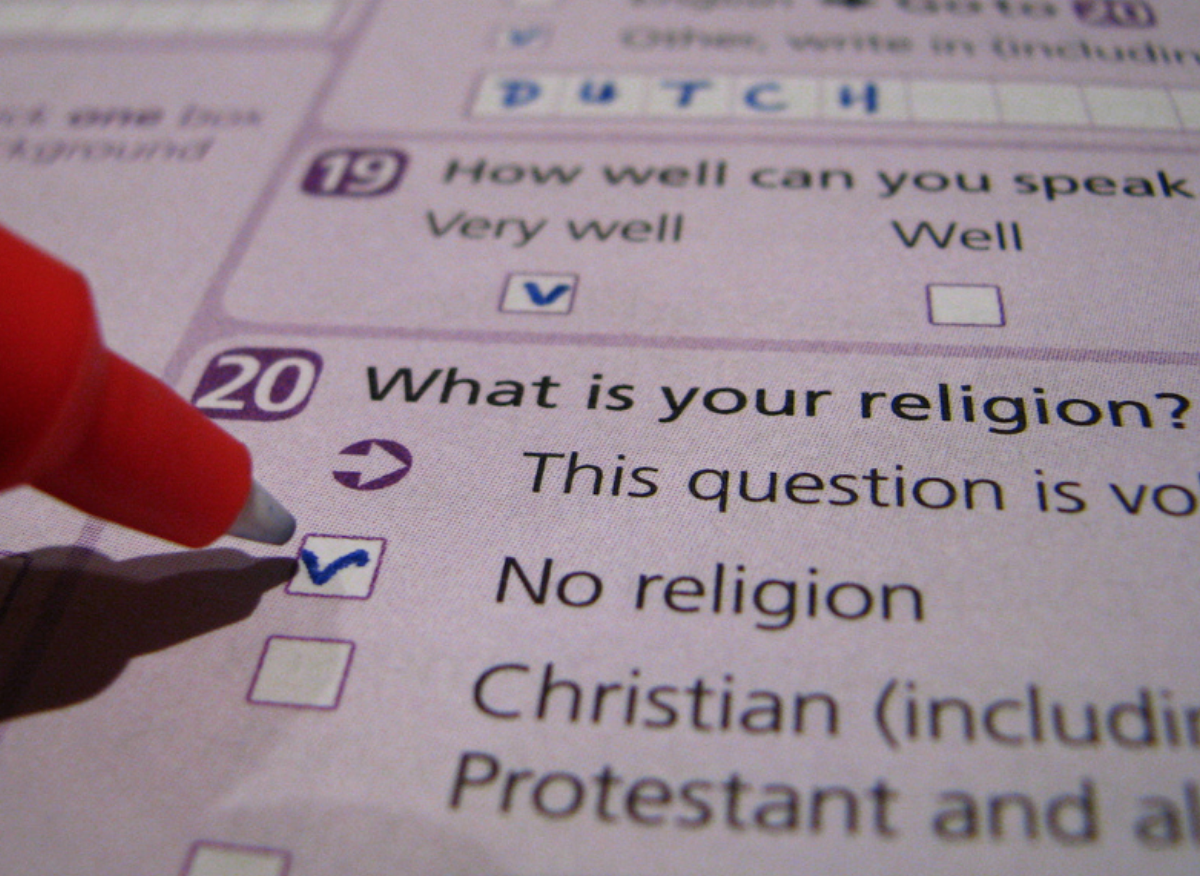
The bottom line: Obama was speaking directly to Democrats in the black church, but he was also reaching out to an emerging power bloc in his party — a group Green called the “religiously unaffiliated.” These so-called “nones” were poised to form a powerful coalition with atheists, agnostics and liberal believers.

Green made a prediction that was years ahead of schedule, in terms of the conventional thinking of Beltway politicos. At some point in the future, that growing coalition of secularists and religious liberals was going to cause tensions inside the Democratic Party.

Five years later, when the Pew Forum released its groundbreaking report on religiously unaffiliated Americans, Green raised that issue once again in a public event. Here’s a bite of the “On Religion” column that I wrote at that time.

[The] unaffiliated overwhelmingly reject ancient doctrines on sexuality with 73 percent backing same-sex marriage and 72 percent saying abortion should be legal in all, or most, cases. Thus, the "Nones" skew heavily Democratic as voters — with 75 percent supporting Barack Obama in 2008. The unaffiliated are now a stronger presence in the Democratic Party than African-American Protestants, white mainline Protestants or white Catholics.

"It may very well be that in the future the unaffiliated vote will be as important to the Democrats as the traditionally religious are to the Republican Party,” said Green, addressing the religion reporters. "If these trends continue, we are likely to see even sharper divisions between the political parties."

This brings us to Biden, today’s Democratic Party and some of the challenges he faces, when dealing with moral, cultural and religious issues in American life.


Please respect our Commenting Policy

New podcast: Conspiracy theory news isn't going away, so how will religious leaders respond?

New podcast: Conspiracy theory news isn't going away, so how will religious leaders respond?

Here we go again. This week’s “Crossroads” podcast (click here to tune that in) offers yet another journey into the world of QAnon and its impact in American pews.

All the evidence is that this subject is not going away, even as it gets more complex. See this week’s post entitled, “The New York Times looks at QAnon leader who is, wait, a Manhattan mystic from Harvard?” Some interesting court trials loom ahead, no doubt, after the January 6th riot at the U.S. Capitol.

Still, if you were looking for a thesis statement that captures how elite American newsrooms view QAnon, and the red-hot topic of conspiracy theories in general, it would be a bite of revealed truth drawn from the must-read “Shadowlands” package published last June by The Atlantic. In “The Prophecies of Q,” author Adrienne LaFrance claimed that QAnon is an emerging sect that is defined by its evangelical hopes and dreams, since the “language of evangelical Christianity has come to define the Q movement.”

In a GetReligion post at the time (“The Atlantic probes QAnon sect and finds (#shocking) another evangelical-ish conspiracy“) I offered my own opinion on that:

There are times, when reading the sprawling “Shadowland” package … when one is tempted to think that the goal was to weave a massive liberal conspiracy theory about the role that conservative conspiracy theories play in Donald Trump’s America.

At the center of this drama — of course — is evangelical Christianity. After all, evangelical Christians are to blame for Trump’s victory, even if they didn’t swing all those crucial states in the Catholic-labor Rust Belt.

It’s almost as if evangelicals are playing, for some strategic minds on the left, the same sick, oversized role in American life that some evangelicals assign to Hillary Clinton, George Soros, Bill Gates and all those liberal Southern Baptist intellectuals who love Johnny Cash and Jane Austen.

That’s still half of what I think on this topic.

It is certainly true that (a) leaders of the “political cult” called QAnon — to use a term from a must-read Joe Carter FAQ on this topic — speak fluent evangelical and that (b) the gospel according to Q and similar conspiracy heresies have influenced many people in pews (including some who traveled to the National Mall for Trump’s March to Save America rally).

That’s an important, ongoing story that must be covered.


Please respect our Commenting Policy