Demographics

Americans think highly of Jesus: But modern Christians get rather harsh reviews

Americans think highly of Jesus: But modern Christians get rather harsh reviews

When it comes to exploring what Americans think about Jesus, a new study offers Christian leaders both good news and bad news.

The good news is that 76% of Americans affirm the "historical existence" of "Jesus of Nazareth," although it's also interesting to note that if 89% of self-identified Christians embraced that statement, the implication is that 11% are not sure.

Meanwhile, 84% of participants in a new "Jesus in America" study -- conducted by the global Ipsos research company for the Episcopal Church -- agreed that "Jesus was an important spiritual figure."

The bad news? While 50% of "not religious" Americans accepted this "important spiritual figure" language, they were much less impressed with the believers who represent Jesus.

When asked, "What characteristics do you associate with Christians in general?", the nonreligious selected these words from the poll's options -- "hypocritical" (55%), "judgmental" (54%) and "self-righteous" (50%). Next up: "arrogant," "unforgiving" and "disrespectful."

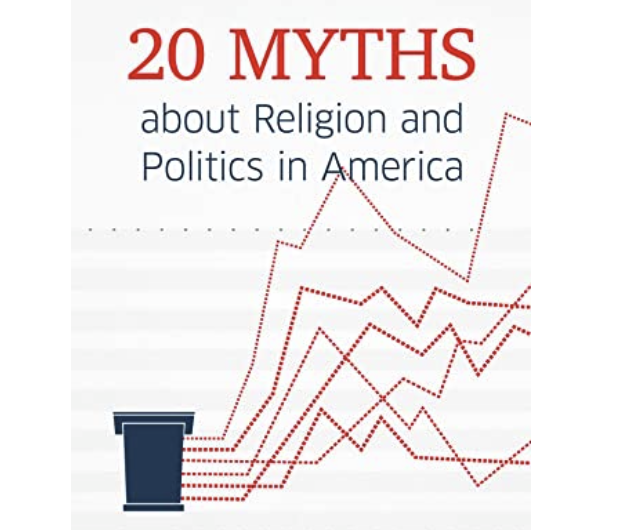
It appears that one of the goals of this poll -- with questions about racism, social justice and last year's attack on the U.S. Capitol -- was to see if nonbelievers have different attitudes about liberal and conservative Christians, said political scientist Ryan Burge of Eastern Illinois University, author of the new book "20 Myths about Religion and Politics in America." He is co-founder of the Religion in Public website and a contributor at GetReligion.org, which I have led since 2004.

"This is the million-dollar question," said Burge, who is also a pastor in the progressive American Baptist Church. "If non-religious people are turned off by what they see as the stricter faith of many Christians, evangelicals in particular, then wouldn't it make sense for them to seek more flexible alternatives?

"If there's all kinds of room in mainline Protestant churches these days, and that's putting it mildly, then why aren't these kinds of people filling up some of those pews?"

Please respect our Commenting Policy

Thinking about world Christianity, as Crux digs deep into many overlooked Catholic details

Thinking about world Christianity, as Crux digs deep into many overlooked Catholic details

It’s hard to believe that it has been two decades since historian Philip Jenkins published his groundbreaking essay “The Next Christianity” in The Atlantic Monthly.

It contained key material from the first of three books that Jenkins published on the future of world Christianity and, thus, of the changing face of world religion — period. The first book was entitled: “The Next Christendom: The Coming of Global Christianity.

This piece of the Atlantic subtitle is crucial: “We stand at a historical turning point, the author argues — one that is as epochal for the Christian world as the original Reformation. Around the globe Christianity is growing and mutating in ways that observers in the West tend not to see.”

Sure enough, many reporters didn’t see what Jenkins was describing, even though clashes between the chilly, declining Christian West and the blooming Christian South and East are easy to see looming in the background of many major stories. As the Anglicans and United Methodists about that.

Understanding Jenkins’ work is a crucial first step to understanding the importance of a new Crux think piece by the omnipresent John L. Allen, Jr. The headline: “In new Catholic numbers, an ‘imponderable’ movement shaping history.”

First, consider this from Jenkins:

If we look beyond the liberal West, we see that another Christian revolution, quite different from the one being called for in affluent American suburbs and upscale urban parishes, is already in progress. Worldwide, Christianity is actually moving toward supernaturalism and neo-orthodoxy, and in many ways toward the ancient worldview expressed in the New Testament: a vision of Jesus as the embodiment of divine power, who overcomes the evil forces that inflict calamity and sickness upon the human race. In the global South (the areas that we often think of primarily as the Third World) huge and growing Christian populations — currently 480 million in Latin America, 360 million in Africa, and 313 million in Asia, compared with 260 million in North America — now make up what the Catholic scholar Walbert Buhlmann has called the Third Church, a form of Christianity as distinct as Protestantism or Orthodoxy, and one that is likely to become dominant in the faith.


Please respect our Commenting Policy

There goes that Ryan Burge guy, again: Myths about evangelicals, Catholics and others

There goes that Ryan Burge guy, again: Myths about evangelicals, Catholics and others

During my years as a journalism professor (now over), I must have told my students the following a thousand times: Pay close attention when one of your sources consistently offers information and insights that (a) fit the actual facts on the ground, yet (b) anger (or at least puzzle) people on both sides of the hot-button issues that make headlines.

For several decades, my classic example of this phenomenon has been political scientist John C. Green of the University of Akron, best known for years of consulting work with the Pew Forum team. A few years ago, I added religious-liberty specialist David French to that list. Sociologist James Davison Hunter, author of that “Culture Wars” classic? Ditto. How about the notorious scholar Karen Swallow Prior?

Then that Ryan Burge guy (@RyanBurge) started lighting up Twitter with chart after chart backed with data on religion and public life. He’s been a GetReligion contributor, in a variety of ways, for several years now and was a big hit when he Zoomed into a December religion-news program at the Overby Center at Ole Miss.

If you agree with Burge on everything, then you aren’t paying attention. That’s a compliment. Like Green, Burge is a man of the mainline-church world, but he’s consistently candid about the trends that he sees on left and right.

How he has another book out — “20 Myths about Religion and Politics in America” — and readers are sure to disagree with one or more of his myths. But the numbers he spotlights are always worthy of attention, especially for journalists who cover religion, culture and politics.

I’ll note some new Burge appearances on audio and video podcasts, as they roll out in the weeks ahead — starting with the one at the top of this post. He also did a Religion News Service Q&A the other day with Jana Riess that ran with this provocative headline: “Evangelicalism isn’t dying, and Catholics are going Republican.”

The first question is exactly what you’d expect, if you’ve been following Burge in recent years:

Your first chapter says that rumors of evangelicalism’s death are premature. Could you talk about that?


Please respect our Commenting Policy

Podcast: Return of the SBC civil war? That'd be a huge development in American religion

Podcast: Return of the SBC civil war? That'd be a huge development in American religion

In the early 1980s, the Religion Newswriters Association (now the Religion News Association) held many of its annual meetings in the days just before the Southern Baptist Convention’s big national gatherings .

With good cause: The SBC was in the midst of a spectacular, painful civil war — “moderates” fighting the armies of “biblical inerrancy” — for control of America’s largest non-Catholic flock Big headlines were a certainty, year after year. Religion reporters knew their editors — back in the days when more newsrooms had travel budgets for this sort of thing — would pay to get them to the SBC front lines.

Thus, the trip was a twofer. Religion-beat pros arrived early and started work during the meetings that preceded the actual convention, such as the Pastors’ Conference (a preaching festival featuring rising SBC stars) and the Women’s Missionary Union. The RNA would work its own seminars into the gaps.

One of my favorite memories was in New Orleans in 1982. Religion-beat patriarch Russell Chandler of the Los Angeles Times and some other scribes got into a convention-hotel elevator, carrying a box of wine and liquor for an RNA social hour. The elevator was packed with WMU women, who didn’t like the looks of that box.

When the RNA folks got off the elevator, one of the women said, under her breath: “Well, they’re not here for the Southern Baptist Convention.” Over his shoulder, Chandler replied: “Oh, yes we are.”

I bring this up because there’s plenty of evidence that the Southern Baptists are about to have a second civil war. As I argued during this week’s “Crossroads” podcast (CLICK HERE to tune that in), that would be a big news story for at least three reasons.

Before we get to those, here’s a few key passages from a Religion News Service story by Bob Smietana describing a big SBC domino that tipped over this week: “SBC President Ed Litton won’t run again — to focus on racial reconciliation instead.” Here’s the overture:

Saying he wants to spend his time focusing on racial reconciliation, Southern Baptist Convention President Ed Litton announced via video Tuesday (March 1) that he would not seek a second term in office.

Litton will become the first SBC president in four decades to not seek reelection after his first one-year term.


Please respect our Commenting Policy

NPR report: Americans are 'sorting' themselves into red vs. blue zones (religion ghost alert)

NPR report: Americans are 'sorting' themselves into red vs. blue zones (religion ghost alert)

I absolutely love specific, symbolic details in Big Picture stories based on trends in statistics and culture.

During what we could call America’s “Divided We Fall” era (let’s hope that it passes), there are all kinds of ways to illustrate the tensions between blue citizens and red citizens. NPR recently did a feature — “Americans are fleeing to places where political views match their own“ — that had a great cultural detail way down in the script that suggested there’s more to this divide than politics.

The key fact: In the 2020 election, Joe Biden “won 85% of counties with a Whole Foods and only 32% of counties with a Cracker Barrel.”

What was missing in this fine, must-read story? It’s that issues of faith, morality and culture have just as much to do with America’s blue-red schism as politics. As the old saying goes, partisan politics is downstream from culture. If you have doubts about that, check out this GetReligion commentary on the classic 2003 “Blue Movie” essay in The Atlantic. Author Thomas B. Edsall observes:

Early in the 1996 election campaign Dick Morris and Mark Penn, two of Bill Clinton's advisers, discovered a polling technique that proved to be one of the best ways of determining whether a voter was more likely to choose Clinton or Bob Dole for President. Respondents were asked five questions, four of which tested attitudes toward sex: Do you believe homosexuality is morally wrong? Do you ever personally look at pornography? Would you look down on someone who had an affair while married? Do you believe sex before marriage is morally wrong? The fifth question was whether religion was very important in the voter's life.

Respondents who took the "liberal" stand on three of the five questions supported Clinton over Dole by a two-to-one ratio; those who took a liberal stand on four or five questions were, not surprisingly, even more likely to support Clinton. The same was true in reverse for those who took a "conservative" stand on three or more of the questions.

Note the religion question in that mix. Thus, the Big Idea in this Edsall essay?

According to Morris and Penn, these questions were better vote predictors—and better indicators of partisan inclination—than anything else except party affiliation or the race of the voter (black voters are overwhelmingly Democratic).

The new NPR piece, while stressing politics, does contain a few killer cultural details. The religious elements of the story? There are hints, but that is all.


Please respect our Commenting Policy

Podcast: Religion News Service offers new story about an old trend called 'Sheilaism'

Podcast: Religion News Service offers new story about an old trend called 'Sheilaism'

One of the problems with covering the same religion-beat topics for multiple decades (in other words, I am old) is that you tend to see many “new” news stories as pieces of puzzles that are actually quite old.

Consider, for example, the Religion News Service feature that was the hook for this week’s “Crossroads” podcast (CLICK HERE to tune that in).

The headline on that RNS piece stated: “A 300-year-old church hopes to connect with spiritual but not religious neighbors.” Here is the overture from this story by religion-beat veteran Bob Smietana:

For three centuries, Trinity Episcopal Church has tried to meet the spiritual needs of the small community of Southport, Connecticut, about an hour and a half outside of New York.

As more and more of the church’s neighbors ditch organized religion but not faith, leaders at Trinity hope a new initiative will help them find meaning and purpose in life even if they never attend a Sunday service.

The church recently launched the Trinity Spiritual Center, which offers lectures, classes on meditation and contemplation, and a sense of community during a trying time, said the Rev. Margaret Hodgkins, the rector of Trinity Church.

We will come back to some of the specifics of this piece — details that link it to several trends that are (#SIGH) decades old in the aging, shrinking world of mainline Protestantism and, to a lesser extent, parts of Roman Catholicism, Eastern Orthodoxy, liberal Judaism and other established religious “brands.”

The Big Idea in this RNS piece is that an Episcopal parish that has some resources to spend has decided to help spiritual seekers find their own paths to the top of Mt. Eternity without proclaiming any of those narrow, tacky doctrines linked to 2,000 years of Christian faith and practice. You know, all that stuff about the Resurrection of Jesus, eternal salvation or moral theology (warning: veiled reference to the “tmatt trio”).

In other words, the goal appears to be a sort-of parish in honor of St. Sheila, the patron saint of “Sheilaism.”


Please respect our Commenting Policy

Saving urban churches: Associated Press feature dances around several important issues

Saving urban churches: Associated Press feature dances around several important issues

When I arrived at The Rocky Mountain News (RIP) in the fall of 1984, one of the first things I did was take a long walk in downtown Denver — taking notes about the religious sanctuaries that were nearby.

Most of the urban churches were, as you would expect in a Western city, linked to Mainline Protestant denominations and there were several Roman Catholic parishes, as well.

All of the mainline churches were in decline, with shrinking and aging congregations housed inside large buildings dating back to the glory days of previous decades. The one exception was a United Methodist congregation led by an evangelical pastor who was reaching out to families, single adults and all kinds of people in nearby neighborhoods — Blacks, Latinos, Asians, etc.

Meanwhile, conservative churches were growing in the suburbs, with a mixture of nondenominational, Baptist, Pentecostal and alternative Presbyterian flocks leading the way.

My point is that there were several stories going on in downtown Denver at the same time. But it was already clear — four decades ago — that lots of those old, big churches would eventually be empty or up for sale. It was also obvious that some of them would seek income from other sources to help keep their doors open, renting space to other flocks or social ministries.

Major news organizations keep bumping into stories linked to these trends, in part because big newsrooms tend to be in central urban zones and, in my experience, quite a few journalists (religion-beat pro included) have liberal Protestant or Catholic backgrounds or remain active in those traditions. Thus, here at GetReligion, it’s common to see posts with headlines such as these: “More news about old churches being sold and flipped: Does it matter why this is happening?”, “Churches for sale: New York Times visits a sexy former Catholic sanctuary in Quebec” and “Wait just a minute: Fading Lutherans (ELCA) in Waco sold their lovely building to Anglicans?” Or how about this one? “Why is a church shrinking or closing? Reporters: Brace for complex and heated debates.”

This brings me to a new Associated Press report about this old topic: “Historic city churches find new life as neighborhood centers.” Once again, there are glimpses of the trends behind this news hook, but very little information examining the larger issues looming in the background.


Please respect our Commenting Policy

And now, in other Pope Francis news: Is having kids a moral duty for married couples?

And now, in other Pope Francis news: Is having kids a moral duty for married couples?

THE QUESTION:

Is having children a moral duty for married couples?

THE RELIGION GUY'S ANSWER:

Pope Francis provoked a fuss at his first general audience of 2022 by remarking that "many, many couples do not have children because they do not want to, or they have just one -- but they have two dogs, two cats. … Dogs and cats take the place of children." He continued, "This denial of fatherhood or motherhood diminishes us; it takes away our humanity" and "civilization becomes aged."

So, do married couples have a moral duty to bear children, and preferably more than one?

Birth rates have emerged as a pressing secular issue of this era. The Religion Guy is old enough to remember progressives' alarm over an impending "population bomb" and enthusiasm for "zero population growth."

While those ideas persist, all the buzz these days is about the globe's great Birth Dearth.

The lead article on page one of the January 18 New York Times was headlined "Worries in China that Population May Soon Shrink." The trend in that nation's official demographic report, issued the day before, suggested that 2021 may be the last year when births outnumber deaths as the population begins decreasing. The birth shortage is even bigger than in 1961 during Mao Zedong's infamous "Great Leap Forward" economic scheme, which produced unaccountably vast famine and death.

The Times stated as objective fact that this is a "crisis" for the vast nation that "could undermine its economy and even its political stability."


Please respect our Commenting Policy

In post-pandemic America, will sagging church health damage public health? 

In post-pandemic America, will sagging church health damage public health? 

America's religious congregations have, over all, suffered steady erosion in attendance, membership and vitality since around 2000.

Analysts fret that worse may occur after the current COVID-19 emergency finally subsides because myriads of members are now accustomed to worshiping online rather than in person or they may skip services altogether.

At the same time, there is evidence that, while decline is common, a majority of congregations report that they have survived or even grown during the past two years. This is a complex subject. As a recent Associated Press story noted:

Gifts to religious organizations grew by 1% to just over $131 billion in 2020, a year when Americans also donated a record $471 billion overall to charity, according to an annual report by GivingUSA. Separately, a September survey of 1,000 protestant pastors by the evangelical firm Lifeway Research found about half of congregations received roughly what they budgeted for last year, with 27% getting less than anticipated and 22% getting more.

This is an important news topic, no matter what. Even secularized news consumers should be interested when social science researchers tell us that sagging participation could not just damage religious institutions but create a public health "crisis." In our age of solitary, do-it-yourself forms of spirituality, research indicates, regular in-person attendance at worship services is central to the well-being of children, adults and society.

This important assertion does not come from religious propagandists but Harvard's Institute for Quantitative Social Science. Building upon two decades of scholarship, the institute in 2016 launched its distinctive "Human Flourishing Project" to focus on the impact the family, workplace, education and religion have on peoples' well-being. Their survey samples are large and they say their methodology improves upon past research.

Key findings document differences between Americans who regularly attend worship versus those who never attend.


Please respect our Commenting Policy