Demographics

What's going on with faith trends in American Judaism, nationally and in your locale?

What's going on with faith trends in American Judaism, nationally and in your locale?

Since 9-11, the media have — with good cause — lavished attention upon Islam in America.

There's been less interest in the cultural and demographic challenges facing Judaism, long the nation's second-largest religion behind Christianity. Jewish news coverage in the mainstream press tends to focus on Democratic Party politics, trends in anti-Semitism and attitudes toward Israel and the unending Mideast mess.

Those are important, of course, but what about Judaism as a living 21st Century religious faith? Here, as so often, the Pew Research Center steps up with its 248-page survey on "Jewish Americans in 2020" (click here for the .pdf report).

The Guy proposes that this is the ideal moment for journalists to focus on the religion of Judaism, asking rabbis and lay synagogue leaders how Pew's trends are playing out both nationally and with their particular audiences and locales.

At one time, Jewish federations conducted such community surveys. This one follows up Pew's major survey in 2013 but direct comparisons with the 2000 numbers are iffy due to changed methodology.

As so often, Pew worked from an unusually large random sample of 4,718 Jewish adults who were interviewed between November 2019 and June 2020. To learn more about Pew's revised methodology to cope with low "response rates" among those sampled -- among factors that produced the embarrassingly wrong 2020 political polls -- see this prior Guy Memo.

As writers dig into the numbers they'll understand fears that unless things change "we are going to lose the illusion of there being a Jewish people." So says "modern Orthodox" Rabbi Shmuly Yanklowitz, speaking with Forward.com (“Pew’s new study of American Jews reveals widening divides, worries over antisemitism”).

The bottom line: Across the board, the gap between Orthodox and non-Orthodox Jews is deepening. This looks very much like the gap between declining U.S. "mainline" and "liberal" Protestants over against conservative or "evangelical" believers, or the gap between traditional religious believers and the growing world of atheists, agnostics and the “religiously unaffiliated.”


Please respect our Commenting Policy

Yes, there's a religion story behind those statistics about China's shrinking population

Yes, there's a religion story behind those statistics about China's shrinking population

China made the news again last week for an odd reason — its demographics.

Only 12 million babies were born last year in China, the lowest number since 1961. You can think of 35 years of forced abortions and mandatory IUD devices for that. Oh, and going after the offspring of Uyghur Muslims, house-church Christians, Tibetan Buddhists and Falun Gong practitioners figure into that number, as well.

But the details of that important religion angle didn’t make it into the stories I read. In the New York Times:

Figures from a census released on Tuesday show that China faces a demographic crisis that could stunt growth in the country, the world’s second-largest economy. China has long relied on an expanding and ambitious work force to run its factories and achieve Beijing’s dreams of building a global superpower and industrial giant. An aging, slow-growing population — one that could even begin to shrink in the coming years — threatens that dynamic.

Now listen to how the next paragraph explains how this happened.

While most developed countries in the West and Asia are also getting older, China’s demographic problems are largely self-inflicted. China imposed a one-child policy in 1980 to tamp down population growth. Local officials enforced that policy with sometimes draconian measures. It may have prevented 400 million births, according to the government, but it also shrank the number of women of childbearing age.

“Sometimes draconian” measures? Forcibly aborting a woman’s second child is, by definition, draconian.

Beijing is now under greater pressure to abandon its family planning policies, which are among the world’s most intrusive; overhaul an economic model that has long relied on a huge population and a growing pool of workers; and plug yawning gaps in health care and pensions.

Well, yes, when local cadres monitor the exact timing of women’s periods to make sure they’re not pregnant, that’s pretty intrusive.


Please respect our Commenting Policy

New podcast: Yes, election of first trans/queer/gender fluid ELCA bishop was a big story

New podcast: Yes, election of first trans/queer/gender fluid ELCA bishop was a big story

Imagine that you are a pastor or a layperson in the Lutheran Church-Missouri Synod, the Wisconsin Evangelical Lutheran Synod or one of the other conservative Lutheran bodies in the United States.

So you sit down with your morning coffee and pop open your email and you see that friends and family have sent you emails enquiring about a headline that they saw on Twitter or somewhere else in today’s complicated news marketplace.

In this case, the headline is from the New York Times and it states: “U.S. Lutheran Church Elects Its First Openly Transgender Bishop.

The problem, of course, is that the “U.S. Lutheran Church” doesn’t exist There is no one denomination that fits that description. Or perhaps the person sending you the email saw, somewhere, the Religion News Service headline that ran with this headline: “Lutherans elect Megan Rohrer first transgender bishop.” Second verse, same as the first.

When it comes to Lutheranism, many journalists continue to struggle when describing who is who and what is what. This brand-name problem was the first layer of the complex issues — in terms of church doctrine and journalism style — that we explored in this week’s “Crossroads” podcast. Click here to tune that in.

The denomination that elected Bishop-elect Rohrer was, of course, the Evangelical Lutheran Church in America, one of the “Seven Sisters” — we may need to make that “Seven Siblings” — of liberal Protestantism.

But what happens if you put that denominational brand name in a headline (besides the fact that it’s way too long for most newspaper layouts)? If you do that, you have to explain the presence of “evangelical,” which has become a near curse word in a news context. And, hey, “Lutheran” by itself sounds more important. Damn the accuracy, full speed ahead.

This brings us to the key hook for this podcast: There was little or nothing surprising about the progressive ELCA electing a trans (if that is the best term, in this case) bishop.


Please respect our Commenting Policy

The U.S. Census story and its hooks for religion news (plus a personal note about Rachel Zoll)

The U.S. Census story and its hooks for religion news (plus a personal note about Rachel Zoll)

The first round of 2020 U.S. Census data (with much more to come) is big news as states gain and lose seats in the U.S. House and politicos enter the wild decennial joust to gerrymander federal and state district lines to their advantage.

But here's another journalistic thought: What does the Census mean for religion?

Tony Carnes of the "A Journey Through NYC Religions" website provides an early example, analyzing possible implications for New York City that other writers could emulate for their own cities, towns or regions.

Editor Carnes (disclosure: a personal friend) is a professional sociologist leading a team that has spent years tracking religion developments in Gotham, notably at the neighborhood level. Despite the town's secular image, Carnes and company have documented that, starting in the late 1970s, thousands of new churches, synagogues, mosques and temples have been built. Such activity was continuing until the COVID-19 pandemic struck.

Carnes counts the populations moving in and moving out from the American Community Survey between 2010 and 2014 as updated by Census numbers for 2018. This shows a city gradually becoming less African-American (population down 96,000) and Hispanic (down 50,000). The gainers are non-Hispanic Whites (up 200,000) and Asians (up 97,000). We'll soon know if these trends continued in 2020.

Carnes calls that "a startling change in the racial/ethnic profile of the city, and it is also found in other cities in the United States."


Please respect our Commenting Policy

Thinking with two key Southern Baptists: Concerning those scary Gallup Poll numbers

Thinking with two key Southern Baptists: Concerning those scary Gallup Poll numbers

Let’s fly up to high altitude for a moment, before reading two interesting think pieces about those Gallup Poll numbers — “U.S. Church Membership Falls Below Majority for First Time” — that launched a kazillion headlines.

If you’ve been paying attention to the state of Christianity in America for the past 50 years or so, you’re aware of several broad trends.

* In terms of demographics, the world of oldline Protestantism — the “Seven Sisters” churches — is in freefall, with these aging denominations losing around 50% of their members after peaking in the 1960s.

* Catholic churches have grown, kind of, in part due to rising numbers of Latinos in the pews. Worship numbers are down. New vocations for priests and nuns are way down (but it’s fascinating to note the cases in which numbers are steady, or rising). Mass attendance and birth-rate trends are crucial.

* Evangelical Protestants surged, especially in the Sunbelt, filling much of the public-square void created by mainline decline. Growth was especially strong with charismatics and Pentecostals — Black and White. In the past decade or two, the rapid growth of nondenominational or even post-denominational churches and networks has hurt mainstream evangelicalism, especially the Southern Baptist Convention. Most evangelical numbers have stalled or gone into a slower decline.

Summary: Churches are growing or holding steady if members are (a) having children, (b) raising children in the faith, (c) retaining the loyalty of those children into the next generation and (d) winning converts (that final point has more to do with doctrine than politics).

Notice that the words “Donald Trump” are missing. Like I said, this is a view from the heavens.

With all that in mind, let’s look at two essays: “Why American Church Membership Is Plummeting,” by historian Thomas Kidd, care of The Gospel Coalition website, and “Why the Church Is Losing the Next Generation,” in the latest newsletter by the Rev. Russell Moore of the SBC’s Ethics and Religious Liberty Commission.

First, here are two crucial chunks of the Kidd essay, which opens — logically enough — with a discussion of the weaknesses of polling data.

… (A)s I have suggested before, we should take religion polls with a grain of salt. … They usually tell us about some trends on the religious landscape, to be sure, but they are almost always open to widely varying interpretation. Polls are at their best when there is little wiggle room for interpretation in the data.


Please respect our Commenting Policy

This just in! Millions of folks are sort of religious, a key to church membership decline

This just in! Millions of folks are sort of religious, a key to church membership decline

When it came to poll numbers about religion and American life, the late George Gallup, Jr., wasn’t all that interested in many of the most obvious questions.

As he told me in several telephone interviews, starting in the 1980s: The religion numbers just don’t add up. You could see the same sentiments in some of his public addresses.

Gallup — who died in 2011 — wasn’t impressed by the high numbers of Americans who told pollsters that they believe in God, attend worship services on a regular basis and say that faith is “very important” in their lives. That didn’t seem to fit with national patterns of divorce and family breakdown. He kept trying to find ways to ask questions that focused on the role of religious faith in daily life.

When push came to shove, Gallup was convinced that about 20% of Americans were seriously practicing some form of religious faith. The number might be lower than that.

Thus, that recent blitz of news about church membership trends. As the Washington Post headline stated: “Church membership in the U.S. has fallen below the majority for the first time in nearly a century.” Here’s some of the overture:

The proportion of Americans who consider themselves members of a church, synagogue or mosque has dropped below 50 percent, according to a poll from Gallup. … It is the first time that has happened since Gallup first asked the question in 1937, when church membership was 73 percent. …

In 2020, 47 percent of Americans said they belonged to a church, synagogue or mosque. The polling firm also found that the number of people who said religion was very important to them has fallen to 48 percent, a new low point in the polling since 2000.

Click here for the Gallup report on these findings, old and new. Here is another summary from 2019. And here is some additional background from the new Gallup release:

Gallup asks Americans a battery of questions on their religious attitudes and practices twice each year. The following analysis of declines in church membership relies on three-year aggregates from 1998-2000 (when church membership averaged 69%), 2008-2010 (62%), and 2018-2020 (49%). …

The decline in church membership is primarily a function of the increasing number of Americans who express no religious preference.


Please respect our Commenting Policy

This is a religion question: How many kinds of 'nones' are there and what do they believe?

This is a religion question: How many kinds of 'nones' are there and what do they believe?

THE QUESTION:

How do the three main categories differ among America’s rising non-religious “nones”?

THE RELIGION GUY’S ANSWER:

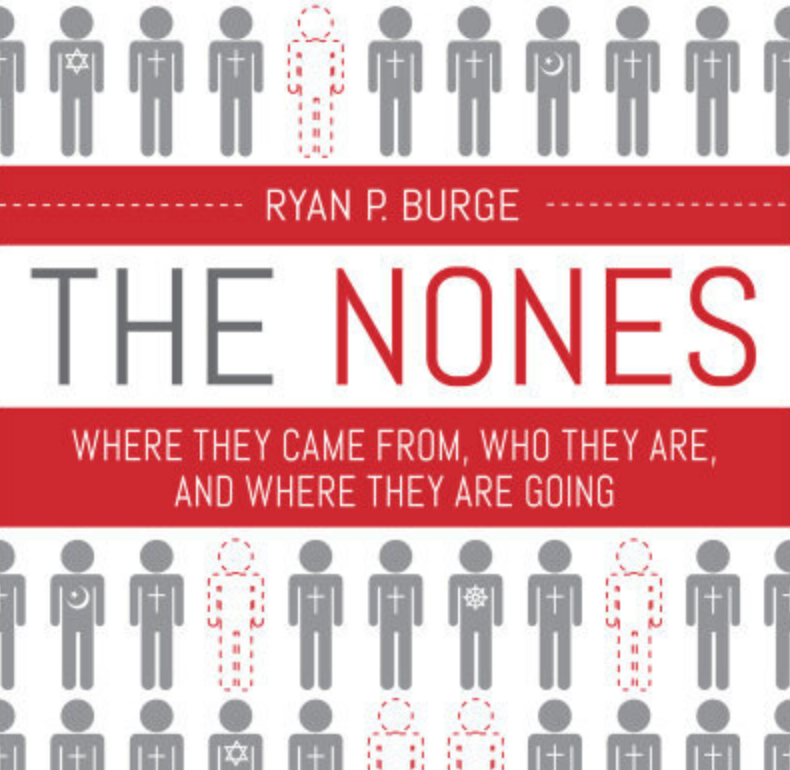
Political scientist Ryan Burge of Eastern Illinois University (a contributor here at GetReligion) has lately emerged as the most prolific analyst of the religion factor in U.S. politics, The Religion Guy contends. He’s now out with a book examining the biggest trend of our times within U.S. religion: “The Nones: Where Thy Came From, Who They Are, and Where They Are Going.”

“Nones” refers to Americans who say they have “none” when pollsters ask about their religious affiliation or religious identity. Since the turn of the century they’ve grown rapidly and make up around a fourth of the U.S. adult population, so this book is highly recommended for anyone interested in contemporary American religion.

Burge is an interesting figure. On the one hand, he’s a hard-nosed, objective observer of poll-driven facts, while on the other a religious practitioner as a long-serving, part-time pastor of a American Baptist congregation. His local flock typifies our era’s second major trend, the unprecedented membership decline in aging white “mainline” Protestant denominations that in former times dominated the national culture, as distinguished from conservative “evangelical” Protestantism.

The most revelatory material in this data-rich survey of all things “none” is the distinctions among the three subcategories of non-religious people carefully marked out by Pew Research Center surveys. Atheists are those who are certain God does not exist, and the same for all supernatural aspects. Agnostics say we do not or cannot know such things. By far the largest segment of nones, however, choose Pew’s third option of “nothing in particular” (NIP).

Burge thinks the NIPs “might be the most consequential religious group in the United States, and no one is talking about them the way they talk about atheists or agnostics.” NIPs are one-fifth of the population and “the fastest-growing religious group in the United States.” On point after point, they are notably different from both atheists and agnostics. Lumping all the non-religious together as the same “glosses over vast differences in the lifestyles, occupations and political worldviews.”


Please respect our Commenting Policy

Why are Latinos veering into GOP? It's all about money, money, money (and zero faith)

Why are Latinos veering into GOP? It's all about money, money, money (and zero faith)

I know, I know. If you have read GetReligion for the past four-plus years, you know that we’re convinced that the rise of the Latino evangelical voter (often paired with traditional Catholic Latino voters) is an emerging story in American public life.

Part of this story is the rise of Pentecostalism in the Spanish-speaking world (classic Pew Research Center study here) and another part is linked to the defense of Latino family values (to use a loaded phrase).

There’s much more to this story than the role these voters played in Donald Trump’s surprising (to some) showings in some Florida and Texas zip codes. Click here (“New York Times listens to Latino evangelicals: 'Politically homeless' voters pushed toward Trump”) and then here (“Concerning Hispanic evangelicals, secret Trump voters and white evangelical women in Georgia”).

To be blunt about it, it appears that political-desk reporters are struggling with this issue, in part because it undercuts some themes in long-predicted demographic trends backing Democrats. You can see that in the recent, oh-so-predictable New York Times story that ran with this massive double-decker headline:

A Vexing Question for Democrats: What Drives Latino Men to Republicans?

Several voters said values like individual responsibility and providing for one’s family, and a desire for lower taxes and financial stability, led them to reject a party embraced by their parents.

The story is getting some Twitter attention because of this magisterial statement of woke Times doctrine:

Some of the frustrations voiced by Hispanic Republican men are stoked by misinformation, including conspiracy theories claiming that the “deep state” took over during the Trump administration and a belief that Black Lives Matter protests caused widespread violence.

But it’s more important to focus on the bigger picture, which is that this trend is all about Latino men wanting to get rich by being part of the American dream. The overture is long, but essential:


Please respect our Commenting Policy

Attention news editors: Are German Catholic bishops poised to become liberal Luthers?

Attention news editors: Are German Catholic bishops poised to become liberal Luthers?

Germany’s Catholic bishops embarked on a series of conversations in 2018 aimed at reforming church teachings. It was an ambitious, if not audacious, effort addressing everything from homosexuality, priestly celibacy and the ordination of women.

As always, the word “reform” — in this context — means modernizing ancient church doctrines.

Conservative Catholics across the world decried the prospect. The tensions that arose at that time — and still simmering today — even caused some to warn that a permanent split could occur.

Indeed, the dreaded “s-word” — schism — can be used to describe the current moment. It was just last year that a high-ranking prelate argued that pushing such changes could lead to a “German national church.”

That’s a big news story — period. Over the past three years, the bishops in Germany haven’t been shy about making headlines — in Catholic-market publications. The question is when their proposals will draw major coverage by professionals in major newsrooms, including television networks.

Meanwhile, Pope Francis has elevated women at the Vatican, but he hasn’t endorsed such progressive doctrinal proposals — although his papacy has emboldened the Germans to push for such changes.

The church across the West has suffered tremendously due to secularism and the clergy sex scandal, especially in Germany. None of these German innovations, along with the alleged cover-ups, has helped matters. Still, the German bishops have continued to propose “reforms” in the past few weeks — with a series of moves that could forever change Roman Catholicism.

These latest pronouncements have received attention in the U.S. press, primarily in conservative religious publications. There are exceptions, but overall these fast-moving developments have gone unnoticed as of late.

These moves come as the church in Germany continues to lose members. In 2019, for example, over 272,000 Catholics quit the church.


Please respect our Commenting Policy