Charities-Nonprofits

Another SCOTUS win for 'equal access,' whether most journalists realized this or not

Another SCOTUS win for 'equal access,' whether most journalists realized this or not

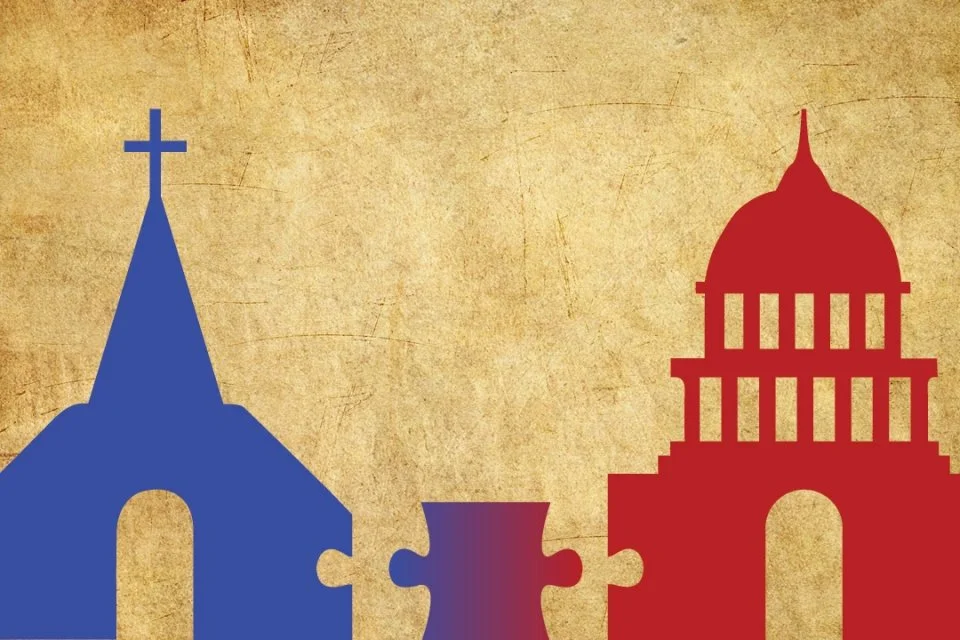
For a decade or more, U.S. Supreme Court justices have been arguing about the separation of church and state. What we keep seeing is a clash between two different forms of “liberalism,” with that term defined into terms of political science instead of partisan politics.

Some justices defend a concept of church-state separation that leans toward the secularism of French Revolution liberalism. The goal is for zero tax dollars to end up in the checkbooks of citizens who teach or practice traditional forms of religious doctrine (while it’s acceptable to support believers whose approach to controversial issues — think sin and salvation — mirror those of modernity).

Then there are justices who back “equal access” concepts articulated by a broad, left-right coalition that existed in the Bill Clinton era. The big idea: Religious beliefs are not a uniquely dangerous form of speech and action and, thus, should be treated in a manner similar to secular beliefs and actions. If states choose to use tax dollars to support secular beliefs and practices, they should do the same for religious beliefs and practices.

At some point, it would be constructive of journalists spotted these “equal access” concepts and traced them to back to their roots in the Clinton era (and earlier). But maybe I am being overly optimistic.

You can see these tensions, kind of, in the Associated Press coverage of the new SCOTUS decision that addressed a Maine law that provided tax funds for parents who chose secular private schools, but not those who chose religious schools. The headline of the main report stated, “Supreme Court: Religious schools must get Maine tuition aid.”

Chief Justice John Roberts wrote the opinion for the majority in this 6-3 ruling. In this story, “liberal” is used to describe the majority.

“Maine’s ‘nonsectarian’ requirement for its otherwise generally available tuition assistance payments violates the Free Exercise Clause of the First Amendment. Regardless of how the benefit and restriction are described, the program operates to identify and exclude otherwise eligible schools on the basis of their religious exercise,” Roberts wrote.

The court’s three liberal justices dissented. “This Court continues to dismantle the wall of separation between church and state that the Framers fought to build,” Justice Sonia Sotomayor wrote.



Please respect our Commenting Policy

Once again, secular science commends a religious instinct and outlook (think compassion)

Once again, secular science commends a religious instinct and outlook (think compassion)

Here’s new secular social science research that’s drenched with religious significance just waiting for examination by journalists.

Over the years, a substantial body of evidence from blue-ribbon universities and medical schools has demonstrated the physical and psychological benefits of regular religious involvement. A January Guy Memo here at GetReligion featured one such new study and then there’s that pioneering Mayo Clinic report from 2001 (.pdf here).

Note to journalists: The impact on life outcomes of youths who are raised in religious homes is especially striking.

Consider the 2019 book “Compassionomics: The Revolutionary Scientific Evidence That Caring Makes a Difference” by physicians Anthony Mazzarelli and Stephen Trzeciak, who are administrators and researchers at New Jersey’s Cooper University Health Care and Cooper Medical School. They reported evidence that health care staffers’ compassion toward patients has a powerful impact on improving both patient outcomes and the workers’ own well-being.

No kidding.

A new book by the same co-authors, going on sale June 21, dramatically extends the concept: “Wonder Drug: 7 Scientifically Proven Ways That Serving Others is the Best Medicine for Yourself” (St. Martin’s Essentials; contact publicity@stmartins.com). The Guy has not read the book but the news potential is obvious from a CNN interview with Mazzarelli last Saturday (click here for transcript).

Think of it as doing well by doing good.

From biblical times to the present, people have been urged to be helpful to others because (1) your Creator requires it and (2) it’s the right thing to do. The two clinicians tell us that a consistent commitment to helping other people is great for you in all kinds of medically provable ways and is thus the “wonder drug” of their title.


Please respect our Commenting Policy

Thinking, with Aaron Renn, about the 'three worlds' shaping American evangelical debates

Thinking, with Aaron Renn, about the 'three worlds' shaping American evangelical debates

f you have been paying much attention to evangelical Twitter in the past year or so, you may have noticed quite a few heated arguments involving the word “elite.”

If you doubt this, run a basic Google search for “Tim Keller,” “evangelical” and “elite.” Then try “David French,” “evangelical” and “elite.”

What you’ll find is more evidence of the relevance of this recent GetReligion “Memo” by religion-beat patriarch Richard Ostling: “Is evangelical Protestantism breaking into five factions in the United States of America?

You may want to click a few of these links if you are planning to read, write or report about the upcoming Southern Baptist Convention, which is June 12-15 in Anaheim, Calif.

There is a very good chance that, at some point, one or more Baptists taking part in speeches or in floor debates will use one or more of these terms — “Positive “World,” “Neutral World” and “Negative World.” Most people will “get” the references being made.

However, I think that it would be good — as a weekend “think piece” — to point to the source of those terms as they were used earlier this year in a First Things essay by social-media scribe Aaron M. Renn. The logical title: “The Three Worlds of Evangelicalism.” Here is the overture:

American evangelicalism is deeply divided.

Some evangelicals have embraced the secular turn toward social justice activism, particularly around race and immigration, accusing others of failing to reckon with the church’s racist past. Others charge evangelical elites with going “woke” and having failed their flocks. Some elites are denounced for abandoning historic Christian teachings on sexuality. Others face claims of hypocrisy for supporting the serial adulterer Donald Trump. Old alliances are dissolving.


Please respect our Commenting Policy

Podcast: Those hellish SBC sexual-abuse stories? They may be coming to a zip code near you

Podcast: Those hellish SBC sexual-abuse stories? They may be coming to a zip code near you

There’s an old saying in the real estate business about properties that get hot and then sell quickly: “Location, location, location.”

That’s precisely where we are right now with the sexual-abuse scandal that looms over the core institutions of the giant, complex, sprawling Southern Baptist Convention.

Where is the story heating up right now? Where is the story going in the future? The answer to both of those questions is: “Location, location, location.” This is true with current events (and events yet to come) and it’s also true with the must-read coverage of this big story. We focused on both sides of that equation during this week’s GetReligion podcast (CLICK HERE to tune that in).

First, let’s talk about the journalism behind this story, which has been building for several years now (see this Bobby Ross, Jr., “Plug-In” update for a starter). Everything begins in Texas and Tennessee and reporters there who are doing the heavy lifting — in Nashville and Houston, to be specific. You can see this, ironically, in this Washington Post story: “How two Texas newspapers broke open the Southern Baptist sex scandal.” Here is the overture:

Houston Chronicle city hall reporter Robert Downen was on the night shift one evening in 2018, just a few months into the job, when something caught his attention.

Scrolling through an online federal court docket, he spotted a lawsuit that accused Paul Pressler, a prominent former judge and leader of the Southern Baptist Convention, of sexual assault. While the case had been previously reported, newly filed documents painted an even more damning picture, including the revelation that Pressler had previously agreed to pay his accuser $450,000. Downen, then 25, probed more deeply and discovered other survivors of church abuse, who made it clear to him, he recalled, that “if you think this problem is confined to one leader, we have quite a bit to show you.”

Downen’s ever-growing spreadsheet of cases soon inspired a larger reporting effort to quantify the scope of sex abuse within the massive Protestant denomination. Journalists at the Chronicle and the San Antonio Express-News teamed up to create a database of cases involving nearly 300 church leaders and more than 700 victims for their landmark 2019 “Abuse of Faith” series.

A wave of outrage in response to the series rocked the Southern Baptist Convention, prompting its Executive Committee to hire an outside firm to investigate.

Sexual-abuse accusations against Pressler had been rumbling for decades behind closed doors and in locked-tight legal proceedings. I first heard about them in the early 1980s, through a well-placed contact at CBS News, when I first hit the religion beat at The Charlotte News. There was smoke, but no one could get to the fire. The fact that this SBC giant’s accusers were young males only added to the tension.

If you know SBC life — I grew up as a Texas Baptist preacher’s kid and my whole family has Baylor University ties — then you may know this old saying: Texas is the wallet on which the SBC sits.


Please respect our Commenting Policy

Pro-abortion rights activists hit Catholic churches, but you probably didn't read about it

Pro-abortion rights activists hit Catholic churches, but you probably didn't read about it

If there was ever a doubt that Americans are living in two, separate news universes, then the past two weeks certainly crystallized that reality even more than the polarizing presidential elections of 2016 and 2020.

Americans who lean left politically, comfortable with reading just The New York Times or Washington Post, have been treated to apocalyptic news stories and opinion pieces — it is often hard to tell which is which — stemming from the leak of the draft decision that could overturn Roe v. Wade.

Did you know that gay marriage is now at risk? Did you know that this incarnation of the U.S. Supreme Court is illegitimate? For these elite news organizations and their readers, reversing the right to abortion is just the first attack by fascist Republicans — you wait and see.

On the right, conservatives who watch opinion shows on Fox News Channel or read Brietbart can’t get enough of how President Joe Biden has been an abject failure, particularly when it comes to inflation.

Have you seen how high gas prices are? Did you read about the baby formula shortage? To those news organizations, it’s all about fixing these problems by “owning the libs” by getting the GOP in control of the House and Senate in the November midterm elections.

I have friends on both sides of the political aisle and it’s shocking to me how much one side doesn’t know about what the other is reading and thinking. It often takes weeks for stories that one side repeatedly reported on to ever make it into the pages and onto screens of the other side.

It’s not a failure of our politics. Those have always been polarized. This is a failure of journalism.

Let me explain how these two news universes (while great for the bottom line of news organizations catering to their bases) led to a major news story being totally ignored by many mainstream news sites.

The protests — deemed an issue with “a lot of passion” by the White House — over abortion spilled over into houses of worship, especially Catholic churches. Is the First Amendment right to protest on private property more important than freedom of religion? Not according to the Constitution, and that’s what the news media should be concerned with reporting, not with managing narratives.

It’s therefore not a surprise that pro-abortion rights folks protesting outside churches — and in some cases disrupting Mass — received little to no coverage in most mainstream national news organizations.


Please respect our Commenting Policy

Ordinary protests at doxxed SCOTUS homes, Masses and a generic firebomb, as well

Ordinary protests at doxxed SCOTUS homes, Masses and a generic firebomb, as well

The Roe v. Wade related events of the past three or four days have created a very obvious case study that can be stashed into that ongoing “mirror image” case file here at GetReligion.

Start here. Let’s say that, during the days of the Donald Trump White House, something important happened related to LGBTQ rights — something like a U.S. Supreme Court decision that delivered a major victory to the trans community. At that point, some wild people on the far cultural right published the home addresses of the justices that backed the decision and, maybe, even any hospital that Justice Ruth Bader Ginsburg might be visiting for cancer treatments.

Another group, let’s call it “Bork Sent Us,” announces plans for protests at Episcopal Church parishes because of that denomination’s outspoken support for LGBTQ causes. Some protestors promise to invade sanctuaries and violate the bread and wine used in the Holy Eucharist. Along the way, what if someone firebombed a Planned Parenthood facility?

Obviously, Trump’s press secretary would be asked to condemn this madness, including violations of a federal law against intimidating protests at the homes of judges.

Let’s set that aside for a moment. I want to ask a “mirror image” journalism question: Would this be treated as a major news story in elite media on both sides of our divided nation and, thus, divided media? Would this, at the very least, deserve a story or two that made it into the basic Associated Press summary of the major news stories of the weekend?

Let me say that these events would have deserved waves of digital ink, with good cause.

This brings us, of course, to the leaked copy of a draft of a majority opinion by Justice Samuel Alito that points to a potential 5-3-1 decision to overturn Roe v. Wade. Twitter users may know many of the details of the anger this has unleashed in mass media and among Sexual Revolution clergy, both secular and sacred. There has been some coverage, including (#DUH) at Fox News. A sample on the church angle:

The White House on Sunday defended people's "fundamental right to protest" but warned against efforts to "intimidate" others during pro-abortion protests planned at Catholic churches across the country.

Multiple activist groups are planning protests defending abortion rights outside Catholic churches on Mother's Day and the following Sunday after a draft opinion from the Supreme Court threatened to overturn Roe v. Wade.


Please respect our Commenting Policy

Was Jesus a socialist? Concerning the 'rich young ruler' and modern economics

Was Jesus a socialist? Concerning the 'rich young ruler' and modern economics

THE QUESTION:

Was Jesus a Socialist?

THE RELIGION GUY’S ANSWER:

Well, no. For one thing, that term, as with rival capitalism, pertains to modern industrialized society.

The 1st Century economy consisted mostly of hand-to-mouth subsistence agriculture, along with fishermen, small-time merchants, individual craftsmen and a tiny class of wealthy overlords. But the question above was posed this month by a Wall Street Journal column, so let’s briefly scan a few aspects of Christianity and economics.

Those familiar with the New Testament will immediately think of the incident between Jesus and the “rich young ruler” recorded in three of the four Gospels (here we’ll follow Luke 18:18-27 in the RSV translation).

The ruler asks Jesus, “What shall I do to inherit eternal life?” Jesus recites several of the Ten Commandments that are to be obeyed. The ruler replies that he has done this since his youth. Jesus then tells him “one thing you still lack. Sell all that you have and distribute to the poor, and you will have treasure in heaven; and come, follow me.” The ruler “became sad, for he was very rich.”

Jesus then observes, “How hard it is for those who have riches to enter the kingdom of God! It is easier for a camel to go through the eye of a needle,” but he concludes, “What is impossible with man is possible with God.”

You can have some fun checking out commentaries on this passage online or in your local library. Softening the force of Jesus’ words (a bit too easily?), Bible experts often say this was a unique saying for one individual who was perhaps stingy and had set his heart too much on his wealth while neglecting God’s priority, that He be served through service to his needy people.

Whatever the ruler ended up doing with his wealth, we are familiar with Catholic men’s and women’s orders where those who join take voluntary vows of poverty and keep only minimal personal possessions, and the same in Buddhism.


Please respect our Commenting Policy

Memory eternal: What were the big ideas that drove the work of Chuck Colson?

Memory eternal: What were the big ideas that drove the work of Chuck Colson?

As a D.C. Beltway power player, the late Charles W. Colson worked with a "Thank God it's Monday" attitude that meant his colleagues always knew they could contact him about hot topics and decisions.

But there was one exception -- visits by his autistic grandson Max.

"If Chuck was with Max, his phone was turned off," said Dave Carlson of the Colson Center for Christian Worldview. "Max could stop him in his tracks."

This bond was rooted in a conviction that shaped the Nixon White House strategist's work after his 1973 born-again Christian conversion and guilty plea for Watergate crimes that put him in federal prison, said Carlson, who spent two decades as a Colson aide and editor. This same conviction led Colson to create the global Prison Fellowship ministry in 1976.

"It didn't matter if you were in prison or what kind of crimes put you there. It didn't matter if you were missing a chromosome or were autistic," he said. Colson believed "we are all humans made in the image of God -- Imago Dei. He was passionate about that until the end."

The 80-year-old Colson died on April 21, 2012, felled by a brain hemorrhage moments after a speech about rising threats to religious liberty. His colleagues marked the 10-year anniversary by rebroadcasting that speech during a BreakPoint radio commentary.

"What we're witnessing in our culture … is but the tip of the iceberg. It's the latest visible manifestation of a growing hostility towards Christianity mainly because -- this has always been the case -- government officials feel threatened by the power of the church because we all worship a king higher than the kings of this earth," said Colson.

Cultural issues are bigger than mere politics, he stressed.

"Elections are important. Whoever serves in office, it makes a difference what kind of person that is and what that person believes," he said. "But elections can't solve the problem we've got. The problem we've got is that our culture has been decaying from the inside for 30 or 40 years, and politics is nothing but an expression of culture. So how do you fix the culture?"


Please respect our Commenting Policy

Naw! Nobody in the Title IX wars is asking LGBTQ questions about religious schools

Naw! Nobody in the Title IX wars is asking LGBTQ questions about religious schools

Every now and then, I finish reading a major-media news story and I think: Wait a minute. There’s a massive hole here (and one that’s going to produce all kinds of news headlines). Didn’t anyone notice?

In this case, we are talking about another story involving a head-on collision between the First Amendment and the evolving doctrines of the Sexual Revolution. The battleground is the hyper-tense world of higher education. The Washington Post headline, in this case: “New Title IX rules set to assert rights of transgender students.”

We will get to the overture in a moment. But can you spot the “hole” that is sort-of mentioned in this background paragraph which is buried way down in the Post report?

Title IX is a 1972 law that bars discrimination on the basis of sex in any educational program or activity that receives federal money. Schools found in violation risk losing federal aid. Advocates have long held that this definition rightfully includes discrimination on the basis of sexual orientation or gender identity.

OK. Does “any educational program or activity that receives federal money” include student-loan programs?

If so, maybe this story should have at least mentioned the 7,000 or so religious colleges and universities in this land? I mean, is there any chance that LGBTQ activists are going to challenge the religious liberty claims of these schools, many of which are explicitly doctrine-defined voluntary associations?

With that in mind, read the top of this feature at The Conversation: “What is the religious exemption to Title IX and what’s at stake in LGBTQ students’ legal challenge?”

While federal law shields most U.S. students from gender and sexual orientation discrimination, an estimated 100,000 LGBTQ students at religious institutions do not have the same protections.

Under a religious exemption provision, scores of colleges and universities can – and do – discriminate on the basis of someone’s sexual orientation, gender identity or gender expression.

A class action lawsuit now challenges that discrimination.


Please respect our Commenting Policy