Charities-Nonprofits

'God bless those who weep': Brilliant OSU lineman leaves football, after fighting suicidal thoughts

'God bless those who weep': Brilliant OSU lineman leaves football, after fighting suicidal thoughts

Athletes of all ages say all kinds of wild things on Twitter that make headlines.

It’s the digital age in which we live. Every now and then, these snarky quips and social-media pronouncements are actually newsworthy.

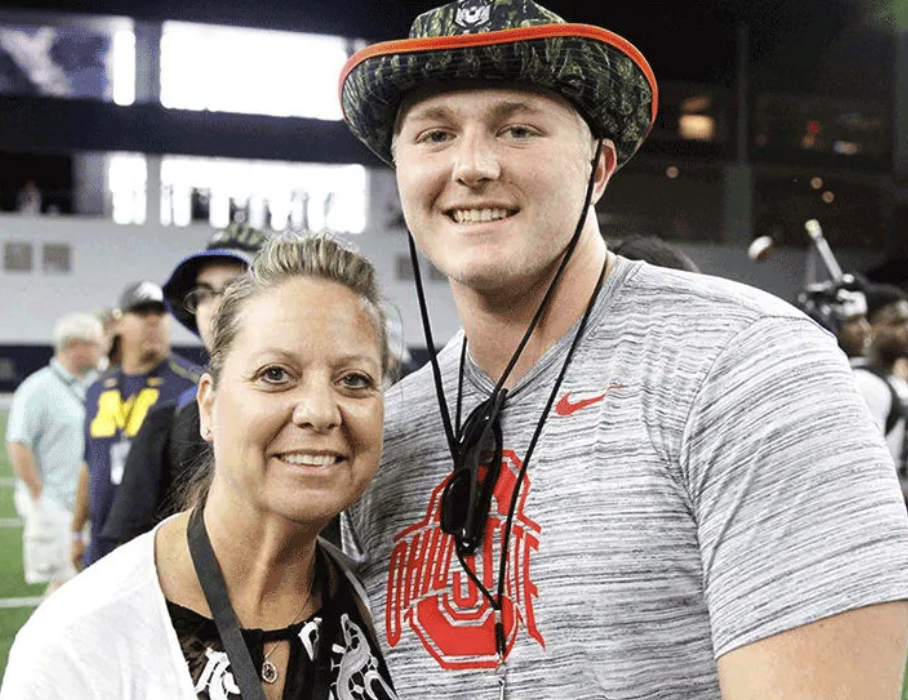
But that painful and haunting letter that Ohio State offensive lineman Harry Miller posted on Twitter was something else altogether. It was an appeal for public awareness of box-cutter scars and mental health issues that, far too often, can be hidden with muscles, bandages and layers of athletic gear. Here is the top of a Bleacher Report story — “Ohio State OL Harry Miller Retires From Football; Details Mental Health Struggles” — about this 5-star level football prospect:

Ohio State offensive lineman Harry Miller announced his medical retirement from football. … In a message posted to Twitter, Miller said that he had suicidal thoughts and went to Ohio State head coach Ryan Day to seek help.

"Prior to the season last year, I told Coach Day of my intention to kill myself," Miller wrote. "He immediately had me in touch with Dr. Candice [Williams] and Dr. [Joshua] Norman, and I received the support I needed."

Miller played for Ohio State from 2019-21. He was named an OSU Scholar-Athlete in 2019 and 2020. Miller also started seven games at left guard for the 2020 team, which won the Big Ten and the Sugar Bowl. He played two games in 2021. OSU recruited Miller, a 5-star recruit, out of Buford High School in Georgia.

"A person like me, who supposedly has the entire world in front of them, can be fully prepared to give up the world entire," Miller wrote. "This is not an issue reserved for the far and away. It is in our homes. It is in our conversations. It is in the people we love."

Miller is an unusual young man for several reasons. A long-time GetReligion reader (a professional writer with decades of experience) put it this way in an email to me this weekend:

He is straight A student in engineering and got a 1600 on the SAT. His mom was physically abused by her first husband and abandoned by Miller's father.

Yet, he has lived for others while becoming a five-star recruit. Now, the guts to do this.

So many religion ghosts, so little time.

Please respect our Commenting Policy

Beyond the Orthodox questions: How might the Ukraine war scramble world Christianity?

Beyond the Orthodox questions: How might the Ukraine war scramble world Christianity?

Russia's invasion of Ukraine has potential to be "the most transformational" European conflict since World War II, writes New York Times foreign policy columnist Thomas Friedman.

Will it be transformational for Christianity?

There's a slim chance peace could be restored, but at this writing Russian dictator Vladimir Putin appears committed to doing whatever it takes to demolish the independence of his once-friendly neighbor and its young democracy. We might see Russian military occupation, a puppet regime, persistent armed resistance by furious Ukrainians, ongoing aid by the West and at some future point a humiliating defeat and withdrawal -- a replay of the decade-long occupation of Afghanistan that played into the Soviet Union's collapse and therefore to Ukraine's independence.

Russia faces accusations of war crimes amid mass killings of innocent civilians, and bombardment of homes, hospitals, schools and infrastructure, with attendant suffering.

The contours of world Christianity could be scrambled, as a result of all of this. This religious aspect seems a mere sidebar for the news media just now.

But long term, the Russian Orthodox hierarchy has fused the church's stature with a regime hit by widespread moral condemnation, sagging influence and rising economic and diplomatic isolation. Opprobrium comes not just from the U.S. and western allies. In a United Nations vote, 141 nations denounced the "aggression" while only four problematic regimes backed Russia. Even China abstained.

The media should be alert to the following possible scenarios.

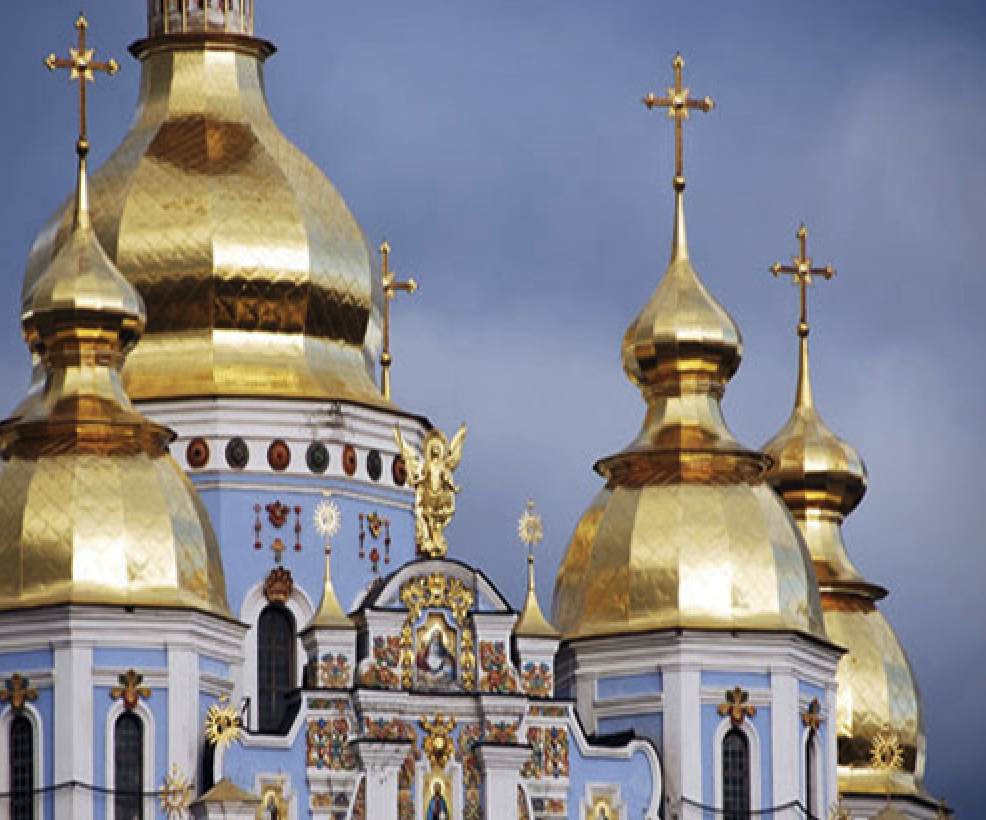
The starting point for discussion is a current church split within Ukraine, whose Orthodox population is second only to the massive church of Russia. See detail here in a previous Memo.

In 1686, the Ecumenical Patriarch, "first among equals" who lead Orthodoxy's independent "autocephalous" branches, granted the Moscow Patriarch the jurisdiction over Ukraine that it still exercises. But after national independence, a rival Orthodox Church of Ukraine now led by Metropolitan Epiphanius arose, and Ecumenical Patriarch Bartholomew — with the sympathy of western leaders — formalized its autocephalous status in 2019.


Please respect our Commenting Policy

Two insiders' writings should be weighed carefully by evangelical-watchers in the press

Two insiders' writings should be weighed carefully by evangelical-watchers in the press

As U.S. Protestant evangelicalism copes with internal divisions and problematic status in the broader society, along with the usual brickbats from the Left, non-partisan journalists and evangelical strategists alike should carefully monitor the thinking of knowledgeable insiders who are not wedded to customary loyalties and assumptions. Two in particular: David French and the lesser-known Michael F. Bird.

Preliminaries: (1) The media should indicate when they're talking about WHITE evangelicals, who are so distinct from the Hispanic and Black subgroups in socio-political terms. (2) Contrary to the customary media story line, it's important to acknowledge that grassroots, evangelicalism remains the LEAST politically involved of U.S. religion's major segments, as seen in the National Congregations Study.

Attorney-turned-pundit David French is, yes, a critic of Donald Trump who even flirted with a quixotic third-party run against him in 2016. Therefore his journalism is ignored if not despised by legions yearning for a second Trump term (which would end when he's age 82.5). Yet consider that though a Harvard Law product, French is a conservative's conservative and an evangelical's evangelical.

The Tennessee-based writer, who worships in the conservative Presbyterian Church in America, is a senior editor of The Dispatch and formerly a National Review writer. During his prior legal career he was a senior counsel with two top evangelical shops, the American Center for Law and Justice and the Alliance Defending Freedom, and president of the Foundation for Individual Rights in Education. Perhaps no attorney has labored more effectively to defend Christian voices and organizations on U.S. campuses, harassed local churches and conservatives and pro-lifers exercising Bill of Rights freedoms.

Additionally, he served with the U.S. Army in Iraq, winning the Bronze Star for combat service. His importance as a conservative thinker was depicted in this 2019 New Yorker article. Wife Nancy was a Sarah Palin ghostwriter and founded Evangelicals for Romney in 2012.

With that background, you'll understand why The Guy keeps thinking about the contention in French's weekly column on religion February 13 that "the seeds of renewed political violence are being sown in churches across the land."


Please respect our Commenting Policy

Behind #MeToo headlines: Denhollander keeps advising church leaders about sexual abuse

Behind #MeToo headlines: Denhollander keeps advising church leaders about sexual abuse

In this age of small-group ministries, most pastors would know how to handle a crisis that affected significant numbers of believers in their pews.

"If you had one in four members of your congregation actively battling cancer or one in four members … experiencing being widowed or losing a spouse, chances are that you would have some level of intentional ministry to those individuals," said Rachel Denhollander, in a recent Trinity Forum event focusing on how churches respond to sexual abuse. "Maybe you would have a support group or a Bible study for them. You would have meal trains to help provide for their physical needs."

But many sexual-abuse victims hesitate to speak out, she said, because churches act as if they don't exist. Thus, they have little reason to believe the sins and crimes committed against them will be handled in a way that offers safety and healing. Far too many religious leaders act as if they haven't grasped the magnitude of this crisis.

"There is an astonishing perception gap and it's really inexcusable at this point in time," she said, speaking to victims, clergy and activists online -- including participants in 24 nations outside the United States. "We've had the data, literally, for decades. … Even what we know is dramatically undercounted.

"The statistic has stayed right around one in four women, for sexual violence, by the time they reach age 18. … The rate continues to rise and there really isn't any excuse, at this point in time, for not knowing that data. But sometimes, it's emotionally easier to not know that data and all of us have that intrinsic desire to not have to see the darkness that's around us."

Sexual abuse is a hot-button issue everywhere, from small fundamentalist flocks to the Roman Catholic Church. Revelations from #MeToo scandals have rocked the careers of A-list players in entertainment, politics, sports, academia and business.


Please respect our Commenting Policy

When ancient texts meet high tech, behold, will we get near-instant Bibles? 

When ancient texts meet high tech, behold, will we get near-instant Bibles? 

The Religion Guy has touted the investigative chops of the Ministry Watch website and its usefulness as a story source for journalists. Let’s re-up that message.

Along with assorted financial and moral scandals, President Warren Cole Smith has been examining what he calls the "Bible translation industry" (which prefers to call itself a "ministry"). This is a very popular cause among U.S. Protestants, with revenues of around $500 million a year. The biggest group, Wycliffe Bible Translators, took in $227 million in 2020.

In articles here (“Outsourcing Bible Translation?”), here (“Translation Service Providers Could Be Paradigm-Changing For Bible Translation Industry”) and finally here (“Just How Broken Is the Bible Translation Industry?”) Smith has been criticizing translation groups for taking so long and spending so much money to produce a Bible translation in a new language when the need is so great.

To force a massive speedup, Smith promotes the fascinating idea of applying the technology used widely by businesses and governments for necessary rapid translations of contracts, diplomatic exchanges, scientific articles, movie scripts and the like. Such biblical projects are already under way, and that provides a solid feature idea for reporters to pursue.

A consortium of traditional Bible translation organizations, illumiNations, figures the planet has around 7,000 languages currently being spoken, of which 3,700 have little or no scripture. It seeks to fill that gap by 2033, and states that it typically takes seven years to render the New Testament and 16 years for a complete Bible. At the present rate, Smith comments, the task will take till at least A.D. 2150.

As a former business executive, Smith argues that Christian donors should reasonably expect 10 times the new Bibles than are actually being produced and, while chiding groups for lack of financial transparency, estimates it takes not only many years but many millions of dollars to produce a new translation. He says the current experimental phase of the new high-tech scheme indicates radically shortened time frames are possible at a cost of a mere $350,000 per new Bible.

Big, if true. That’s a news story.


Please respect our Commenting Policy

Podcast: Religion News Service offers new story about an old trend called 'Sheilaism'

Podcast: Religion News Service offers new story about an old trend called 'Sheilaism'

One of the problems with covering the same religion-beat topics for multiple decades (in other words, I am old) is that you tend to see many “new” news stories as pieces of puzzles that are actually quite old.

Consider, for example, the Religion News Service feature that was the hook for this week’s “Crossroads” podcast (CLICK HERE to tune that in).

The headline on that RNS piece stated: “A 300-year-old church hopes to connect with spiritual but not religious neighbors.” Here is the overture from this story by religion-beat veteran Bob Smietana:

For three centuries, Trinity Episcopal Church has tried to meet the spiritual needs of the small community of Southport, Connecticut, about an hour and a half outside of New York.

As more and more of the church’s neighbors ditch organized religion but not faith, leaders at Trinity hope a new initiative will help them find meaning and purpose in life even if they never attend a Sunday service.

The church recently launched the Trinity Spiritual Center, which offers lectures, classes on meditation and contemplation, and a sense of community during a trying time, said the Rev. Margaret Hodgkins, the rector of Trinity Church.

We will come back to some of the specifics of this piece — details that link it to several trends that are (#SIGH) decades old in the aging, shrinking world of mainline Protestantism and, to a lesser extent, parts of Roman Catholicism, Eastern Orthodoxy, liberal Judaism and other established religious “brands.”

The Big Idea in this RNS piece is that an Episcopal parish that has some resources to spend has decided to help spiritual seekers find their own paths to the top of Mt. Eternity without proclaiming any of those narrow, tacky doctrines linked to 2,000 years of Christian faith and practice. You know, all that stuff about the Resurrection of Jesus, eternal salvation or moral theology (warning: veiled reference to the “tmatt trio”).

In other words, the goal appears to be a sort-of parish in honor of St. Sheila, the patron saint of “Sheilaism.”


Please respect our Commenting Policy

In Afghanistan, believers in religious minorities have every reason to go underground

In Afghanistan, believers in religious minorities have every reason to go underground

There's a logical reason that Taliban forces have not been accused of destroying any churches in Afghanistan.

"That's the dirty little secret. There were no churches before the Taliban returned to power," said Nina Shea, director of the Hudson Institute's Center for Religious Freedom and a human-rights activist for 30 years. "Christians were already underground because of the constant threats to their lives, so they didn't have any church buildings to blow up."

Everyone remembers the shocking videos when desperate Afghans chased a U.S. military plane on a Kabul runway, pleading to be among those evacuated. At least two people fell to their deaths after clinging to a plane during takeoff.

Ever since, there have been reports about the dangers faced by those left behind, especially Afghans with ties to the U.S. military, the fallen government or workers in secular or religious non-profit groups that remained behind to continue humanitarian work.

Christians, Hindus, Sikhs, Ahmadis, Shia Muslims and members of other religious minorities are also living in fear.

"They are all on the run. They are all in hiding," said Shea, reached by telephone. "People are being hunted down and beaten and are threatened with death if they don't betray members of their families who are considered apostates" by the Taliban.

It's impossible not to discuss religious freedom during this crisis, she added. "Everything the Taliban does is about religion. Religion is involved when they hang people for violating their approach to Islamic law or when they attack women and girls who want to go to school. For the Taliban, this is all connected."

The problem is that religious freedom concerns are often drowned out during debates about politics, economics, climate change and other issues in violent flashpoints around the world.


Please respect our Commenting Policy

Saving urban churches: Associated Press feature dances around several important issues

Saving urban churches: Associated Press feature dances around several important issues

When I arrived at The Rocky Mountain News (RIP) in the fall of 1984, one of the first things I did was take a long walk in downtown Denver — taking notes about the religious sanctuaries that were nearby.

Most of the urban churches were, as you would expect in a Western city, linked to Mainline Protestant denominations and there were several Roman Catholic parishes, as well.

All of the mainline churches were in decline, with shrinking and aging congregations housed inside large buildings dating back to the glory days of previous decades. The one exception was a United Methodist congregation led by an evangelical pastor who was reaching out to families, single adults and all kinds of people in nearby neighborhoods — Blacks, Latinos, Asians, etc.

Meanwhile, conservative churches were growing in the suburbs, with a mixture of nondenominational, Baptist, Pentecostal and alternative Presbyterian flocks leading the way.

My point is that there were several stories going on in downtown Denver at the same time. But it was already clear — four decades ago — that lots of those old, big churches would eventually be empty or up for sale. It was also obvious that some of them would seek income from other sources to help keep their doors open, renting space to other flocks or social ministries.

Major news organizations keep bumping into stories linked to these trends, in part because big newsrooms tend to be in central urban zones and, in my experience, quite a few journalists (religion-beat pro included) have liberal Protestant or Catholic backgrounds or remain active in those traditions. Thus, here at GetReligion, it’s common to see posts with headlines such as these: “More news about old churches being sold and flipped: Does it matter why this is happening?”, “Churches for sale: New York Times visits a sexy former Catholic sanctuary in Quebec” and “Wait just a minute: Fading Lutherans (ELCA) in Waco sold their lovely building to Anglicans?” Or how about this one? “Why is a church shrinking or closing? Reporters: Brace for complex and heated debates.”

This brings me to a new Associated Press report about this old topic: “Historic city churches find new life as neighborhood centers.” Once again, there are glimpses of the trends behind this news hook, but very little information examining the larger issues looming in the background.


Please respect our Commenting Policy

In post-pandemic America, will sagging church health damage public health? 

In post-pandemic America, will sagging church health damage public health? 

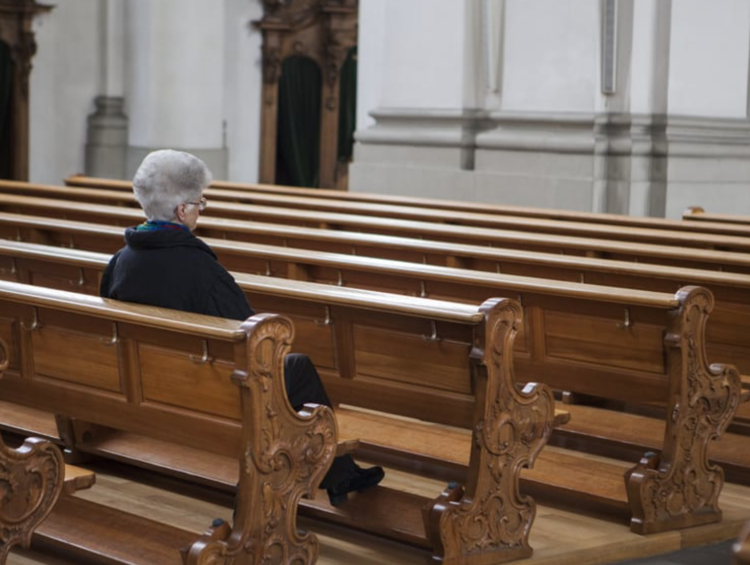
America's religious congregations have, over all, suffered steady erosion in attendance, membership and vitality since around 2000.

Analysts fret that worse may occur after the current COVID-19 emergency finally subsides because myriads of members are now accustomed to worshiping online rather than in person or they may skip services altogether.

At the same time, there is evidence that, while decline is common, a majority of congregations report that they have survived or even grown during the past two years. This is a complex subject. As a recent Associated Press story noted:

Gifts to religious organizations grew by 1% to just over $131 billion in 2020, a year when Americans also donated a record $471 billion overall to charity, according to an annual report by GivingUSA. Separately, a September survey of 1,000 protestant pastors by the evangelical firm Lifeway Research found about half of congregations received roughly what they budgeted for last year, with 27% getting less than anticipated and 22% getting more.

This is an important news topic, no matter what. Even secularized news consumers should be interested when social science researchers tell us that sagging participation could not just damage religious institutions but create a public health "crisis." In our age of solitary, do-it-yourself forms of spirituality, research indicates, regular in-person attendance at worship services is central to the well-being of children, adults and society.

This important assertion does not come from religious propagandists but Harvard's Institute for Quantitative Social Science. Building upon two decades of scholarship, the institute in 2016 launched its distinctive "Human Flourishing Project" to focus on the impact the family, workplace, education and religion have on peoples' well-being. Their survey samples are large and they say their methodology improves upon past research.

Key findings document differences between Americans who regularly attend worship versus those who never attend.


Please respect our Commenting Policy