Charities-Nonprofits

Yes, there were overlooked religion angles in today's biggest U.S. political news story

Yes, there were overlooked religion angles in today's biggest U.S. political news story

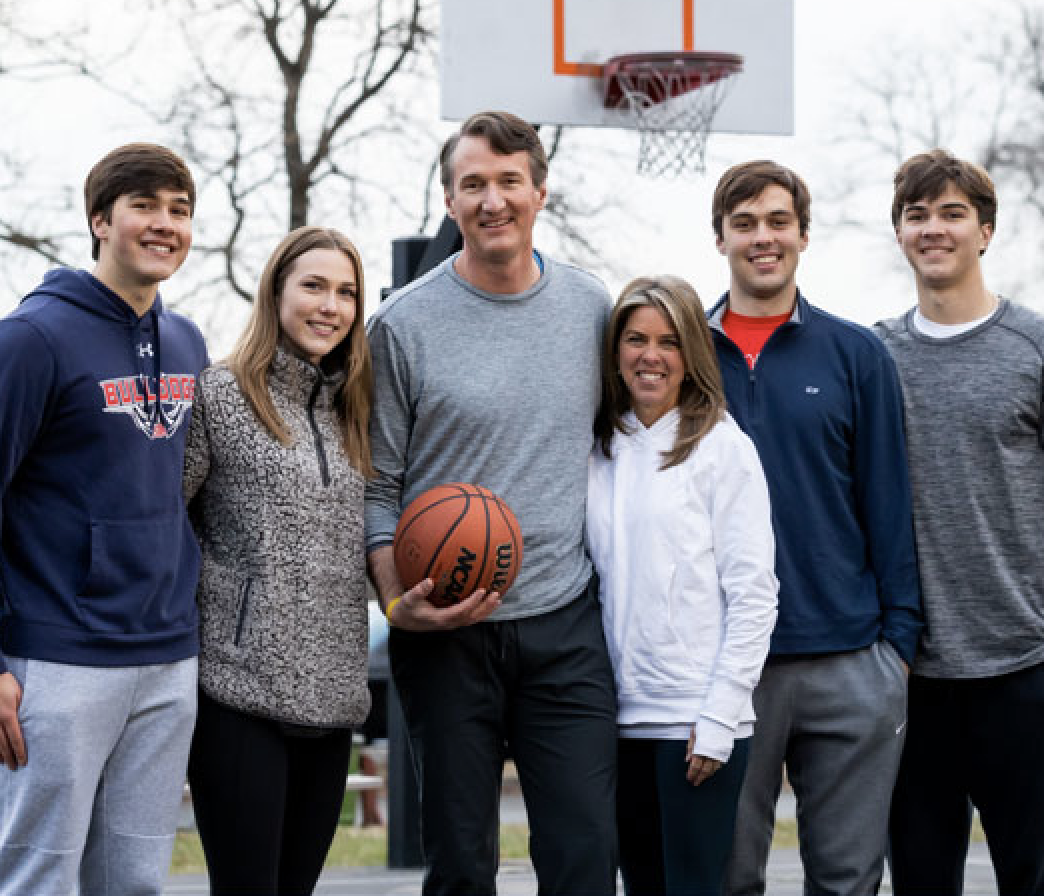
Well what do you know. Evangelical Anglicans and the Salvation Army had a big night in the Commonwealth of Virginia.

That’s probably not the first thing that leaps to mind today, for political junkies who spent most of the night (the World Series finale was a big deal) watching political pundits express shock and, sometimes, grief watching a Republican newcomer upset name-brand Democratic Party candidate.

Lots of people talked about Donald Trump, of course. Some people dug a bit deeper and focused on how governor-elect Glenn Youngin managed to affirm some themes from the Trump revolution, while striving to stay as far away as possible from personal contact with Orange Man Bad.

This brings me to a headline this morning at A Journey Through NYC Religions, which is one of those niche-news websites that many religion-beat pros have in their browser favorites — because of its heady mix of hard facts and hard-to-label commentary.

Here’s the headline: “Faith trumps Trump in Virginia.”

Say what?

I think many journalists would assume — if they thought about religion angles in the Virginia race — that the members of the victorious GOP team probably came from White megachurches. But that’s not what veteran editor Tony Carnes found when he looked for the ties that bind, in this case. Here is his overture:

Most of the media attention in the Virginia elections has been on Trump and his influence. The Democratic candidate Terry McAuliffe tried unsuccessfully to tag his opponent Glenn Youngkin as a Trumper.

However, under the surface of politics, there was a deeper spiritual culture and social network that connected the top three candidates in Virginia. This characteristic made the GOP effort in Virginia more winsome (indeed, that is the first name of Winsome Sears, the next Lieutenant Governor.)

Please respect our Commenting Policy

Many media pros have missed a mega-money source backing some big Christian causes

Many media pros have missed a mega-money source backing some big Christian causes

Follow the money.

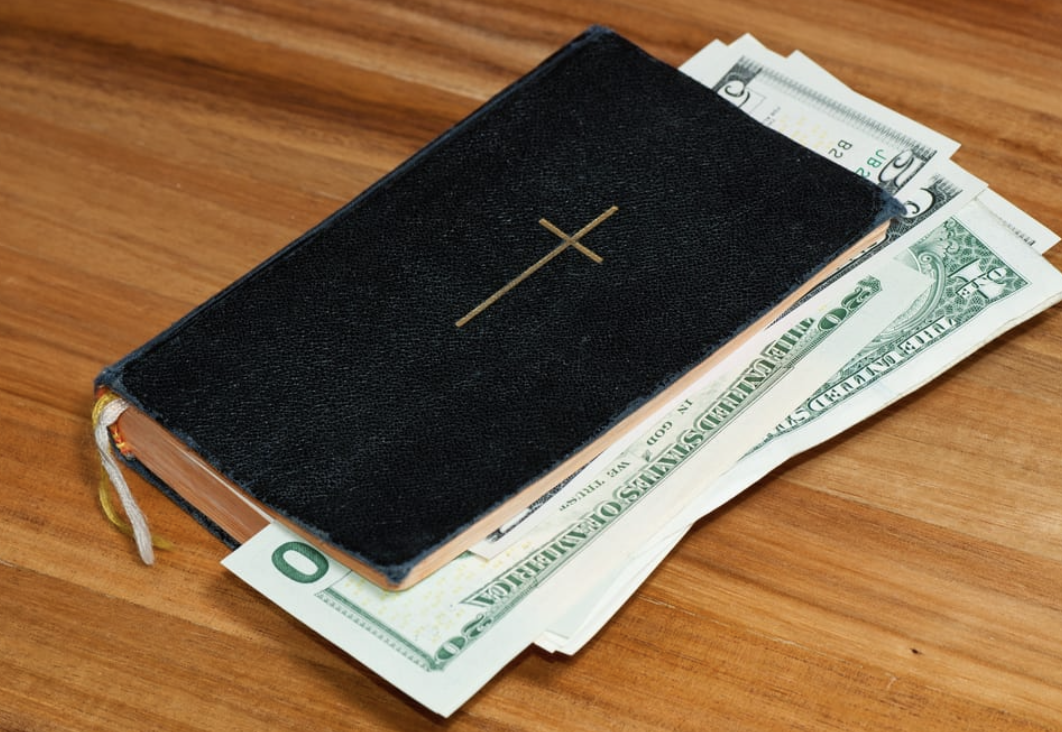
Those three little words guide journalists and prosecutors alike. And that explains the news potential of the Georgia-based National Christian Foundation (NCF), www.ncfgiving.com/ which to date has quietly given $14 billion to 71,000 non-profit groups, $1.3 billion of that last year, in both tiny and huge grants. An Atlanta Journal-Constitution piece recently noted that "mysterious" operation is "one of the most influential charities you've never heard of."

Writing last week for Ministry Watch (a news website that reporters should follow), GetReligion alumnus Steve Rabey reports that NCF became "the world's largest Christian foundation" largely through word-of-mouth referrals rather than promotional efforts. The Chronicle of Philanthropy, which posted antagonistic coverage in February, ranks NCF as the nation's eighth-largest charity.

NCF calls itself a "ministry," and though it aids a wide range of secular non-profit charities it's a particularly important vehicle for religious donations from wealthy conservative Protestants who share its belief that "the entire Bible is the inspired and inerrant Word of God." The foundation's 26 offices around the U.S. handle donations -- contact info posted here -- so local angles for the media abound. (At national headquarters, Dan Stroud is C.E.O and Steve Chapman the media contact via info@ncfgiving.com or 404-252-0100.)

Rabey's piece includes a helpful link to the Guidestar.org posting of NCF's 593-page IRS Form 990 filed for 2019, with a listing of grant recipients that reporters will want to eyeball. The largest categories of donations ranged from local churches ($215 million) on down to medical care ($21 million). Major causes included evangelism, relief, education, children and youth work, museums, spiritual and community development, media and publishing, orphan care, Bible translation and ministry to the homeless.

NCF typifies the rising importance of "donor-advised funds" in U.S. philanthropy. The basic idea has existed for a century and was devised as a vehicle for Christian donors in 1982 by pioneering Atlanta tax attorney Terry Parker, still a board member, along with evangelical financial gurus Ron Blue and Larry Burkett.


Please respect our Commenting Policy

Don't neglect the Supreme Court's potentially weighty case on religious schools funding

Don't neglect the Supreme Court's potentially weighty case on religious schools funding

Media eyes are trained on the U.S. Supreme Court's December 1 argument on Mississippi's abortion restrictions, preceded by a fast-tracked November 1 hearing about the stricter law in Texas. But don't neglect the Court's December 8 hearing and subsequent decision on tax funding of religious schools in the potentially weighty Carson v. Makin case (docket #20-1088).

University of Baltimore law Professor Kimberly Wehle certainly wants us to pay heed, warning October 14 via TheAtlantic.com that this is a "sleeper" appeal that "threatens the separation of church and state." In her view, the high court faces not just the perennial problem of public funding for religious campuses. She believes the justices could decide "religious freedom supersedes the public good" by aiding conservative Christian schools that, based on centuries of doctrine, discriminate against non-Christian and LGBTQ students and teachers.

Journalistic backgrounding: Thinly-populated Maine provides an unusual context for this story because the majority of its 260 school districts do not operate full K-12 systems and instead pay tuition for public or private schools that families choose for upper grades. Religiously-affiliated schools are included, but not if Maine deems them "sectarian."

Notably, the parents' plea for tuition is backed by major institutions of the Catholic Church, the Southern Baptist Convention and other evangelical Protestants, the Church of God in Christ (the nation's largest African-American denomination), Latter-day Saints (formerly called "Mormons") and Orthodox Judaism, alongside the 63-campus Council of Islamic Schools. A reporter's question: Has such a religious coalition ever formed in any prior Supreme Court case?

Of further interest, the case engages a major religious-liberty theorist, Michael W. McConnell, director of Stanford University's Constitutional Law Center and former federal judge on the 10th Circuit Court of Appeals. He wrote that circuit's 2008 opinion in Colorado Christian University v Weaver (.pdf here), which tossed out a law that barred "pervasively sectarian" colleges from a state scholarship program.

In Carson, McConnell filed a personal brief September 8 that hands the Supreme Court a history lesson (.pdf here) on religious freedom as conceived when the Constitution's First Amendment was framed. He has explored this ground since a significant Harvard Law Review article in 1989.


Please respect our Commenting Policy

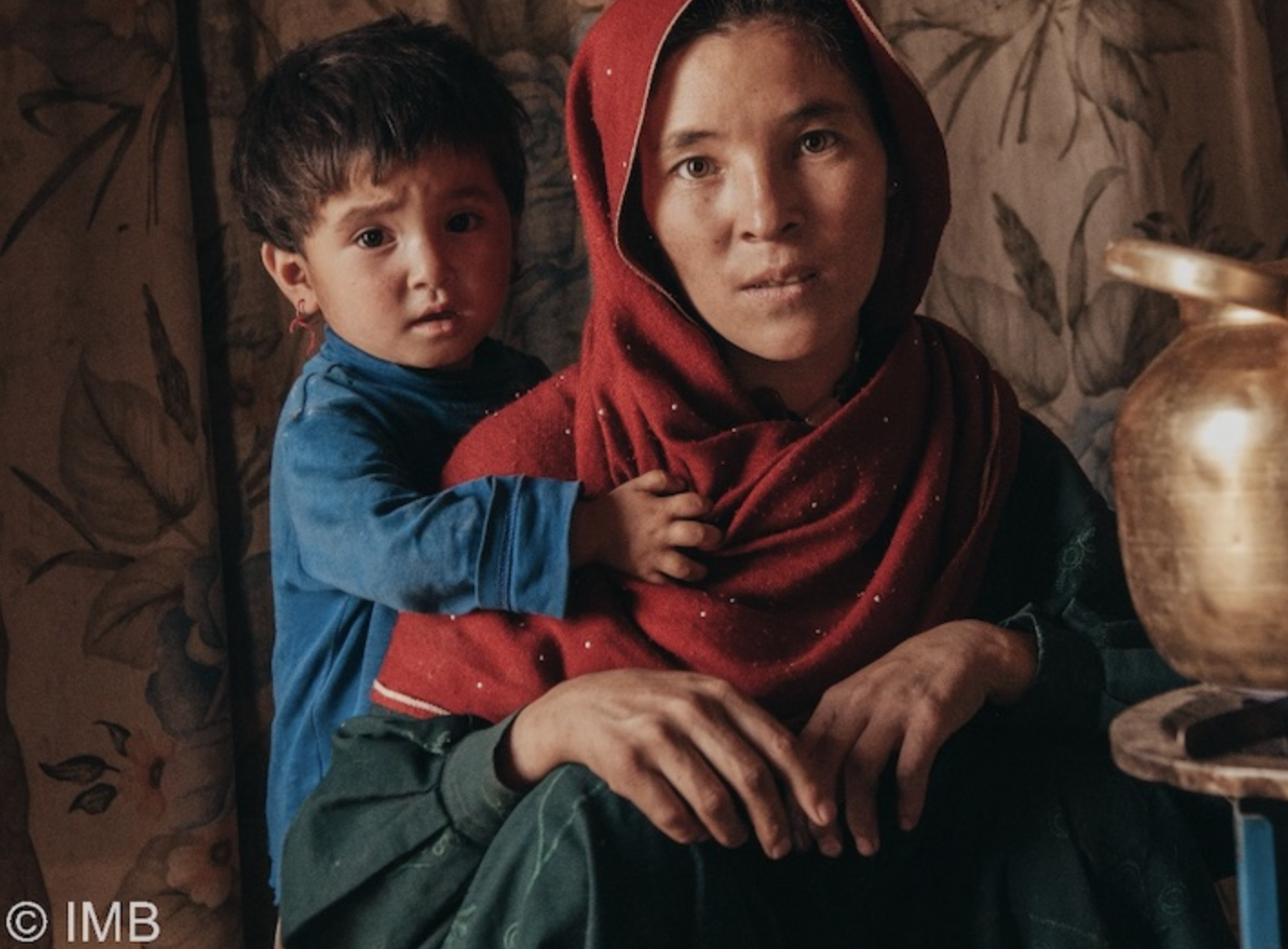
That question again: What's happening to religious believers and others stuck in Afghanistan?

That question again: What's happening to religious believers and others stuck in Afghanistan?

This is a case in which I don’t want to say, “We told you so,” but -- well — we told you so.

If you dug into this recent podcast-post — “ 'What's next in Afghanistan?' Warning: this news topic involves religion” — you’d know that the GetReligion team has been worried about what will happen to elite news coverage of human rights issues and, specifically, religious freedom, in Afghanistan under this new Taliban regime. In fact, that podcast included many themes from an earlier GetReligion podcast-post with this headline: “When the Taliban cracks down, will all the victims be worthy of news coverage?”

It appears that there are two problems.

Reality No. 1: It’s hard to cover the hellish realities of life in the new-old Afghanistan without discussing the messy exit of U.S. diplomats and troops from that troubled nation. Thus, new coverage will please Republicans, who are infuriated about that issue, and anger the White House team of President Joe Biden, which wants to move on. New coverage allows Republicans to “pounce,” as the saying goes.

Reality No. 2: There are many valid stories inside Afghanistan right now, but some are more explosive than others in terms of fallout here in America. This is especially true when dealing with stories about Americans who are still trapped there. Then there are religious believers — including Christians and members of minority groups inside Islam — who face persecution and even executions because of their beliefs. It appears that some journalism executives (and foreign-policy pros) continue to struggle with the reality that religious issues are at the heart of the Afghanistan conflict.

Thus, cases of political and religious persecution in Afghanistan are “conservative news.” For a quick overview, see this National Review piece: “In Afghanistan, ‘Almost Everyone Is in Danger Now.’ “ Note this snarky line:

The sort of headline that shouldn’t just be local news. … Those knee-jerk Biden critics over at . . . er, the Connecticut affiliate of NBC News report: “43 Connecticut Residents Still Stuck In Afghanistan.

Here is a key chunk of that NBCConnecticut.com report:


Please respect our Commenting Policy

The New Yorker torches Teen Challenge residential programs in vivid, one-sided report

The New Yorker torches Teen Challenge residential programs in vivid, one-sided report

This must be the season for exposés on Christian youth ministries.

Business Insider just came out with a huge piece on Young Life and a lot of folks are talking about the New Yorker’s recent exposé on the Christian drug rehab organization, Teen Challenge. Based on 60-plus interviews, it’s about one teen-aged girl’s story of being taken from her adopted parents’ home in the middle of the night and forced into a hellish residential program in central Florida.

The story has been framed as Teen Challenge attacking gay teens, although Emma, the central character, arrives at the school pregnant and ends up marrying a man four years later. Much of the story is about how she was forced to give up her child while sequestered at Teen Challenge.

It’s important, when reading this vivid story, to keep asking: Where are the voices on the other side of this drama?

Many of the events reported by The New Yorker took place a decade ago. Here’s how it started:

In the spring of her freshman year of high school, in 2011, Emma Burris was woken at three in the morning. Someone had turned on the lights in her room. She was facing the wall and saw a man’s shadow. She reached for her cell phone, which she kept under her pillow at night, but it wasn’t there. The man, Shane Thompson, who is six and a half feet tall, wore a shirt with “Juvenile Transport Agent” printed on the back. He and a colleague instructed Emma to put on her clothes and follow them to their car. “She was very verbal, resisting,” Thompson told me. Her parents, who had adopted her when she was seven, stood by the doorway, watching silently.

Thompson drove Emma away from her house, in Royal Palm Beach, Florida, and merged onto the highway. Emma, who was fifteen, tried to remember every exit sign she passed, so that she could find her way home, but she was crying too hard to remember the names. …

Part Scottish and part Puerto Rican, Emma was slight, with long, wavy blond hair. Her parents, whose lives revolved around their church, admonished her for being aggressive toward them and for expressing her sexuality too freely. She watched lesbian pornography and had lost her virginity to an older boy.

“Being aggressive toward them?”


Please respect our Commenting Policy

New podcast: Those Southern Baptist sex-abuse battles are not just about Southern Baptists

New podcast: Those Southern Baptist sex-abuse battles are not just about Southern Baptists

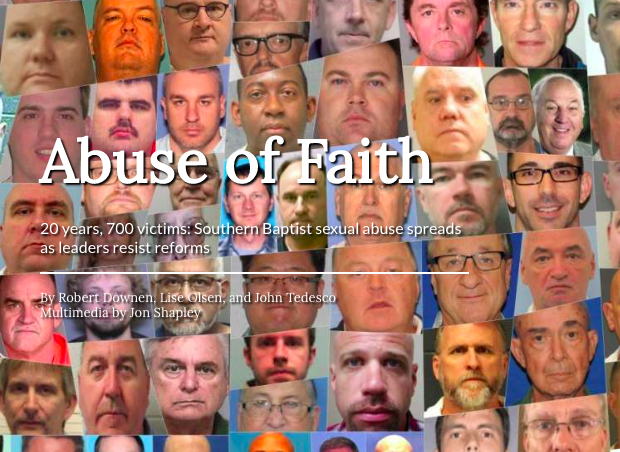
The Southern Baptist Convention’s ongoing fights about how to handle sexual-abuse claims against ministers and other church personnel and volunteers is a perfect example of the kind of story that drives newspaper editors crazy.

It’s big and complicated and it seems like something crazy or important (or both) happens every other day. But it also seems like it’s impossible to yank a big, dramatic headline out of this sprawling, complicated story.

The story never seems to end and the amount of background material needed — in story after story after story — makes it impossible to cover this stuff in tidy 500-word stories. But if a newsroom skips a few of the major developments, that makes it even harder to get back in the game and explain to readers what is happening. Oh, and did I mention that newsroom managers pretty much have to assign a reporter to this story full-time or near full-time? That’s expensive in this day and age. Obviously, this reporter has to have religion-beat experience and speak fluent Southern Baptist.

At the same time, in my experience, there will almost always be one or two editors who say (or think) something like this: “I know the SBC is huge and there are billions of dollars involved and we have lots of Southern Baptist churches (and maybe a college) in our news territory, but … I don’t ‘get’ why this story really matters to average readers. I mean, it’s not about sports or politics or something important (to me).”

As a Charlotte editor once told me, when I was poised to break a national-level SBC story in the early 1980s: Nobody reads this stuff but fanatics and every time you write about it we get too many letters to the editor.

This brings us to this week’s “Crossroads” podcast, which focuses on why the SBC’s struggles with sexual-abuse are important, and NOT just to Southern Baptists (click here to tune that in). The key is to identify major stories LINKED to sexual-abuse scandals that involve ethical, moral, legal and theological issues that can be seen in religious groups of all kinds (and many secular nonprofits and organizations as well). To illustrate this, let me tell you a story about an important evangelical counseling pioneer — the late Dr. Louis McBurney, founder of the Marble Retreat Center in Colorado.


Please respect our Commenting Policy

Facebook decides -- following clicks and $$$ -- that it should encourage online prayer

Facebook decides -- following clicks and $$$ -- that it should encourage online prayer

There are 2.4 billion Christians in the world today, according to most estimates.

Then again, nearly 3 billion people have Facebook accounts. Nearly 70% of U.S. adults use this social-media platform, which recently passed $1 trillion in market capitalization.

"I will use Facebook to reach people, because you almost have to do that," Father Andrew Stephen Damick, chief content officer for Ancient Faith Ministries, a 24-hour source for online radio channels, podcasts, weblogs, forums and more. The ministry was born in 2004 and is now part of the North American archdiocese of the ancient Orthodox Patriarchate of Antioch.

Facebook remains, he noted, "the No. 1 social-media platform in the world -- by a lot. You can't ignore all those people. … We knew this before COVID, but the pandemic made it impossible to deny the obvious. Everyone had to go online, one way or another."

Facebook Live became a way to stream worship services online, even if all a pastor could do was mount a smartphone on a stand. Even small congregations began holding online religious-education classes, support groups and leadership meetings.

As for worship, it was one thing for Protestant megachurches to stream TV-friendly services built on pop-rock Christian music and charismatic preaching. The online options were more problematic for faiths in which worship centered on the smells, bells, images and tastes of ancient liturgies.

Then, in early June, images began circulating of a Twitter message introducing "Prayer Posts" allowing Facebook users to "enable group members to ask for and respond to prayers" with a few clicks in a page's control settings. Participation could be as simple as a user clicking an "I prayed" button linked to a prayer.

This isn't a totally new idea. The Facebook "Prayer Warriors" group already has 865,700 active members, a flock larger than the average of 518,000 Episcopalians that attended services on an average Sunday in 2019, according to the denomination's statistics.


Please respect our Commenting Policy

Mexico's high court backs abortion rights: Who did the Washington Post choose to interview?

Mexico's high court backs abortion rights: Who did the Washington Post choose to interview?

The trend started a decade ago, or even earlier, about the time when social media took over and many elite newsrooms began caring less about seeking out qualified, informed voices on both sides of hot stories.

The result was a kind of fail-safe method for spotting media bias, especially with stories located at the intersection of politics, religion and the cultural changes, especially those linked to the Sexual Revolution.

First, readers can print a copy of the story in question and then, with a highlighter pen, mark quotes from people who appear to have been interviewed by the reporters — the sources whose voices provide the framing anecdotes and quotations that provide crucial facts and material that interpret the facts.

Then, with a second highlighter, mark the quotes from experts, activists and citizens on the other side of the issue. The key question: How many of these quotes came from actual interviews and how many were taken from online press releases and statements?

Compare and contrast. The big question: What sources were shown respect — with personal interviews — and which sources were demoted to PR release status? (Personal comment: As a columnist, I have found that quoting personal weblogs — Twitter as well — can offer a kind of neutral ground, with more information and authentic “voices” than mere press releases.)

In my experience, 99% of the time the people who are quoted from interviews represent the viewpoints that are favored and respected by the journalists who produced the story. With that in mind, let’s look at the sourcing in an international-desk story that ran in The Washington Post with this headline: “Mexico decriminalizes abortion, a dramatic step in world’s second-biggest Catholic country.

The Catholic angle is crucial, of course. Who would be interviewed? Activists in ministries to pregnant women? Canon lawyers? Perhaps a Catholic priest or historian who knows why “life” issues are so crucial in the church’s theology? I will also ask: Was anyone from the religion-desk allowed input into the sourcing?

Let’s start with the overture:

MEXICO CITY — Mexico’s supreme court voted Tuesday to decriminalize abortion, a striking step in a country with one of the world’s largest Catholic populations and a decision that contrasts with tighter restrictions introduced across the border in Texas.


Please respect our Commenting Policy

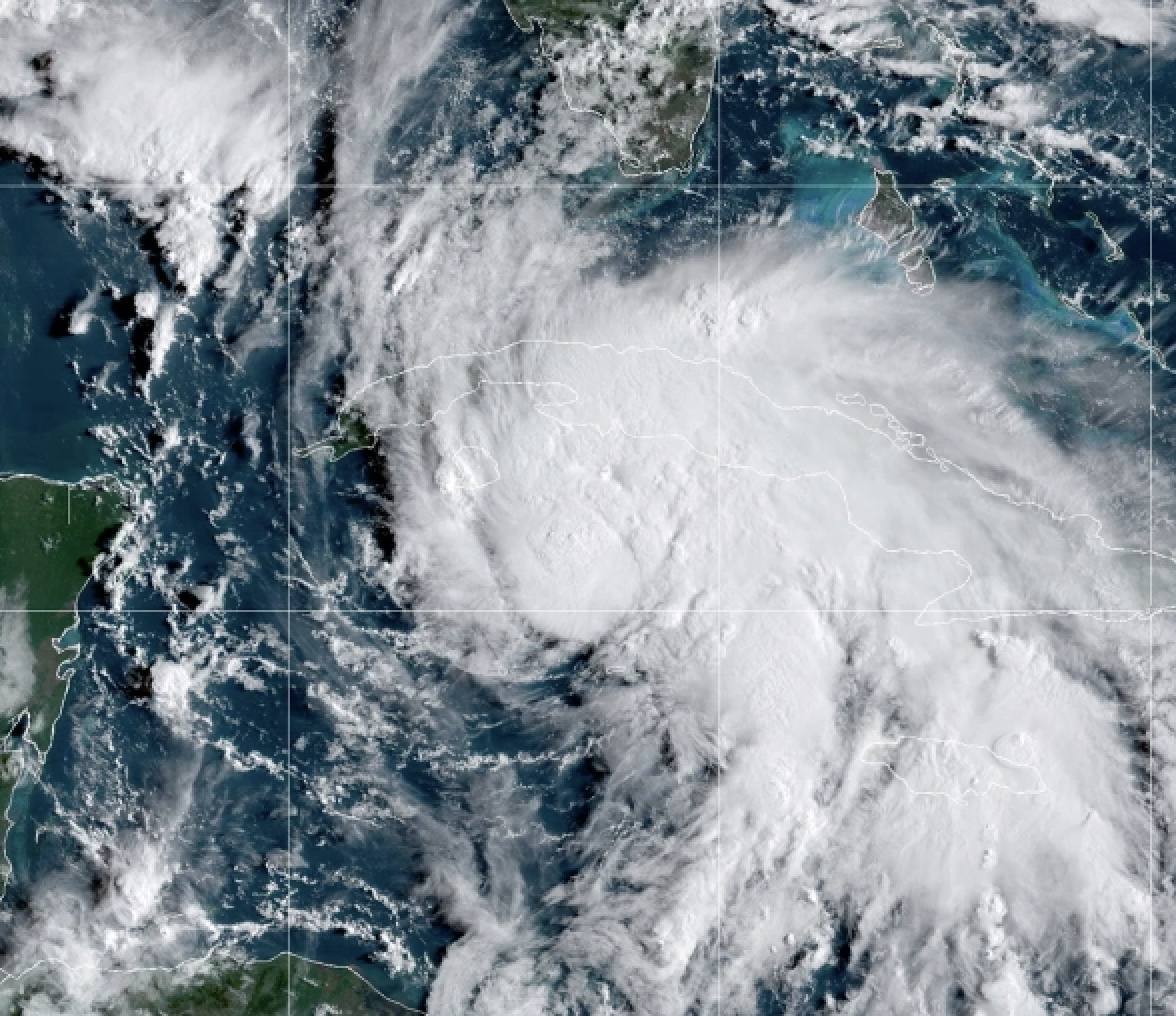
After Hurricane Ida: Prayers, tears, light, miracles and donations from somewhere ...

After Hurricane Ida: Prayers, tears, light, miracles and donations from somewhere ...

If you have ever lived in a major hurricane zone — Port Arthur, Texas, and West Palm Beach, Fla., for me — then you know that after the winds die down, the electric trucks (from all over) roll into town, from all over. The same thing is true with relief efforts from major religious groups. We’re talking Southern Baptists, Church of Jesus Christ of Latter-day Saints, World Vision, Churches of Christ and more.

The second half of that equation usually gets lots of ink the the religious press.

The elite newsrooms? Sometimes, yes. Lots of times, no.

So let’s look at a very interesting Hurricane Ida story from the Associated Press that provided all kinds of religion details about the locals and the people striving to help them: “Louisiana residents thankful for small miracles after Ida.” As a longtime GetReligion reader said, in an email:

This isn't profound, I guess it's just an example of "there, was that so hard?" . ... to report intimately about believers and clergy worshipping after a catastrophe. Frankly I've been kind of overwhelmed by the enormity of the loss in Louisiana — I joined a church relief team to help in Slidell and New Orleans a month after Katrina — and this story brought tears.

But note: This story focuses — with good cause — on the locals and government efforts post-hurricane. That’s a great story. But maybe this needed a word about the other big religion hook in post-storm news?

Meanwhile, here’s the overture:

MARRERO, La. (AP) — Amid the devastation caused by Hurricane Ida, there was at least one bright light Sunday: Parishioners found that electricity had been restored to their church outside of New Orleans, a small improvement as residents of Louisiana struggle to regain some aspects of normal life.

In Jefferson Parish, the Rev. G. Amaldoss expected to celebrate Mass at St. Joachim Catholic Church in the parking lot, which was dotted with downed limbs. But when he swung open the doors of the church early Sunday, the sanctuary was bathed in light.


Please respect our Commenting Policy