Charities-Nonprofits

Plug-In: Ida, abortion and Afghanistan: The best religion reads in stunning news week

Plug-In: Ida, abortion and Afghanistan: The best religion reads in stunning news week

I was in Waverly, Tenn., reporting on the aftermath of historic flooding that claimed 20 lives as Hurricane Ida — “one of the most powerful storms ever to hit the U.S.” — made landfall in Louisiana on Sunday.

On Monday afternoon, as I was boarding a flight in Atlanta to return home to Oklahoma City, The Associated Press sent a “flash” — its designation for “a breaking story of transcendent importance” — about the chaotic end of America’s 20 years of war in Afghanistan.

Guess what?

The big news week was just getting started.

By midnight Wednesday, a divided U.S. Supreme Court had provided “a momentous development in the decades-long judicial battle over abortion rights.” The court declined, at least for now, to overrule a new Texas law that bans most abortions in the state, raising hope among abortion opponents and concern among abortion-rights supporters that Roe v. Wade could be jeopardy.

Also, Ida’s “weakened remnants tore into the Northeast and claimed at least 43 lives across New York, New Jersey and two other states in an onslaught that ended Thursday and served as an ominous sign of climate change’s capacity to wreak new kinds of havoc.”

The news just keeps coming, and I haven’t even mentioned COVID-19 — which continues to rage with cases and hospitalizations “at their highest level since last winter.”

Mercy.

Power Up: The Week’s Best Reads

1. Afghanistan’s arc from 9/11 to today: once hopeful, now sad: This is a powerful read by Kathy Gannon, Afghanistan and Pakistan news director for The Associated Press.

“A country of 36 million, Afghanistan is filled with conservative people, many of whom live in the countryside,” Gannon explains. “But even they do not adhere to the strict interpretation of Islam that the Taliban imposed when last they ruled.”

Please respect our Commenting Policy

Plug-In: Is Afghanistan a religion story? If so, it may be the year's biggest religion story

Plug-In: Is Afghanistan a religion story? If so, it may be the year's biggest religion story

A few weeks ago, realizing how quickly 2021 was racing toward 2022, I made a mental note of the year’s top religion stories so far.

On my quick list: Christian nationalism at the Jan. 6 Capitol riot. Battles over pandemic-era worship restrictions. Faith’s role in vaccine hesitancy. The biggest Southern Baptist Convention annual meeting in many years. The Communion drama between President Joe Biden and U.S. Catholic bishops. Jewish connections to the Florida condo collapse.

Nowhere in my mind: Afghanistan.

But now — especially after the suicide bombings in Kabul on Thursday — it’s looking as if news (much of it tied to religion) in that war-torn nation will dominate headlines for weeks and even months.

As I noted last week, it’s impossible to keep up with all the rapid-fire developments, but these stories delve into compelling religion angles:

Stranded at the airport (by Mindy Belz, World)

Taliban follow strict Islamic creed that doesn’t change with the times, scholars say (by Mark A. Kellner, Washington Times)

Taliban’s religious ideology has roots in colonial India (by Sohel Rana and Sumit Ganguly, ReligionUnplugged.com)

Who is ISIS-K, the group officials blame for the Kabul airport bombings? (by Jack Jenkins, Religion News Service)

Desperate Afghan Christians turned away at airport, aid groups say (by Alejandro Bermudez, Shannon Mullen and Matt Hadro, Catholic News Agency)

Kabul airport attacks strand Afghan contacts of Christian humanitarians (by Cheryl Mann Bacon, Christian Chronicle)


Please respect our Commenting Policy

So ... where are the hidden converts to Christianity in Afghanistan? Can reporters find them?

So ... where are the hidden converts to Christianity in Afghanistan? Can reporters find them?

There’s an online discussion happening now among religion writers about all the uncovered religion angles of the current mess in Afghanistan.

The crux of the Afghanistan quagmire is religious, not simply political. It’s not just some guerrilla group taking over the country. It’s a radical Islamist group that aims to drag Afghanis back to the 7th century. There’s a reason why Afghanistan is vying with North Korea for the world’s worst country in terms of religious persecution.

The question nagging at some of us is what’s not getting covered in the daily drama of thousands of hapless people trying to leave the country despite the Taliban hordes gathered outside the airport. Also, sadly, there are the Marines inside the perimeter who are likewise keeping many people from getting on planes. (The Wall Street Journal has been covering the latter situation better than anyone else).

And on Wednesday, Catholic News Service reported that people who qualify for refugee status, including Christians, are being barred by the State Department from boarding outgoing military flights. Soo, who’s coming to the rescue? Political commentator Glenn Beck, that’s who. CNA says he’s raised $28 million via his Nazarene Fund to fly 20 jets into Kabul and pick up stranded Christians. This is an amazing story but where is the mainstream coverage?

While my co-writer Clemente Lisi covered the Catholics marooned in this desperate place, I’ve been focusing on coverage of evangelical Protestants, the only other religious group of any size that’s trapped there. (There were Sikhs and Hindus in Afghanistan as well, but they read the tea leaves after terrorists killed 25 Sikhs in March of 2020. After last year’s attack, those who could leave the country, left.)

Recently, India offered to take the estimated 650 Sikhs and Hindus who remain, a move that’s gotten criticism by Indian Muslims who want to get some of their friends out as well, according to the New York Times.

But, right now, there are no government or sympathetic Vatican officials out there willing to fish out the surprising number of evangelical Protestants who have somehow cropped up in this forbidding terrain. We read news accounts of “missionaries” who are stranded in country and I want to know: What missionaries? What converts? Does anyone have facts?

It’s nearly impossible to get reputable statistics at this point and all the news I found was anecdotal and scattered.


Please respect our Commenting Policy

What does the New York Times mean when it reports on 'religious leaders' in Afghanistan?

What does the New York Times mean when it reports on 'religious leaders' in Afghanistan?

Anyone who has read GetReligion for more than a month probably knows that I have always been concerned about the lack of press coverage of endangered religious minorities in large parts of the world — including nations such as Afghanistan.

It’s crucial to remember, when talking about religious freedom issues and the Universal Declaration of Human Rights, that it is tragically common for members of a major world religion to punish other members of their own faith because of strong disagreements about doctrine and tradition. It is common to see persecution of those who have no faith — think atheists and agnostics — as well as those who have converted to a new faith.

As a reminder, here is Article 18 of that landmark United Nations document:

Everyone has the right to freedom of thought, conscience and religion; this right includes freedom to change his religion or belief, and freedom, either alone or in community with others and in public or private, to manifest his religion or belief in teaching, practice, worship and observance.

With all of that in mind, it’s easy to understand why I was interested in this headline atop a New York Times report: “The Taliban holds first meeting of religious leaders since taking Kabul.

The key, of course, is the meaning of these two words — “religious leaders.”

If you follow news updates, you know that the ancient Jewish community in Afghanistan is long gone — unless merchant Zablon Simintov chose to attend this meeting. Was there a Catholic representative at the meeting? Were leaders of the growing underground church invited? Did they dare to come out of hiding? What about the Muslim leaders of progressive (for lack of a better word) mosques who cooperated with Western leaders during the past 20 years?

Who were these “religious leaders”?


Please respect our Commenting Policy

New podcast: When the Taliban cracks down, will all the victims be worthy of news coverage?

New podcast: When the Taliban cracks down, will all the victims be worthy of news coverage?

There’s no question that the botched U.S. efforts to evacuate at-risk people in Afghanistan is the big story of the hour, the day, the week and for the foreseeable future — especially if this turns into a grand-scale hostage nightmare.

But who is at risk? What kinds of people are trapped inside the new kingdom of the Taliban?

That was the subject that dominated this week’s “Crossroads” podcast (click here to tune that in). And as you would expect, host Todd Wilken and I were especially interested in the role that religion has been playing in this story — if journalists are willing to cover that angle.

So who is at risk? Here is a typical wording, care of an Associated Press update:

The Kabul airport has been the focus of intense international efforts to get out foreigners, Afghan allies and other Afghans most at risk of reprisal from the Taliban insurgents.

With the Taliban controlling the Afghan capital, including the airport’s outer perimeter, White House national security adviser Jake Sullivan said that U.S. citizens are able to reach the airport, but were often met by large crowds at the airport gates.

But, wait. What about the news reports that U.S. forces cannot help U.S. citizens avoid Taliban checkpoints in order to reach the airport, while British and French military personnel are doing precisely that for their own people? That’s a very hot story right now, with U.S. diplomats and the White House saying that the can work with the Taliban to ensure safety.

So let’s pause and flesh out some of the details in that AP phrase about who is at risk, as in “foreigners, Afghan allies and other Afghans most at risk.” Who is most at risk, right now?

* Obviously, American journalists have every right to focus on risks to American citizens.

* In particular, we can assume that Taliban activists are tracing Americans who have led or worked with NGOs, religious aid groups, churches. Then there are the Western-style think tanks, schools, medical groups, etc.

* Obviously, there are the thousands of Afghans who cooperated with and even worked for the U.S. government, U.S.-backed Afghan military units and the kinds of “foreign” organizations mentioned in the previous item.


Please respect our Commenting Policy

When it comes to covering disasters in Haiti, the Catholic media have the best connections

When it comes to covering disasters in Haiti, the Catholic media have the best connections

It’s already shaping up to be a bad week: The collapse of Afghanistan and the earthquake in Haiti and the coronavirus figures that keep on going up and up; how much worse can it get?

Quite a bit. Tropical Storm Grace dumped torrential rains on Haiti on Monday. Oh, and Lebanon is in economic collapse.

With tmatt already covering the religion news landscape in Afghanistan (be sure to catch his note on the U.S. embassy in Kabul being tone deaf to Islamic values), I turned my attention to Haiti, the recipient of a 7.2 magnitude earthquake on Saturday that has killed at least 1,300, injured at least 5,700 and leveled buildings in an isolated corner of the island that’s a four-hour drive from Port-au-Prince, the capital.

Finding a religion angle when reporting a disaster is challenge enough, but finding an original angle is harder. Happily, the New York Times foreign desk came up with a jewel of a story about how the role that the churches of Haiti are playing in all of this.

For many Haitians, their only source of aid throughout their lives, in the absence of strong government institutions, has been the church, a part of Haiti’s landscape since the era of European colonialism and slavery.

Many churches lay in ruins after the 7.2 magnitude earthquake on Saturday morning,
In the city of Les Cayes, which was particularly devastated by the quake, clerics despaired even as they sought to project hope and resolve to rebuild.

“We are the only thing here,” said the Rev. Yves Joel Jacqueline, 44, who works at cathedral in Les Cayes with Haiti’s cardinal, Bishop Chibly Langlois, who was hurt in the quake. “There is no support from the government.”

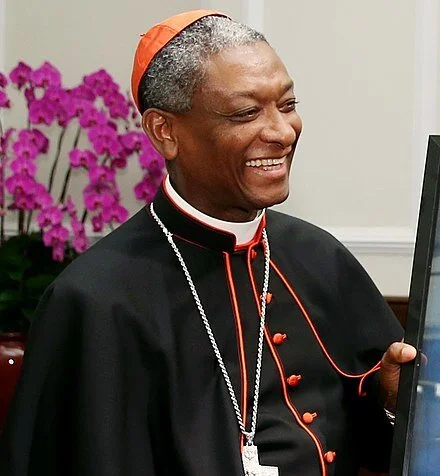
Langlois, who is pictured with this post, is Haiti’s first cardinal, appointed to the post by Pope Francis in 2014. Of all the articles I’ve scanned, none seem to know what kind of injuries he has.

Having never been to Haiti, I wasn’t aware that churches and their relief agencies are often the only safety net for many people.


Please respect our Commenting Policy

Trying to spot religion 'ghosts' in the dramatic fall of America's version of Afghanistan (#FAIL)

Trying to spot religion 'ghosts' in the dramatic fall of America's version of Afghanistan (#FAIL)

The whole idea of Axios, as a news publication, is to take massive, complex stories and — using a combination of bullet lists and URLs to additional information — allow readers to quickly scan through the news of the previous day. The Axios team calls this “smart brevity.”

More often than not, this turns out to be a crunched summary of the big ideas in mainstream coverage. Thus, it’s logical to look at this online newsletter’s take — “1 big thing: System failure” — on the horrific scenes that unfolded yesterday in Kabul, Afghanistan.

The big question: What did American diplomats, intellectuals and politicos miss in the big picture?

* The United States was literally run out of town after 20 years, $1 trillion and 2,448 service members' lives lost.

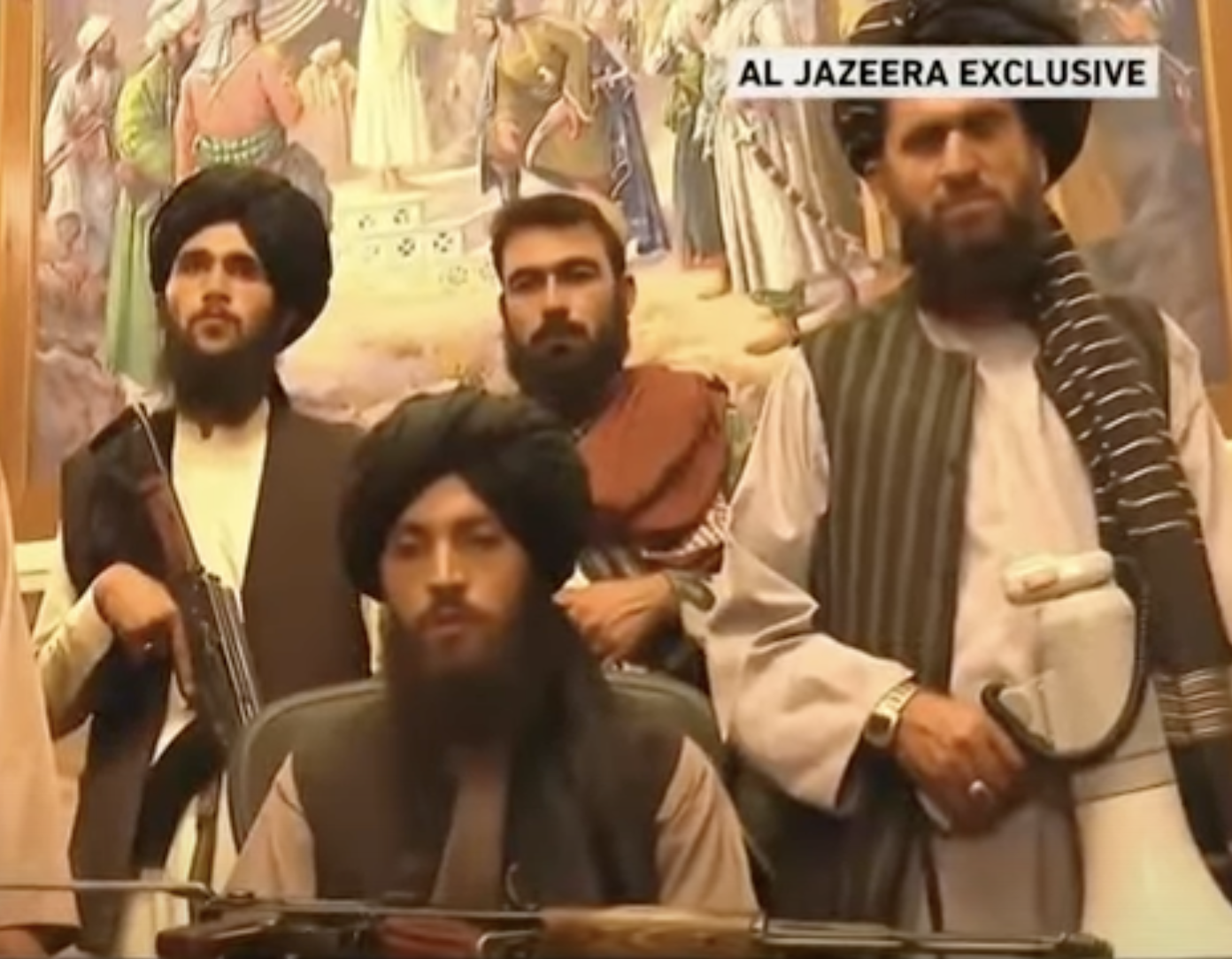
* Mohammad Naeem, the spokesman for the Taliban's political office, told Al Jazeera today: "Thanks to God, the war is over in the country."

Why it matters: A friend who spent more than a decade as a U.S. official in Afghanistan and Iraq texted me that the collapse "shows we missed something fundamental — something systemic in our intel, military and diplomatic service over the decades — deeper than a single (horrible) decision."

* As the BBC's Jon Sopel put it: "America's attempt to export liberal democracy to Afghanistan is well and truly over. …”

What were the key tasks in this “export of liberal democracy”? Here is my two-point summary.

First, the United States and its allies had to build an Afghan military that could protect this project. #FAIL

Second, the Western nation builders had to sell a vision of an Islamic culture that, somehow, embraced American values on a host of different issues — from free elections to freedom for women, from Western-style education to respect for the Sexual Revolution in all its forms. This Georgetown University faculty lounge vision of Islam needed to be more compelling than the one offered by the Taliban. #FAIL

Looking at this from a journalism perspective, I think it is more than symbolic that most of the elite media coverage of the fall of this new, alternative Afghanistan have almost nothing to say about Islam and, in particular, the divisions inside that stunningly complex world religion. Was this, in any way, a “religion story”? Apparently not. #FAIL

There is way too much coverage to look at, of course. However, it does help to look at The New York Times, since that is the straw that stirs the drink in American media. My goal was to find material that contrasted the Taliban’s vision of Islam with the vision offered by the U.S. State Department.


Please respect our Commenting Policy

Plug-In: From life issues to gov't mandates, religious reactions to vaccines have been complex

Plug-In: From life issues to gov't mandates, religious reactions to vaccines have been complex

Want to be smart?

Then avoid simple narratives in news coverage. That’s especially true on the still-timely subject of religion and debates about the COVID-19 vaccines.

For evidence, check out these recent stories:

“As vaccine mandates become a reality, politicians, pastors and even the pope are speaking out against faith-based exemptions,” the Deseret News’ Kelsey Dallas reports.

But here’s the twist: “In many cases, those who claim a religious exemption are part of a denomination that doesn’t share their concerns, although many faith leaders do support making exemptions available.”

“Does respect for human life mean vaccine mandates?” asks a story by the Washington Post’s Michelle Boorstein.

The answer? It’s complicated.

“In recent days, with a handful of organizations from Facebook and Google to the University of Virginia announcing vaccine mandates, religious leaders and organizations have considered their own teachings and values on the question of how to show respect for life,” Boorstein writes. “And their conclusions vary widely.”

This news, via USA Today, jumps out at you: “Florida church vaccinates hundreds after 6 members die from COVID-19 in 10 days.”

"It's just been ripping our hearts apart,” the senior pastor says in the story by Marina Pitofsky.

It’s probably no surprise that social media pounced on the church for waiting until members died to promote vaccinations.

Except, as anyone reading the entire report learns, it didn’t: “The church vaccinated about 800 people in March at a similar event as COVID-19 vaccines became widely available in the U.S.”

While not religion related per se, Peggy Noonan’s Wall Street Journal column this week makes some excellent points.


Please respect our Commenting Policy

Yo, New York Times editors: Why edit faith out of obit for the 'Mother Teresa' of Africa?

Yo, New York Times editors: Why edit faith out of obit for the 'Mother Teresa' of Africa?

If you know anything about old-school journalism, then you have heard this mantra — “who, what, when, where, why and how.” During my nearly three decades as a journalism and mass media professor, I used to refer to these essential building blocks of hard-news reporting as the “W5H” formula.

Clearly, when you are dealing with the life story of a woman who sacrificed everything in order to help poor, suffering, abandoned children, the “why” factor in that equation is going to be especially important.

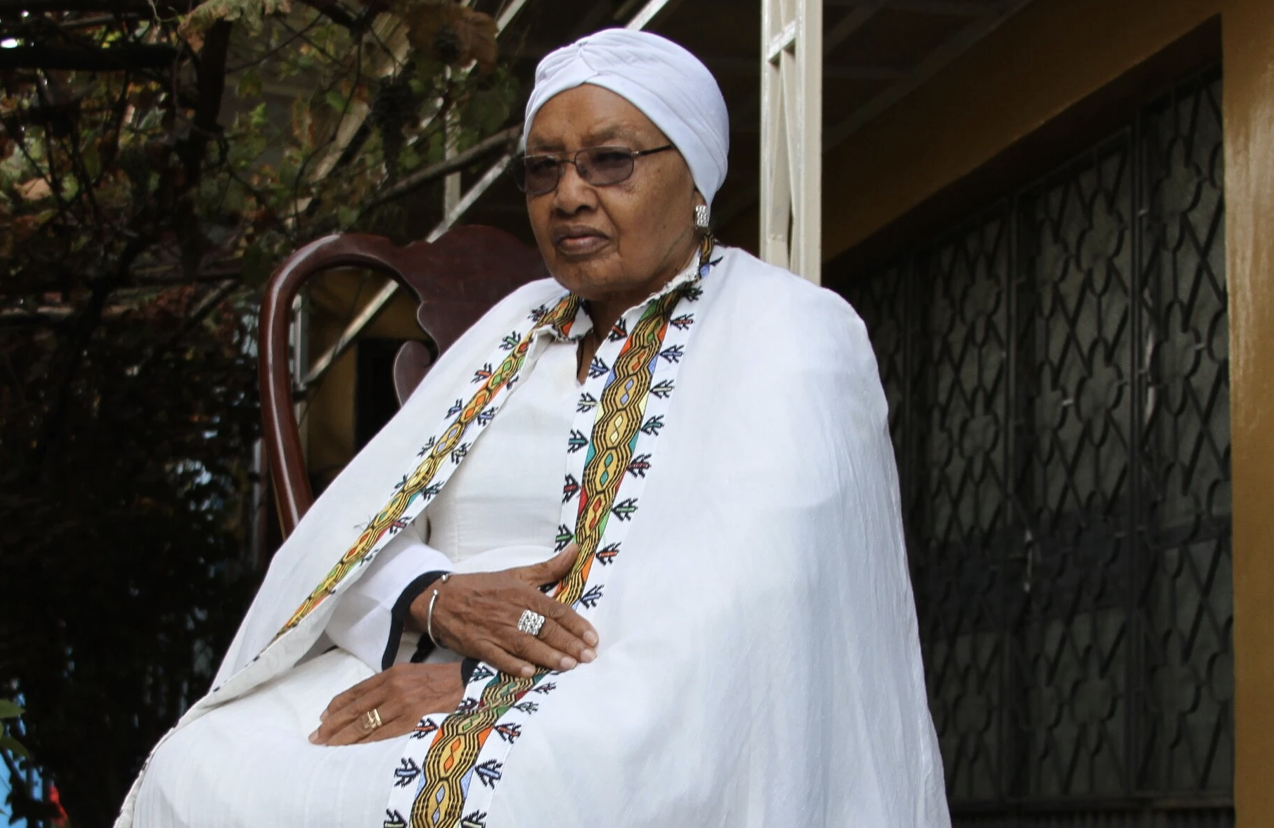
This brings us to two very different news reports about the death of one of modern Ethiopia’s most beloved figures, a woman who was frequently described as a living saint. Here is the New York Times headline: “Abebech Gobena, the ‘Mother Teresa’ of Africa, Dies at 85.” And here is the overture:

Abebech Gobena was returning from a pilgrimage to the holy site of Gishen Mariam, about 300 miles north of the Ethiopian capital, Addis Ababa, when she saw the woman and her baby.

It was 1980, and Ms. Gobena was passing through an area recently stricken by drought and an accompanying famine. All along the road were bodies — many dead, some dying, some still able to sit up and ask for food.

“There were so many of these hungry people sprawled all over, you could not even walk,” she said in a 2010 interview with CNN. She handed out what little she had — a loaf of bread, a few liters of water.

The word “holy” in the lede is rather important, since we are talking about Coptic Orthodox monastery of Gishen Mariam.

According to ancient traditions, Gishan Mariam is the location of a piece of the cross on which Jesus was crucified. It was a gift from St. Helena, the mother of Constantine I, and came to Ethiopia as a gift from the Patriarch of Alexandria. A festival called “Meskel,” celebrating the finding of the cross, is a major event in Ethiopian life.

So the story begins with Gobena returning from a pilgrimage to this holy site, which almost certainly tells us something about this woman’s life. This is interesting, since the Times piece does not include any of the following words — “Christian,” “Orthodox,” “Coptic,” “faith” or “saint.”

Would it make a difference, for example, to know that the small amount of water Gobena was carrying, which he gave to those who were suffering, was holy water that she was carrying home from the shrine to be used for rites of blessing and healing?


Please respect our Commenting Policy