Charities-Nonprofits

Embracing LGBTQ adoptive parents: Was Bethany's change of heart (and doctrine) a surprise?

Embracing LGBTQ adoptive parents: Was Bethany's change of heart (and doctrine) a surprise?

Ever since she joined the New York Times last summer, Ruth Graham has been breaking stories left and right. Yesterday’s revelation of a revered Christian adoption agency agreeing to allow in gay parents is the latest of many.

Judging by her piece — and those of several other outlets — the decision must have been known for several days but was embargoed until that all-important email went out to the ministry’s staff.

Ever since the Supreme Court legalized gay marriage in 2015, it was only a matter of time before these newly legalized couples wanted to adopt kids.

This time around, state officials could be supporting them and any agency not complying would stand to lose financially big time. The story begins:

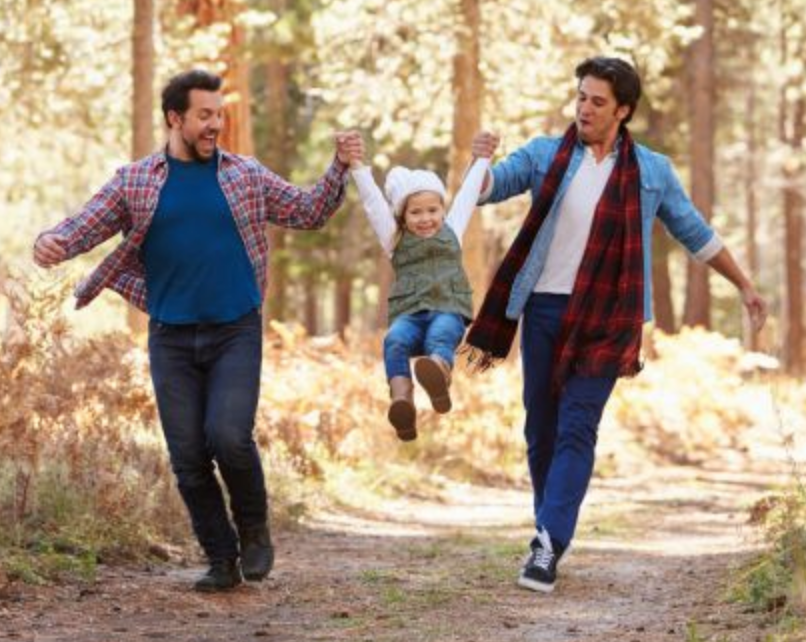
One of the country’s largest adoption and foster care agencies, Bethany Christian Services, announced on Monday that it would begin providing services to L.G.B.T.Q. parents nationwide effective immediately, a major inflection point in the fraught battle over many faith-based agencies’ longstanding opposition to working with same-sex couples.

Bethany, a Michigan-based evangelical organization, announced the change in an email to about 1,500 staff members that was signed by Chris Palusky, the organization’s president and chief executive. “We will now offer services with the love and compassion of Jesus to the many types of families who exist in our world today,” Mr. Palusky wrote. “We’re taking an ‘all hands on deck’ approach where all are welcome.”

What that means is that the amount of orphans is so great and the number of available parents are so few, that anyone available –- even if gay, single, older, etc. –- is needed to adopt these kids.

The announcement is a significant departure for the 77-year-old organization, which is the largest Protestant adoption and foster agency in the United States. Bethany facilitated 3,406 foster placements and 1,123 adoptions in 2019, and has offices in 32 states. (The organization also works in refugee placement, and offers other services related to child and family welfare.) Previously, openly gay prospective foster and adoptive parents in most states were referred to other agencies.

The decision comes amid a high-stakes cultural and legal battle that features questions about sexuality, religious freedom, parenthood, family structure and theology.

Please respect our Commenting Policy

Puzzle: Many reporters ignoring Equality Act's impact on this crucial Schumer-Kennedy legislation

Puzzle: Many reporters ignoring Equality Act's impact on this crucial Schumer-Kennedy legislation

I have been following the Equality Act coverage and, so far, a crucial piece in this puzzle has been missing.

Thus, here is a one-question pop test. That question: Name the piece of stunningly bipartisan legislation — vote was 97-3 in U.S. Senate — from the Bill Clinton era that will be gutted by passage of the Equality Act? Hint: It was introduced in the House by Rep. Chuck Schumer (D-NY) on March 11, 1993, and in the Senate on the same day by the late Sen. Ted Kennedy (D-MA).

We are, of course, talking about the Religious Freedom Restoration Act (RFRA). In today’s advocacy-media age that would, of course, be the “Religious Freedom” Restoration Act, complete with “scare quotes.”

The key is the impact the Equality Act would have on religious parachurch groups, social ministries, hospitals and educational institutions, from preschools to universities.

Now, does everyone agree on how the Equality Act would impact the First Amendment rights of religious believers and their doctrine-defined ministries?

Of course not. There are strong, credible voices on both sides of that debate that deserve serious, accurate, informed coverage by the mainstream press. However, this process — let’s call it “journalism” — would require newsroom managers to admit that this issue exists.

That’s why Andrew Sullivan — one of the world’s best-known gay public intellectuals — called the introductory Washington Post Equality Act story a “press release” (think PR) for the Human Rights Campaign. Here is that story’s description of the legislation’s impact:

The Equality Act would amend existing civil rights laws, such as the Civil Rights Act of 1964 and the Fair Housing Act, to explicitly ban LGBTQ discrimination in the workforce, housing, education, credit, jury service and other areas of American life.

If passed, the legislation would provide the most comprehensive LGBTQ civil rights protections in U.S. history, advocates say, significantly altering the legal landscape in a country where more than half of states lack explicit legal protections on the basis of sexuality or gender identity. …


Please respect our Commenting Policy

Behind the headlines: As winter storm cripples Texas power grid, people of faith rally to help

Behind the headlines: As winter storm cripples Texas power grid, people of faith rally to help

Texans like to brag that they live in “a whole other country.”

I don’t suppose, though, that whoever came up with that slogan had Siberia in mind.

As a severe winter storm crippled the state’s energy grid this week, my parents were among 4 million residents who lost electricity. Mom and Dad endured a really chilly night before going to stay at my sister’s house for a few days.

Heroes (think “Mattress Mack”) and villains (#FlyingTed) have emerged, while people of faith — as they tend to do during disasters — rally to help.

Here at Religion Unplugged, Jillian Cheney tells the inspiring story of a church that partnered with a Jeep club to rescue snowed-in families.

Houses of worship losing power themselves hampered some efforts to provide reliable sanctuary, but “leaders are doing all they can to connect and comfort their communities,” Christianity Today’s Kate Shellnutt reports.

Churches and other faith groups teamed up to help open an emergency warming center for the homeless at a Dallas convention center, Religion News Service’s Bob Smietana notes.

Catholic churches in San Antonio and Fort Worth opened their doors, according to the Catholic News Agency’s Jonah McKeown.

Among others mobilizing to help: Southern Baptists, Churches of Christ and Episcopalians.

Power Up: The Week’s Best Reads

1. A congregation of avatars: A few pastors minister “to the wild universe of virtual reality, or VR for short,” this fascinating feature by World magazine’s Juliana Chan Erikson explains.


Please respect our Commenting Policy

Welcome to New York Times 'religion' feed? A kissy-kissy chat with exiting NARAL boss

Welcome to New York Times 'religion' feed? A kissy-kissy chat with exiting NARAL boss

Does anyone else remember RSS feeds?

The whole idea of RSS — Really Simple Syndication — is that websites can allow you can set up an automated feed that feeds you updates on specific topics in a standardized, computer-readable format.

The key is that computer algorithms are supposed to detect when stories address issues that interest a specific reader.

Anyway, I received this item the other day in my RSS feed devoted to New York Times stories about religion. In this case, the Times defines the RSS criteria, not me.

In terms of religion news, this one is pretty weird — even for today’s Times. The headline: “Ilyse Hogue, Influential Abortion Rights Advocate, Will Step Down as NARAL Chief — In an interview, Ms. Hogue discussed a tumultuous era for abortion rights and the future of Roe v. Wade.”

In other words, this is a kissy-kissy Q&A marking Hogue’s exit after eight years as leader of NARAL Pro-Choice America. The Times informs readers that “abortion rights are at something of a crossroads, with Democrats facing the choice of whether to try to deliver on their promise of codifying Roe v. Wade.”

All right, says I, let’s see the many points in this report that touch on religion. After all, the RSS algorithms put this in the “religion” feed.

I found three, and even that it is stretching it. Can you spot the religious content in the following three bites from this news feature? The questions, obviously, are in bold type:

Let’s start with perhaps the biggest question: Is Roe v. Wade safe?


Please respect our Commenting Policy

Once again, AP accuses big Catholic bosses of abusing government coronavirus relief efforts

Once again, AP accuses big Catholic bosses of abusing government coronavirus relief efforts

There they go again.

In this case, “they” refers to whoever is in charge of religion-news coverage these days at the Associated Press. Someone there needs to take a remedial course in (a) church history, (b) church-state law in the United States or (c) both.

Let’s start by flashing back about six months, when the AP rolled out an investigation of what its editors clearly thought was a scandal of epic proportions. Does anyone remember this lede, and this GetReligion dissection (“AP explains why it was wrong for local-level Catholic employees to get coronavirus relief money“), of the expose)?

NEW YORK (AP) — The U.S. Roman Catholic Church used a special and unprecedented exemption from federal rules to amass at least $1.4 billion in taxpayer-backed coronavirus aid, with many millions going to dioceses that have paid huge settlements or sought bankruptcy protection because of clergy sexual abuse cover-ups.

That was a bizarre, but honest, opener. The entire story was built on the assumption that there is such a thing — corporately and legally speaking — as a “U.S. Roman Catholic Church.”

As I said at the time, this is “like saying that there is an ‘American Public School System,’ as opposed to complex networks of schools at the local, regional and state levels.” One could also note that there is a Planned Parenthood of America. However, government coronavirus aid in the paycheck-support program went to 37 regional and local Planned Parenthood groups.

The Associated Press has now produced a sequel, with this headline: “Sitting on billions, Catholic dioceses amassed taxpayer aid.” While the editors avoided the “U.S. Roman Catholic Church” label this time around, this lengthy story is built on a similar misunderstanding of what happened when Catholic parishes, schools, nonprofits and other ministries applied for coronavirus aid.

As readers can see in the headline, in the sequel AP leaders focused on finances at the diocesan level, as opposed to a mythical national Catholic structure. This is closer to the truth, but it still misses the mark. While many issues of church authority are linked to local bishops, in local dioceses, the crucial issue here was paycheck-relief money reaching staff members in individual parishes, schools and ministries that had been rocked by falling donations during the COVID-19 crisis. Let’s start with the overture:


Please respect our Commenting Policy

Creative ways to cover abortion stories near Roe v. Wade anniversary: Here's a few ideas

Creative ways to cover abortion stories near Roe v. Wade anniversary: Here's a few ideas

I always get frustrated with the lack of original thought when it comes to covering abortion stories connected to the anniversaries of Roe v. Wade. Last week’s reporting for the 48th anniversary was no exception.

There was the predictable updates (which I am not criticizing), such as President Joe Biden’s intent to codify Roe v. Wade, which the Catholic-news website Crux covered here. And Fox News ran a piece about a restrictive abortion law passed by the state of Tennessee last summer , and how that has become ensnared in the courts.

Now I know that, with the inauguration on the same week and all, there wasn’t a lot of energy out there to come up with Roe v. Wade stories that covered new ground. But the stories are out there, folks. It’s just that many of those in the media don’t feel like ferreting them out. Let’s suggest a few:

(1) Since Black Lives Matter has been a major newsmaker this past year, how about a revisit on black abortion rates? About a year ago, the Arizona Capital Times ran this opinion piece by a black member of the state house of representatives. I’ll pull out one paragraph:

The impacts on our black communities are hard to fathom. According to the Guttmacher Institute, which generally supports abortion, in 2011 360,000 black babies were aborted. CDC statistics for 2011 show that 287,072 black deaths occurred from all other causes excluding abortion. By these numbers, abortion is the leading cause of death among blacks.

Shouldn’t there be more reporting on something that kills more black children than police brutality ever has? Can’t say I’ve seen a whole lot. This story is also linked to debates in the Black church about politics, social issues, family, etc.

(2) Personality profiles. The pro-choicers get loads of them, such as this 2018 Washington Post piece about a black gynecologist who went from being anti-abortion to pro-abortion rights — and why. This was Willie Parker. The Atlantic, however, went more creative and much deeper in a feature about a war in the abortion movement where Parker is being accused of sexual assault, and the nasty infighting that’s resulted from that. Insider politics is always an interesting read, must say.

But where are the profiles of folks like Lila Rose and Joan Andrews Bell and many other lesser-known folks?


Please respect our Commenting Policy

New podcast: Why the infamous 'McCarrick doctrine' haunted U.S. Catholic bishops this week

New podcast: Why the infamous 'McCarrick doctrine' haunted U.S. Catholic bishops this week

It was a great week to be a Cardinal Theodore McCarrick Catholic.

Now, before anyone gets mad, let me stress that the McCarrick mentioned during this week’s “Crossroads” podcast (click here to tune that in) was not the “Uncle Ted” McCarrick known for bunking with seminarians or the trusted priest or bishop accused of fondling teen-aged boys from families that trusted him.

No, it was Cardinal McCarrick, the consummate networker, trusted fundraiser, ecclesiastical kingmaker and media manipulator. This was the man who, as archbishop of Washington, D.C., created the so-called “McCarrick Doctrine” that protected national-level Catholic politicians whose faith was a crucial part of their lives and images, even if many ancient doctrines didn’t mesh well with their political agendas. This McCarrick also claimed — in a public speech — to have helped elect Pope Francis.

This was the McCarrick whose legacy helped shape the remarkable war inside the U.S. Conference of Catholic Bishops that jumped into clear view on Inauguration Day.

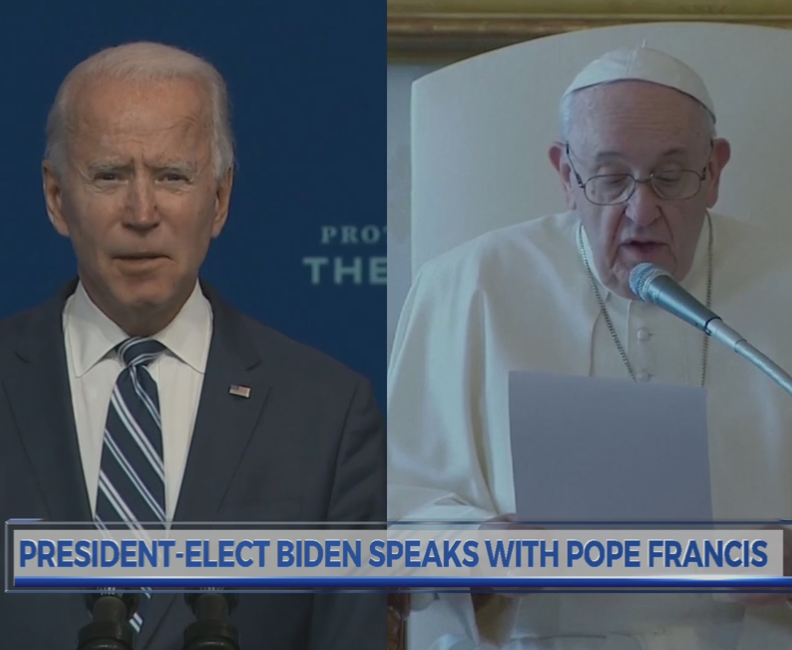
It was easy to see this coming. I wrote about it several weeks ago in this “On Religion” column: “Joe Biden and the U.S. Catholic bishops — Tensions remain about Holy Communion.” And Catholic-press veteran J.D. Flynn clearly knew something big was coming when, a day before the Biden inauguration, he wrote an analysis — “Biden and the bishops. This probably will not go well” — for his new (and essential) website called The Pillar. Check out this lede:

Shortly after President Joe Biden begins his term of office, the U.S. bishops will be derided as culture warriors and abortion obsessives, unwilling to find common ground with the administration of the second Catholic U.S. president.

Sure enough, the elected leader of America’s Catholic bishops issued a letter (hold that thought) criticizing Biden’s actions supporting abortion rights, while hinting at clashes over religious liberty (Hello, Little Sisters of the Poor) and church doctrines on marriage and sex.

This drew an angry social-media response from Catholic progressives — including key men wearing red hats. Their outcry led to this headline in The Washington Post: “As Biden is sworn in, president of U.S. bishops assails him over abortion.”

In a bombshell report, The Pillar noted that the Vatican tried to ban the distribution of the USCCB statement by Gomez — at least until team Pope Francis could release a more politically nuanced letter. That headline: “Vatican intervened to spike US bishops’ Biden statement release.”

But back to the Post. The overture for that report says exactly what one would expect it to say:


Please respect our Commenting Policy

UK ready to welcome waves of Hong Kong residents (Yes, BBC ignored religion angles)

UK ready to welcome waves of Hong Kong residents (Yes, BBC ignored religion angles)

On the night of the Hong Kong handover to China, I walked through that great city’s old airport — noting the many residents who sat, passports in hand, preparing to leave. I was leaving after a small international gathering of journalists and academics focused, naturally, on religion and the news.

I talked to a few of the solemn people I saw that night in 1997. Some said they were leaving for good. Others said they were going abroad to explore the legal and economic hurdles they would need to clear if or when they decided to leave. I didn’t hear a single optimistic voice.

Like the people I interviewed for the two “On Religion” columns I researched during that stey, they said that they expected that, in a few years, the Chinese authorities would crack down on dissent, free speech and, yes, some mentioned freedom of religion. Here are those columns: “Silence and tension in Hong Kong” and “Hong Kong II: There’s more to life than $.”

I bring this up because of an important story that is unfolding, in slow motion, in the United Kingdom. Here is the top of a long BBC website story with this headline: “The Hong Kong migrants fleeing to start new lives in the UK.

The UK will introduce a new visa at the end of January that will give 5.4 million Hong Kong residents — a staggering 70% of the territory's population — the right to come and live in the UK, and eventually become citizens.

It is making this "generous" offer to residents of its former colony because it believes China is undermining Hong Kong's rights and freedoms.

Not everyone will come. Some of those eligible to leave have expressed their determination to stay and continue the fight for democracy.

In the end, Britain estimates that about 300,000 will take up the visa offer over the next five years.

As you would expect, the story introduces a family that is already in the UK, exploring their reasons for making the leap. Any signs of religion here?

Readers are told that Andy Li and his wife Teri Wong moved to York in October, just after the announcement of plans for this policy change. They said, no surprise, that they were thinking about their children, daughter Gudelia, 14, and son Paul, 11.

"We feel that the things we treasure about Hong Kong — our core values — are fading over time," said Mr Li. "So we decided we needed to provide a better opportunity for our children, not only for their education, but also for their futures."


Please respect our Commenting Policy