Catholicism

Journalists need to ask: Are emerging Catholic synod fights about 'ideology' or 'doctrine'?

Journalists need to ask: Are emerging Catholic synod fights about 'ideology' or 'doctrine'?

The Synod on Synodality is here and there are many, many angles for journalists to pursue.

Let’s put it this way (with much, much more to come), I don’t think Clemente Lisi will have lots of time for soccer (he is an internationally known reporter on all things futbol) in the days ahead. For starters, readers can dig into these Lisi features at Religion Unplugged, where he is editor: “Everything You Need To Know About The Synod On Synodality” and “Pope Francis Open To Church Blessing Of Same-Sex Unions.”

The same-sex blessing story is huge and, frankly, leaders in some mainstream newsrooms (scan this Google News search file) seem to be waiting for a clear signal from their usual Catholic sources on the degree to which it is appropriate to celebrate.

I would like to back off and examine an important word in recent statements by Pope Francis and, thus, the elite press. That word is “ideology.” You can see what is going on in the Associated Press report with this headline: “Ideological rifts among U.S. bishops are in the spotlight ahead of momentous Vatican meeting.”

The subject, of course, is the Synod on Synodality. Read this carefully:

The synod is intended to be a collegial, collaborative event, though the agenda includes divisive issues such as the role of women in the church and the inclusion of LGBTQ Catholics.

If there’s Exhibit A for how elusive consensus might be, it’s the United States’ participation. In effect, there are two high-level U.S. delegations widely viewed as ideological rivals — six clerics appointed by Pope Francis who support his aspirations for a more inclusive, welcoming church; five clerics chosen by the U.S. Conference of Catholic Bishops who reflect a more conservative outlook and more skepticism of Francis’ priorities.

The assumption, of course, is that the divisions among U.S. representatives and, one can assume others around the world, are essentially political.

As always: Politics is real. Religion? Not so much.

Let’s keep reading, before we return to that loaded word — “ideological.”

Please respect our Commenting Policy

How the Rupnik scandal and elite news coverage are shaping the legacy of Pope Francis

How the Rupnik scandal and elite news coverage are shaping the legacy of Pope Francis

The more I read about Pope Francis and President Joe Biden, the more I realize that they are similar.

I mean, both are Catholic, and that’s where the similarities end, right?

That may be the case for most, but they are quite similar in how they are covered by the mainstream press.

Let me explain.

Without getting too much into the weeds here, Biden has been dogged by multiple scandals involving his troubled son Hunter. You wouldn’t know that, however, from much of the mainstream press coverage of this presidency. Journalists remain too concerned with former President Donald Trump — how could they not? — and the recently-averted government shutdown.

Conservative media have covered Hunter Biden’s alleged wrongdoings and shady business practices since the 2020 presidential election. That was when the public was were told by the mainstream press that Hunter’s woes were based on Russian misinformation. Here we are nearly three years later and, yes, it turns out that there is a there there.

This brings us to Pope Francis and scandals swirling around him.

Wait! What scandals, you ask? Hold that thought.

The mainstream press has been fond of this pope and media consumers can see that whenever he says something that matches progressive left-wing political ideology. When it comes to scandal, however, there’s little to no coverage. Case in point: The Rupnik case.

Like Hunter Biden’s laptop, you may not have heard of the Rupnik case. Most mainstream news organizations chose not to cover the latest developments to come out of Rome just last month.

Thus, here’s a recap: Marko Rupnik, a Jesuit priest, became the focus of an investigation late last year when multiple allegations of sexual misconduct against him were reported in the Italian press. They mostly concerned sexual abuse of nuns who were part of Rupnik’s religious community and artistic studio in Rome.

When the extent of the allegations, over a period of many years, became evident, suspicions were raised that one of the most famous Jesuit priest in the world might have been given lenient treatment from the three most powerful Jesuits in the church.


Please respect our Commenting Policy

Plug-In: Vatican Synod on Synodality is sure to make some Catholics mad and others happy

Plug-In: Vatican Synod on Synodality is sure to make some Catholics mad and others happy

Religion-beat professionals are following tragic news out of Pakistan: Dozens are dead after a suicide bombing in a crowd of people celebrating the birthday of Islam’s prophet, The Associated Press’ Abdul Sattar reports.

Meanwhile, Sen. Dianne Feinstein of California — the longest serving woman senator — has died at 90. An obituary by the Washington Post’s Emily Langer recounts that Feinstein “attended an elite Catholic high school where she was the only Jewish student.”

This is our weekly roundup of the top headlines and best reads in the world of faith. We start by previewing a major summit of the Catholic Church.

What To Know: The Big Story

‘Truly important’: “This is the biggest thing happening in the Catholic Church since Vatican II, there is no question about that,” a scholar tells The Tablet’s Carol Zimmerman.

John L. Allen Jr. of Crux characterizes the upcoming Synod of Bishops on Synodality as “this fall’s Catholic equivalent of the Super Bowl.”

“The unprecedented gathering of 464 Catholic clergy and laypeople, including women, begins Oct. 4 at the Vatican,” Religion News Service’s Claire Giangravé reports. More from RNS:

While some might dismiss the highly anticipated event as a meeting on meetings, the term synodality under Pope Francis has expanded to reflect his vision for dialogue and decision-making in the church.

“I am well aware that speaking of a ‘Synod on Synodality’ may seem something abstruse, self-referential, excessively technical, and of little interest to the general public,” Francis said to journalists at the Vatican on Aug. 26.

he summit will bring 464 Catholic clergy and laypeople, including women, to the Vatican to discuss hot-button issues ranging from sexual abuse to LGBTQ inclusion and female ordination.

“It is something truly important for the church,” the pope said.

Divided American clerics: Ideological rifts among U.S. bishops are in the spotlight ahead of the Vatican meeting, according to The Associated Press’ David Crary:


Please respect our Commenting Policy

Thinking about the legacy of 'Team Ted,' as Vatican insiders talk about the next pope

Thinking about the legacy of 'Team Ted,' as Vatican insiders talk about the next pope

If I have learned anything about mainstream journalism it is this: Editors love partisan political horse races.

This framework is, alas, also used when journalists ponder vacancy signs on the Throne of St. Peter in Rome.

In this kind of contest, scribes almost always (they don’t have to do this, of course) decide that there is a good horse and a bad horse. Most of the time, the “good” candidate is defined as the one who is in favor of “reform.”

What does “reform” mean, for most mainstream journalists? As I noted long ago in this post — “Who gets to ‘reform’ what?” — it helps to look up that loaded word in an online dictionary or two:

REFORM …

* make changes for improvement in order to remove abuse and injustices; "reform a political system"

* bring, lead, or force to abandon a wrong or evil course of life, conduct, and adopt a right one; "The Church reformed me"; "reform your conduct" ...

* a change for the better as a result of correcting abuses; "justice was for sale before the reform of the law courts" ...

* improve by alteration or correction of errors or defects and put into a better condition; "reform the health system in this country"

* a campaign aimed to correct abuses or malpractices.

Now, who gets to define what is and what is not an “abuse,” an “evil course of life,” an “injustice” or a “malpractice”?

That would be the players behind the horse race who are trusted by newsroom leaders and owners.

Thus, before we get to this weekend’s “think piece,” let’s pause and look back to a 2013 speech at Villanova University (YouTube at the top of this post) by the former, now disgraced, cardinal Theodore McCarrick. At the 18-minute mark or so, this media-maven Vatican player discusses his behind-the-scenes networking activity ahead of the conclave that gave the world Pope Francis.

So often the kingmaker in American Catholic life, McCarrick describes a meeting with an “influential Italian gentleman” at the North American College in Rome.


Please respect our Commenting Policy

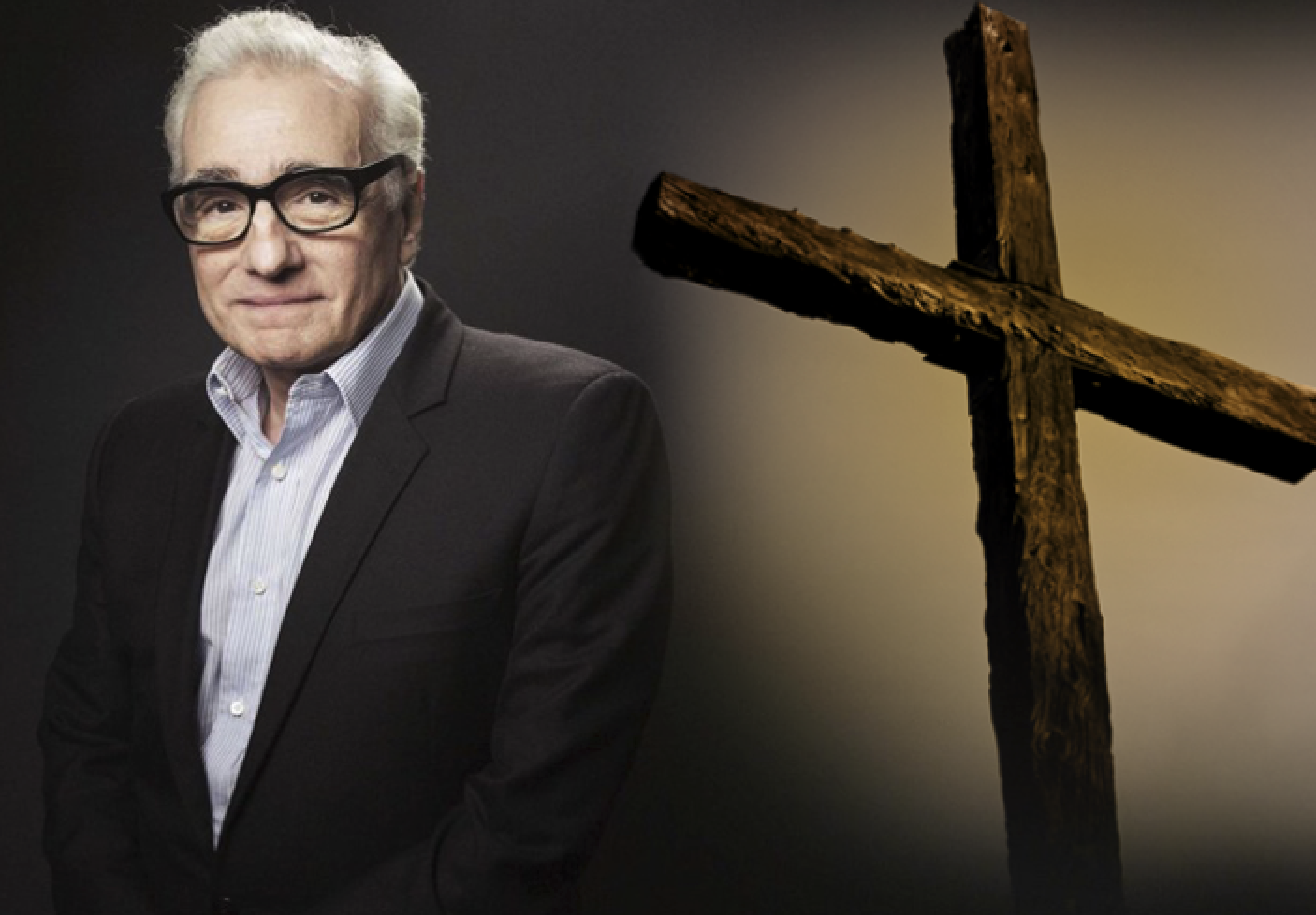
Film legend Martin Scorsese -- no surprise -- talks about his latest movie (and Jesus)

Film legend Martin Scorsese -- no surprise -- talks about his latest movie (and Jesus)

Since Day 1 — almost 20 years ago — your GetReligionistas have talked about the religion “ghosts” that haunt many mainstream news stories.

The basic idea is that journalists without religion-beat skills often omit religious facts, history and beliefs when writing many stories in which it’s almost impossible to understand what is going on without reporting these religion angles. Thus, we say these stories are “haunted” by religion “ghosts.”

From time to time, we hear from critics who claim that we want journalists to “force” religion into stories in the arts, sports, politics, business, etc. In the vast majority of cases, these critics are not arguing with us — but with easily available information about the lives of the people involved in these stories. Remember that classic 2016 case with mainstream news coverage (hello ESPN) of NBA superstar Kevin Durant?

This brings me to a recent Time magazine feature that ran with this headline: “Martin Scorsese Still Has Stories to Tell.” On one level, reporter Stephanie Zacharek faced a familiar entertainment-beat story, as in doing a junket-related feature with a Hollywood player who is promoting his or her new movie.

However, what we ended up with is a positive example of a journalist weaving accurate, valid, material about a newsmaker’s religious history into a mainstream news report.

Let me note that, in terms of film-studies doctrine, there is no such thing as an “orthodox” view of the role Catholic faith plays in this superstar director’s life and work. That’s fine. There’s way more to this man’s story than ongoing (in my view valid) arguments about “The Last Temptation of Christ.

Catholics can, and do, argue about what “kind” of Catholic he is, in terms of beliefs and practice of the faith. Film scholars can debate which of his movies are “Catholic,” which ones have faith soaked into the images and which ones seem to clash with Catholicism.

But everyone agrees on one thing: It’s impossible to talk about Scorsese and leave his Catholicism out of the mix.

Thus, Zacharek’s feature is not an example of a journalist “forcing” religion into a story about a mainstream artist. It’s an example of a story that asks relevant questions about Scorsese and then let’s him talk about his life and art. Thus, it contains quite a bit of valid Godtalk.

At first this is a rather normal arts-beat feature. For example, near the top:

Scorsese’s encyclopedic knowledge of film has made him the patron saint of film bros, and though it’s a title he most certainly never asked for, he’s happy to talk about movies for as long as you like.


Please respect our Commenting Policy

Plug-In: Here's the latest sex and money news from the Southern Baptist Convention

Plug-In: Here's the latest sex and money news from the Southern Baptist Convention

After a week away, it’s nice to be back. Making headlines this week: A U.S. senator is demanding to know if the Christian aid organization World Vision is funding terrorism, Ken Chitwood reports for Christianity Today.

Pope Francis is going to Marseille to talk migration, but will Europe listen as it scrambles to stem an influx? The Associated Press’ Nicole Winfield, Trisha Thomas and Sylvie Corbet tackle that question. And Jerry Falwell Jr.’s latest legal battle with Liberty University — and his brother — has escalated, according to Religion News Service.

This is our weekly roundup of the top headlines and best reads in the world of faith. We start with the latest news — and there’s a lot of it — from the Southern Baptist Convention.

What To Know: The Big Story

Is sin a private matter?: A lawsuit filed by the Rev. Johnny Hunt, a former Southern Baptist Convention president, against the SBC’s Executive Committee and Guidepost makes that claim, Religion News Service’s Bob Smietana reports. But legal experts are skeptical, Smietana notes.

The longtime megachurch pastor is upset over the disclosure that he covered up his sexual misconduct for a decade, according to the RNS story.

Moments that made the Rev. Bart Barber: The Conservative Resurgence that the SBC’s current president defied is now shaping his leadership, The Tennessean’s Liam Adams writes.

In other coverage, Adams notes that a top SBC committee documented a former CEO’s “professional fraud” but won’t pursue legal action. And Southern Baptist leaders are promoting strength even as a top committee faces increased instability.


Please respect our Commenting Policy

A question that skeptics have raised for centuries: Why did the Bible accept slavery?

A question that skeptics have raised for centuries: Why did the Bible accept slavery?

QUESTION:

Why did the Bible accept slavery?

THE RELIGION GUY’S ANSWER:

There’s been intense discussion of this never-ending issue in 2023, as we’ll see.

In essence, defenders of the Bible explain that slave-holding was a fundamental aspect of society as far back as the earliest written annals we have, well before biblical times. Due to the existence of that powerful reality, the Bible did not and could not attempt to overthrow the sinful system but worked against its evils. Fact is, slavery was so ingrained that it was not outlawed till recent times, nearly 3,000 years after the Old Testament laws were written and 2,000 years after the New Testament dealt with the problem.

However, skeptics question the moral stature of the Jewish and Christian heritage because the Bible is outwardly neutral toward the practice of owning fellow human beings as property. After all, today slavery is considered a contemptible blight, as in the 1948 Universal Declaration of Human Rights from the United Nations: “No one shall be held in slavery or servitude; slavery and the slave trade shall be prohibited in all their forms.”

Recent events show how contentious the interpretation of slave history can be. Witness the July furor when a sentence in new Florida public school history guidelines said American slaves “developed skills which, in some instances, could be applied for their personal benefit.”

Catholics’ debate over their history has been revived this year. Some background: The pioneering 4th Century Bishop Gregory of Nyssa (in present-day Turkey) preached against slavery in the Roman Empire, but his was a lonely voice. The influential 13th Century theologian Thomas Aquinas taught that “nothing is so repugnant to human nature as slavery,” which amounts to “civil death.” And yet some people have “eminence of reason” that makes them “by nature masters” over those who have “deficiency.”


Please respect our Commenting Policy

News hooks? Gender, sexual orientation and religion among American college students

News hooks? Gender, sexual orientation and religion among American college students

I know people will be surprised to hear this, but it’s rare for me to get my hands on some new data. I basically use two or three surveys for everything you see on this Substack and my social media.

But last week was a very good one because I got data that is a bit different, but very interesting, and quite newsworthy.

It comes from FIRE (Foundation for Individual Rights and Expression), which is an organization that fights for the ability of individuals (students and faculty) to be able to freely exercise their First Amendment right to free speech. If someone on a college campus is punished for nothing more than their speech, FIRE often steps in and sues the university. You can read several examples of this on their Wikipedia page.

One of the major research projects that FIRE undertakes is an annual survey of college students to gauge how they think about the issue of free speech and if they feel like they have to stifle their speech because of hostility on campus. Often, this includes speech connected to religious beliefs.

This is a real treasure trove of data about how the next generation thinks about all kinds of topics. Their full report of their results (which runs to 85 pages) is here. The survey that they collected contains a total sample size of 55,102 respondents who had to be currently enrolled at an institution of higher learning in the United States. A thorough description of the methodology used is here and here.

I am making one adjustment to this data — I restricted my sample to just those who are between the ages of 18 and 25 years old. While I do think the views of 40-year-old graduate students are important, I wanted to just focus on college aged folks for this bit of data analysis. That means my sample is a bit smaller — 39,178. That’s still more than enough to analyze, though.

I am going to write a series of posts with this data, especially topics related to free speech and allowing speakers on campus that generate controversy, but I gleaned so much from just the demographic variables that I had to write about them specifically.

The theme here is simply three variables: sexual orientation, gender identity and religion among college-aged folks.

What really kicked this off was a report from Brown University that indicated that 38% of their student body identifies as homosexual, bisexual, queer, asexual, pansexual, questioning or other. When that same poll was conducted ten years earlier, that share was just 14%. Is Brown an outlier here? Or are huge percentages of college students not straight and/or not cisgender? Are these issues linked to religious beliefs, or the lack thereof?


Please respect our Commenting Policy

Pope Francis vs. Bishop Strickland feud highlights the good and bad of journalism today

Pope Francis vs. Bishop Strickland feud highlights the good and bad of journalism today

Another week and yet another headline about Pope Francis feuding with a doctrinally conservative American prelate.

It’s become an all-too-common story and one that the legacy media often can’t resist.

It was late last month that the pope lamented what he called a “reactionary” Catholic church in the United States, where he said political ideology had replaced faith. Pope Francis had made the comments on August 5 in a private meeting in Lisbon — published three weeks later by the Jesuit journal Civilta Cattolica — with members of the Jesuit order, of which he is a member, during his trip for World Youth Day.

The pope’s comments, and the expected fallout, were widely covered by both the secular and Catholic press in the United States and abroad.

The latest salvo in this transatlantic war-of-words took place last week, on Sept. 11, when The Pillar reported that the pope had “discussed with Vatican officials the prospect of requesting the resignation of Bishop Joseph Strickland of the Diocese of Tyler, Texas.”

This is what The Pillar reported:

The pope met Sept. 9 with Archbishop Robert Prevost, OSA, head of the Dicastery for Bishops, and Archbishop Christophe Pierre, apostolic nuncio to the United States — both cardinals-elect.

Several sources close to the dicastery told The Pillar ahead of the meeting that the prelates would present the pope with the results of an apostolic visitation of Stickland’s diocese, conducted earlier this year, as well as subsequent public actions by the bishop, who has emerged as an outspoken critic of the Holy Father.

“The situation of Bishop Strickland is the agenda,” one senior official close to the dicastery told The Pillar, “and the expectation is that the Holy Father will be requesting his resignation — that will certainly be the recommendation put to him.”

While noting that the papal audience did not exclusively concern the Bishop of Tyler, who has previously accused the pope of having a “program [for] undermining the Deposit of Faith,” the official said that Strickland’s case was set to be the “primary point of discussion.”


Please respect our Commenting Policy