Catholicism

What do seminaries do, in an age in which many believers are afraid of 'theology'?

What do seminaries do, in an age in which many believers are afraid of 'theology'?

During the 1970s and '80s, the flocks gathered in conservative Protestant pews kept growing and growing -- until a third of the U.S. population could be defined as "evangelical."

Times were already getting tough for leaders of progressive Mainline churches, with sharp declines in budgets and worship attendance. But the waters were smooth for evangelicals.

"One might be considered a very capable kayaker if the river currents are moving along at only a few miles per hour," said theologian David Dockery, during the recent convocation rites at Southwestern Baptist Theological Seminary in Ft. Worth, Texas, after he was inaugurated as its 10th president.

But the currents changed, while many contented evangelical leaders didn't spot the dangerous waves around them. "I fear that the waters of our cultural context have become much choppier and are moving evermore rapidly with each passing year," said Dockery, who noted that he was beginning his 40th year working in Christian higher education.

Consider a sobering new study -- "The Great Dechurching. Who's Leaving, Why Are They Going, and What Will It Take to Bring Them Back" -- by researchers Jim Davis, Michel Graham and Ryan Burge. Their numbers indicate that evangelicalism has backslid to where it was 50 years ago.

The big question is, "Why?" Dockery said he accepts the study's thesis that many boom-era evangelicals lacked "deep roots in their understanding of the Christian faith." Many evangelicals failed to teach practical discipleship in daily life and seemed reluctant to defend the truths "delivered to the saints" through the ages. This fear of theology has proven to be a disaster as America "has become more secularized, polarized and confused," he said.

Thus, the "Dechurching" trend leads straight to hard questions about seminaries, noted Burge, in his "Graphs about Religion" newsletter. He teaches political science at Eastern Illinois University and is one of my GetReligion.org colleagues.

Seminaries help define religious denominations and are "an incredibly important part of the religious economy. In many ways they are the canary in the coal mine for the health of American religion," he wrote.

Please respect our Commenting Policy

Bible debates, ancient and modern: Why did early church choose only four Gospels?

Bible debates, ancient and modern: Why did early church choose only four Gospels?

QUESTION:

Why did early Christians choose only four Gospels?

RELIGION GUY’S ANSWER:

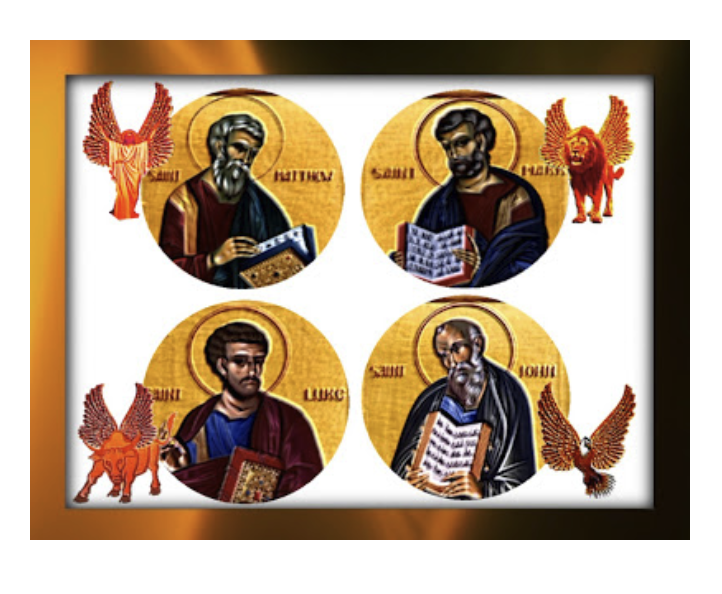
During the formative first centuries of Christian history there were some 40 texts in circulation that could be considered “gospels,” according to one scholar, while another counted as many as 70. Marvin Meyer of Chapman University decided a dozen such non-biblical gospels merited inclusion in an 2005 anthology, while others have proposed different listings.

Early Christians dismissed what they judged to be “apocryphal” texts, meaning of doubtful authenticity, and recognized only the familiar quartet of Matthew, Mark, Luke and John as authoritative and eventually included in what became the New Testament. The four did not name the authors, but the substance was deemed to come directly or indirectly from Jesus’ original apostles.

An obvious aspect of such judgments was the dating.

Chronology expert Jack Finegan calculated that Jesus’ crucifixion probably occurred in early April of either A.D. 30 or 33. “The Oxford Bible Commentary” typifies experts’ consensus in listing these dates for the final composition of the Four: Matthew between A.D. 75 and 100. Mark “probably not long after” Jerusalem fell in 70. Luke most likely around 80 to 85. John about 90 to 100.

That means there would have been living eyewitnesses to Jesus to provide or confirm oral or written material incorporated into the Four, rather like historians in 2023 gathering memories about the Dwight Eisenhower presidency through the Ronald Reagan years.

But over the past generation, liberal scholarship has emphasized those “apocryphal” contenders, effectively reducing the exclusive stature of the biblical four. Many decided there wasn’t much of importance to distinguish the traditional four from the others. Elaine Pagels of Princeton University popularized the revisionist mood in “The Gnostic Gospels” (1979). By 2003, the big-selling and rather ridiculous novel “The Da Vinci Code” fictionalized the supposedly arbitrary choice of New Testament books as a power grab.


Please respect our Commenting Policy

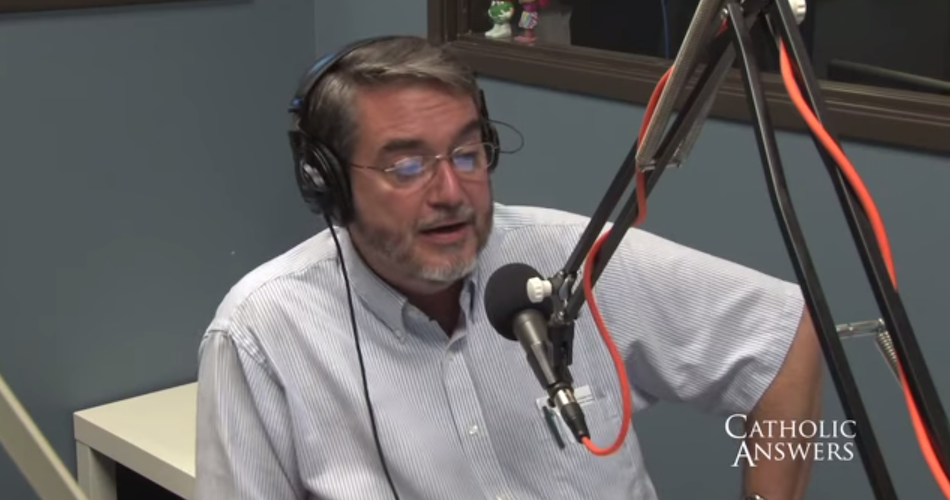
If you haven't profiled the Catholic apologist Scott Hahn -- now's the time to act

If you haven't profiled the Catholic apologist Scott Hahn -- now's the time to act

The Guy cannot recall any “legacy media” coverage of Scott Hahn, the influential U.S. Catholic lay theologian. If you haven’t done a feature on this fascinating Ohioan, here’s the ideal news peg -- Pope Francis’s Synod of Bishops that begins at the Vatican October 4.

There’s Catholic dynamite here. Hahn, who has a huge parish-level following, stated via Facebook August 24 that he’s “grateful for Bishop [Joseph] Strickland’s inspiring words,” and posted a link to a new pastoral letter from the outspoken Texas conservative who is attacking the synod (and under increasingly fierce Vatican pressure to cease his dissent or be forced to resign).

Strickland warned that “schismatics” are promoting “evils that threaten” the church, and implied that Pope Francis himself (though unnamed) is facilitating their nefarious cause through his Synod on Synodality process.  See GetReligion backgrounder on the Synod dispute here.

Among reactions, founder Mike Lewis at WherePeterIs.com said he’s long admired Hahn’s contributions to the faith so it’s “deeply disappointing” that he is now embracing a “toxic” and “reactionary” movement that Catholics loyal to the papacy worry could produce a “schism coming from the far-right of the U.S. Church.”

Hahn, 65, is the longtime professor of Biblical Theology and the New Evangelization at Franciscan University, a growing liberal-arts stronghold devoted to “the authentic teachings of the Church.” Journalists who scan the websites for Hahn’s off-campus activities and his Saint Paul Center for Biblical Theology will find he’s a popular speaker in person and via religious TV and radio, and a prolific producer of his own and others’ books, articles, DVDs, CDs, podcasts, online courses and conferences.

His organization, in its Catholic conservatism and independence from official church agencies, resembles the EWTN organization that grew from TV talks by the late Mother Mary Angelica beginning in 1981.

Hahn holds a Ph.D. from the Jesuits’ Marquette University in Milwaukee, but it’s significant that his divinity degree is from Gordon-Conwell Theological Seminary, a Northeast anchor of evangelical Protestant thought.


Please respect our Commenting Policy

Reuters should correct a correction? Polish rite to beatify family of nine killed by Nazis

Reuters should correct a correction? Polish rite to beatify family of nine killed by Nazis

Does anyone remember newspaper “corrections”?

Let me explain the concept to younger GetReligion readers. Back in the days of ink-on-paper news, if a news organization made a mistake, the editors used to print an actual correction, noting the error and providing the correct information. Then, early in the online era, they would add a “correction” blurb at the top of a story and then insert a detailed correction at the end (or some variation on these items).

Then some, not all, news organizations simply started correcting mistakes — in the never-ending flow of online copy — without admitting that they made these mistakes in the first place. Thus, savvy news readers began making screenshots of errors they spotted, knowing that this was the only definitive way to prove the error ever existed.

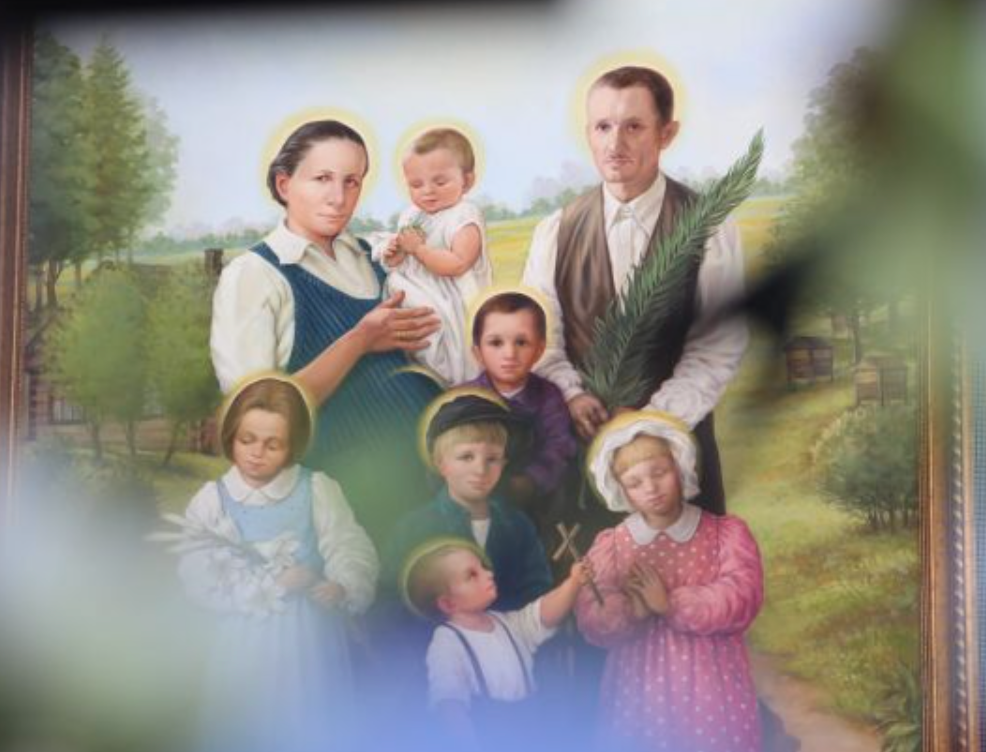
Now, we have something really strange going on in the following Reuters news report: “Catholic Church to beatify Polish family, including new-born baby, killed by Nazis.”

If you follow Catholic Twitter, it appears that there were errors in an earlier version of this story.

Maybe. It’s hard to tell.

Then again, the current version of the story (as I wrote this) appears to contain a clash between two different accounts of this beatification story.

Start here: Note the “including new-born baby” reference in the headline.Then, let’s work through this, starting with the lede from several days ago:

VATICAN CITY, Sept 5 (Reuters) — The Catholic Church is to beatify a Polish family of nine including a new-born baby who died at the hands of the Nazis during World War Two, the Vatican's saint-making department said.


Please respect our Commenting Policy

Thinking just a little bit about Jimmy Buffett, the laid back Catholic troubadour?

Thinking just a little bit about Jimmy Buffett, the laid back Catholic troubadour?

I wrote this short “think piece” just before heading out the door on a trip to our old stomping grounds in South Florida.

The timing is a coincidence, with zero connections to some follow-up reflections on my recent post — “New York Times offers flashback to sacraments offered by the priest of the Parrotheads” — about some religion “ghosts” linked to coverage of the late singer-songwriter Jimmy Buffett.

I had no idea that there would be some Catholic-press coverage pointing to some faith-centered threads in his music. Hold that thought. Here is a small chunk of my GetReligion post noting the Big Idea in the Times story:

The basic idea is that the singer-songwriter was a kind of guru-priest who was looking at the humdrum lives being lived by millions of Americans. He saw this and, looking out from the center microphone on stage during his never-ending tours, he had compassion on them.

After all, he had seen this relationship before. When fans sang along in the crowd, it created, as noted in the Times feature, a “unified hum, reminding Mr. Buffett of the recitation of prayers in church during his altar boy days.”

Was there more to the theological content of Buffett’s lyrics than that? The Catholic News Agency offered a feature with the headline, “Jimmy Buffett: more Catholic than you think?”

While admitting that there was little overt Catholic content in the singer’s public life and remarks, this new piece dug back to earlier interpretive work by Stephen M. Metzger, writing for the Church Life Journal at Notre Dame University.

“[I]t is clear that Catholicism left an indelible mark on his imagination,” wrote Stephen M. Metzger, a scriptor (cataloguer of Latin manuscripts) and graduate of the University of Notre Dames Medieval Institute. … Buffett attended St. Ignatius Catholic School and went on to graduate from McGill-Toolen Catholic High School, which remains the most prominent Catholic high school in Mobile, Alabama. 

Metzger said evidence of Buffett’s Catholic upbringing shone through in his work, even if his songs weren’t explicitly Catholic.


Please respect our Commenting Policy

Pew Research Center report lifts the veil (as much as possible) on religion in China

Pew Research Center report lifts the veil (as much as possible) on religion in China

Amid a flow of recent news stories on the economic problems that plague China and its disruptive impact on global affairs, the Pew Research Center on August 30 issued a landmark 160-page report with a wealth of information on another persistent issue -- the status of various religious groups in this nation of 1.4 billion after 74 years of unremitting effort by Communist rulers to suppress or eliminate faith.

Given North Americans’ long-running interest in both China and its religious situation, especially for Christians, this report is important news. Editors will want to summon their art departments for charts to complement coverage. The report’s depiction of data sources and the huge difficulties in obtaining reliable information from the mainland adds to this notable achievement.

The upshot, according to Pew demographer Conrad Hackett, is that by available measures, China is — on the surface — “the least religious country in the world.” Not surprising when media and public meetings are restricted and the regime forbids religious education while subjecting children to intensive atheistic propaganda at school. Only a tenth of the Chinese report religious affiliation, and 3% say religion is “very important” in their lives, compared with 98% in nearby Indonesia (or 37% in the United States).

Government barriers meant Pew could not conduct its own field surveys as in other nations. So the numbers come from government reports, research by Chinese universities (a risky academic specialty), one private polling firm and the Sweden-based World Values Survey. The report provides excellent guidance on interpreting limits and problems with the available data sources and confusion over definitions.

Note this striking example: The government lists 34,000 registered Buddhist temples, compared with 190,000 counted by Sun Yat-sen University experts.

Yet the people are permeated with spiritual beliefs and superstitions. These include gravesite visits to venerate or assist ancestors in the afterlife, rituals to seek personal benefits, incense-burning, fortune-telling, planning of activities around auspicious calendar dates and feng shui (placement of buildings and furnishings thought to manipulate energies). With or without formal affiliation, a third of Chinese believe in the Buddha or enlightened Buddhist beings, and 18% believe in Taoist deities.

Are some believers afraid to discuss faith ties, while living under China’s expanding social credit system of rewards and punishments?


Please respect our Commenting Policy

Mainstream press (again!) fails to put McCarrick's past and victims into proper context

Mainstream press (again!) fails to put McCarrick's past and victims into proper context

It’s been quite some time since a story involving a major figure or incident in the Catholic church was covered by both the mainstream and religious press.

Stop and think about that for a moment.

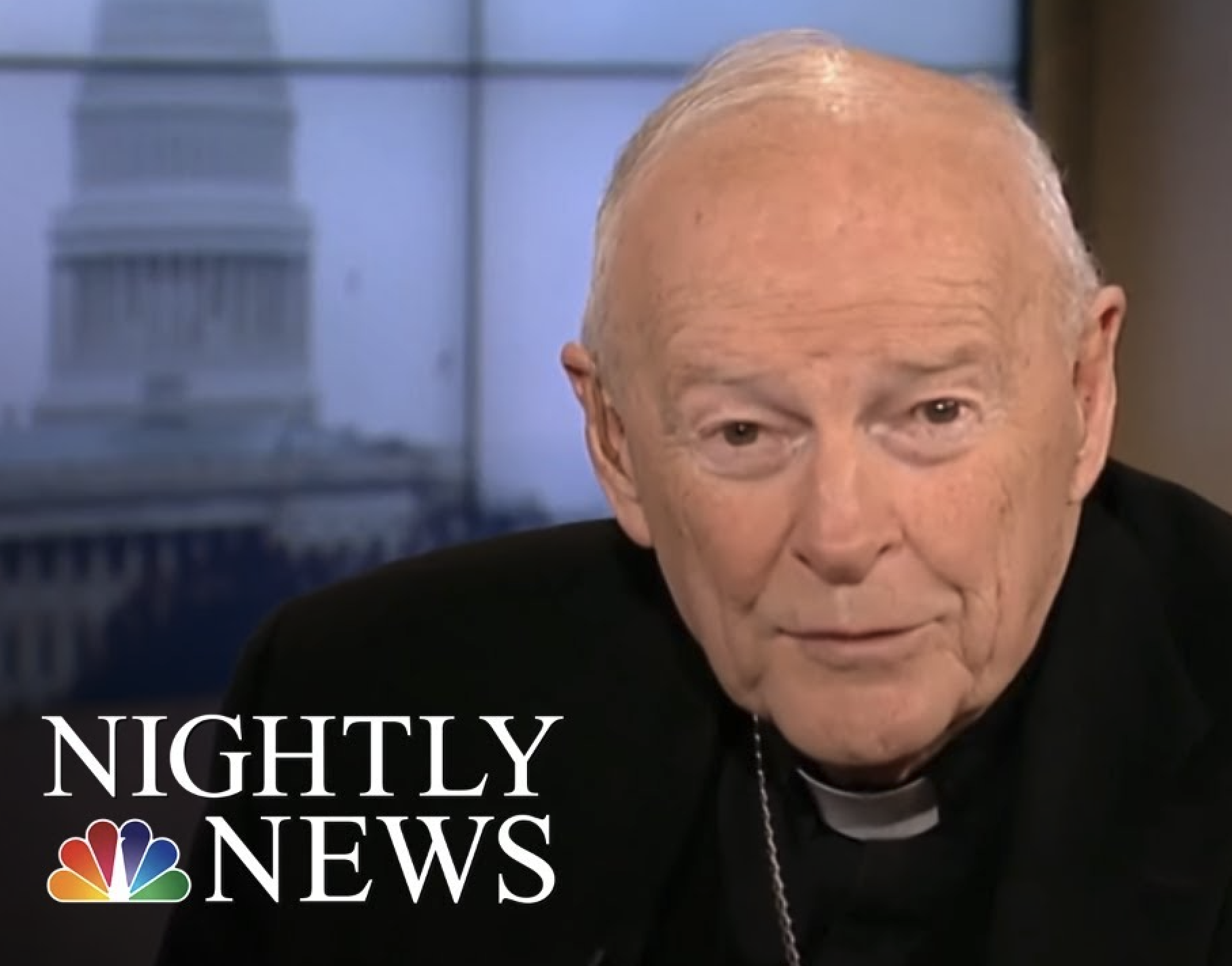
The story in question at the moment involves disgraced ex-Cardinal Theodore McCarrick, one of the most influential Catholic prelates of the past half century on both sides of the Atlantic.

Pope Francis, readers will recall, defrocked McCarrick — the press-friendly former cardinal of Washington, D.C. — in 2019 following a Vatican tribunal into allegations that he had molested a 16-year-old boy decades ago. McCarrick resigned from the College of Cardinals the prior year, but only after an accusation that he had molested the teenage altar boy while serving at the Archdiocese of New York was found to be credible. At that point, some newsrooms finally began covering years of off-the-record reports about McCarrick’s behavior with seminarians.

McCarrick, now 93, has gone into seclusion the past few years. He’s been largely forgotten by the mainstream press (with a few notable exceptions).

That all changed on Aug. 30 when the latest chapter in the McCarrick saga emerged in the form of a court hearing. A Massachusetts judge ruled that the former cardinal was not competent to stand trial in another sex abuse case. The 2021 case stems from a charge that “Uncle Ted” — as he was often called by seminarians — had sexually assaulting a teenage boy in Massachusetts.

The Associated Press covered the story this way, replete with a dateline. Here’s how the article opens:

DEDHAM, Mass. (AP) — The once-powerful Roman Catholic Cardinal Theodore McCarrick will not stand trial on charges he sexually assaulted a teenage boy decades ago, as a Massachusetts judge dismissed the case against the 93-year-old on Wednesday because both prosecutors and defense attorneys agree he is experiencing dementia.

McCarrick, the ex-archbishop of Washington, D.C., was defrocked by Pope Francis in 2019 after an internal Vatican investigation determined he sexually molested adults as well as children.


Please respect our Commenting Policy

Plug-In: That openly prayerful coach is back on the sideline, after his Supreme Court win

Plug-In: That openly prayerful coach is back on the sideline, after his Supreme Court win

NEW YORK — I filed this edition of Weekend Plug-in from my temporary, 38th-floor apartment in Midtown Manhattan. I’ve spent the week enjoying a mix of work and fun in Metropolis.

As I typed this, Pope Francis had just arrived in Mongolia, “becoming the first pope to visit the vast country with one of the world's smallest Catholic populations, nestled between Russia and China — two nations with complicated Vatican relationships,” as the National Catholic Reporter’s Christopher White reports.

Francis has long expressed an interest in visiting Russia and China, but Mongolia might be as close as he gets, the Wall Street Journal’s Francis X. Rocca explains.

As Mongolia Catholics welcome Francis, the nation’s evangelicals wrestle with growing pains, according to Christianity Today’s Angela Lu Fulton. Also, check out this Julia Duin background report at GetReligion.

This is our weekly roundup of the top headlines and best reads in the world of faith. Our big story concerns the return of a Washington state high school football coach who won a school prayer case before the U.S. Supreme Court.

What To Know: The Big Story

God on the gridiron: “Joe Kennedy — also known as the “praying coach” — is back as an assistant coach for the first time since the Supreme Court ruled that the Bremerton School District in Kitsap County had violated his religious freedom.” That’s the synopsis from Duin, who goes in depth on Kennedy’s return for The Free Press.

Readers may recall that Jovan Tripkovic interviewed Kennedy for ReligionUnplugged.com after the coach’s SCOTUS victory in 2022.

Friday night lights: The Seattle Times’ Nine Shapiro sets the scene for Kennedy’s return:

This much we can say for sure: Bremerton High assistant football coach Joe Kennedy will pray after Friday night’s opening game of the season, as the U.S. Supreme Court said he could.

“I’ll just go over to mid-field, like I always do, face the scoreboard, take a knee, and thank God for being here,” the 54-year-old coach said, sitting in the grandstands after practice Wednesday, having returned to coaching the Knights in early August following an eight-year absence.


Please respect our Commenting Policy