Catholicism

Podcast: Let's play, 'Name that pope!' The Pope Francis vs. St. Pope John Paul II edition

Podcast: Let's play, 'Name that pope!' The Pope Francis vs. St. Pope John Paul II edition

Nearly a decade ago, I wrote my “On Religion” anniversary column (No. 26 at that time) about a game that Catholics seemed to be playing in cyberspace.

Some called this game, “Name that pope!” At this stage of Catholic life, early in the Pope Francis era, quite a few Catholics were frustrated with the many journalists who claimed there were striking differences — on social justice, poverty, the environment and peace — between the new pope and the previous two occupants of the Throne of St. Peter.

Pope Benedict XVI and St. Pope John Paul II were, you see, stern conservatives obsessed with clashes between centuries of Catholic moral theology and the Sexual Revolution. Pope Francis offered a kinder, more compassion vision focusing (all together now) on social justice, poverty, the environment and peace.

That old “Name that pope!” game played a pivotal role in this week’s “Crossroads” podcast (CLICK HERE to tune that in). We were talking about a new Associated Press story that ran with this headline: “Pope says some ‘backward’ conservatives in US Catholic Church have replaced faith with ideology.

Hold that thought, as we return to the earlier edition of “Name that pope!” Let’s run through this unedited chunk of that column:

Start with this quotation: "The reservation of the priesthood to males, as a sign of Christ the Spouse who gives himself in the Eucharist, is not a question open to discussion."

Name that pope: That's Pope Francis, believe it or not.

Round two: "It is deplorable that homosexual persons have been and are the object of violent malice in speech or in action. Such treatment deserves condemnation from the church's pastors wherever it occurs."

Name that pope: That's Pope Benedict XVI.

Round three: "If we refuse to share what we have with the hungry and the poor, we make of our possessions a false god. How many voices in our materialist society tell us that happiness is to be found by acquiring as many possessions and luxuries as we can! ... Instead of bringing life, they bring death."

Please respect our Commenting Policy

Off to Mongolia: As oldest traveling pontiff, Francis visits a country with few Christians

Off to Mongolia: As oldest traveling pontiff, Francis visits a country with few Christians

One of the most interesting, but least publicized religious events of the year happens this weekend, starting today actually, when Pope Francis travels to Mongolia. The papal schedule is here.

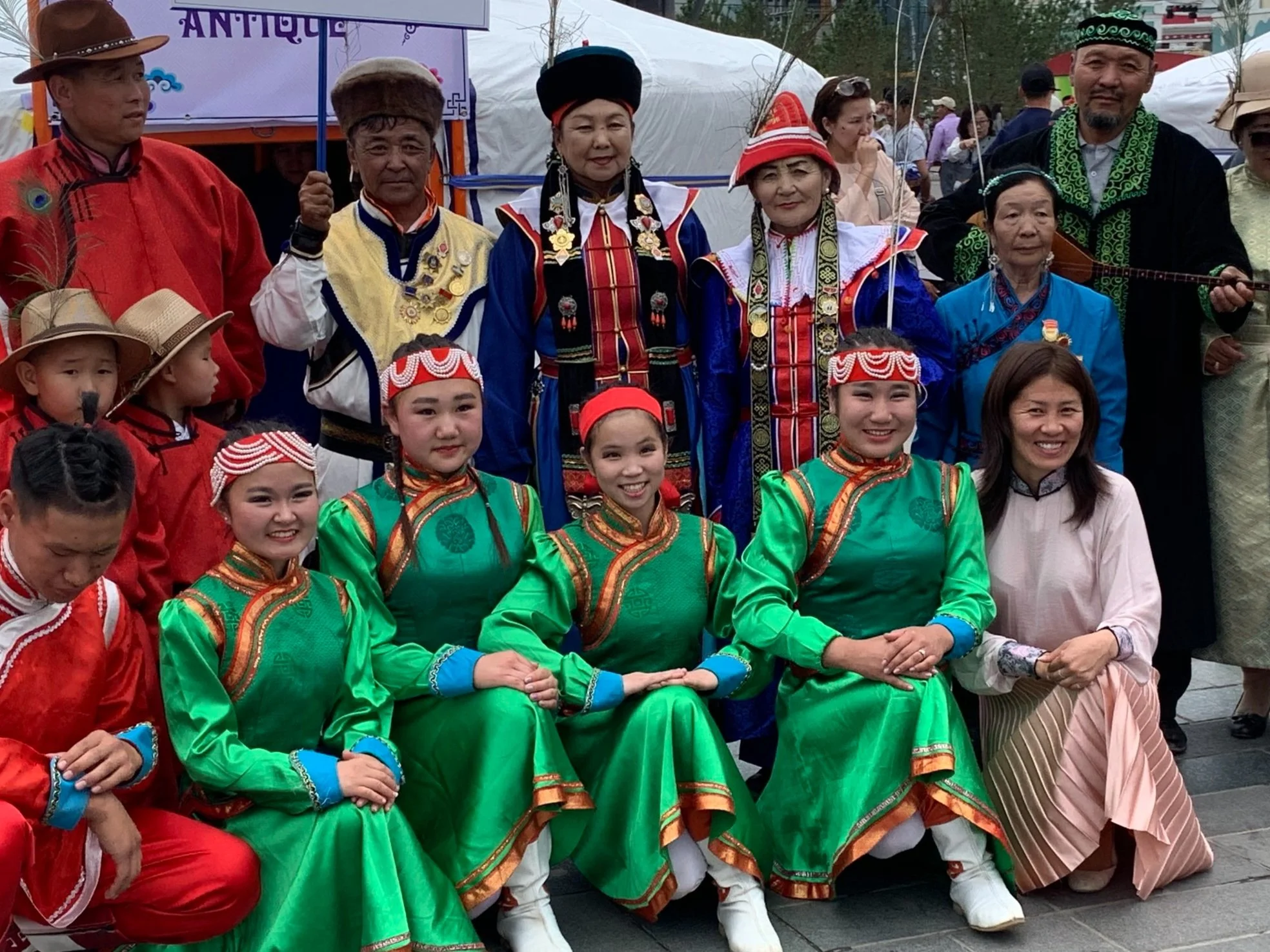
I spent three weeks in Mongolia in 2019. While there, I got to meet a variety of Protestants and Buddhists (Buddhism is more than half the population), but never saw any sign of the Catholics.

The logical question: What are the news hooks for this visit? What should journalists be covering?

Let’s do some math. There are only 3 million people in the country and 41,000  60,000 of them (estimates vary) are Christian — the vast majority evangelical Protestant — after three decades of evangelizing.

When missionaries poured into the country in the early 90s, they had to start from ground up, as much of the  populace was atheist thanks to Communism. Catholic missionaries were among them and, today, there are 1,300-1,500 Catholics there, which is pretty low compared with the many Protestants. There are roughly 196 churches in the entire country,out of which eight — plus one chapel — are Catholic.

Even the Church of Jesus Christ of Latter-day Saints claims more members (12,500) than that. See this Vatican overview for more on Mongolian Catholics.

There’s a lot of spiritual hunger there. When evangelist Franklin Graham (son of Billy) visited Mongolia last year, 17,000 showed up to hear him and 2,000 indicated conversions. I help support a Mongolian evangelist (her biography is here) who just completed a tour of the country and her sessions were packed (see this short video).

Evangelistically speaking, Mongolia is virgin territory, and everyone wants a cut of that pie. I am willing to bet that Francis’ new cardinal there unofficially told him the Protestants are making a lot of gains and he needs help. There are so many good stories in this trip, it’s hard to know where to start.

First, AP’s bare-bones intro:

VATICAN CITY — Pope Francis on Sunday described his visit later this week to Mongolia, the first-ever pilgrimage by a pontiff to the east Asian country, as a much-desired occasion to encounter a “noble, wise” people.

Speaking to the public in St. Peter’s Square, Francis said the trip would also be an opportunity to embrace the Catholic community there, describing the church in Mongolia as “small in numbers but lively in faith and great in charity.”


Please respect our Commenting Policy

New York Times offers a fascinating look at France's painful religion and immigration puzzle

New York Times offers a fascinating look at France's painful religion and immigration puzzle

Religion is very complicated in France. It’s almost as complicated as anti-religion traditions in France.

This makes it very hard for journalists to draw a line between the “good” religious believers and the “bad” religious believers, as well as the “good” anti-religion leaders and the “bad” anti-religious leaders.

For example, if a politician opposes public displays of religious tradition by Muslims, is that “good” anti-religion or “bad” anti-religion? After all, it could be see as logical after generations of French opposition to similar symbolic gestures by Catholics, Jews, etc. Ah, but what this action can be seen as opposition to European Union support for welcoming immigrants, no matter what?

Those seeking a quick glance at recent scenes in this complicated drama can surf through these GetReligion posts — “France's high court clears up burkini's legality; mainstream media still muddy the waters” and “More secular attacks on burkinis: The New York Times explains why this is not about religion.”

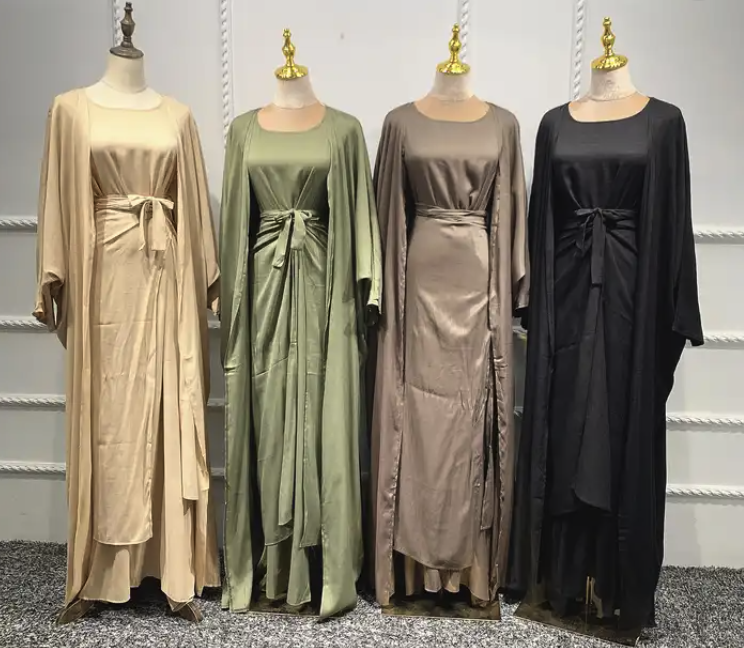
As with the burkini battles, France is now wrestling with another conflict about women, especially school girls, who choose to be modest for bad reasons. The New York Times has published a solid, fascinating report that ran with this complicated (which is fitting) double-decker headline:

France to Ban Full-Length Muslim Robes in Public Schools

Religious symbols are already banned in French schools, but the abaya — a loosefitting robe worn by some Muslim women — was in a gray area. Critics called the measure discriminatory

Ah, but what if there is nothing distinctively or historically Muslim about a particular garment?

What is the difference between a “good” evening gown that is dramatic (and modest) and a “bad” everyday gown that is dramatic and modest? The issue, of course, is whether the gown is worn for religious reasons. In this overture, note the distinction between an “abaya” and the “niqab,” which covers the face. (Oh, and note “children” in the lede, as opposed to “girls.”)

France will bar children in public schools from wearing the abaya, a loosefitting, full-length robe worn by some Muslim women, the government said this week. It said the measure was necessary to stem a growing number of disputes in its secular school system.


Please respect our Commenting Policy

Pope Francis and his Synod on Synodality (part one) looks like 2023's story of the year

Pope Francis and his Synod on Synodality (part one) looks like 2023's story of the year

Move aside, Southern Baptists and their drive to restrict women’s pastoral ministry in church. Women will be just one of many contested topics when Pope Francis presides October 4–29 over his Synod of Bishops at the Vatican, already in line to become the religion story of the year, even though final decisions await a second session in October, 2024.

Interest escalated with last week’s vigorous attack on the meeting from conservative Catholics, in the form of a 110-page booklet translated into eight languages, made available free online for journalists and parishioners. “The Synodal Process Is A Pandora’s Box” contends that planners have stacked the deck and this “watershed in Church history” constitutes an “imminent” threat to “demolish” the “Catholic Church as it has always existed.”

Hard to top the news possibilities that could amount to a Vatican II and a half: Marriage for priests, ordination of women as deacons (though not as priests) with more power otherwise, lay preachers, broader inclusion for “LGBTQ+” Catholics (yes the Vatican uses that fashionable term), blessing ceremonies (but not marriages) for same-sex couples as the Church of England authorized this year, openness to polygamy and Communion to divorced-and-remarried Catholics and restitution for victims of clergy sexual abuse.

Or not. Germany’s “Synodal Way” process has taken the lead in promoting such revisionist proposals. By contrast, some U.S, bishops downplayed participation in the pope’s synod project or publicly criticized it.

Raising the stakes, according to Rome's Civilta Cattolica on Monday, Francis told an August 5 meeting in Portugal that in the American church there is "a very strong reactionary attitude. It is organized and shapes the way people belong, even emotionally." The pope also said "there is an appropriate evolution in the understanding of matters of faith and morals" and that "backward-ism is useless."

News coverage understandably emphasizes the “Pandora’s Box” booklet’s foreword by American Cardinal Raymond Burke, the onetime archbishop of St. Louis who is now retired as head of the Apostolic Signatura at the Vatican, the church’s highest tribunal.


Please respect our Commenting Policy

Plug-In: The March On Washington, 60 years later -- looking back with faith

Plug-In: The March On Washington, 60 years later -- looking back with faith

Is it time for fall yet? We’re enduring yet another triple-digit day in my home state of Oklahoma, and I’m ready for cooler temperatures.

But you signed up for religion news, not a weather report, so let’s start with this: Belief in the prosperity gospel is on the rise among churchgoers, according to a Lifeway Research report by Marissa Postell Sullivan.

Meanwhile, yet another Roman Catholic diocese in California has filed for bankruptcy, the Washington Post’s Paulina Villegas reports.

“The San Francisco Archdiocese is the third Bay Area diocese to file for bankruptcy after facing hundreds of lawsuits brought under a California law approved in 2019 that allowed decades-old claims to be filed by Dec. 31, 2022,” The Associated Press’ Olga R. Rodriguez notes.

At Christianity Today, Kate Shellnutt explains how the Christian Standard Bible has found its place in a crowded evangelical market.

This is our weekly roundup of the top headlines and best reads in the world of faith. Our big story concerns Monday’s 60th anniversary of the Aug. 28, 1963, March on Washington.

What To Know: The Big Story

Evolution of activism: “The March on Washington of 1963 is remembered most for the Rev. Martin Luther King Jr.'s “I Have a Dream” speech — and thus as a crowning moment for the long-term civil rights activism of what is sometimes referred to as the ‘Black Church.’”

That’s the lede from The Associated Press’ David Crary, who adds important context:

At the march, King indeed represented numerous other Black clergy who were his colleagues in the Southern Christian Leadership Conference. But the march was the product of sustained activism by a broader coalition. Black and white labor leaders, as well as white clergy, played pivotal roles over many months ahead of the event.

Moreover, the Black Church was not monolithic then — nor is it now.


Please respect our Commenting Policy

Thinking about faith and family in the first debate between some 2024 GOP hopefuls

Thinking about faith and family in the first debate between some 2024 GOP hopefuls

President Joe Biden has talked about the battle for the soul of the nation. In fact, he gave a speech about just that in September 2022, two months before the midterm elections, at Philadelphia’s Independence Hall, in order to rebuke Donald Trump and his divisive politics.

“Donald Trump and the MAGA Republicans represent an extremism that threatens the very foundations of our republic,” Biden, a practicing Catholic, said at the time.

Nearly a year later, the leading Republican presidential candidates came together in Milwaukee for the chance to take on Biden in the November 2024 election. The headline-grabbing elephant in the living room: Former President Donald Trump did not take part.

What emerged from these eight candidates at the Fiserv Forum was an often-heated two-hour debate in which they weren’t afraid to bring up faith and family as a reason why Biden’s America has been a failure. The Fox News debate was the first of the GOP primary season. Trump, meanwhile, staged an interview with the exiled Fox News superstar Tucker Carlson, which was streamed live on the X platform (formerly known as Twitter).

While the candidates vying for the White House agreed America is undergoing a crisis, they differed on exactly why. It set the stage for what will be a very interesting primary and one where issues surrounding faith and family won’t be ignored by millions of Americans, even if they are downplayed in mainstream media coverage.

Faith and family are not new talking points for GOP candidates. It’s a trend that dates back to the 1980s during the Ronald Reagan era and has continued with the rise of the Christian Coalition and, in recent years, the large support of white evangelicals for Trump, especially in two-party national showdowns. The U.S. Catholic bishops have also become more outspoken on many moral and social issues.


Please respect our Commenting Policy

Podcast: Journalists need to ask if Colorado has 'good' and 'bad' religious preschools

Podcast: Journalists need to ask if Colorado has 'good' and 'bad' religious preschools

I was never a Ronald Reagan fan, but — let’s face it — he would have to rank No. 1 among American politicians when it comes to having the “gift of gab.”

Thus, with a tip of the hat to the Gipper, let me make this observation: You know that there are church-state experts — on the new illiberal side (cheering) and on the old-liberal side (groaning) — who are watching recent events in Colorado and saying, “There you go again.”

This brings us to this long, long, wordy headline from The Denver Post that served as the hook for this week’s “Crossroads” podcast (CLICK HERE to tune that in). Read this one carefully:

Denver Archdiocese sues Colorado over right to exclude LGBTQ people from universal preschool

State’s non-discrimination requirements “directly conflict with St. Mary’s, St. Bernadette’s, and the Archdiocese’s religious beliefs,” the lawsuit says.

The Post team has, naturally, framed this case in precisely the manner chosen by Colorado officials, while paying as little attention as possible to recent decisions made by the (#triggerwarning) U.S. Supreme Court.

In particular, journalists may want to look at that recent decision —  Carson v. Makin. The key: The high court addressed the state of Maine’s attempts to give public funds to parents who sent their children to secular or religiously progressive PRIVATE schools, but not to parents who picked private schools that support centuries of Christian doctrines on marriage and sex (and other hot-button topics, such as salvation, heaven and hell).

Now, back to the Denver Post:

The Denver Catholic Archdiocese along with two of its parishes is suing the state alleging their First Amendment rights are violated because their desire to exclude LGBTQ parents, staff and kids from Archdiocesan preschools keeps them from participating in Colorado’s new universal preschool program.

The program is intended to provide every child 15 hours per week of state-funded preschool in the year before they are eligible for kindergarten. To be eligible, though, schools must meet the state’s non-discrimination requirements.


Please respect our Commenting Policy

Paeans to librarians and libraries, with some thoughts on religion reference topics

Paeans to librarians and libraries, with some thoughts on religion reference topics

Last week, The Religion Guy spent some time discussing the history of religion reporting with the veteran journalism educator Will Norton, from GetReligion’s home base at the Overby Center at the University of Mississippi. This topic come up: Religion-section articles written in the heyday of Time magazine were very much team efforts enriched by talented field correspondents, stringers, in-house reporter-researchers, photo editors and more.

Also, a quick-witted library staff exploited a 75,000-volume reference collection, expanding digital data banks (thank you, LexisNexis!) and Time Inc.’s own story files that spanned decades. After the library was largely disbanded its #2, Lynn Dombek, became director of our Associated Press research center, winning a corporate prize for aiding bureaus worldwide. Lynn later created startup First Look Media’s research department and is now the research editor at ProPublica.

A Dombek interview with the Poynter Institute underscores the importance of the behind-scenes and all-too-unheralded librarians at major news shops.

OK, but what about journalists at smaller organizations, or scrambling solo freelancers, or researchers at financially-strapped religious agencies?

For them, too, reference works are vitally important for facts and reliable interpretations in this highly complex field but can be expensive. The infinite information online is free but requires careful vetting and can be spotty, lacking important resources available only via print or online subscriptions.

The Guy urges those committed to career-long journalism about religion, and other specialists, to build reference libraries as much as finances allow.


Please respect our Commenting Policy

Are white evangelicals devoted to Fox News? Do atheists flock over to MSNBC?

Are white evangelicals devoted to Fox News? Do atheists flock over to MSNBC?

One of my favorite things to do when the weather is nice is walk my dog. She’s a seven-pound Yorkshire terrier named Lucy. Oftentimes she wants to take a stroll around the neighborhood in the early evening and it’s a good excuse for me to stand up from the computer and actually move around a bit.

It helps to know that I live in an older neighborhood in the Midwest where many houses were built close together and only 10 feet from the sidewalk. So, I can easily see in someone’s living room when I am walking by with the dog.

I love to catch a glance at what’s on their television. Lots of times it’s the St. Louis Cardinals, but that’s a less frequent occurrence as the team has been terrible this year. But if it’s not baseball, it’s usually the news. I see a little MSNBC, a bit more of CNN, but a whole lot of Fox News. If you go to a local doctor’s office, it’s what is on the television in the waiting room. It’s really the default channel for most public spaces in rural, deep-red America.

I am not a scholar of media and politics, but there have been dozens of books written about the 24 hours news cycle and the rise of polarized outlets like Fox News and MSNBC and the impact that they are having on society and politics. But I’ve never really seen a whole lot written about religion and media consumption. It’s time to change that.

The Cooperative Election Study asks people if they have watched a variety of media outlets in the prior 24 hours. They get all the legacy networks (NBC, CBS, ABC) but also the news channels like FNC, MSNBC and CNN. The results are fascinating and every time I look at the heat map, I seem to find a little nugget that I didn’t see the previous time.

The big networks still do pretty well, honestly. A decent chunk of America is watching NBC, CBS and ABC on a regular basis. And what’s interesting is that there’s not a ton of variation from top to bottom. For example, ABC hovers between 30% and 50% for basically every group (aside from Black Protestants). The other networks are in that same range, too. There’s pretty wide penetration across all kinds of religious groups.

I was surprised how broad the viewership is for CNN.


Please respect our Commenting Policy