Catholicism

Yes, Protestants disagree with the ancient churches on the status of the siblings of Jesus

Yes, Protestants disagree with the ancient churches on the status of the siblings of Jesus

QUESTION:

“Did Jesus Have Brothers & Sisters?”

THE RELIGION GUY’S ANSWER:

The quote above is the headline for an article this month by Ginny Baxter, the “Woman to Woman” blogger on Patheos.com. She figures “the answer is a definite ‘maybe.’ “

On this age-old but ever-debated topic, The Guy would answer that — as is often the case — it depends on what church is fielding the question.

From ancient times, Catholicism and Orthodoxy have said “No.” They believe in Mary’s “perpetual virginity,” meaning that she and husband Joseph never had sexual relations and Jesus was the only child she ever gave birth to.

(This issue should not be confused with Christianity’s belief in the “virginal conception” or “virgin birth,” that Mary conceived Jesus miraculously without a biological human father, as recorded in the Gospels of Matthew and Luke.)

In the early Protestant Reformation, Martin Luther broke from Catholicism on numerous matters, including mandatory celibacy for priests, but continued to believe that Mary was “ever-virgin,” although he believed that personally and did not state it as a required doctrine. Virtually all Protestants since his time have answered, “Yes, Jesus did have siblings.”

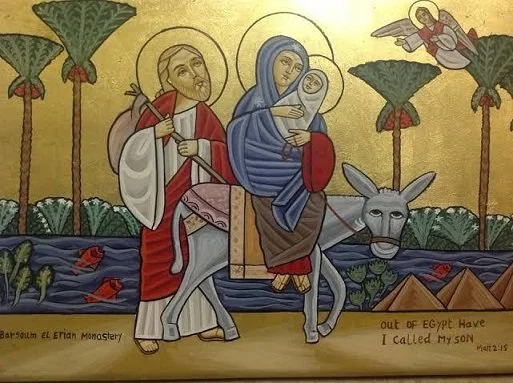
The New Testament does not mention that Mary was “ever-virgin.” Jesus’ (adoptive) father Joseph was present with Mary when Jesus taught in the Temple at age 12 (see Luke 2:41-50). But then Joseph disappears from the Gospels’ narratives, so interpreters assume he died at some point before Jesus began his public ministry around age 30.

The ”Proto-Gospel of James,” probably composed in the late 2nd Century A.D., may have been the first writing to depict an ever-virgin Mary.

Please respect our Commenting Policy

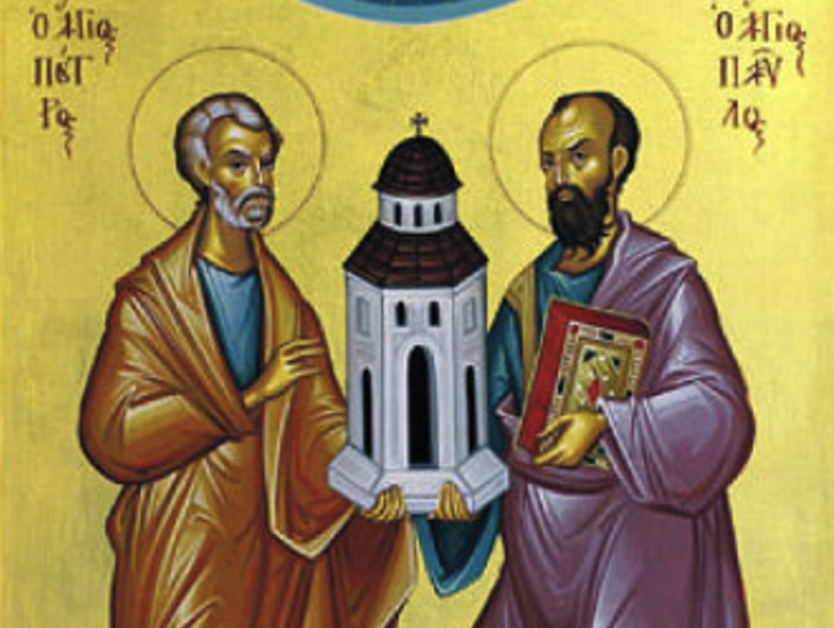
Add to newsroom calendars? Millions of Christians marked the Feast Of Sts. Peter and Paul

Add to newsroom calendars? Millions of Christians marked the Feast Of Sts. Peter and Paul

The feast day of St. Peter and St. Paul is a significant celebration on the Christian calendar, especially in the ancient churches of the East and West, because it commemorates the lives of two of the most important martyrs and leaders in all of Christian history.

However, this is not a holy day that shows up on the “must cover” list in many newsroom calendars. A quick Google News search for the past few days will demonstrate that reality.

Should that change? The annual feast is observed on June 29 and holds deep religious and historical significance for Christians around the world.

The date commemorates the death of the two saints. They are believed to be buried at the two basilicas that bear their names — St. Peter’s and St. Paul’s Outside the Walls in Rome. Through their tireless efforts and unwavering faith, Peter and Paul left an indelible mark on Christianity, shaping the faith’s foundations and spreading the message of Jesus in the world.

The feast day serves as a reminder of the enduring power of faith and the transformative impact of Christ’s message. It calls believers to emulate the courage and commitment displayed by these apostles. Their lives serve as a testament to the transformative power of encountering Christ and the call to proclaim His message of love and salvation to the world.

In recent years, it has also become — more than once — the hook for major ecumenical events involving Rome and Eastern Orthodoxy.

Here is what journalists and readers need to know about the Feast of Saints Peter and Paul:

St. Peter, also known as Simon, was one of the 12 apostles chosen by Jesus to be one of his closest followers. Catholics consider him the first pope and the founder of the church in Rome. Peter was a humble fisherman when Jesus called him to be a “fisher of men.”


Please respect our Commenting Policy

What the Italian press is reporting about the looming Vatican Synod of Synodality

What the Italian press is reporting about the looming Vatican Synod of Synodality

One of the biggest religion-beat stories of the year is currently playing out and most people are probably unaware of it, due to lack of mainstream-news updates. Maybe this story is too Catholic?

I say this because the three-year process that began in 2021 known as the Synod of Synodality is reaching its most contentious and potentially dramatic stage. I wrote back in March 2022 that the mainstream press had largely ignored the story.

This is what I wrote at the time:

A phrase like Synod on Synodality certainly won’t ever make it into a punchy headline, not even at The New York Post.

The secular press isn’t all that interested in doctrinal issues that don’t appeal to a larger audience or lack a political connection. It’s the reason why the pope going after the Latin Mass got little mainstream news attention while bishops batting President Joe Biden about receiving Holy Communion got tons of coverage. Then again, the synod will almost certainly contain strong LGBTQ news hooks.

Here we are 16 months later and the mainstream press is still largely ignoring the story. Our own tmatt had a very detailed podcast and post regarding one hook with the Synod of Synodality (#Vatican3) and the issues swirling around Cardinal Jean-Claude Hollerich’s past comments and current role, in which he will help shape synod debates about some of its most controversial issues.

Now, it’s quite interesting that the mainstream press — in the United States, at least — has largely been silent regarding a very important new synod document.

In fact, the Vatican’s release of the Instrumentum Laboris (Latin for “working document”) head of October’s Synod of Bishops makes clear that it’s “not a document of the church’s Magisterium.” The 50-page document, however, has plenty to say about the issues Pope Francis has openly discussed over the past decade regarding female deacons and gay unions.  

In Italy, mainstream-news coverage of the pope and Vatican affairs are a staple of daily coverage — akin to White House reporting in the United States.


Please respect our Commenting Policy

Yo, LA Times: Maybe, must maybe, issues of faith, family and culture matter in California?

Yo, LA Times: Maybe, must maybe, issues of faith, family and culture matter in California?

If you follow the mainstream press coverage of religion — primarily coverage by reporter who are NOT religion-beat specialists — then you know that what really matters in life is politics.

As we say here at GetReligion: Politics is real. Religion? Not so much.

Now, it’s also true that money is real, as in news coverage of economics (which often overlap with politicals). If a story cannot be linked directly to politics, journalists will study its economic implications.

The Big Idea: Politics and economics matter more than culture and religion. Maybe journalists think they can ignore that classic book by candid liberal Thomas Frank: “What's the Matter with Kansas?

This brings me to a recent Los Angeles Times piece that ran (this is the Yahoo! News version) with this headline: “4 in 10 California residents are considering packing up and leaving, new poll finds.”

This is a religion-free story. Sort of. Here is the sunny overture:

With its unmatched natural splendor and cultural attractions, California is a beacon that attracts people from around the world who put down roots and call it home.

About 70% of residents said they are happy living here, a new statewide poll shows, crediting the state's diversity, economic opportunities and an enjoyable lifestyle as reasons to stick around.

Yet large swaths of residents are also considering packing up and leaving. Many also believe that the state is headed in the wrong direction, and are anxious about the direction of the economy and their ability to pay their bills.

Message received, right there at the end.

Just in case you missed the point, the Times team goes further:


Please respect our Commenting Policy

Podcast: Are on-the-record statements by Cardinal Hollerich relevant to his synod role?

Podcast: Are on-the-record statements by Cardinal Hollerich relevant to his synod role?

Unless there is a papal election in the near future, the Vatican Synod on Synodality (#VATICAN3) will be one of the most important religion-beat stories of 2023 and 2024 (click here for the dates).

One of the first defining documents of this process was released the other day — “Instrumentum Laboris. A document of the whole Church.” Apparently this was a “religion” story, the kind of inside-baseball development that was covered by Catholic publications on the doctrinal left and right.

That surprised me, since — normally — anything about the Vatican, LGBTQ+rights and women’s ordination makes headlines. Thus, I was glad that Religion News Service published, well, a very typical RNS news story about this document. See if you can spot the big ideas in this double-decker headline:

Vatican confirm synod topics will address questions of LGBTQ+ and women deacons

The document addresses inclusivity toward LGBTQ+ faithful, the issue of female ordination and welcoming toward divorced, remarried or polygamous couples

This story include a massive gap, in terms of essential content (that’s my opinion, of course) and that provided the hook for this week’s “Crossroads” podcast (click here to tune that in). Before we go there, let’s look at a low-key document overview from The Pillar:

The document … acknowledges tensions in the synodal process, saying, “We should not be frightened by them, nor attempt at any cost to resolve them, but rather engage in ongoing synodal discernment. Only in this way can these tensions become sources of energy and not lapse into destructive polarizations.”

The goal of synodality, the document says, is to create “a Church of sisters and brothers in Christ who listen to one another and who, in so doing, are gradually transformed by the Spirit.”

A synodal Church, it says, is one marked by a willingness to listen, encounter, and dialogue, as well as by the humility to ask forgiveness for faults. It is a Church that celebrates unity in diversity and welcomes all people, while not shying away from speaking the truth in love.

For journalists who have covered decades of mainline Protestant life, terms such as “dialogue” and “unity in diversity” — perhaps even doctrinal diversity — will sound familiar.


Please respect our Commenting Policy

What happened on LA Dodgers Pride Night? That depended on source of the coverage

What happened on LA Dodgers Pride Night? That depended on source of the coverage

The Los Angeles Dodgers recently honored the Sisters of Perpetual Indulgence as part of team’s annual Pride Night.

The appearance by the “drag nuns” — supporters call them “satirical,” while opponents label them “a hate group” — was either a success or a bust depending on what brand of media selected by news consumers. The Dodgers lost the game that night, as well as the next two matches with the rival Giants from San Francisco.

The Dodgers have held Pride Night for 10 years. This year’s edition, however, became ensnared in bitter controversy and a media storm. Following criticism from Catholic groups, the team rescinded an invitation to the Sisters of Perpetual Indulgence to be honored at Pride Night. The performers are men who dress flamboyantly as nuns and have performed rites mocking Christian beliefs and symbols.

The group was later reinvited, sparking protests.

What happened on Pride Night? Unless you attended the game and arrived an hour before it started — that’s when the group was honored — you don’t really know what happened.

Clashing media outlets highlighted what they saw as most important (there was no consensus), and some even disagreed with how the group was welcomed when given the Community Hero Award.

Here’s a timeline of what happened based on a variety of media reports and first-hand accounts found on social media with supporting videos.

Harnessing the power of social media, Catholic groups amassed a protest outside the ballpark a few hours before the first pitch. Fox News reported there were “thousands” of protesters in a headline and that Catholics for Catholics, a group based in Phoenix, organized “a prayerful procession” in a parking lot outside Dodger Stadium.

Here's how Fox News’ website reported on the protests:

Several hours before the first pitch was thrown at the Los Angeles Dodgers' Pride Night, a large group of protesters gathered outside the stadium.

Catholics for Catholics, a group based in Phoenix, organized what it described as "a prayerful procession" in a parking lot outside Dodger Stadium.


Please respect our Commenting Policy

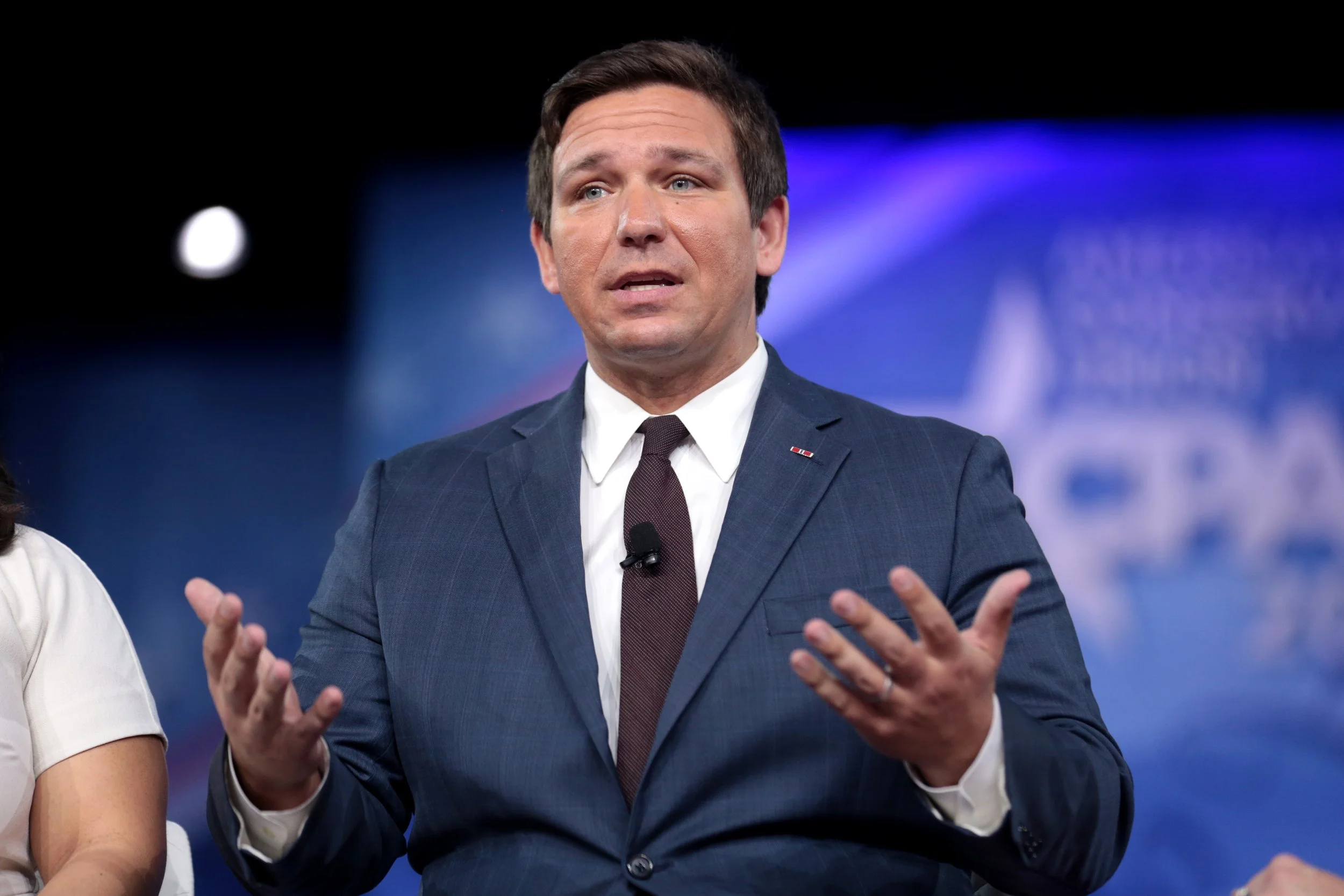
DeSantis' Catholic faith goes under the media microscope before '24 presidential primaries

DeSantis' Catholic faith goes under the media microscope before '24 presidential primaries

The presidential race is just starting to heat up. While it may still be early, candidates are popping up every few days and announcing their intention to seek the Republican nomination in 2024.

Among those seeking to dislodge the early favorite — polling shows that to be former President Donald Trump — is Florida Gov. Ron DeSantis. This is the same man who has become something of a conservative darling in recent years for relentlessly going after “woke” ideology. His battle with Disney is an example of a culture war fight DeSantis hasn’t been afraid to address in recent years.

DeSantis has been criticized for many things, from whether his wife Casey is “a problem” to confusion over the pronunciation of his last name.

As the past weeks have shown, DeSantis’ foray into national politics has come shone a brighter media spotlight on him, his family and beliefs.

Yes, Christian beliefs. It’s true that DeSantis is seen as possibly the only candidate in the ever-growing GOP primary field capable of defeating Trump and possibly even President Joe Biden.

This increased scrutiny — both by the mainstream and religious press — has included whether or not DeSantis, a Catholic, is personally devout. I tackled this very topic more than a year ago in a post that ran under the headline “As Florida’s DeSantis wages culture war, his Catholic faith isn’t news — unless it’s used to attack him.”

Here was the main thrust of my argument:


Please respect our Commenting Policy

Flashback: That popular question, 'Who was the most remarkable person you've covered?'

Flashback: That popular question, 'Who was the most remarkable person you've covered?'

Mother Teresa was having a bad press conference.

Journalists gathered for her 1989 Denver visit seemed determined to ask a litany of questions about her views on every imaginable issue in world affairs and American politics. The soft-spoken, yet often stern, nun seemed confused and kept stressing that her Missionary Sisters of Charity would always focus on the needs of the needy and the sick, including those suffering from AIDS.

One television reporter even asked if the day's main ecumenical event — a "Celebrate Life with Mother Teresa" prayer rally — would include a Mass. Once again, the tiny sister from Calcutta was confused. How could there be a Catholic Mass if the rally included Lutherans, Baptists, Episcopalians, Pentecostal believers and clergy from other churches?

"We will pray together," she said. "That is what we can do."

I raised my hand and asked another question that I knew she might not want to answer. I had heard that she had privately toured Northeast Denver, an impoverished area hit hard by gangs. Might she open a mission there?

Mother Teresa smiled, but gently deflected the question, noting that Denver had recently been added at the end of a long list of dioceses worldwide making just such a request.

What happened next was a singular moment in my journalism career, one that awkwardly blurred the lines between the personal and the professional.

Why bring this up right now?


Please respect our Commenting Policy