Catholicism

An important question pastors tend to avoid: 'Is premarital sex always sinful?'

An important question pastors tend to avoid: 'Is premarital sex always sinful?'

QUESTION:

“Is premarital sex always sinful?”

THE RELIGION GUY’S ANSWER:

The question above was the headline with an April article by Talley Cross, a “gender and sexuality” blogger with patheos.com. She responded with a cautious “no.”

A “yes” answer is the contrary and familiar doctrine and tradition in Judaism, Christianity, Islam and other faiths, and as we’ll see below has lately gotten a degree of backing from surprising places.

That age-old teaching is terribly counter-cultural these days and also subject to critique from within religions. The Gallup Poll says in 2001 a slim 53% majority of Americans thought sex between an unmarried man and woman was morally acceptable, but as of last year the number reached a record 76%. (Adultery got only 9% acceptance.)

In a 2019 Pew Research Center poll, 57% of those who identified as Christians “always” or “sometimes” approved of unwed sex for those in a “committed relationship” without marriage, with fully 79% approval among the non-religious respondents. As for casual sex without any “committed relationship,” 50% of the Christians accepted this “always” or “sometimes and the non-religious did so by 83%.

The influential New York Times (ditto for NPR) has developed an interest in a variant known as “polyamory,” romantic relationships with knowledge and consent among three or more participants, who sometimes take additional partners on the side.

Please respect our Commenting Policy

Yes, the perennial 'voters in pews' factor hovers as 2024 White House scenarios emerge

Yes, the perennial 'voters in pews' factor hovers as 2024 White House scenarios emerge

Only a candidate like Joe Biden is so problematic he could lose to a candidate like Donald Trump.

Only a Trump is so problematic he could lose to a Biden. That’s one way to frame what the early polls are telling us about Americans’ attitude about their 2024 choice.

Since Biden is so far successfully freezing out major Democratic competitors, the big question for journalists is whether any Republican can dethrone Donald Trump. Hovering over that -- as always with Republicans -- is how active churchgoers will assess the large flock (once again) of dump-Trump hopefuls in the winner-take-all primaries.

Take the newbies. Can Ron DeSantis’s grumpy Trumpiness freed from Trump’s baggage prevail, or the exact opposite?

Tim Scott’s Reagan-esque sunniness plus religiosity Trump lacks?

Can former Nikki Haley straddle both Trumpers (playing for Veep?) and anti-Trumpers?

Can pious Vice President Mike Pence overcome hostility from both those sides? Would Chris Christie eviscerate ex-pal Trump but without winning, as with Mario Rubio 2016?

If the more cheerful Asa Hutchinson or Chris Sununu also assail Trump, won’t they alienate his base? Would a rumored Glenn Youngkin entry come too late? Do the others have any hope?

By such common calculations, Trump appears all but inevitable 58 weeks before the nominating convention. But with such a surreal candidate -- with coming courtroom tangles -- might those pious Republicans shock the pundits? Wouldn’t that be a story?

The news media shouldn’t forget the religion angle with the Democrats and Joe Biden’s currently lethargic campaign.


Please respect our Commenting Policy

News coverage of Los Angeles Dodgers drag-nuns story reveals plenty of bad habits

News coverage of Los Angeles Dodgers drag-nuns story reveals plenty of bad habits

Sports have always brought people together. That’s a big reason that they have been so popular for decades.

But in our ever-polarized world around political lines, sports have taken a hit. Whether it involved NFL players taking a knee during the national anthem or NBA players supporting Black Lives Matter, sports and sports journalism have become increasingly political the last few years.

Baseball, and specifically the Los Angeles Dodgers, became the focus of controversy over the last two weeks when the team invited, then un-invited and then issued a welcome once again a group known as the Sisters of Perpetual Indulgence, a well-known San Francisco group of queer and trans people dressed as nuns at the team’s annual Pride Night on June 16.

As many noted, there’s no way a sports franchise would have given this kind of salute to a group of traditional Catholics opposed by cultural progressives, a group like the Little Sisters of the Poor.

What took place during this entire saga is a series of predictable news-media coverage twists and turns guided by professionals who, it appears, saw this issue from their own left-right vantage points. Modern journalism is often criticized for building narratives and reading minds rather than reporting facts and interviewing both sides. This story fit that mold.

While the news coverage lacked voices from both sides in this debate, most of the reports also lacked another very important term — anti-Catholic.

Are these “nuns” anti-Catholic? It certainly depends on which side of this debate you are on and many news outlets made that clear and, thus, ignored citizens whose views were found to be heretical, in terms of current newsroom dogmas.

Take, for example, the Los Angeles Times feature that ran on May 25 that included a photo shoot with the “nuns.” Here’s how that piece opened:

Ask the L.A. Sisters of Perpetual Indulgence why they decided to join the order of drag nuns, and most of them will tell you it’s because they felt the call.

Sister Tootie Toot (glitter green lips, dark beard, emerald cocktail dress) felt it like a ton of bricks when she walked into a leather bar where several sisters had assembled.


Please respect our Commenting Policy

Once more into the breach: Kind-of-PBS website offers PR for 'independent' Catholic flock

Once more into the breach: Kind-of-PBS website offers PR for 'independent' Catholic flock

Let’s do something quick this morning, since it is Memorial Day (some readers might be online, pre- or post-cookouts) and I am also getting ready for two weeks of travel.

So let’s do something simple on one of the most complex, controversial and bizarre topics I have ever handled as a journalist. I am referring to the global web of “Old Catholic” churches — which can be everything from conservative Latin rite flocks to far-left modernist movements that really should just join the Episcopal Church and that would be that.

Decades ago, in Denver, I tried to follow the ordination clains of a controversial — but well known — priest and hospital chaplain and, before I knew it, I had about three folders full of conflicting info about sacraments and orders and my head was spinning. The highlight was a chat with a local mailman who had a detailed flow-chart proving that he was an archbishop with orders as valid as those of Pope John Paul II.

This brings me (Once more, into the breach!) to a news report from Flatland, a non-profit news website in Kansas City. The “about” page states: “We’re Kansas City PBS’ nonprofit journalism source, a destination for local and regional storytelling.” The headline proclaims: “Gay Priest Shepherds Nontraditional ‘Catholic’ Church.” Here’s the overture:

The red brick church at 700 West Pennway on Kansas City’s West Side has undergone several religious conversions in its long history. 

This late 19th-century building was home to West Side Christian Church from 1893 until 1986, when property managers Jeff Krum and Adam Jones bought it. 

Then, until 2000, it became secular as the home for the City in Motion dance company. Next, the Buddhist Rime Center made its home there from 2001 until 2020. 

And now, for almost two years, it’s housed the relatively new Christ the King Independent Catholic Church

The “Catholic” part of the name takes a bit of explaining. 

At this point, readers really need to know something — at least a few paragraphs — about the world of “independent” and “Old Catholic” rites. After all, the term “independent Catholic” makes about as much sense as “jumbo shrimp,” “military intelligence” and “genuine laminated rosewood.”


Please respect our Commenting Policy

New Ipsos survey includes newsworthy updates on religious attitudes worldwide

New Ipsos survey includes newsworthy updates on religious attitudes worldwide

There’s obvious news potential in a poll about religious attitudes that covers 26 nations and with fresh data (collected between January 20 and February 3).

Media chart-makers could have fun with the many numbers in the 40-page “Global Religion 2023: Religious Beliefs Across the World,” issued May 11 by Ipsos, the noted international market research and polling firm. For more information, see the full document (.pdf here) and the basic press release (.pdf here).

Coverage by the Southern Baptist Convention’s press service plucked out one notable number that others also emphasized: “Nearly half, 47%, of the global population believes that religion does more harm than good [though Ipsos] did not explore the reasons behind the perception . …”

By contrast, there were heavily positive attitudes toward religion’s impact in Thailand, Turkey and four South American nations. The U.S. fell in the middle range with 39% seeing “more harm.”  

But journalists need to note this: The harshly negative view was especially powerful in both secularized Sweden and in India, which on many other Ipsos measures has the globe’s most devout population! Go figure.

Before plunging into other data, The Guy offers colleagues a few preliminary thoughts on news reporting about this survey, which follows a similar Ipsos project in 2017, and whether instead it’s wiser to just keep the report on file for selective later use where pertinent.

The “26-country average” used by Ipsos lumps together all its findings, suggesting numbers like the 47% who see “more harm” represent the entire global population.

The Guy thinks these numbers may be too sketchy to tell us much.


Please respect our Commenting Policy

LGBTQ Catholics dream of a changed church, while seeing reasons to hope

LGBTQ Catholics dream of a changed church, while seeing reasons to hope

As a child in inner-city Milwaukee, Father Bryan Massingale's grandmother gave him a leather-bound copy of The New Webster Encyclopedic Dictionary of the English Language, along with a dream that he might need it someday.

"My grandmother was not delusional. She did not live in denial of reality," said Massingale, a Jesuit priest who holds an endowed chair in ethics at Fordham University, in New York City. "Her gift was a vision, an act of hope. It was a dream, a hope, a reminder that the neighborhood, with its drugs, violence and rodent-infested corner store with overpriced goods, did not define or limit who I could be."

That's important to know, he declared, since he was speaking as "a Black, gay priest and theologian" at Fordham's recent Ignatian Q Conference for LGBTQ students from Jesuit campuses. This event was a "space for our dreaming, for queer dreams" of hope for "despised and disdained and stigmatized peoples," he added.

"I dream of a church where gay priests and lesbian sisters are acknowledged as the holy and faithful leaders they already are," he said, in a published version of his address. "I dream of a church where LGBTQ employees and schoolteachers can teach our children, serve God's people and have their vocations, sexuality and committed loves affirmed. …

"I dream of a church that enthusiastically celebrates same-sex loves as incarnations of God's love among us."

Theological visions of this kind inspire hope for some Catholics and concern for others.

Thus, the North American phase of the Vatican's global Synod on Synodality found "strong tensions within the Church," while participants in the virtual assemblies also "felt hope and encouragement and a desire for the synodal process to continue," according to the 36-page report (.pdf here) released on April 12 by U.S. and Canadian Catholic leaders.


Please respect our Commenting Policy

Lots of interesting issues haunt this question! Should Christians Use Tarot Cards?

Lots of interesting issues haunt this question! Should Christians Use Tarot Cards?

QUESTION:

Should Christians Use Tarot Cards?

THE RELIGION GUY’S ANSWER:

If you think this topic is off the wall, at least it’s not off the news.

Tarot for Christians is promoted by the May cover story in The Christian Century, a venerable independent magazine that helps define what’s trendy and acceptable for “Mainline” and liberal Protestant readers.

The article’s author is the monthly’s own Associate Editor Jessica Mesman, who also co-founded the Sick Pilgrim blog aimed at “people who questioned EVERYTHING.” Her self-described social circle consists of fellow “lapsed Catholics” along with “exvangelicals, and other ‘deconstructing’ Christians” who seek to fill the vacuum left by their prior religious “narrative threads.”

For the uninitiated: Tarot cards consist of a deck numbering 78, with 22 to symbolize “Major Arcana” or life events, and 56 “Minor Arcana” that cover everyday occurrences.

Some devotees may claim the practice is rooted in ancient Egyptian magic. But conventional history says Tarot originated as an entertaining card game in 15th century Italy that later merged into the occult movement’s quest for liberating answers through access to hidden wisdom. Tarot was newly popularized as a “New Age” spiritual practice in America’s 1960s counterculture and the “Neo-Pagan” movement.

A Tarot card reader, whether a paid professional or the individual, turns over Tarot cards and reflects by intuition on what the images say. Often this is divination or “fortune telling,” believed to provide information and guidance about the future. But as with Christian writers like Brittany Muller, Mesman’s own practice reflects on the cards’ images as “a tool for self-directed spiritual contemplation,” rather like Enneagrams or the Myers-Briggs self-assessment questionnaire.

“There doesn’t have to be any magic involved — not in the sense of manipulation of supernatural power,” she explains.


Please respect our Commenting Policy

Yes, what about that meeting between Pope Francis and an exiled Russian Orthodox leader?

Yes, what about that meeting between Pope Francis and an exiled Russian Orthodox leader?

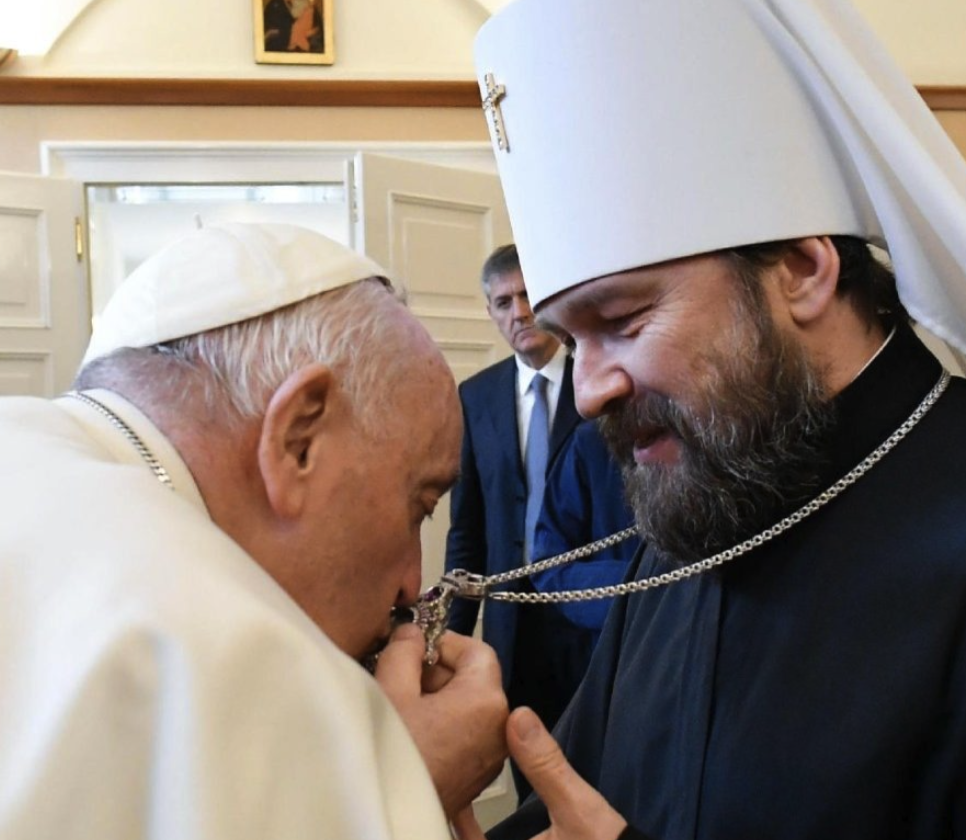
So, my gentle readers, please allow me to flash back to a recent news story that I intended to discuss, but travel got in the way. This was a story that may or may not have been important, but we really don’t know because it centered on a private meeting between Pope Francis and a very symbolic Russian Orthodox leader.

Why to I say that Metropolitan Hilarion of Budapest is a highly”symbolic” Orthodox leader, especially at this point in the hellish conflict between Russia and Ukraine?

To explain my use of “symbolic,” we need to look at the Associated Press story that ran with this headline: “Pope in Hungary meets with Ukrainian refugees, Russian envoy.”

Ah, but was Metropolitan Hilarion a “Russian envoy,” in this case? Hold that thought, because things get more complex in the AP lede:

BUDAPEST, Hungary (AP) — Pope Francis plunged into both sides of Russia’s war with Ukraine on Saturday, greeting some of the 2.5 million Ukrainian refugees who have fled across the border to Hungary during a public prayer service and then meeting privately with an envoy of the Russian Orthodox Church that has strongly supported the war.

First, an important point of grammar in the final clause of that sentence, as in “meeting privately with an envoy of the Russian Orthodox Church that has strongly supported the war.” I added the bold italics, stressing that this is “that,” rather than “who.”

As we will see, it appears that the AP team covering this event knew little or nothing about the recent personal history of Hilarion. Then again, AP may have — for for some reason — chosen to omit interesting and potentially important information.

Hold that thought (again), as we read some material that appears later in this story:

Immediately after greeting and encouraging the refugees, Francis … met with the Russian Orthodox Church’s representative in Hungary, Metropolitan Hilarion, who developed close relations with the Vatican during his years as the Russian church’s foreign minister. The Vatican said the 20-minute meeting at the Holy See’s embassy in Budapest was “cordial.”

The Russian church’s strong support for the Kremlin’s war has rankled the Vatican and prevented a second papal meeting with Patriarch Kirill, the head of the Russian Orthodox Church and an ally of Russian President Vladimir Putin.


Please respect our Commenting Policy

View from Rome: Italian press aims to inform, but loves tabloid-style Vatican scandals

View from Rome: Italian press aims to inform, but loves tabloid-style Vatican scandals

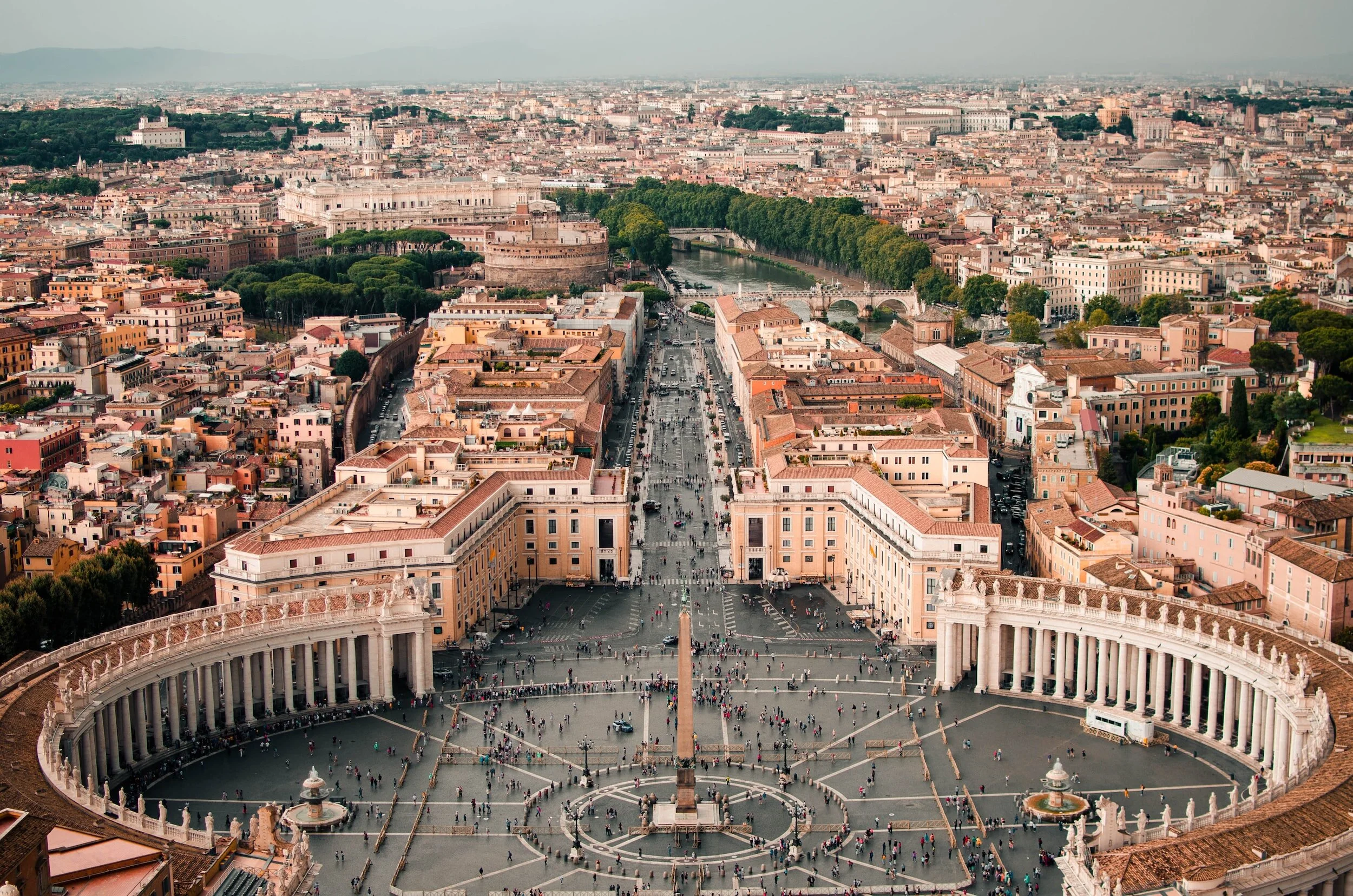
There’s nothing like walking down Via della Conciliazione in Rome. It’s a very long street, bustling with cars and tourists, that feeds into St. Peter’s Square at the Vatican. It’s a reminder of how big and imposing the Vatican can be, at least physically, in the increasingly secular West.

Italy, however, remains a Catholic nation, at least culturally, with reminders everywhere you look.

I am back in Italy for the first time since 2018. Unable to visit in recent years because of the pandemic, I am happy to be back to visit family and watch some soccer.   

My return to Italy also gives me the chance to observe how Italian journalists cover the Vatican and Pope Francis. What this close look reveals is a press fixated less on the doctrinal battles and culture-war issues we see in the American press. Instead, it’s all about international politics, the disappearance of a young girl (more on that later) and banking scandals.  

Let me explain. Italian media very much cover the papacy as a political force (it still very much is in this part of the world) and less of a religious one. As we say here at religion, many journalists believe religion is news to the degree that if affects politics.

Scandals involving the Holy See, even ones that are decades old and unsolved, continue to intrigue readers. It’s true that culture war issues were increasingly a factor in Italy’s elections that led to Giorgia Meloni becoming the country’s first female prime minister. It’s also true that Italian newspapers are not objective — many belong to political parties — but they don’t hide that fact from readers. That’s how the press works in Europe.

The big stories the Italian press have covered lately are the pope’s recent meeting with Ukraine’s President Vladimir Zelensky at the Vatican, the unsolved “Vatican Girl” scandal from 1983 and an ongoing trial that has revealed a series of financial scandals. Another big issue for the Vatican and Italy is falling birth rates, a story with strong religious overtones.

These stories transcend whatever political bias Italian newspapers bring to the table. They are seen as important to the country’s geo-political situation (in the case of Ukraine and birth rates).

The other stories reveal a Vatican that is very much involved in shadowy behavior — a corrupt institution that makes for attention-grabbing headlines meant to get clicks and sell newspapers. A murder mystery and alleged financial wrongdoing on the part of bishops will do that.


Please respect our Commenting Policy