Catholicism

Another Catholic order fades away: AP offers a familiar story, from only one point of view

Another Catholic order fades away: AP offers a familiar story, from only one point of view

The sad Catholic story format has become rather standardized by now.

First, you need a declining college, seminary, parish, local school or a religious order. Then (2) you add the details of the crisis and some brave quotes from the people who have decided to make hard decisions about the future — including their beliefs about the reasons for the decline.

Here’s the optional part: There may be (3) quotes from critics of the fading institution, as well as it’s supporters. This implies that there are Catholic issues being debated that are connected to this case study.

Now, I will argue that there needs to be (4) an additional factor, one other question, added to this increasingly familiar equation: Are there a few Catholic institutions of this kind that are surviving or even growing? The answer may be relevant to the big picture.

The Associated Press recently published a better-than-average story of this type, with this headline: “The end of an era for the Sisters of Charity of New York.” It offers the first two factors and at least admits that the third exists, with supporters mentioning the views of critics (perhaps even some in the order) — with AP declining to actually interview any of them. Here is the familiar overture:

NEW YORK (AP) — Through more than 200 years, the Sisters of Charity of New York nursed Civil War casualties, joined civil rights and anti-war demonstrations, cared for orphans, and taught countless children.

They’re proud of their history of selfless service. But they can’t ignore their current reality: The congregation continues to shrink and age — and not a single new sister has joined their U.S. group in more than 20 years.

After much prayer and contemplation, they made a tough decision that marked the beginning of the Catholic congregation’s end. They will no longer accept new members, and announced in an April 27 statement that they are now on a “path to completion.”

This leads to the required background material, with a Big Idea statement (which I have placed in bold type):

Please respect our Commenting Policy

Thinking about post-Christian Europe? The Pillar looks for God in the Netherlands

Thinking about post-Christian Europe? The Pillar looks for God in the Netherlands

There is this old saying that when America sneezes, Europe catches a cold — or something like that.

That’s true, these days, when it comes to many issues in economics and politics.

But I have always thought that this equation works the other way around when it comes to issues of culture, morality and faith. The trends we see in the European Union seem to make it across the Atlantic sooner or later. If this is true, European trends in Catholicism, and other faiths, are worth watching.

This brings us to another “think piece” for journalists (and news consumers), this time care of The Pillar, a must-follow independent news and commentary site covering many things Catholic. The headline: “Finding God in the Netherlands.”

But, before we get there, let’s pause to recall a famous 1969 radio interview, or sermon, offered by Father Joseph Ratzinger, who would eventually become Pope Benedict XVI. Readers will often find the full text under this title, “What Will the Church Look Like in 2000?” Here are two large chunks of this famous, many would say prophetic, material:

From the crisis of today the Church of tomorrow will emerge — a Church that has lost much. She will become small and will have to start afresh more or less from the beginning. She will no longer be able to inhabit many of the edifices she built in prosperity. As the number of her adherents diminishes, so it will lose many of her social privileges. In contrast to an earlier age, it will be seen much more as a voluntary society, entered only by free decision. As a small society, it will make much bigger demands on the initiative of her individual members.

There’s more, a few lines later:

The Church will be a more spiritual Church, not presuming upon a political mandate, flirting as little with the Left as with the Right. It will be hard going for the Church, for the process of crystallization and clarification will cost her much valuable energy. It will make her poor and cause her to become the Church of the meek. The process will be all the more arduous, for sectarian narrow-mindedness as well as pompous self-will will have to be shed. One may predict that all of this will take time.

This brings us to the long feature at The Pillar written by Edgar Beltran, a philosopher and political scientist from Maracaibo, Venezuela, who is doing Philosophy of Religion graduate work at Radboud University in Nijmegen, the Netherlands.


Please respect our Commenting Policy

Here is a strange question: Why doesn't the U.S. Census ask questions about religion?

Here is a strange question: Why doesn't the U.S. Census ask questions about religion?

QUESTION:

“Why doesn’t the U.S. Census ask about religion?”

THE RELIGION GUY’S ANSWER:

Most Americans may never have thought about this, an odd omission considering that religion is such an important aspect of society. Canada’s government, for example, has asked about religious affiliations since 1871.

But from the first once-a-decade U.S. Census conducted in 1790, the federal government has never directly asked all Americans about their religion (or lack thereof). Responses are anonymous, which should remove any sensitivities about answering such a question. The usual explanation is that “separation of church and state” forbids such questionining by a government agency, which is debatable.

Much of the history below draws upon an April 12  article about the Census by the Pew Research Center that has further detail for those interested, available by clicking here.

Instead of church-and-state entanglement, The Guy offers a different sort of objection to Census involvement. Religious affiliation or identity may be too complicated a matter for government nose-counters to deal with accurately.

Several non-government agencies with more expertise in this area collect standard data on Americans’ religion, with numbers that regularly conflict due to differing methods, assumptions and definitions.

One of the most important is Pew Research’s own Religious Landscape Study, last issued in 2014. www.pewresearch.org/religion/religious-landscape-study/Groundwork for the next round has already begun. Pew’s precision on religious factions and identities is vital because Protestant categories like “Lutheran” or “Presbyterian” mask big differences among groups with that label.

That sort of specificity is also provided in the “U.S. Religion Census” conducted each decade since 1990 by experts in religion statistics.


Please respect our Commenting Policy

Podcast: Religion ghosts in Pornhub's battle with Utah, Louisiana and red-state America?

Podcast: Religion ghosts in Pornhub's battle with Utah, Louisiana and red-state America?

When I first encountered David French, roughly two decades ago, he was a First Amendment expert known for his defense of religious liberty — for all kinds of people, including evangelicals in blue zip codes.

That was “conservative,” back then. Today, French has moved to the op-ed pages of The New York Times. I guess, in the ongoing Donald Trump era (#ALAS), that makes him what some would call a “New York Times conservative.” That isn’t a compliment.

I don’t always agree with French, but he remains a voice that old-school First Amendment liberals — folks who are often called “conservative” these days — will need to follow as conflicts continue to escalate on issues of free speech, religious liberty and freedom of association.

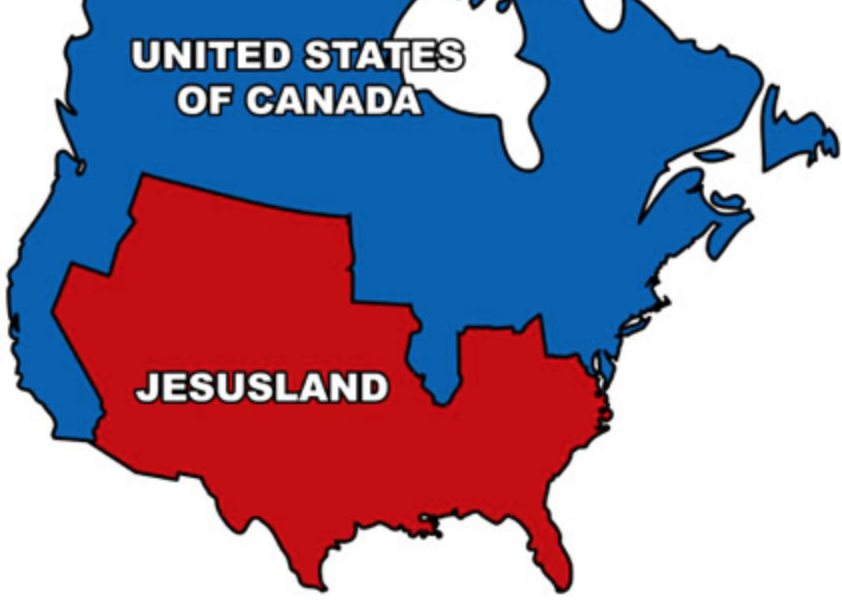
This brings me to a byte of French material that I inserted into this week’s “Crossroads” podcast (CLICK HERE to tune that in). These are the first two sentences of French’s must-read 2020 book “Divided We Fall: America’s Secession Threat and How to Restore Our Nation.” Here we go:

“It’s time for Americans to wake up to a fundamental reality: the continued unity of the United States cannot be guaranteed. At this moment in history, there is not a single important cultural, religious, political, or social force that is pulling Americans together more than it is pulling us apart.”  

A few lines later he adds this material, to which I alluded in the podcast (and in my recent Religion & Liberty essay on the state of American journalism):

“We lack a common popular culture. Depending on where we live and what we believe, we watch different kinds of television, we listen to different kinds of music, and we often watch different sports.

“We increasingly live separate from each other. … The geography that a person calls home, whether it is rural, exurban, suburban, or urban, is increasingly predictive of voting habits.”

The Internet, however, is everywhere. So is digital pornography.

Some people are more concerned about that than others and, yes, the level of concern seems to have something to do with religion and culture (and, thus, zip codes). This brings us to the Axios headline that inspired this podcast: “Pornhub blocks access in Utah in protest of new age verification law.”

The religion angle? Well, we are talking about politics in Utah. Here is some of that Axios news-you-can-use information:

Driving the news: Pornhub.com now opens on devices in Utah with a message that states the company has "made the difficult decision to completely disable access to our website in Utah."


Please respect our Commenting Policy

Repeat after me: White Catholics voting in 2004. White Catholics voting in 2024 ...

Repeat after me: White Catholics voting in 2004. White Catholics voting in 2024 ...

The topic of this Memo will not surprise readers.

It’s time to focus on the U.S. Catholic vote in 2024, following up a prior Memo assessing religion angles with Donald Trump’s prospects. The Guy once again advises journalists and other observers that Catholics are more pivotal politically than unbudgeable Democrats such as Black Protestants, non-Orthodox Jews and non-religious Americans.

Ditto with the long-running lockstep Republican loyalty among white evangelical Protestants and Latter-day Saints, in national-level elections when they are pushed into a two-party vise. As for America’s other major religious bloc, the more liberal “Mainline” Protestants, they are nearly split down the middle, usually with slim Republican majorities, and they are declining in influence as memberships shrink.

The past generation saw two U.S. political earthquakes. With one, many Southern white Protestants left the Democrats, effectively ending that party’s “Solid South” that dated from the Civil War, Reconstruction and the New Deal eras. Earthquake No. 2 was the move of white (that is, non-Hispanic) Catholics away from Democratic identity that originated in 19th Century immigration, reinforced in the presidential nominations of Al Smith and John F. Kennedy (who won 78% of Catholic voters in 1960, according to Gallup).

Today, this chunk of the broadly defines “Catholic vote” provides pretty consistent and modest but all-important Republican majorities. The Pew Research Center reports they were evenly split between the two parties as recently as 1994, the year Republicans finally won the U.S. House after four decades of failure. By 2019 they identified as Republican by 57% (and weekly Mass attenders moreso) even though the G.O.P. has never nominated a Catholic. (Could Florida’s Ron DeSantis be the first?)

Around two-thirds of Hispanic Catholics have consistently identified as Democrats, but the media will want to closely monitor their float toward the G.O.P in certain regions, especially pivotal parts of Florida and Texas. Note that Pew newly reports that 67% of Hispanics identified as Catholic in 2010 but only 43% in 2022. The cause was not Protestant inroads, but a remarkable jump from 10% to 30% over a mere dozen years in those who lack religious identity.


Please respect our Commenting Policy

Elite editors often ignore Catholic stories, so why is St. Pope John Paul II a target?

Elite editors often ignore Catholic stories, so why is St. Pope John Paul II a target?

What is news? Who gets to define that term?

These are questions that I ask students when I teach journalism during their freshman year in college.

It sounds like a simple question — but increasingly an important one as we examine trends in recent religion coverage in the news media.

The bottom line: There is a trend where many religion stories — especially those regarding Catholicism — receive zero coverage whatsoever in the secular mainstream press. However, stories about evangelicals, Anglicans, Eastern Orthodoxy and other faiths have also vanished or never appeared in the first place.

When some issues do get coverage, it’s often because it has more to do with politics than debates about doctrine, theology or faith. Why?

That’s the key question.

It takes us back to the original question: What is news?

This trend includes Catholic stories that I have written about here — vandalism of churches/pro-life centers and the FBI spying on parishioners — and others that I have not regarding other faith traditions such as the split in the Anglican Communion.

All of these stories are news — “big” news, even. However, they clash with what left-leaning readers of major legacy news organizations want to see and hear in the publications that they support with their online clicks and subscription payments. That appears to affect a majority of elite editors and reporters (click here for tmatt’s Religion & Liberty manifesto on that topic).

Coverage of these stories either never happened or just vanished, like the manifesto of the Nashville school shooter. Regarding Catholic storylines, a recent First Things essay — written by a prominent American bishop — that all but accused a cardinal of heresy never drew any mainstream media ink.

Neither have the statements of a progressive cardinal who now heads the pro-life Vatican office who says he has no issue with euthanasia.


Please respect our Commenting Policy

Some Catholics still embrace confession, while many more ignore this sacrament

Some Catholics still embrace confession, while many more ignore this sacrament

In the movies, the penitent enters a confession booth, kneels, and whispers to a priest behind a lattice screen: "Forgive me father, for I have sinned."

This drama was, for centuries, at the center of Catholic life. But in recent decades, the number of Americans who go to confession has plunged to a shocking degree that church leaders have struggled to explain.

But Father David Michael Moses knows what happened during Holy Week this year, when he spent 65 hours "in the box" at his home parish, Christ the Good Shepherd in Spring, Texas, and at St. Joseph near downtown Houston. In all, heard 1167 confessions.

"We are talking about a lot of sin, and lots of grace," he said. "It's about offering people help and hope. In the end, Jesus wins all the battles that people bring with them into confession. That's what confession is all about."

The 29-year-old priest began hearing confessions at 6 a.m. on April 4, as Catholics made their way to nearby office towers. He continued until midnight, with a parish volunteer noting there were 100 people in line at 8 p.m. Another priest arrived two hours later, and everyone had an opportunity for the Sacrament of Penance.

"You keep thinking: 'Do I go slow and just do my best? Do I try to speed things up?' What you can't do is let anyone feel that they were turned away," said Father Moses, a Houston native who is the son of a Baptist mother and Lutheran father who converted to Catholicism.

Hearing confessions "is hard. It's exhausting. But there is nothing in the world that I would rather be doing, right now. This is what it means to be a priest. This is about salvation and the care of souls."

As recently as the 1950s and 1960s, researchers said about 80% of American Catholics went to confession at least once a year. A clear majority said the went once a month.

Then the numbers began falling -- sharply.


Please respect our Commenting Policy

Thinking about Bari Weiss, Twitter, evangelicals and New York Times op-ed doctrines

Thinking about Bari Weiss, Twitter, evangelicals and New York Times op-ed doctrines

Here’s a question for you: When it comes to defining the doctrines of blue-zip-America, which is more important — the news pages of The New York Times or the newspaper of record’s op-ed pages?

In the old days, I would have said the op-ed pages.

But that was back when most of the Times news desks were, to one degree or another, still part of (to one degree or another) the American Model of the Press (background in this .pdf file). That was certainly the case in the era of the late, great A.M. Rosenthal.

At this moment in time, there are signs of actual diversity — even tension — in the op-ed pages and maybe, just maybe, signs of a few glowing embers of editorial independence in the news papers.

But let’s still assume — as I argued in my Religion & Liberty essay, The Evolving Religion of Journalism — that the Times news operation is still operating as a niche-news, advocacy journalism publication anxious to please the new liberal, maybe illiberal, readers who pay cash for its content.

Let’s assume that the July, 2020, resignation letter posted by Bari “The Free Press” Weiss remains a must-read “think piece” for all news consumers. For those who need a refresh, as part of this “think piece” doubleheader, here are two key passages from that shot over the bow of the Gray Lady’s principalities and powers:

… [A] new consensus has emerged in the press, but perhaps especially at this paper: that truth isn’t a process of collective discovery, but an orthodoxy already known to an enlightened few whose job is to inform everyone else.

Twitter is not on the masthead of The New York Times. But Twitter has become its ultimate editor. As the ethics and mores of that platform have become those of the paper, the paper itself has increasingly become a kind of performance space. Stories are chosen and told in a way to satisfy the narrowest of audiences, rather than to allow a curious public to read about the world and then draw their own conclusions. I was always taught that journalists were charged with writing the first rough draft of history. Now, history itself is one more ephemeral thing molded to fit the needs of a predetermined narrative.

Here is another essential passage from this “read it all” classic. This comes after Weiss — a gay, Jewish, old-school First Amendment liberal — describes the in-house digital bullying that made her hit the exit door:


Please respect our Commenting Policy

'On Religion' column enters year 35: Demons, martyrs, violence and miracles in Colombia

'On Religion' column enters year 35: Demons, martyrs, violence and miracles in Colombia

In one of her first encounters with violence linked to the Revolutionary Armed Forces of Colombia (FARC), Deann Alford heard, or felt, a bullet pass and slam into a door frame, with shrapnel striking a nearby woman and child.

The future journalist was both shocked and inspired by her contacts with Christians caught in that land's toxic climate of paramilitary warfare, narcotrafficking and kidnappings. She struggled to grasp how someone like pilot Russell Martin Stendal, after years held for ransom, could forgive his kidnappers and then start a missionary effort to convert them.

"Without his months as their hostage, I'm convinced he never could have reached the FARC," wrote Alford, in "Victorious: The Impossible Path to Peace," her blunt memoir about religious freedom in Colombia.

Stendal, she added, "has forgiven all. But I have not. ... In my quarter-century as a journalist, I've written dozens of articles about Colombian guerrilla groups' crimes against Christians, ranging from extortion to murder. Many of these stories regard crimes of the FARC, typically threatening and abducting church workers, missionaries and pastors, extorting them with offers they could not refuse."

Eventually, Alford realized that it wasn't enough to cover Colombia with telephone calls, faxes and Internet connections. She would have to put "boots on the ground" and return. "But I didn't. I was afraid. No, that word is too mild. I was terrified. I let the risk of being killed and kidnapped keep me away."

Alford's bottom line: "I told the Lord I would go anywhere for him but Colombia."

But she returned and, over years of contacts, her fears mixed with frustration. After working in secular newsrooms, as well as Christian publications and wire services, she couldn't understand why more people -- journalists and religious leaders -- could not see the importance of the faith stories unfolding, decade after decade, in Colombia.

This is another example of an important theme woven into my work with this "On Religion" column, with this week marking the start of my 35th year. Simply stated, many journalists do not "get" religion, in terms of grasping the role faith plays in many important events and trends stories.

But Alford was dealing with an even more complex equation. Yes, many editors fail to value religion-news coverage. But it's also true that many Americans -- including people in pews -- do not value coverage of international news. Thus, it's hard to imagine a tougher sell in today's media marketplace than coverage of religion news on the other side of the world.


Please respect our Commenting Policy