Catholicism

Hot megachurch question: 'Why have many worshippers stopped singing in church'?

Hot megachurch question: 'Why have many worshippers stopped singing in church'?

QUESTION:

“Why have many worshippers stopped singing in church?”

THE RELIGION GUY’S ANSWER:

The question in that headline accompanied a provocative article about U.S. Protestant church trends that The Guy will turn to in a moment. The answer is important, and it’s quite obvious to observers of the long-running “worship wars” that are about far more than guitars and drums supplanting pipe organs and hymnals.

(For Catholicism’s parallel debate, check out the lively book “Why Catholics Can’t Sing” in the revised edition subtitled “With New Grand Conclusions and Good Advice”(!). Author Thomas Day, retired music department chair at Rhode Island’s Salve Regina University, laments destructive inroads of popular culture.)

The headline question accompanied this April piece on GetReligion.org by its editor Terry “tmatt” Mattingly: That might suggest slant from a boyhood Southern Baptist turned (guitar playing) Eastern Orthodox. However, Mattingly was not promoting his own liturgical preference, but reporting concerns raised by Kenny Lamm, the worship strategist for the Southern Baptists’ North Carolina state convention, who leads workshops nationwide.

Lamm recently posed these issues on his website in response to a pre-Easter e-mail from a frustrated man who’s been searching for a new church to join and visited one possibility four weeks in a row. Here’s what he experienced there.

Programmed lighting that blinds the “audience” (notably, not “congregation” or “worshippers”) in a pitch black room so you cannot see your fellow Christians. Haze machines. Unfamiliar songs “we can’t follow” with “unmemorable” melodies that leap uncomfortably, and with a vocal range running so high “the average singer” cannot reach the notes (a la the National Anthem!). Amplified instruments so loud they bury the sloppily dressed singers on stage and far moreso those out in the seats, and make the ears hurt (earplugs are kindly provided in the lobby).

Result: “We did not see one person singing — not one.”


Please respect our Commenting Policy

Has Donald Trump won nomination already? Careful. And keep a hawkeye on Iowa ...

Has Donald Trump won nomination already? Careful. And keep a hawkeye on Iowa ...

In nationwide polls, Donald Trump has defied multiple legal snarls to pad his already healthy margin over potential challenger Ron DeSantis for the Republican nomination. So far, those two swamp all other possible names, such as Nikki Haley.

As for state polling, South Carolina numbers last week from Winthrop University have Trump at 41% and DeSantis 20%, while the two locals got only 18% (Haley), and 7% (Tim Scott). Likewise in New Hampshire with its first primary, where a St. Anselm College poll in late March reported Trump 42%, DeSantis 29%, popular Governor Chris Sununu a mere 14% and Haley 4%.

Reporters on the politics, religion, and religion-and-politics beats should especially keep a hawkeye (so to speak) on Iowa, with its crucial first-in-the-nation caucus next January — turf already well-trod by GOP hopefuls. An April 4 poll of likely G.O.P. caucus-goers by J.L. Partners shows Trump 41%, DeSantis 26%, and Haley a 5% also-ran.


Please respect our Commenting Policy

FBI war on 'rad trad' Catholics: Where's the outrage (or even fairness) in press coverage?

FBI war on 'rad trad' Catholics: Where's the outrage (or even fairness) in press coverage?

There are several factors that, when put together, make an event or trend a news story. 

The first is that it is new. It’s not a coincidence that the first three letters of the word news helps to form the word “new.”

Then there’s timing. Not just “what,” but also “when” something happens makes it newsworthy. “What” and “when” are essential to the five W’s (which also includes “where,” “who” and “why”) that reporters and editors worry most when determining news coverage.

The inability for certain types of stories to register with the secular press, especially legacy media, is yet another sign of the political, cultural and moral divisions in our society and the dying American model of the press. 

While this space is very much dedicated to critiquing news coverage of Catholic issues and those involving Catholics, it is very difficult to do so when there is little to no coverage of important Catholic stories by a very sizable chunk of the American media ecosystem. 

This takes us to a trio of stories involving the federal government and the Catholic church that took place during the first half of this month. At a time of year where the mainstream media is seeking Christian storylines to coincide with Lent, Holy Week and Easter Sunday (beyond photos of elaborate hats), the three stories I am about to dissect here drew very little mainstream media attention.

Instead, it was the Catholic press (once again!) and “conservative” secular media that did the bulk of the reporting on, for my first example, the issue regarding the decision by Walter Reed Hospital to drop a contract for Franciscan priests to provide pastoral care of patients and, instead, hiring a secular firm to oversee those same services going forward. Try to imagine “secular” Last Rites for Catholics?

The second was the decision by the Department of Justice to recommend zero jail time in a plea deal involving a suspect charged with destruction of property at a Catholic church in Washington last year.

Finally, there were, according to documents, traditional Catholics who were targeted by the FBI because they could be considered domestic terrorists.


Please respect our Commenting Policy

Plug-In: Losing their religion -- shape of Latino Catholic population keeps changing in America

Plug-In: Losing their religion -- shape of Latino Catholic population keeps changing in America

LANCASTER, Pa. — Greetings from Amish country.

I wrote this while in Pennsylvania for the Evangelical Press Association’s 2023 Christian Media Convention.

Let’s check out the best reads and top headlines in the world of faith.

What to know: The big story

A declining demographic: Once upon a time in America, the phrase “Latino Catholic” seemed almost superfluous.

However, new research released this week details just how much that has changed.

The Wall Street Journal’s Francis X. Rocca reports:

The study by the Pew Research Center found that the percentage of Catholic Latinos fell to 43% in 2022 from 67% in 2010. The share of evangelical Protestants among U.S. Latinos remained relatively stable at 15%, compared with 12%. But the proportion of Latinos with no religious affiliation is now up to 30% from 10%, bringing it to about the same level as that of the U.S. population as a whole.

The tendency to identify as atheist, agnostic or “nothing in particular” is especially strong among young Latinos, as with young Americans in general. About half of U.S. Latinos ages 18 to 29 identify themselves that way.

Crux’s John Lavenburg notes:

Even with the decreases, Latinos are about twice as likely as U.S. adults overall to identify as Catholic. However, the data within that 43 percent shows the potential impacts of a secularized U.S. culture on Latino Catholics, and paints a bleak picture for the future if the trends continue.

Political angle: The Washington Times’ Mark A. Kellner suggests that evangelical Hispanics — despite “relatively stable” numbers — have a rising profile:

This is due in part, the research group said, to the political activism of some evangelical churches, but also because “a rising share of Latino voters” have cast their ballots for Republican candidates in recent elections.

Religion News Service’s Alejandra Molina cites “the clergy sexual abuse scandal, a lack of LGBTQ inclusivity and the rule that women can’t be priests” as reasons Latinos are leaving the Catholic Church.


Please respect our Commenting Policy

Podcast: That Baltimore Catholic clergy sexual-abuse report is a big, but complex, story

Podcast: That Baltimore Catholic clergy sexual-abuse report is a big, but complex, story

The inevitable clergy sexual-abuse report from the Archdiocese of Baltimore is a major news story, for legions of valid reasons.

Baltimore is this nation’s “premier see,” the oldest diocese in the United States. This city at the heart of a once-thriving Catholic region that now in a demographic death-dive that is extreme, even by the standards of 21st century America.

To move closer to issues discussed in this week’s “Crossroads” podcast (click here to tune that in), we are also talking about the city and Catholic culture in which the Sister Catherine Cesnik vanished in November of 1969. This is the murdered nun who left behind friends, colleagues and former female students who were convinced that she was about to blow the whistle on serial abuser Father Joseph Maskell, one of the villains at the heart of the famous Netflix who-done-it “The Keepers.”

Yes, the former chaplain at the famous (now closed) Keough High School was mentioned 200 times in the 450-page Maryland Attorney General report on child sexual abuse by clergy (and others) in the Archdiocese of Baltimore.

But here is the key point that I want to make — as part of a broader discussion of the hellish, I would argue demonic, sexual-abuse sins and crimes being committed against children, teens and adults in many different secular and religious institutions. Most journalists see this abuse crisis through a specific lens, and it’s a narrow Catholic lens with events beginning with the The Boston Globe and it’s pivotal Spotlight investigations that went public in 2002.

But, as “The Keepers” series on Netflix makes clear, Father Maskell had already abused children in Baltimore, abuse that was reported to superiors, before he was transferred over to Keough.

Note that this was long before Father Gilbert Gauthe was assigned to St. John the Evangelist Catholic Church in Henry, La., where he began abusing young boys — creating a landmark 1984 case that opened the modern era of media coverage of clergy sexual abuse in America. That media coverage took place early in my own journalism career and I’ve been covering this story ever since.

The whole point of this week’s podcast is that journalists need to think all this over. Do we want to keep painting the sexual abuse of children, teens and adults as a “Catholic” story that began a decade or two ago, or do we want to broaden the lens and look at the bigger picture — which would be an even bigger, more important and, yes, more difficult story?


Please respect our Commenting Policy

Catholicism's internal cracks go public with Cardinal Robert McElroy ban on EWTN

Catholicism's internal cracks go public with Cardinal Robert McElroy ban on EWTN

It should come as no surprise to anyone that politicians don’t much like the press. This isn’t a shocking statement to anyone old enough to remember President Richard Nixon and Watergate.

Nixon, of course, wasn’t alone. A watchdog press has ran afoul of many presidents, including Ronald Reagan, Bill Clinton, Barack Obama and Donald Trump. This last one most of all.

In Catholicism, popes have also been media targets. Popes, compared to presidents, have been more gracious when speaking of the press. That even goes for the hyper-aggressive Italian media and their daily Vatican coverage.

As the left-right political divide widens, while many journalists working for mainstream publications abandon objectivity, so have the Catholic left-right doctrinal feuds. Francis’ papacy, in fact, has been plagued by it. Mainstream news coverage, for those who read this space, know that readers are increasingly fed narratives over reality.

The Catholic press operates differently. Those on the left wish to reform the church. Those on the right want to uphold and preserve centuries-old doctrines. Catholic media, depending where the publication or TV station falls on the doctrinal spectrum, isn’t governed by objectivity but by church teachings. This is where the conflict arises and when culture war battles within the church — and society at large — can manifest themselves.

This is an internecine battle among members of the Catholic hierarchy. In the crosshairs is EWTN. The media empire, founded by Mother Angelica in 1980, is a news organization that does all of its reporting through the lens of traditional Catholic teaching. It’s the 1992 Catholic Catechism network.

That frequently comes into direct conflict with the words and actions of Pope Francis’ strongest supporters, when dealing with ministry to LGBTQ Catholics, for example, and other culture-war issues.

Just as Obama went after Fox News and Trump against most everyone (even Fox News following the 2020 presidential election), we now have Catholic cardinals openly criticizing Catholic media. The recent case involving San Diego Cardinal Robert McElroy is an example of Catholicism’s internal divisions playing out in Catholic media.

McElroy’s target is EWTN, one of the largest Catholic news organization in the world.


Please respect our Commenting Policy

Thinking about AI and faith: Can a computer 'get' what it means to be truly human?

Thinking about AI and faith: Can a computer 'get' what it means to be truly human?

Every now and then, I get an email from Ira Rifkin, who for many years wrote “Global Wire” posts for GetReligion about journalism issues in international events and trends. He signed off about half a year ago with an edgy post called, “Ciao, GetReligion: Thanks, all, for my tenure. Critic that I am, though, here are some final thoughts.”

With his unique mix of Jewish and Buddhist disciplines, Rifkin was also a keen observer of new ideas and concepts linked to what mass media tends to call “spirituality,” as opposed to more conventional forms of religious faith.

Several weeks ago, he send me a URL for a Los Angeles Times feature that ran with this headline: “Can religion save us from artificial intelligence?

I immediately put it into my “think piece” file, but held on to it for a while to put some cushion between it and my podcast/post with this title: “When is preaching a 'news' story? Ah, the temptation of ChatGPT sermons.” Here is a byte of that:

Right now, one of the hot topics in the public square is the rise of artificial intelligence and, to be specific, the ChatGPT website. Thus, this week’s “Crossroads” podcast (click here to tune that in) focused on several “newsy” angles of the recent Associated Press story that ran with the headline, “Pastors’ view: Sermons written by ChatGPT will have no soul.”

During the podcast, I riffed on the whole issue that different kinds of technology can shape the content of communications in different ways. If ChatGPT sermons have a sense of “soul,” it would be a “soul” that is defined by the creator of the software and the tech platform.

The Los Angeles Times story that Rifkin sent me opens with an AI sermon hook — but the issue at the heart of the story is much, much bigger than that.

Nevertheless, it helps to start this “think piece” recommendation with that feature’s overture:

Sometimes Rabbi Joshua Franklin knows exactly what he wants to talk about in his weekly Shabbat sermons — other times, not so much. It was on one of those not-so-much days on a cold afternoon in late December that the spiritual leader of the Jewish Center of the Hamptons decided to turn to artificial intelligence.


Please respect our Commenting Policy

Time to step up the mainstream coverage of transgender debates within U.S. religion

Time to step up the mainstream coverage of transgender debates within U.S. religion

News about transgender issues tends to deal with women’s athletic competitions and shelters, pronouns, girls’ locker rooms, public school sex education, competing rights claims (with parents on both sides of the dates) and resulting political and legal disputes.

There’s been less coverage of medical morality, especially concerning under-aged youths, and hardly any about how various religious groups understand gender and why.

Journalists should take notice when four vigorous arguments on the religious aspect appear in the space of just six days, as follows.

March 20: The leaders of the U.S. Conference of Catholic Bishops authorized publication (.pdf here) of an important but little-reported transgender policy. It declares that Catholic health-care agencies “must not” perform or help develop chemical or surgical procedures to transform a person’s bodily characteristics into those of the opposite sex.

The stated reasons are theological and moral. Key quotes: “We did not create human nature; it is a gift from a loving Creator,” so human dignity requires “genuine respect for this created order.” Sexual differentiation is a reality “willed by God” and a “ fundamental aspect of existence as a human being.”

Therefore, surgical and chemical techniques to switch a patient’s sexual characteristics, or puberty blockers to halt youths’ natural development, “are not morally justified.” To the bishops, such interventions are “injurious to the true flourishing of the human person” and violate doctors’ basic moral maxim to “do no harm.”


Please respect our Commenting Policy

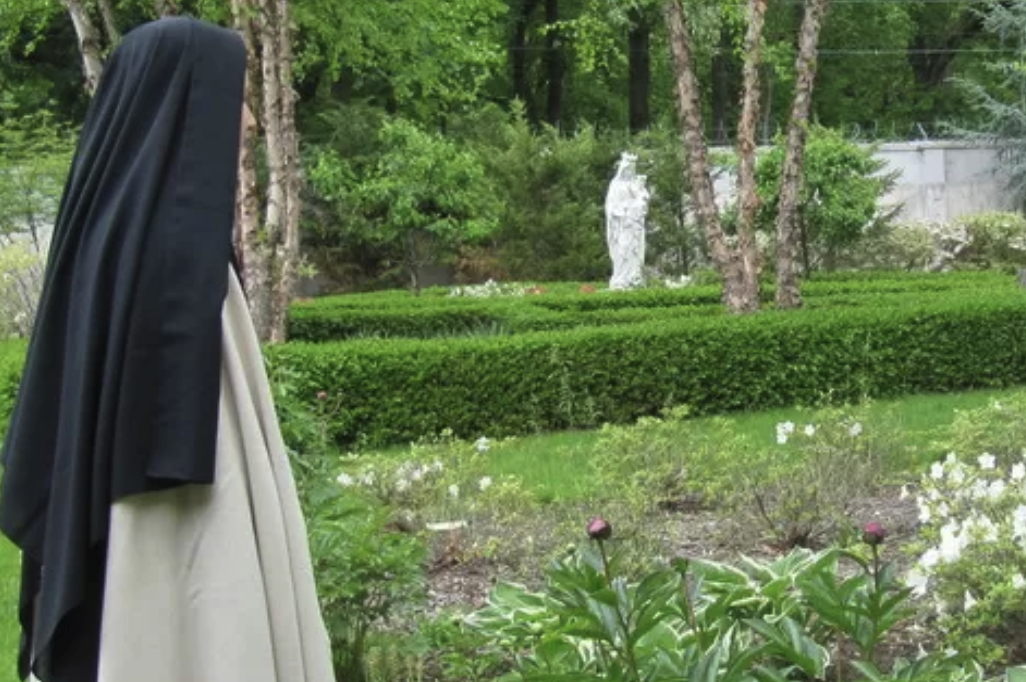
'The Nuns Who Left Brooklyn' -- How many religious details did this Times story need?

'The Nuns Who Left Brooklyn' -- How many religious details did this Times story need?

The headline of this New York Times story was totally “religion story” — “The Nuns Who Left Brooklyn.

Thus, I heard from people who wanted to know what your GetReligionistas thought of this religion story.

The content of this news feature was, quite frankly, totally “metro desk” (people who have worked in newsrooms will understand that term). This is, let me stress, not a complaint. The Times story is packed with relevant, even colorful local news details about a sad situation that developed in Brooklyn.

Also, religion-beat pros will not that it is hard to do a story about the details in the lives of cloistered Catholic women religious, since they are not going to sit down for interviews and talk about the details of their lives and beliefs. The story has some crucial details provided by others that tell readers some of what they need to know.

Would I have appreciated a few more details about this order and where it fits into the current drama of Catholic monastic life in America? Sure. Was that an essential part of this particular story? I’ll admit that the answer to that is: “Not really.” Hold that thought. Meanwhile, here is the overture:

The 10 Carmelite nuns of Cypress Hills, cloistered in Brooklyn for almost 20 years, decided to leave New York City after much contemplation.

As much as they tried, the sisters of the Monastery of Our Lady of Mount Carmel and St. Joseph, devotees of silence and prayer who rarely left the confines of the cloister, could no longer ignore what was going on outside. The loud celebrations in an adjacent park became a bit too much. And when a beloved lay volunteer was murdered, the sisters were shaken deeply.

The last straw came in 2020, that first pandemic summer, with the explosion of late-night partying on their street involving cars with powerful speakers, said Mother Ana Maria, who spoke on behalf of the monastery, which used to be on Highland Boulevard.

“Our walls shook and our windows shattered,” she said. The sisters wondered whether the blaring music well past midnight was aimed directly at them.

Shattered windows? That’s some loud partying. That leads to a poignant detail, care of the mother superior who spoke for the nuns.

Mother Ana Maria, who, along with her sisters, begins each day at 5 a.m. The nuns pushed their beds away from the walls of their cells — the small rooms where they slept — but still felt unsafe, she said.


Please respect our Commenting Policy