Catholicism

Debates in England about free speech and religion veer into 'thoughtcrimes' zone

Debates in England about free speech and religion veer into 'thoughtcrimes' zone

Wherever he goes, Father Sean Gough prays for the people he encounters -- sometimes out loud and often silently.

This isn't unusual, since he is a priest in the Catholic Archdiocese of Birmingham, England. Gough was praying silently when he was arrested near an abortion facility in a Public Spaces Protection Order protected zone, while holding a "Praying for free speech" sign. His car was parked nearby, with a small "unborn lives matter" bumper sticker.

The priest was charged with "intimidating service users," although the facility was closed at the time. The charges were later dropped.

Officers also raised questions about his clothing.

"When interrogated by police for silently praying in the censorship zone, they challenged me for wearing a cassock," said Gough, on Twitter. "When do I normally wear one? Don't I realize it'll be perceived as intimidating? These are not questions a person should be asked under caution in a democracy!"

Clause 11 of a recent Public Order Bill -- waiting to be signed into law -- would criminalize all forms of "influence" inside a 15-meter "buffer zone" around every abortion facility in England and Wales. An amendment to permit silent prayer and consensual conversations failed by a 116-299 vote in Parliament.

After years of debates about religious liberty and freedom of speech, recent events in England have veered into what activists and politicos have described as "thoughtcrimes," a term used in George Orwell's dystopian novel "1984" to describe thoughts that violate ruling-party dogmas.

In the U.S. House of Representatives, eight Republicans circulated a letter claiming it's "imperative that the U.S. speak boldly and clearly to its friend when the U.K. has failed to protect unalienable rights." The document condemned policies that "persecute Christians and other pro-life citizens for thoughtcrimes."
Please respect our Commenting Policy

How the press (mainstream and Catholic) chose to cover Francis' pontificate turning 10

How the press (mainstream and Catholic) chose to cover Francis' pontificate turning 10

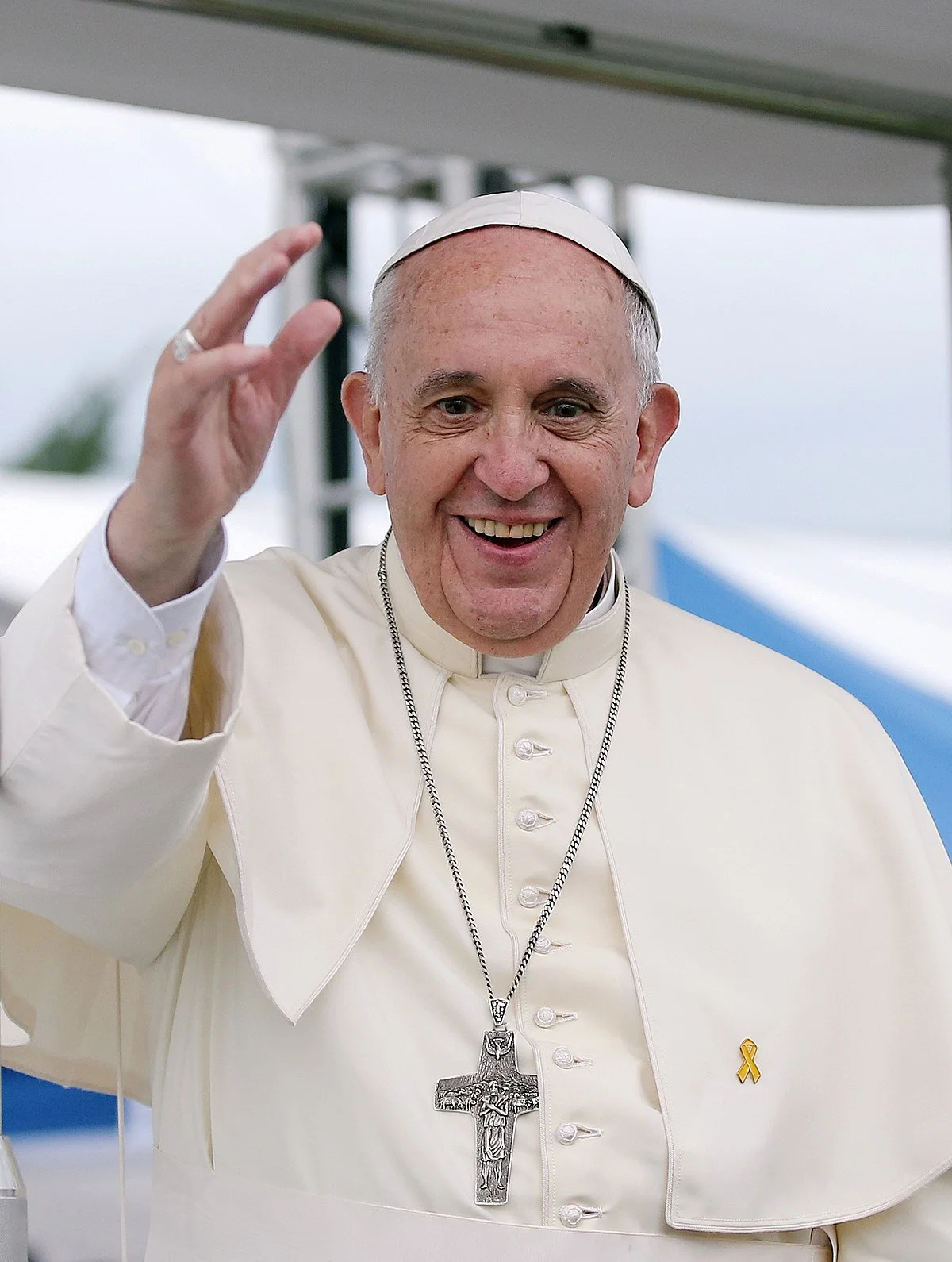
Pope Francis’ pontificate turned 10 years old last week and — like with an anniversary or milestone — became a time for the news media to reflect and reassess.

What will continue to matter — at least what I will be keeping an eye on — is how this pope will be covered both by the mainstream and Catholic press going forward. And, once again, news coverage of this pope often says as much about the journalists doing the coverage as it does about Pope Francis.

I wrote my own piece for Religion Unplugged on Francis reaching the milestone.

This is how I set up that feature:

The former Cardinal Jorge Mario Bergoglio, who was born in Argentina and is of Italian descent, was elected the 266th pope on March 13, 2013. It marked the first time a pontiff from South America has held the position. 

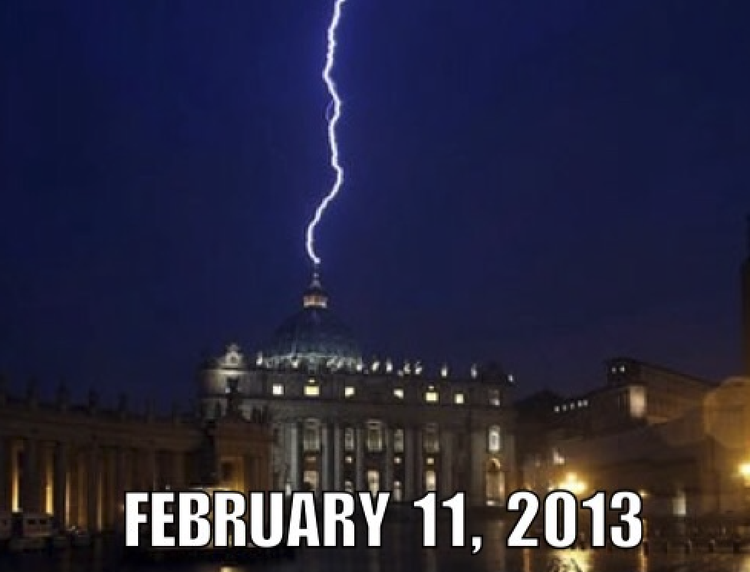
Following the resignation of Pope Benedict XVI in 2013, a papal conclave elected Bergoglio as his successor. He chose Francis as his papal name in honor of Saint Francis of Assisi.

Over that span of time, Catholics, especially in the West, have become much more polarized around political lines, a trend that has exacerbated divisions among Catholics. The 86-year-old Pope Francis, on a great number of issues, has been seen as a polarizing force for his progressive stances on several issues.

In fact, the “polarizing force” this papacy has brought with it was the major theme throughout the much of the coverage regarding Francis’ 10th anniversary as head of the Catholic church. The question? Was the force put to good use?

The narrative over the past 10 years has been that Francis’ papacy has largely steered the church leftward, in terms of doctrine and culture, after more than three decades of conservative leadership under Popes John Paul II and Benedict XVI.

But ambiguity has been the main issue with what this pope says, as opposed to what he does.


Please respect our Commenting Policy

How a veteran Catholic congressman evolved into a political heretic

How a veteran Catholic congressman evolved into a political heretic

WASHINGTON — As a veteran Chicago-land Democrat, Rep. Daniel Lipinksi knew what to expect when facing newspaper editors during pre-election endorsement season -- hard questions about his support for centuries of Catholic teachings on abortion.

But the Chicago Sun-Times stressed a different question in 2020 -- same-sex marriage. Lipinski said the Supreme Court had settled that issue, so he didn't expect to face it in Congress. The follow-up was blunt and personal: But do YOU support legalized same-sex marriage?

Lipinski said he supported his church's teachings on marriage and sexuality.

"They didn't just see themselves as newspaper editors interviewing candidates in a political race. ... They saw themselves as inquisitors seeking an admission of heresy," said Lipinski, who lost that close primary race with a rival backed by liberal Democrats.

During his 16 years in Congress, Lipinski voted with his party 90% of the time and his convictions never changed, especially on economic and labor issues. Nevertheless, by 2018 New York magazine had floated this headline: "House Democratic Leaders Rally to Defend Their Illinois Heretic."

By 2020, he had reached "political leper" status, in part because of social-media attacks on his beliefs that bled into mainstream news, he said, addressing the recent "Journalism in a Post-Truth World" conference in Washington, D.C. The event was sponsored by Franciscan University in Steubenville, Ohio, and the Eternal Word Television Network.

The old days of tough questions and bipartisan debate were one thing, said Lipinski. At this point, American politics have stormed past tribalism into bitter sectarianism, with politicos, activists and journalists embracing "partisanship as a fundamentalist pseudo-religion" that strictly defines good and evil.

What is happening? In the past two decades, he noted, researchers have documented a stunning rise in "religiously unaffiliated" Americans. In 2020, Gallup reported that membership in houses of worship sank to 47% -- below the 50% mark for the first time. In 1999, that number was 70%.

It's possible, said Lipinski, that many citizens are now searching for "for meaning, or a mission, or truth, somewhere else," which only raises the stakes in public life.

"Partisanship has become not just a social identity, but a primary identity considered to be more important than any other," he said. "We all identify ourselves as belonging to different groups -- our families, our religions, our favorite sports teams, our professions. But more and more Americans are defining who they are by the political parties that they choose."


Please respect our Commenting Policy

Podcast: Is 'post-truth America' a right-wing or a left-wing term? Please discuss

Podcast: Is 'post-truth America' a right-wing or a left-wing term? Please discuss

Please ponder this pair of true or false questions.

When religious, cultural and political liberals complained about Donald Trump promoting his own “alternative facts” for use in the mainstream press, did they have a valid point? Was it fair game for them to apply the academic term “post-truth” in this case?

When religious, cultural and political conservatives complained about Democrats and their Big Tech-Big Media allies burying coverage of the Hunter Biden laptop scandal, funders of Antifa, origin debates about COVID-19 and Jane’s Revenge attacks on churches and crisis-pregnancy centers, did they have a valid point? Was it fair game for them to apply the academic term “post-truth” in this case?

I would argue that the correct answer is “yes,” in both cases.

Debates about the meaning of the term “post-truth” were at the heart of this week’s “Crossroads” podcast (click here to tune that in). There was a logical reason for that, since Clemente Lisi and I were speakers in a March 10-11 conference in Washington, D.C., with this title: “Journalism in a Post-Truth World.” The conference was sponsored by Franciscan University of Steubenville and the Eternal Word Television Network.

The Franciscan University press release afterwards noted that the participants included journalists from the “National Catholic Register, The Washington Post, OSV News, Fox News, CNN, RealClearPolitics, The Catholic Herald, The Spectator, Washington Examiner, National Review, The Daily Signal, Catholic News Agency, The Daily Caller, and GetReligion.” Well, I had requested that I be identified as a columnist with the Universal press syndicate, but I wear several hats.

That’s a list that clearly leans to newsrooms on the cultural right, but with some solid mainstream voices as well. For example, I was on a panel about Catholic news coverage with the (in my eyes) legendary religion-beat pro Ann Rodgers, best known for several decades with the Pittsburgh Press and Pittsburgh Post-Gazette. Also, click here for a Lisi post at Religion Unplugged about his presentation.

It’s safe to say that someone was there from the National Catholic Reporter, because of this headline in that progressive Catholic publication: “EWTN-sponsored conference on journalism embraces right-wing 'post-truth' narrative.


Please respect our Commenting Policy

Plug-In: At least six dead, plus unborn child, in Jehovah's Witnesses shooting In Germany

Plug-In: At least six dead, plus unborn child, in Jehovah's Witnesses shooting In Germany

Good morning, Weekend Plug-in readers!

Among the stories we’re following this week: A South Carolina church held a prayer vigil after two members of its community were abducted and killed by a Mexican drug cartel, as WPDE-TV’s Jenna Herazo reports.

Here in my home state of Oklahoma, voters trounced — somewhat surprisingly — a proposal to legalize recreational marijuana. Given the millions of dollars spent by the pro-marijuana side, a faith coalition leader who fought the initiative calls the outcome a “David beats Goliath” victory. I report that story at ReligionUnplugged.com.

Every weekend, Plug-in rounds up the best reads and top headlines in the world of faith.

We start this edition with tragic news out of Germany.

What to Know: The Big Story

Mass shooting at house of worship: “A former member of the Jehovah’s Witnesses shot dead six people at a hall belonging to the congregation in the German city of Hamburg before killing himself after police arrived, authorities said Friday. Police said an unborn baby also died, without clarifying whether the baby’s mother was among the dead. Eight people were wounded, four of them seriously.”

That’s the lede at this hour from The Associated Press’ Pietro de Cristofaro and Geir Moulson.

The shooting is “a rare kind of attack in a country where gun ownership is severely restricted,” the Wall Street Journal’s Georgi Kantchev notes.

More from the Journal:

The Jehovah’s Witnesses in Germany association said the community was “deeply saddened by the horrific attack on its members.” 

Jehovah’s Witnesses, a Christian denomination, have some 175,000 members in Germany, including 3,800 in the state of Hamburg, according to the organization. 

The attack took place around 9 p.m. on Thursday at a Jehovah’s Witnesses Kingdom Hall building in the northern part of the city after a service.

Motive emerging: Authorities are investigating the background of the shooting, according to news reports.


Please respect our Commenting Policy

Got news? Concerning a boring AP story that ignored info about controversial cardinal

Got news? Concerning a boring AP story that ignored info about controversial cardinal

Want to read a really boring Associated Press news story?

You know, the kind of short hard-news, nothing-but-facts AP report in which an important person — Pope Francis, in this case — releases a list of appointees to some inside-baseball this or that, people who are either unknown or vaguely familiar to a dozen or so readers who are into that kind of thing?

In this case, one ends up with a boring headline — sure to appear in a few newspapers — that reads like this: “Pope renews cabinet of cardinal advisers, adds new members.” Here’s the riveting overture:

ROME (AP) — Pope Francis has renewed his cabinet of cardinal advisers from around the world, naming a handful of new members Tuesday and reconfirming others to help him run the Catholic Church.

Francis instituted the Council of Cardinals one month into his papacy, on April 13, 2013, with a primary goal of advising him on the reform of the Vatican bureaucracy. After nearly a decade of consultation, Francis issued a new blueprint for the Vatican bureaucracy last year.

Nevertheless, the Jesuit pope clearly appreciated the regular opportunities to consult with a small number of hand-picked cardinals representing the church on nearly every continent, and decided to keep the cabinet alive, albeit with some new members.

Now, would that story be a bit more interesting — “newsy” even — if it noted that one of the new members of this papal “inner ring” was a cardinal who, at this moment in time, may be the world’s most controversial prince of the church?

I mean, in this case we are talking about a cardinal who said the following, in an interview with KDA, a German news agency:

"The Church's positions on homosexual relationships as sinful are wrong. … I believe that the sociological and scientific foundation of this doctrine is no longer correct. It is time for a fundamental revision of Church teaching, and the way in which Pope Francis has spoken of homosexuality could lead to a change in doctrine. …


Please respect our Commenting Policy

Mainstream outlets ignore anti-Catholic angles in Merrick Garland's Senate testimony

Mainstream outlets ignore anti-Catholic angles in Merrick Garland's Senate testimony

It’s almost always news when a public official testifies before a congressional committee. Such was the case when Attorney General Merrick Garland faced the Senate Judiciary Committee. 

As expected, it was an important, and often heated, four hours of testimony that was highlighted by the back-and-forth exchanges between Garland and Republican senators on the panel. You can read Garland’s opening remarks on the DOJ website. 

Beyond his prepared remarks, there were plenty of potential storylines tied to religion that surfaced in the hearing. However, depending on which news organizations one follows, these storylines either made it into the news coverage or they were never mentioned. 

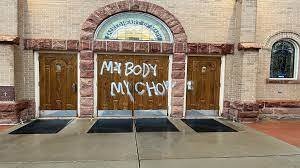
The Garland hearing comes at a time of heightened polarization, something made worse by the Supreme Court decision that rolled back the 1973 Roe v. Wade decision that legalized abortion. The aftermath of that decision has resulted in increased vandalism of Catholic churches, pro-life pregnancy centers and even a now-retracted FBI memo that targeted some traditional Catholics

The content of the coverage of the questions asked and the contents of Garland’s responses depended on what reporters, editors and news organizations deemed important. This has been the case for decades, but the shift has changed dramatically in more recent years as news organizations divide themselves into political camps depending on the beliefs of their faithful audiences

Did valid religion angles, especially those involving Catholics, make it into the coverage of national legacy media outlets? 

Here is a hint: Prayers by protestors at abortion facilities appear to be considered much more dangerous, and thus newsworthy, than vandalism, or even arson, at Catholic churches and crisis pregnancy centers. News coverage of this Senate hearing seemed to have been produced by journalists living in parallel universes. Once again, this is the dominant news trend in the Internet age.

Here is the top of the New York Times report on the Garland hearing: 

WASHINGTON — Republicans subjected Attorney General Merrick B. Garland to a four-hour grilling before the Senate Judiciary Committee on Wednesday, a harbinger of the fights that loom ahead as the party targets the Justice Department in the months leading up to the 2024 election. 


Please respect our Commenting Policy

Podcast: Zero elite press coverage of 'heresy' accusations against an American cardinal?

Podcast: Zero elite press coverage of 'heresy' accusations against an American cardinal?

The question at the heart of this week’s “Crossroads” podcast (click here to tune that in) was not whether Springfield (Ill.) Bishop Thomas Paprocki was on target with his First Things essay that all but accused San Diego Cardinal Robert McElroy of heresy.

The question was not whether Cardinal Jean-Claude Hollerich of Luxembourg — a strategic leader in the Vatican’s Synod on Synodality — was right when he said the church's teaching on homosexuality are “no longer correct,” and added, “I think it is time for a fundamental revision of the doctrine."

The question was not whether Chicago Cardinal Blase Cupich was correct when he suggested, in print, that priests should absolve Catholics who come to Confession, allowing them to receive Holy Communion, even if these individuals refuse to repent of behaviors that Catholic doctrine insists are sin.

The question was not what Pope Francis meant when he told bishops in the Congo, “Always. Always forgive in the Sacrament of Reconciliation” — even if there is confusion about whether penitents are repenting of their sins or not.

No, the journalism question discussed during this podcast was this: Why are these developments — especially that stunning “Imagining a Heretical Cardinal” essay by Paprocki — receiving (as of this morning) zero coverage in the mainstream press?

By the way, it’s important that Bishop Paprocki is the chairman-elect of the Canonical Affairs and Church Governance Committee of the United States Conference of Catholic Bishops.

It may also be relevant that, in 2017, Paprocki and McElroy clashed — in print — over the Springfield bishop’s decision not to allow Catholics to receive Holy Communion if they are openly living in same-sex marriages and, thus, rejecting centuries of Catholic doctrines on marriage and sex.

Why the lack of coverage? I have several theories.


Please respect our Commenting Policy

100 years ago this week, feisty Time magazine began changing the news game

100 years ago this week, feisty Time magazine began changing the news game

Friday, March 3, marks 100 years from the first issue date of Time magazine, self-described as “The Weekly News-Magazine.”

The feisty New York-based newcomer brought journalistic inventions that redefined what’s news and how it’s presented. When Time and other Time Inc. magazines were up for sale in 2018, an article in the rival New York Times bade farewell to “the pre-eminent media organization of the 20th Century.”

Here is a very obvious point of disclosure and personal privilege: The Guy worked there 1969-1998 as a field correspondent and Religion section writer.

Looking back, the magazine’s 75th anniversary spectacle converted Radio City Music Hall across the street into a banquet venue and invited every living person who’d ever appeared on its cover. The Rev. Billy Graham, say hello to Joe DiMaggio. President Bill Clinton, meet Lauren Bacall. You get the picture.

The current ownership, however, is low-key about the centennial. But Time’s survival is noteworthy in today’s harsh environment for print media, albeit with reduced circulation, budget, staffing and publishing frequency.

Then there is another important angle about the impact of Time in the news marketplace. News flash: Religion makes news!

Missionary Kid Henry Luce was the co-founder, and Time carried a religion news section each week, alongside other specialized “back of the book” sections like Press and Law -- subject areas that many dailies only covered with depth decades later.

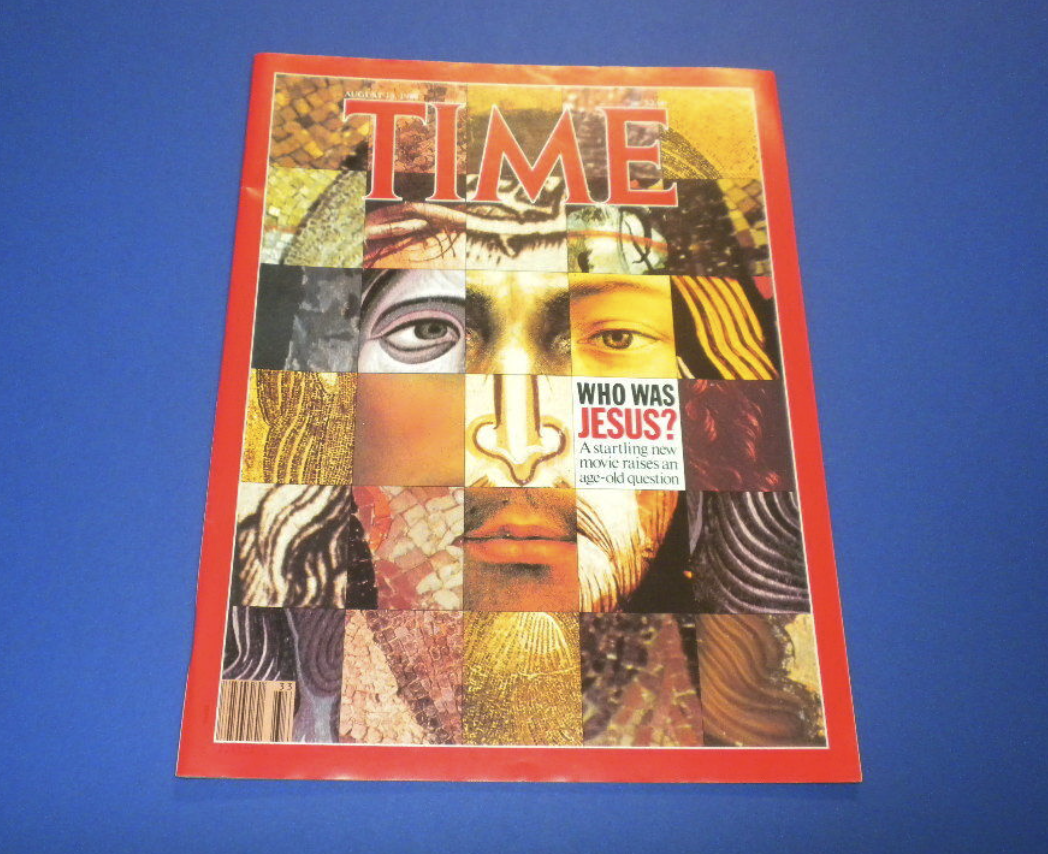
Attention-grabbing Time covers, coveted real estate for all fields, added renown to numerous religious writers and thinkers (e.g. C.S. Lewis, 1947), bureaucrats (Eugene Carson Blake, 1961) and activists (Mother Teresa, 1975).

Some readers may recall one cover in particular — the much-misunderstood black-hued “Is God Dead?” Holy Week cover in 1966, written anonymously (no bylines in those days) by John Elson. This talented scribe, a churchgoing Catholic, was not undermining faith but asking whether there were any limits to the era’s “theological strip-tease” among liberal Protestants and post-Protestants. That cover was, in other words, ahead of its time.


Please respect our Commenting Policy