Catholicism

Wait! Did this New Jersey news team mean to hint that Catholics are not 'Christians'?

Wait! Did this New Jersey news team mean to hint that Catholics are not 'Christians'?

Long ago, there was this radio and television superstar named Art Linkletter.

How long ago? Well, I thought of him as an old guy when I was a kid. In particular, I remember chatter about his bestseller — 50-plus years ago — with this title: “Kids Say the Darndest Things.” The idea was to collect things that children say that sound cute or even silly but, the more you think about them, these statements turn out to offer insights into life as we know it.

Why bring this up? Every now and then — once a month, maybe — I get an email from a reader offering a link to something strange that ran somewhere in a mainstream news or commentary publication (readers struggle to discern the difference, these days).

Often, the reader shares the material and then asks something like: “Are journalists really this stupid?” or “Do journalists really hate ________ this much?” The blank space in that equation will be filled with one of several different terms, such as “religious people,” “conservative Christians,” “traditional Catholics” or something else.

The link to Art Linkletter is that, from time to time, a reader — either wise, patient or cynical — will suggest that a specific example of journalists failing to “get religion” could simply be worth a chuckle, kind of a “Journalists Say the Darndest Things” take. But some readers will then pause and wonder if there is something else going on.

This brings us a recent feature at NJ.com that ran with the headline, “Ash Wednesday 2023: Can you eat eggs or meat? Can you drink coffee? A guide to fasting.” This website connects the work of several news organizations, such as The (Newark) Star-Ledger, The Times of Trenton, The South Jersey Times, etc. Here is the overture for this “news you can use” story:

On Ash Wednesday, you might see a Christian or a Catholic wearing smudged ashes on their forehead.

Maybe you are a practicing Christian and are fasting this Ash Wednesday, and you are wondering what you can and cannot eat on the first day of Lent. Here is what you need to know about this first day of Lent in most Christian denominations and the rules of fasting.

Read that first sentence again.


Please respect our Commenting Policy

Loaded question: Is gambling evil? That's a religion-beat hook in many states

Loaded question: Is gambling evil? That's a religion-beat hook in many states

THE QUESTION:

Is gambling evil?

THE RELIGION GUY’S ANSWER:

Analysts anticipated a record high cash haul from the Super Bowl with the explosion in legalized online sports betting. The big weekend produced several interesting articles about the pros and cons, the inroads and innovations, of America’s gambling industry.

The Wall Street Journal’s Barton Swaim mulled religious aspects under the arresting headline “Would Jesus Bet on the Super Bowl?” He said that for Jews and Christians the Bible is “less than explicit” in warnings and yet its moral teachings do raise questions about gambling.

Swaim sympathizes with theologians who oppose the desire to “get something for nothing,” accompanied by the attitude that work to earn necessary income “is a mostly unhealthy activity best avoided.” But he admitted that’s also the case when we inherit assets or the value of property increases regardless of our own efforts.

For Swaim, the key moral aspect is what gambling “reveals about the gambler,” especially desire or lust for wealth. The last of the Ten Commandments (Exodus 20:17) even forbids private inward thoughts of material desire or coveting, and Jesus warned in the Sermon on the Mount that “you cannot serve both God and money” (Matthew 6:24).

Yet another moral problem for Swaim is the fact that a certain portion of gamblers “will end up addicted and in financial and moral ruin.” More on that below.

Looking at Judaism, a Super weekend survey in The Forward noted that the late Rabbi Joseph Soloveitchik, the prime thinker for the “modern Orthodox” movement, denounced casino attendance and that’s the view of “pretty much every other authority” on Jewish law, before and since. Even the rabbis of Judaism’s liberal Reform branch have called gambling  “non-productive and threatening to the social fabric.” A noted Jewish  therapist says even seemingly innocent small bets can be a gateway to addiction.

Among Christians, there’s a notable split between tolerant Catholics and Protestants, who’ve been mostly hostile.


Please respect our Commenting Policy

Why you probably missed news about the FBI memo calling out 'radical traditionalist' Catholics

Why you probably missed news about the FBI memo calling out 'radical traditionalist' Catholics

The politicization of American society has affected a great number of institutions — from universities to major sports leagues to large corporations. Right now, there are a great many things that divide us as Americans.

The FBI has also become politicized. This is a belief that picked up momentum during Donald Trump’s presidency, but continues to exist now under the Joe Biden administration. If journalism is the place that you believe should shed a light on this painful paradox, then you’d be sadly mistaken.

Not only has the FBI possibly been politicized, but so has journalism, and we’re all poorer for it. A great example of this journalistic disconnect is an important story that “conservative” and “religious” media covered, while it was ignored by the vast majority of mainstream news outlets, including our culture’s most elite and powerful newsrooms.

The key question: Has the FBI decided that “radical” Catholics are dangerous and a threat to American public life?

On Feb. 8, a website called UncoveredDC reported on an FBI document titled “Interest of Racially or Ethnically Motivated Violent Extremists in Radical-Traditionalist Catholic Ideology Almost Certainly Presents New Mitigation Opportunities.”

UncoveredDC says on its website that it pledges “to work hard to bring you the unvarnished truth, a concept the legacy media abandoned long ago.” It is considered a right-wing news website given the people it covers and the angles it takes on stories. That doesn’t mean that what they are reporting on isn’t true, especially if it comes on the form of official government documents.

The memo, out of the FBI’s Richmond, Va. field office, zeroed in on what it called “Radical-Traditionalist Catholics.” The memo notes that FBI investigations have found that there is a “growing overlap” between white nationalists and the RTCs. The Jan. 23 memo claimed that RTCs are a small minority within Catholicism. It said that they adhere to beliefs that are “anti-Semitic, anti-immigrant, anti-LGBT” and linked to “white supremacy.”

That sounds like a big story, especially with a rosary-carrying Catholic in the White House, even if he is a Catholic who has — in word and deed — rejected some ancient doctrines of the church.

Why was this story not covered by most news outlets?


Please respect our Commenting Policy

Plug-In: A $50 million shrine dedicated to honor Catholic farm boy who became a martyr

Plug-In: A $50 million shrine dedicated to honor Catholic farm boy who became a martyr

Most weeks, I send out a “live” version of Weekend Plug-in.

This week, though, I expected to be on an airplane as this e-newsletter began arriving in readers’ inboxes. So if any UFOs got shot out of the sky this weekend, don’t look for the religion angle right here, right now.

But please do enjoy this prescheduled roundup of the best reads and top headlines in the world of faith.

What To Know: The Big Story

Blessed Stanley: A dedication Mass for a $50 million shrine honoring the Catholic Church’s first U.S.-born martyr was held in Oklahoma City. I wrote about the life — and death — of slain missionary Stanley Francis Rother for The Associated Press.

My story notes:

The Spanish colonial-style structure incorporates a 2,000-seat sanctuary as well as a visitor center, gift shop, museum and smaller chapel that will serve as Rother’s final resting place.

The shrine grounds also will feature a re-creation of Tepeyac Hill, the Mexico City site where Catholics believe the Virgin Mary appeared to an Indigenous Mexican man named Juan Diego in 1531. An artist created painted bronze statues of Our Lady of Guadalupe and St. Juan Diego — each weighing thousands of pounds — for the Oklahoma site.

Life and ministry: For the best in-depth coverage of Rother and the shrine, be sure to follow The Oklahoman’s faith editor, Carla Hinton, who has covered this story for years.

Among her features this week: a detailed look at the shrine museum and an exploration of how “Rother’s heart has remained with his beloved Guatemalan parishioners.”

A final shrine note: I first wrote about Rother in 2001 during my time as religion editor for The Oklahoman. In 2017, I did a Religion News Service feature on the love for “Father Stan” in his hometown of Okarche, Oklahoma.


Please respect our Commenting Policy

Pope Francis and a liberal U.S. cardinal spark new firestorm on sex, sin and Eucharist

Pope Francis and a liberal U.S. cardinal spark new firestorm on sex, sin and Eucharist

When popes talk about sex, it tends to make headlines.

This was certainly true when Pope Francis told the Associated Press, "Being homosexual isn't a crime." He said the Catholic Church opposes criminalizing homosexuality and that, "We are all children of God, and God loves us as we are." The pope then noted that homosexual activity is "not a crime. Yes, but it's a sin."

The pope immediately responded to questions from Outreach.faith, a website serving LGBTQ Catholics. Francis explained: "I was simply referring to Catholic moral teaching, which says that every sexual act outside of marriage is a sin. … This is to speak of 'the matter' of sin, but we know well that Catholic morality not only takes into consideration the matter, but also evaluates freedom and intention; and this, for every kind of sin."

The timing was striking since the AP interview ran on January 25 -- one day after the Jesuit magazine America published a controversial essay by Cardinal Robert W. McElroy of San Diego, who Pope Francis selected as a cardinal last year.

"It is a demonic mystery of the human soul why so many men and women have a profound and visceral animus toward members of the L.G.B.T. communities," concluded McElroy. "The church's primary witness in the face of this bigotry must be one of embrace rather than distance or condemnation. The distinction between orientation and activity cannot be the principal focus for such a pastoral embrace because it inevitably suggests dividing the L.G.B.T. community into those who refrain from sexual activity and those who do not."

The cardinal linked this "pastoral" approach to another hot-button issue -- offering Holy Communion to Catholics divorced and remarried outside the church. Previously, he had claimed that the "Eucharist is being weaponized and deployed as a tool in political warfare" by bishops attempting to withhold Communion from Catholic politicians who publicly promote abortion rights.


Please respect our Commenting Policy

Dangerous four-way intersection looms ahead in Christian debates about LGBTQ issues

Dangerous four-way intersection looms ahead in Christian debates about LGBTQ issues

Flying home from his February Africa pilgrimage, Pope Francis held an unprecedented three-man press conference alongside Archbishop of Canterbury Justin Welby, leader of the Church of England and some 85 million members in the global Anglican Communion, and the Right Rev. Iain Greenshields, this year’s titular head of the Church of Scotland (equivalent of the mainline U.S. Presbyterians).

These men personify three emerging approaches to same-sex revisionism that reporters will be observing. A fourth option,of course, is strict limitation of sex to heterosexual marriage, a doctrine articulated in the Catholic Catechism and shared by all churches until recently. For example, see this summary issued last week by the Rev. J.D. Greear, a former Southern Baptist Convention president.

In the West, many “mainline” Protestant groups have shifted to option one — full-on approval of same-sex relationships, exemplified by liturgies to celebrate church weddings. The Church of Scotland joined them last May as assembly delegates gave this change 67% support. (Dissenting clergy will not be forced to perform weddings they oppose in conscience.) This followed an earlier go-ahead in America’s largest Presbyterian denomination.

With option two, Pope Francis has not proposed any alteration in the Catholic teaching that same-sex acts are sinful, but is ambiguous about how Catholic churches should welcome and potentially bless gay people (see this earlier GetReligion post on a test case in Chicago). That and his other “dialogue” initiatives rile doctrinal traditionalists. Backed by Welby and Greenshields, Francis asserted that secular law should not criminalize people for gay acts -- a striking plea in Africa, where many nations outlaw gay activity and some impose the death penalty.

Then Archbishop Welby’s church made an historic decision for option three — half-way liberalization. This approach would continue to bar same-sex weddings, while approving church “blessing” ceremonies for such couples after their civil marriages (legal in England since 2013). After six years of formal nationwide church discussion, and more than eight hours of floor debate, the General Synod voted February 9 to “welcome” that policy, which the bishops approved in January.

The motion expressed repentance over past and present “harm that LGBTQI+ people have experienced” in church. Welby and the Archbishop of York jointly stated that their church “will publicly, unreservedly and joyfully welcome same-sex couples.” This includes sexually active same-sex couples? Debate continues on that point.

This decision by no means settles matters.


Please respect our Commenting Policy

The Associated Press turns crisis pregnancy centers into 'anti-abortion' sites and that's that

The Associated Press turns crisis pregnancy centers into 'anti-abortion' sites and that's that

There comes a time when some journalists feel they must dissent from the prevailing winds of their occupation, and I’ve finally reached that point.

My concern comes from a piece in the National Catholic Register on how new terms describing abortion handed down by the Associated Press –- the standard bearer for American journalism –- have made this new normal something I can no longer follow.

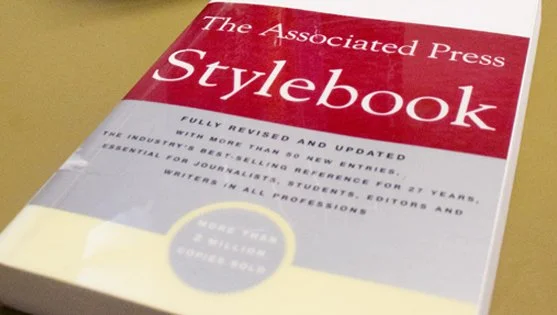
The Associated Press or AP, for those of you not employed by news organizations, sets the correct titles and grammar for work in American journalism. Everyone follows whatever AP decides something should be called, using the evolving standards of the Associated Press Stylebook.

Until now. Typically, AP leaders have tried to avoid taking sides in the abortion and gender debates. However, their most recent rules makes it quite impossible for some journalists — including myself — to cover this complicated topic the way AP insists that we cover it.

In the past, for example, journalists argued about calling activists on one side “anti-abortion,” as opposed to “pro-life,” while those on the other side were given a label they welcomed, as in “pro-choice.” That second label evolved into “pro-abortion rights.” We will come back to that.

Now this. From the Register:

The Associated Press (AP) issued new guidelines advising reporters not to use the terms “crisis pregnancy center” or “pregnancy resource center” but to instead refer to centers that offer pro-life counseling and support as “anti-abortion centers.”

Reporters should “avoid potentially misleading terms such as pregnancy resource centers or pregnancy counseling centers,” because “these terms don’t convey that the centers’ general aim is to prevent abortions,” according to the AP’s Abortion Topical Guide.

The changes were made last November but are just getting publicized now.  And these centers –- PRCs --aren’t just there to prevent abortions, which anyone who walks into one soon discovers.


Please respect our Commenting Policy

Washington Post looks at 'school choice' bills, and (#surprise) omits 'equal access' info

Washington Post looks at 'school choice' bills, and (#surprise) omits 'equal access' info

For a minute or two, I thought that the Washington Post was going to publish a fair-minded news feature about the complex issues involved in “school choice” legislation.

Alas, it soon became clear that this was another business-as-usual piece that was, for the most part, committed to featuring the voices of activists on one side of the story. The story also avoided a key church-state legal term that is shaping recent U.S. Supreme Court rulings on this subject.

Thus, it’s time — once again — for readers to grab some highlighter pens. Hold that thought.

You can sense what’s going on in the headline: “More states are paying to send children to private and religious schools.”

Ah, but private schools are private schools, too. Some are secular, some are openly religious. Some of the religious schools are on the left, in terms of doctrine, and some are on the right. But they are all “private” schools. Are all private schools created equal? Did the Post team “get” this angle of the story and include some diversity in the sourcing?

The bottom line: What we have here is another one of those “highlighter pen” stories that GetReligion digs into every now and then. What readers need to do is print a copy of the story and then grab three pens with different colors — maybe red, blue and some variation on purple. The goal is to mark quotes representing voices on the cultural left, right and, maybe, even in the middle.

But first, here is how the story opens:

For years, school-choice advocates toted up small victories in their drive to give parents taxpayer money to pay for private school. Now, Republican-led states across the country are leaving the limitations of the past behind them as they consider sweeping new voucher laws that would let every family use public funds to pay for private school.


Please respect our Commenting Policy

Death of old-school journalism may be why Catholic church vandalism isn't a big story

Death of old-school journalism may be why Catholic church vandalism isn't a big story

The start of 2023 has brought with it renewed discussion about the role of journalism in society and, more importantly, how it should be practiced and for whom.

At the same time, more Catholic churches and crisis-pregnancy centers have been the target of vandalism.

You may not have noticed this trend — because it is receiving little elite-news coverage.

I can’t help but think these two things are linked. Here’s how.  

Journalists and news organizations are increasingly abandoning old-school objectivity — think basic standards of accuracy, balance, fairness, etc. — in favor of an ever-changing worldview linked to whatever is fashionable politically or culturally, especially stances that are popular with paying customers. These news organizations are increasingly focused on how to influence the now and future rather than report on basic facts surrounding events.

Journalism, however, is not solely about predicting the future — see, for example, the heavy coverage towards polls trying to predict the outcome of elections — but observing the present and the on-the-record facts that surround us at the moment on a particular topic or issue.  

This growing activism among journalists has led reporters to lose most of their curiosity, a crucial element in news coverage.

Instead of asking questions, many already think they have the answers on an array of issues. In the process, this sense of activism among this new journalist class (and their Gen X editors who suddenly think that journalists have been doing things all wrong for decades) has led it to loss its curiosity. Debates? Who needs debates? Tropes based in secular society’s current values, for example, automatically trump thousands of years worth of Judeo-Christian tradition.

This brings us to the continuing trend that has seen many churches vandalized over the past few years. It’s a story that has received very little news coverage in the national press. Why?


Please respect our Commenting Policy