Catholicism

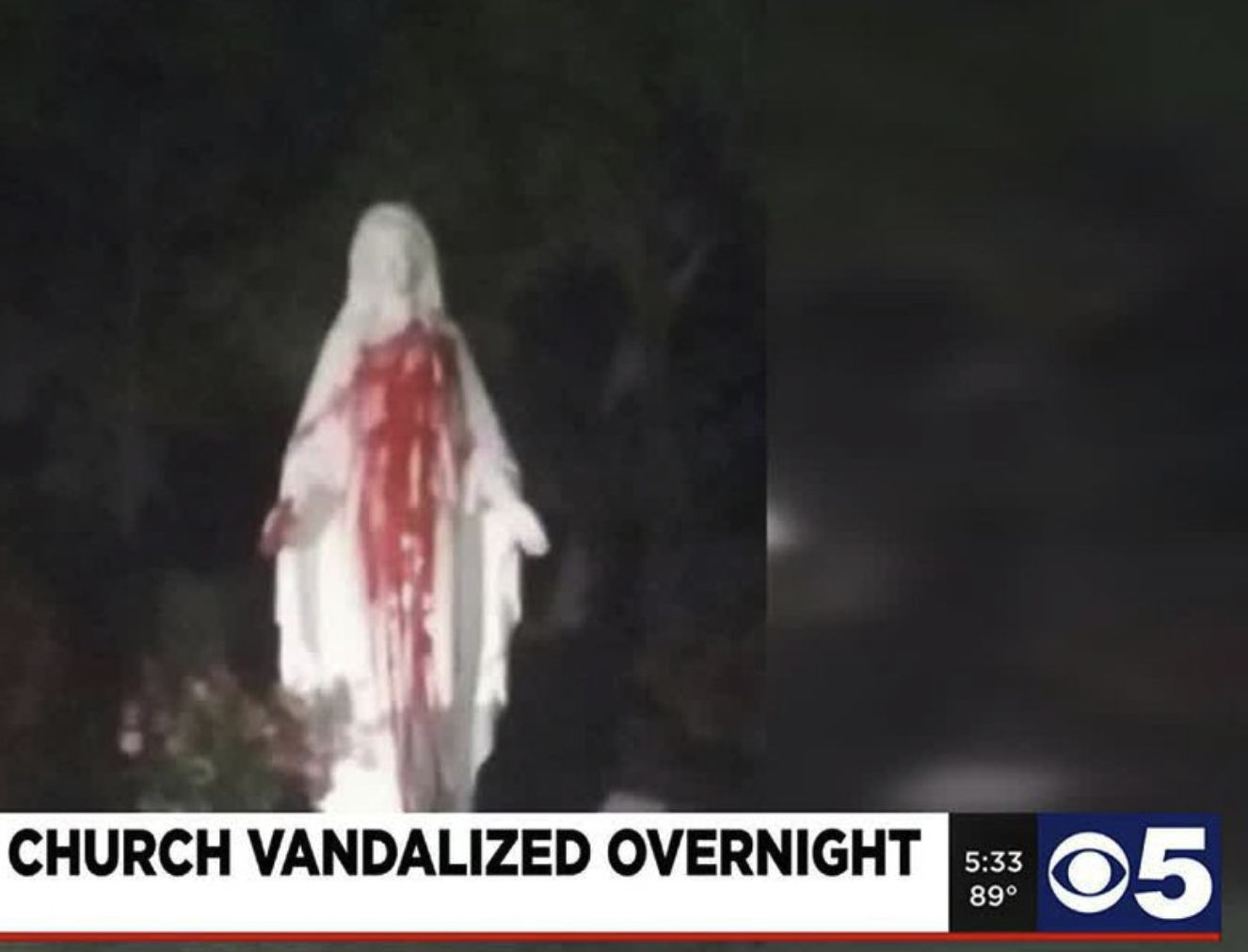
Of course the fall of Roe was 2022's top religion-beat story (including those church attacks)

Of course the fall of Roe was 2022's top religion-beat story (including those church attacks)

In the years before Roe v. Wade, one of America's largest Christian flocks struggled to find a way to condemn abortion, while also opposing bans on abortion.

A 1971 resolution said: "Some advocate that there be no abortion legislation, thus making the decision a purely private matter between a woman and her doctor" while others "advocate no legal abortion," permitting it "only if the life of the mother is threatened." Thus, it backed legislation allowing "abortion under such conditions as rape, incest, clear evidence of severe fetal deformity, and carefully ascertained evidence of the likelihood of damage to the emotional, mental, and physical health of the mother."

After the 1973 Roe decision, the same body stressed the "limited role of government" in abortion questions, while supporting a "full range of medical services and personal counseling" for expectant mothers.

That was the Southern Baptist Convention -- before its conservative wing gained control, creating a powerful cultural force against abortion rights.

Churches were always active in abortion debates, with some embracing centuries of doctrine on the sanctity of human life, while overs became strategic abortion-rights supporters. Thus, journalists in the Religion News Association named the Supreme Court decision to overturn Roe v. Wade as the year's top American religion-news story. Now churches -- left and right face -- face the challenge of proclaiming certainties while many states seek compromise.

Stressing politics, the RNA stated: "The Supreme Court overturns the 1973 Roe v. Wade precedent and says there is no constitutional right to abortion, sparking battles in courts and state legislatures and driving voters to the November polls in high numbers. More than a dozen states enact abortion bans, while voters reject constitutional abortion restrictions in conservative Kansas and Kentucky and put abortion rights in three other states' constitutions."

This poll avoided other religion-news elements of this story, such as acts of violence against churches -- especially Catholic parishes -- and crisis pregnancy centers, ranging from vandalism to arson, from the interruption of sacred rites to the destruction of sacred art. Protestors marched at the homes of SCOTUS justices and police arrested an armed man who threatened to invade the house of Justice Brett Kavanaugh.

This year, the RNA added an international list, selecting Russia's war against Ukraine as the top story, in part because of bitter tensions between the Russian Orthodox Church and the new Orthodox Church of Ukraine, backed by the United States and the Orthodox Ecumenical Patriarchate in Turkey.

Please respect our Commenting Policy

What's up in 2023? The Guy offers a first draft of a religion-beat agenda

What's up in 2023? The Guy offers a first draft of a religion-beat agenda

The new year could be climactic for two aspects of LGBTQ issues, first, the rights of religious and conservative dissenters within liberalized western culture, and second, the ongoing conflicts within church groups.

What should journalists be prepared to cover?

By June, the U.S. Supreme Court will decide the 303 Creative case, in which a website designer — based on First Amendment claims — seeks exemption from Colorado’s anti-discrimination law to avoid work on postings that celebrate same-sex weddings (background here). The Court might broadly define what rights various forms of religious traditionalists have in a host of legal conflicts facing e.g. U.S. religious colleges, social-service agencies and individual businesses now that same-sex marriage is legalized.

Inside a specific religion brand, this could be a pivotal year for the global Anglican Communion with its 46 national branches and some 85 million baptized members. A mid-January meeting of bishops in the “mother” Church of England may well decide dioceses can permit same-sex weddings. That historic change would then need approval from clergy and lay delegates at the February 6–9 General Synod.

Such a move would add explosive potential to the April 17-21 meeting in Kigali, Rwanda, of the Global Fellowship of Confessing Anglicans (“GAFCON”), long vexed by liberal moves in England, the United States and elsewhere in declining First World churches. GAFCON unites the heads of 10 Anglican branches, three of which alone (Kenya, Nigeria, Uganda) encompass half the world’s Anglicans. GAFCON’s chairman, Archbishop Foley Beach (admin@anglicanchurch.net and 724-266-9400), heads a church of conservatives who’ve left the U.S. Episcopal Church and Anglican Church of Canada.

Already, key archbishops have boycotted global Anglican confabs, continuing a slow-motion breakup that began decades ago. Will the maneuvers in England and elsewhere provoke a huge, definitive break from the London-based Anglican Communion by churches in GAFCON and the related Global South Fellowship of Anglican Churches?

The United Methodist Church could be on the brink of the biggest U.S. Protestant split since the Civil War. That’s a huge story at the local, regional, national and global levels.


Please respect our Commenting Policy

Five Catholic storylines journalists will need to follow closely as we enter 2023

Five Catholic storylines journalists will need to follow closely as we enter 2023

There are only a few days left to go in 2022. It was a busy news year — loaded with stories with strong religion angles.

Many of those stories had Catholic angles that were important to highlight and report on. A year ago, I took a look at the top Catholic angles journalists needed to focus on heading into 2022. I was prescient in my outlook, highlighting the Supreme Court decision regarding abortion among the top things to focus on.  

This is what I wrote a year ago looking ahead to 2022:

Issues around politics and religion will likely dominate once again in 2022. The abortion issue and a pending Supreme Court decision regarding access to it will be a big story in the coming year. The Catholic church, a major part of the abortion debate in this country for decades, will play a major role in news stories that will be written over the coming months.   

As we prepare to ring in 2023, I want to highlight five big storylines and trends to look for over the next 12 months:

(5) Catholic politicians vs. bishops

The culture war that has embroiled many societies, especially in the United States and now Western Europe, will continue to pit Catholic bishops and politicians. It will be especially pronounced when it involves Catholic lawmakers.

We’ve already seen this with President Joe Biden and outgoing House Speaker Nancy Pelosi. Both are practicing Catholics who have butted heads with many bishops who keep noting public remarks and actions by these politicians that directly clash with centuries of Catholic doctrines on a great number of moral issues.

The U.S. Conference of Catholic Bishops recently elected a new president. As conference president, Archbishop Timothy Broglio of the Archdiocese of the Military Services will have to focus on many hot-button issues. Above all, fights over issues surrounding abortion and contraception will continue, including questions about whether politicians who openly clash with church teachings should receive Holy Communion.


Please respect our Commenting Policy

Final 2022 podcast: What parts of the Roe v. Wade story deserved additional coverage?

Final 2022 podcast: What parts of the Roe v. Wade story deserved additional coverage?

Everyone had to know that the fall of Roe v. Wade would be the top pick in the Religion News Association’s annual poll to determine the Top 10 religion-beat stories of 2022. That would have been the case, even if the RNA hadn’t created two lists this year, one for U.S. stories and one for international stories.

Why? I’ve been following this poll closely since the late 1970s and once interviewed the legendary George Cornell of the Associated Press about his observations on mainstream religion-news coverage trends during his decades on the beat.

Let’s briefly review some of the factors that shape this list year after year, since this topic was discussed during the final 2022 “Crossroads” podcast (CLICK HERE to tune that in). This episode was recorded while we wrestled with rolling power blackouts here in the frigid hills of East Tennessee. See if you can guess where we had to do a patch and start again!

First of all, the RNA top story will almost always be a hot political event or trend — with a religion angle. Politics, after all, is REAL news. Think White Evangelicals and Bad Man Orange. Second, it helps if stories feature clashes between religion and sex, usually in one of the progressive Mainline Protestant churches or, ideally, Roman Catholicism. Think Joe Biden, Catholic bishops and just about anything (especially if Pope Francis is involved). After that, you have slots for wars, natural disasters and newsy papal tours.

The fall of Roe v. Wade had it all, putting a core Sexual Revolution doctrine at risk, to one degree or another, depending on the blue, red or purple state involved.

I will not run through the contents of the whole RNA list. However, it’s interesting to note the wordings in some poll items, paying attention to what is included and what is NOT included therein. For example, here is No. 1 in the U.S. list:

The Supreme Court overturns the 1973 Roe v. Wade precedent and says there is no constitutional right to abortion, sparking battles in courts and state legislatures and driving voters to the November polls in high numbers. More than a dozen states enact abortion bans, while voters reject constitutional abortion restrictions in conservative Kansas and Kentucky and put abortion rights in three other states’ constitutions.

What is missing in that complex item?


Please respect our Commenting Policy

Hey! The Gray Lady noticed the Christmas on Sunday debates. Let's dig into that (again)

Hey! The Gray Lady noticed the Christmas on Sunday debates. Let's dig into that (again)

It’s almost Christmas.

At least, it’s almost Christmas if you are one of those strange people who think “Christmas” is the same thing as the feast of the Nativity of Our Lord Jesus Christ. However, thinking about this holy day in those terms requires negotiating a maze created by school calendars, travel, office parties, family traditions and, yes, worship services. And then there is the cultural steamroller called “The Holidays,” led by the powers that be in government, shopping malls and mass media.

I bring this up because of that New York Times story that ran a few days ago: “O Come All Ye Faithful, Except When Christmas Falls on a Sunday.” It’s a story well worth reading and we will get to it shortly.

However, if you follow the GetReligion podcast, you know that I’ve been expecting the hot social-media debates about the whole “Christmas on Sunday” kerfuffle to eventually bleed over into the mainstream press. Check out this “Crossroads” episode: “Is Christmas 'news'? Not really, unless it is a case of 'Christmas AND ...'

Before that, I wrote an “On Religion” column hooked to a new study by Lifeway Research. Here’s that headline: “When is Christmas? That depends on the person asking.” If you dig into those numbers, you’ll see a bright red line running between two different brands of Protestantism — those with roots in traditions that include some form of liturgical calendar and those that do not, especially the rapidly growing world of nondenominational evangelical and charismatic/Pentecostal churches. He’s a key chunk of that column:

In churches with centuries of liturgical traditions, the Nativity of Our Lord Jesus Christ is Dec. 25, following the quiet season of Advent (Latin for "toward the coming"). This year, Christmas falls on Sunday and, for Catholics, Anglicans and others, the Christmas Eve Midnight Mass is one of the year's most popular rites. This opens a festive season that continues through Jan. 6, the Feast of the Epiphany. Many Eastern Orthodox Christians follow the ancient Julian calendar and celebrate Christmas on Jan. 7, after Nativity Lent.

In the United States, some kind of Christmas Eve service remains the big draw, according to almost half (48%) of Protestant pastors contacted in a new study by Lifeway Research. The frequency of high-attendance church events builds until Christmas Eve, then declines sharply.


Please respect our Commenting Policy

Buried story of 2022? The persecution of Christians keeps surging around the world

Buried story of 2022? The persecution of Christians keeps surging around the world

You want news?

The 2022 report from the Open Doors organization (CLICK HERE) says “persecution of Christians has reached the highest levels” since it began accumulating data for its annual “World Watch List” three decades ago. Hostile incidents have increased by 20% since just 2014, and some 360 million Christians, or 14% of the worldwide total, are said to have faced persecution, harassment, or discrimination.

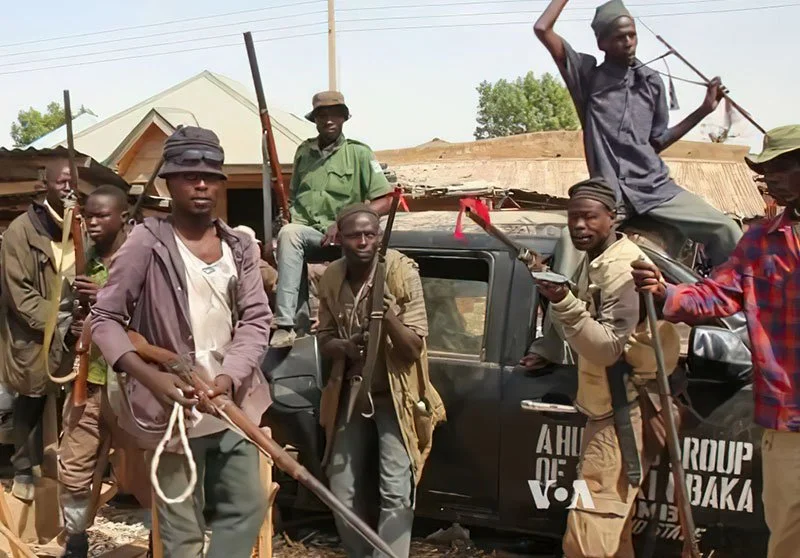
Open Doors reports that it has documented the murders in one year’s time of 5,898 Christians for their faith (up 24% from the prior year); attacks on 5,110 local churches (up 14%); 3,829 abductions (a new high, up 124%); 6,175 victims held without trial; 24,678 subjected to beatings, death threats and other abuse; 6,449 with homes or businesses attacked; and 3,147 women targeted for rape or sexual harassment. 

Since that report was issued, the Nigeria-based civil rights group Intersociety reports that in just that one nation 4,020 additional killings and 2,315 abductions occurred from January through October, 2022.

The Memo therefore proclaims this international upsurge the Buried Story of the Year, a major, newsworthy global scourge widely featured by religious media — yet all but ignored by much of the “Mainstream Media.”

Journalists will have another peg for remedying this sin of omission when Open Doors issues its 2023 report early in the new year.

One noteworthy media exception, timed for Christmas a year ago, was a thorough New York Times survey of widespread harassment of Christians in India. Also, Reuters this month produced a massive investigation of 10,000 forced abortions conducted by the military in chaotic Nigeria, indicating rape is a widespread tactic used to terrorize Christian women.

On a broader time frame, the Center for the Study of Global Christianity estimates that 1 million Christian martyrs were killed in the first 10 years of the 21st Century.


Please respect our Commenting Policy

Soccer and God-talk: Lionel Messi's Catholic faith was part of epic World Cup drama

Soccer and God-talk: Lionel Messi's Catholic faith was part of epic World Cup drama

LUSAIL, Qatar — Soccer superstar Lionel Messi went out of his way to avoid a gaggle of French defenders throughout the World Cup final.

But Messi didn’t dodge the role that his Catholic faith played in Argentina’s epic win over France, praising God for his personal career success after the penalty-kick shootout in a World Cup final that will be remembered as the best in the tournament’s 92-year history.

“It’s just crazy that it became a reality this way,” Messi said. “I craved this for so long. I knew God would bring this gift to me. I had the feeling that this time was the one.”

Messi, a practicing Catholic, answered questions from reporters after Argentina’s victory at the 89,000-seat Lusail Stadium in the suburbs of the capital Doha. It was a game of ups and downs. Argentina twice squandered a lead (2-0 at halftime and 3-2 in extra time), but triumphed in the end on penalties after the game ended 3-3.

In leading Argentina to a third World Cup — after wins in 1978 and 1986 — Messi also replaced countryman Diego Maradona’s and even Brazilian legend Pele as the greatest player to have ever kicked a soccer ball.

Maradona, who died two years ago, is a global icon. In Argentina, he has enjoyed a status reserved for a deity. There’s even a church in which the faithful gather in his name. It’s impossible to avoid faith when talking about football in Argentina.

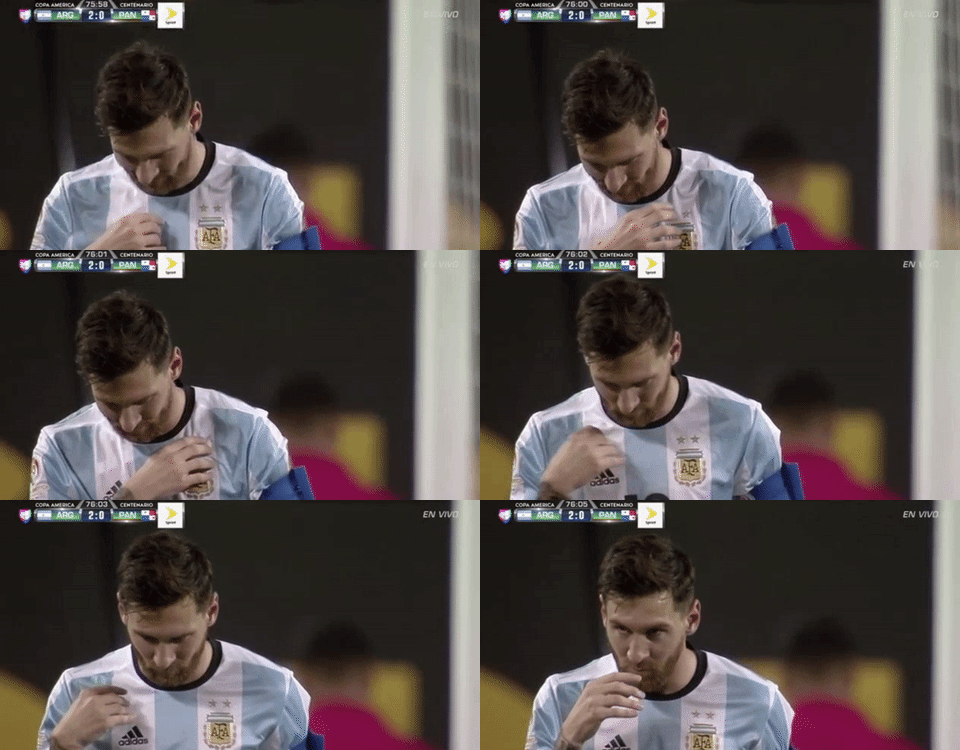
In an interview following the win against France, Messi, who typically makes the sign of the cross and points towards the sky after scoring goals, again mentioned God as the reason for the victory.

“I just said that God was going to give it to me,” Messi told TyC Sports, an Argentine sports TV channel, referring to the World Cup trophy. “I was sure I had a feeling that this was the moment. We suffered a lot — but now it’s time to enjoy it.”


Please respect our Commenting Policy

That never-ending debate in modern churches: Should Christians baptize babies?

That never-ending debate in modern churches: Should Christians baptize babies?

THE QUESTION:

Unending Debate: Should Christians baptize babies?

THE RELIGION GUY’S ANSWER:

Yes or no, depending what church is answering the question.

A quote posted in August by Detroit Baptist Theological Seminary says this “debate over baptism has raged in the church for millennia” and “all sides argue passionately for their view.”

Jesus’ evangelism command to his followers in the Great Commission (Matthew 28:19) directed water baptism for church membership as observed in all types of Catholic, Orthodox and Protestant groups (except for the Quakers and Salvation Army).

Along with this, Baptists and other Protestants of like mind, view baptism as an “ordinance” to symbolize faith, not a “sacrament” where God bestows grace or regeneration. And, as discussed below, full immersion of the body in the water is their trademark practice.

Who should be baptized? Baptists et al. make a simple, straightforward argument. They see no explicit examples of infant baptism in the New Testament, only cases where baptism followed conscious conversion to a personal belief in Jesus Christ as Savior. Such “believer’s baptism,” of course, is impossible for infants and young children. The Great Commission linked baptism with religious instruction, and Acts 2:38 records that the original 3,000 Christian converts on the day of Pentecost repented for forgiveness of their sins before baptism.

Christians on the opposite side respond by citing New Testament examples where a “household” or “family” was baptized as a group and reason that young children were surely included.


Please respect our Commenting Policy

Podcast: Is Christmas 'news'? Not really, unless it is a case of 'Christmas AND ...'

Podcast: Is Christmas 'news'? Not really, unless it is a case of 'Christmas AND ...'

At least once a year, back in the days when I was in a newsroom full-time, I would have a semi-argument with an editor about this question: Are debates about worship issues “hard news”?

Every now and then I would win and we’d run a story — like a feature about United Methodists arguing about gender-neutral language for God (this was in the 1980s). When it ran, all hellfire broke loose, which convinced some editors that I was right. Others, however, were upset that so many readers disagreed with their conviction that a religion-religion story was news, as opposed to religion-politics stories.

This brings me to Christmas — which is on a Sunday this year. This has led to some interesting polling and emotional online debates, but, so far, not much news coverage about the central worship question: Should churches celebrate Christmas on Christmas, even if Dec. 25 falls on a Sunday? This was the hook for this week’s “Crossroads” podcast (CLICK HERE to tune that in).

Research? The team at Lifeway Research has done two studies linked to Christmas worship. For example, see this Baptist Press headline: “Most churches plan to open on Christmas and New Year’s Day.” I wrote a column the other day with this headline: “When is Christmas? That depends on the person asking.”

Back to the question about worship being news. You end up with an equation that goes something like this:

* Flocks of people attending Latin Mass rites is not news.

* The pope questioning the motives of traditional Catholics who support the Latin Mass is news.

* A major American political leader — Joe Biden, perhaps — supporting the pope’s take on the Latin Mass would be big news.

See how this works? You can see how this would apply to the whole “When is Christmas?” debate. It matters to millions of people in pews. It doesn’t matter to the political desk.


Please respect our Commenting Policy