Catholicism

Traditional Latin Mass feud news remains scarce: How reporters can grasp what's at stake

Traditional Latin Mass feud news remains scarce: How reporters can grasp what's at stake

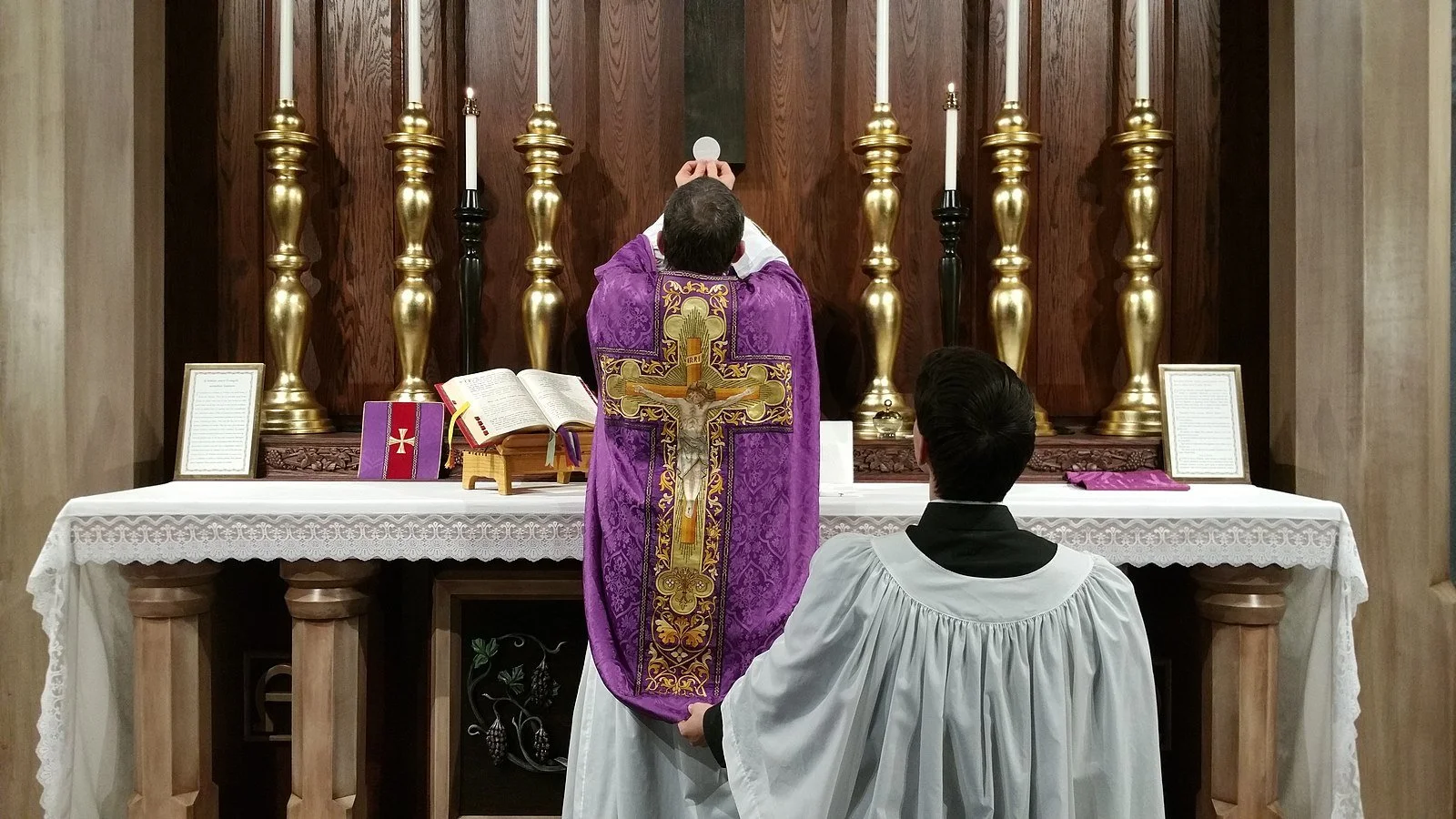
What’s the deal with all the emotional meltdowns about the traditional Latin Mass? I mean, no one speaks Latin anymore.

It sounds like a line that could have come out of the mouth of comedian Jerry Seinfeld during one of his stand-up acts. It isn’t part of his act, but it is a more than symbolic question that Catholics have been pondering over the past year.

It was last summer when Pope Francis signed a motu proprio — Latin for a papal document personally signed by the pope to signify his special interest in a topic — on this very subject. In the July 16, 2021, decree, the pope approved clarifications regarding restrictions on the traditional Latin Mass in an effort to ensure that liturgical reform is “irreversible” and that bishops strive to enforce changes made after the Second Vatican Council.

Specifically, bishops were told to ban ordinations of priests and confirmations using the old rite. They also were instructed to limit the frequency of rites by priests who have managed to receive a dispensation to celebrate Mass in Latin.

What’s the deal with the traditional Latin Mass? It turns out a lot.

The Novus Ordo Mass, which has been celebrated since 1965, is the norm among Catholic churches in this country and around the globe. Coverage, particularly last year, of the Traditional Latin Mass took on a political twinge in the pages of The New York Times. This is how their story from July 16 of last year framed the debate:

Pope Francis took a significant step toward putting the Roman Catholic Church’s liturgy solidly on the side of modernization on Friday by cracking down on the use of the old Latin Mass, essentially reversing a decision by his conservative predecessor.

The move to restrict the use of an old Latin rite in celebrating Mass dealt a blow to conservatives, who have long complained that the pope is diluting the traditions of the church.

Francis placed new restrictions on where and by whom the traditional Latin Mass can be celebrated and required new permissions from local bishops for its use.

The key words to look for in mainstream news reports are “modernization” and “conservative,” as if this pope was doing something positive and that Pope Benedict XVI had been somehow stuck in the past.

Please respect our Commenting Policy

Religious Left returns to RFRA: Washington Post explores a crucial Florida abortion showdown

Religious Left returns to RFRA: Washington Post explores a crucial Florida abortion showdown

For 18 years, GetReligion has argued that mainstream news organizations need to pay more attention to the Religious Left. Yes, I capitalized those words, just like the more familiar Religious Right.

The Religious Right has been at the heart of millions news stories (2,350,000 or so Google hits right now, with about 61,600 in current news). The Religious Left doesn’t get that much ink (322,000 in Google and 2,350 or so in Google News), in part — my theory — because most journalists prefer the word “moderate” when talking about believers in the small, but still media-powerful world of “mainline” religion.

But there is a church-state legal story unfolding in Florida that cries out for coverage of liberal believers — with an emphasis on the details of their doctrines and traditions, as opposed to politics. Doctrines are at the heart of a story that many journalists will be tempted to cover as more post-Roe v. Wade politics.

I suspect, if and when this story hits courts (even the U.S. Supreme Court), journalists will need to do their homework (#FINALLY) on the Religious Freedom Restoration Act of 1993. The big question: What does religious liberty (no “scare quotes”) look like from a Unitarian point of view? Hold that thought.

First, here is the headline on a long Washington Post feature: “Clerics sue over Florida abortion law, saying it violates religious freedom.” Here is the overture:

When the Rev. Laurie Hafner ministers to her Florida congregants about abortion, she looks to the founding values of the United Church of Christ, her lifelong denomination: religious freedom and freedom of thought. She taps into her reading of Genesis, which says “man became a living being” when God breathed “the breath of life” into Adam. She thinks of Jesus promising believers full and abundant life.

“I am pro-choice not in spite of my faith, but because of my faith,” Hafner says.

She is among seven Florida clergy members — two Christians, three Jews, one Unitarian Universalist and a Buddhist — who argue in separate lawsuits … that their ability to live and practice their religious faith is being violated by the state’s new, post-Roe abortion law. The law, which is one of the strictest in the country, making no exceptions for rape or incest, was signed in April by Gov. Ron DeSantis (R), in a Pentecostal church alongside antiabortion lawmakers such as the House speaker, who called life “a gift from God.”

The lawsuits are at the vanguard of a novel legal strategy arguing that new abortion restrictions violate Americans’ religious freedom, including that of clerics who advise pregnant people.


Please respect our Commenting Policy

Plug-In: Five news takeaways as Kansas keeps abortion rights In its constitution

Plug-In: Five news takeaways as Kansas keeps abortion rights In its constitution

Catholic churches and dioceses in Kansas spent millions of dollars in support of a referendum to remove the right to abortion from the state’s constitution.

But in America’s first big post-Roe test, this ballot measure failed — and by a wide margin — with nearly three in five voters opposing it.

Given the Sunflower State’s solid conservative credentials, the referendum’s defeat might qualify as Kansas’ second-biggest upset in recent memory (college football fans won’t soon forget No. 1).

What exactly happened? Here are five takeaways:

1. Yes, Kansas has a history of voting for conservative Republicans, particularly for president. But its political leanings are more complicated.

On the one hand, the New York Times’ Mitch Smith and Katie Glueck note:

While Kansas has a history of voting for governors of both parties, the state almost always backs Republicans for president — Lyndon B. Johnson in 1964 was a notable exception. It is a largely white state and many Kansans identify as Christians, with a sizable evangelical constituency. Roman Catholic Archbishop Joseph F. Naumann of Kansas City, Kan., has long been a hero to many conservative Catholics for his ardent opposition to abortion, contraception and gay marriage.

But on the other hand, Kansas State University political scientist Brianne Heidbreder points to Kansas’ political unpredictably dating back to 1861, when it became the 34th state.

Heidbreder spoke to the New York Times’ Maggie Astor:

“While it is a very conservative state, there is a large proportion of the electorate that really considers itself moderate,” Dr. Heidbreder added.

Patrick Miller, an associate professor of political science at the University of Kansas, pointed to a crucial distinction: “We’re more Republican than we are conservative.”


Please respect our Commenting Policy

New York Times: LGBTQ rights are a key factor in Ukraine (even if many Ukrainians disagree)

New York Times: LGBTQ rights are a key factor in Ukraine (even if many Ukrainians disagree)

When I was a sophomore at Baylor University (soon after the cooling of the earth’s crust) the great journalism professor David McHam had an interesting pre-computer way of demonstrating what he wanted to see when a student prepared a second draft of a news story.

Taking a metal straight edge (think pica pole), he would tear the copy into horizontal blocks of text. Then he would rearrange these into a different order, locking them in place with clear tape. Then he would say something like this: “You buried some of the most important information. Go rewrite the story in this order.”

This brings me to a New York Times story about religion, culture, politics and war in Ukraine. There’s a lot of interesting material here, but readers who want to know some crucial basic facts will need to be patient — because they are buried deep in this report. The double-decker headline offers the basic framework:

War Spurs Ukrainian Efforts to Legalize Same-Sex Marriage

The role of gay soldiers, the lack of legal rights for their partners, and the threat of Russia imposing anti-L.G.B.T. policies have turned the war into a catalyst for change in Ukraine.

Now, before I go any further, let me note that, yes, I am Orthodox and I attend a parish that includes Slavic believers, as well as lots and lots of American converts. Also, my two visits to Kiev left me convinced Ukraine is — as the Soviets intended — a tragically divided nation. My views are identical to those of Alexander Solzhenitsyn, on that subject.

When Russian began its evil invasion, I posted a note on Facebook that ended with this:

EU-USA was arrogant enough to think they could — with money, culture and military tech — turn Eastern-Russian Ukrainians into Europeans. Will Putin be arrogant enough to think he can, with blood, turn Western-European Ukrainians into Russians?

I raise this issue because, at a crucial point deep in this Times story, I believe it is relevant. Hold that though.

The anecdotal lede for this story focuses on the fears of a young Ukrainian combat medic named Olexander Shadskykh. That leads to the thesis statement:


Please respect our Commenting Policy

Plug-In: Compelling headlines from 'Penitential Pilgrimage' to Canada by Pope Francis

Plug-In: Compelling headlines from 'Penitential Pilgrimage' to Canada by Pope Francis

Pope Francis made a “penitential pilgrimage” to Canada this week to apologize to Indigenous peoples for abuses at church-run residential schools.

Rome-based journalists traveling with Francis did an excellent job covering the historic trip. I’m talking about folks such as Religion News Service’s Claire Giangravé, the Wall Street Journal’s Francis X. Rocca and the National Catholic Reporter’s Christopher White.

But a single correspondent can’t match the powerful reporting of a global team of religion writers, such as that assembled by The Associated Press.

Besides Vatican reporter Nicole Winfield, AP dispatched Pulitzer-winning religion writer Peter Smith, whose home base is Pittsburgh, and Rob Gillies, its bureau chief in Toronto, to cover the papal visit. Other writers, such as David Crary, Holly Meyer and Anita Snow, helped with the various angles. (That’s not even to mention the amazing photography of the global religion team’s Jessie Wardarski.)

The result: a stellar package highlighted by headlines such as these:

Pope’s Indigenous tour signals a rethink of mission legacy (by Nicole Winfield)

Indigenous Canadians wary, hopeful as pope prepares apology (by Peter Smith)

Church apologies: Top leaders say sorry for historical sins (by Holly Meyer and Peter Smith)

A religiously diverse Edmonton hosts Pope Francis visit (by Peter Smith)

Pope apologizes for ‘catastrophic’ school policy in Canada (by Nicole Winfield and Peter Smith)

Pope in headdress stirs deep emotions in Indian Country (by Anita Snow)

Pope in Canada prays for healing for ‘terrible’ colonization (by Nicole Winfield, Peter Smith and Rob Gillies)

Pope in Quebec amid decline of Catholic Church in province (by Rob Gillies)


Please respect our Commenting Policy

Podcast: Anglicans in liberal West and conservative Global South face broken communion -- again

Podcast: Anglicans in liberal West and conservative Global South face broken communion -- again

This week’s “Crossroads” podcast was recorded (live on radio and then edited) this past Wednesday afternoon and it is already a bit out of date (CLICK HERE to tune that in).

You see, this episode was intended as a kind of “walk-up” feature about press issues at the 15th Lambeth Conference of Anglican bishops from around the world (July 26-Aug. 8) in Canterbury. At that point, there wasn’t much coverage to critique, other than some reports the Guardian, as in: “Justin Welby forced to allow Anglican bishops to reject statement on sexuality.” Since then, Religion News Service has released this: “Same-sex marriage sparks divisive debate at twice-delayed Lambeth Conference.”

As you can see, the coverage — so far — has been shaped by a familiar template in which decades of Anglican warfare is reduced to a rather political fight over homosexuality, as opposed to church doctrines about biblical authority and sex outside of traditional marriage.

The twist in this old, old story is that most of the heroes in the press coverage are White progressives from rich First World nations and the villains are People of Color from the Global South (think Africa and Asia). Does that framework sound familiar to many news consumers? Hold that thought.

The podcast argued that sexuality is the popular news hook for the Anglican wars, but that the doctrinal issues at stake run much deeper. Thus, I would like to place the unfolding Lambeth 2022 drama in the context of what your GetReligionistas have long called “Anglican timeline disease.

With that in mind, let’s flash back to 1992 — that’s three decades, for those keeping score. Here is the top of the 1999 “On Religion” column I wrote about this behind-the-scenes event: “The time for broken communion?” This is long, but essential:

It's been seven years since Bishop C. FitzSimons Allison faced the fact that some of his fellow bishops worship a different god than he does.

The symbolic moment came during an Episcopal House of Bishops meeting in Kanuga, N.C., as members met in small groups to discuss graceful ways to settle their differences on the Bible, worship and sex. The question for the day was: "Why are we dysfunctional?"

"I said the answer was simple — apostasy," said Allison, a dignified South Carolinian who has a doctorate in Anglican history from Oxford University. "Some of the other bishops looked at me and said, 'What are you talking about?'"


Please respect our Commenting Policy

Ciao, GetReligion: Thanks, all, for my tenure. Critic that I am, though, here are some final thoughts

Ciao, GetReligion: Thanks, all, for my tenure. Critic that I am, though, here are some final thoughts

I’ve been a contributor to GetReligion since 2015, when founder Terry Mattingly recruited me over salad at an Annapolis mall eatery. I’m grateful that he did.

Seven years is, for me, a hefty professional run. But nothing lasts for ever. Change is constant. In short, this is my last regular GetReligion post.

During my time here I’ve noticed what I consider an imbalance in the stories GetReligion bloggers generally choose to critique. It is this: The underwhelming and frequently inaccurate religion news coverage too often offered by “mainstream media” is criticized at GetReligion on a near-daily basis. The ignorance of important religion details and the coverage’s overall poor quality are often attributed to mainstream journalists’ “secular,” or “progressive,” worldviews.

Another regular criticism is that mainstream media journalists view everything through a zero-sum political lens. This, goes the argument, renders them incapable of understanding or communicating religious complexity as it’s actually lived by believers living outside the blue-state mindset. Politics is all that really matters, is the trope.

hese broadsides are standard GetReligion fare. Importantly, the accusations are generally on target. It’s more than a coincidence that the GetReligion team members behind this website have decades of experience in the mainstream press.

Religion journalism has suffered greatly in this Internet era. Relatively few news outlets ever invested in upping their religion coverage. Today, even fewer do. Blame that on journalism’s downward economic spiral brought about by the World Wide Web explosion — a major theme here at GetReligion.

However, what’s too often missed here is criticism of the similar lackluster coverage originating in clearly conservative media. At GetReligion, conservative-market media more often than not get a pass. This is, in part, because conservative media’s most popular content is offered by right-wing commentators who make little to no effort to hide their biases and whose stock in trade is pure opinion.


Please respect our Commenting Policy

St. Anne plays a major role in papal visit to Canada: Is she important to Catholics, alone?

St. Anne plays a major role in papal visit to Canada: Is she important to Catholics, alone?

Long ago, I had a strategic and symbolic on-deadline argument with Rocky Mountain News (#RIP) editor.

Holy Week loomed on the horizon, on the Western calendar, and I was asked to fill out a form requesting quick Ash Wednesday feature art. I suggested — thinking beauty and diversity — a visit to an Episcopal parish in the heart of Denver’s most prominent Black neighborhood, a congregation known for the beauty of its high-church, Anglo-Catholic rites.

The editor said the photo needed to be in a Catholic church, since Holy Week is a Catholic story. I said that was a logical way to think about it, since the Catholic church is so prominent. However, I noted that Holy Week is an ancient Christian tradition observed in many Christian churches and denominations. It would be good to remind readers of that fact. I won that debate and the result was a stunning photograph.

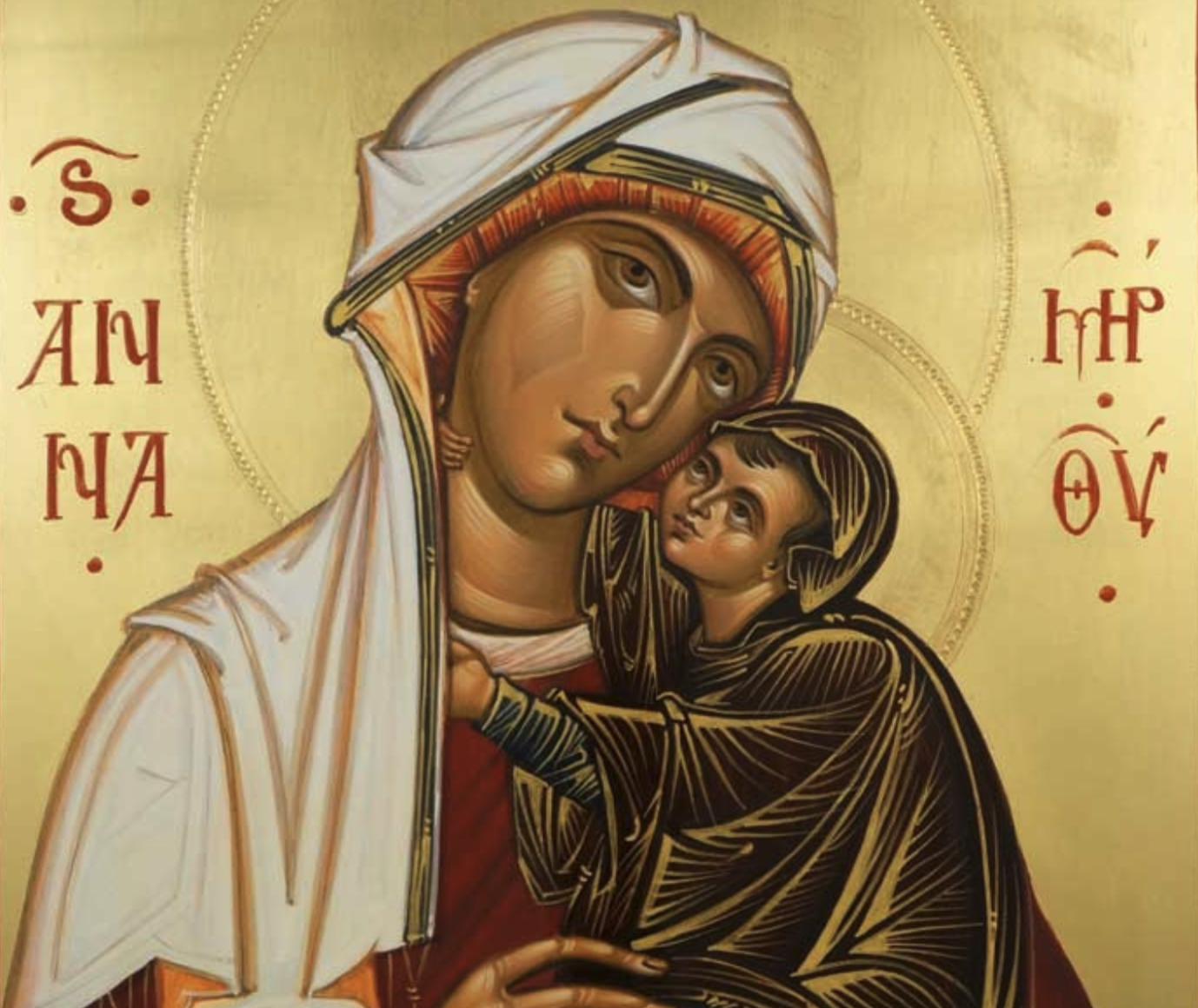
I thought of that debate when reading a timely Religion News Service piece that ran with this headline: “Who is St. Anne and why is she so important to Indigenous peoples?” Let me stress that this is a good story and a valid angle during the Pope Francis pilgrimage to Canada. I urge readers to check it out. Here is the top of that report:

When Pope Francis met with a delegation of First Nations, Métis and Inuit people in April at the Vatican, he told them he wanted to visit them in Canada this year. And not just at any time of the year, but during the Feast of St. Anne (July 26).

“I think with joy, for example, of the great veneration that many of you have for Saint Anne, the grandmother of Jesus,” Pope Francis told the Indigenous delegation to the Vatican. “This year I would like to be with you on those days.”

As the pope visits Canada through Friday (July 29), he will indeed celebrate the Feast of St. Anne in the country. He also will visit several sites dedicated to the saint, whom Catholics believe to be the mother of Mary and the grandmother of Jesus.

That last sentence includes a classic example of a statement — “whom Catholics believe to be the mother of Mary and the grandmother of Jesus” — that is certainly accurate, but it would still cause some readers to think, “Wait a minute. Aren’t there millions of other Christians who honor St. Anne for the same reasons?”


Please respect our Commenting Policy

Looking beyond the polls to find Catholic news hooks in stories about 2022 midterms

Looking beyond the polls to find Catholic news hooks in stories about 2022 midterms

Political news coverage is, in part, guided by polls.

There are dozens of them that come out every few days in reporters’ email inboxes trying to gauge the temperature of the electorate on any given politician or policy decisions. This is especially true in a presidential election year. it’s also true during the midterms, which will arrive on Nov. 8.

While mainstream pollsters took a hit for being inaccurate when Donald Trump won the White House in 2016, the polls roll on as the experts put them out, pundits dissect them and news coverage reports on what they mean.

Often lost in this horse-race coverage of who’s up and who’s down are the views of real people about issues that are, in many cases, larger than partisan politics.

However, an EWTN/RealClear Opinion poll, released on July 15, took a snapshot of what Catholics are thinking, at this point in time. I wrote about its major findings for Religion Unplugged. However, there was more to this survey than a one-day headline.

There are plenty of nuggets of data that could serve as a jumping off point for news coverage in the coming weeks and months.

Overall, the survey found, in the words of Matthew Bunson, executive editor of EWTN News:

This new EWTN News/RealClear Opinion Research poll finds that Catholics — like the majority of Americans — are dissatisfied with the direction of the country, have largely negative views about most of the institutions of government save for the Supreme Court, and are deeply concerned about attacks and vandalism against churches and pro-life clinics.


Please respect our Commenting Policy