Catholicism

Life after Roe: What role will churches and faith play in work of pro-life Democrats?

Life after Roe: What role will churches and faith play in work of pro-life Democrats?

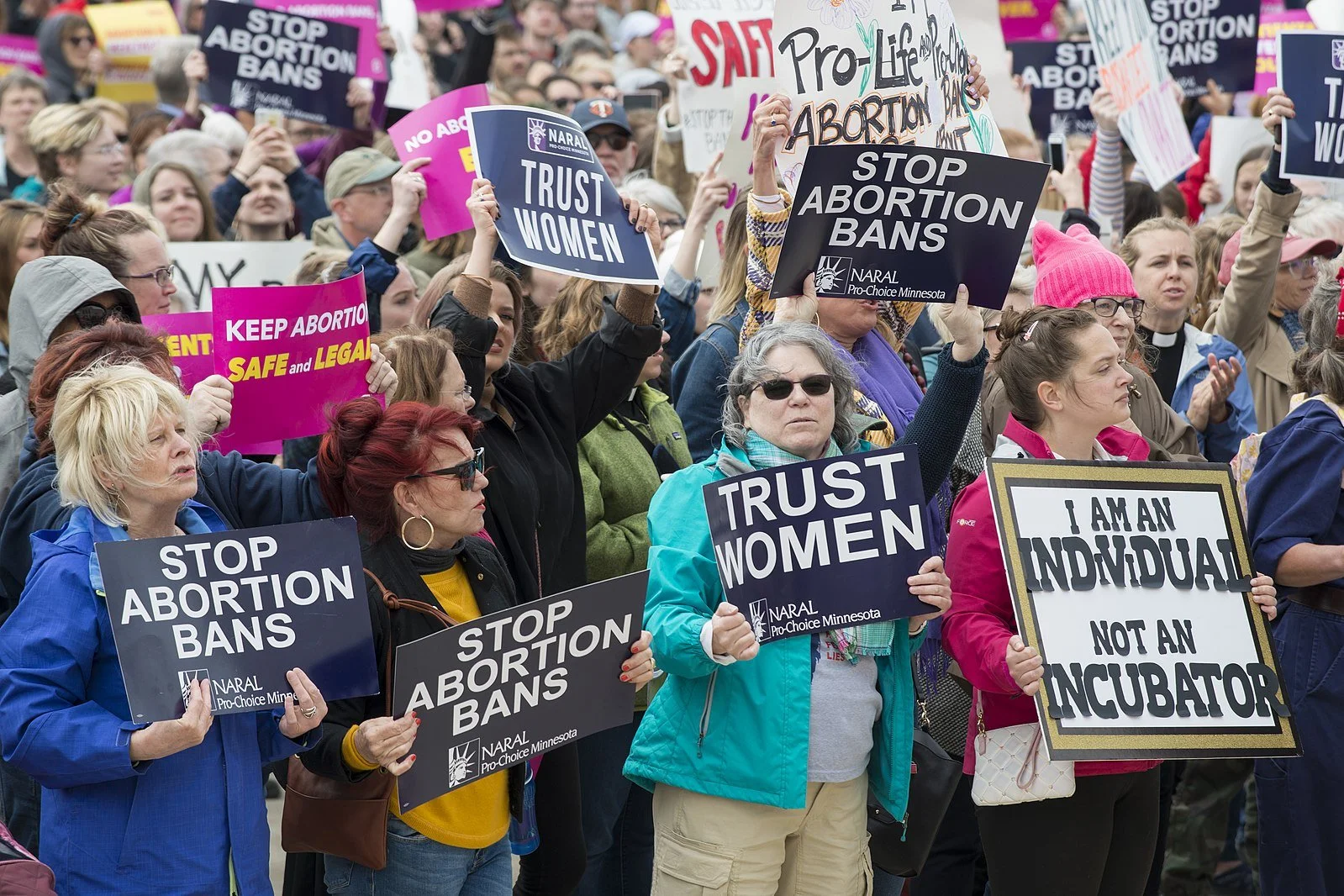
As outraged Democrats jumped on social media after the fall of Roe v. Wade, some symbolic voices in the party offered careful words of celebration.

"Let's Stand Together and Support Women and Children!!!", tweeted state Sen. Katrina Jackson, the African-American Democrat who sponsored Louisiana's trigger bill that includes potential 10-year prison sentences for those who perform abortions.

Jackson's added calls for "womb to tomb" legislation raising wages for childcare workers, funds to fight human-trafficking and new state programs helping families.

Louisiana Gov. John Bel Edwards, also a Democrat, posted several Twitter messages, including: "My position on abortion has been unwavering. I am pro-life and have never hidden from that fact." He stressed that this Louisiana bill included clauses protecting procedures in cases of "medical futility" and ectopic pregnancies and added that he believes it needed "an exception to the prohibition on abortion for victims of rape and incest."

The Democratic Party, in its 2020 platform, remained committed to "protecting and advancing reproductive health, rights and justice," while promising to "fight and overturn federal and state laws" limiting or opposing abortion rights.

But in the wake of the Supreme Court's recent Dobbs vs. Jackson Women's Health Organization decision, crucial debates about abortion laws will move to state governments. Some have already passed bills protecting unborn children and others have taken equally strong stands defending abortion rights.

Many states are located somewhere in between, noted Kristen Day, leader of Democrats for Life of America. In these states there will be tense negotiations over legislation -- such as "heartbeat bills," usually defined as abortion bans after six weeks of gestation -- that were impossible under court actions linked to Roe v. Wade.

While "pro-life" Democrats are an endangered species inside the D.C. Beltway, there are "hundreds of us active in state governments," said Day, reached by telephone. Many of these Democrats are linked to Black and Latino churches -- grassroots workers that national party leaders may not want to attack or alienate.

Please respect our Commenting Policy

WHAT IS THIS? Looking for real news coverage of crisis pregnancy centers? This isn't it ...

WHAT IS THIS? Looking for real news coverage of crisis pregnancy centers? This isn't it ...

If you have been around newsrooms for several decades, especially after the arrival of the Internet, you know that Donald Trump didn’t invent the term “fake news.” Yes, he grabbed it and ran with it. Big time.

Basically, what Orange Man Bad wanted was news coverage that praised all things Trump and, whenever possible, attacked his enemies. This is the flip side of mainstream news offerings that conservatives criticized during the whole Barack “The One” Obama era, when some press people had a thrill-up-the-leg or messiah-esque approach to news.

This preach-to-the-choir ethos is, I believe, one form of “fake news” and I started hearing journalists expressing concerns about it back in the 1980s. Journalists also, as newspaper economics soured, began worrying out loud about news coverage of powerful businesses that resembled cheerleading for the home team. Many feared the line between news and public-relations was in danger.

Then there was the whole “news you can use” phenomenon. The idea is that newsrooms need to offer “news” that is, in reality, offers handy, cheerful, useful, positive guides to local services and worthy causes.

With all of that as a backdrop, let’s look at a recent headline in The Olympian, a mainstream McClatchy chain newspaper up in the deep-blue Pacific Northwest: “Anti-abortion ‘fake clinics’ exist throughout WA. Here’s what they are and how to spot them.”

Read this article and then ask: WHAT IS THIS?

While the scare quotes around ‘fake clinics’ provide a smidgen of editorial distancing, it’s clear — if you look at the sources for this article — that the newspaper is cheering for the pro-abortion-rights activists who are using that term.

But first, WHAT IS THIS? Here is what this article is NOT. It is not an editorial. It is not an opinion column. It is not even a news “analysis” feature.

I would argue that this is a “news you can use” feature for readers who want to attack — that word can be used in several ways — religious and nonprofit groups opposed to abortion and, in particular, crisis pregnancy centers. If you have scanned small headlines deep inside mainstream news outlets, you may know that some of these centers, and the churches that support them, have recently experienced vandalism and even arson.


Please respect our Commenting Policy

Fallout from Supreme Court abortion decision: When reporters parrot partisan talking points

Fallout from Supreme Court abortion decision: When reporters parrot partisan talking points

With emotions running high, the Supreme Court’s reversal of Roe v. Wade marked a cataclysmic shift in the ongoing culture wars. What it means for the upcoming midterm elections and beyond has been the topic of much speculation since the ruling was handed down.

The decision was marked by joy on one side and anger on the other, with may reporters wearing their emotions on their faces and under their bylines. However, many people I know reacted with mixed emotions. Even conservatives were uneasy about the decision, mostly because they feared the violence that could be a part of the fallout. Indeed, the National Catholic Reporter’s news account put it best in its headline: “As Court overturns Roe v. Wade, Catholics react with joy, anger, trepidation.”

We do live in a time when political decisions often inspire violence.

Lose an election? Storm the Capitol Building.

Unhappy with police misconduct? Burn down stores.

Both sides are guilty of this, although the mainstream press — which has grown ever-partisan in the Internet age — hasn’t always been good about calling out both sides for such intimidation.

The fallout from the Dobbs decision? It’s only been a few days, but there was violence in some parts of the country from Rhode Island to Iowa to Arizona. The rhetoric was vile on Twitter, quickly aimed at Christians, and that was soon on display in the streets in a variety of forms.

Again, national legacy media have not always been good about giving proper background and context to the events of the recent past, especially in terms of coverage of violence against churches and crisis-pregnancy centers.

The fissures in American public life are real. So are the distorted realities partisan news organizations like to perpetuate these days.

Just two weeks ago, Gannett, the nation’s largest newspaper chain, argued that opinion pages are alienating readers and becoming obsolete. They doubled down by warning their reporters to refrain from using social media platforms to comment on the decision. However, take a look at this morning’s news summary from USA Today. Spot any patterns?


Please respect our Commenting Policy

Gen Z and trends in religious faith and practice: Looking at 2021 and beyond

Gen Z and trends in religious faith and practice: Looking at 2021 and beyond

It’s been nearly two years since I’ve written a post about the precarious religious position of Generation Z (those born after 1995), and with data from late 2021 available it seems like a prime opportunity to update what we know about their religious inclinations.

Because almost all surveys only contact adult Americans (18+), we can’t get a full picture of the entirety of Gen Z, but just the oldest members of this generation. Thus, here I am analyzing those between the ages of 18 and 25 years old.

Let’s start broadly, comparing the religious composition of different generations beginning with the Silent Generation (who were born between 1925 and 1945).

In this generation, half of all respondents indicated that they were Protestant, while 22% said that they were Catholic. Just 8% of the Silent Generation say that they were atheists or agnostics and nearly the same share describe their religion as “nothing in particular” (10%). In sum, the oldest Americans are 72% Christian and 18% none.

Now, for Generation Z things are much different.

Just 22 % of the youngest adults describe themselves as Protestant — a more than 50% decline from the Silents. Catholics make up 14% of Gen Z, an eight percentage-point dip from the Silent Generation.

Of course, the share of nones is much larger. Seventeen percent of young people describe their religion as atheist or agnostic, and 31% say that they are attached to no religion in particular. Taken together, 36% of Gen Z are Christians, while 48% are nones.

For journalists, there is the news hook: This is the first generation in history in which the nones clearly outnumber the Christians.


Please respect our Commenting Policy

What's news? Attacks on Christians in Nigeria provide an important case study

What's news? Attacks on Christians in Nigeria provide an important case study

As an undergrad, The Religion Guy took a valuable course titled “Evaluation and Display of News,” an elemental skill for journalists who cope with difficult choices.

Take the Johnny Depp-Amber Heard trash-a-thon. Please. Just as car crashes produce rubbernecking, “human interest” justified vast voyeurism that fed the market and stole print space and air time from more substantive stories.

Editors’ tendentious coverage decisions continually erode public trust in the media. Liberal outlets give scant play to the assassination plot against Brett Kavanaugh, harassment of other Supreme Court justices and their families and related attacks on a couple dozen pro-life agencies. Meanwhile, conservatives downplay the near-miss danger to Vice President Mike Pence and other high officials amid the January 6 attempt to block the Constitution’s election process.

The Guy could list other examples from both sides, and so could you.

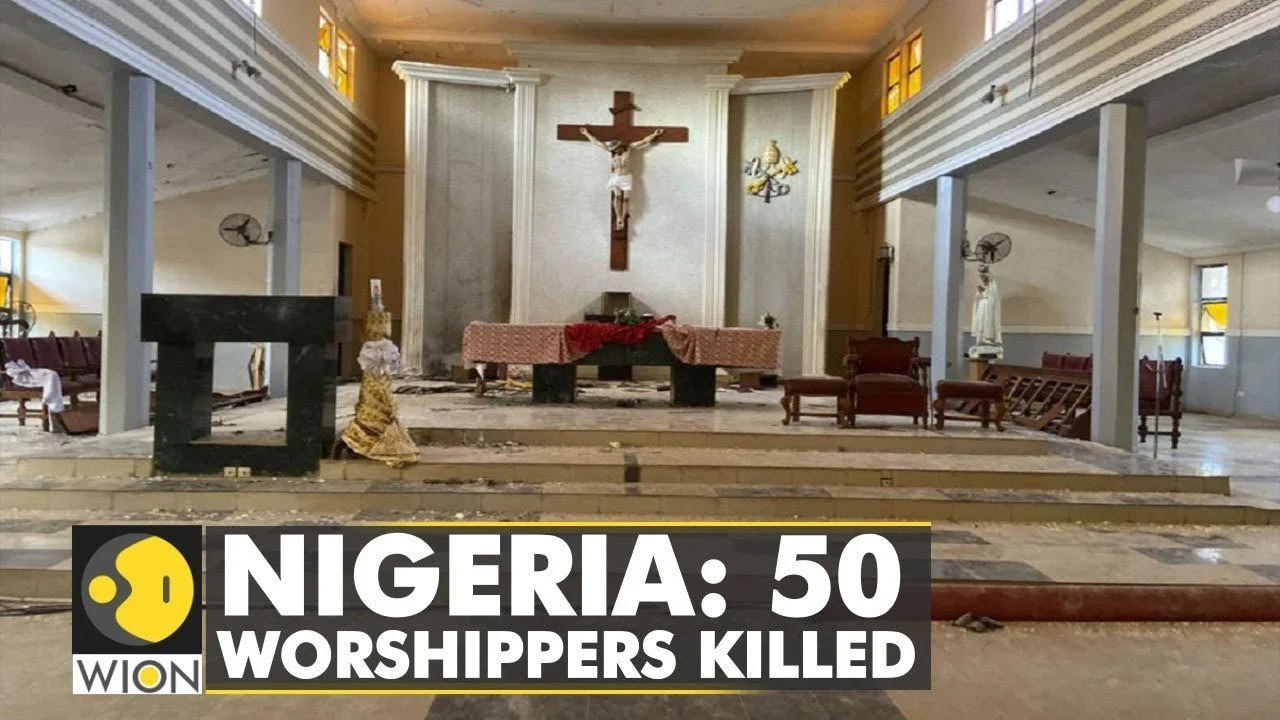
Let’s leap across the Atlantic to assess neglectful news judgment regarding the important plight facing Christians in Nigeria. Their continual conflict with Muslim jihadi factions has left an estimated 37,500 dead since 2011, says the latest annual report (.pdf here) from the U.S. Commission on International Religious Freedom (www.uscirf.gov; contact media@uscirf.gov or 202–523–3240).

The nondenominational watchdog group Open Doors USA says that in 2021“more Christians were murdered for their faith in Nigeria than in any other country,” making up nearly 80% of Christian deaths worldwide. Nigeria is the “most dangerous place to be a Christian” in the world, says the Intersociety for Civil Liberty and Rule of Law, a Nigerian human rights monitor. Christian observers speak openly of “genocide.”

In addition to the deaths, it’s all but impossible to count up the maimed victims who’ve survived, the kidnapped schoolchildren and clergy, forced child marriages and forced conversions or the widespread destruction of Christians' churches, homes, shops and even whole villages.

Sounds like compelling news from here.


Please respect our Commenting Policy

Another SCOTUS win for 'equal access,' whether most journalists realized this or not

Another SCOTUS win for 'equal access,' whether most journalists realized this or not

For a decade or more, U.S. Supreme Court justices have been arguing about the separation of church and state. What we keep seeing is a clash between two different forms of “liberalism,” with that term defined into terms of political science instead of partisan politics.

Some justices defend a concept of church-state separation that leans toward the secularism of French Revolution liberalism. The goal is for zero tax dollars to end up in the checkbooks of citizens who teach or practice traditional forms of religious doctrine (while it’s acceptable to support believers whose approach to controversial issues — think sin and salvation — mirror those of modernity).

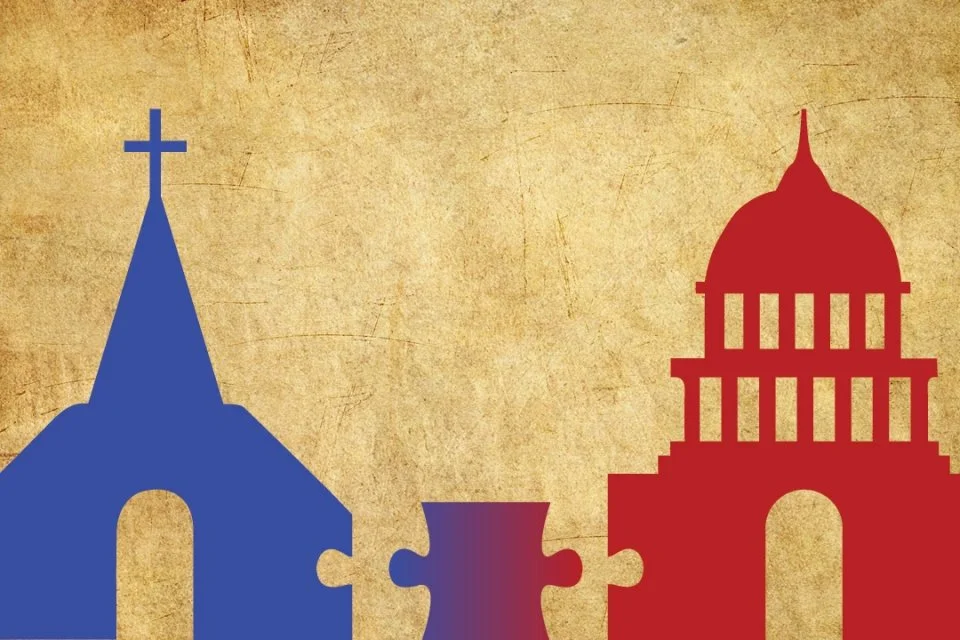
Then there are justices who back “equal access” concepts articulated by a broad, left-right coalition that existed in the Bill Clinton era. The big idea: Religious beliefs are not a uniquely dangerous form of speech and action and, thus, should be treated in a manner similar to secular beliefs and actions. If states choose to use tax dollars to support secular beliefs and practices, they should do the same for religious beliefs and practices.

At some point, it would be constructive of journalists spotted these “equal access” concepts and traced them to back to their roots in the Clinton era (and earlier). But maybe I am being overly optimistic.

You can see these tensions, kind of, in the Associated Press coverage of the new SCOTUS decision that addressed a Maine law that provided tax funds for parents who chose secular private schools, but not those who chose religious schools. The headline of the main report stated, “Supreme Court: Religious schools must get Maine tuition aid.”

Chief Justice John Roberts wrote the opinion for the majority in this 6-3 ruling. In this story, “liberal” is used to describe the majority.

“Maine’s ‘nonsectarian’ requirement for its otherwise generally available tuition assistance payments violates the Free Exercise Clause of the First Amendment. Regardless of how the benefit and restriction are described, the program operates to identify and exclude otherwise eligible schools on the basis of their religious exercise,” Roberts wrote.

The court’s three liberal justices dissented. “This Court continues to dismantle the wall of separation between church and state that the Framers fought to build,” Justice Sonia Sotomayor wrote.


Please respect our Commenting Policy

Question for Catholic politicos and others: Who receives Holy (Christian) Communion?

Question for Catholic politicos and others: Who receives Holy (Christian) Communion?

THE QUESTION:

Who should receive Christian Communion?

THE RELIGION GUY’S ANSWER:

By coincidence, Christianity’s practice for sharing the Communion bread and wine (or juice) is popping up in two separate controversies.

Item: San Francisco’s Archbishop Salvatore Cordileone sparked an ongoing fuss with his May 19 declaration that Speaker of the House Nancy Pelosi is not to receive the sacrament at Masses in her hometown because she vehemently advocates liberal abortion laws while openly identifying as Catholic.

Item: On June 27, Episcopal Church delegates will confer online on whether the agenda at a national convention in Baltimore July 8–11 will take up a radical proposal to offer Communion to people who are not baptized and thus not affiliated with the Christian religion.

Let’s first walk through the Catholic situation. Last year the U.S. bishops debated whether a forthcoming policy statement on the sacrament of Communion would address the fitness of pro-choice Catholic politicians to receive the elements at the altar. The advent of an ardently pro-choice and actively Catholic President, Joseph Biden, energized the discussion.

Kansas Archbishop Joseph Naumann, who chairs the U.S. bishops’ committee on pro-life issues, said it’s “a grave moral evil” to identify as Catholic and advocate open abortion choice “contrary to the church’s teaching.” In the end, however, the bishops’ statement sidestepped the problem.

Cordileone’s related stance toward Pelosi has been joined by the bishops of neighboring Santa Rosa, California; Tyler, Texas; and Arlington, Virginia. But policy on this is set by each local bishop and in Cardinal Wilton Gregory’s Washington, D.C., Pelosi has no problem finding a church to receive the sacrament.

In a similar action, on June 6 Denver Archbishop Samuel Aquila and three other Colorado bishops asked Catholic state legislators who voted for an abortion rights bill to “voluntarily refrain” from taking Communion.

Cordileone explained that he is simply implementing canon law, which prescribes that parishioners “who obstinately persist in manifest grave sin are not to be admitted to Holy Communion” (#915).


Please respect our Commenting Policy

Nowhere to hide: Los Angeles Times hit job focuses on one side of Biola University tensions

Nowhere to hide: Los Angeles Times hit job focuses on one side of Biola University tensions

If you have followed trends in academic and student life at Biola University over the past 25 years or so — I have spoken there about 10 times in that period — you know that this is a complex campus, with all kinds of divisions on theological, moral, political and cultural issues.

As a rule, campus administrators there are just as uncomfortable with strong conservative voices as they are with candid evangelical progressives. Thus, all kinds of Biola believers have learned to state radically different convictions in language that can be called “evangelical” to one degree or another. The goal is to keep painful fights out of publications read by parents, donors and even trustees.

It’s important to keep this in mind while reading the Los Angeles Times morality-tale sermon that ran the other day with this headline: “CRT, Trumpism and doubt roil Biola University. Is this the future of evangelical Christianity?” The headline failed to include the key issue in this story — clashes over the validity of 2,000 years of Christian doctrine on sexuality and marriage.

For additional insights on political and theological diversity found Christian campuses, it will help to read this classic 1995 essay at The Atlantic — “The Warring Visions of the Religious Right” — by the liberal Baptist scholar Harvey Cox of Harvard Divinity School (author of the ‘60s bestseller, “The Secular City”).

Oh, and speaking of liberal Baptist scholars, one of the defining voices in the new Los Angeles Times feature is David Gushee of Mercer University. It was totally valid to include his voice in this story, but it was interesting that he is quoted as a neutral academic expert on these matters, as opposed to being an articulate spokesman for activists on one side of the doctrinal war being covered in this story.

After all, it was Gushee who opened a classic 2016 essay for Religion News Service with these lines:

Middle ground is disappearing on the question of whether LGBT persons should be treated as full equals, without any discrimination in society — and on the related question of whether religious institutions should be allowed to continue discriminating due to their doctrinal beliefs.

It turns out that you are either for full and unequivocal social and legal equality for LGBT people, or you are against it, and your answer will at some point be revealed. This is true both for individuals and for institutions.

Neutrality is not an option. Neither is polite half-acceptance. Nor is avoiding the subject. Hide as you might, the issue will come and find you.

Thus, the Los Angeles Times has come to confront the leaders of Biola University.


Please respect our Commenting Policy

As Roe clock ticks, press avoids news about another big story -- attacks on Catholic churches

As Roe clock ticks, press avoids news about another big story -- attacks on Catholic churches

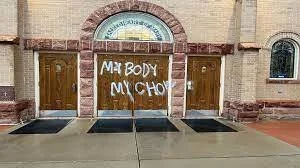
There have been at least 41 incidents of attacks against churches and crisis-pregnancy facilities since the May 2 leak of the Supreme Court draft decision that revealed the potential fall of Roe v. Wade.

The attacks have included property theft, vandalism, arson and property destruction.

How do we know this? A front page New York Times investigation this past Sunday?

No.

A round-up story in The Washington Post, USA Today, the Associated Press? Coverage on CBS, CNN or another major network?

No, no, no and, alas, no.

We know this because of The Washington Stand, which is described as the Family Research Council’s “outlet for news and commentary from a biblical worldview.” In other words, these events are “conservative” niche news (as opposed to, let’s say, attacks on “sanctuary movement” churches because of their activism on immigration).

This awful trend should come as no surprise. At least it wasn’t to me. I wrote a story recently at Religion Unplugged on the rash of vandalism — especially acts against Catholic churches — throughout this spring. I opened my news account with the theft of a tabernacle at a Brooklyn, N.Y., church (see this related GetReligion piece). Here’s an excerpt from my piece:

The desecration was the latest in a string of incidents across the United States, triggering fears of future vandalism given the supercharged political climate around abortion, LGBTQ rights and bishops denying politicians Communion.

The vandalism may not necessarily be tied to one or more of these factors — rising crime rates is also a possibility in the wake of the pandemic — but church officials remain vigilant as the summer approaches. While the motivations remain a mystery, the outcome has rattled Catholic churches across the country. Some have resorted to increased security measures, like locking doors when Masses aren’t taking place, installing security cameras and even erecting barbed wire and fences to avoid being targeted.

As we await a final Supreme Court ruling, we could be in for a long summer of violence and vandalism.

My criticism here is not in the news coverage this issue has received. Instead, it’s the lack of coverage.


Please respect our Commenting Policy