Catholicism

'God bless those who weep': Brilliant OSU lineman leaves football, after fighting suicidal thoughts

'God bless those who weep': Brilliant OSU lineman leaves football, after fighting suicidal thoughts

Athletes of all ages say all kinds of wild things on Twitter that make headlines.

It’s the digital age in which we live. Every now and then, these snarky quips and social-media pronouncements are actually newsworthy.

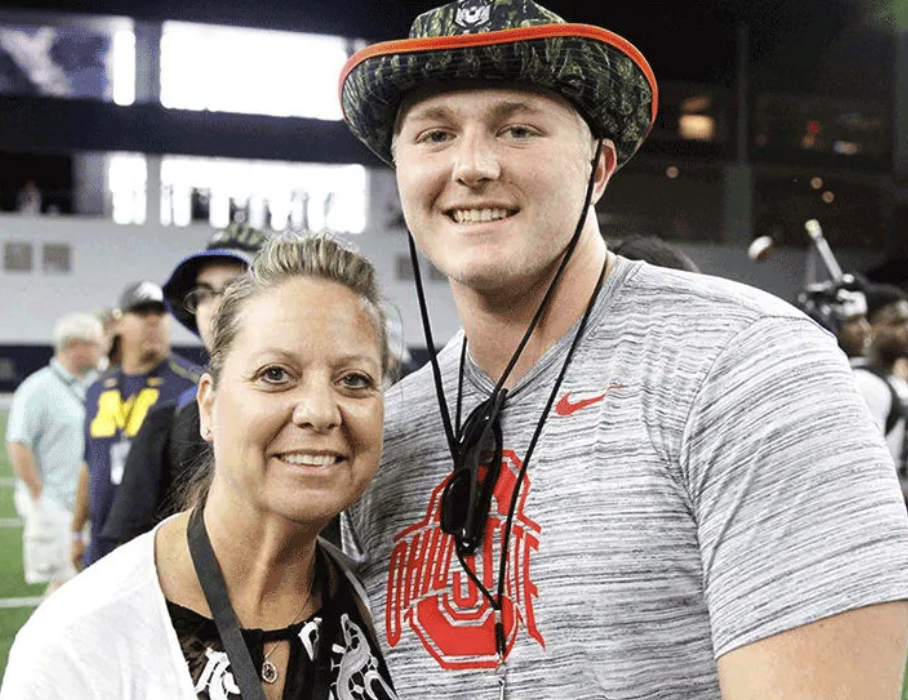
But that painful and haunting letter that Ohio State offensive lineman Harry Miller posted on Twitter was something else altogether. It was an appeal for public awareness of box-cutter scars and mental health issues that, far too often, can be hidden with muscles, bandages and layers of athletic gear. Here is the top of a Bleacher Report story — “Ohio State OL Harry Miller Retires From Football; Details Mental Health Struggles” — about this 5-star level football prospect:

Ohio State offensive lineman Harry Miller announced his medical retirement from football. … In a message posted to Twitter, Miller said that he had suicidal thoughts and went to Ohio State head coach Ryan Day to seek help.

"Prior to the season last year, I told Coach Day of my intention to kill myself," Miller wrote. "He immediately had me in touch with Dr. Candice [Williams] and Dr. [Joshua] Norman, and I received the support I needed."

Miller played for Ohio State from 2019-21. He was named an OSU Scholar-Athlete in 2019 and 2020. Miller also started seven games at left guard for the 2020 team, which won the Big Ten and the Sugar Bowl. He played two games in 2021. OSU recruited Miller, a 5-star recruit, out of Buford High School in Georgia.

"A person like me, who supposedly has the entire world in front of them, can be fully prepared to give up the world entire," Miller wrote. "This is not an issue reserved for the far and away. It is in our homes. It is in our conversations. It is in the people we love."

Miller is an unusual young man for several reasons. A long-time GetReligion reader (a professional writer with decades of experience) put it this way in an email to me this weekend:

He is straight A student in engineering and got a 1600 on the SAT. His mom was physically abused by her first husband and abandoned by Miller's father.

Yet, he has lived for others while becoming a five-star recruit. Now, the guts to do this.

So many religion ghosts, so little time.


Please respect our Commenting Policy

Plug-In: Why sexual harassment reports inside Christianity Today were especially shocking

Plug-In: Why sexual harassment reports inside Christianity Today were especially shocking

“Sexual harassment went unchecked at Christianity Today.”

The headline shocked me.

The source of the news stunned me as much as the content of it.

“Women reported two top leaders’ inappropriate behavior for more than 12 years,” the story said. “Nothing happened.”

Where were those claims made? In a bombshell investigative piece by Christianity Today itself.

The influential evangelical magazine, based in Carol Stream, Illinois, outside Chicago, published an in-depth exposé written by news editor Daniel Silliman and edited by senior news editor Kate Shellnutt.

I’ve frequently praised Silliman’s investigative reporting on evangelical institutions. In this week’s piece, he delves into serious allegations inside his own workplace:

A number of women reported demeaning, inappropriate, and offensive behavior by former editor in chief Mark Galli and former advertising director Olatokunbo Olawoye. But their behavior was not checked and the men were not disciplined, according to an external assessment of the ministry’s culture released Tuesday.

The report identified a pair of problems at the flagship magazine of American evangelicalism: a poor process for “reporting, investigating, and resolving harassment allegations” and a culture of unconscious sexism that can be “inhospitable to women.” CT has made the assessment public.

“We want to practice the transparency and accountability we preach,” said CT president Timothy Dalrymple. “It’s imperative we be above reproach on these matters. If we’re falling short of what love requires of us, we want to know, and we want to do better.”

In separate, independent reporting, the CT news editor interviewed more than two dozen current and former employees and heard 12 firsthand accounts of sexual harassment.

If Galli’s name sounds familiar, he made widespread headlines in December 2019 when he wrote an editorial calling for then-President Donald Trump’s impeachment and removal from office.


Please respect our Commenting Policy

Thinking about world Christianity, as Crux digs deep into many overlooked Catholic details

Thinking about world Christianity, as Crux digs deep into many overlooked Catholic details

It’s hard to believe that it has been two decades since historian Philip Jenkins published his groundbreaking essay “The Next Christianity” in The Atlantic Monthly.

It contained key material from the first of three books that Jenkins published on the future of world Christianity and, thus, of the changing face of world religion — period. The first book was entitled: “The Next Christendom: The Coming of Global Christianity.

This piece of the Atlantic subtitle is crucial: “We stand at a historical turning point, the author argues — one that is as epochal for the Christian world as the original Reformation. Around the globe Christianity is growing and mutating in ways that observers in the West tend not to see.”

Sure enough, many reporters didn’t see what Jenkins was describing, even though clashes between the chilly, declining Christian West and the blooming Christian South and East are easy to see looming in the background of many major stories. As the Anglicans and United Methodists about that.

Understanding Jenkins’ work is a crucial first step to understanding the importance of a new Crux think piece by the omnipresent John L. Allen, Jr. The headline: “In new Catholic numbers, an ‘imponderable’ movement shaping history.”

First, consider this from Jenkins:

If we look beyond the liberal West, we see that another Christian revolution, quite different from the one being called for in affluent American suburbs and upscale urban parishes, is already in progress. Worldwide, Christianity is actually moving toward supernaturalism and neo-orthodoxy, and in many ways toward the ancient worldview expressed in the New Testament: a vision of Jesus as the embodiment of divine power, who overcomes the evil forces that inflict calamity and sickness upon the human race. In the global South (the areas that we often think of primarily as the Third World) huge and growing Christian populations — currently 480 million in Latin America, 360 million in Africa, and 313 million in Asia, compared with 260 million in North America — now make up what the Catholic scholar Walbert Buhlmann has called the Third Church, a form of Christianity as distinct as Protestantism or Orthodoxy, and one that is likely to become dominant in the faith.


Please respect our Commenting Policy

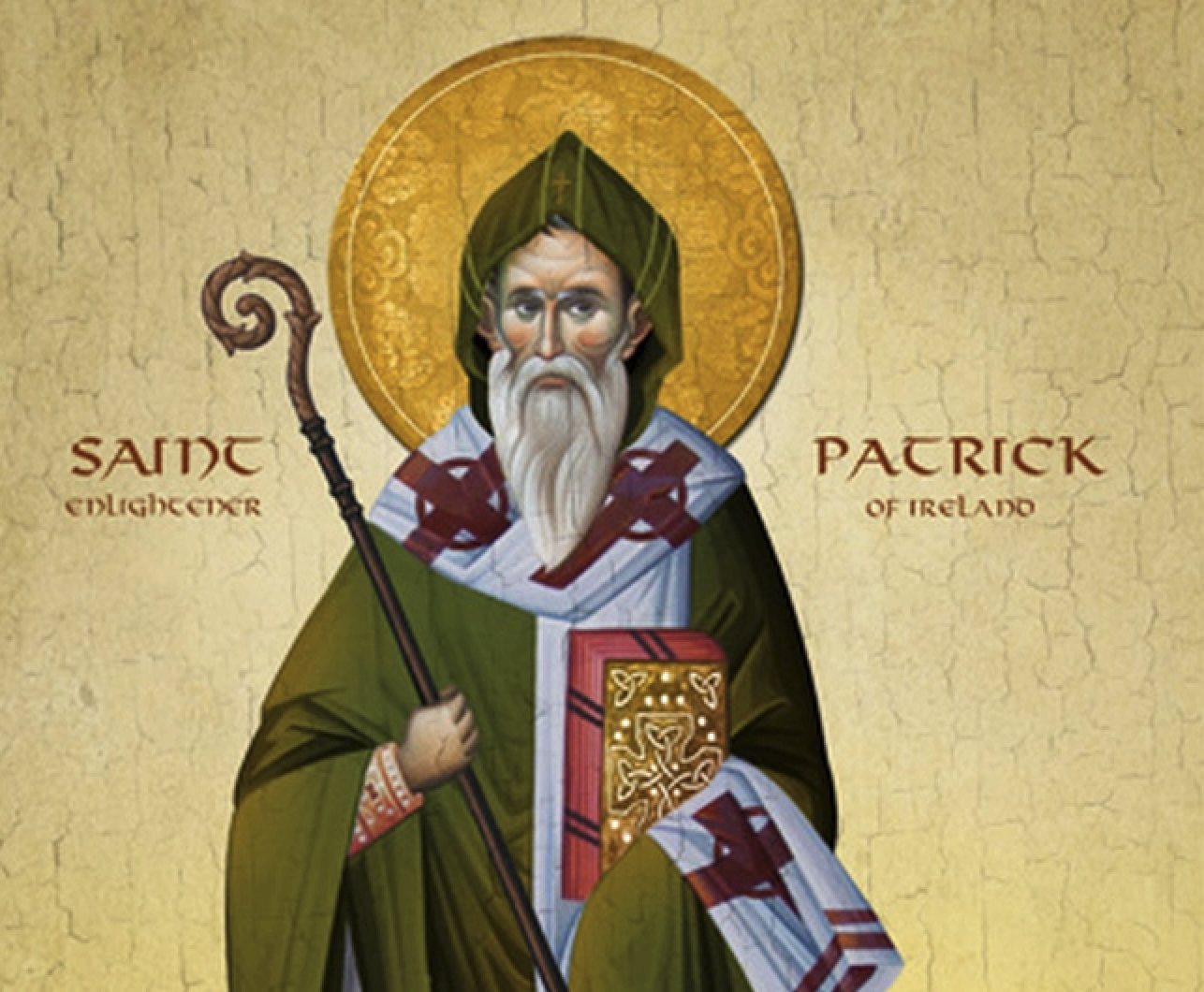
Podcast: Why would journalists want to edit St. Patrick's voice out of stories about his feast?

Podcast: Why would journalists want to edit St. Patrick's voice out of stories about his feast?

When you think of St. Patrick’s Day, what leaps to mind?

Maybe I should ask the question like this: When you think about mainstream-press news coverage of St. Patrick’s Day, what leaps to mind?

Green beer? Corned beef and cabbage (during Lent)?

Great masses of people — primarily in big cities in the Acela Zone and the Rustbelt — going more than a little crazy? Politicians trying to march next to the Catholic archbishop of New York, when they disagree with him on most hot-button issues? Lawsuits about LGBTQ groups demanding to march in a parade that, once upon a time, had something to do with Christian hero?

Questions like these were at the heart of this week’s “Crossroads” podcast (CLICK HERE to tune that in), which got rather personal — since my family embraced the Celtic saints when we converted to Orthodox Christianity. My patron saint is St. Brendan and my daughter’s is St. Brigid (more on this later).

The Big Idea of this podcast was quite simple: It is totally valid for journalists to focus on civic celebrations of St. Patrick’s Day and other modern variations on the veneration (not worship) of the great Celtic saints. The problem is when they leave readers in the dark about the details in the lives of these saints (along with debates about those details), along with the prayers and rites linked to them.

For example, when you think about St. Patrick do these words come to mind?

My name is Patrick. I am a sinner, a simple country person, and the least of all believers. I am looked down upon by many. My father was Calpornius. He was a deacon; his father was Potitus, a priest, who lived at Bannavem Taburniae. ... His home was near there, and that is where I was taken prisoner. I was about sixteen at the time. At that time, I did not know the true God. I was taken into captivity in Ireland, along with thousands of others.

That’s the first few lines of the Confession of St. Patrick, a document that historians take quite seriously — in part because it focuses on the faith and history of this great missionary bishop, while ignoring all kinds mythological details that came later.


Please respect our Commenting Policy

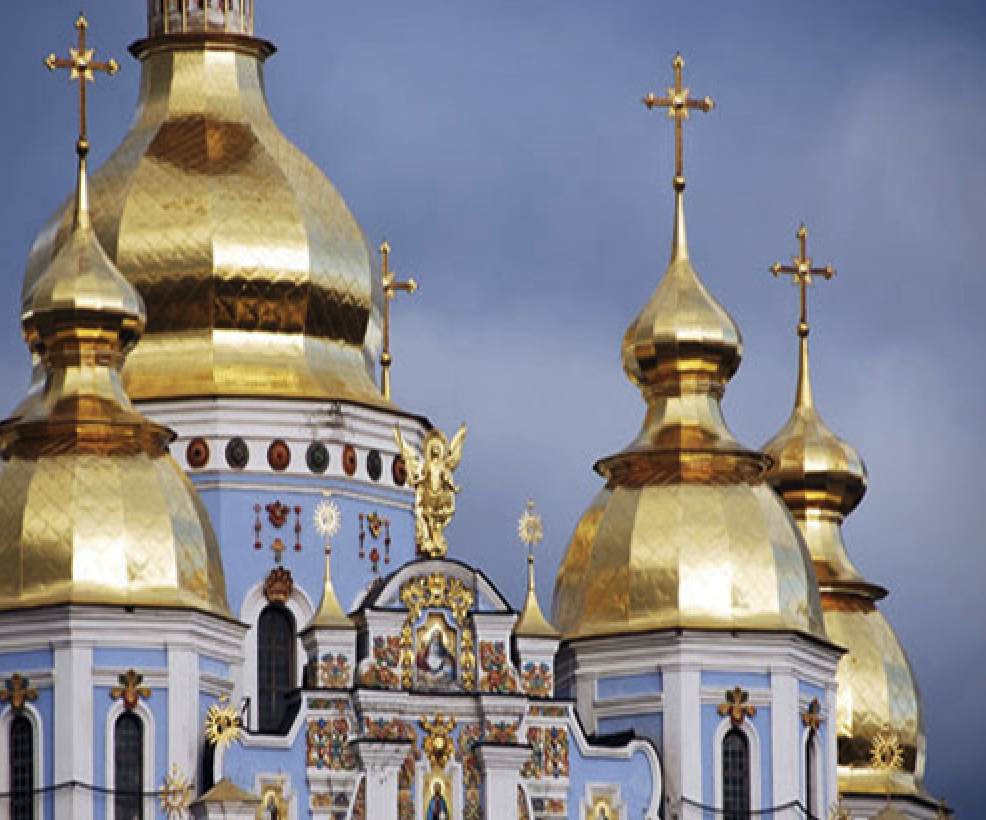
Beyond the Orthodox questions: How might the Ukraine war scramble world Christianity?

Beyond the Orthodox questions: How might the Ukraine war scramble world Christianity?

Russia's invasion of Ukraine has potential to be "the most transformational" European conflict since World War II, writes New York Times foreign policy columnist Thomas Friedman.

Will it be transformational for Christianity?

There's a slim chance peace could be restored, but at this writing Russian dictator Vladimir Putin appears committed to doing whatever it takes to demolish the independence of his once-friendly neighbor and its young democracy. We might see Russian military occupation, a puppet regime, persistent armed resistance by furious Ukrainians, ongoing aid by the West and at some future point a humiliating defeat and withdrawal -- a replay of the decade-long occupation of Afghanistan that played into the Soviet Union's collapse and therefore to Ukraine's independence.

Russia faces accusations of war crimes amid mass killings of innocent civilians, and bombardment of homes, hospitals, schools and infrastructure, with attendant suffering.

The contours of world Christianity could be scrambled, as a result of all of this. This religious aspect seems a mere sidebar for the news media just now.

But long term, the Russian Orthodox hierarchy has fused the church's stature with a regime hit by widespread moral condemnation, sagging influence and rising economic and diplomatic isolation. Opprobrium comes not just from the U.S. and western allies. In a United Nations vote, 141 nations denounced the "aggression" while only four problematic regimes backed Russia. Even China abstained.

The media should be alert to the following possible scenarios.

The starting point for discussion is a current church split within Ukraine, whose Orthodox population is second only to the massive church of Russia. See detail here in a previous Memo.

In 1686, the Ecumenical Patriarch, "first among equals" who lead Orthodoxy's independent "autocephalous" branches, granted the Moscow Patriarch the jurisdiction over Ukraine that it still exercises. But after national independence, a rival Orthodox Church of Ukraine now led by Metropolitan Epiphanius arose, and Ecumenical Patriarch Bartholomew — with the sympathy of western leaders — formalized its autocephalous status in 2019.


Please respect our Commenting Policy

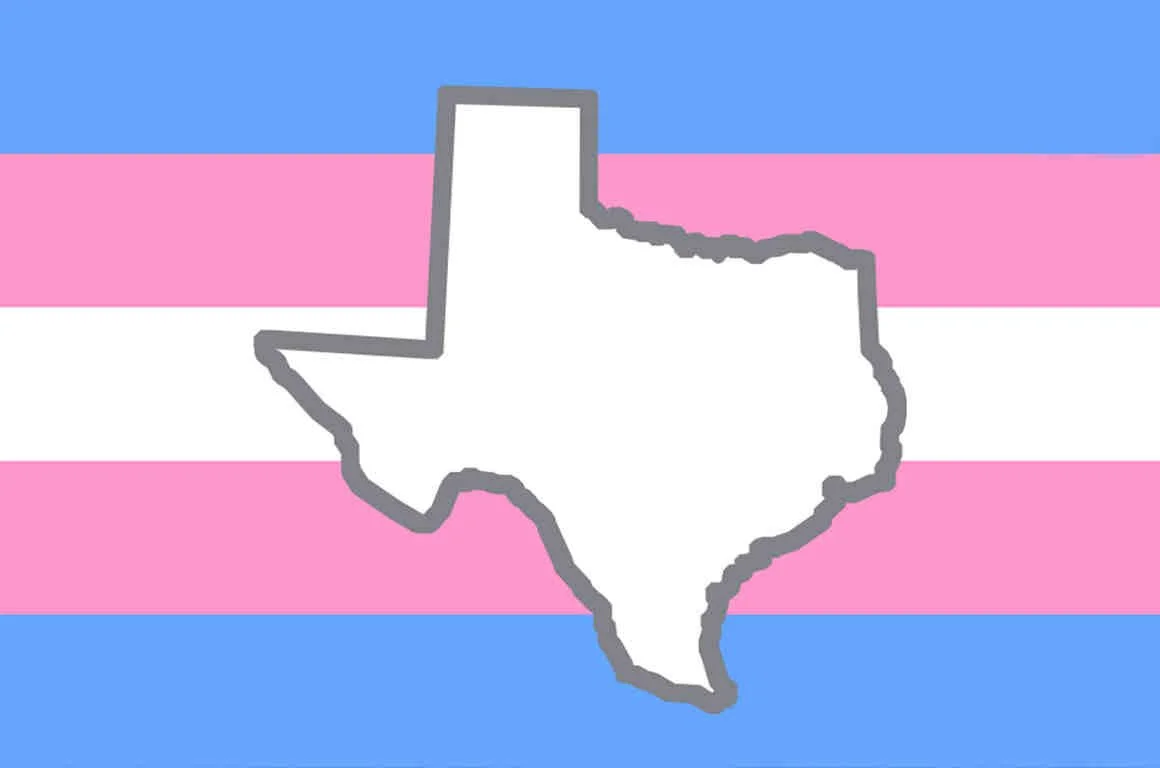
'Gender affirming?' Texas press keeps backing one side in battles over trans therapies

'Gender affirming?' Texas press keeps backing one side in battles over trans therapies

Texas is definitely at the forefront of the culture wars these days, with legislation restricting abortion past six weeks, addressing concerns about critical race theory and now a state directive nixing hormone treatments aimed at changing a child’s gender.

Naturally, media have been all over these issues. The latest, which has to do with sex changes for kids, has gotten a lot of people riled up on both sides. In the Lone Star state, all of these debates have obvious religious and moral implications.

However, only one side ends up in newspapers like the Houston Chronicle, from whose March 4 story I’ll quote from here:

Texas Children’s Hospital has stopped prescribing gender-affirming hormone therapies — a move that could affect thousands of transgender children in Texas — in response to a controversial directive from state leaders to investigate medical treatments for transgender youth as child abuse.

The nation’s largest pediatric hospital revealed the decision Friday, dealing a blow to parents of transgender children who were seeking access to medicine that slows the onset of puberty or hormone treatments that help older children develop into bodies that match their identities.

A few paragraphs down, we learn that a state agency was investigating the parents of a 16-year-old “who underwent gender-affirming care.”

“Gender-affirming care” means puberty blockers that block the hormones — testosterone and estrogen — that cause periods and breast growth, or voice-deepening and facial hair growth. It’s not known their effect on fertility, bone marrow density or brain development. Supposedly there are no bad long-term effects, but we don’t know everything at this point, do we?

We do know that there are strong voices on both sides of these debates and, as tmatt noted the other day, not all of them (“Top Trans Doctors Blow the Whistle on ‘Sloppy’ Care”) fit neatly into the familiar right-left, straight-LGBTQ niches.


Please respect our Commenting Policy

There goes that Ryan Burge guy, again: Myths about evangelicals, Catholics and others

There goes that Ryan Burge guy, again: Myths about evangelicals, Catholics and others

During my years as a journalism professor (now over), I must have told my students the following a thousand times: Pay close attention when one of your sources consistently offers information and insights that (a) fit the actual facts on the ground, yet (b) anger (or at least puzzle) people on both sides of the hot-button issues that make headlines.

For several decades, my classic example of this phenomenon has been political scientist John C. Green of the University of Akron, best known for years of consulting work with the Pew Forum team. A few years ago, I added religious-liberty specialist David French to that list. Sociologist James Davison Hunter, author of that “Culture Wars” classic? Ditto. How about the notorious scholar Karen Swallow Prior?

Then that Ryan Burge guy (@RyanBurge) started lighting up Twitter with chart after chart backed with data on religion and public life. He’s been a GetReligion contributor, in a variety of ways, for several years now and was a big hit when he Zoomed into a December religion-news program at the Overby Center at Ole Miss.

If you agree with Burge on everything, then you aren’t paying attention. That’s a compliment. Like Green, Burge is a man of the mainline-church world, but he’s consistently candid about the trends that he sees on left and right.

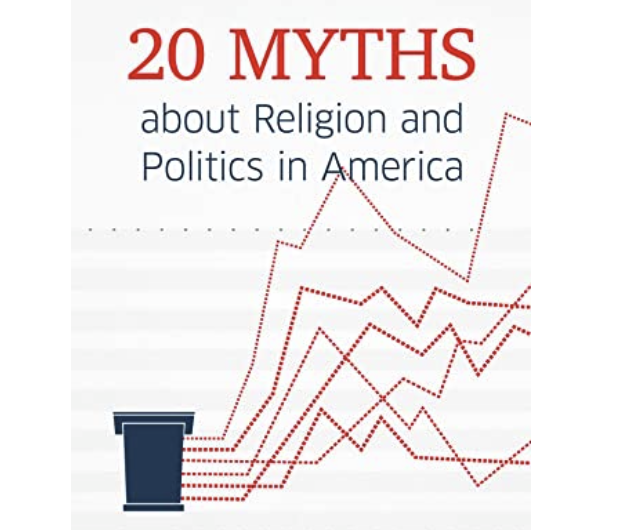
How he has another book out — “20 Myths about Religion and Politics in America” — and readers are sure to disagree with one or more of his myths. But the numbers he spotlights are always worthy of attention, especially for journalists who cover religion, culture and politics.

I’ll note some new Burge appearances on audio and video podcasts, as they roll out in the weeks ahead — starting with the one at the top of this post. He also did a Religion News Service Q&A the other day with Jana Riess that ran with this provocative headline: “Evangelicalism isn’t dying, and Catholics are going Republican.”

The first question is exactly what you’d expect, if you’ve been following Burge in recent years:

Your first chapter says that rumors of evangelicalism’s death are premature. Could you talk about that?


Please respect our Commenting Policy

Vatican 'Synod on Synodality': Why the press has largely ignored this big Catholic story

Vatican 'Synod on Synodality': Why the press has largely ignored this big Catholic story

We interrupt your reading about the war in Ukraine with a very important post about the global Catholic Synod on Synodality.

Synod on synodality? Say that three times fast. For some Catholics it’s kind of a Zen thing.

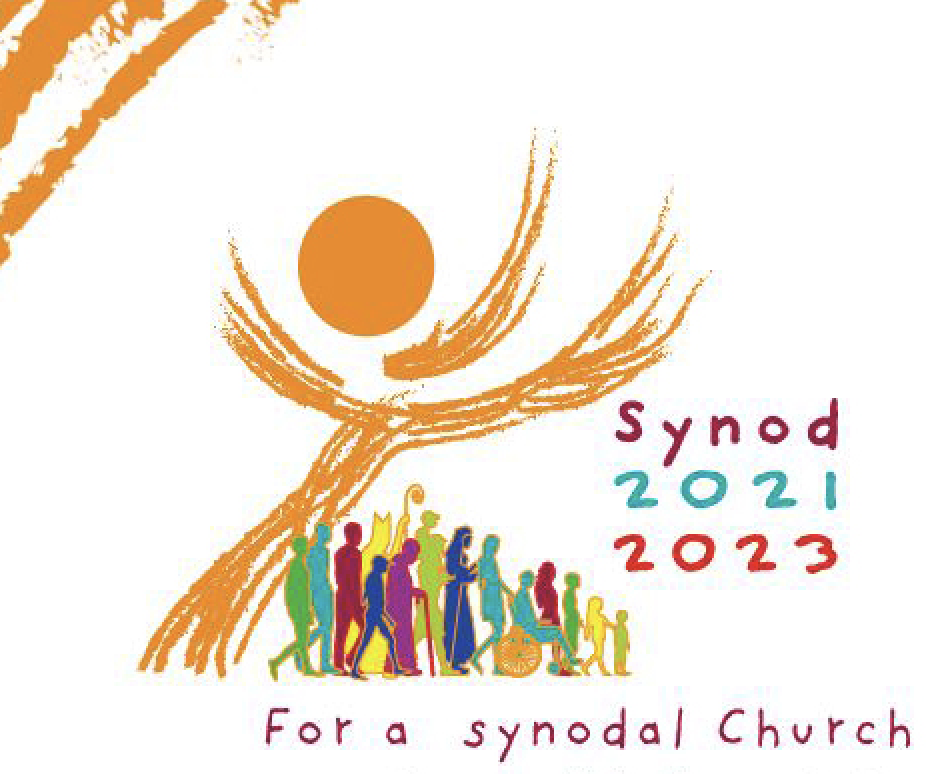
The Synod of Synodality is a two-year process that Pope Francis began last October. Officially known as “Synod 2021-2023: For a Synodal Church,” it is a process that allows bishops to consult with Catholics — from parishioners all the way up to priests — in a spirit of collaboration and openness. This includes official dialogue with some activists who actively dissent from church teachings.

Why should anyone care? Is this a news story that editors will care about?

A phrase like Synod on Synodality certainly won’t ever make it into a punchy headline, not even at The New York Post.

The secular press isn’t all that interested in doctrinal issues that don’t appeal to a larger audience or lack a political connection. It’s the reason why the pope going after the Latin Mass got little mainstream news attention while bishops batting President Joe Biden about receiving Holy Communion got tons of coverage. Then again, the synod will almost certainly contain strong LGBTQ news hooks.

It was in March 2020, on the eve of the pandemic, that Pope Francis announced the synod. It was quickly forgotten as the world battled the outbreak of COVID-19. The Vatican even set up a Twitter account for the synod.

Last October, when the pope launched the start of this process, the Catholic press did a very good job explaining what the Synod of Synodality is. For example, Catholic News Agency explained this global synod and its purpose this way:

The pope acknowledged that learning to listen was “a slow and perhaps tiring exercise” for bishops, priests, religious, and laity.


Please respect our Commenting Policy

The New York Times fails to ask a key 'parental rights' question linked to Texas trans wars

The New York Times fails to ask  a key 'parental rights' question linked to Texas trans wars

No one in his or her right (or left) mind would expect the college of journalism cardinals at The New York Times to write a balanced story about one of the latest battles in Texas over core doctrines of the Sexual Revolution.

In this case, I am not referring to Gray Lady coverage of the state’s efforts to ban most abortions after unborn children have detectable heartbeats, which is about six weeks into pregnancies.

No, I am referring to a massive new story about Gov. Greg Abbott call for child-abuse investigations of parents who back appeals by their children and teens to begin medical efforts to transition to another gender. The double-decker headline is rather restrained, when one considers the level of outrage among the vast majority of Times-persons.

Texas Investigates Parents Over Care for Transgender Youth, Suit Says

The investigations by the state’s Department of Family and Protective Services started last week with an employee of the agency, according to the suit, after Gov. Greg Abbott called for such inquiries.

As I said, no one would expect the Times to do a balanced story on this kind of subject, one that is so close to the newspaper’s doctrinal heart.

I was, however, surprised that this story didn’t include (a) some kind of reference to the newspaper’s involvement in an important discussion of a related topic by two of America’s leading trans activists and medical professionals and (b) some input from religious conservatives — major players in Texas life — discussing whether Abbott’s actions limit parental rights in decisions affecting their children. Religious conservatives have been very concerned, in the past, about government efforts (see this ongoing Canada case) to punish parents who oppose transition efforts by their children (usually backed by a former spouse).

Back to the Times report. Here is some crucial material:

The investigations by the state’s Department of Family and Protective Services, which have not been previously reported, were started in response to an order from Mr. Abbott to the agency, the lawsuit says. The order followed a nonbinding opinion by the Texas attorney general, Ken Paxton, that parents who provide their transgender teenagers with puberty-suppressing drugs or other medically accepted treatments — which doctors describe as gender-affirming care — could be investigated for child abuse.


Please respect our Commenting Policy